What is stall? How a pilot should react in front of a stall situation
Source: Airbus Safety First URL: https://safetyfirst.airbus.com/what-is-stall-how-a-pilot-should-react-in-front-of-a-stall-situation/ Published: 2011-01-14 Magazine Issue: 2011-01 Category: Archive PDF: Original PDF
Jacques ROSAY
Section titled “Jacques ROSAY”VP Chief Test Pilot
1. Introduction
Section titled “1. Introduction”The worldwide air transport fleet has recently encountered a number of stall events, which indicate that this phenomenon may not be properly understood and managed in the aviation community. As a consequence, the main aircraft manufacturers have agreed together to amend their stall procedures and to reinforce the training. A working group gathering Authorities and aircraft manufacturers will publish recommendations for harmonized procedures and appropriate training. This article aims at reminding the aerodynamic phenomenon associated to the stall, and the recently published new procedures.
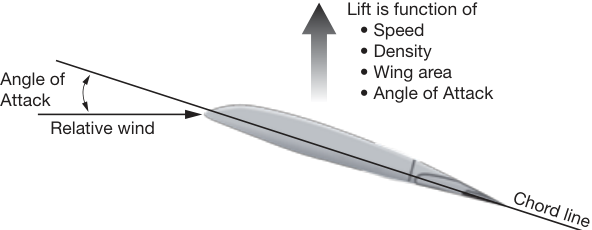
A wing generates a lift equal to 1/2ρSV²Cl.
With:
ρ = air density S = wing surface reference V = True Air Speed Cl = lift coefficient of the wing
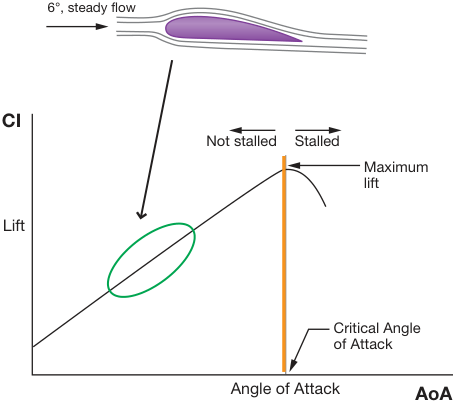
For a given configuration, a given speed and a given altitude, the lift is only linked to the AoA.
Angle of Attack
Safety
3. The stall phenomenum
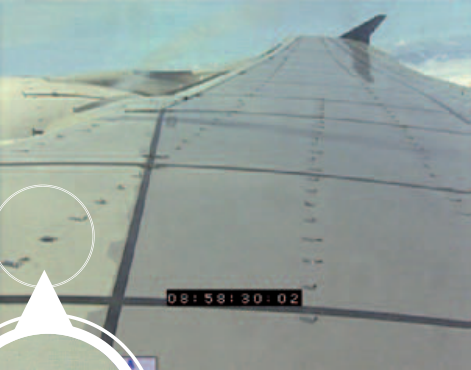
Section titled “3. The stall phenomenum”The linear part of the curve corresponds to a steady airflow around the wing.
4. Some important things to remember about the stall
Section titled “4. Some important things to remember about the stall”q For a given configuration and at a given Mach number, a wing stalls at a given Angle of Attack (AoA) called AoA STALL. When the Mach number increases, the value of the AoA STALL decreases.
q When approaching the AoA STALL, the wing generates a certain level of buffeting, which tends to increase in level at high Mach number.
q When the AoA increases and approaches the AoA STALL, in certain cases, a phenomenon of pitch up occurs as a result of a change in the distribution of the lift along the wingspan. The effect of the pitch up is a self-tendency of the aircraft to increase its Angle of Attack without further inputs on the elevators. Generally, for a given wing, this phenomenon occurs at a lower Angle of Attack and is more prominent when the Mach number is higher.
q The only mean to counter the pitch up is to apply a nose down elevator input.
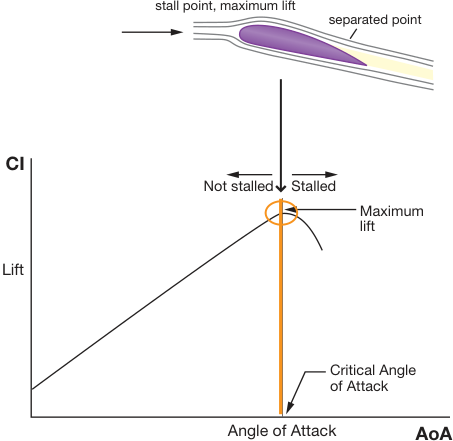
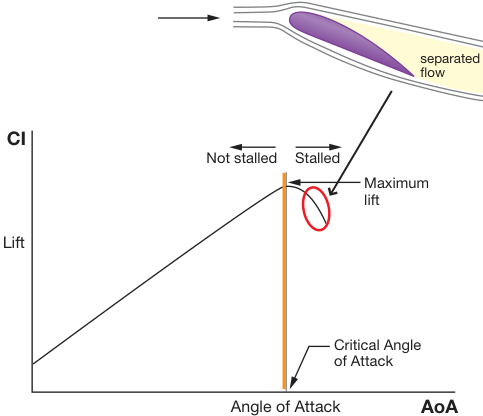
q When the aerodynamic flow on the wing is stalled, the only possible mean to recover a normal flow regime is to decrease the AoA at a value lower than the AoA STALL.
q Stall is an AoA problem only. It is NOT directly a speed issue.
Knowing those two last characteristics is absolutely paramount, as they dictate the only possible way to get out of a stall.
5. Protections against the stall in NORMAL LAw on Fbw aircraft
Section titled “5. Protections against the stall in NORMAL LAw on Fbw aircraft”In NORMAL LAW, the Electronic Flight Controls System (EFCS) takes into account the actual AoA and limits it to a value (AoA MAX) lower than AoA STALL (fig. 1).
Figure 1 In NORMAL LAW, the EFCS limits the AoA to a value lower than AoA STALL
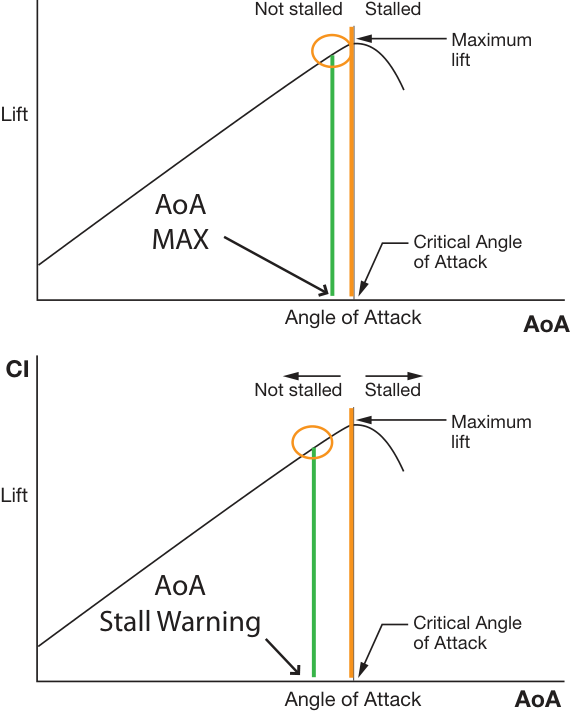
The EFCS adjusts the AoA MAX limitation to account for the reduction of the AoA STALL with increasing Mach number.
the protections against the stall. Depending on the nature of the failure, they revert to ALTERNATE LAW or to DIRECT LAW.
Equally, for a given Mach number and a given AoA, the EFCS takes into account the natural pitch up effect of the wing for this Mach number and this AoA, and applies on the elevators the appropriate longitudinal pre-command to counter its effect.
In both cases, the pilot has to ensure the protection against the stall, based upon the aural Stall Warning (SW), or a strong buffeting which, if encountered, is an indication of an incipient stall condition.
The conventional aircraft are permanently in DIRECT LAW, and regarding the stall protection, they are in the same situation as the FBW aircraft in DIRECT LAW.
6. Protections against the stall in ALTERNATE and dIREcT LAw on Fbw and conventional aircraft
Section titled “6. Protections against the stall in ALTERNATE and dIREcT LAw on Fbw and conventional aircraft”In both ALTERNATE and DIRECT LAW, the aural SW is set at a value called AoA Stall Warning (AoA SW), which is lower than the AoA STALL (fig. 2).
The triggering of the Stall Warning just means that the AoA has reached the AoA SW, which is by definition lower than the AoA STALL, and that the AoA has to be reduced.
On FBW aircraft, following certain malfunctions, in particular in case of sensor or computer failure, the flight controls cannot ensure
Safety
Knowing what the SW is, there is no reason to overreact to its triggering. It is absolutely essential for the pilots to know that the onset of the aural Stall Warning does not mean that the aircraft is stalling, that there is no reason to be scared, and that just a gentle and smooth reaction is needed.
The value of the AoA SW depends on the Mach number. At high Mach number, the AoA SW is set at a value such that the warning occurs just before encountering the pitch up effect and the buffeting.
If the anemometric information used to set the AoA SW is erroneous, the SW will not sound at the proper AoA. In that case, as mentioned above, the clue indicating the approach of the stall is the strong buffeting. In the remainder of this document, for this situation, “SW” must be read as “strong buffeting”.
7. Margin to the Stall warning in cruise at high Mach number and high altitude
Section titled “7. Margin to the Stall warning in cruise at high Mach number and high altitude”Typically, in cruise at high Mach number and high altitude, at or close to the maximum recommended FL, there is a small margin between the actual cruise AoA and the AoA STALL. Hence, in ALTERNATE or DIRECT LAW, the margin with the AoA SW is even smaller.
The encounter of turbulence induces quick variations of the AoA. As a consequence, when the aircraft is flying close to the maximum recommended altitude, it is not unlikely that turbulence might induce temporary peaks of AoA going beyond the value of the AoA SW leading to intermittent onsets of aural SW.
Equally, in similar high FL cruise conditions, in particular at turbulence speed, if the pilot makes significant longitudinal inputs, it is not unlikely that it reaches the AoA SW value.
For those reasons, when in ALTERNATE or DIRECT LAW, it is recommended to fly at a cruise flight level lower than the maximum recommended. A 4,000 ft margin is to be considered. Then, for the same cruise Mach number, the IAS will be higher, the AoA will be lower, and therefore the AoA margin towards AoA SW will be significantly increased.
In addition, as in RVSM space the use of the AP is mandatory, any failures leading to the loss of the AP mandates to descend below the RVSM vertical limit.
8. Stall warning and stall
Section titled “8. Stall warning and stall”The traditional approach to stall training consisted in a controlled deceleration to the Stall Warning, followed by a power recovery with minimum altitude loss.
Experience shows that if the pilot is determined to maintain the altitude, this procedure may lead to the stall.
A practical exercise done in flight in DIRECT LAW on an A340-600 and well reproduced in the simulator consists in performing a low altitude level flight deceleration at idle until the SW is triggered, and then to push the THR levers to TOGA while continuing to pull on the stick in order to maintain the altitude.
The results of such a manoeuvre are:
q In clean configuration, even if the pilot reacts immediately to the SW by commanding TOGA, when the thrust actually reaches TOGA (20 seconds later), the aircraft stalls.
q In approach configuration, if the pilot reacts immediately to the SW, the aircraft reaches AoA stall -2°.
q In approach configuration, if the pilot reacts with a delay of 2 seconds to the SW, the aircraft stalls.
This shows that increasing the thrust at the SW in order to increase the speed and hence to decrease the AOA is not the proper reaction in
many cases (this will be developed in the following chapter).
In addition, it is to be noticed that, at high altitude, the effect of the thrust increase on the speed rise is very slow, so that the phenomenom described above for the clean configuration is exacerbated.
Obviously, such a procedure leads to potentially unrecoverable situations if it is applied once the aircraft has reached the aerodynamic stall (see next chapter).
Even if the traditional procedure can work in certain conditions if the pilot reacts immediately to the SW, or if he is not too adamant on keeping the altitude, the major issue comes from the fact that once the Stall Warning threshold has been crossed, it is difficult to know if the aircraft is still approaching to stall or already stalled. Difference between an approach to stall and an actual stall is not easy to determine, even for specialists.
Several accidents happened where the “approach to stall” procedure was applied when the aircraft was actually stalled.
For those reasons, the pilots should react the same way for both “approach to stall” and “stall” situations.
9. How to react
Section titled “9. How to react”What is paramount is to decrease the AoA. This is obtained directly by decreasing the pitch order.
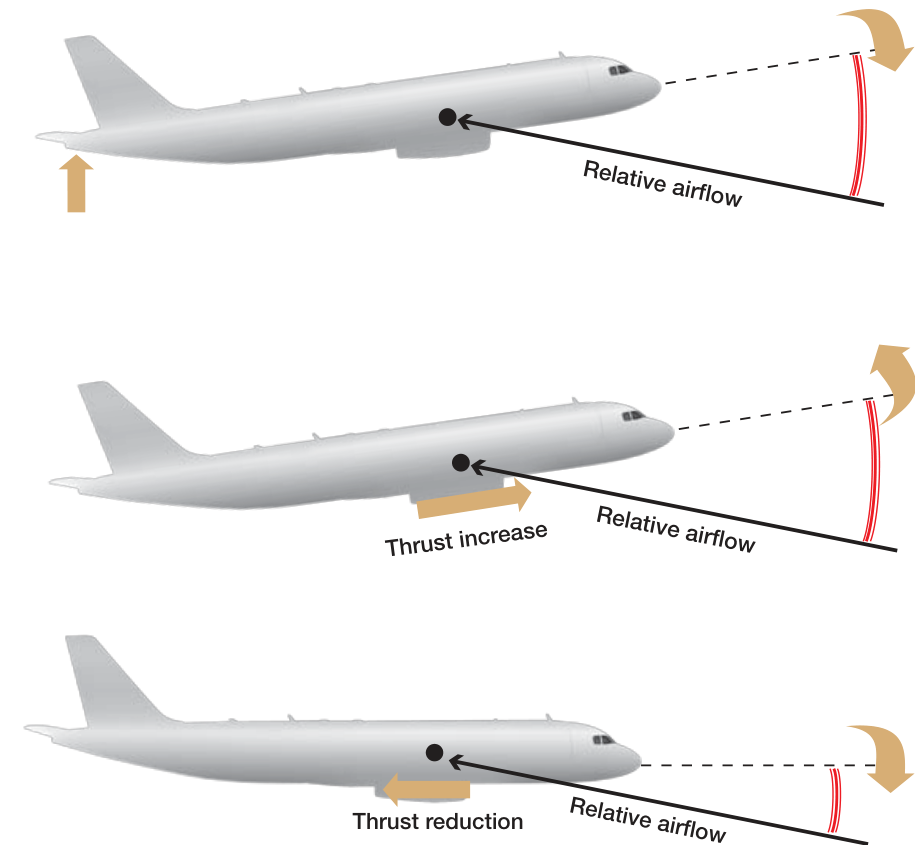
The pitch control is a direct AoA command (fig. 3).
The AoA decrease may be obtained indirectly by increasing the speed, but adding thrust in order to increase the speed leads to an initial adverse longitudinal effect, which trends to increase further the AoA (fig. 4).
It is important to know that if such a thrust increase was applied when the aircraft is already stalled, the longitudinal effect would bring the aircraft further into the stall, to a situation possibly unrecoverable.
Conversely, the first effect of reducing the thrust is to reduce the AoA (fig. 5).
Figure 3 Pitch control is a direct AoA command
Figure 4 Adding thrust leads to an increase in AoA
Figure 5 Reducing thrust leads to a decrease in AoA
FIRST: The AoA MUST BE REDUCED. If anything, release the back pressure on stick or column and apply a nose down pitch input until out of stall (no longer have stall indications). In certain cases, an action in the same direction on the longitudinal trim may be needed. Don’t forget that thrust has an adverse effect on AoA for aircraft with engines below the wings.
SECOND: When the stall clues have disappeared, increase the speed if needed. Progressively increase the thrust with care, due to the thrust pitch effect.
In practice, in straight flight without stick input, the first reaction when the SW is triggered should be
to gently push on the stick so as to decrease the pitch attitude by about two or three degrees in order to decrease the AoA below the AoA SW.
During manoeuvres, the reduction of the AoA is generally obtained just by releasing the backpressure on the stick; applying a progressive forward stick inputs ensures a quicker reduction of the AoA.
If the SW situation occurs with high thrust, in addition to the stick reaction, reducing the thrust may be necessary.
10. Procedure
Section titled “10. Procedure”As an answer to the stall situation, a working group gathering the FAA and the main aircraft manufacturers, including Airbus, ATR, Boeing, Bombardier and Embraer, have established a new generic procedure titled “ Stall Warning or Aerodynamic Stall Recovery Procedure ” applicable to all aircraft types.
This generic procedure will be published as an annex to the FAA AC 120.
This new procedure has been established in the following spirit:
q One single procedure to cover ALL stall conditions
q Get rid of TOGA as first action
- q Focus on AoA reduction.
Safety
Generic Stall warning or Aerodynamic Stall Recovery Procedure
Section titled “Generic Stall warning or Aerodynamic Stall Recovery Procedure”Immediately do the following at the first indication of stall (buffet, stick shaker, stick pusher, or aural or visual indication) during any flight phases except at lift off .
1. Autopilot and autothrottle …Disconnect
Section titled “1. Autopilot and autothrottle …Disconnect”Rationale: While maintaining the attitude of the aircraft, disconnect the autopilot and autothrottle. Ensure the pitch attitude does not change adversely when disconnecting the autopilot. This may be very important in mis-trim situations. Manual control is essential to recovery in all situations. Leaving one or the other connected may result in in-advertent changes or adjustments that may not be easily recognized or appropriate, especially during high workload situations.
2. a) Nose down pitch control… Apply until out of stall (no longer have stall indications)
Section titled “2. a) Nose down pitch control… Apply until out of stall (no longer have stall indications)”b) Nose down pitch trim … As needed
Section titled “b) Nose down pitch trim … As needed”Revision of Airbus’ Operational documentation
Section titled “Revision of Airbus’ Operational documentation”airbus has updated its operational documentation in order to reflect the changes introduced by the new generic stall recovery procedures. in order to allow simultaneous fleetwide introduction, the procedure was provided via Temporary Revision.
This information was provided together with an FCTM update advance copy and FoT 999.0044/10, on May 12, 2010.
a300 FCoM volume 8Ge Temporary Revision number 219-1 a300 FCoM volume 8pW Temporary Revision number 051-1 a300 QRH Temporary Revision number 076-1
A300FFcc:
Section titled “A300FFcc:”a300FFCC FCoM volume 2 Temporary Revision number 052-1 a300FFCC QRH Temporary Revision number 025-1
A300-600/A300-600F:
Section titled “A300-600/A300-600F:”a300-600/a300-600F FCoM volume 2 Temporary Revision number 002-2 a300-600/a300-600F QRH Temporary Revision number 217-1
a310 FCoM volume 2 Temporary Revision number 004-2 a310 QRH Temporary Revision number 224-1
Rationale: a) The priority is reducing the angle of attack.
There have been numerous situations where flight crews did not prioritize this and instead prioritized power and maintaining altitude. This will also address autopilot induced full back trim.
b) If the control column does not provide the needed response, stabilizer trim may be necessary. However, excessive use of trim can aggravate the condition, or may result in loss of control or in high structural loads.
3. Bank …Wings Level
Section titled “3. Bank …Wings Level”Rationale: This orientates the lift vector for recovery.
A318/319/320/321:
Section titled “A318/319/320/321:”FCoM volume 3 Temporary Revision number 323-1 QRH Temporary Revision number 727-1
FCoM volume 3 Temporary Revision number 552-1 QRH Temporary Revision number 353-1
FCoM volume 3 Temporary Revision number 512-1 (a340-200/-300) FCoM volume 3 Temporary Revision number 513-1 (a340-500/-600) QRH Temporary Revision number 369-1
FCoM procedures / non-eCaM abnormal and emergency procedures / operating Techniques
4. Thrust …As Needed
Section titled “4. Thrust …As Needed”- Rationale: During a stall recovery, many times maximum power is not needed. When stalling, the thrust can be at idle or at high thrust, typically at high altitude. Therefore, the thrust is to be adjusted accordingly during the recovery. For engines installed below the wing, applying maximum thrust can create a strong nose up pitching moment, if speed is low. For aircraft with engines mounted above the wings, thrust application creates a helpful pitch down tendency. For propeller driven aircraft, thrust application energizes the air flow around the wing, assisting in stall recovery.
5. Speed Brakes …Retract
Section titled “5. Speed Brakes …Retract”Rationale: This will improve lift and stall margin.
6. Bank …Wings Level
Section titled “6. Bank …Wings Level”Rationale: Apply gentle action for recovery to avoid secondary stalls then return to desired flight path.
Safety
副总裁首席试飞员
全球商用机队近来发生了多起失速事件,这表明该现象可能未能在航空界得到正确的理解与处理。为此,各主要飞机制造商已共同商定修改失速程序并加强培训。由局方和飞机制造商组成的工作组将发布统一程序和适当培训的建议。本文旨在回顾与失速相关的气动现象,以及近期发布的新程序。
机翼产生的升力等于 1/2ρSV²Cl。
其中:
ρ = 空气密度 S = 机翼参考面积 V = 真空速 Cl = 机翼升力系数
对于给定的构型、给定的速度和给定的高度,升力仅与迎角相关。
迎角
安全
3. 失速现象
Section titled “3. 失速现象”曲线的线性部分对应于机翼周围稳定的气流。
4. 关于失速需要记住的几个重要事项
Section titled “4. 关于失速需要记住的几个重要事项”q 对于给定的构型和在给定的马赫数下,机翼在称为失速迎角(AoA STALL)的给定迎角下失速。当马赫数增加时,AoA STALL 的值减小。
q 当接近 AoA STALL 时,机翼产生一定程度的抖振,在高马赫数时该抖振强度趋于增加。
q 当迎角增加并接近 AoA STALL 时,在某些情况下,由于沿翼展方向升力分布的变化,会出现自动上仰现象。自动上仰的影响是飞机自身有增大迎角的趋势,而无需在升降舵上进一步输入。一般而言,对于给定的机翼,此现象发生在较低的迎角下,且马赫数越高越明显。
q 对抗自动上仰的唯一方法是施加低头升降舵输入。
q 当机翼上的气动流发生失速后,恢复正常流态的唯一可能方法是降低迎角至低于 AoA STALL 的值。
q 失速仅是迎角问题。它不是直接的速度问题。
了解最后两个特性至关重要,因为它们决定了摆脱失速的唯一可能方法。
5. FBW 飞机在正常法则(NORMAL LAW)下对失速的保护
Section titled “5. FBW 飞机在正常法则(NORMAL LAW)下对失速的保护”在正常法则下,电传飞行控制系统(EFCS)考虑实际迎角并将其限制在低于 AoA STALL 的值(AoA MAX)(图 1)。
图 1 在正常法则下,EFCS 将迎角限制在低于 AoA STALL 的值
EFCS 调整 AoA MAX 限制以考虑随马赫数增加而导致的 AoA STALL 减小。
在 FBW 飞机上,特定的故障(特别是传感器或计算机故障)会导致飞行控制无法确保对失速的保护。根据故障性质,飞机将进入备用法则或直接法则。
同样,对于给定的马赫数和给定的迎角,EFCS 会考虑该马赫数和迎角下机翼的自然自动上仰效应,并在升降舵上施加适当的纵向预指令以对抗其影响。
在上述两种情况下,飞行员必须依靠音响失速警告(SW)或强烈的抖振来确保对失速的保护,如遇到强烈抖振,则是即将失速状态的指示。
常规飞机始终处于直接法则,在失速保护方面,与处于直接法则的 FBW 飞机处于相同状况。
6. FBW 和常规飞机在备用法则和直接法则下对失速的保护
Section titled “6. FBW 和常规飞机在备用法则和直接法则下对失速的保护”在备用法则和直接法则下,音响失速警告在称为失速警告迎角(AoA SW)的值触发,该值低于 AoA STALL**(图 2)**。
触发失速警告仅意味着迎角已达到定义上低于 AoA STALL 的 AoA SW,此时需要减小迎角。
在 FBW 飞机上,特定的故障(特别是传感器或计算机故障)会导致飞行控制无法确保对失速的保护。根据故障性质,它们将进入备用法则或直接法则。
了解失速警告的含义后,没有理由对其触发反应过度。飞行员必须绝对清楚,音响失速警告的开始并不意味着飞机正在失速,没有理由惊慌,只需要温和而平稳的反应即可。
AoA SW 的值取决于马赫数。在高马赫数时,AoA SW 被设定在这样的值:警告在即将遇到自动上仰效应和抖振之前触发。
如果用于设定 AoA SW 的空速信息有误,失速警告将不会在正确的迎角下响起。在这种情况下,如上所述,即将接近失速的线索是强烈的抖振。在本文档的其余部分,对于这种情况,“SW”应理解为“强烈的抖振”。
7. 高马赫数高空巡航时与失速警告的距离余度
Section titled “7. 高马赫数高空巡航时与失速警告的距离余度”通常,在高马赫数、高空巡航时,即在或接近最大推荐飞行高度层(FL)处,实际巡航迎角与失速迎角之间的余度很小。因此,在备用法则或直接法则下,与迎角失速警告(AoA SW)的余度更小。
遭遇颠簸会导致迎角快速变化。因此,当飞机在接近最大推荐高度飞行时,颠簸很可能引发迎角峰值暂时超过迎角失速警告值,导致间歇性语音警告触发。
同样,在类似高空巡航条件下,特别是在颠簸速度下,如果飞行员做出大幅度的纵向输入,很可能达到迎角失速警告值。
基于这些原因,在备用法则或直接法则下飞行时,建议巡航高度层低于最大推荐值。应当考虑留出 4,000 ft 的余度。如此,在相同巡航马赫数下,指示空速(IAS)将更高,迎角将更低,因此迎角相对于迎角失速警告的余度将显著增加。
此外,由于在缩小的垂直间隔最低标准(RVSM)空域内必须使用自动驾驶仪(AP),任何导致失去自动驾驶仪的故障都要求下降至 RVSM 垂直限制以下。
8. 失速警告与失速
Section titled “8. 失速警告与失速”传统的失速训练方法是受控减速至失速警告,然后加油门恢复并尽量减少高度损失。
经验表明,如果飞行员坚持保持高度,此程序可能导致失速。
在 A340-600 上实际飞行和模拟机良好再现的一个实用练习是:在低空平飞减速至慢车状态,直至触发失速警告,然后向前推推力手柄至 TOGA,同时继续向后拉杆以保持高度。
该机动动作的结果如下:
q 在光洁构型下,即使飞行员在收到失速警告后立即响应下达 TOGA 指令,当推力实际达到 TOGA 时(20 秒后),飞机已经失速。
q 在进近构型下,如果飞行员立即响应失速警告,飞机达到失速迎角减 2° 的状态。
q 在进近构型下,如果飞行员延迟 2 秒响应失速警告,飞机将失速。
这表明,在失速警告时增加推力以提高速度从而降低迎角,在许多情况下并非正确的反应(这将在下一章详述)。
此外,需要注意的是,在高空,增加推力对速度提升的效果非常缓慢,因此上述针对光洁构型的现象会更加明显。
显然,如果此程序在飞机已经进入气动失速后才应用,将导致潜在不可恢复的状况(见下一章)。
即使在某些条件下,如果飞行员对失速警告立即做出反应,或者不太坚持保持高度,传统的程序可能有效,但主要问题在于,一旦越过失速警告阈值,就很难判断飞机是仍在接近失速还是已经失速。接近失速与实际失速之间的区别并不容易判断,即使对专家而言也是如此。
多起事故发生在飞机实际已经失速的情况下,却应用了“接近失速”程序。
基于这些原因,飞行员对“接近失速”和“失速”两种情况应采取相同的反应方式。
9. 如何反应
Section titled “9. 如何反应”最重要的是必须减小迎角。这通过直接减小俯仰指令来实现。
俯仰控制是直接的迎角指令**(图 3)**。
迎角减小可以间接通过增加速度来实现,但增加推力以提高速度会产生初始的不利纵向效应,趋势是进一步增大迎角**(图 4)**。
重要的是要了解,如果当飞机已经失速时应用此类推力增加,纵向效应会使飞机进一步陷入失速,可能进入无法恢复的状态。
相反,减小推力的首要效应是减小迎角**(图 5)**。
图 3 俯仰控制是直接的迎角指令
图 4 增加推力导致迎角增大
图 5 减小推力导致迎角减小
第一:必须减小迎角。如果有任何动作,松开杆或操纵杆上的拉杆力,或向前推杆直至脱离失速(不再有失速指示)。在某些情况下,可能需要在同一方向上操作纵向配平。别忘了,对于发动机安装在机翼下方的飞机,推力对迎角有不利影响。
第二:当失速迹象消失后,必要时增加速度。由于推力-俯仰效应,谨慎地逐渐增加推力。
实际上,在无杆输入的直线飞行中,触发失速警告时的第一反应应该是轻轻向前推杆,使俯仰姿态减小约两三度,以将迎角降低至迎角失速警告值以下。
在机动飞行中,迎角的减小通常仅通过松开杆上的拉杆力即可实现;实施渐进式的前推杆输入可确保更快地减小迎角。
如果在高推力状态下发生失速警告,除杆的响应外,可能还需要减小推力。
10. 程序
Section titled “10. 程序”作为对失速情况的回应,FAA与主要飞机制造商(包括空客、ATR、波音、庞巴迪和巴西航空工业公司)组成的工作组,制定了一项新的通用程序,标题为”失速警告或气动失速改出程序”,适用于所有机型。
该通用程序将作为FAA AC 120的附件发布。
新程序的制定遵循以下原则:
- 一个程序涵盖所有失速情况
- 取消将TOGA作为首要动作
- 重点在于减小迎角
安全
通用失速警告或气动失速改出程序
Section titled “通用失速警告或气动失速改出程序”在飞行各阶段出现失速征候时(抖振、杆力抖杆器、推杆器、音频或目视指示),立即执行以下动作起飞离地除外。
1. 自动驾驶和自动油门 … 断开
Section titled “1. 自动驾驶和自动油门 … 断开”原理: 保持飞机姿态,断开自动驾驶和自动油门。确保断开自动驾驶时俯仰姿态不会向不利方向变化。这在配平不当的情况下可能非常重要。在所有情况下,人工控制是改出的关键。保留任一系统连接可能导致难以识别或不适合的意外变化或调整,特别是在高工作负荷情况下。
2. a) 推杆控制 …… 持续使用直至退出失速(不再有失速征候)
Section titled “2. a) 推杆控制 …… 持续使用直至退出失速(不再有失速征候)”b) 向下俯仰配平 … 根据需要
空客运营文件修订
Section titled “空客运营文件修订”空客已更新其运营文件,以反映新通用失速改出程序带来的变更。为实现机队同步推广,该程序通过临时修订(Temporary Revision)方式提供。
该信息于2010年5月12日随FCTM更新预印本和FoT 999.0044/10一同发布。
A300 FCOM 第8卷Ge 临时修订号 219-1 A300 FCOM 第8卷pW 临时修订号 051-1 A300 QRH 临时修订号 076-1
A300FFCC:
Section titled “A300FFCC:”A300FFCC FCOM 第2卷 临时修订号 052-1 A300FFCC QRH 临时修订号 025-1
A300-600/A300-600F:
Section titled “A300-600/A300-600F:”A300-600/A300-600F FCOM 第2卷 临时修订号 002-2 A300-600/A300-600F QRH 临时修订号 217-1
A310 FCOM 第2卷 临时修订号 004-2 A310 QRH 临时修订号 224-1
原理: a) 首要任务是减小迎角。
多次出现飞行员未能优先处理此问题,而是优先考虑推力和保持高度的情况。这也适用于自动驾驶引起的满后配平情况。
b) 如果驾驶杆未能提供所需响应,可能需要使用安定面配平。然而,过度使用配平可能使情况恶化,或导致失去控制或高结构载荷。
3. 坡度 … 改平
Section titled “3. 坡度 … 改平”原理: 这将使升力矢量朝向改出方向。
A318/319/320/321:
Section titled “A318/319/320/321:”FCOM 第3卷 临时修订号 323-1 QRH 临时修订号 727-1
FCOM 第3卷 临时修订号 552-1 QRH 临时修订号 353-1
FCOM 第3卷 临时修订号 512-1(A340-200/-300)FCOM 第3卷 临时修订号 513-1(A340-500/-600)QRH 临时修订号 369-1
FCOM 程序 / 非ECAM 不正常和紧急程序 / 操作技术
4. 推力 … 根据需要
Section titled “4. 推力 … 根据需要”原理: 在失速改出过程中,多数时候不需要最大推力。失速时推力可能处于慢车状态或高推力状态,通常在高空。因此,在改出过程中应相应调整推力。对于安装在机翼下方的发动机,在低速时使用最大推力可能产生强烈的上仰力矩。对于机翼上方安装发动机的飞机,推力增加会产生有益的下俯趋势。对于螺旋桨驱动的飞机,推力增加会使机翼周围的气流获得能量,协助失速改出。
5. 减速板 … 收上
Section titled “5. 减速板 … 收上”原理: 这将改善升力和失速裕度。
6. 坡度 … 改平
Section titled “6. 坡度 … 改平”原理: 柔和动作以完成改出,避免二次失速,然后恢复所需航迹。
安全