Landing with Nosewheels at 90 degrees
Source: Airbus Safety First URL: https://safetyfirst.airbus.com/landing-with-nosewheels-at-90-degrees/ Published: 2022-01-13 Category: Flight Ops, Ground Ops, Maintenance PDF: Original PDF

degrees
Section titled “degrees”In the past few years, several events occurred involving landing with the Nose Landing Gear (NLG) wheels turned to 90° from the aircraft centerline.
The investigations identified the root causes, which were for each event. actions were different Mitigating developed and deployed accordingly.
This article describes the outcomes of investigations into several events of aircraft landing with NLG wheels at 90° and shows why they are not related. It also recalls the corrective actions and existing operational recommendations to prevent any recurrence.
This article is also available on safetyfrst.airbus.com and on the Safety first app for iOS and Android devices.
CASE 1: NLG COMPONENT STRUCTURAL FAILURE
Section titled “CASE 1: NLG COMPONENT STRUCTURAL FAILURE”Event description
Section titled “Event description”In 2005, during the takeoff of an A320 family aircraft, a few seconds after landing gear retraction was commanded, the L/G SHOCK ABSORBER FAULT ECAM alert was triggered followed by the WHEEL N/W STRG FAULT ECAM alert. As a result, the flight crew was not able to retract the Nose Landing Gear (NLG). They suspected an issue with the NLG, and so they performed a flyby allowing ATC to observe the situation of the NLG. ATC confirmed to the crew that the nosewheels of the aircraft were turned at 90°. The flight crew decided to divert to an airport with a longer runway. The aircraft remained airborne to use fuel before landing. The aircraft touched down on the runway and the flight crew delayed the nosewheel touchdown by not using ground spoilers, autobrake, or applying reverse thrust. The nosewheel tires burst shortly after touchdown and the wheels on the runway generated a lot of sparks. The aircraft remained on the runway centerline. After the aircraft stopped, the flight crew deemed that it was not necessary to perform an emergency evacuation and all passengers disembarked the aircraft using stairs.
Event analysis
Section titled “Event analysis”There are two lugs on the upper support of the NLG shock absorber that prevent it from rotating freely in its housing (fig.1). The investigation showed that both lugs had sheared off and this caused the NLG to lose its centered position. This condition was immediately detected by the Landing Gear Control Interface Unit (LGCIU), which triggered the L/G SHOCK ABSORBER FAULT ECAM alert. The Braking & Steering Control Unit (BSCU) also detected the rotation and deactivated the Nose Wheel Steering (NWS) system. This triggered the WHEEL N/W STRG FAULT ECAM alert. The absence of nosewheel steering, combined with the broken anti-rotation lugs and the aerodynamic loads, enabled the NLG wheels to turn at 90° from the centerline.
It was discovered that the BSCU standard fitted to the aircraft at the time performed a greater number of steering movements during the preland checks compared to previous BSCU standards. This caused more fatigue to the 2 lugs on the upper support of the shock absorber. The internal pressure of the shock absorber was also found to be too high due to incorrect servicing during maintenance. This resulted in additional friction being applied to the NLG self-centering mechanical device, which is connected to the upper support, and eventually caused the 2 lugs to shear.
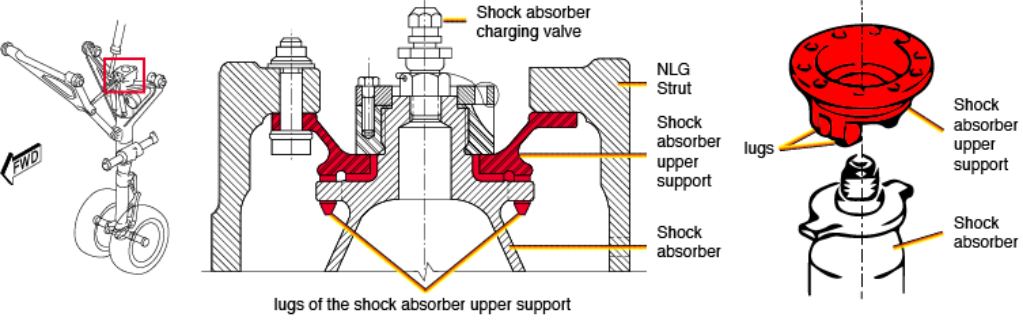
(fig.1) Position of the 2 lugs on the upper support of the NLG shock absorber
Prevention
Section titled “Prevention”New BSCU Standard
Section titled “New BSCU Standard”BSCU Standard L4.9B was developed with a reduced number of steering movements during the preland tests. The retrofit of this new standard is complete. The BSCU standard responsible for the lug failure is no longer in service.
The temporary solution published in OEB 175/176 is no longer applicable for any of the A320 family aircraft now that the BSCU retrofit campaign is complete.
In the case of L/G SHOCK ABSORBER FAULT and WHEEL N/W STRG FAULT ECAM alerts, no reset is authorized in flight on any A320 family aircraft.
Correct shock absorber servicing
Section titled “Correct shock absorber servicing”Before this event, it was possible to perform servicing of the shock absorber with weight on wheels but it was difficult to service the correct pressure. This led to a tendency to overpressure the shock absorber and caused increased fatigue on its upper support. NLG shock absorber servicing procedures were improved following the event to allow for easier servicing with weight off wheels using jacks on the NLG. If the shock absorber can only be serviced with weight on wheels, then the servicing task must be done again, and with weight off wheels, within the next 7 days.
AMM procedures must be followed when servicing the NLG shock absorber. In particular, the jacks for the NLG should be used to ensure servicing the optimum pressure for the shock absorbers. This will minimize the risk of overpressure, which can cause structural fatigue of NLG components.
Reinforced upper support of the NLG shock absorber
Section titled “Reinforced upper support of the NLG shock absorber”Following another event that led to a landing with the NLG rotated to 90°, which had been caused by installation errors during maintenance, a new foolproof design of the NLG shock absorber was introduced (fig.2). This design prevents any lug rupture on the upper support of the shock absorber, and it is installed on all A320 family aircraft in production since 2004 and SB A320-32-1277 (Mod 34160) is available for retrofit.
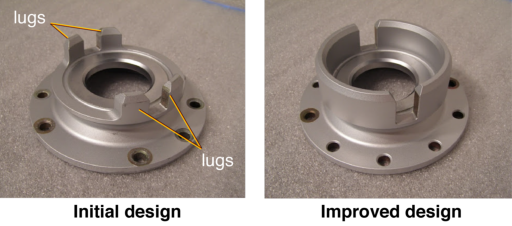
(fig.2) Differences between the initial design and improved design for the reinforced upper support of the NLG shock absorber
CASE 2: BSCU FAILURE
Section titled “CASE 2: BSCU FAILURE”Event description
Section titled “Event description”| Event description | |
|---|---|
| During cruise, the fight crew pressed the AUTOBRAKE MAX pushbuttons. | They |
| also set the A/SKID & N/W STRG switch to OFF and back to ON, which was not | |
| AUTOBRAKE MAX ON light. | |
| On approach, the AUTOBRAKE MAX ON light remained on after the landing gear | |
| was extended and the L/G SHOCK ABSORBER FAULT ECAM alert was triggered. | |
| the centerline. | |
| Event analysis | |
| It was found that the nosewheels were able to rotate up to 90° because of a | |
| hardware failure on the BSCU. The BSCU remained active but it could not be | |
| controlled and its outputs became frozen. This caused the BRAKES SYS 2 FAULT | |
| ECAM alert and malfunction of the AUTOBRAKE MAX ON light. |
Prevention
Section titled “Prevention”An updated design was introduced to improve the robustness of the BSCU and to allow a switch-over to the passive BSCU system when the outputs of the active BSCU system become frozen (i.e. switch from BSCU 1 to BSCU 2 or vice versa).
The retrofit of the updated BSCU standard was mandatory and is now complete. There are no reported events with a similar root cause after the affected BSCU standards were replaced.
CASE 3: COMBINATION OF INDEPENDENT FAILURES
Section titled “CASE 3: COMBINATION OF INDEPENDENT FAILURES”Event description
Section titled “Event description”In 2011, during cruise on an A320 family aircraft, the NAV ILS 1 FAULT ECAM alert was triggered followed by the WHEEL N/W STRG FAULT ECAM alert. The flight crew then observed that the Captain’s PFD went blank for a few seconds.
On approach, the L/G SHOCK ABSORBER FAULT ECAM alert was triggered after extension of the landing gear. The flight crew suspected an NWS issue, so they performed a flyby for ATC to check the position of the NLG wheels. ATC confirmed that the wheels were turned 90° to the aircraft centreline. The flight crew landed the aircraft by delaying NLG touchdown as recommended in the A320 FCOM procedure, which is applicable when both the L/G SHOCK ABSORBER FAULT and WHEEL N/W STRG FAULT ECAM alerts are triggered. The aircraft safely came to a stop and the passengers disembarked using the stairs. There were no injuries and one nosewheel tire was damaged during the event.
Event analysis
Section titled “Event analysis”When the landing gear was extended, no steering control was available because an electrical transient in the power supply to the BSCU 1 caused a loss of steering function. The WHEEL N/W STRG FAULT ECAM alert was triggered. The electrical power transient was due to arcing at a connector on IDG1. Power transients affecting BSCU 1 were already observed on several previous flights.
It was also found that a maintenance task on the NLG was not correctly carried out and this resulted in the hydraulic selector valve jammed in the open position. This would usually be detected in the preland test. However, the flight crew were not able to perform the test due to a fault in the landing gear lever position. This fault was present for several previous flights.
With the selector valve jammed open, there was hydraulic pressure on the nosewheels when the nose landing gear extended. The nosewheels began to turn due to the loss of the steering function. The L/G SHOCK ABSORBER FAULT ECAM alert was triggered because the nosewheels were not centered. BSCU System 1 switched to System 2, but the NWS system remained inactive as it detected that the nosewheels were not centered . The nosewheels continued to rotate to 90°.
Prevention Fault classification
In the case of a fault of the landing gear lever position, the BRAKES SYS 1(2) FAULT ECAM alert is now triggered. This improvement is available from the BSCU Standard L4.10. It is installed on all A320 family aircraft in production since 2016 and SB A320-32-1432 is available for retrofit. BSCU standard Since the introduction of BSCU Standard L4.9B, the BSCU now centers the NLG wheels in case no preland tests are performed. The retrofit of this new standard is completed. “Display Unit failure” QRH procedure
In this event, the power transient that affected the BSCU was not sufficient to switch to the BSCU 2 sooner, which would have prevented the NLG from turning to 90°. If the PFD flickers with no ELEC GEN 1(2) FAULT, the flight crew should apply the “Display Unit Failure” QRH abnormal procedure. If the Captain’s PFD is affected, GEN 1 should be set to OFF, and if the First Officer’s PFD is affected, GEN 2 should be set to OFF. The application of this procedure forces the BSCU to switch from BSCU 1(2) to BSCU 2(1).
CASE 4: WATER INGRESS IN NLG STEERING SENSORS
Section titled “CASE 4: WATER INGRESS IN NLG STEERING SENSORS”Event description
Section titled “Event description”In January 2021, during the approach of an A320 family aircraft, the L/G SHOCK ABSORBER FAULT and WHEEL N/W STRG FAULT ECAM alerts were triggered after extension of the landing gear. The flight crew set the A/SKID & N/W STRG switch to OFF and back to ON again even though it was not requested in any ECAM/QRH/OEB procedure. The flight crew landed the aircraft and delayed the NLG touchdown as long as possible, as recommended in the A320 FCOM procedure applicable when both the L/G SHOCK ABSORBER FAULT and WHEEL N/W STRG FAULT ECAM alerts are triggered. After NLG touchdown, both NLG tires burst and the aircraft stopped on the runway. There were no injuries. The NLG wheels were turned to 90° from the aircraft centerline and skid marks of more than 1200 m long were found on the runway (fig.3).
Event analysis
Section titled “Event analysis”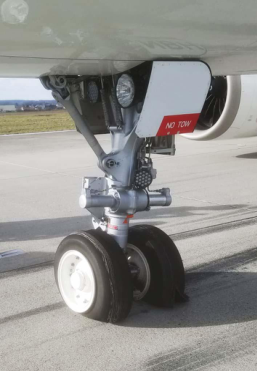
(fig.3) View of the NLG after landing
During inspection of the NLG after the event, water was found in the two Rotary Variable Differential Transformers (RVDTs). These two sensors provide the angle of the NWS position to the BSCU. Three days before the event, the aircraft was cleaned during a maintenance C check. The water ingress in the RVDTs most probably happened at this time.
A ferry flight was performed after the C check and cleaning. Analysis of the recorder data showed that one RVDT was blocked during this flight. It is likely that this was due to the water in the RVDT freezing at altitude but was probably unblocked as the ice broke up upon landing. A steering offset resulted from this flight and remained for the next 7 flights.
The steering offset was at almost 2° during taxi-out on the flight when the event occurred. The flight crew kept the aircraft from veering off course and continued with the takeoff.
The L/G SHOCK ABSORBER FAULT and WHEEL N/W STRG FAULT ECAM alerts were triggered when the landing gear extended. The NWS was already at an angle that was too excessive to be corrected by the normal mechanical self-alignment of the wheels.
When the flight crew inappropriately cycled the A/SKID & N/W STRG switch, they reactivated the BSCU and hydraulic pressure was supplied to the steering actuator. During the preland test, the BSCU could not centre the nosewheels because of the faulty sensor and the angle of the NWS position was already too excessive. This resulted in the nosewheels rotating further toward 90° before landing.
Prevention
Section titled “Prevention”Compliance with the AMM/MP tasks for aircraft washing
AMM/MP tasks for NLG washing must be followed (12-21-11 “External Cleaning”, which refers to AMM/MP 32-21-00 “Cleaning of the Nose Landing Gear”). These tasks clearly warn against the use of high-pressure hoses and provide details on protections to be used.
For further information on aircraft washing, an OIT (ref. 999.0042/10) is available on the AirbusWorld portal and the “Aircraft Protection during Washing and Painting” Safety first article was published in January 2014, highlighting the importance of correctly applying the washing and painting procedures, including the washing of NLG.
Operations with a nosewheel steering offset
Section titled “Operations with a nosewheel steering offset”The “Operation with Nosewheel Steering Offset” A320 FCOM supplementary procedure states that the flight crew should not attempt to take off with an offset exceeding 1.5°. The nosewheel steering offset is determined based on the rudder trim input necessary to cancel the tendency for the aircraft to veer on taxi out.
No system resets when not authorized
Section titled “No system resets when not authorized”The flight crew must only perform authorized reset procedures in flight. They are described in the System Reset table of the A320 QRH. If the flight crew performs a reset that is not listed in this table it could lead to unintended and serious incidents.
The flight crew must only attempt authorized resets as per the System Reset table in the A320 QRH/FCOM. Unauthorized resets can have dramatic consequences. More information about authorized system resets is available in the “System Reset: Use with Caution” Safety first article.
CASE 5: 180° TURN WITH NLG INOPERATIVE BEFORE TAKEOFF
Section titled “CASE 5: 180° TURN WITH NLG INOPERATIVE BEFORE TAKEOFF”Event description
Section titled “Event description”In March 2021, an A320 family aircraft was dispatched with the NWS inoperative (MEL item 32-51-01 “Nose Wheel Steering Control System” ). This was due to a failure detected by the BSCU. The WHEEL N/W STRG FAULT ECAM alert was triggered during engine start as expected for the dispatch under the MEL.
The MEL operational procedure states that the flight crew must avoid sharp turns when the NWS is inoperative. Differential braking and asymmetric thrust were used to steer the aircraft during the taxi-out. The flight crew then performed a sharp 180° turn to align the aircraft on the runway contrary to the conditions of the MEL. After liftoff, the L/G SHOCK ABSORBER FAULT ECAM alert was triggered and the landing gear lever was jammed in the DOWN position. The flight crew performed an In-Flight Turn Back (IFTB) and landed the aircraft. The NLG had rotated to 90° and both NLG tires burst (fig.4).
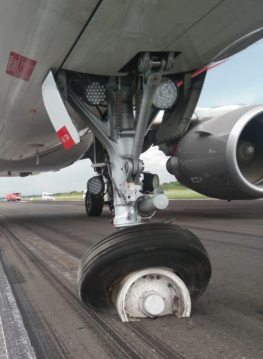
(fig.4) View of the NLG after landing
Event analysis
Section titled “Event analysis”The NLG wheels were in free-to-castor mode (fig.5) because of the inoperative NWS.
Free-to-castor mode
Section titled “Free-to-castor mode”In free-to-castor mode, the NLG wheels will return to 0° after up to 15° of steering due to the self-centering effect offered by the rake angle of the leg. Between 15° and 25°, the wheels will return to 0° but with more difficulty. If the NWS steering angle exceeds 25°, then NLG wheels will rotate toward 90°.
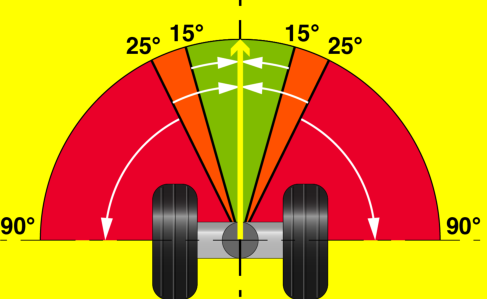
(fig.5) Ability of the NLG wheels to self-center when in free-to-castor mode
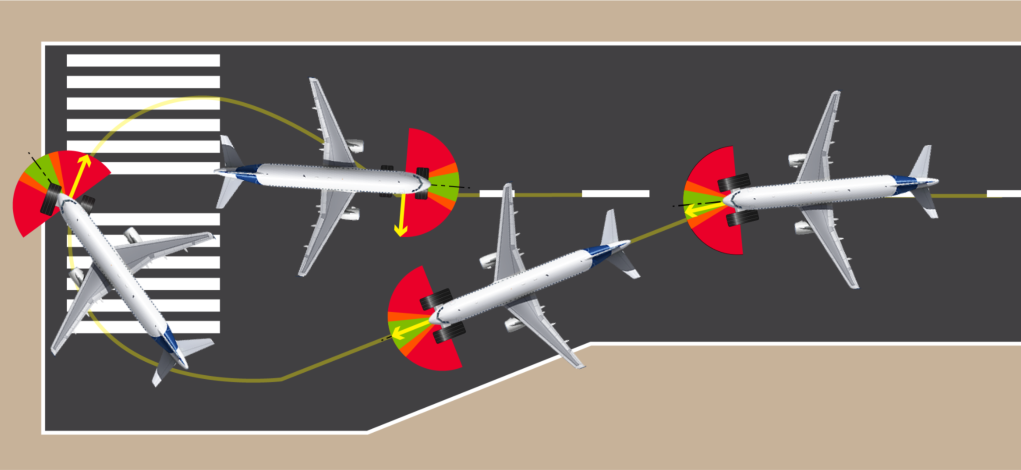
Analysis of recorder data showed the evolution of the NWS angle during the taxi-out, which resulted in a U-turn. The NLG wheels remained below 15° during the first left turn and naturally returned to the centered position. During the right turn, the angle of the wheels was more than 25°, which means they will continue rotation towards the 90° position at the end of the sharp 180° turn. The wheels remained in the 90° position during the takeoff roll and upon landing.
The L/G SHOCK ABSORBER FAULT ECAM alert was triggered at takeoff because the nosewheels were not centred at 0°. This prevented the flight crew from retracting the landing gear.
(fig.6) Illustration of the 180° turn performed during the event
Prevention
Section titled “Prevention”There were very few cases of dispatch with inoperative NWS on A320 family aircraft reported to Airbus over the last 15 years. Dispatching an aircraft with an inoperative NWS requires operational precautions that are explained in the associated operational procedure.
Even if the safety analysis shows that an acceptable level of safety is granted when dispatching the aircraft without an operative NWS system, the operational burden is significant. For that reason, and to avoid such an event occuring again, the Nose Wheel Steering Item 32-51-01 will be removed from the MMEL. It will no longer be possible to dispatch an aircraft with an inoperative NWS system. The updated Master MEL (MMEL) revision will be available in February 2022. An FOT will also be published to further explain the rationale for removing this MMEL item and to provide appropriate mitigation means in the case of inoperative NWS.
It is not possible to dispatch other Airbus aircraft types with an inoperative NLG due to design differences. The only exception is A300/A310 family aircraft. Based on in-service experience and the design of the A300/A310 NLG, the wheels are not likely to turn at 90°. Operational considerations
The A320 FCOM mentions the possibility of having NLG wheels at 90° when both the WHEEL N/W STRG FAULT and L/G SHOCK ABSORBER FAULT ECAM alerts are triggered and recommends delaying the nosewheel touchdown at landing.
Contributors :
Section titled “Contributors :”Hélène CARROLS Incident/Accident Investigator Product Safety
LAURENT COUTURET Braking and Steering Operations Expert Customer Support
Olivier FERRAN Senior Flight Operations Engineer Customer Support
Laurent TIZAC Landing Gear Mechanical Design Expert Design Office
With thanks to Ian GOODWIN from Product Safety and Matthieu BURLOTTE from Customer Support
Section titled “With thanks to Ian GOODWIN from Product Safety and Matthieu BURLOTTE from Customer Support”The events in recent years where A320 family aircraft landed with their NLG wheels turned at 90° have different root causes and are not related. There were no serious injuries or fatalities and the damage caused to the nose gears on these aircraft was repairable.
Actions were taken to prevent recurrence of each event. Updated Brake System Control Unit (BSCU) standards were developed and retrofitted. Improved design for the upper support of the NLG shock absorber was deployed on the A320 family fleet.
Following the maintenance and operational procedures remains the strongest safety net to prevent such occurrence. Compliance with the AMM tasks is essential: for shock absorber servicing to avoid an overpressure condition or for aircraft washing to warn against the use of high-pressure hoses.
It is also important for flight crews to remember that they must only perform the authorized reset procedures in flight, which are described in the System Reset table of the A320 QRH/FCOM. If the flight crew performs a reset that is not listed in this table it could lead to unintended and serious incidents.
The latest action taken is to prevent the dispatch of an aircraft with the NWS system inoperative in order to avoid the risk of having the nosewheels at 90°.
Safety first, 2022. Safety first is published by Airbus S.A.S. 1, rond point Maurice Bellonte - 31707 Blagnac Cedex/France.
Editor: Yannick Malinge, Chief Product Safety Officer.
Editorial team: Guillaume Estragnat, Vanessa Sadi, Gwyneth Duggan, Tim Roach.
- Reference: X00D16031905.
Photos by Airbus.
来源:Airbus Safety First 网址:https://safetyfirst.airbus.com/landing-with-nosewheels-at-90-degrees/ 发布日期:2022-01-13 类别:飞行运营、地面运营、维修 PDF:原始 PDF
在过去的几年中,发生了几起前起落架(NLG)前轮相对于飞机纵轴线偏转 90° 落地的事件。
调查已确定每起事件的根本原因,并据此制定了不同的缓解措施。
本文描述了对前起落架前轮处于 90° 偏转状态落地事件的调查结果,并说明这些事件之间并无关联。同时,本文还回顾了为防止此类事件再次发生而采取的纠正措施和现有运营建议。
本文也可在 safetyfrst.airbus.com 网站以及适用于 iOS 和 Android 设备的安全首要点(Safety first)应用程序上查阅。
案例 1:前起落架组件结构失效
Section titled “案例 1:前起落架组件结构失效”2005 年,一架 A320 系列飞机在起飞过程中,指令收起落架几秒后,触发了 L/G SHOCK ABSORBER FAULT(起落架减震支柱故障)ECAM 警告,随后触发了 WHEEL N/W STRG FAULT(前轮转向故障)ECAM 警告。因此,机组无法收起前起落架(NLG)。他们怀疑前起落架存在问题,于是进行了低空通场,让 ATC 观察前起落架的状况。ATC 向机组确认飞机前轮已偏转 90°。机组决定备降至跑道更长的机场。飞机继续在空中飞行以消耗燃油。飞机在跑道上接地后,机组通过不使用地面扰流板、不使用自动刹车或不施加反推的方式来延迟前轮接地。前轮轮胎在接地后不久爆裂,轮子在跑道上产生大量火花。飞机保持在跑道中心线上滑行。飞机停稳后,机组认为无需进行紧急撤离,所有乘客通过舷梯下机。
前起落架减震支柱上支撑部件有两个凸耳,用于防止其在壳体内自由旋转**(图 1)**。调查表明,两个凸耳均已剪切断裂,导致前起落架失去居中位置。起落架控制接口组件(LGCIU)立即检测到该状况,触发了 L/G SHOCK ABSORBER FAULT ECAM 警告。制动/转向控制组件(BSCU)也检测到旋转并使前轮转向(NWS)系统失效。这触发了 WHEEL N/W STRG FAULT ECAM 警告。前轮转向功能缺失,加上防旋转凸耳断裂以及气动载荷,使得前起落架前轮相对于中心线偏转 90°。
调查发现,当时安装在飞机上的 BSCU 标准比早期 BSCU 标准在着陆前检查期间执行了更多次转向动作。这导致减震支柱上支撑部件的两个凸耳承受了更大的疲劳载荷。此外,减震支柱内部压力也因维修期间充气不当而过高。这增加了作用于与上支撑相连的前起落架自动居中机械装置的摩擦力,最终导致两个凸耳发生剪切断裂。
(图 1) 前起落架减震支柱上支撑两个凸耳的位置
BSCU 新标准
Section titled “BSCU 新标准”BSCU L4.9B 标准已开发完成,该标准在着陆前测试期间减少了转向动作次数。该新标准的改装工作已经完成。导致凸耳失效的 BSCU 标准已停止使用。
鉴于 BSCU 改装工作已完成,OEB 175/176 中发布的临时解决方案不再适用于任何 A320 系列飞机。
对于 L/G SHOCK ABSORBER FAULT 和 WHEEL N/W STRG FAULT ECAM 警告,不允许在任何 A320 系列飞机飞行中进行复位。
减震支柱正确充气
Section titled “减震支柱正确充气”在此事件之前,可以在机轮承重状态下对减震支柱进行充气,但难以充注至正确的压力。这导致倾向于过度充压减震支柱,使其上支撑产生额外疲劳。事件发生后,前起落架减震支柱的充气程序得到改进,允许使用前起落架顶升装置在机轮无承重状态下更方便地进行充气。如果只能在机轮承重状态下对减震支柱进行充气,则必须在 7 天内重新执行充气任务,且需在机轮无承重状态下进行。
进行前起落架减震支柱充气时必须遵循 AMM 程序。尤其是应使用前起落架顶升装置来确保减震支柱充注最佳压力。这将最大限度地降低过度充压的风险,避免前起落架组件结构疲劳。
前起落架(NLG)减震支柱加强型上支撑件
Section titled “前起落架(NLG)减震支柱加强型上支撑件”继另一起因维护期间安装错误导致前起落架以90°角着陆的事件后,引入了一种新型前起落架减震支柱防错设计(图2)。该设计可防止减震支柱上支撑件上的任何铰链接头断裂,自2004年起已安装在所有生产的A320系列飞机上,且SB A320-32-1277(改装件34160)可用于改装。
(图2) 前起落架减震支柱加强型上支撑件初始设计与改进设计对比
案例2:BSCU故障
Section titled “案例2:BSCU故障”| 事件描述 | |
|---|---|
| 巡航期间,飞行机组按压了AUTOBRAKE MAX按钮。 | 他们 |
| 还将A/SKID & N/W STRG电门扳至OFF后再扳回ON,但 | |
| AUTOBRAKE MAX ON指示灯未点亮。 | |
| 进近时,着陆减速板伸出后AUTOBRAKE MAX ON指示灯仍然点亮,且触发L/G SHOCK ABSORBER FAULT ECAM警戒。 | |
| 飞机偏出跑道中心线。 | |
| 事件分析 | |
| 经调查,发现由于BSCU硬件故障,前起落架能够旋转达90°。 | |
| BSCU保持通电状态,但无法控制,其输出信号被冻结。这导致BRAKES SYS 2 FAULT ECAM警戒和AUTOBRAKE MAX ON指示灯故障。 |
引入了改进设计以增强BSCU的稳健性,并允许在BSCU主动系统输出冻结时切换至BSCU被动系统(即从BSCU 1切换至BSCU 2或反之)。
改装至改进版BSCU标准为强制要求,现已完成。在受影响的BSCU标准更换后,未再报告具有相似根本原因的事件。
案例3:独立故障组合
Section titled “案例3:独立故障组合”2011年,在A320系列飞机巡航期间,触发NAV ILS 1 FAULT ECAM警戒,随后触发WHEEL N/W STRG FAULT ECAM警戒。飞行机组观察到机长PFD黑屏数秒。
进近期间,放下着陆减速板后触发L/G SHOCK ABSORBER FAULT ECAM警戒。飞行机组怀疑存在NWS问题,于是进行目视低空通场以供ATC检查前起落架轮位置。ATC确认轮子相对于飞机中心线偏转了90°。飞行机组按照A320 FCOM程序建议延迟前起落架触地的方式着陆,该程序适用于L/G SHOCK ABSORBER FAULT和WHEEL N/W STRG FAULT ECAM警戒同时触发的情况。飞机安全停稳,乘客使用舷梯下机。事件中无人员受伤,一条前起落架轮胎受损。
当着陆减速板伸出时,由于IDG1连接器处的电弧导致BSCU 1电源发生电气瞬变,造成转向功能失效,因此无法进行转向控制。触发WHEEL N/W STRG FAULT ECAM警戒。电气电源瞬变是由于IDG1连接器处的电弧引起的。此前多次飞行中已观察到影响BSCU 1的电源瞬变。
此外发现,前起落架的一项维护任务未正确执行,导致液压选择阀卡阻在打开位置。这通常会在着陆前测试中检测到。然而,由于着陆减速板手柄位置存在故障,飞行机组无法执行该测试。该故障已存在多次飞行。
由于选择阀卡阻在打开位置,当前起落架伸出时前起落架轮上有液压压力。前起落架轮因转向功能失效开始旋转。触发L/G SHOCK ABSORBER FAULT ECAM警戒,因为前起落架轮未居中。BSCU系统1切换至系统2,但NWS系统仍处于不工作状态,因为它检测到前起落架轮未居中。前起落架轮继续旋转至90°。
预防措施 故障分类
对于着陆减速板手柄位置的故障,现在会触发BRAKES SYS 1(2) FAULT ECAM警戒。该改进措施自BSCU标准L4.10起可用,自2016年起已安装在所有生产的A320系列飞机上,且SB A320-32-1432可用于改装。 BSCU标准 自引入BSCU标准L4.9B以来,若未执行着陆前测试,BSCU现在会将前起落架轮居中。该新标准的改装已完成。 “显示器组件故障” QRH程序
在本事件中,影响BSCU的电源瞬变不足以使系统更早切换至BSCU 2,而这本可防止前起落架转向90°。如果PFD闪烁但无ELEC GEN 1(2) FAULT,飞行机组应执行“显示器组件故障”QRH非正常程序。如果机长PFD受影响,应将GEN 1设置为OFF;如果副驾驶PFD受影响,应将GEN 2设置为OFF。执行该程序将强制BSCU从BSCU 1(2)切换至BSCU 2(1)。
案例 4:前起落架转向传感器进水
Section titled “案例 4:前起落架转向传感器进水”2021年1月,一架A320系列飞机在进近过程中,前起落架放下后触发了起落架减震支柱故障(L/G SHOCK ABSORBER FAULT)和轮载前轮转向故障(WHEEL N/W STRG FAULT)ECAM警告。尽管ECAM/QRH/OEB程序中并未要求,机组仍将防滞/前轮转向(A/SKID & N/W STRG)电门关闭后又重新打开。机组按照A320 FCOM程序(当起落架减震支柱故障和轮载前轮转向故障ECAM警告同时触发时)的建议,尽可能推迟前起落架接地。接地后,两个前起落架轮胎爆胎,飞机停在跑道上。事件中无人员受伤。前起落架机轮相对于飞机纵轴偏转了90°,跑道上发现了超过1200米长的轮胎痕迹**(图3)**。
(图3) 着陆后前起落架状态
事件后对前起落架进行检查时,在两个旋转可变差动变压器(RVDT)中发现了水。这两个传感器向刹车转向控制组件(BSCU)提供前轮转向(NWS)位置角度。事件发生前三天,飞机在维修C检期间进行了清洗。水进入RVDT很可能是在此期间发生的。
C检和清洗后执行了一次调机飞行。记录器数据分析显示,一个RVDT在此次飞行中被卡阻。这可能是由于RVDT中的水在高空结冰所致,但着陆时冰层破裂可能已使其恢复正常。此次飞行后产生了约2°的转向偏差,并在随后7个航班中持续存在。
在发生事件的航班滑出期间,转向偏差几乎达到2°。机组修正了飞机偏出航迹的情况并继续起飞。
前起落架放下时,触发起落架减震支柱故障和轮载前轮转向故障ECAM警告。前轮转向已处于过大角度,轮子的正常机械自动对正功能已无法纠正。
机组不当地循环操作了防滞/前轮转向电门,重新激活了BSCU并向转向作动筒提供了液压压力。在落地前测试期间,由于传感器故障以及前轮转向位置角度已过大,BSCU无法将前轮对中。这导致前轮在着陆前进一步旋转至90°。
遵守AMM/MP飞机清洗作业要求
必须遵循前起落架清洗的AMM/MP作业要求(12-21-11“外部清洗”,其中引用了AMM/MP 32-21-00“前起落架清洗”)。这些作业明确警告不得使用高压水管,并提供了应采取的保护措施详情。
有关飞机清洗的更多信息,可在AirbusWorld门户查阅OIT(参考号999.0042/10),并可参阅2014年1月发布的《飞机清洗和喷涂过程中的保护》Safety first文章,该文强调了正确执行清洗和喷涂程序(包括前起落架清洗)的重要性。
前轮转向偏差运行
Section titled “前轮转向偏差运行”《前轮转向偏差运行》A320 FCOM补充程序指出,当前轮转向偏差超过1.5°时,机组不应尝试起飞。前轮转向偏差是根据在滑出时抵消飞机偏航趋势所需的方向舵配平输入来确定的。
未经授权不得进行系统复位
Section titled “未经授权不得进行系统复位”机组只能在飞行中执行经授权的复位程序。这些程序在A320 QRH的系统复位表中有所描述。如果机组执行了该表中未列出的复位操作,可能导致意外和严重的事件。
机组必须仅按照A320 QRH/FCOM系统复位表执行经授权的复位。未经授权的复位可能造成严重后果。更多关于经授权系统复位的信息,请参阅《系统复位:谨慎使用》Safety first文章。
案例 5:起飞前前起落架失效状态下进行180°转弯
Section titled “案例 5:起飞前前起落架失效状态下进行180°转弯”2021年3月,一架A320系列飞机以前轮转向(NWS)失效(MEL项目32-51-01“前轮转向控制系统”)放行。这是由于BSCU检测到故障。在发动机启动期间,按照MEL放行预期触发了轮载前轮转向故障(WHEEL N/W STRG FAULT)ECAM警告。
MEL操作程序规定,当前轮转向失效时,机组必须避免急转弯。在滑出期间,使用差动刹车和不对称推力来操纵飞机方向。随后,机组在跑道上进行了一个急转弯180°调头,使飞机对准跑道,这与MEL的条件要求相反。起飞后,触发了起落架减震支柱故障(L/G SHOCK ABSORBER FAULT)ECAM警告,且前起落架操纵杆卡阻在DOWN位。机组执行了飞行中返航(IFTB)并着陆。前起落架已旋转至90°,两个前起落架轮胎爆胎**(图4)**。
(图4) 着陆后前起落架状态
由于前轮转向失效,前起落架机轮处于自由转向模式**(图5)**。
自由转向模式
Section titled “自由转向模式”在自由转向模式下,由于前起落架支杆角度提供的自对中效果,前起落架轮子在最多15°转向范围内会恢复到0°。在15°至25°之间,轮子虽能恢复到0°,但难度更大。如果前轮转向角度超过25°,则前起落架轮子将转向90°。
(图5) 前起落架轮子在自由转向模式下自对中能力
对记录器数据的分析显示了在滑行过程中前轮转向角度的变化,其中包括一次180°转弯。前起落架轮子在第一次左转弯时保持在15°以下,自然恢复到中立位置。在右转弯过程中,轮子角度超过25°,这意味着在急转弯结束时轮子将继续向90°位置旋转。轮子在起飞滑跑和着陆时保持在90°位置。
由于前轮未处于0°中立位置,起飞时触发了 L/G SHOCK ABSORBER FAULT ECAM 警戒。这导致机组无法收上前起落架。
(图6) 事件中执行的180°转弯示意图
在过去的15年里,空客收到关于A320系列飞机前轮转向系统不工作而放行的案例很少。带有前轮转向系统不工作的放行需要操作注意事项,这些在相关的操作程序中有说明。
尽管安全分析表明,在前轮转向系统不工作时放行飞机可以保证可接受的安全水平,但操作负担相当大。基于此原因,并为避免此类事件再次发生,前轮转向项目 32-51-01 将从 MMEL 中移除。未来将不可能在前轮转向系统不工作时放行飞机。更新的 MMEL 修订版将于2022年2月发布。此外还将发布一份 FOT,进一步解释从 MMEL 中移除该项目的理由,并为前轮转向系统不工作的情况提供适当的缓解措施。
由于设计差异,其他空客机型不可能在前起落架不工作时放行。唯一例外是 A300/A310 系列飞机。基于 A300/A310 前起落架的服务经验和设计,轮子不太可能转到90°。
操作注意事项
A320 FCOM 提到当 WHEEL N/W STRG FAULT 和 L/G SHOCK ABSORBER FAULT 两个 ECAM 警戒同时触发时前起落架轮子可能处于90°,建议在着陆时延迟前轮接地。
Hélène CARROLS 事故/事故调查员,产品安全部
Laurent COUTURET 刹车与转向操作专家,客户支援部
Olivier FERRAN 高级飞行操作工程师,客户支援部
Laurent TIZAC 起落架机械设计专家,设计工程部
特别感谢来自产品安全部的 Ian GOODWIN 和客户支援部的 Matthieu BURLOTTE
Section titled “特别感谢来自产品安全部的 Ian GOODWIN 和客户支援部的 Matthieu BURLOTTE”近年来,A320系列飞机以前起落架轮子处于90°状态着陆的事件有不同的根本原因,相互之间并无关联。没有造成严重人员伤亡,前起落架的损坏也可修复。
已采取行动防止每起事件再次发生。已开发并改装了更新的 BSCU 标准。A320系列机队已部署了改进设计的前起落架减震器上部支撑。
遵守维护和操作程序是防止此类事件发生最有效的安全屏障。遵守 AMM 任务至关重要:减震器维修应避免超压情况,飞机清洗应警告不要使用高压水管。
机组人员同样重要的是要记住,他们只能执行 A320 QRH/FCOM 系统复位表中描述的经授权的飞行中复位程序。如果机组执行了该表中未列出的复位,可能导致意外和严重的事件。
最新采取的措施是防止在前轮转向系统不工作时放行飞机,以避免前轮处于90°的风险。
Safety first,2022年。Safety first 由空客 S.A.S. 出版。 地址:1, rond point Maurice Bellonte - 31707 Blagnac Cedex/France。
主编:Yannick Malinge,产品安全总监。
编辑团队:Guillaume Estragnat、Vanessa Sadi、Gwyneth Duggan、Tim Roach。
20192534。参考编号:X00D16031905。
照片由空客提供。