Hard Landing, a Case Study for Crews and Maintenance Personnel
Source: Airbus Safety First URL: https://safetyfirst.airbus.com/hard-landing-a-case-study-for-crews-and-maintenance-personnel/ Published: 2014-01-29 Magazine Issue: 2014-01 Category: Flight Ops, Maintenance, approach, automation, event, gear, hard, landing, load, report 15, reporting, stabilization, training PDF: Original PDF
Introduction
Section titled “Introduction”In this article, Airbus would like to take you through a case study and use it to learn some lessons and share our safety first culture. The article is split into three distinct parts: – The first will describe the event
-
The second, targeted at flight crews, will discuss and develop the stabilization criteria and present a prevention strategy against unstable approaches. It will also insist on the need to use the appropriate level of automation at all times.
-
– The third part, targeted at maintenance personnel, will illustrate the need to always use the Aircraft Maintenance Manual (AMM) as the source document for maintenance operations.
Nicolas BARDOU David OWENS Director, Flight Safety Senior Director Training Policy
Description of the Events
Section titled “Description of the Events”Approach and Landing
Section titled “Approach and Landing”An A330 is on an ILS in rain. The Captain is PF, with AP1, both FDs and A/THR engaged. At 6 NM from touchdown the aircraft is in flap configuration 3, on glide slope and localizer at Vapp. ATC provided the flight crew with latest weather information: 10 kt tailwind with windshear reported on final.
Passing 1,500 ft, AP and A/THR are disconnected and the approach is continued manually. An initial LOC deviation of ¼ of a dot is corrected by PF. Passing 1,000 ft,
the crew report runway in sight. Passing 500 ft, several flight parameters (localizer, glide slope, vertical speed, pitch, bank…) briefly exceed the published “approach stabilization criteria” but each is corrected by PF.
However, by 150 ft radio altitude, the aircraft is above the glide by more than one dot and two nose-down inputs are applied. The rate of descent increases to -1,100 ft/min and the EGPWS alert “SINK RATE” sounds twice, the second time below 50 ft. Despite a nose up input during the flare the aircraft impacts the ground at -1,260 ft/min with a vertical acceleration of 2.74 g.
After Landing
Section titled “After Landing”The flight crew reported the hard landing in the tech logbook and passed the information to the station’s maintenance.
The technician applied customized technical notes that specified that in the absence of load report 15 - generated by the Aircraft Condition Monitoring System (ACMS) in case of hard landing - and if the Data Management Unit (DMU) is functioning properly, no aircraft inspection was required and the DAR disc was to be replaced and kept in the aircraft for further analysis at the home base.
On that particular case the DMU was considered to be functioning because messages had been received by the home base during the flight. Load report 15, however, was not transmitted via ACARS until the following day, due to an internal failure known as a DMU lock up (REF A).
The aircraft was cleared to be dispatched for the return flight.
After take-off, due to the damage sustained during the hard landing, the landing gear failed to retract and the flight crew elected to perform an In Flight Turn Back after enough fuel was burnt to land below MLW. The aircraft landed safely.
Operational Recommendations
Section titled “Operational Recommendations”Stabilization criteria
Section titled “Stabilization criteria”The Flight Crew Training Manual (FCTM) and Flight Crew Operating Manual (FCOM) both state that deviation from the normal stabilization criteria should trigger a call-out from Pilot Monitoring. These calls should in turn trigger, at the very least, an acknowledgment from PF, and, where necessary, corrective action. The criteria vary from type to type but typically a call should be triggered if:
-
The speed goes lower than the speed target by 5 kt, or greater than the speed target by 10 kt.
-
The pitch attitude goes below 0°, or above 10°.
-
The bank angle exceeds 7°.
-
The descent rate becomes greater than 1,000 feet/min.
-
Excessive LOC or GLIDE deviation occurs: ¼ dot LOC; 1 dot G/S.
There are generally considered to be three essential parameters needed for a safe, stabilized approach:
-
Aircraft track
-
Flight Path Angle
-
Airspeed
What could the crew have done to prevent this event?
Preventing unstable approaches
Section titled “Preventing unstable approaches”The prevention strategy against unstable approaches may be summarized by the following key words:
- Train – Correct
– Anticipate – Decide
- Detect
Prevention can be emphasized through dedicated training for:
-
Stabilized approaches
-
Pilot Monitoring
-
Difficult and unexpected reasons to initiate a go-around as part of recurrent training – not just go-around from minima, “nothing seen!” Try introducing a sudden, late wind shift…
Anticipate
Section titled “Anticipate”First, define and brief a common plan for the approach including energy management and the use of automation.
Then, identify and discuss factors such as non-standard altitude or speed restrictions, approach hazards, system malfunctions.
Finally, brief several scenarios in readiness for anticipated ATC requests or other needs to change your initial plan: What if?
Detect
Section titled “Detect”Make time available and reduce workload by avoiding all unnecessary / non pertinent actions, monitor flight path for early detection of deviations and provide timely and precise deviation call-outs. Be alert and adapt to changing weather conditions, approach hazards or system malfunctions.
Correct
Section titled “Correct”It is very important to correct as early as possible any deviation throughout the approach. To do that, various strategies can be used such as using speed brake to correct excessive altitude (not recommended in final approach), early extension of landing gear to correct excessive airspeed or extending the outbound or downwind leg will provide more distance for approach stabilization.
Acknowledge all PM call-outs for proper crew coordination and take immediate corrective action before deviations develop into a challenging or a hazardous situation.
Decide
Section titled “Decide”Assess whether stabilized conditions will be recovered early enough prior to landing, otherwise initiate a go-around.
Be go-around-prepared:
Discuss the go-around maneuver during descent preparation and approach briefing. Keep it in mind while monitoring the descent, task sharing… Be ready to challenge and change plans as necessary.
Be go-around-minded:
“Let’s be prepared for a go-around and we will land only if the approach remains stabilized, and we have adequate visual references to make a safe landing”
In this regard the flight crew need to:
-
Maintain stable approach criteria throughout the approach and into the landing flare.
-
Ensure that the necessary ATC clearances have been received in a timely way.
-
Ensure that the visual references below DH or MDA are maintained.
-
Ensure that the runway is clear.
-
Be open and ready for a go-around until the thrust reversers have been selected.
Remember - a go-around is always possible until the reversers have been selected. Up to that point, it is never too late to go around.
Appropriate Use of Automation
Section titled “Appropriate Use of Automation”Before and during that approach there were plenty of clues that should have warned the crew of the high probability of a challenging approach. Indeed, the crew subsequently reported that they had to, “fight to maintain the airplane on track”.
Passing 1,500 ft, PF disconnected AP and A/THR, thereby depriving himself of additional help that automation offers. Keeping A/THR engaged longer would have reduced the workload of the flight crew in the management and control of the airspeed.
During the very last part of the approach, the tailwind may have been seen as a threat as regards idle thrust values and slow spool up times in the event of a go-around. The use of A/THR in this situation might have stabilized the thrust more quickly than a pilot could using manual thrust, especially with such high workload. This would have resulted in a higher thrust setting, above idle and enabled a more rapid thrust response in the event of a go-around.
The issue here is that the workload required to maintain stability became excessive at a very late stage, when the crew experienced the rapidly changing winds on short final, making the last part of the approach rather difficult to
handle in terms of trajectory and speed. But there were clues that the workload was building throughout, long before it became critical. In other words, the workload had become so great that the crew had lost their capacity to fly the aircraft at the required level of precision!
Stability is therefore not just a matter of numbers (speed, pitch etc) but also the effort PF is applying to maintain stability. If that effort equals or exceeds his ability, a go-around must be immediately performed. On this approach, an appropriate use of automation might have allowed the flight crew to better gauge the need to go around, thereby avoiding the hard landing.
This is lesson one, in fact, the appropriate use of automation is one of our Golden Rules (fig. 1), presented in issue 15 of this magazine in January 2013.
-
1 Fly, navigate and communicate: In this order and with appropriate tasksharing
-
2 Use the appropriate level of automation at all times
-
4 Take action if things do not go as expected
Figure 1 Airbus Golden Rule for Pilots #2 states “Use appropriate level of automation at all times”
Lesson number two can be considered as follows.
Perhaps we would now summarize the criteria for a stabilized approach in a slightly different way. We can now take the three essential quantitative parameters needed for a safe, stabilized approach plus one additional qualitative consideration:
– Aircraft track
-
Flight Path Angle
-
Airspeed
-
Workload Capacity
Figure 2 Hard landing flowchart to be added to the A330/A340 AMM in April 2014
Maintenance Recommendations
Section titled “Maintenance Recommendations”In this event, customized technical notes were used by the operator, instead of the Airbus originated AMM and as a result the aircraft was cleared to be dispatched for the return flight.
The AMM states that the primary source for a suspected hard landing is the flight crew. From this point on, a hard landing situation has to be fully considered until damage is assessed and it is clearly proven that there are no “downstream effects”.
This will trigger some aircraft inspections defined in AMM 05.51.11 that could be alleviated by using load report 15 or DFDRS (DFDR, QAR, DAR…). The load report 15 should not to be used to confirm a hard landing but used in a way to determine easily the level of inspection that may be needed.
At the time of this event, AMM 05.51.11 B (2) (b) “Procedure to Confirm a Suspected Hard/Hard Overweight Landing”, stated:
- “If you do not (or if you cannot) read the landing impact parameters from the load report 15, or the DFDRS, do these steps before the subsequent flight:
Note: The first three are “classical’ measures of achieved performance. The last is a judgment of how hard the PF is working to control the aircraft. Achieving all the numbers is only fine if the crew are still capable of dealing with something else unexpected. Capacity will be reduced in cases of high manual workload. Therefore, using the right level of automation helps.
-
Supply DFDR or QAR data (if available) to Airbus with the pilot report and the load trim sheet.
-
Do the inspection in paragraph 4 and make a report of damage or what you find.
-
Airbus will do an analysis of the incident to find if the aircraft can return to service. (The aircraft cannot return to service without Airbus decision).”
-
To avoid any possible confusion, A330/A340 AMM 05.51.11 will be amended in April 2014 to include:
-
A modified wording of the first phrase of the above procedure, which now reads: “If load report 15 or the DFDRS data are not available or you cannot read them…”
-
A flowchart to guarantee the same level of readability as on the A320 Family AMM (fig 2).
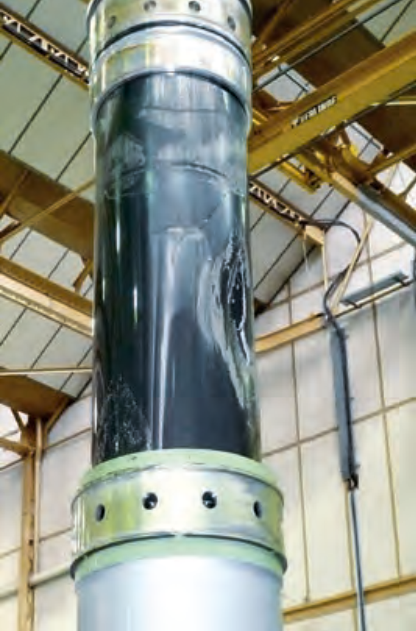
Figure 3 Damage on the aircraft following the hard landing: aircraft’s Landing Gear
The load report 15 is generated automatically by the ACMS memory right upon landing and should be available via the MCDU / ACMS MENU / STORED REPORTS.
DMU reports can be obtained by 4 non-exclusive manners:
-
Manual print out by crew
-
Automatic print out (depending of equipment via MCDU (AMM task 31-36-00) or ACMS (ground programming vendor tool)
-
ACARS transmission
-
ACARS request (depending on A/C configuration)
Operators are encouraged to review their policy to optimize the access to the load report 15, by being made aware of the four alternative ways that the DMU report can be accessed.
Note: The DMU is not a No Go item. An aircraft can be dispatched with none operative and the repair interval is fixed at 120 calendar days in the MMEL.
This in-service case study allowed to illustrate three messages that ought to be highlighted:
-
Use the appropriate level of automation at all times
-
There are four essential parameters needed for a safe, stabilized approach:
-
Aircraft track
-
Flight Path Angle
-
Airspeed
-
Workload capacity, which may be reduced in case of high workload
-
Always use the Airbus AMM as the base documentation for maintenance operations.
Reference:
Section titled “Reference:”A: Technical Follow-Up (TFU) ref 31.36.00.070 LR Honeywell DMU Lock-up issue
来源:Airbus Safety First 网址:https://safetyfirst.airbus.com/hard-landing-a-case-study-for-crews-and-maintenance-personnel/ 发布日期:2014-01-29 杂志期号:2014-01 分类:飞行运营、维修、进近、自动化、事件、起落架、硬、着陆、载荷、报告15、报告、稳定、训练 PDF:原始PDF
在本文中,Airbus希望带您通过一个案例研究来汲取经验教训,并分享我们的安全优先文化。本文分为三个独立部分:
- 第一部分将描述该事件
- 第二部分,面向飞行机组,将讨论并详述稳定标准,并提出防止不稳定进近的预防策略。还将强调始终使用适当自动化程度的重要性。
- 第三部分,面向维修人员,将说明始终使用《飞机维护手册》(AMM)作为维修作业来源文件的必要性。
Nicolas BARDOU David OWENS 飞行安全总监 训练政策高级总监
一架A330在雨中执行ILS进近。机长担任主飞驾驶员(PF),自动驾驶接通(AP1),两侧飞行指引仪(FD)和自动推力(A/THR)均接通。在距接地6海里处,飞机处于襟翼3构型,跟踪下滑道和航向道,进近速度为Vapp。空中交通管制(ATC)向机组提供了最新的天气信息:10节顺风,报告在最后进近航道有风切变。
通过1500英尺时,自动驾驶和自动推力断开,人工继续进近。航向道偏差初始为四分之一格,由主飞驾驶员修正。通过1000英尺时,机组报告目视跑道。通过500英尺时,多个飞行参数(航向道、下滑道、下降率、俯仰、横滚……)短暂超出公布的“进近稳定标准”,但每项都由主飞驾驶员修正。
然而,在150英尺无线电高度时,飞机高于下滑道超过一格,并进行了两次向下俯仰输入。下降率增至-1100英尺/分钟,增强型近地警告系统(EGPWS)“下降率”警告响了两次,第二次在50英尺以下。尽管在拉平阶段进行了向上俯仰输入,飞机仍以-1260英尺/分钟的垂直速度接地,垂直加速度为2.74 g。
机组在技术记录本中报告了硬着陆,并将信息传递给驻站维修。
技术员应用了定制的技术备注,其中规定:在没有由飞机状态监控系统(ACMS)在硬着陆情况下生成的载荷报告15的情况下,且如果数据管理组件(DMU)功能正常,则无需进行飞机检查,DAR盘应被更换并保存在飞机上供基地进一步分析。
在该特定案例中,DMU被认为功能正常,因为飞行期间基地收到了消息。然而,由于一个称为DMU锁死的内部故障(参考A),载荷报告15直到第二天才通过ACARS传输。
该飞机被批准签派执行回程航班。
起飞后,由于硬着陆造成的损坏,起落架未能收起,机组选择在消耗足够燃油以低于最大着陆重量(MLW)着陆后,执行飞行中返航。飞机安全着陆。
《飞行机组训练手册》(FCTM)和《飞行机组操作手册》(FCOM)均指出,偏离正常稳定标准应触发监控飞行员(PM)的喊话。这些喊话继而应至少触发主飞驾驶员的确认,并在必要时采取纠正措施。标准因机型而异,但通常在以下情况下应触发喊话:
- 速度低于目标速度5节,或高于目标速度10节。
- 俯仰姿态低于0°,或高于10°。
- 横滚角超过7°。
- 下降率大于1000英尺/分钟。
- 出现过度航向道或下滑道偏差:四分之一格航向道;一格下滑道。
通常认为安全稳定进近需要三个基本参数:
- 飞机航迹
- 飞行航径角(FPA)
- 空速
机组可以采取什么措施来防止此事件?
防止不稳定进近
Section titled “防止不稳定进近”防止不稳定进近的预防策略可概括为以下关键词:
-
训练 – 修正
-
预见 – 决断
-
发现
预防可通过以下专项训练得到强化:
- 稳定进近
- 监控飞行员的职责
- 将困难和意外的复飞原因纳入复训训练——不仅仅是最低标准复飞、“未看到!”的复飞。尝试引入突然的、晚期的风向变化……
首先,制定并简述进近的共同计划,包括能量管理和自动化使用。
然后,识别并讨论非标准高度或速度限制、进近风险、系统故障等因素。
最后,简述几种情景,为预期的ATC要求或其他需要改变初始计划的情况做好准备:假如……?
通过避免所有不必要/无关的动作来腾出时间并降低工作负荷,监控飞行轨迹以尽早发现偏差并及时准确地报告偏差。保持警惕并适应天气条件变化、进近风险或系统故障。
在整个进近过程中,尽早纠正任何偏差至关重要。为此可采用多种策略,例如使用减速板纠正过高的 altitude(不建议在最后进近阶段使用)、提前放下起落架以纠正过高的空速,或者延伸 outbound 或 downwind 边以获得更多进近稳定所需的空间。
认可副驾驶的所有喊话以确保良好的机组协同,并在偏差发展成棘手或危险局面之前立即采取纠正措施。
评估稳定条件是否能在着陆前尽早恢复,否则执行复飞。
做好复飞准备:
在下降准备和进近简述中讨论复飞动作。在监控下降、任务分工……过程中始终牢记这一点。做好必要时质疑并改变计划的准备。
保持复飞意识:
“让我们做好复飞准备,只有在进近保持稳定且具备足够的目视参考以确保安全着陆时,我们才会着陆。”
为此,飞行机组需要:
-
在整个进近过程中保持稳定的进近标准,直至进入着陆拉平阶段。
-
确保及时获取所需的ATC许可。
-
确保在 DH 或 MDA 以下保持目视参考。
-
确保跑道无障碍。
-
在反推选择之前,保持开放和做好复飞准备。
记住——在反推选择之前,复飞始终是可能的。在此之前任何时候复飞都不算晚。
合理使用自动化
Section titled “合理使用自动化”在这次进近前后,有许多迹象本应警告机组此次进近很可能具有挑战性。事实上,机组随后报告称他们不得不“奋力保持飞机在航道上”。
通过 1,500 ft 时 PF 断开了自动驾驶仪和自动推力(A/THR),从而失去了自动化所提供的额外帮助。较长时间保持 A/THR 接通本可减轻飞行机组在管理和控制空速方面的工作负荷。
在进近的最后阶段,逆风可能被视为一种威胁,因为涉及慢车推力值和复飞时较慢的发动机加速时间。在这种情况下使用 A/THR 可能比飞行员手动控制推力更快地稳定推力,尤其是在工作负荷如此之高的情况下。这将产生高于慢车的推力设置,并能在复飞时实现更快的推力响应。
这里的问题是,维持稳定性所需的工作负荷在很晚的阶段变得过大,当时机组在最后进近时遇到了快速变化的风,使进近最后部分在轨迹和速度方面相当难以控制。但在此之前很久——在工作负荷变得临界之前——就有迹象表明工作负荷在不断累积。换言之,工作负荷已经变得如此之大,以至于机组失去了以所需精度驾驶飞机的能力!
因此,稳定性不仅仅是数字问题(速度、俯仰等),还包括 PF 为维持稳定性所付出的努力。如果这种努力等于或超过了他的能力,必须立即执行复飞。在这次进近中,合理使用自动化本可让飞行机组更好地判断是否需要复飞,从而避免硬着陆。
事实上,这第一条教训——合理使用自动化是我们的黄金法则之一(图 1),已在 2013 年 1 月本期杂志第 15 期中介绍过。
-
1 飞行、导航和通讯: 按此顺序并配合适当的任务分工
-
2 始终使用适当级别的自动化
-
4 如果情况不符合预期,采取行动
图 1 空客飞行员黄金法则第 2 条:“始终使用适当级别的自动化”
第二条教训可以概括如下。
也许我们现在可以用稍有不同的方式总结稳定进近的标准。我们现在可以将安全稳定进近所需的三个基本定量参数加一个附加的定性考虑:
– 飞机航迹
-
航迹角
-
空速
-
工作负荷能力
图 2 硬着陆流程图,将于 2014 年 4 月加入 A330/A340 AMM
在本事件中,运营人使用了定制技术说明,而非空客原版的 AMM(飞机维修手册),结果该航空器被批准放行执行回程航班。
AMM 指出,疑似硬着陆的主要信息来源是机组。此后,必须全面考虑硬着陆情况,直至完成损伤评估并明确证明没有“后续影响”。
这将触发 AMM 05.51.11 中定义的一些航空器检查项目,可通过使用载荷报告 15 或 DFDR(数字式飞行数据记录器)、QAR(快速访问记录器)、DAR(数据采集记录器)等来减轻检查范围。载荷报告 15 不应用于确认硬着陆,而应以便于确定所需检查级别的方式使用。
在本事件发生时,AMM 05.51.11 B (2) (b) “疑似硬着陆/超重硬着陆确认程序”规定:
- “如果您无法(或无法)从载荷报告 15 或 DFDR 中读取着陆冲击参数,请在后续飞行前执行以下步骤:
注: 前三项是已达成性能的“经典”衡量指标。最后一项是判定 PF(操控飞行员)为控制航空器所付出的努力程度。即使所有数值均达标,也只有在机组仍有能力应对其他突发状况时才可接受。在高人工工作负荷情况下,能力会下降。因此,使用适当级别的自动驾驶有助于减轻负荷。
-
将 DFDR 或 QAR 数据(如有)与飞行员报告及载荷配平单一起提供给空客。
-
执行第 4 段中的检查,并提交损伤报告或检查结果。
-
空客将对事件进行分析,以确定航空器能否恢复服役。(未经空客决定,航空器不得恢复服役)。”
-
为避免任何可能的混淆,A330/A340 AMM 05.51.11 将于 2014 年 4 月修订,增加以下内容:
-
上述程序第一句的修改措辞,现表述为:“如果载荷报告 15 或 DFDR 数据不可用或无法读取……”
-
流程图,以确保与 A320 系列 AMM 相同的可读性水平(图 2)。
图 3 硬着陆后航空器损伤情况:航空器起落架
载荷报告 15 由 ACMS(飞机状态监控系统)在着陆瞬间自动生成,可通过 MCDU(多功能控制显示组件)/ACMS MENU/STORED REPORTS 获取。
DMU(数据管理组件)报告可通过 4 种非互斥方式获取:
-
机组手动打印
-
自动打印(根据设备配置,通过 MCDU(AMM 任务 31-36-00)或 ACMS(地面编程供应商工具))
-
ACARS(飞机通信寻址与报告系统)传输
-
ACARS 请求(取决于航空器配置)
强烈建议运营人审查其政策,优化对载荷报告 15 的获取途径,了解 DMU 报告可通过四种替代方式获取。
注:DMU 不是放行限制项目(No Go item)。航空器可在 DMU 不工作的情况下放行,MMEL(主最低设备清单)规定的修复时限为 120 个日历日。
本在役案例研究阐明了三条值得强调的信息:
-
始终使用适当级别的自动驾驶
-
稳定进近需要四个关键参数:
-
航迹
-
下滑角度
-
空速
-
工作负荷能力,在高工作负荷情况下可能会下降
-
始终使用空客 AMM 作为维修作业的基础文件。
A:技术跟进(TFU)参考资料 31.36.00.070 LR 霍尼韦尔 DMU 锁定问题