Preventing Fan Cowl Door Loss
Source: Airbus Safety First URL: https://safetyfirst.airbus.com/preventing-fan-cowl-door-loss/ Published: 2019-04-12 Magazine Issue: 2019-04 Category: Flight Ops, Maintenance, Cowl, door, engine, fan, PDA PDF: Original PDF
OPERATIONS Preventing Fan Cowl Door Loss




Fan cowl door loss events are still reported to Airbus. In all cases, the fan cowl doors were not latched closed and secured following a maintenance task.
This article provides an update on the design and procedure improvements introduced on the Airbus fl eet to prevent fan cowl door loss events.

This article is an update of the Safety First #14 article, published in 2012.
It provides information to the Operators of the improvements and additional recommendations put in place since 2012.
FAN COWL DOOR LOSS EVENTS STILL OCCUR
Section titled “FAN COWL DOOR LOSS EVENTS STILL OCCUR”Since the previous article published in July 2012, 14 events of loss of fan cowl doors during flight were reported to Airbus (12 events on A320, one on A330 and another on A300 aircraft).
The aircraft had undergone overnight maintenance and, in most of the cases, the fan cowl doors were opened to check the Integrated Drive Generator (IDG) oil level. The morning of the incident, the walkaround inspection did not reveal the opened fan cowls.
Airbus developped several additional devices to prevent fan cowl door loss events by enhancing the prevention means and reducing the number of fan cowl doors openings required by scheduled maintenance.
ENHANCED PREVENTION MEANS
Section titled “ENHANCED PREVENTION MEANS”Latch Key (A320 CFM56, A320 IAE V2500 and A330neo)
Section titled “Latch Key (A320 CFM56, A320 IAE V2500 and A330neo)”An improved latch with a key and a REMOVE BEFORE FLIGHT flag attached to the key (fig.1) has been introduced in December 2015 on the A320ceo aircraft. The key is needed to open the latch. When the fan cowl door is opened, the key remains on the latch. It can only be removed if the latch is fully closed. When not used, the latch key has to be stored in the cockpit with the landing gear pin.
The following Airworthiness Directives (ADs) mandate the retrofit of this new lockable latch on A320ceo aircraft equipped with IAE and CFM56 engines:
(fig.1)
Latch with key and “Remove before flight” red flag on A330neo aircraft
INFORMATION
Section titled “INFORMATION”A Monitored Retrofit Campaign was launched by Airbus in August 2018, refer to the RIL SA71M15018054 R02 for more information.
Latch key maintenance tips are available in the ISI 71.00.00062.
A330neo aircraft equipped with RR Trent 7000 engines are also fitted with this latch key device from production line.
Latch Closure Monitoring (A320neo)
Section titled “Latch Closure Monitoring (A320neo)”Proximity sensors located at each latch monitor the fan cowls position on A320neo aircraft equipped with PW1100 and LEAP-1A engines. The ECAM displays the ENG1(2) FAN COWL NOT CLSD caution if the fan cowls are not properly closed.
Mechanical Prevention Flag (A320neo LEAP)
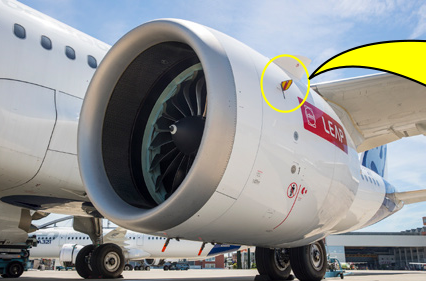
Section titled “Mechanical Prevention Flag (A320neo LEAP)”In addition to the cowl position monitoring, a prevention flag extends mechanically from the surface of the left hand fan cowl when the forward latch is opened to warn the ground personnel and the flight crew that the latch is not closed (fig.2) on A320neo equipped with CFM LEAP-1A engines.
(fig.2)
Section titled “(fig.2)”Mechanical prevention flag on an A320neo equipped with LEAP engines
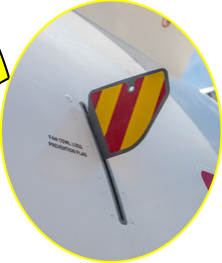
Devices to hold open the fan cowl doors when they are lowered (A320 IAE, A320neo PW, A340-500/600 and A330neo)
Section titled “Devices to hold open the fan cowl doors when they are lowered (A320 IAE, A320neo PW, A340-500/600 and A330neo)”A U-arrestor device holds the fan cowls in a partially open position when the cowls are lowered on A340 equipped with TRENT 500 engines and on A330neo with TRENT 7000 engines. It is obvious to the operator that the cowls are not fully closed when looking from below or from the side of the cowl. The U-arrestor pin must be pressed to close the fan cowl door (fig.3).
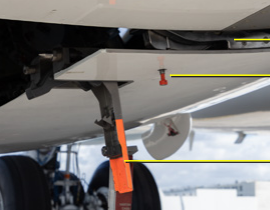
U-arrestor device
U-arrestor pin
FCD Latch 1
(fig.3)
A330neo U-arrestor
The equivalent function is insured by the “Hold Open Device”, mandated by the AD 2001-381(B), requiring embodiment of the SB A320 71-1028 on A320ceo equipped with V2500 engines.
It is insured by a similar “Push Open Device” on A320neo equipped with PW1100G.
Optional** LATCH COWL BEFORE FLIGHT **flag (A300-600, A310, A330ceo and A340)
Section titled “Optional** LATCH COWL BEFORE FLIGHT **flag (A300-600, A310, A330ceo and A340)”Airbus recommends the use of a LATCH COWL BEFORE FLIGHT red flag when the fan cowl doors are unlatched on A300-600, A310, A330ceo, A340, A340500/600 aircraft. This flag can be obtained with the following SBs:
-
SB A300-600 71-6030 • SB A340 71-4009
-
SB A310 71-2039 • SB A340-500/600 71-5005
-
SB A330 71-3034
Latch Access Panel (A350 and A380)
Section titled “Latch Access Panel (A350 and A380)”If the fan cowl door latches are left open on the A350 or A380 aircraft, the latch access panel cannot be closed. This will be visible to ground operator or flight crew during an exterior walkaround check (fig.4).
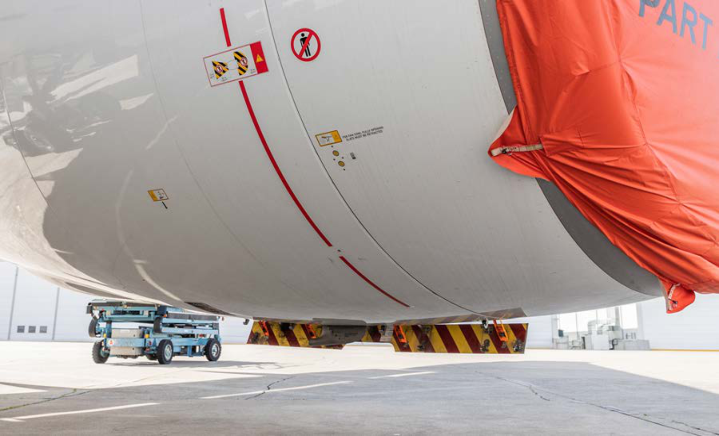
(fig.4)
Section titled “(fig.4)”Engine of an A350 with fan cowl door latch access panel open
CAUTION markings
Section titled “CAUTION markings”Additional markings with arrows pointing toward the latches (fig.5) are there to remind the ground staff to check the latches are engaged and correctly secured on A320ceo aircraft. They can be installed through:
-
VSB RA32071-161 on CFM56-5A/5B
-
VSB NAC-71-0330 on IAE V2500
These are optional SBs and therefore they are not installed on production aircraft.
Decals with cautions located at eye level ensure that fan cowl doors are closed and correctly latched before fl ight (fi g.6) on A320 aircraft. They are installed on recent A320ceo production aircraft and on A320neo. They can also be installed by retrofi t with the following VSBs:
-
VSB RA32071-117 on CFM56-5A/5B
-
VSB NAC-71-0235 on IAE V2500
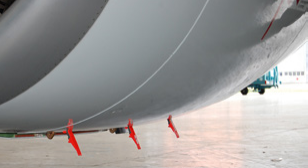
(fi g.7) Latches voluntarily left in an obvious unlatched position

(fi g.5) Arrows pointing toward the latches
(fi g.6) Eye level decal with cautions
BEST PRACTICE
Section titled “BEST PRACTICE”The latches should be left in a position so that it is obvious that they are not engaged if the fan cowl is lowered. This helps to identify any cowls that are not latched and secured.
As a good practice, the fan cowl doors should be latched as soon as they are lowered.
MAINTENANCE EVOLUTION
Section titled “MAINTENANCE EVOLUTION”Update of AMM: Introduction of a Logbook Entry (all aircraft)
Section titled “Update of AMM: Introduction of a Logbook Entry (all aircraft)”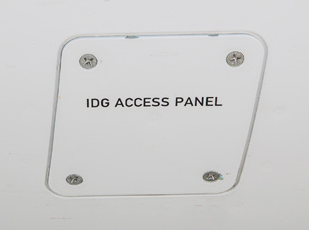
(fi g.8) IDG oil access door on A320neo LEAP
Airbus revised the AMM TASK “Opening/Closing of the Fan Cowls” on all Airbus aircraft to introduce a logbook entry that informs the fl ight crew that the fan cowl doors have been previously opened. This will alert the fl ight crew that they should confi rm that the fan cowl doors are correctly closed during their exterior walkaround.
IDG access door
Section titled “IDG access door”Additional technical solutions were also developed to reduce the number of fan cowl doors openings.
An optional IDG access door is available on A320ceo aircraft equipped with CFM56-5A/5B engines. IDG oil level can be checked via this access door without opening the fan cowl doors. A320neo LEAP, A330ceo RR Trent 700 and A340500/600 RR Trent 500 are already equipped with this IDG access door (fi g.8).
Increased interval for IDG oil level check
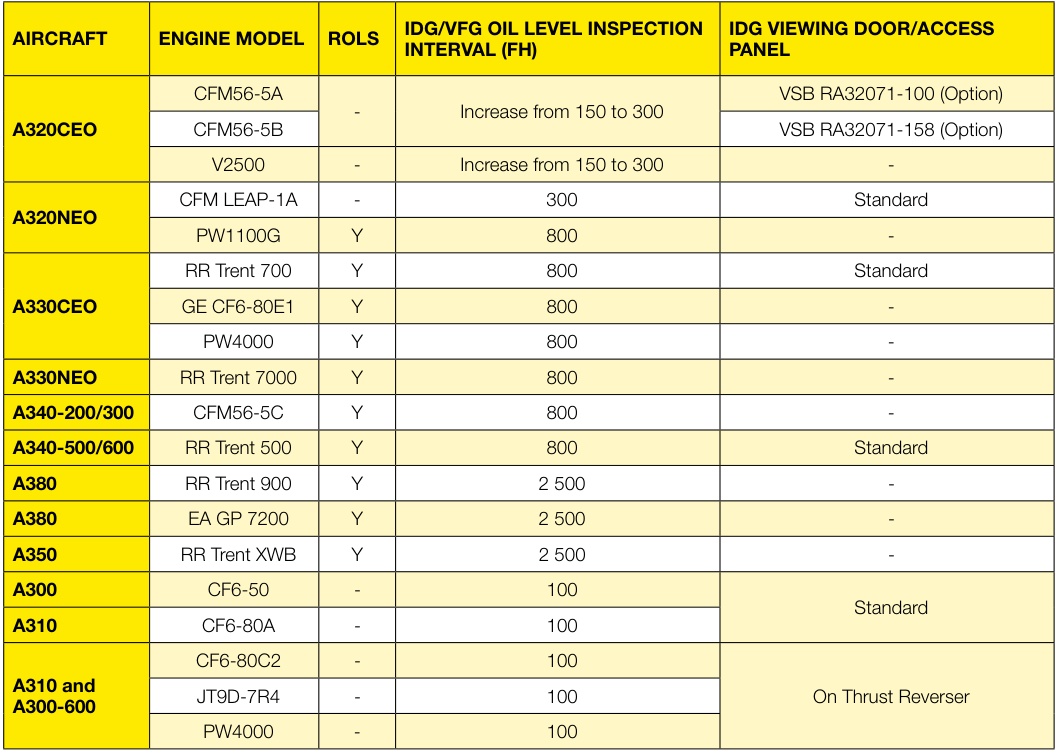
Section titled “Increased interval for IDG oil level check”To reduce the frequency of fan cowl door opening for aircraft not equipped with the IDG access door, Airbus demonstrated that the IDG oil level check interval could be extended from 150 FH to 300 FH (or 2 months) on CFM56-5A/5B and IAE V2500 engines.
IDG Remote Oil Level Sensor (ROLS)
Section titled “IDG Remote Oil Level Sensor (ROLS)”A Remote Oil Level Sensor (ROLS) monitors the IDG oil level and an IDG LOW OIL LEVEL ECAM alert will appear when servicing is required. With this monitoring, the inspection interval is longer (fig.9).
(fig.9)
Section titled “(fig.9)”Summary of maintenance solutions
To improve the latch visibility, they are covered with fluorescent paint. The condition of the paint on the latches needs to be checked every 7 500 FH (or every 24 months) on A320ceo aircraft in accordance with the Maintenance Planning Document.
(fig.10) Fan cowl door latch with damaged paint
EXTERIOR WALKAROUND
Section titled “EXTERIOR WALKAROUND”Updated FCOM Procedures
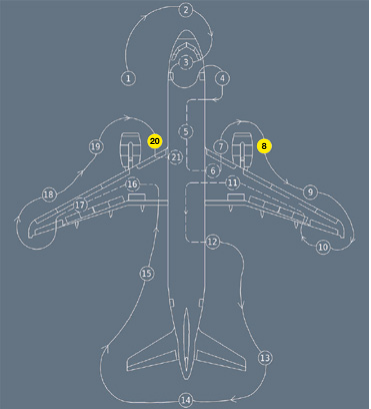
Section titled “Updated FCOM Procedures”Airbus updated the exterior walkaround section of the FCOM Standard Operating Procedures for all aircraft by introducing additional steps in the walkaround (fig.11). This change requests that the correct latching of the fan cowls is now checked from both sides of each engine.
(fig.11)
Section titled “(fig.11)”Additional steps at stations 20 and 8 in the exterior walkaround of the A320 FCOM
The exterior walkaround is one of the last opportunities to detect incorrectly latched fan cowl doors before flight
The exterior walkaround is one of the last opportunities to detect incorrectly latched fan cowl doors before flight. The flight crew must pay particular attention to check the fan cowl doors are correctly latched.
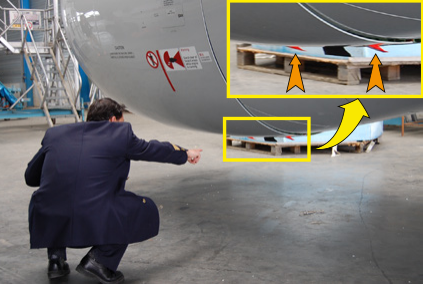
The most effective way to confirm that all latch handles are correctly engaged and flush with the fan cowls is to crouch down to get a good line of sight with the latches. The flight crew needs to check on both sides of the engine to confirm there is no gap around the cowl and all latches are secured (fig.12 and fig.13). Use a torch light if the lighting conditions are poor or if the inspection is done by night.
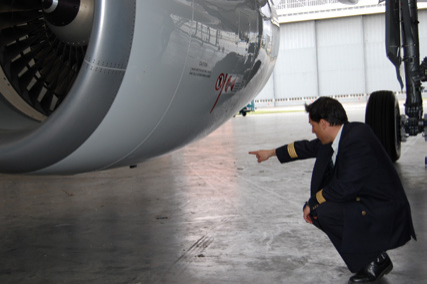
(fig.12) The flight crew should crouch down to correctly check the fan cowl door latching
(fig.13) Incorrect latching: The latches are not flush with the nacelle and there is a small gap around the cowl
CONTRIBUTORS:
Section titled “CONTRIBUTORS:”Xavier JOLIVET
Section titled “Xavier JOLIVET”Director Product Safety Product Safety
Hubert GANS
Section titled “Hubert GANS”Propulsion Systems Integration Engineer Engineering Engine Integration
Laurent BEL
Section titled “Laurent BEL”DCS Propulsion System CoC Powerplant
Thibaut JOATHON
Section titled “Thibaut JOATHON”Nacelle Engineering Support Customer Engineering Support
With thanks to:
Section titled “With thanks to:”Eric DELMAS
Section titled “Eric DELMAS”The incorrect latching of the fan cowl doors following maintenance, added by a failure to detect this condition on the pre-flight exterior walkaround are the common causes in all fan cowl door loss events reported to Airbus.
Several prevention means have been implemented in addition to the solutions described in the Safety first article published in July 2012. These include:
-
Latch with key and “Remove before flight” red flag (all except A320neo) - NEW
-
Cockpit information (ECAM alert) on A320neo - NEW
-
Prevention flag on A320neo LEAP-1A - NEW
-
U-arrestor on A330neo (NEW) and A340-500/600
-
Latch Access Panel on A380 and A350
-
Remote Oil Level Sensor on IDG
Operational improvements have also been introduced:
-
Increase of the IDG oil level check inspection interval on A320ceo - NEW
-
Creation of a Log book entry after a fan cowl door opening/ closing procedure – NEW
-
Additional step in the exterior walkaround to duplicate the check of fan cowl latches – NEW
-
New entry in the Preventing Identified Risks (PIR) section of the FCTM
As of today, aircraft equipped with these modifications have not experienced a fan cowl door loss event.
Incorporating these preventive devices, with the operational improvements, supported by the increased awareness of flight crews and maintenance personnel, are thus key elements to preventing such events.
Safety fi rst, #28 April, 2019. Safety fi rst is published by Airbus S.A.S. - 1, rond point Maurice Bellonte - 31707 Blagnac Cedex/France. Publisher and Editor: Yannick Malinge, Chief Product Safety Offi cer. Concept Design by Airbus Multi Media Support 20190588. Reference: X00D16031905 Issue 28. Photos by Airbus, G. Estragnat, S. Ramadier.
Safety fi rst
Section titled “Safety fi rst”The Airbus magazine contributing to the enhancement of the safety of aircraft operations by increasing knowledge and communication on safety related topics.
Safety fi rst is published by the Product Safety department. It is a source of specialist safety information for the use of airlines who fl y and maintain Airbus aircraft. It is also distributed to other selected organizations and is available on digital devices.
Material for publication is obtained from multiple sources and includes selected information from the Airbus Flight Safety Confi dential Reporting System, incident and accident investigation reports, system tests and fl ight tests. Material is also obtained from sources within the airline industry, studies and reports from government agencies and other aviation sources.
All articles in Safety fi rst are presented for information only and are not intended to replace ICAO guidelines, standards or recommended practices, operator-mandated requirements or technical orders. The contents do not supersede any requirements mand ated by the State of Registry of the Operator’s aircraft or supersede or amend any Airbus type-specific AFM, AMM, FCOM, MMEL documentation or any other approved documentation.
操作:防止风扇整流罩门丢失
风扇整流罩门丢失事件仍有报告给空客。在所有案例中,风扇整流罩门在维修工作后均未闩锁关闭并固定。
本文提供了空客机队为防止风扇整流罩门丢失事件而引入的设计和程序改进的最新信息。
本文是2012年发布的《安全优先》第14期文章的更新。
本文向运营商提供自2012年以来实施的改进和补充建议的相关信息。
风扇整流罩门丢失事件仍在发生
Section titled “风扇整流罩门丢失事件仍在发生”自2012年7月发表上一篇文章以来,共有14起风扇整流罩门在飞行中丢失的事件报告给空客(12起发生在A320上,A330和A300各1起)。
相关飞机均接受了过夜维修,在大多数案例中,风扇整流罩门被打开以检查综合驱动发电机(IDG)油位。事件发生当日的航前检查未发现风扇整流罩处于打开状态。
空客开发了多种附加装置,通过加强预防手段和减少计划维修所需的风扇整流罩门开启次数来防止风扇整流罩门丢失事件。
加强的预防手段
Section titled “加强的预防手段”带钥匙的闩锁(A320 CFM56、A320 IAE V2500和A330neo)
Section titled “带钥匙的闩锁(A320 CFM56、A320 IAE V2500和A330neo)”2015年12月在A320ceo飞机上引入了带有钥匙和REMOVE BEFORE FLIGHT红色提示旗的改进型闩锁(图1)。打开闩锁需要钥匙。当风扇整流罩门打开时,钥匙保留在闩锁上。只有当闩锁完全关闭时,钥匙才能取下。不使用时,闩锁钥匙必须存放在驾驶舱内,与起落架锁销放在一起。
以下适航指令(AD)要求在配备IAE和CFM56发动机的A320ceo飞机上加装此新型可锁定闩锁:
(图1)
A330neo飞机上带钥匙和”飞行前取下”红色提示旗的闩锁
空客于2018年8月启动了受监控的改装活动,详见RIL SA71M15018054 R02。
闩锁钥匙的维护提示可在ISI 71.00.00062中查阅。
配备RR Trent 7000发动机的A330neo飞机也在生产线装配了此闩锁钥匙装置。
闩锁关闭监控(A320neo)
Section titled “闩锁关闭监控(A320neo)”在配备PW1100和LEAP-1A发动机的A320neo飞机上,每个闩锁处设置的接近传感器监控风扇整流罩的位置。如果风扇整流罩未正确关闭,ECAM显示ENG1(2) FAN COWL NOT CLSD警告。
机械防忘旗(A320neo LEAP)
Section titled “机械防忘旗(A320neo LEAP)”在整流罩位置监控的基础上,配备CFM LEAP-1A发动机的A320neo飞机上还设有机械防忘旗。当左侧风扇整流罩的前闩锁打开时,防忘旗从整流罩表面机械伸出,以警告地面人员和飞行机组闩锁未关闭(图2)。
(图2)
配备LEAP发动机的A320neo飞机上的机械防忘旗
风扇整流罩门降低时固定装置(A320 IAE、A320neo PW、A340-500/600和A330neo)
Section titled “风扇整流罩门降低时固定装置(A320 IAE、A320neo PW、A340-500/600和A330neo)”在配备TRENT 500发动机的A340和配备TRENT 7000发动机的A330neo上,U形锁定装置将风扇整流罩固定在部分打开位置。从下方或侧面观察时,运营商可以明显看出整流罩未完全关闭。关闭风扇整流罩门必须按下U形锁定销(图3)。
U形锁定装置
U形锁定销
FCD闩锁1
(图3)
A330neo U形锁定装置
配备V2500发动机的A320ceo飞机通过AD 2001-381(B)规定的”保持打开装置”实现等效功能,该指令要求实施SB A320 71-1028。
配备PW1100G的A320neo飞机通过类似的”推动打开装置”实现等效功能。
可选 ~~飞行前锁定整流罩~~ 标记牌(A300-600、A310、A330ceo 和 A340)
Section titled “可选 ~~飞行前锁定整流罩~~ 标记牌(A300-600、A310、A330ceo 和 A340)”空客建议在 A300-600、A310、A330ceo、A340、A340-500/600 飞机上,当风扇整流罩舱门未锁定时,使用 LATCH COWL BEFORE FLIGHT 红色标记牌。该标记牌可通过以下服务通告获取:
-
SB A300-600 71-6030 • SB A340 71-4009
-
SB A310 71-2039 • SB A340-500/600 71-5005
-
SB A330 71-3034
锁闩检修面板(A350 和 A380)
Section titled “锁闩检修面板(A350 和 A380)”如果在 A350 或 A380 飞机上风扇整流罩舱门锁闩处于打开状态,锁闩检修面板将无法关闭。这在外部绕机检查时,地面工作人员或飞行机组将能够看到 (图4)。
A350 飞机发动机风扇整流罩舱门锁闩检修面板处于打开状态
额外的带有指向锁闩箭头的标记 (图5) 用于提醒地面工作人员在 A320ceo 飞机上检查锁闩是否已啮合并正确固定。这些标记可通过以下文件安装:
-
CFM56-5A/5B 发动机:VSB RA32071-161
-
IAE V2500 发动机:VSB NAC-71-0330
这些为可选服务通告,因此未在生产飞机上安装。
位于视平线高度的警示贴纸可确保在飞行前风扇整流罩舱门已关闭并正确锁定 (图6)。这些贴纸已安装在最新的 A320ceo 生产飞机和 A320neo 上。也可通过以下文件进行改装安装:
-
CFM56-5A/5B 发动机:VSB RA32071-117
-
IAE V2500 发动机:VSB NAC-71-0235
(图7) 锁闩故意保持在明显的未锁定位置
(图5) 指向锁闩的箭头
(图6) 视平线高度的警示贴纸
如果风扇整流罩放下后锁闩处于明显未啮合的位置,则有助于识别未锁定和固定的整流罩舱门。
作为良好做法,风扇整流罩舱门应在放下后立即锁定。
AMM 更新:飞行记录本条目的引入(所有飞机)
Section titled “AMM 更新:飞行记录本条目的引入(所有飞机)”
(图8) A320neo LEAP 上的 IDG 滑油检修门
空客修订了所有空客飞机 AMM 中的”打开/关闭风扇整流罩”任务,引入了一条飞行记录本条目,告知飞行机组风扇整流罩舱门之前已被打开。这将提醒飞行机组在外部绕机检查时确认风扇整流罩舱门已正确关闭。
IDG 检修门
Section titled “IDG 检修门”还开发了额外的技术解决方案,以减少风扇整流罩舱门的打开次数。
A320ceo 飞机配备 CFM56-5A/5B 发动机时,可选装 IDG 检修门。通过该检修门可以检查 IDG 滑油液位,而无需打开风扇整流罩舱门。A320neo LEAP、A330ceo RR Trent 700 和 A340-500/600 RR Trent 500 已配备此 IDG 检修门 (图8)。
IDG 滑油液位检查间隔延长
Section titled “IDG 滑油液位检查间隔延长”对于未配备 IDG 检修门的飞机,为减少风扇整流罩舱门的打开频率,空客已验证可将 CFM56-5A/5B 和 IAE V2500 发动机的 IDG 滑油液位检查间隔从 150 飞行小时延长至 300 飞行小时(或 2 个月)。
IDG 远程滑油液位传感器(ROLS)
Section titled “IDG 远程滑油液位传感器(ROLS)”远程滑油液位传感器(ROLS)可监控 IDG 滑油液位,当需要维护时将显示 IDG 低滑油液位 ECAM 警戒。借助此监控,检查间隔可以更长 (图9)。
维护解决方案汇总
为提高锁闩的可见性,锁闩上涂有荧光漆。根据维护计划文件,A320ceo 飞机上锁闩漆面状况需要每 7500 飞行小时(或每 24 个月)检查一次。
(图10) 漆面损坏的风扇整流罩舱门锁闩
外部绕机检查
Section titled “外部绕机检查”更新的 FCOM 程序
Section titled “更新的 FCOM 程序”空客更新了所有飞机 FCOM 标准操作程序中的外部绕机检查部分,在绕机检查中引入了额外的步骤 (图11)。此更改要求从发动机两侧检查风扇整流罩的正确锁定情况。
A320 FCOM 外部绕机检查中站位 20 和 8 的额外步骤
外部绕机检查是飞行前检测不正确锁定风扇整流罩舱门的最后机会之一
外部绕机检查是飞行前检测不正确锁定风扇整流罩舱门的最后机会之一。飞行机组必须特别注意检查风扇整流罩舱门是否正确锁定。
确认所有锁闩手柄正确啮合且与风扇整流罩齐平的最有效方法是蹲下以获得良好的锁闩视线。飞行机组需要检查发动机的两侧,以确认整流罩周围没有间隙且所有锁闩都已固定 (图12 和图13)。如果照明条件不佳或在夜间进行检查,请使用手电筒。
(图12) 飞行机组应蹲下正确检查风扇整流罩舱门的锁定情况
(图13) 不正确的锁定:锁闩未与短舱齐平,整流罩周围有小间隙
CONTRIBUTORS(撰稿人)
Section titled “CONTRIBUTORS(撰稿人)”Xavier JOLIVET
Section titled “Xavier JOLIVET”产品安全总监 产品安全部
Hubert GANS
Section titled “Hubert GANS”推进系统集成工程师 发动机集成工程
Laurent BEL
Section titled “Laurent BEL”推进系统DCS(符合性声明) 动力装置
Thibaut JOATHON
Section titled “Thibaut JOATHON”短舱工程支持 客户工程支持
Eric DELMAS
Section titled “Eric DELMAS”维护后风扇包皮门闩锁止不当,加上在飞行前外部绕机检查中未能发现此情况,是空客报告的所有风扇包皮丢失事件的常见原因。
除2012年7月发布的《Safety first》文章中描述的解决方案外,还实施了几种预防措施,包括:
- 带钥匙的锁闩和”飞行前移除”红色警示牌(A320neo除外)- 新增
- A320neo驾驶舱信息(ECAM警戒)- 新增
- A320neo LEAP-1A上的预防警示牌 - 新增
- A330neo(新增)和A340-500/600上的U型限动装置
- A380和A350上的锁闩接近面板
- IDG(整体驱动发电机)远程油量传感器
同时还引入了操作改进措施:
- 延长A320ceo IDG油量检查间隔 - 新增
- 风扇包皮门开关程序后在飞行日志本中创建记录 - 新增
- 在外部绕机检查中增加步骤以重复确认风扇包皮锁闩 - 新增
- FCTM《防止已识别风险(PIR)》章节新增条目
截至目前,配备这些改装件的飞机未发生任何风扇包皮丢失事件。
综合运用这些预防装置,配合操作改进措施,加之飞行员和维护人员安全意识的不断提高,是防止此类事件的关键要素。
Safety first, #28 2019年4月。《Safety first》由空中客车公司出版 - 地址:1, rond point Maurice Bellonte - 31707 法国布朗萨克。出版人和编辑:首席产品安全官 Yannick Malinge。概念设计:空中客车多媒体支持 20190588。参考编号:X00D16031905 第28期。图片由空中客车公司、G. Estragnat、S. Ramadier提供。
Safety first
Section titled “Safety first”空中客车致力于提升飞机运营安全的杂志,通过增进安全相关知识与交流来提高航空安全水平。
《Safety first》由产品安全部出版,是航空公司飞行员和维护人员获取专业安全信息的来源,同时也分发给其他经选择的机构,并可在数字设备上获取。
刊载素材来源于多个渠道,包括:从空客飞行安全保密报告系统精选的信息、事件和事故调查报告、系统测试和飞行测试报告。也来源于航空公司行业内资源、政府机构的研究和报告以及其他航空来源。
《Safety first》中的所有文章仅供信息参考,不旨在替代ICAO(国际民航组织)的指南、标准或建议做法,也不替代运营人必须遵守的要求或技术指令。内容不取代飞机注册国规定的要求,也不取代或修改任何空客机型特定的AFM(飞机飞行手册)、AMM(维护手册)、FCOM(飞行手册操作程序)、MMEL(主最低设备清单)文档或其他任何批准文档。