Lithium Battery Fire in the Cabin or in the Cockpit
Source: Airbus Safety First URL: https://safetyfirst.airbus.com/lithium-battery-fire-in-the-cabin-or-in-the-cockpit/ Published: 2025-07-03 Category: Cabin Ops, Flight Ops, fire, PED, smartphone, tablet PDF: Original PDF

A lithium battery fire during flight is a significantly growing threat due to the increasing number of portable electronic devices carried by aircraft occupants.
Recent events illustrate the critical importance of adhering to the procedures to timely and efficiently react to a lithium battery fire.
This article explains the specific firefighting steps to fight a lithium battery fire. It also recalls the various procedures that must be followed to deal with a fire in the cabin or in the cockpit.
Check the latest version of this article on safetyfirst.airbus.com and on the Safety first app for iOS and Android devices.
CASE STUDY
Section titled “CASE STUDY”Event Description
Section titled “Event Description”An A320 aircraft was in cruise at FL 300. The purser had just finished delivering beverages to the cockpit and was about to join a supernumerary flight attendant that was seated in the front galley. The four remaining cabin crew members were delivering meals to passengers, when some passengers started screaming in the front of the aircraft. A fire appeared to originate in the right overhead bin above the 5th row seats.
(fig.1) Location of the cabin crew members at the start of the event
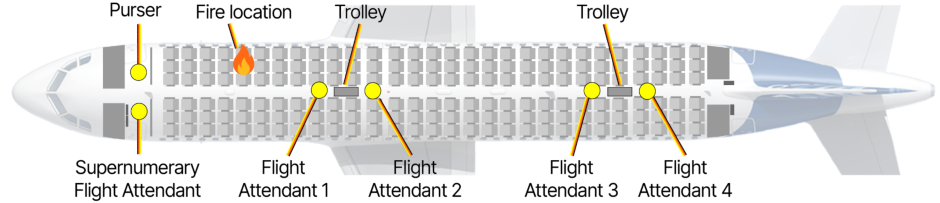
The supernumerary flight attendant retrieved a fire extinguisher and fireproof gloves and initially took on the Firefighter role. Meanwhile, the purser took on the Communicator role and alerted the flight crew. Flight attendant 1 moved passengers away from the affected area and then took on the Assistant Firefighter role by collecting water and non-alcoholic liquids. Flight attendants 2, 3, and 4 moved the trolleys to the aft galley and managed passengers. Flight attendant 3 put on fireproof gloves from the aft galley and brought two additional fire extinguishers to the fire area. The Firefighter role then rotated between the supernumerary flight attendant and flight attendant 3.
The three extinguishers were used. The cabin crew then poured water and other non-alcoholic liquids on the remains of the backpack holding the affected device.
Meanwhile, the flight crew had initiated a diversion to a nearby airport. They made an announcement on the passenger address system that the cabin crew should prepare the cabin for landing. Some cabin crew members remained near the fire zone to continue pouring water on the device, while others prepared the cabin for landing. The flight crew then announced 5 minutes to landing, enabling all cabin crew members to prepare for landing. The aircraft safely landed and the passengers disembarked via stairs.
Event Analysis
Section titled “Event Analysis”Thermal runaway of a power bank
Section titled “Thermal runaway of a power bank”Analysis showed that a power bank from a passenger’s backpack, stored in the overhead bin, suffered a thermal runaway.
No time for storage procedure
Section titled “No time for storage procedure”The cabin crew did not have the time to perform the storage procedure after extinguishing the fire due to the announcement from the flight crew that they were close to landing.
Firefighting operations disturbed by passengers
Section titled “Firefighting operations disturbed by passengers”During the firefighting procedure, some passengers tried to get involved in the procedure, disturbing the cabin crew members in their mission. Relocated passengers were standing in the aisle, preventing the cabin crew from easily retrieving firefighting equipment from the aft galley.
REINFORCING AWARENESS OF PASSENGERS, GROUND PERSONNEL, AND CREWS
Section titled “REINFORCING AWARENESS OF PASSENGERS, GROUND PERSONNEL, AND CREWS”In the Safety Information Bulletin (SIB) 2025-03 published in May 2025, the European Union Aviation Safety Agency (EASA) highlighted that the number of Portable Electronic Devices (PEDs) that passengers typically travel with, has increased to 4 or 5 items per passenger. This represents a significant exposure to the risk of a thermal runaway during flight. EASA strongly recommends carrying these lithium-battery-powered items, power banks, or e-cigarettes in the cabin so that the cabin crew can react quickly should a thermal runaway occur.
The SIB also recalls that it is essential to inform passengers about the risks of carrying lithium batteries or lithium-battery-powered devices, and about the limitations and restrictions that apply for their transportation and use onboard an aircraft. The document also highlights the essential need for cabin crews and flight crews to be trained and aware of the specificities of a lithium battery fire in order to timely and efficiently address it if it occurs in flight.
For more information, refer to the following documents:
-
EASA SIB 2025-03 published in May 2025
-
FAA AC 120-80B published in March 2023
-
EASA Dangerous goods webpage
-
IATA “Lithium battery risk assessment guidance for operators”
FIGHTING A LITHIUM BATTERY FIRE
Section titled “FIGHTING A LITHIUM BATTERY FIRE”Characteristics of a Lithium Battery Fire
Section titled “Characteristics of a Lithium Battery Fire”Thermal runaway
Section titled “Thermal runaway”In the case of internal degradation or damage, a battery cell rapidly releases its stored energy through a highly energetic venting reaction known as “thermal runaway.” This can generate smoke, flammable gas, heat (up to 600 °C and 1 500 °C locally), fire, explosion, or a spray of flammable liquids.
A possible chain reaction
Section titled “A possible chain reaction”If one cell from a battery composed of several cells undergoes thermal runaway, it can damage adjacent cells and create a chain reaction that could lead to an explosion.
For more information on the transportation of lithium batteries, refer to the article “Lithium battery, Safe to fly?” initially published in 2016 and updated in July 2025.
Two-Step Firefighting Procedure
Section titled “Two-Step Firefighting Procedure”Conventional firefighting procedures and extinguishing agents are not sufficient to stop a lithium battery fire. A fire extinguisher can suppress open flames, but it is not effective in addressing the source of the fire, which is the thermal runaway. Therefore, two steps are necessary to fight a lithium battery fire.
① Fight the flames
Section titled “① Fight the flames”The first step is to fight the flames using a fire extinguisher.
② Fight the heat to stop the thermal runaway
Section titled “② Fight the heat to stop the thermal runaway”After the flames are extinguished, the firefighter must concentrate their effort on cooling the battery using water or a non-alcoholic liquid. This will stop the thermal runaway and prevent propagation to adjacent battery cells, if any. The best solution is to immerse the device in water.
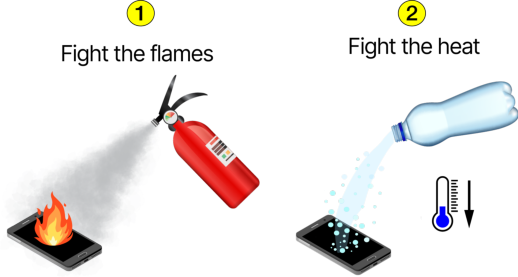
(fig.2) The two steps that are necessary for fighting a lithium battery fire
LITHIUM BATTERY FIRE IN THE CABIN
Section titled “LITHIUM BATTERY FIRE IN THE CABIN”The “ Lithium Battery Smoke/Fumes/Fire ” and “ Storage Procedure After a Lithium Battery Fire ” cabin crew procedures were developed for managing lithium battery fires. These two “basic” procedures can be referred to by other procedures, such as the “ PAX Seat Smoke/Fumes/Fire ” and the “ Overhead Bin Smoke/Fumes/Fire ”, which may be applied if the affected device is located in a seat or in an overhead bin.
Recall of the Firefighting Roles
Section titled “Recall of the Firefighting Roles”In any case, regardless of the type of fire, the firefighting roles defined in the CCOM “ Definition and Description of Fire Fighting Roles” section must be followed.
Firefighter role
Section titled “Firefighter role”The Firefighter role is assigned to the first crew member who discovers the fire. The Firefighter must:
-
Alert other cabin crew members
-
● Retrieve the nearest fire extinguisher ● Immediately locate the fire source ● Fight the fire.
In the presence of smoke, the Firefighter should consider using Portable Breathing Equipment (PBE) before fighting the fire. Note that if there is no smoke or a limited quantity of smoke, the Firefighter may initially fight the fire to save time and be replaced by the Assistant Firefighter who may have put on a PBE in the case of an increase in smoke quantity.
Communicator role
Section titled “Communicator role”The Communicator role is assigned to the second crew member to arrive on the scene. The Communicator must:
-
Alert the flight crew about the fire event
-
● Provide information about the fire to the flight crew, such as the location, source, and severity of the fire as well as the presence of smoke and its effect on occupants
-
● Maintain communication with the flight crew, provide updates on the situation, such as the firefighting progress, the number of extinguishers used and the situation in the cabin (e.g. smoke, injuries, etc.).
Assistant Firefighter role
Section titled “Assistant Firefighter role”The Assistant Firefighter role is assigned to the third crew member who arrives on the scene. The Assistant Firefighter must:
-
Bring necessary additional firefighting equipment to the Firefighter
-
● Support and coordinate the firefighting effort ● Prevent fire propagation by ensuring that no flammable materials (fluids, gases, devices) are near the affected device
-
● Be prepared to exchange roles with the Firefighter.
Support Crew Members role
Section titled “Support Crew Members role”Other crew members must:
-
Relocate passengers and keep them away from the affected area
-
● Reassure passengers ● Perform first-aid.
As for any emergency situation, assertive management of passengers is key to prevent unnecessary disturbance to the accomplishment of the procedure.
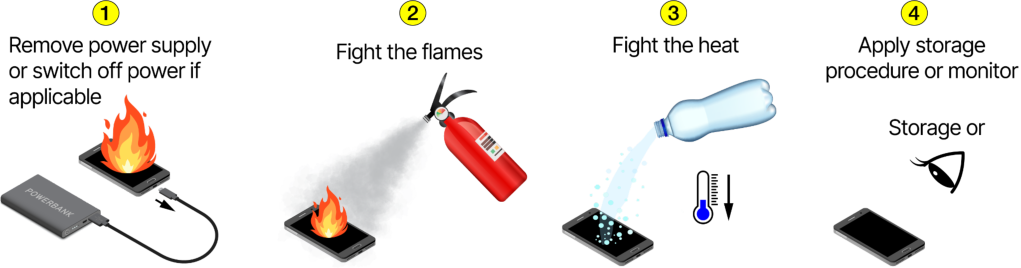
“Lithium Battery Smoke/Fumes/Fire” CCOM Procedure When the cabin crew are able to identify that the source of smoke/fumes/fire is from a lithium battery, the following procedure should be applied.
① Remove power source The first step of the procedure is to unplug the device or switch off its power source, if applicable (fig.3). The use of fireproof gloves should also be considered, if available.
② Fight the fire
Section titled “② Fight the fire”The Firefighter takes the fire extinguisher and discharges it at the base of the flames. Meanwhile, the Assistant Firefighter may collect additional firefighting equipment, if needed, and also water bottles or non-alcoholic liquids for the next step. ③ Fight the heat
When the flames are extinguished, the Assistant Firefighter pours water or non-alcoholic liquids on the device to cool it. The Assistant Firefighter should take care during this step, as liquids may turn into steam when poured on the hot device.
④ Apply the “Storage Procedure After a Lithium Battery Fire” or monitor the device
Section titled “④ Apply the “Storage Procedure After a Lithium Battery Fire” or monitor the device”If the cooled device can be moved, the cabin crew should apply the “ Storage Procedure After a Lithium Battery Fire ”.
When the affected device is cooled but cannot be moved, a cabin crew member should be assigned to monitor it. As per the “Basic Firefighting Procedure”, regular reports must be made to the chief purser.
(fig.3) “Lithium Battery Smoke/Fumes/Fire” CCOM Procedure
“Storage Procedure after a Lithium Battery Fire” CCOM Procedure
Section titled ““Storage Procedure after a Lithium Battery Fire” CCOM Procedure”This procedure can be performed after the “ Lithium Battery Smoke/Fumes/Fire ” procedure or the “ Overhead Bin Smoke/Fumes/Fire ” procedure. The flight crew can also request that the procedure be initiated in the case of a lithium battery fire in the cockpit.
When the fire is contained and the device cooled, and if it can be safely moved, the cabin crew should apply the “ Storage Procedure after a Lithium Battery Fire ”.
① Put on fireproof gloves
Section titled “① Put on fireproof gloves”The Firefighter must put on fireproof gloves.
② Fill a receptacle with water
Section titled “② Fill a receptacle with water”Meanwhile, the Assistant Firefighter retrieves a receptacle and fills it with water or non-alcoholic liquid.
③ Immerse the device
Section titled “③ Immerse the device”The Firefighter carefully takes the device and immerses it in the receptacle.
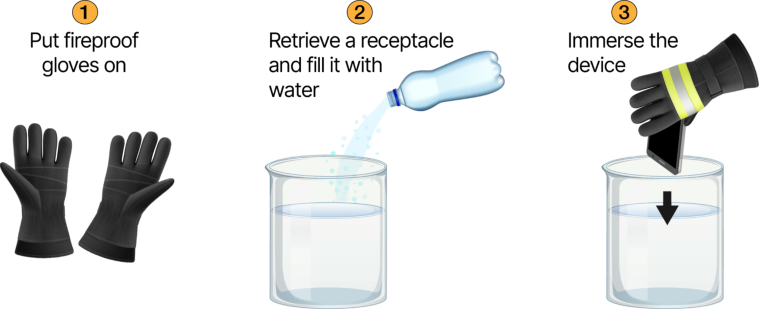
(fig.4) “Storage Procedure after a Lithium Battery Fire” CCOM Procedure - part 1
④ Transfer the receptacle to the nearest lavatory
Section titled “④ Transfer the receptacle to the nearest lavatory”The Assistant Firefighter transfers the receptacle to the nearest lavatory. The lavatory is proposed as it contains smoke detection means. It is a secured location for the device, away from the passengers, and it provides a waterproof floor designed to receive water in case of turbulent conditions.
⑤ Set the lavatory containing the device as inoperative
Section titled “⑤ Set the lavatory containing the device as inoperative”The Assistant Firefighter should then set the lavatory containing the device as inoperative to prevent passengers from accessing it.
⑥ Monitor the lavatory containing the device
Section titled “⑥ Monitor the lavatory containing the device”The lavatory containing the device must be regularly monitored for the remainder of the flight to ensure that the device remains immersed.
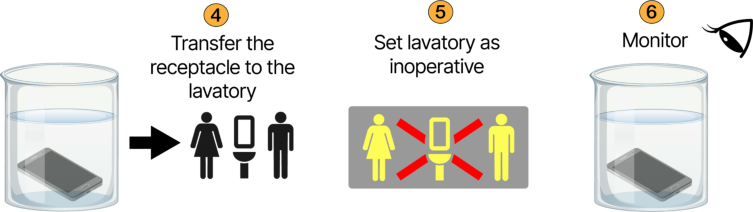
(fig.5) “Storage Procedure after a Lithium Battery Fire” CCOM Procedure - part 2
“PAX Seat Smoke/Fumes/Fire” CCOM Procedure
Section titled ““PAX Seat Smoke/Fumes/Fire” CCOM Procedure”This procedure addresses the case where the fire or smoke comes from either:
-
The In-Flight Entertainment (IFE) system
-
● A passenger Portable Electronic Device (PED) in the seat pocket or seat stowage
-
A PED trapped in the seat mechanism
-
A seat mounted battery
In the first case, the “ Basic Firefighting ” CCOM procedure applies.
In the three other cases, the “ Lithium Battery Smoke/Fumes/Fire ” CCOM procedure must be applied.
“Overhead Bin Smoke/Fumes/Fire” CCOM Procedure
Section titled ““Overhead Bin Smoke/Fumes/Fire” CCOM Procedure”It may not be easy to identify the type of fire occurring in the overhead bin (lithium battery fire or not). Therefore, based on in-service events, the “ Overhead Bin Smoke/Fumes/Fire ” CCOM procedure assumes that a lithium battery-powered device may be the origin of the fire.
Apply standard firefighting roles
Section titled “Apply standard firefighting roles”Standard firefighting roles must be applied. The Firefighter and Assistant Firefighter should always consider the use of PBE since smoke may be expected when opening the affected overhead bin. The use of fireproof gloves should also be considered, if available. The Firefighter must then retrieve a fire extinguisher. Meanwhile, the Assistant Firefighter should get water or non-alcoholic liquid, the Communicator should notify the flight crew of the fire, and the Support Crew Members should relocate passengers away from the fire location.
In order to save time, the firefighter may consider starting to fight the fire before putting on the PBE. The assistant firefighter should then, at the same time, put on the PBE and replace the firefighter when necessary.
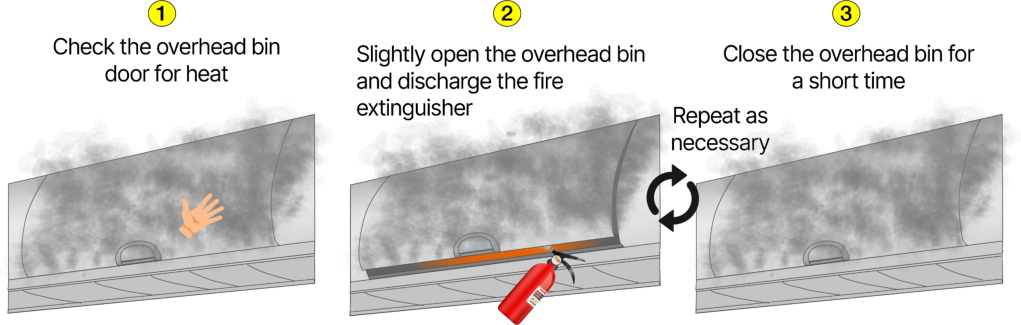
① Check for heat
Section titled “① Check for heat”The Firefighter should use the back of their hand to check the heat of the overhead bin to determine the presence of fire and identify its approximate location.
② Open the overhead bin slightly and discharge the fire extinguisher
Section titled “② Open the overhead bin slightly and discharge the fire extinguisher”The Firefighter should slightly open the overhead bin to prevent smoke from spreading into the cabin and introduce the nozzle of the fire extinguisher. The extinguisher must then be discharged.
③ Close the bin for a short time
Section titled “③ Close the bin for a short time”The overhead bin can be closed and latched for a short time to let the extinguishing agent act. This sequence should be repeated as necessary with additional fire extinguishers until the flames are extinguished.
(fig.6) “Overhead Bin Smoke/Fumes/Fire” CCOM Procedure - part 1
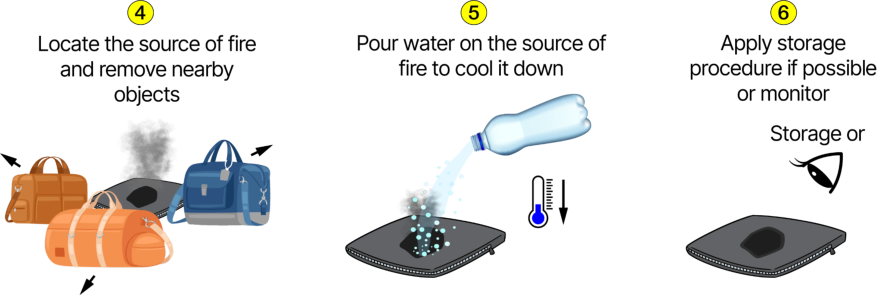
④ Identify the source of fire and remove nearby objects
Section titled “④ Identify the source of fire and remove nearby objects”When there are no more flames, the Firefighter must carefully open the overhead bin, try to identify the source of fire and remove nearby objects. If the source of fire cannot be easily located, the Firefighter should carefully empty the overhead bin to find it. As per the “Basic Firefighting procedure”, the Assistant Firefighter should be prepared to use the fire extinguisher in case flames reappear.
⑤ Cool down the source of fire
Section titled “⑤ Cool down the source of fire”When the source of fire is located, the Firefighter must pour water or non-alcoholic liquid on it to cool it down.
⑥ Apply “Storage Procedure after a Lithium Battery Fire” if possible
Section titled “⑥ Apply “Storage Procedure after a Lithium Battery Fire” if possible”When the source of fire is cooled down and can be safely moved, the “ Storage Procedure after a Lithium Battery Fire ” procedure should be applied. If it is not possible to move the affected device, it must be monitored.
(fig.7) “Overhead Bin Smoke/Fumes/Fire” CCOM Procedure - part 2
To know more about managing lithium battery fires in the cabin, and other cabin safety subjects, read the “ Getting to grips with cabin safety ” brochure, available on Airbus World.
LITHIUM BATTERY FIRE IN THE COCKPIT
Section titled “LITHIUM BATTERY FIRE IN THE COCKPIT”The majority of electronic flight bags, which are widely used by flight crews, contain lithium batteries as a primary source of power. Lithium batteries can also be present in the cockpit in laptops, tablets, cameras, mobile phones, or any PEDs.
“Smoke/Fire from Lithium Battery” FCOM/QRH Procedure
Section titled ““Smoke/Fire from Lithium Battery” FCOM/QRH Procedure”The flight crew procedure to address a lithium battery fire in the cockpit was developed on the basis of key principles: Fly, navigate, communicate, with appropriate tasksharing.
As mentioned in the procedure, if at any time of the application of the procedure, the smoke becomes the greatest threat, the flight crew should consider applying the “Removal of Smoke / Fumes” procedure.
Similarly, if the situation becomes unmanageable, the flight crew should consider an immediate landing. Depending on the situation, the captain can consider an overweight landing, a tailwind landing, ditching, or a forced landing.
① Transfer control if necessary
Section titled “① Transfer control if necessary”One pilot needs to continue flying the aircraft, while the second pilot addresses the detected fire. The Firefighter must be the flight crew member who is nearest the fire. As a consequence, a transfer of control may be necessary.
② Request initiation of the “Storage Procedure After a Lithium Battery Fire” procedure by the cabin crew
Section titled “② Request initiation of the “Storage Procedure After a Lithium Battery Fire” procedure by the cabin crew”The flight crew must establish communication with the cabin to request them to initiate the “ Storage Procedure After a Lithium Battery Fire ” CCOM procedure.
③ Secure the safety of the flight crew
Section titled “③ Secure the safety of the flight crew”If flames are present, the Pilot Flying (PF) should put on the oxygen mask and focus on flying the aircraft, while the Firefighter puts on the Portable Breathing Equipment (PBE) and starts fighting the fire.
(fig.8) “Smoke/Fire from Lithium Battery” FCOM/QRH Procedure - part 1
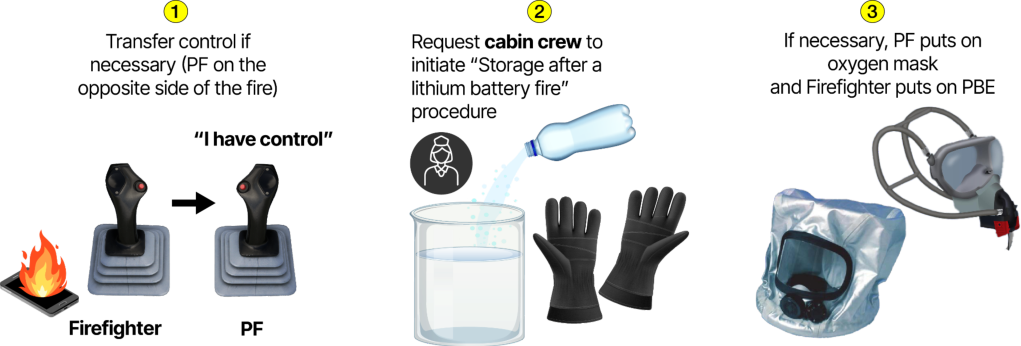
④ Fight the fire
Section titled “④ Fight the fire”The Firefighter should use the fire extinguisher to extinguish any open flames.
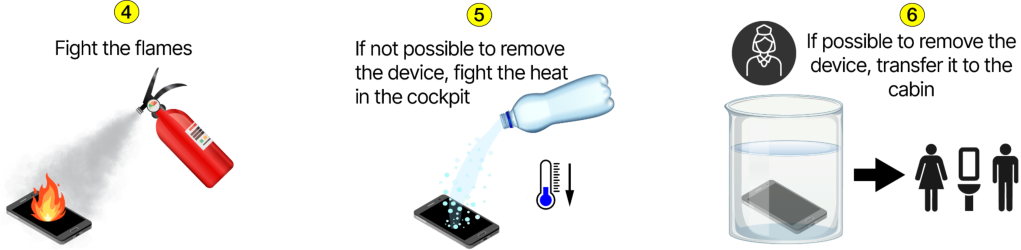
⑤ If not possible to remove the device, fight the heat in the cockpit
Section titled “⑤ If not possible to remove the device, fight the heat in the cockpit”If there are no flames or after the flames are extinguished, the device must be cooled down.
If it is not possible to remove the affected device from the cockpit, the Firefighter or the cabin crew assisting the flight crew should pour water or non-alcoholic liquid on the device to cool it down.
As stated in the FCTM, if the device is attached to a cable that cannot be easily disconnected, then it must be considered that the device is not removable from the cockpit, and water or non-alcoholic liquid must be poured on it.
⑥ If possible to remove the device, transfer the affected device to the cabin
Section titled “⑥ If possible to remove the device, transfer the affected device to the cabin”If it is possible to move the device, the cabin crew assisting the Firefighter should transfer it to the cabin and apply the “ Storage Procedure after a Lithium Battery Fire ” procedure. In the case of a flight where no cabin crew is onboard (e.g. freighter aircraft or ferry flight), it is the duty of the Firefighter to perform the storage procedure themselves.
(fig.9) “Smoke/Fire from Lithium Battery” FCOM/QRH Procedure - part 2
Lithium battery fire resilient stowage in the cockpit
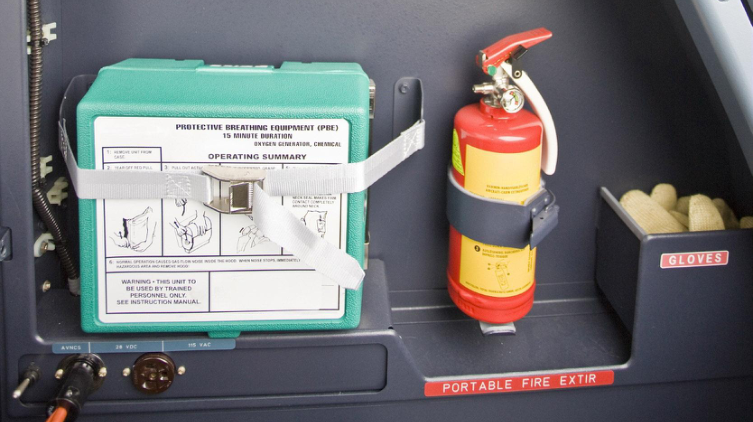
Section titled “Lithium battery fire resilient stowage in the cockpit”Stowage boxes resilient to lithium battery fire are available in the cockpit of A320 family, A330, A340, A350 and A380 aircraft. These stowage boxes have been tested as resilient to a lithium battery fire for 3 minutes. They can be filled with water or non-alcoholic liquid, if needed. When available, these resilient stowage boxes should be used by the flight crew to safely store their PED during flight as explained in the FCTM “ Procedures - Normal Procedures - General - Clean Cockpit ” chapter.
Depending on the aircraft type, one or two types of resilient stowage boxes are available (Table 1) :
-
All A300-600 and A310 aircraft are fitted with a resilient flight document stowage box
-
All A320 family aircraft are fitted with resilient flight document stowage boxes. Resilient checklist & operation manual stowage boxes are installed on newly manufactured aircraft (linefit) from September 2019. A Service Bulletin (SB 25-1BPJ or 25-1BPK) can be applied to replace the checklist and operation manual stowage boxes by resilient ones on previously manufactured aircraft
-
All A330 and A340 aircraft are fitted with two resilient checklist stowage boxes. A resilient flight document stowage box is installed on newly manufactured A330 aircraft (linefit) from September 2021. It can be installed on previously manufactured aircraft via SB 25-3768 and on A340 aircraft via SB 25-4384 or SB 25-5245
-
A350 aircraft manufactured from September 2019 are fitted with resilient laptop stowage boxes. Previously manufactured aircraft can be retrofitted with the resilient stowage boxes via SB 25-P147
-
● A380 aircraft manufactured from October 2021 are fitted with resilient laptop stowage boxes. Previously manufactured aircraft can be retrofitted with the resilient stowage boxes via SB 25-8283
-
● Development is planned on A220 aircraft to also add resilient stowages in the cockpit.
Monitored retrofit campaigns are ongoing to install the resilient stowage on in-service aircraft. For more information on the monitored retrofit campaign, please contact the Retrofit Operations team at monitored.retrofit@airbus.com.
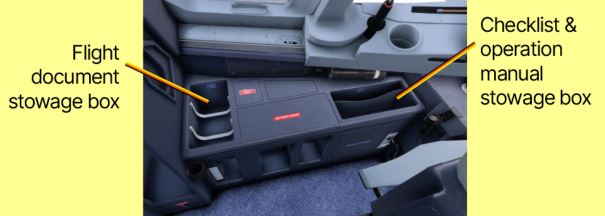
(fig.10) Stowage available in the left hand lateral console of an A320 family aircraft
|---|---|---|---|---|---|---|
Table 1: Availability of the resilient stowage boxes on Airbus aircraft
Is my aircraft equipped with resilient stowage?
Section titled “Is my aircraft equipped with resilient stowage?”The flight crew can check if the aircraft they are flying is equipped with a resilient stowage in the “ Aircraft Configuration Summary ” table of the FCOM/QRH.
Contributors:
Claire COLEMAN Cabin Crew Instructor Flight Operation Support & Training Standards
Joaquin DE NOVA Senior Flight Operations Engineer Flight Operations Support & Training Standards
Christophe DELMAS Aircraft Safety Enhancement Manager
Konstantin KALLERGIS Senior Expert Overall Aircraft Fire Safety
Maxime LANSONNEUR Director Safety - Training and Flight Operations Customer Support
Commercial aviation is significantly exposed to the risk of lithium battery fire. EASAʼs Safety Information Bulletin published in May 2025 recalls the essential need to inform passengers about the risks of carrying lithium batteries or lithium-battery-powered devices. Passengers should be aware of the limitations and restrictions that apply for the transportation and use of lithium battery-powered-devices onboard an aircraft. The bulletin also highlights the importance of flight crew and cabin crew training.
Lithium battery fires must be treated with an additional step to conventional fires. The first step is to fight the flames with a fire extinguisher. The second step is to cool down the device to stop the thermal runaway of the battery.
Fighting a fire in the cabin or in the cockpit during a flight is a complex task that must be accomplished as a team. It is therefore essential that flight crews and cabin crews are familiar with the FCOM/QRH and CCOM procedures related to lithium battery fires in order to react quickly and appropriately, if needed.
Jordane SOULA-OUDOT Accident/Incident Investigator Aviation Safety
With thanks to Gregory CALON from the Design Office and to the Monitored Retrofit team.
Safety first, 2025. Safety first is published by Airbus S.A.S. 1, rond point Maurice Bellonte - 31707 Blagnac Cedex/France.
Editor: Yannick Malinge, SVP Aviation Safety.
Editorial team: Guillaume Estragnat, Vanessa Sadi, Gwyneth Duggan, Javier Martinez Marina, Lise Foubert, Bruno Fargeon.
Photos by Airbus.
来源:Airbus Safety First 网址:https://safetyfirst.airbus.com/lithium-battery-fire-in-the-cabin-or-in-the-cockpit/ 发布日期:2025-07-03 分类:客舱运营,飞行运营,火灾,PED,智能手机,平板电脑 PDF:原始 PDF
由于飞机上乘客携带的便携式电子设备(PED)数量不断增加,飞行中锂电池火灾已成为日益严重的威胁。
近期事件表明,严格遵守相关程序以及时有效地应对锂电池火灾至关重要。
本文阐述了应对锂电池火灾的具体灭火步骤,并回顾了在客舱或驾驶舱内处理火灾必须遵循的各项程序。
请在 safetyfirst.airbus.com 网站和适用于 iOS 和 Android 设备的 Safety first 应用程序上查看本文的最新版本。
一架 A320 飞机在 FL 300(30000 英尺)高度巡航飞行。乘务长刚向驾驶舱送完饮料,正准备回到坐在前厨房的超编乘务员座位处。此时,四名剩余的客舱乘务员正在向乘客发放餐食,此时飞机前部传来乘客的尖叫声。火灾似乎发生在第 5 排座位上方的右侧行李架内。
(图 1) 事件开始时客舱乘务员的位置
超编乘务员取来灭火器和消防手套,最初承担了消防员角色。与此同时,乘务长承担了沟通者角色,向飞行机组发出警报。1 号乘务员将乘客从受影响区域转移,然后通过收集水和非酒精类液体承担了副消防员角色。2 号、3 号和 4 号乘务员将餐车移至后厨房并安抚乘客。3 号乘务员从前厨房戴上消防手套,并带来两个额外的灭火器到火灾区域。消防员角色随后在超编乘务员和 3 号乘务员之间轮换。
共使用了三个灭火器。随后客舱乘务员向装有受影响设备背包的残骸上泼水和其他非酒精类液体。
与此同时,飞行机组已开始备降附近机场。他们通过乘客广播系统宣布客舱乘务员应准备客舱着陆。部分客舱乘务员留在火灾区域附近继续向设备泼水,其他人则准备客舱着陆。飞行机组随后宣布距离着陆还有 5 分钟,使所有客舱乘务员能够做好着陆准备。飞机安全着陆,乘客通过舷梯下机。
充电宝的热失控
Section titled “充电宝的热失控”分析表明,存放在行李架中的乘客背包内的一个充电宝发生了热失控。
没有时间执行存放程序
Section titled “没有时间执行存放程序”由于飞行机组宣布即将着陆,客舱乘务员在灭火后没有时间执行存放程序。
乘客干扰灭火作业
Section titled “乘客干扰灭火作业”在灭火过程中,部分乘客试图参与灭火程序,干扰了客舱乘务员的任务。被转移的乘客站在过道上,阻碍了客舱乘务员从前厨房轻松取用灭火设备。
加强乘客、地面人员和机组人员的意识
Section titled “加强乘客、地面人员和机组人员的意识”欧洲航空安全局(EASA)于 2025 年 5 月发布的安全信息通告(SIB)2025-03 强调,乘客通常携带的便携式电子设备(PED)数量已增至每位乘客 4 至 5 件。这代表着飞行中发生热失控的重大风险敞口。EASA 强烈建议将这些锂电池驱动物品、充电宝或电子烟随身携带在客舱内,以便客舱乘务员能够在发生热失控时迅速做出反应。
该通告还回顾指出,必须告知乘客携带锂电池或锂电池驱动设备的风险,以及在飞机上运输和使用这些设备的限制和规定。该文件还强调,客舱乘务员和飞行机组必须接受培训并了解锂电池火灾的特殊性,以便在飞行中发生火灾时能够及时有效地处理。
更多信息请参阅以下文件:
- 2025 年 5 月发布的 EASA SIB 2025-03
- 2023 年 3 月发布的 FAA AC 120-80B
- EASA 危险品网页
- IATA《运营商锂电池风险评估指南》
扑救锂电池火灾
Section titled “扑救锂电池火灾”锂电池火灾的特点
Section titled “锂电池火灾的特点”当电池内部发生降解或损坏时,电池单体通过一种高能放气反应迅速释放其储存的能量,这被称为“热失控”。这可能产生烟雾、可燃气体、热量(最高可达600°C,局部可达1500°C)、火焰、爆炸或可燃液体喷射。
可能发生的连锁反应
Section titled “可能发生的连锁反应”如果由多个电池单体组成的电池中有一个单体发生热失控,它可能会损坏相邻的单体并引发连锁反应,从而导致爆炸。
有关锂电池运输的更多信息,请参阅2016年首次发布、2025年7月更新的文章“锂电池,安全飞行?”
两步灭火程序
Section titled “两步灭火程序”传统的灭火程序和灭火剂不足以扑灭锂电池火灾。灭火器可以抑制明火,但无法有效解决火源——热失控问题。因此,扑救锂电池火灾需要两个步骤。
① 扑灭火焰
Section titled “① 扑灭火焰”第一步是使用灭火器扑灭火焰。
② 扑灭热量以阻止热失控
Section titled “② 扑灭热量以阻止热失控”火焰熄灭后,消防员必须集中精力使用水或非酒精类液体冷却电池。这将阻止热失控,并防止火势蔓延到相邻的电池单体(如有)。最佳方案是将设备浸入水中。
(图2) 扑救锂电池火灾所需的两步程序
客舱内锂电池火灾
Section titled “客舱内锂电池火灾”客舱乘务员程序“锂电池烟雾/烟气/火灾”和“锂电池火灾后的存放程序”是专门为处置锂电池火灾而制定的。这两个“基础”程序可被其他程序引用,例如“旅客座椅烟雾/烟气/火灾”和“头顶行李架烟雾/烟气/火灾”,这些程序可在受影响设备位于座椅或头顶行李架时适用。
灭火角色回顾
Section titled “灭火角色回顾”在任何情况下,无论火灾类型如何,都必须遵循CCOM“灭火角色定义与描述”部分中定义的灭火角色。
消防员角色由首先发现火灾的乘务员承担。消防员必须:
-
向其他客舱乘务员发出警报
-
● 取用最近的灭火器 ● 立即定位火源 ● 扑救火灾。
在存在烟雾的情况下,消防员应在扑救火灾前考虑使用便携式呼吸设备(PBE)。请注意,如果没有烟雾或烟雾量有限,消防员可以先扑救火灾以节省时间,然后由已经佩戴PBE的副消防员接替,以防烟雾量增加。
联络员角色由第二个到达现场的乘务员承担。联络员必须:
-
向飞行机组发出火灾警报
-
● 向飞行机组提供火灾信息,如位置、火源、严重程度,以及烟雾的存在及其对乘客的影响
-
● 与飞行机组保持通讯,提供情况更新,如灭火进展、已使用的灭火器数量以及客舱情况(如烟雾、人员伤亡等)。
副消防员角色
Section titled “副消防员角色”副消防员角色由第三个到达现场的乘务员承担。副消防员必须:
-
将必要的额外消防设备带给消防员
-
● 支持和协调灭火工作 ● 通过确保受影响设备附近没有易燃材料(液体、气体、设备)来防止火势蔓延
-
● 准备好与消防员交换角色。
支援乘务员角色
Section titled “支援乘务员角色”其他乘务员必须:
-
转移乘客并使其远离受影响区域
-
● 安抚乘客 ● 进行急救。
与任何紧急情况一样,对乘客的有效管控对于防止干扰程序执行至关重要。
“锂电池烟雾/烟气/火灾”CCOM程序 当客舱乘务员能够确认烟雾/烟气/火灾的来源是锂电池时,应采用以下程序。
① 移除电源 程序的第一个步骤是拔掉设备插头或关闭其电源(如适用)(图3)。还应考虑使用消防手套(如果有的话)。
灭火者取用灭火器,将灭火剂喷射至火焰根部。与此同时,灭火辅助者可在需要时收集额外的灭火设备,并准备水瓶或非酒精类液体,以备下一步使用。③ 冷却
火焰扑灭后,灭火辅助者将水或非酒精类液体浇在设备上进行冷却。灭火辅助者在此步骤中应注意,液体浇在炽热的设备上可能会转变为蒸汽。
④ 执行“锂电池起火后的存放程序”或监控设备
Section titled “④ 执行“锂电池起火后的存放程序”或监控设备”若冷却后的设备可以移动,客舱乘务员应执行“锂电池起火后的存放程序”。
当受影响设备已冷却但无法移动时,应指派一名客舱乘务员对其进行监控。按照“基本灭火程序”,必须定期向乘务长报告情况。
(图3) “锂电池烟雾/烟气/起火” CCOM 程序
“锂电池起火后的存放程序” CCOM 程序
Section titled ““锂电池起火后的存放程序” CCOM 程序”此程序可在“锂电池烟雾/烟气/起火”程序或“头顶行李箱烟雾/烟气/起火”程序之后执行。若驾驶舱内发生锂电池起火,飞行机组也可请求启动本程序。
当火势得到控制、设备已冷却,且能够安全移动时,客舱乘务员应执行“锂电池起火后的存放程序”。
① 佩戴防火手套
Section titled “① 佩戴防火手套”灭火者必须佩戴防火手套。
② 在容器中注水
Section titled “② 在容器中注水”与此同时,灭火辅助者取来容器并注入水或非酒精类液体。
③ 将设备浸入液体中
Section titled “③ 将设备浸入液体中”灭火者小心地拿起设备并将其浸入容器中。
(图4) “锂电池起火后的存放程序” CCOM 程序 - 第一部分
④ 将容器转移至最近的洗手间
Section titled “④ 将容器转移至最近的洗手间”灭火辅助者将容器转移至最近的洗手间。选择洗手间的原因在于其配备烟雾探测装置,且是一个安全位置,可使设备远离乘客,同时具有防水地面设计,可在颠簸情况下承受积水。
⑤ 将含有设备的洗手间设为不可用
Section titled “⑤ 将含有设备的洗手间设为不可用”随后,灭火辅助者应将含有设备的洗手间设为不可用状态,以防止乘客进入。
⑥ 监控含有设备的洗手间
Section titled “⑥ 监控含有设备的洗手间”含有设备的洗手间必须在剩余飞行时间内定期监控,以确保设备始终浸没在液体中。
(图5) “锂电池起火后的存放程序” CCOM 程序 - 第二部分
“旅客座椅烟雾/烟气/起火” CCOM 程序
Section titled ““旅客座椅烟雾/烟气/起火” CCOM 程序”本程序适用于以下情况产生的起火或烟雾:
-
机上娱乐(IFE)系统
-
● 旅客随身电子设备(PED)位于座椅口袋或座椅储物处
-
PED 卡在座椅机构中
-
座椅安装式电池
第一种情况下,应执行“基本灭火”CCOM 程序。
后三种情况下,必须执行“锂电池烟雾/烟气/起火”CCOM 程序。
“头顶行李箱烟雾/烟气/起火” CCOM 程序
Section titled ““头顶行李箱烟雾/烟气/起火” CCOM 程序”头顶行李箱内发生的火灾类型(是否为锂电池起火)可能难以识别。因此,基于实际运行事件,“头顶行李箱烟雾/烟气/起火”CCOM 程序默认锂电池供电设备可能为火灾起因。
执行标准灭火分工
Section titled “执行标准灭火分工”必须执行标准灭火分工。灭火者和灭火辅助者应始终考虑使用防护呼吸设备(PBE),因为打开受影响的头顶行李箱时可能会有烟雾。使用防火手套也应予以考虑(如有配备)。灭火者随后必须取用灭火器。与此同时,灭火辅助者应准备水或非酒精类液体,沟通者应通知飞行机组发生火灾,而支援乘务员应将乘客转移至远离火灾位置的地方。
为节省时间,灭火者可考虑在佩戴 PBE 之前就开始灭火。灭火辅助者应在同一时间佩戴 PBE,并在必要时替换灭火者。
① 检查温度
Section titled “① 检查温度”灭火者应使用手背检查行李架温度,以判断是否存在火情并确定其大致位置。
② 轻微打开行李架并释放灭火器
Section titled “② 轻微打开行李架并释放灭火器”灭火者应轻微打开行李架以防止烟雾扩散至客舱,并将灭火器喷嘴伸入。随后必须释放灭火器。
③ 短暂关闭行李架
Section titled “③ 短暂关闭行李架”可将行李架短暂关闭并锁止,以使灭火剂发挥作用。根据需要重复此步骤并使用额外灭火器,直至火焰熄灭。
(fig.6) “行李架烟雾/烟气/火灾” CCOM 程序 - 第 1 部分
④ 确认火源并移除附近物品
Section titled “④ 确认火源并移除附近物品”当火焰熄灭后,灭火者必须小心打开行李架,确认火源并移除附近物品。若无法轻松定位火源,灭火者应小心清空行李架以查找火源。根据“基本灭火程序”,助理灭火者应随时准备使用灭火器,以防火焰再次出现。
⑤ 冷却火源
Section titled “⑤ 冷却火源”当火源被定位后,灭火者必须向其浇水或非酒精类液体以进行冷却。
⑥ 如可行,执行“锂电池火灾后存放程序”
Section titled “⑥ 如可行,执行“锂电池火灾后存放程序””当火源已冷却且可安全移动时,应执行“锂电池火灾后存放程序”。若无法移动受影响设备,则必须对其进行监控。
(fig.7) “行李架烟雾/烟气/火灾” CCOM 程序 - 第 2 部分
了解更多关于客舱内锂电池火灾管理及其他客舱安全主题的内容,请阅读《深入了解客舱安全》手册,该手册可在 Airbus World 上获取。
驾驶舱内锂电池火灾
Section titled “驾驶舱内锂电池火灾”目前飞行机组广泛使用的电子飞行包(EFB)大多采用锂电池作为主要电源。笔记本电脑、平板电脑、照相机、手机或任何便携式电子设备(PED)中也可能含有锂电池。
“锂电池烟雾/火灾” FCOM/QRH 程序
Section titled ““锂电池烟雾/火灾” FCOM/QRH 程序”驾驶舱内锂电池火灾的飞行机组程序基于以下关键原则制定:飞行、导航、通讯,并进行适当的任务分工。
如该程序所述,如果在执行程序过程中的任何时刻烟雾成为最大威胁,飞行机组应考虑执行“烟雾/烟气排除”程序。
同样,如果情况变得无法控制,飞行机组应考虑立即着陆。根据情况,机长可考虑超重着陆、逆风着陆、水上迫降或强行着陆。
① 必要时进行控制权交接
Section titled “① 必要时进行控制权交接”一名飞行员继续驾驶飞机,而另一名飞行员处理已探测到的火灾。灭火者必须是距离火源最近的飞行机组人员。因此,可能需要进行控制权交接。
② 请求客舱乘务组启动“锂电池火灾后存放程序”
Section titled “② 请求客舱乘务组启动“锂电池火灾后存放程序””飞行机组必须与客舱建立通信,请求其启动“锂电池火灾后存放程序”CCOM 程序。
③ 确保飞行机组安全
Section titled “③ 确保飞行机组安全”如果存在火焰,飞行驾驶员(PF)应戴上氧气面罩并专注于驾驶飞机,而灭火者应戴上便携式呼吸设备(PBE)并开始灭火。
(fig.8) “锂电池烟雾/火灾” FCOM/QRH 程序 - 第 1 部分
灭火者应使用灭火器扑灭任何明火。
⑤ 如果无法移除设备,则在驾驶舱内对抗热量
Section titled “⑤ 如果无法移除设备,则在驾驶舱内对抗热量”如果没有火焰或火焰已被扑灭,必须对设备进行冷却。
如果无法将受影响设备从驾驶舱中移除,灭火者或协助飞行机组的客舱乘务员应向设备浇水或非酒精类液体以进行冷却。
如 FCTM 所述,如果设备连接到无法轻松断开的电缆,则应认为该设备不可从驾驶舱移除,必须向其浇水或非酒精类液体。
⑥ 如果可以移除该设备,将受影响设备转移至客舱
如果可以移动该设备,协助灭火员的客舱乘务员应将其转移至客舱,并执行”锂电池火灾后的存放程序”。在无客舱乘务员登机的航班上(如货机或调机飞行),由灭火员自行执行存放程序。
(图9)“锂电池冒烟/起火”FCOM/QRH程序 - 第2部分
驾驶舱内锂电池火灾防护存放箱
Section titled “驾驶舱内锂电池火灾防护存放箱”空客A320系列、A330、A340、A350和A380飞机的驾驶舱内均配备了可承受锂电池火灾的存放箱。这些存放箱经过测试,可在锂电池火灾中保持防护性能达3分钟。如有需要,可用水或非酒精类液体填充。当有防护存放箱可用时,飞行机组应在飞行期间使用这些箱子来安全存放个人电子设备(PED),如FCTM”程序 - 正常程序 - 概述 - 清洁驾驶舱”章节所述。
根据飞机型号的不同,可使用一种或两种类型的防护存放箱**(表1)**:
-
所有A300-600和A310飞机均配备了防护飞行文件存放箱
-
所有A320系列飞机均配备了防护飞行文件存放箱。防护检查单和操作手册存放箱安装在2019年9月及以后新生产的飞机上(生产线安装)。服务通告(SB 25-1BPJ或25-1BPK)可用于将先前生产的飞机上的检查单和操作手册存放箱更换为防护型
-
所有A330和A340飞机均配备了两个防护检查单存放箱。防护飞行文件存放箱安装在2021年9月及以后新生产的A330飞机上(生产线安装)。可通过SB 25-3768安装在先前生产的A330飞机上,通过SB 25-4384或SB 25-5245安装在A340飞机上
-
2019年9月及以后生产的A350飞机配备了防护笔记本电脑存放箱。先前生产的飞机可通过SB 25-P147进行改装,加装防护存放箱
-
2021年10月及以后生产的A380飞机配备了防护笔记本电脑存放箱。先前生产的飞机可通过SB 25-8283进行改装,加装防护存放箱
-
计划在A220飞机上开发并加装驾驶舱防护存放箱。
正在实施改装监控计划,为现役飞机安装防护存放箱。有关改装监控计划的更多信息,请联系改装运营团队:monitored.retrofit@airbus.com。
(图10) A320系列飞机左侧控制台上的存放箱
|---|---|---|---|---|---|---|---|
表1: 空客飞机防护存放箱配置情况
我的飞机是否配备了防护存放箱?
Section titled “我的飞机是否配备了防护存放箱?”飞行机组可在FCOM/QRH的”飞机配置概要”表中查看所飞机型是否配备了防护存放箱。
贡献者:
Claire COLEMAN 客舱乘务教官 飞行运行支援与培训标准
Joaquin DE NOVA 高级飞行运行工程师 飞行运行支援与培训标准
Christophe DELMAS 飞机安全改进经理
Konstantin KALLERGIS 飞机整体防火安全高级专家
Maxime LANSONNEUR 安全总监 - 培训与飞行运行客户支援
商业航空面临锂电池火灾的显著风险。2025年5月发布的EASA安全信息通告强调,向乘客通报携带锂电池或锂电池供电设备风险的重要性。乘客应了解机上运输和使用锂电池供电设备的相关限制和规定。该通告还强调了飞行机组和客舱乘务员培训的重要性。
锂电池火灾的处理比常规火灾多一个步骤。第一步是用灭火器扑灭火焰。第二步是冷却设备以阻止电池热失控。
在飞行中扑灭客舱或驾驶舱内的火灾是一项需要团队协作的复杂任务。因此,飞行机组和客舱乘务员必须熟悉FCOM/QRH和CCOM中与锂电池火灾相关的程序,以便在需要时能够快速、正确地做出反应。
Jordane SOULA-OUDOT 事故/事件调查员 航空安全
感谢设计办公室的Gregory CALON以及改装监控团队的贡献。
Safety first,2025年。《Safety First》由空客S.A.S.出版。地址:1, rond point Maurice Bellonte - 31707 Blagnac Cedex/法国。
编辑:Yannick Malinge,航空安全高级副总裁。
编辑团队:Guillaume Estragnat、Vanessa Sadi、Gwyneth Duggan、Javier Martinez Marina、Lise Foubert、Bruno Fargeon。
照片由空客提供。