Pitot Probe Performance Covered On the Ground
Source: Airbus Safety First URL: https://safetyfirst.airbus.com/pitot-probe-performance-covered-on-the-ground/ Published: 2016-07-28 Magazine Issue: 2016-07 Category: Flight Ops, Ground Ops, Maintenance, adirs, adiru, MEL, obstruction, pitot, pressure, probe, speed, walk around, walkaround, wasp PDF: Original PDF
PROCEDURES


Pitot probes inlet obstruction will affect accuracy of the air data parameters calculated from its measurements such as the aircraft airspeed and Mach number. Pitot probes inlet obstruction on the ground can be caused by unexpected sources such as sand, dirt, dust or insect nesting activity. This is why it is important to think about when to install Pitot probe covers for an aircraft on the ground to protect its air data system performance.


STÉPHANE COTE
BENOIT DUQUESNE
AYMERIC JACQUOT
Anemo/Inertial Systems Product Leader
Accident/Incident Investigator
Air Data and Inertial System Engineer

AN OBSTRUCTED PITOT PROBE MAY OCCUR IN LESS TIME THAN YOU THINK
Section titled “AN OBSTRUCTED PITOT PROBE MAY OCCUR IN LESS TIME THAN YOU THINK”In-service experience: impacts of a blocked Pitot probe in a context of dispatch under MEL
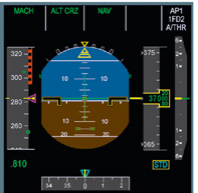
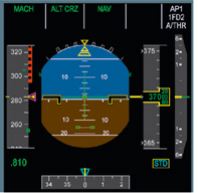
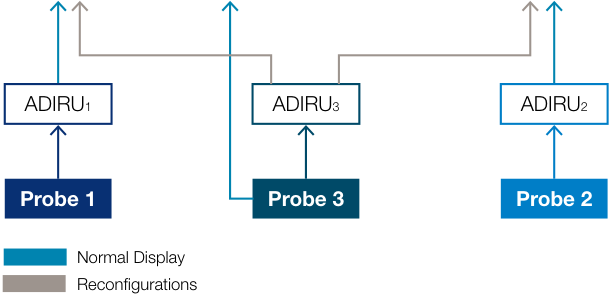
Section titled “In-service experience: impacts of a blocked Pitot probe in a context of dispatch under MEL”In a recent incident, the captain of an A330 rejected the take-off attempt after noticing an airspeed indication failure. Troubleshooting conducted subsequently led to swap two of the Air Data Inertial Reference Units (ADIRU) and the aircraft was dispatched with ADIRU 2 inoperative as allowed by the Minimum Equipment List (MEL). A second take-off passed the critical V1 speed when an airspeed discrepancy was noticed again on the captain’s PFD. The take-off had to be continued but a wrong captain airspeed associated with ADIRU 2 inoperative caused the A330’s auto-thrust and flight directors to disengage, the flight controls mode
reverted from normal to alternate law and the autopilot became unavailable. The crew performed an immediate in-flight turn-back. After the uneventful landing, a detailed ground inspection found conclusive evidence that the cause of the indicated airspeed discrepancy was due to a Pitot probe partially blocked in less than two hours by nesting wasps.
An investigation of another in-flight turnback (from a non-Airbus aircraft type) at the same airport also showed that the inlet of the captain’s Pitot probe was partly obstructed by material consistent with a mud-dauber wasp nest.
The cause of the indicated airspeed discrepancy was due to a Pitot probe partially blocked in less than two hours by nesting wasps.
Main reasons for Pitot obstruction: insects but not only…
Section titled “Main reasons for Pitot obstruction: insects but not only…”Insects can cause rejected takeoff or in-flight turn-back events and there are other potential sources of Pitot obstruction.
“A mud dauber wasp can build a significant nest capable of completely blocking a Pitot probe, vent, or drain in around 20 minutes” according to a recent airworthiness bulletin
issued by the Australian Civil Aviation Safety Authority (CASA) following an investigation of an in-service occurrence. But it is not only insect activity that can be the cause of Pitot blockage. Pitot probe inlet obstruction by insect, dust, dirt or any materials (sand) is the main root cause of rejected take-off or in-flight turn-back events due to airspeed discrepancy below FL 250.
The main cause of airspeed discrepancy below FL250 was Pitot obstruction by sand, dust, dirt or insects.
PROCEDURES
Section titled “PROCEDURES”(fi g.1)
Section titled “(fi g.1)”Pitot probe simplifi ed schematic (applicable for A320, A330 and A340 aircraft)
The Pitot probe consists of a tube pointing directly into the air fl ow (fi g.2) and measuring the stagnation pressure called total pressure or Pitot pressure.
This total pressure information and the static pressure delivered by static ports on the fuselage are used to compute the indicated airspeed and Mach number provided by the ADIRU (fi g.3).
Like any precision instrument, Pitot probes need to be protected on ground to provide correct airspeed and Mach number measurements in fl ight in order to fl y the aircraft safely.
(fi g.2)
Section titled “(fi g.2)”Design principle of a Pitot probe (applicable for A320, A330 and A340 aircraft)
-
1 2
-
3 3 4
-
1 Drain hole 2 Water trap 3 Heater cable wound around the pressure line
-
4 Total pressure line 5 Electrical connector 5 6 Pneumatic connector 6 (Quick disconnect)
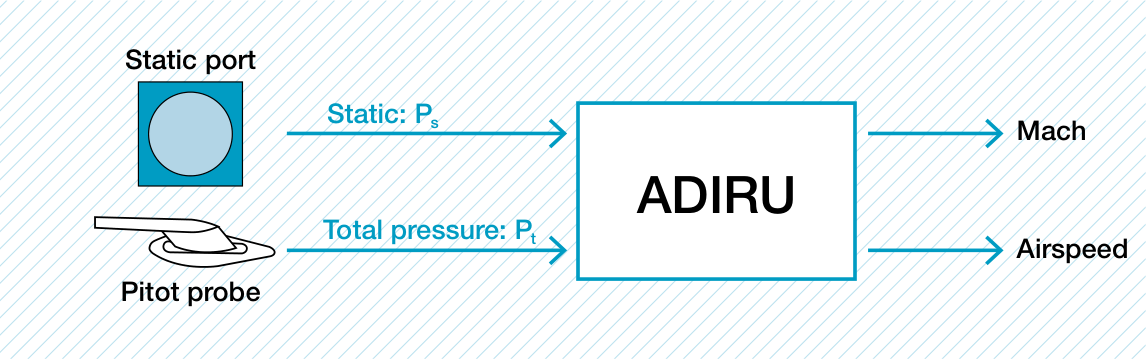
(fi g.3)
Pitot probe principle
Aircraft Maintenance Manual parking procedure
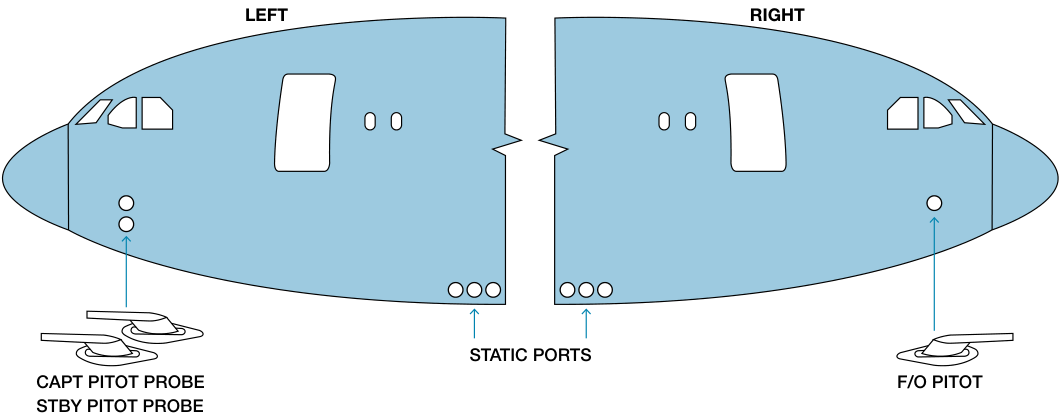
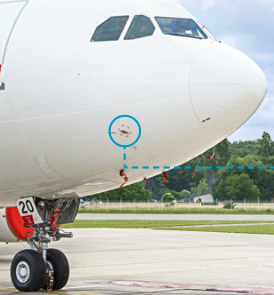
Section titled “Aircraft Maintenance Manual parking procedure”Parking procedures available in the Aircraft Maintenance Manual (AMM section 10-11-00) will request that approved protective covers are installed on each of the air data probes or
devices, including Pitot probes (fi g.4). But many operators will not apply the AMM parking procedure if the aircraft only has a short turn-around time or remains on the fl ight line.
(fi g.4)
Section titled “(fi g.4)”Pitot probe locations on an Airbus A330 or A340 aircraft
PROCEDURES
Section titled “PROCEDURES”The proper protection for Pitot probes
Section titled “The proper protection for Pitot probes”(fig.5)
Section titled “(fig.5)”Example of Aircraft Pitot probe protective cover
(PN: 98A10001005000 or alternate PN: A1000100500000). Airbus A380 and A350 aircraft have Multi-Function Probes (MFP) and a standby Pitot probe that use two different covers. Pitot probe and MFP covers are part of the flight kit for each aircraft.
Using the approved Pitot probe covers (fig.5) is important as the covers for other manufacturer’s aircraft may not be the correct fit or offer complete protection for the Pitot probes of Airbus aircraft. The same Pitot probe cover can be used on Airbus A310, A320, A330, and A340 aircraft families
When is Pitot probe too hot to handle on ground?
Section titled “When is Pitot probe too hot to handle on ground?”Protective covers can be installed 30 minutes after engines shut down as the probe heating is deactivated when engines are turned off. After a
period of 15 minutes for the probe tip to cool to 70°C, it can take an additional 15 minutes to reach ambient temperature.
AIRLINE ASSESSMENT – FROM OPERATIONAL BASES TO DESTINATION AIRPORTS
Section titled “AIRLINE ASSESSMENT – FROM OPERATIONAL BASES TO DESTINATION AIRPORTS”Is the Pitot probe protection a priority for ground handlers and maintenance teams?
Section titled “Is the Pitot probe protection a priority for ground handlers and maintenance teams?”With the recent finding from the example incident where a Pitot probe obstruction occurred in less than two hours, it is important to know if Pitot probe protection is a priority in local airport ground handling or turn-around procedures. The aircraft operator should collaborate with the local airport authorities to assess the risk of Pitot probes being blocked by sand, dust, dirt or insects activity at their operational base or destination airports.
For example, check if a wildlife management plan is part of the airport’s hazard management strategy and what mitigations are in place to detect or manage insect activity. Confirm how each airport will alert airlines or operators where there is evidence that local conditions may contribute to an increased risk of Pitot blockage to aircraft on the ground.
Depending on the outcomes of this risk assessment, the operator should consider implementing a specific policy on the use of Pitot covers even for a short turn-around time. Some airlines already have policies in place for certain airports that require Pitot covers to be used for all aircraft on the ground regardless of turn-around times.
Airlines or operators should also report any in-service incidents of Pitot probe obstruction to the local airport authority and to Airbus. This will help to determine root causes, prevent further occurrences and track any trends of obstructions of Pitot probes on ground.
Some airlines already have policies in place for certain airports that require Pitot covers to be used for all aircraft on the ground regardless of turnaround times.
AIRPORT PROACTIVE PREVENTION STRATEGIES
Section titled “AIRPORT PROACTIVE PREVENTION STRATEGIES”The airports can also implement preventive actions following an assessment of the locally occurring risks such as regularly inspecting for wasps or other insects at their sites. It is important to continuously monitor and communicate with all airlines and aircraft operators about any seasonal increased insect activity, especially by wasps, and where there are local conditions causing accumulations of sand, dirt or fine particle dust. This will
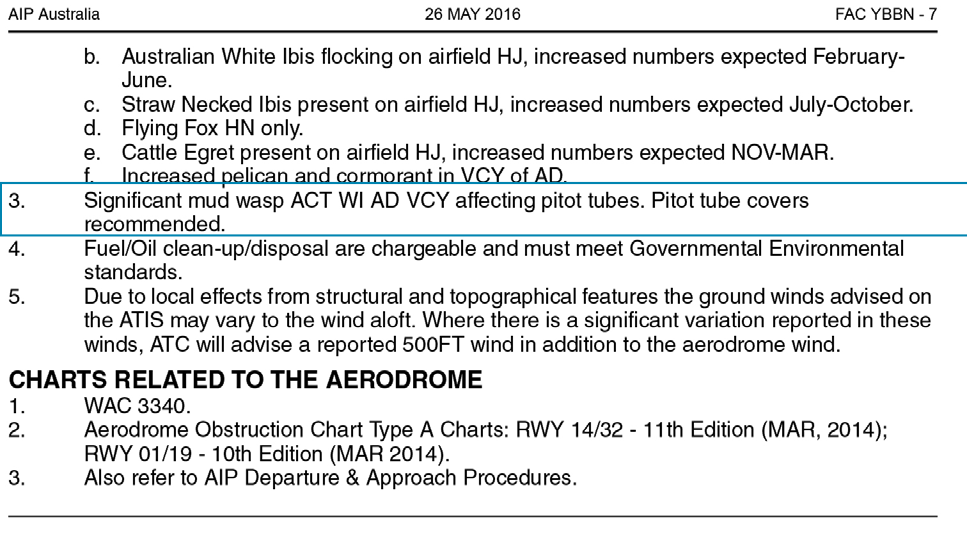
alert aircraft operators and their ground handlers to consider applying additional preventive measures to protect Pitot probes with the approved covers, even for short aircraft turn-around times. If there is a persisting problem, it may be necessary to issue a Notice to Airmen (NOTAM) making the pilots aware of the risk (fig.6) and alert them to pay particular attention when checking their aircraft’s Pitot probes for any risk of obstruction.
(fig.6)
Section titled “(fig.6)”Example extract from NOTAM with item [3.] warning of mud wasp activity and the recommendation to install Pitot tube covers - Courtesy of Brisbane Airport Corporation
PROCEDURES
Section titled “PROCEDURES”(fi g.7)
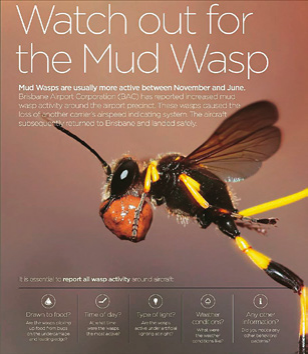
Section titled “(fi g.7)”Mud wasp awareness poster - Courtesy of Brisbane Airport Corporation
(fi g.8)
Section titled “(fi g.8)”Array of 3D printed Pitot probes of various designs (A330, B737-400, B737-800, Dash-8, B747 and E190) used for monitoring wasp activity and ecology study at Brisbane airport. - Courtesy of Brisbane Airport Corporation
ADDITIONAL AIRPORT MEASURES – UPPING THE ANTE
Section titled “ADDITIONAL AIRPORT MEASURES – UPPING THE ANTE”An example of where collaboration between Airlines and Airports can enhance the operational safety of aircraft
Section titled “An example of where collaboration between Airlines and Airports can enhance the operational safety of aircraft”Like many other airports around the world, being located in a sub-tropical environment means Brisbane Airport (BNE) is ever vigilant about the presence of mud wasps on site. While the airport has always maintained a stringent monitoring and control regime for these pests, following an incident whereby a mud wasp nest blocked the air data instruments of an Airbus aircraft during a standard turn-around at Brisbane Airport, the Brisbane Airport Corporation (BAC) upped the ante by introducing additional measures to mitigate the ongoing risk of Pitot blockage on ground.
Airport to Airline Communication
Section titled “Airport to Airline Communication”BAC recommends the use of Pitot probe covers on aircraft at BNE to prevent possible obstructions from mud wasp activity. Results from pest inspections carried out by pest management professionals are emailed out weekly to all airlines and stakeholders. The notifi cations include the location and number of nests found and treated. Their “Watch out for the Mud Wasp” awareness poster (fi g.7) is a quick reference guide to the conditions to observe when the wasps are likely to be more active at BNE and details what information to report to the BAC wildlife coordinator via email or at the Brisbane Airport Wildlife Working Group.
Preventative pest control
Section titled “Preventative pest control”BAC initiated a wasp ecology study consisting of an array of 3D printed Pitot probes of various designs (A330, B737-400, B737-800, Dash-8, B747 and E190), which are secured to sheets of metal to resemble the aircraft’s fuselage, and they are mounted in different parking positions around the airfi eld (fi g.8). Each location is inspected regularly for evidence of mud wasp activity and when there are nests found in any of the 3D printed Pitot tube arrays the contents are hatched and examined by an ecologist. Results from the study are expected in February 2017. This will help BAC achieve a better understanding of the species of mud wasp present at Brisbane, the impacts that they can have on aircraft operations and any further measures that can be taken to mitigate the risk.
FLIGHT CREW FOCUS ON PITOT PROBES
Section titled “FLIGHT CREW FOCUS ON PITOT PROBES”Additional safety barriers, embedded in Airbus Standard Operating Procedures (SOP), are available to flight crews in order to avoid takingoff with obstructed Pitot probes.
SOP Exterior Walk Around (FCOM section PRO-NOR-SOP-05)
Section titled “SOP Exterior Walk Around (FCOM section PRO-NOR-SOP-05)”Always look at the Pitot probes carefully during the pre-flight exterior inspection and check that all of the covers are removed before flight. Ensure there is no damage to the Pitot
probe and that the general condition is good. This will give confidence that the correct airspeed readouts will be available on all of the instruments in all flight phases.
SOP Take-off (FCOM section PRO-NOR-SOP-12)
Section titled “SOP Take-off (FCOM section PRO-NOR-SOP-12)”During the take-off phase, a partially or totally obstructed Pitot probe may lead to an underestimated, fluctuating or “flagged” airspeed information on the Primary Flight Display (PFD) or standby instrument for the affected Pitot probe. In this case, there is likely to be an indicated airspeed discrepancy
which should be detected when cross checked with the other PFD. Standard Operating Procedures for Airbus aircraft require the flight crew to scan airspeeds shown on the PFD throughout the takeoff and the Pilot Flying shall cross check and confirm the airspeed indicated on reaching 100 knots.

Pitot probe protection using the Airbus approved covers is the most effective way to prevent Pitot obstruction on ground.
Airlines and operators should assess and monitor the risk of any obstruction to their aircraft’s Pitot probes at the airports where they are based or operating to. Airports can also play an active role by collaborating with their operators to manage airport hazards and communicate on any of the mitigations in place.
Where there is an identified risk of Pitot obstruction due to sand, dirt, dust or insect nesting activity, the operator should consider applying a specific policy to use Pitot covers for aircraft on the ground regardless of turn-around times.
Reporting any occurrences of Pitot probe obstruction to the local airport authorities and Airbus will help to monitor for adverse trends, put specific measures in place and communicate this information to the benefit of all airlines and operators.
Safety first, #22 July, 2016. Safety first is published by Airbus S.A.S. - 1, rond point Maurice Bellonte - 31707 Blagnac Cedex/France. Publisher and Editor: Yannick Malinge, Chief Product Safety Officer. Concept Design by Airbus Multi Media Support 20161577. Reference: GS 420.0045 Issue 22. Photos by Airbus, Lindner Fotografie, T. Denson, S. Ramadier, H. Goussé, P. Masclet, F. Lancelot, M. Lindner, P. Pigeyre.
来源: Airbus Safety First 网址: https://safetyfirst.airbus.com/pitot-probe-performance-covered-on-the-ground/ 发布日期: 2016-07-28 杂志期号: 2016-07 分类: 飞行运营, 地面运营, 维修, ADIRS, ADIRU, MEL, 堵塞, 皮托管, 压力, 探头, 空速, 绕机检查, 绕机检查, WASP PDF: 原始 PDF
程序
皮托管入口堵塞会影响从其测量数据计算出的空速数据参数的准确性,如飞机空速和马赫数。地面上的皮托管入口堵塞可能由意外原因造成,如沙尘、污垢、灰尘或昆虫筑巢活动。因此,重要的是要考虑何时为地面上的飞机安装皮托管罩,以保护其空速数据系统的性能。
STÉPHANE COTE
BENOIT DUQUESNE
AYMERIC JACQUOT
航姿惯性系统产品负责人
事故/事件调查员
空速数据和惯性系统工程师
皮托管堵塞可能比你想象的更快发生
Section titled “皮托管堵塞可能比你想象的更快发生”运营经验:在 MEL 放行背景下阻塞皮托管的影响
Section titled “运营经验:在 MEL 放行背景下阻塞皮托管的影响”在最近的一次事件中,一架 A330 的机长在发现空速指示故障后中断了起飞尝试。随后的故障排查导致更换了两个大气数据惯性基准组件(ADIRU),并按照最低设备清单(MEL)的规定放行了 ADIRU 2 不工作的飞机。第二次起飞通过关键的 V1 速度时,机长 PFD 上再次出现空速不一致。起飞不得不继续,但与 ADIRU 2 不工作相关的错误机长空速导致 A330 的自动推力和飞行指引仪脱开,飞行控制模式从正常法则反转为备用法则, autopilot 变得不可用。机组执行了立即返场飞行。着陆无异常后,详细的地面检查发现了确凿证据,表明空速不一致的原因是皮托管在不到两小时内被黄蜂巢部分堵塞。
另一起同一机场的返场飞行事件(非 Airbus 飞机型号)的调查也显示,机长皮托管的入口被一种材料部分堵塞,与泥蜂巢一致。
空速不一致的原因是皮托管在不到两小时内被筑巢黄蜂部分堵塞。
皮托管堵塞的主要原因:不仅仅是昆虫……
Section titled “皮托管堵塞的主要原因:不仅仅是昆虫……”昆虫可能导致中断起飞或返场飞行事件,而皮托管堵塞还有其他潜在原因。
“泥蜂可以在约 20 分钟内构建一个足以完全堵塞皮托管、通风口或排水口的巢穴”,这是澳大利亚民用航空安全局(CASA)在调查一起运营事件后发布的一份近期适航通告中的内容。但这不仅仅是昆虫活动才会导致皮托管堵塞。皮托管入口被昆虫、灰尘、污垢或任何材料(沙子)堵塞是 25000 英尺以下因空速不一致导致中断起飞或返场飞行事件的主要原因。
25000 英尺以下空速不一致的主要原因是由沙尘、灰尘、污垢或昆虫造成的皮托管堵塞。
皮托管简化示意图(适用于 A320、A330 和 A340 飞机)
皮托管由一根直接指向气流方向的管子组成**(图 2)**,用于测量称为全压或皮托管压力的滞止压力。
全压信息和机身静压口提供的静压被用于计算 ADIRU 提供的指示空速和马赫数**(图 3)**。
与任何精密仪器一样,皮托管在地面上需要受到保护,以便在飞行中提供正确的空速和马赫数测量,从而确保飞机安全飞行。
(fi g.2)
Section titled “(fi g.2)”皮托管设计原理(适用于 A320、A330 和 A340 飞机)
-
1 2
-
3 3 4
-
1 排水孔 2 疏水器 3 加热电缆缠绕在压力管路上
-
4 全压管路 5 电连接器 5 6 气动连接器 6 (快卸接头)
(fi g.3)
皮托管工作原理
飞机维护手册停机程序
Section titled “飞机维护手册停机程序”飞机维护手册(AMM 10-11-00 章节)中的停机程序要求在每个大气数据探头或装置上安装经批准的防护罩,包括皮托管 (fi g.4)。但如果飞机仅需短时间过站或停放在机坪上,许多运营商不会执行 AMM 停机程序。
(fi g.4)
Section titled “(fi g.4)”空客 A330 或 A340 飞机上的皮托管位置
皮托管的适当防护
Section titled “皮托管的适当防护”(fig.5)
Section titled “(fig.5)”飞机皮托管防护罩示例
(件号:98A10001005000 或替代件号:A1000100500000)。空客 A380 和 A350 飞机配备多功能探头(MFP)和备用皮托管,需使用两种不同的防护罩。皮托管和 MFP 防护罩属于每架飞机飞行包的组成部分。
使用经批准的皮托管防护罩 (fig.5) 非常重要,因为其他制造商飞机的防护罩可能不适合空客飞机或无法提供完整的防护。同一款皮托管防护罩可用于空客 A310、A320、A330 和 A340 系列飞机。
皮托管在地面温度过高时如何处理?
Section titled “皮托管在地面温度过高时如何处理?”防护罩可在发动机停车后 30 分钟安装,因为探头加热系统在发动机关闭时即停止加热。探头尖端冷却至 70°C 需要约 15 分钟,再额外需要 15 分钟才能降至环境温度。
航空公司评估——从运营基地到目的地机场
Section titled “航空公司评估——从运营基地到目的地机场”皮托管防护是否是地面代理和维护团队的首要任务?
Section titled “皮托管防护是否是地面代理和维护团队的首要任务?”根据上述事件案例中新发现的皮托管阻塞在不到两小时内发生的情况,了解皮托管防护是否在当地机场地面保障或过站程序中被优先考虑至关重要。飞机运营商应与当地机场当局合作,评估在其运营基地或目的地机场沙尘、污垢或昆虫活动造成皮托管堵塞的风险。
例如,检查野生动物管理计划是否作为机场风险管理策略的组成部分,以及有哪些缓解措施用于检测或管理昆虫活动。确认各机场将如何提醒航空公司或运营商注意可能导致地面飞机皮托管阻塞风险增加的当地条件。
根据风险评估的结果,运营商应考虑制定关于皮托管防护罩使用的专项政策,即使对于短过站时间也应执行。一些航空公司已在某些机场制定了相关政策,要求所有在地面停放的飞机无论过站时间长短均使用皮托管防护罩。
航空公司或运营商还应向当地机场当局和空客报告任何皮托管堵塞的在役事件。这将有助于确定根本原因、防止再次发生,并跟踪地面皮托管堵塞的趋势。
一些航空公司已在某些机场制定了相关政策,要求所有在地面停放的飞机无论过站时间长短均使用皮托管防护罩。
机场主动预防策略
Section titled “机场主动预防策略”机场在评估当地发生的风险后也可采取预防措施,例如定期检查是否存在黄蜂或其他昆虫。重要的是持续监测并与所有航空公司和飞机运营商沟通任何季节性增加的昆虫活动,尤其是黄蜂活动,以及可能导致沙尘、污垢或细颗粒积聚的当地条件。这将提醒飞机运营商及其地面代理考虑采取额外的预防措施来防护皮托管,即使对于短过站时间也应使用经批准的防护罩。如果问题持续存在,可能需要发布航行通告(NOTAM),提醒飞行员注意相关风险 (fig.6),并提醒他们在检查飞机皮托管时特别注意任何堵塞风险。
(fig.6)
Section titled “(fig.6)”航行通告示例摘录,项目 [3.] 警告泥蜂活动并建议安装皮托管防护罩——由布里斯班机场公司提供
泥蜂危害警示海报 - 由布里斯班机场公司提供
多种设计(A330、B737-400、B737-800、Dash-8、B747 和 E190)的 3D 打印皮托管探针阵列,用于监测布里斯班机场的泥蜂活动和生态研究。- 由布里斯班机场公司提供
额外机场措施 – 加大防控力度
Section titled “额外机场措施 – 加大防控力度”航空公司与机场协作可提升飞机运行安全性的典型案例
Section titled “航空公司与机场协作可提升飞机运行安全性的典型案例”与世界各地许多其他机场一样,位于亚热带环境意味着布里斯班机场(BNE)始终对场地内泥蜂的存在保持高度警惕。尽管机场一直对这些害虫维持着严格的监测和管控措施,但在发生一起泥蜂巢穴在标准过站期间堵塞空中客车飞机大气数据传感器的事故后,布里斯班机场公司(BAC)加大了防控力度,引入额外措施以降低皮托管在地面发生堵塞的持续风险。
机场至航空公司通报
Section titled “机场至航空公司通报”BAC 建议在 BNE 为飞机使用皮托管探针保护罩,以防止泥蜂活动可能造成的堵塞。害虫管理专业人员进行的害虫检查结果每周通过电子邮件发送给所有航空公司和相关方。通知内容包括发现的蜂巢位置和数量。其“警惕泥蜂”警示海报 (图 7) 是一份快速参考指南,介绍在 BNE 泥蜂可能较为活跃时应观察的条件,以及需要通过电子邮件或布里斯班机场野生动物工作组向 BAC 野生动物协调员报告的详细信息。
预防性害虫控制
Section titled “预防性害虫控制”BAC 启动了一项泥蜂生态研究,使用多种设计(A330、B737-400、B737-800、Dash-8、B747 和 E190)的 3D 打印皮托管探针阵列,将它们固定在金属板上以模拟飞机机身,并安装在停机坪不同停机位 (图 8)。每个位置定期检查是否有泥蜂活动的痕迹,当在任何 3D 打印皮托管管阵列中发现蜂巢时,其内容物会被孵化并由生态学家进行检查。研究结果预计于 2017 年 2 月公布。这将帮助 BAC 更好地了解布里斯班存在的泥蜂种类、它们对飞机运行的影响,以及可采取的进一步措施来降低风险。
飞行机组关注皮托管探针
Section titled “飞行机组关注皮托管探针”空中客车标准操作程序(SOP)中嵌入的额外安全屏障可供飞行机组使用,以避免在皮托管探针堵塞的情况下起飞。
SOP 外部绕机检查(FCOM 章节 PRO-NOR-SOP-05)
Section titled “SOP 外部绕机检查(FCOM 章节 PRO-NOR-SOP-05)”在起飞前外部检查期间,始终仔细观察皮托管探针,并确认飞行前所有保护罩均已拆除。确保皮托管探针没有损坏,整体状况良好。这将确保在所有飞行阶段所有仪表都能提供正确的空速读数。
SOP 起飞(FCOM 章节 PRO-NOR-SOP-12)
Section titled “SOP 起飞(FCOM 章节 PRO-NOR-SOP-12)”在起飞阶段,部分或完全堵塞的皮托管探针可能导致受影响皮托管探针的主飞行显示(PFD)或备用仪表上的空速信息被低估、显示波动或“标记”。在这种情况下,可能会出现指示空速偏差,当与另一个 PFD 交叉检查时应当能够发现。空中客车飞机的标准操作程序要求飞行机组在起飞过程中扫描 PFD 上显示的空速,飞行飞行员应在达到 100 节时交叉检查并确认指示空速。
使用空中客车批准的保护罩保护皮托管探针是在地面防止皮托管堵塞的最有效方法。
航空公司和运营人应评估并监测其飞机皮托管探针在驻场或运行机场发生任何堵塞的风险。机场也可通过与运营人合作管理机场 hazards并就现有缓解措施进行沟通,发挥积极作用。
当存在因沙尘、污垢、灰尘或昆虫筑巢活动导致皮托管堵塞的已识别风险时,运营人应考虑制定专门政策,无论过站时间长短,在地面停场时为飞机使用皮托管保护罩。
将任何皮托管探针堵塞事件报告给当地机场当局和空中客车,将有助于监测不良趋势、制定具体措施,并向所有航空公司和运营人通报相关信息,使大家受益。
Safety first, #22 2016 年 7 月。Safety first 由空中客车 S.A.S. 出版 - 1, rond point Maurice Bellonte - 31707 Blagnac Cedex/法国。出版人和编辑:Yannick Malinge,产品安全总监。概念设计由空中客车多媒体支持 20161577。参考资料:GS 420.0045 第 22 期。照片由空中客车、Lindner Fotografie、T. Denson、S. Ramadier、H. Goussé、P. Masclet、F. Lancelot、M. Lindner、P. Pigeyre 提供。