The Future Air Navigation System FANS B
Source: Airbus Safety First URL: https://safetyfirst.airbus.com/the-future-air-navigation-system-fans-b/ Published: 2007-12-14 Magazine Issue: 2007-12 Category: Archive PDF: Original PDF
The Future Air Navigation System FANS B Air traffic communications enhancement for the A320 Family
Section titled “The Future Air Navigation System FANS B Air traffic communications enhancement for the A320 Family”By: Sophie de Cuendas
Section titled “By: Sophie de Cuendas”Design Manager, Airbus Customer Services
This article first appeared in issue 40
In today’s busy Air Traffic Control (ATC) environment, and especially in high-density continental airspace, congestion on the voice channels used by air traffic controllers and pilots can be one of the limiting factors in sector capacity and safety.
Most messages on the voice channels are for routine activities such as the transfer of voice communications, flight level requests and clearances, route and heading clearances and requests, speed clearances and Secondary Surveillance Radar (SSR) code changes. Pilots and controllers need to exchange information in a flexible, reliable and secure manner.
A Preliminary Eurocontrol Trial (PETAL), the Eurocontrol test of air/ground data link, a project at Airbus and the Maastricht Upper Airspace Centre (UAC), and its follow-on PETAL II, also conducted until the end of 2001 at the Maastricht UAC, demonstrated that the transmission of digital data via air/ground data link offers a reliable alternative to voice communications in relieving spectrum and ATC congestion and improving safety in air transport. The Maastricht UAC controls the upper airspace of Belgium, the Nether-lands, Luxembourg and part of Germany, which carries a lot of Europe’s air traffic.
The experience gained from the PETAL projects was used for a new project in Europe known as the Link 2000+ Programme, which provides air traffic controllers and pilots with a second communication channel: An air/ground data link, over an Aeronautical Telecommunications Network/VHF Data Link (ATN/VDL) Mode 2 infrastructure in the core area of Europe. VDL mode 2 compared to VDL mode A improves the data rate exchanges between aircraft and the ground station (data rate multiplied by ten, new modulation scheme, new communication protocol).
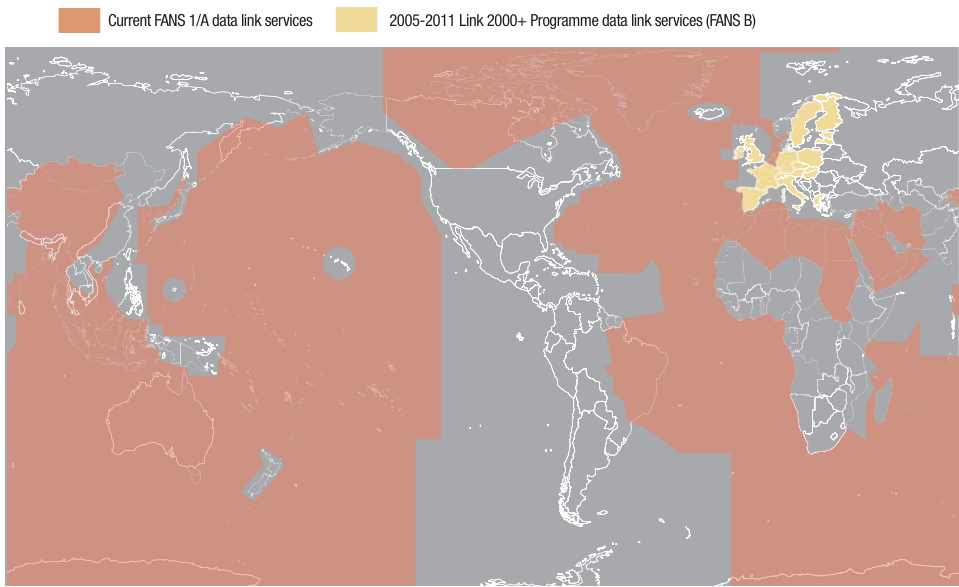
Link 2000+ Programme will start with a pioneer phase whose objective is to gain operational experience on ATC data link use, with pioneer airlines and pioneer ATC centres, to prepare for full deployment of ATC data link in Europe’s upper airspace. The product needed for the Link 2000+ Programme pioneer phase requires a voice readback in accordance with European Organi - zation for Civil Aviation Equipment (Eurocae) standard ED-110A, which provides an inter - operability requirements standard for the initial implementation of the Aeronautical Tele-commu - nications network (ATN), which supports several Air Traffic services.
The pioneer airlines are presently: Finnair, Aero - flot-Russian Interna-tional Airlines, Air Berlin, Air Europa, Airbus Transport International, Alitalia, American Airlines, Federal Express, Niki, HapagLloyd, Lufttransport Unter-nehmen, Lufthansa,
Lufthansa City Line, Malev, Scandinavian Airlines and SAS Braathens. Tarom-Romanian Air Transport is also considering joining. Currently, these airlines operate more than 600 Airbus aircraft and have committed more than 160 Airbus aircraft to the Link 2000+ Programme pioneer phase. Operator acceptance for the pioneer phase is planned to end during 2007.
Following the pioneer phase, the Link 2000+ Programme is currently investi gating introducing incentives for those aircraft that are Controller Pilot Data Link Communications/Aeronautical Telecom - munications Network (CPDLC/ ATN) equipped and operate in Link 2000+ Programme airspace. The intended follow-on from this incentive phase will be a ‘mandate’ phase where all aircraft operators flying in Link 2000+ Programme airspace will be required to equip with CPDLC/ATN avionics, subject to certain conditions.
Incentive and mandate phases will require an upgrade of existing products to be compliant with the Eurocae standard ED 110B to remove the requirement for voice readback.

- The ATC Clearance (ACL) Service
2 Link 2000+ Programme applications and services
Section titled “2 Link 2000+ Programme applications and services”The Context Management Application (CMA)
Section titled “The Context Management Application (CMA)”This application provides the Data Link Initiation Capability (DLIC) service that is mandatory prior to any CPDLC connection. This function will typically be initiated when an aircraft is either at the gate in the pre-departure phase of flight, or before entering a new Flight Information Region (FIR) supporting data link communications. It provides the ground with the necessary information to make data link communications possible between the controller and the aircraft:
-
Aircraft 24 bit address
-
The ATC Microphone Check (AMC) Service
-
Air Navigation Service Provider (ANSP) commitment
| Maastricht centre (the pioneer ATC centre) has | Maastricht centre (the pioneer ATC centre) has |
|---|---|
| been controlling flights using | CPDLC since 2005. |
| Most of the European ATC centres have committed | |
| themselves to the Link | 2000+ and their |
| deployments are proceeding to schedule. Other | |
| ANSPs are split into two groups, those able to | |
| achieve by 2008 | |
| ANSPs committed for 2011 |
-
Aircraft flight identification
-
Departure/destination airport
-
Facility designation
-
Information about available air applications
The Controller Pilot Data-link Communication (CPDLC) application
Section titled “The Controller Pilot Data-link Communication (CPDLC) application”The CPDLC application provides direct pilot/controller communication using data link between an aircraft and the controlling ATC centre. A voice readback is required for any messages related to any changes of the aircraft trajectory.
This application provides a set of data link message elements corresponding to existing Inter-national Civil Aviation Organiza-tion (ICAO) phraseology.
- Functions provided by the CPDLC application are: • The ATC Communication Management (ACM) Service
3 Future Air Navigation System B (FANS B)
Section titled “3 Future Air Navigation System B (FANS B)”The FANS B product is Airbus response to the Eurocontrol Link 2000+ Programme for utilization of ATC data link in continental areas (high density airspaces with radar surveillance) in the en-route phase, using the ATN air-ground communication network. As ATN is operational only in Europe, FANS B is proposed only on A320 Family aircraft for the time being.
The first FANS B package allows airline participation in early implementation phases of the Link 2000+ Programme - the ‘pioneer phase’. Airbus pioneer
customers are Aeroflot-Russian International Airlines, Alitalia, Finnair, Niki, Lufttransport Unternehmen, Royal Jordanian, and Tarom-Romanian Air Transport.
For the following phases Airbus is aiming at a single FANS B evolution enabling airlines to be eligible and benefit from the incentive phase, and also be compliant with the Link 2000+ Programme mandate. Airbus is closely cooperating with Link 2000+ Programme management to finalize
incentives and mandate conditions in the best interests of Airbus customers.
FANS B applications and services
Section titled “FANS B applications and services”The Airbus FANS B product offers, at aircraft level, over ATN air-ground communication network and through VDL Mode 2 sub-network, the data link applications and services (Context Management Application, Controller Pilot Data-Link Commu -
FANS B architecture
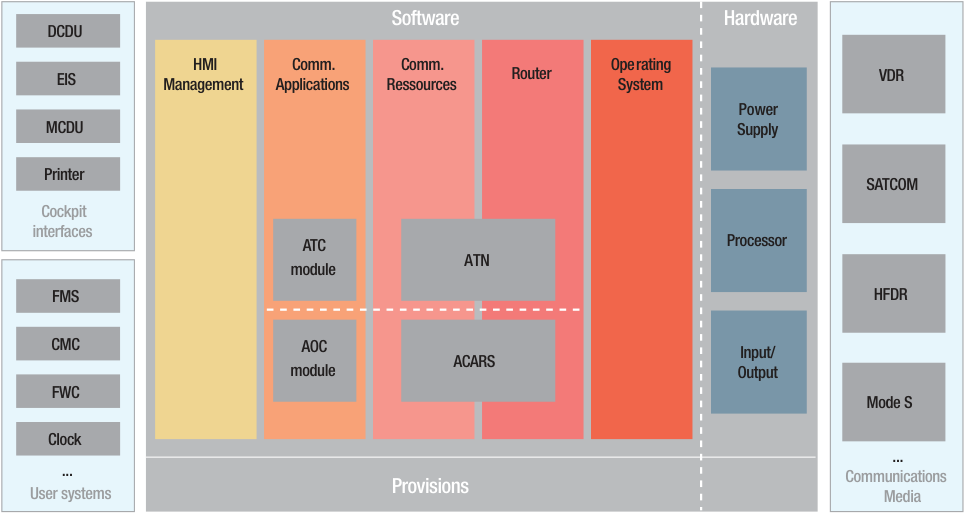
nication application and ATC Communication Management, ATC Clearance, and ATC Microphone Check services) in accordance with Link 2000+ Programme specifications. FANS B architecture
-
Two Multi Purpose Control and Display Units (MCDUs)
-
Two Flight Warning Computers
-
The Central Fault Display Interface Unit (CFDIU)
-
The FANS B Human Machine Interface (HMI)
The FANS B architecture is the following:
-
The airborne part with the ATSU (Air Traffic Service Unit), which is a modular hosting platform that centralizes all data communications (ATC and AOC/Airline Operations Communications) and manages the dedicated Human Machine Interface (HMI)
-
The air/ground data link:
-
ACARS (Aircraft Communication Addressing and Reporting System) over VDL mode A/2, Satcom or HFDL (HF Data Link) are used to transmit AOC data. Satcom and HFDL for AOC are optional in the ATSU architecture
-
ATN over VDL mode 2 only, is used to transmit ATC data to the ground for communication purposes
-
The ground/ground data link: Two types of network have to be considered, the ACARS network for AOC messages and ATN network for ATC messages.
Data link communications between the aircraft and the airline operations centre optimize aircraft and crew management, improve data management like engine trend monitoring or maintenance reports, optimize spares management and speed up repairs.
The preceding product, FANS A+, has been in use for oceanic and remote area operations for several years (see information). The main HMI principles, defined on the A330/A340 and A320 Family FANS A+ installation, are also used on FANS B.
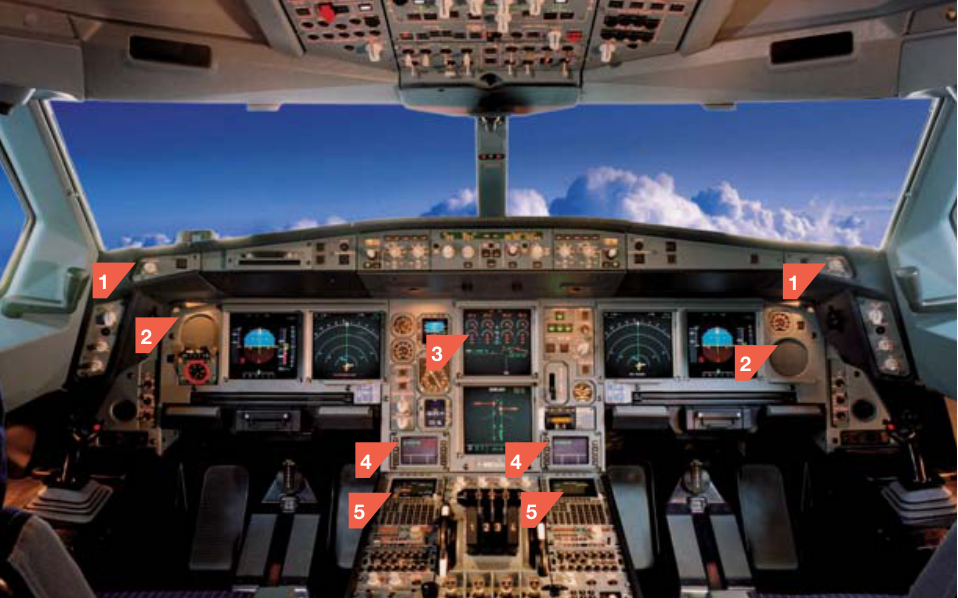
The HMI equipment used in the cockpit for FANS B functions are:
-
Two DCDUs
-
The MCDU to access the ATC message MENU
-
Electronic Centralized Aircraft Monitor (ECAM) pages and alerts for FWC information about abnormal situations
-
Two push buttons with visual attention getters, and the two associated aural ATC alerts
-
The printer
A configuration with two DCDUs was chosen in accordance with safety studies and human factors studies, because of a clear dissociation of the ATC communication from other communications; absence of interference with the previously existing crew operational procedures; direct full time availability of ATC clearance messages; and its location in the forward field of view near the MCDUs.
The ATC alerts consist of:
On board equipment
Section titled “On board equipment”The FANS B installation requires a minimum standard of the following equipment/installation:
-
ATSU and Data link Control and Display Units (DCDU) provision
-
An aural alert: A specific sound named ‘RING’ (double brief ringing-phone-like alert)
-
A visual alert: Two flashing lighted push-button switches labelled ‘ATC MSG’ (one for CAPT, one for F/O), located in the glare shield. The flashing period is one second.
-
Two DCDUs that allow the flight crew to read, and answer, to CPDLC messages received from the ground
-
Two pushbuttons with ‘attention getters’ on the glare shield controlled by both Flight Warning Computers (FWCs)
-
One VHF Data Radio (VDR 3) capable of VDL mode 2

Information
Section titled “Information”North Atlantic Region benefits from data link.
Section titled “North Atlantic Region benefits from data link.”-
In 2004, traffic levels exceeded pre–2001 levels
-
NAV CANADA has reduced communication costs to users by 50%
-
55% of the fleet use either FMC (Flight Management Computer), WPR (Waypoint Position Reporting) or FANS A+ ADS–C for automatic position reporting
Pacific Sub–Region benefits from data link.
Section titled “Pacific Sub–Region benefits from data link.”-
Reduced separations to 50/50nm and 30/30nm (trials)
-
User preferred routes and re-route (trials) for all city pairs in South Pacific
-
Weather deviations
-
Automatic position reporting
-
80% of the fleet in South Pacific use CPDLC (Controller-Pilot Data-Link Communications) and ADS–C, based on FANS A+, 60% in the Central Pacific, and 30% on average in the entire Pacific
4 Conclusion
Section titled “4 Conclusion”The FANS B product is the first Airbus answer to ATN based data link operations. Highly inspired by the FANS A/A+ package, FANS B integrates the same interfaces and operational principles for denser airspaces and for the characteristics of the ATN environment (network architecture, technical acknowledgement timestamp, timers).
FANS B enables aircrew to manage data link communications between the aircraft and the ground Air Traffic Services, as well as commu - nications between the aircraft and the AOC.
The availability of a second means of commu - nication reduces communication errors, aircrew and controller workload and fatigue and will thus contribute to higher safety levels - radio voice communications have a number of drawbacks in today’s busy traffic environment and pilots have to listen to each controller-initiated communication.
Other benefits are expected with the entry into operations of the data link technology in European airspaces such as an increase of airspace capacity by:
-
3.4% with a data link equipage rate of 25%*
-
8% with a data link equipage rate of 50%*
• 11% with a data link equipage rate of 75%* The above benefits are thanks to improvements such as better task sharing between controllers.
The Link 2000+ Programme can only be successful with the wide involvement of air navigation service providers, communication service providers, airlines and of course controllers and pilots. This is now under way – a contribution to safer, on-time aircraft operations.
It is anticipated that other regions will deploy ATN data link capabilities in their environment. A strong international standardization effort, in which Airbus has a key role, is being made to have interoperable standards. In particular CPDLC is part of Federal Aviation Administration (FAA) Next Generation Air Transportation System (NGATS).
Link 2000+ Programme and FANS B are key components of the Single European Sky ATM (Air Traffic Management) Research (SESAR) concept for future European Air Traffic Management System. Any airlines interested in information about FANS B or in upgrading their aircraft to this standard are invited to contact Airbus Customer Services Upgrade Services at upgrade.services@airbus.com or consult the ‘getting to grips with Fans B in highdensity continental areas part III’ brochure distributed by Airbus.
To ensure proper operation of FANS B aircraft in highdensity continental data link airspaces an operator needs to ensure the following:
-
a) A contract with a Data Service Provider, DSP (ARINC or SITA*) is signed
-
b) The aircraft is declared to the data link service provider
-
c) The aircraft and its FANS capability is declared to the ATC centres of the operated routes
-
d) The aircraft’s avionics are properly configured e) Operational approval is obtained
*ARINC: Aeronautical Radio INC SITA: Sté. Internationale de Telecommunications Aéronautiques
CONTACT DETAILS
Section titled “CONTACT DETAILS”Sophie de Cuendias Design Manager Upgrade Services Airbus Customer Services Tel: +33 (0)5 62 11 05 60 Fax: +33 (0)5 62 11 08 47 sophie.de-cuendias@airbus.com
- Figures given in the Eurocontrol website
未来空中导航系统 FANS B
Section titled “未来空中导航系统 FANS B”A320 系列飞机空中交通通信增强方案
Section titled “A320 系列飞机空中交通通信增强方案”作者:Sophie de Cuendas
空中客车客户服务部设计经理
本文首次发表于第40期
在当今繁忙的空中交通管制(ATC)环境中,特别是在高密度大陆空域,空中交通管制员和飞行员使用的语音频道拥塞可能是限制扇区容量和安全的因素之一。
语音频道上的大部分消息都是日常活动,如移交语音通信、高度请求和许可、航路和航向许可及请求、速度许可和二次监视雷达(SSR)代码更改。飞行员和管制员需要以灵活、可靠和安全的方式交换信息。
欧洲空管组织(Eurocontrol)空地数据链测试的初步试验(PETAL)项目——空中客车、马斯特里赫特高空空域中心(UAC)的一个项目,及其后续项目PETAL II,同样在马斯特里赫特UAC进行至2001年底——表明通过空地数据链传输数字数据为缓解频谱和ATC拥塞以及提高航空运输安全提供了一种可靠的语音通信替代方案。马斯特里赫特UAC负责管控比利时、荷兰、卢森堡及德国部分地区的上层空域,这些区域承载着大量欧洲空中交通。
从PETAL项目获得的经验被用于欧洲一个新项目——Link 2000+项目,该项目为空中交通管制员和飞行员提供了第二个通信频道:在欧洲核心区域的航空电信网络/VHF数据链(ATN/VDL)Mode 2基础设施上建立空地数据链。与VDL Mode A相比,VDL Mode 2提高了飞机与地面站之间的数据交换速率(数据传输速率提高十倍,新调制方案,新通信协议)。
Link 2000+项目将以先驱阶段启动,其目标是获得ATC数据链使用的操作经验,与先驱航空公司和先驱ATC中心合作,为欧洲上层空域全面部署ATC数据链做准备。Link 2000+项目先驱阶段所需的产品需要按照欧洲民用航空设备组织(Eurocae)标准ED-110A进行语音复述,该标准为航空电信网络(ATN)的初始实施提供了互操作性需求标准,ATN支持多种空中交通服务。
目前参与的先驱航空公司包括:芬兰航空、俄罗斯国际航空、柏林航空、西班牙航空、空客运输国际、意大利航空、美国航空、联邦快递、Niki航空、汉莎航空货运、空中运输企业、汉莎航空、汉莎城市线航空、匈牙利航空、斯堪的纳维亚航空和SAS布拉斯恩航空。罗马尼亚航空也在考虑加入。目前,这些航空公司运营着600多架空客飞机,并已承诺为Link 2000+项目先驱阶段投入160多架空客飞机。先驱阶段的运营方验收计划于2007年底完成。
在先驱阶段之后,Link 2000+项目目前正在研究为装备了管制员-飞行员数据链通信/航空电信网络(CPDLC/ATN)并在Link 2000+项目空域运行的飞机引入激励措施。激励阶段之后的预期将是“强制”阶段,届时在Link 2000+项目空域飞行的所有飞机运营商将被要求装备CPDLC/ATN航电设备,但需满足特定条件。
激励和强制阶段需要对现有产品进行升级以符合Eurocae标准ED 110B,从而取消语音复述的要求。
- ATC许可(ACL)服务
2 Link 2000+项目应用和服务
Section titled “2 Link 2000+项目应用和服务”上下文管理应用(CMA)
Section titled “上下文管理应用(CMA)”该应用提供了数据链启动能力(DLIC)服务,这是任何CPDLC连接之前必需的。该功能通常在飞机处于出发前阶段的停机位时,或在进入支持数据链通信的新飞行情报区(FIR)之前启动。它为地面提供必要信息,使管制员与飞机之间的数据链通信成为可能:
-
飞机24位地址
-
ATC麦克风检查(AMC)服务
-
空中导航服务提供商(ANSP)承诺
| 马斯特里赫特中心(先驱ATC中心) | 马斯特里赫特中心(先驱ATC中心) |
|---|---|
| 自2005年起一直使用 | CPDLC管制航班。 |
| 大多数欧洲ATC中心已承诺 | |
| 参与Link | 2000+项目,其 |
| 部署工作按计划进行。其他 | |
| ANSP分为两组,能够在2008年 | |
| 实现的 | ANSP承诺在2011年之前完成。 |
-
飞机航班识别码
-
起飞机场/目的地机场
-
设施代号
-
可用空中应用相关信息
管制员-飞行员数据链通信(CPDLC)应用
Section titled “管制员-飞行员数据链通信(CPDLC)应用”CPDLC应用通过数据链在飞机与管制ATC中心之间提供直接的飞行员/管制员通信。任何与飞机轨迹变更相关的消息都需要语音复读。
该应用提供一组与现有国际民用航空组织(ICAO)措辞相对应的数据链消息元素。
- CPDLC应用提供的功能包括:• ATC通信管理(ACM)服务
3 未来空中导航系统B(FANS B)
Section titled “3 未来空中导航系统B(FANS B)”FANS B产品是空中客车对欧洲航行安全组织(Eurocontrol)Link 2000+计划的响应,用于在航路阶段使用ATN空地通信网络在大陆地区(具有雷达监视的高密度空域)利用ATC数据链。由于ATN仅在欧洲运行,目前FANS B仅在A320系列飞机上提供。
首个FANS B数据包使航空公司能够参与Link 2000+计划的早期实施阶段(“先驱阶段”)。空中客车的先驱客户包括俄罗斯国际航空公司、意大利航空公司、芬兰航空、尼基航空、Lufttransport Unternehmen、皇家约旦航空和罗马尼亚航空运输公司。
对于后续阶段,空中客车的目标是实现单一的FANS B演进方案,使航空公司有资格并受益于激励阶段,同时符合Link 2000+计划的强制要求。空中客车正在与Link 2000+计划管理层密切合作,以最终确定激励措施和强制条件,最大程度地维护空中客车客户的利益。
FANS B应用与服务
Section titled “FANS B应用与服务”空中客车FANS B产品在飞机层面,通过ATN空地通信网络和VDL Mode 2子网络,提供数据链应用和服务(情境管理应用、管制员-飞行员数据链通信应用以及ATC通信管理、ATC许可和ATC麦克风检查服务),符合Link 2000+计划规范。FANS B架构
-
两台多功能控制与显示组件(MCDU)
-
两台飞行警告计算机
-
中央故障显示接口组件(CFDIU)
-
FANS B人机界面(HMI)
FANS B架构如下:
-
机载部分配备ATSU(空中交通服务组件),这是一个模块化托管平台,集中处理所有数据通信(ATC和AOC/航空公司运营通信)并管理专用人机界面(HMI)
-
空/地数据链:
-
ACARS(飞机通信寻址与报告系统)通过VDL模式A/2、卫星通信或HFDL(高频数据链)用于传输AOC数据。ATSU架构中卫星通信和HFDL用于AOC为可选配置
-
ATN仅通过VDL模式2,用于将ATC数据发送到地面进行通信
-
地/地数据链:需要考虑两种类型的网络,用于AOC消息的ACARS网络和用于ATC消息的ATN网络。
飞机与航空公司运营中心之间的数据链通信优化了飞机和机组人员管理,改进了数据管理(如发动机趋势监控或维护报告),优化了备件管理并加快了维修速度。
前一款产品FANS A+已在 oceanic 和偏远地区运营中使用多年(见信息)。在A330/A340和A320系列FANS A+安装中定义的主要HMI原则也应用于FANS B。
驾驶舱中用于FANS B功能的HMI设备包括:
-
两台DCDU
-
MCDU用于访问ATC消息菜单
-
电子集中式飞机监控(ECAM)页面和警告,用于FWC提供的异常情况信息
-
两个带有视觉注意力吸引器的按钮,以及两个相关的听觉ATC警告
-
打印机
根据安全研究和人体因素研究,选择了两台DCDU的配置方案,原因包括:ATC通信与其他通信的清晰分离;不影响先前存在的机组操作程序;ATC许可消息的全时直接可用性;以及其位于靠近MCDU的前视场位置。
ATC警告包括:
FANS B安装需要以下设备/安装的最低标准:
-
ATSU和数据链控制与显示组件(DCDU)供应
-
听觉警告:一种名为”RING”的特定声音(类似双响电话铃声的警告)
-
视觉警告:两个闪光的按钮开关,标有”ATC MSG”(一个用于机长,一个用于副驾驶),位于遮光板上。闪光周期为一秒。
-
两台DCDU,允许飞行机组读取并回复从地面接收的CPDLC消息
-
遮光板上的两个带有”注意力吸引器”的按钮,由两台飞行警告计算机(FWC)控制
-
一台能够进行VDL模式2的甚高频数据无线电(VDR 3)
北美地区从数据链中获益
Section titled “北美地区从数据链中获益”-
2004年,交通量超过2001年前的水平
-
NAV CANADA已将用户通信成本降低50%
-
55%的机队使用FMC(飞行管理计算机)、WPR(航路点位置报告)或FANS A+ ADS-C进行自动位置报告
太平洋分区从数据链获益
Section titled “太平洋分区从数据链获益”-
缩小间隔至50/50海里和30/30海里(试验阶段)
-
用户优先航路及重新选择航路(试验阶段),覆盖南太平洋所有城市对
-
气象偏航
-
自动位置报告
-
南太平洋80%的机队使用CPDLC(管制员-驾驶员数据链通信)和ADS-C,基于FANS A+;中太平洋60%;整个太平洋地区平均30%
FANS B产品是空客针对基于ATN的数据链运营的首次回应。FANS B深受FANS A/A+套件的启发,集成了相同的接口和运行原则,适用于更密集的空域以及ATN环境的特点(网络架构、技术确认时间戳、定时器)。
FANS B使机组能够管理飞机与地面空中交通服务之间以及飞机与AOC之间的数据链通信。
第二套通信手段的可用性降低了通信错误、机组和管制员工作负荷及疲劳,从而有助于提高安全水平——在当今繁忙的交通环境中,语音无线电通信存在诸多弊端,飞行员必须监听管制员发起的每一次通信。
随着数据链技术在欧洲空域投入运行,预计还将带来其他益处,例如通过以下方式提高空域容量:
-
数据链装机率为25%时,容量增加3.4%*
-
数据链装机率为50%时,容量增加8%*
-
数据链装机率为75%时,容量增加11%*
上述益处得益于任务分配改善等改进,管制员之间的配合更为优化。
Link 2000+计划的成功离不开空中导航服务提供商、通信服务提供商、航空公司以及管制员和飞行员的广泛参与。目前已在推进中——这将有助于实现更安全、准时的飞机运营。
预计其他地区也将在其环境中部署ATN数据链能力。空客在其中发挥关键作用的强有力国际标准化工作正在进行,以确保标准的互操作性。特别是CPDLC已被纳入美国联邦航空局(FAA)的下一代航空运输系统(NGATS)。
Link 2000+计划和FANS B是欧洲单一天空ATM(空中交通管理)研究(SESAR)概念的组成部分,是未来欧洲空中交通管理系统的重要组成部分。任何希望了解FANS B或为其飞机升级至该标准的航空公司,欢迎联系空客客户服务升级服务部:upgrade.services@airbus.com,或参阅空客发行的《在高密度大陆地区掌握FANS B》第三部分宣传册。
为确保FANS B飞机在高密度大陆数据链空域的正常运行,运营商需确保以下事项:
-
a) 与数据服务提供商(DSP,ARINC或SITA*)签订合同
-
b) 向数据链服务提供商申报飞机
-
c) 向所运营航路的ATC中心申报飞机及其FANS能力
-
d) 正确配置飞机航电设备
-
e) 获得运行批准
*ARINC:Aeronautical Radio INC(航空无线电公司)SITA:Sté. Internationale de Telecommunications Aéronautiques(国际航空电信公司)
Sophie de Cuendias 设计经理 升级服务部 空客客户服务 电话:+33 (0)5 62 11 05 60 传真:+33 (0)5 62 11 08 47 sophie.de-cuendias@airbus.com
- 数据来源于Eurocontrol网站