Do not forget that you are not alone in Maintenance
Source: Airbus Safety First URL: https://safetyfirst.airbus.com/do-not-forget-that-you-are-not-alone-in-maintenance/ Published: 2012-07-14 Magazine Issue: 2012-06 Category: Archive PDF: Original PDF
Safety
uwe EGGERLING
Section titled “uwe EGGERLING”Safety Director engineering & Maintenance Customer Services
1. Introduction
Section titled “1. Introduction”The aim of this article is to highlight the importance of being aware of what other maintenance team co-workers are doing, and where they are working on the aircraft at the same time. The potential consequences can be dramatic when this awareness is lost, as shown by this article.
Maintenance teams are working in an environment where they are faced with ever more complex aircraft systems and the increased interaction of co-workers performing different tasks at the same time on the same aircraft.
Being aware of who is doing what, and understanding the consequences of tasks being performed is essential, to avoid potentially dramatic situations.
2. Maintenance Event description
Section titled “2. Maintenance Event description”Loss of situational awareness in maintenance operations can have serious consequences. In the least it can lead to damage to the aircraft, and in the worst case can result in fatal injuries to maintenance workers involved in the incident, as two recent cases have highlighted.
Case No. 1: Accident with the Krueger flap
Section titled “Case No. 1: Accident with the Krueger flap”During a scheduled maintenance check, an experienced licensed mechanic was cleaning an area between the extended Krueger flap and the structure on an A300-600.
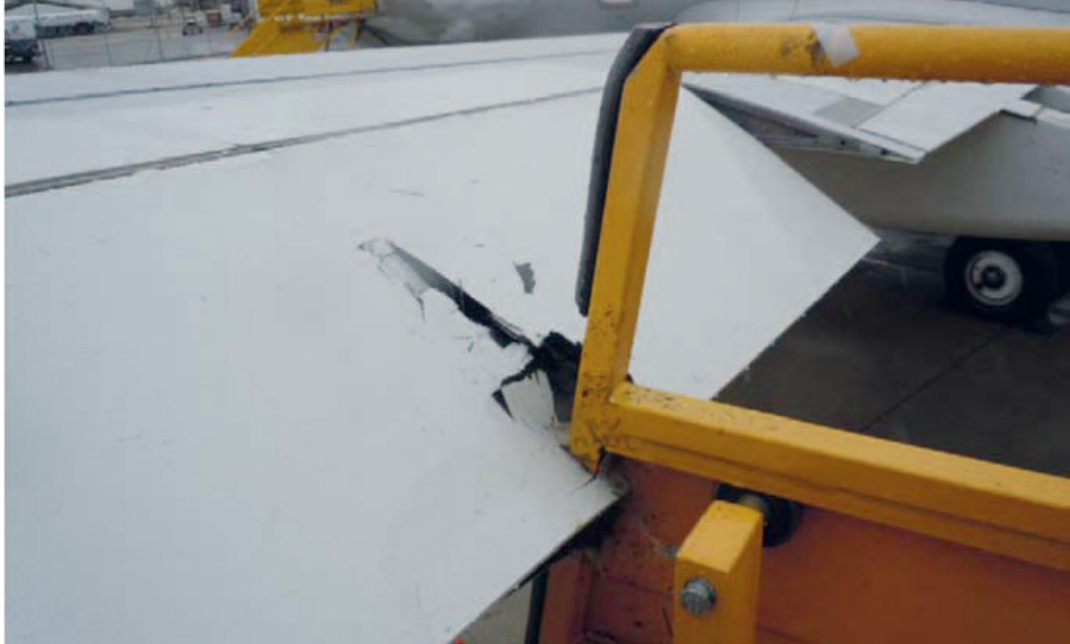
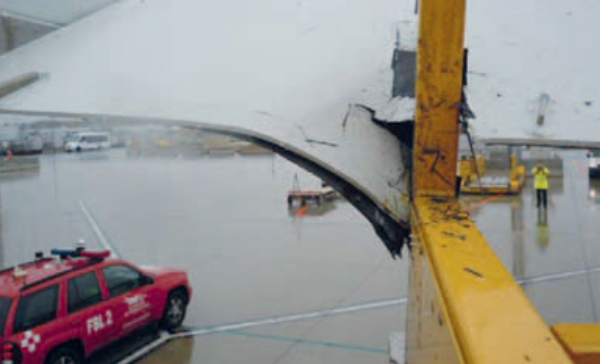
During the performance of this maintenance task, the slats started retracting, causing the head of the mechanic to be impacted by the moving Krueger flap at the end of the slat system retraction cycle.
The investigations performed further to this accident confirmed that the warnings and precautions as per the AMM were clear.
It was also confirmed that head set communication was present between the cockpit operator and the hangar area, and visual alert signs were located around the work areas.
Good standard maintenance practice would require to do a walkaround to be carried out. The person who activated the hydraulic system did not, through such a check, confirm that there was no risk to other personnel prior to energising the hydraulic system.
Case No. 2: Injuries caused by the Nose Landing door closure
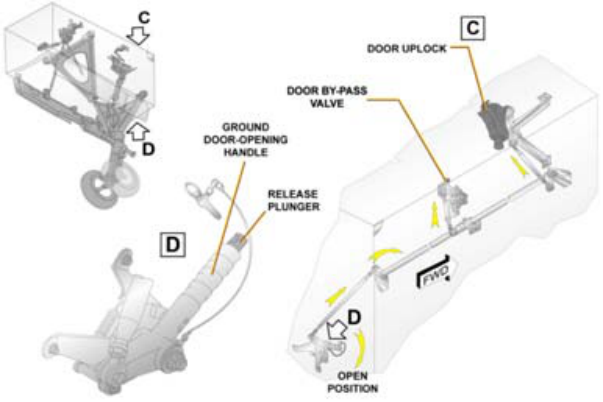
Section titled “Case No. 2: Injuries caused by the Nose Landing door closure”A mechanic was working alone within the landing gear bay on an A320 Family aircraft. For an undetermined reason, the ground door opening handle was in the “closed” position, i.e. not corresponding to the actual position of the nose landing doors (fig. 1).
Another person, not being aware that a mechanic was already working within the landing gear bay, activated the hydraulic system; the doors closed accordingly and trapped the mechanic.
3. The Aircraft Maintenance Manual
Section titled “3. The Aircraft Maintenance Manual”The AMM is written with specific warnings and cautions detailing safety procedures and tooling that should be used. These Warning Notices typically ensure that the controls agree with the position of the surfaces they operate, and to operate the controls only when the related hydraulic systems are pressurized.
The use of the correct tooling will prevent the doors from closing, if the hydraulic system is pressurised Inadvertently.
Figure 1 A320 Nose Landing Gear operation mechanism
The aim of these safety steps is to highlight particular risks, and to reduce the risk of injury to the mechanics.
4. The Lessons Learned
Section titled “4. The Lessons Learned”The common factor between the two described accidents was that even though the maintenance documentation provided clear warning advice, fatal injuries were caused to the workers in question.
In both events, investigation showed that more than one individual was working on the aircraft at the time, but on different assigned tasks.
None of them had made a maintenance error related to the tasks he was working on. However, a combination of actions taken led to the situation that put one of the workers lives at risk.
All of these difficulties point to a lack of having a clear and up to date understanding of what was going on around the aircraft. It demonstrates the importance of being aware all the time of the state of the aircraft systems, and sub-systems, that may be being working on.
A common situation is that personnel carrying out part of a major maintenance task, without the awareness and knowledge as to how their actions are affecting the overall task, or aircraft technical configuration, i.e. having
Taking the two examples above, details of the warnings and cautions are as follows:
-
q MAKE SURE THAT THE CONTROLS AGREE WITH THE POSITION OF THE ITEMS THEY OPERATE BEFORE YOU PRESSURIzE A HYDRAULIC SYSTEM. UNWANTED MOVEMENT OF HYDRAULICALLY OPERATED ITEMS CAN LEAD TO SERIOUS INJURY AND / OR CAUSE DAMAGE.
-
q ONLY OPERATE CONTROLS WHEN THE RELATED HYDRAULIC SYSTEMS ARE PESSURIzED.
-
q IF YOU OPERATE A CONTROL WHEN THE RELATED HYDRAULIC SYSTEM IS NOT PRESSURIzED, THERE IS A RISK THAT:
-
THE CONTROL WILL BE IN A POSITION THAT DOES NOT AGREE WITH THE ITEM(S) IT OPERATES.
-
WHEN HYDRAULIC PRESSURE IS RESTORED, UNWANTED MOVEMENT OF THE HYDRAULICALLY OPERATED ITEM(S) MAY OCCUR AND CAUSE SERIOUS INJURY AND / OR CAUSE DAMAGE.
In addition, the “Doors Closing Preparation” of the Technical Training Manual includes a caution, which highlights the following messages:
ON THE GROUND
Section titled “ON THE GROUND”-
q MAKE CERTAIN THAT THE GROUND DOOR OPENING CONTROL HANDLE IS LOCKED IN THE OPEN POSITION,
-
q REMOVE THAT THE SAFETY PIN FROM THE DOORS,
-
q MAKE CERTAIN THAT THE DOOR TRAVEL RANGES ARE CLEAR
Safety
lost the “big picture”, also commonly known as “tunnel tasking”. Often technicians are given only their piece of the puzzle, for example, being assigned tasks with deadlines without explanation or direction – a “just do it” assignment.
The difficulty in ensuring safety whilst working on aircraft systems is increased by the fact that many different individuals may be working on the aircraft. The presence of multiple individuals increases the need for good and clear communication between them, and clear understanding of responsibilities.
In addition to the awareness of what the different team members within one given team are doing, another important task for maintenance teams is the co-ordination and information transfer across different teams, for example during shift hand-over.
Figure 2 A possible consequence of the lack of awareness in the hangar
5. Conclusion
Section titled “5. Conclusion”A recurring source of accidents or incidents during maintenance is caused by loss of situational awareness. Technicians are often made aware of only part of a major maintenance task. Problems can occur when they are not trained or explanations are not provided of how their activities could affect other people working at the same time on the aircraft.
As part of preventive measures, individuals, training organisations, and management should ensure effective shift preparations, communications between all involved working on the aircraft, and avoid being trapped in a “tunnel task” situation, which can have fatal consequences.
Safety
不要忘记在维修工作中你不是一个人在战斗
Section titled “不要忘记在维修工作中你不是一个人在战斗”来源: Airbus Safety First 网址: https://safetyfirst.airbus.com/do-not-forget-that-you-are-not-alone-in-maintenance/ 发布日期: 2012-07-14 杂志期号: 2012-06 分类: Archive PDF: Original PDF
Safety
Uwe Eggerling
Section titled “Uwe Eggerling”Customer Services 工程与维修安全总监
本文旨在强调意识到其他维修团队同事正在做什么以及他们正在飞机上何处作业的重要性。当这种意识丧失时,潜在后果可能是灾难性的,本文将通过案例加以说明。
维修团队工作的环境中面临着日益复杂的飞机系统,以及同时在同一架飞机上执行不同任务的同事之间日益增加的互动。
了解谁在做什么,并理解所执行任务的后果,对于避免潜在的危险情况至关重要。
2. 维修事件描述
Section titled “2. 维修事件描述”维修作业中情境意识的丧失可能导致严重后果。轻则造成飞机损坏,重则导致涉事维修人员致命伤亡,最近两个案例充分说明了这一点。
案例一:克鲁格(Krueger)襟翼事故
Section titled “案例一:克鲁格(Krueger)襟翼事故”在一次计划维修检查期间,一名经验丰富的持证机械师正在清洁 A300-600 飞机上展开的克鲁格襟翼与结构之间的区域。
在执行此项维修任务期间,缝翼开始收回,导致该机械师的头部在缝翼系统收回循环结束时被移动的克鲁格襟翼撞击。
事故调查结果表明,维修手册(AMM)中的警告和注意事项是明确的。
调查还确认,驾驶舱操作员与机库区域之间存在头戴式耳机通信,且工作区域周围设置了视觉警示标识。
良好的标准维修规范要求进行绕机检查。激活液压系统的人员没有通过此类检查来确认激活液压系统前对其他人员不构成风险。
案例二:前起落架舱门关闭造成的伤害
Section titled “案例二:前起落架舱门关闭造成的伤害”一名机械师独自在 A320 系列飞机的起落架舱内作业。由于某种不明原因,前起落架舱门的地面打开手柄处于”关闭”位置,即与前起落架舱门的实际位置不符(图 1)。
另一名人员不知道已有机械师在起落架舱内作业,激活了液压系统;舱门随之关闭,将该机械师困住。
3. 飞机维修手册
Section titled “3. 飞机维修手册”维修手册(AMM)包含具体的警告和注意事项,详细说明了应使用的安全程序和工具。这些警告提示通常确保各控制装置与它们操作的部件位置一致,并且仅在相关液压系统处于压力状态下时才操作控制装置。
使用正确的工具可以防止在意外对液压系统加压时舱门关闭。
图 1 A320 前起落架舱门操作机构
这些安全步骤的目的是突出特定风险,并降低机械师受伤的风险。
4. 经验教训
Section titled “4. 经验教训”上述两起事故的共同点是:尽管维修文件提供了明确的警告建议,但相关作业人员仍然遭受了致命伤害。
在这两起事件中,调查显示,当时有多人在飞机上作业,但各自承担不同的指定任务。
他们中没有任何人是在其所从事的任务方面犯了维修错误。然而,多个行为相结合导致了使其中一名人员生命受到威胁的局面。
所有这些困难都指向一个问题:缺乏对飞机周围正在发生什么的清晰和最新了解。这表明始终了解正在接受维修的飞机系统及子系统状态的重要性。
一种常见的情况是,执行部分主要维修任务的人员不了解其行动如何影响整体任务或飞机技术构型,即
以以上两个案例为例,警告和注意事项的详细内容如下:
-
q 在对液压系统加压之前,确保控制装置与它们操作的部件位置一致。液压操作部件的意外移动可能导致严重人身伤害和/或造成损坏。
-
q 仅在相关液压系统处于压力状态时操作控制装置。
-
q 如果在相关液压系统未加压时操作控制装置,存在以下风险:
-
控制装置将处于与其操作的部件位置不一致的状态。
-
当液压压力恢复时,液压操作部件可能发生意外移动,可能导致严重人身伤害和/或造成损坏。
-
此外,《技术培训手册》的”舱门关闭准备”部分包含一项注意事项,强调了以下信息:
ON THE GROUND
Section titled “ON THE GROUND”-
q 确保地面舱门开启控制手柄锁定在打开位置,
-
q 从舱门上取下安全销,
-
q 确保舱门活动范围畅通
Safety
失去了“大局观”,这通常也被称为“隧道任务”。技术人员往往只被告知整个维护任务中属于自己负责的那一部分,例如被分配任务并给定完成期限,却没有得到任何解释或指导——一种“只管去做”的任务分配。
在飞机系统上作业时确保安全的难度,由于可能有许多不同人员同时在飞机上工作而增加。多人在场增加了相互之间良好、清晰沟通的需求,以及对各自责任的清晰理解。
除了了解同一团队内各成员的工作内容外,维护团队的另一项重要工作是跨团队的协调与信息传递,例如在交接班期间。
图 2 缺乏意识在机库中可能造成的后果
5. Conclusion
Section titled “5. Conclusion”维护过程中,事故或事故征候反复出现的一个常见原因是情景意识的丧失。技术人员往往只被告知某项重大维护任务的一部分内容。当他们没有接受培训或没有被解释其工作可能如何影响同时在飞机上作业的其他人员时,问题就可能发生。
作为预防措施,个人、培训机构和管理层应确保有效的交接班准备、机上所有作业人员之间的沟通,并避免陷入可能产生致命后果的“隧道任务”状态。
Safety