Bird or Hail Strikes on the Radome
Source: Airbus Safety First URL: https://safetyfirst.airbus.com/bird-or-hail-strikes-on-the-radome/ Published: 2024-09-13 Category: Flight Ops, Maintenance, composite, honeycomb, radar PDF: Original PDF

Abnormal events such as bird strikes and hail strikes can occur at any time. When the aircraft is struck by birds or Foreign Object Debris (FOD), the correct inspection process must be followed, before the next flight, to determine if the aircraft is safe to fly.
This article focuses on the that a bird or hail strike can effect have on the radome of the aircraft. It recalls the recommendations to and maintenance crews to ensure flight correct detection, reporting, and management of a bird or hail strike. It also explains why it is important to always check both the outer and inner sides of a radome after any bird or hail strike event.
Check the latest version of this article on safetyfrst.airbus.com and on the Safety first app for iOS and Android devices.
CASE STUDY
Section titled “CASE STUDY”Event Description
Section titled “Event Description”An A350 aircraft was climbing towards its cruise altitude when the SURV WXR 1 FAULT ECAM alert triggered just before reaching 12 000 ft. The flight crew pressed the WXR SYS 2 pushbutton of the SURV panel to switch to weather radar system 2. The SURV WXR 2 FAULT ECAM alert triggered shortly after. The flight crew then performed several weather radar system switchovers with the same result during the climb. The aircraft eventually reached its cruising altitude of 35 000 ft. The SURV WXR 1+2 FAULT ECAM alert triggered. The flight crew contacted their Operations Control Center and decided to perform an in-flight turnback. They initiated the turnback and started to descend. The flight crew then heard a loud noise, followed by strong aerodynamic noise, and observed indicated speed discrepancies. The following ECAM cautions subsequently triggered: NAV ISIS SPD UNRELIABLE, NAV AIR DATA REDUNDANCY LOST, and NAV RNP AR CAPABILITY
DOWNGRADED. Three minutes after the collapse, the flight control system temporarily reverted to alternate law for 17 minutes. Normal law was then recovered and was maintained for the remainder of the descent. There was another reversion to alternate law that occurred at the beginning of the approach lasting almost two minutes, after which normal law was recovered and maintained until landing.
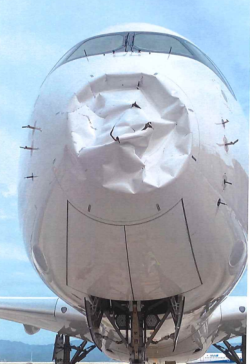
(fig.1) View of the collapsed radome (source: operator)
When the aircraft reached the gate, the ground crew observed that the nose radome had collapsed onto the radar (fig.1).
Event Analysis
Section titled “Event Analysis”Previous report of bird strike
Section titled “Previous report of bird strike”The aircraft technical logbook revealed that the aircraft had a bird strike on the left side of the radome one month prior to the event. The technical logbook stated that an inspection was performed in accordance with the MP A350-A-05-51-14-00001-282A-A - Inspection of the Aircraft after a Bird Strike and that traces of bird strike were found on the outer surface left side of the radome, but there was no damage detected. The logbook did not specifically mention if the inner surface of the radome was also inspected. Therefore, it is not possible to confirm if a complete inspection of the radome was performed.
Confirmation of the bird strike
Section titled “Confirmation of the bird strike”A detailed examination of the collapsed radome by Airbus confirmed that there was a bird strike to the left side of the radome prior to the event where the radome collapsed. DNA of a hawk was found as well as some paint micro-cracking around the likely impact area (fig.2).
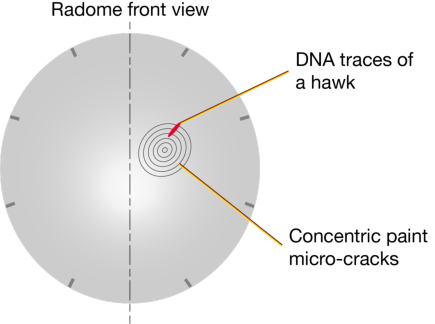
(fig.2) Location of the bird strike based on the observed paint micro-cracks
Damage at the impact area
Section titled “Damage at the impact area”The inner skin disbonded from the composite structure of the radome, and there was damage to the honeycomb structure near the location of the bird strike. This damage compromised the structural resilience of the radome, which resulted in the radome collapsing.
WXR antenna drive failure messages on previous flights
Section titled “WXR antenna drive failure messages on previous flights”The Post Flight Reports (PFR) of the aircraft showed intermittent and repetitive SURV WXR 1 FAULT, SURV WXR 2 FAULT, and SURV WXR 1+2 FAULT
ECAM alerts triggered during the three previous flights with the associated “ Drive Unit - WXR antenna ” failure message. This failure message is triggered if the antenna fails to move to its commanded position during an antenna scan cycle. It may be the result of a failure of the drive unit of the antenna or of a mechanical blockage of the antenna. System tests were performed on the ground at the end of each of the three flights with no fault found. The condition of the inner skin that had disbonded from the radome structure was not detected during these ground checks.
EFFECTS OF A BIRD OR HAIL STRIKE ON A RADOME
Section titled “EFFECTS OF A BIRD OR HAIL STRIKE ON A RADOME”The radome is an aerodynamic weatherproof fairing that protects the radar antenna. It is manufactured with materials that allow transmission and reception of the radar radio waves with minimal interference.
Radome Structure
Section titled “Radome Structure”All radomes on Airbus commercial aircraft since the A300 are composed of a composite sandwich structure constructed of a honeycomb core located between internal and external skins (except A380 which has a double sandwich honeycomb core). These skins were previously manufactured from Glass, Kevlar & quartz. The latest radomes are manufactured from S2-glass® materials.
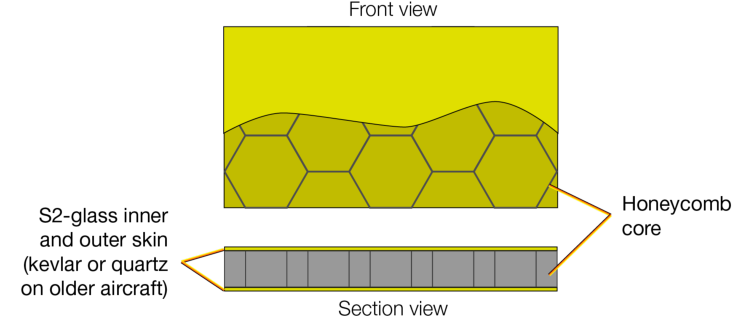
(fig.3) Typical structure of a radome (the shape of the honeycomb may vary depending on the aircraft)
Effect of an impact on the radome
Section titled “Effect of an impact on the radome”When impacted by hail, a bird strike, or other foreign objects, a sandwich composite structure deforms and then may return to its original shape with little to no damage visible on its external surface, but with potentially significant damage to its internal structure. (fig.4). In-service experience shows that there is often very little trace of the impact on the outer surface of the radome whereas the honeycomb core can be damaged and the radome inner skin can be disbonded around the impact zone.
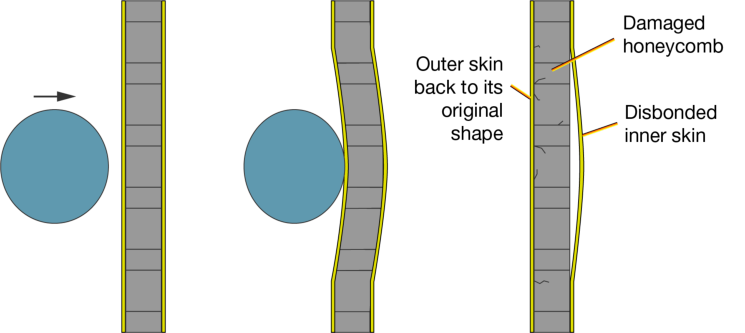
(fig.4) Example of damage due to an impact on a composite panel
Inflation of the disbonding during flight
Section titled “Inflation of the disbonding during flight”If the damage due to bird or hail strikes is not detected on the ground, the damaged area will be subject to several flight cycles. The air trapped between the honeycomb and disbonded skin (around 1 bar on the ground) will tend to inflate during each flight and create a bubble where the skin is disbanded due to the lower ambient air pressure at altitude (around 0.2 bar at cruise altitude) (fig.5).
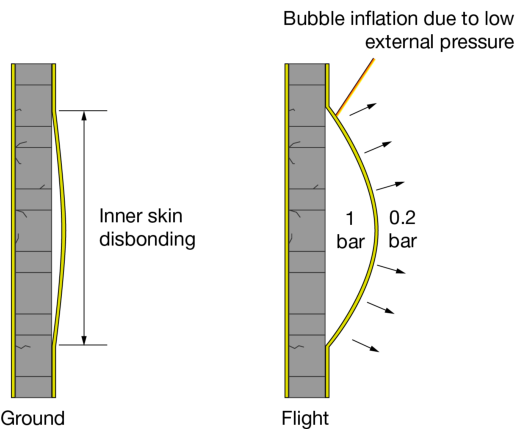
(fig.5) Inflation effect at altitude where the skin has disbonded from the structure
Weather radar faults as a secondary effect
Section titled “Weather radar faults as a secondary effect”If a damage is not detected, depending on its size and location, it may impair the movement of the weather radar antenna and trigger the weather radar alerts (fig.6).
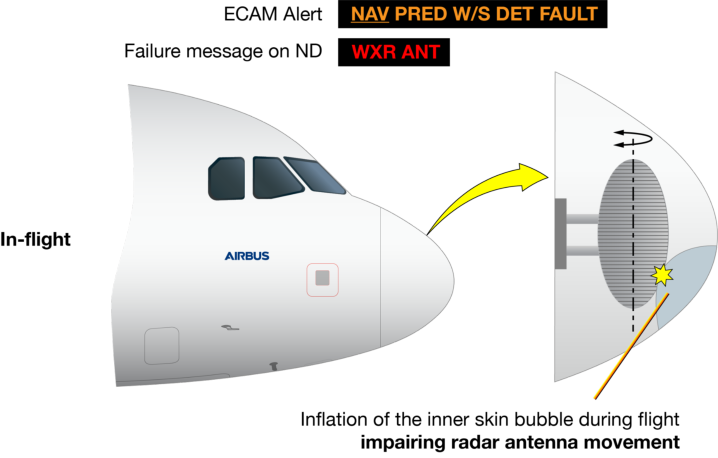
(fig.6) Example of secondary effects of radome damage on A320 aircraft
When the aircraft is back on the ground and the radome inner skin bubble deflates, it may no longer impair the movement of the antenna (fig.7). This can explain why there was no fault found during the troubleshooting test of the weather radar system on ground.
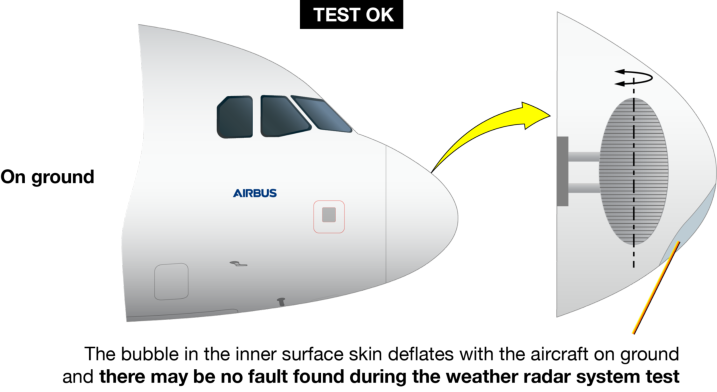
(fig.7) Radar system troubleshooting tests performed on ground may not identify the fault despite the radome damage still being present
OPERATIONAL CONSIDERATIONS
Section titled “OPERATIONAL CONSIDERATIONS”Flight crews have an important role to play in reporting and detecting damage due to bird or hail strikes.
Report any bird or hail strikes to maintenance personnel
Section titled “Report any bird or hail strikes to maintenance personnel”In the case of an actual or suspected bird or hail strike during flight, and regardless of the location on the aircraft, the flight crew must make a logbook entry to report the event to maintenance personnel, so that they can perform the appropriate aircraft inspection.
The flight crew report should provide detailed information to aid in isolating any issues such as:
At the time of the bird or hail strike event:
-
Aircraft configuration (position of the landing gears and flight controls)
-
● Flight phase
At the time of and after the bird or hail strike event:
-
Any erroneous engine, radio, or navigation system behaviors
-
● Any smells noticed in the air conditioning system (burning smells or other odors)
-
● List of ECAM (EICAS for A220) alerts that triggered ● Description of any other system malfunctions during or after the event
Check for bird or hail strike during exterior walkaround
Section titled “Check for bird or hail strike during exterior walkaround”Conducting a thorough exterior walkaround inspection of the aircraft is also an opportunity to detect any potential bird/hail or FOD related damage. Should traces of bird or hail strike or FOD be found on any aircraft part, the flight crew must inform maintenance personnel and make a logbook entry.
MAINTENANCE CONSIDERATIONS
Section titled “MAINTENANCE CONSIDERATIONS”Aircraft Inspection after a Bird or Hail Strike
Section titled “Aircraft Inspection after a Bird or Hail Strike”Careful inspection of the aircraft as per the AMM/MP/AMP after a reported bird or hail strike is essential, to check if the aircraft is safe to perform the next flight or if component repair or replacement is required.
Perform bird or hail strike inspections as soon as possible
Section titled “Perform bird or hail strike inspections as soon as possible”In-service experience shows that it may be difficult to identify the signs of a bird or hail strike due to the fact that composite parts may return back to their original profiles after impact and this may mask or hide damage to the internal structure. The inspection must, therefore, be performed right after the bird or hail strike event to maximize the chance of findings.
Use lights for accurate detection
Section titled “Use lights for accurate detection”High quality additional lighting should be used to perform the inspection if in low light conditions. The use of a grazing light (applying directional light near the surface and lighting it at a narrow angle) to accentuate the shadows of uneven areas can help to detect defects.
Perform a radome inspection for any reported bird or hail strikes
Section titled “Perform a radome inspection for any reported bird or hail strikes”In the case of a bird or hail strike, the damage may not be limited to a single zone. Therefore, regardless of the location of the reported bird or hail strike (e.g. engine, fuselage, wing leading edges, etc.) the radome must always be inspected since it may also be affected by the strike.
Inspect the Radome external AND internal structure
Section titled “Inspect the Radome external AND internal structure”In all cases after bird or hail strikes, in addition to the external inspection, it is mandatory to open and inspect the internal structure and surface of the radome for signs of delamination and disbonding, even if there is no trace on the external side of the radome. Typical signs of disbonding of the inner skin can be uneven surfaces or skin discoloration (fig.8). If any damage is detected, it must be checked that it is within the allowable damage limit provided in the SRM/ASR/ASRP to continue in service. If the damage is outside the allowable damage limits, then the radome must be repaired or replaced.
The documentation for A380 aircraft (with double sandwich honeycomb core structure), and for A220 aircraft (single sandwich honeycomb core structure but with a different manufacturing process), does not currently require a systematic inspection of the internal surface of the radome in the case of every reported bird or hail strike. An update is under evaluation of the need to harmonize the procedure with the other Airbus aircraft types.
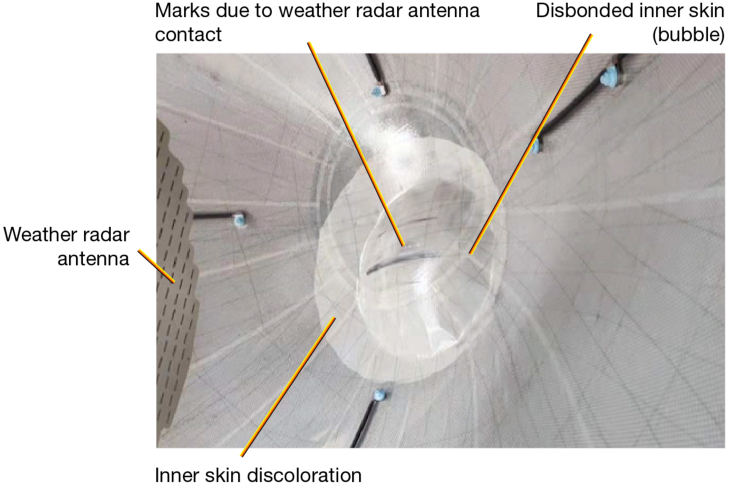
(fig.8) Example of out-of-limits damage on the inner surface of the radome (source: Operator)
Weather Radar Antenna Drive Troubleshooting
Section titled “Weather Radar Antenna Drive Troubleshooting”At the time of the event described above, the A350 fault isolation task to be applied in the case of a fault message concerning the weather antenna drive requested the confirmation of the fault by performing a radar system test:
-
If the system test failed, the task requested an inspection of the inner structure and surface of the radome.
-
If the system test revealed no fault, no further action was requested. However, as per Aircraft Fault Isolation philosophy, after three or more occurrences of a fault, the full fault identification procedure must be done. This includes inspecting the inner structure and surface of the radome when there are three or more occurrences of a weather radar antenna fault message.
Troubleshooting and fault isolation task improvements
Section titled “Troubleshooting and fault isolation task improvements”An update of the troubleshooting/aircraft fault isolation task linked to the weather antenna drive failure was launched for A320/A330/A340 and A350 aircraft. This is to take into account the conditions described in the above event causing the possible inflation at altitude, and deflation on the ground of the disbonded inner skin bubble of the radome. The procedure now requires a systematic inspection of the inner structure or surface of the radome to check for damage whenever there is a failure message related to the weather antenna or antenna drive.
-
Further information can be found in the AMM/MP/AMP, SRM/ASR/ASRP documents available on the AirbusWorld portal and in the following published documents: ● ISI 53.15.00024: A320Fam - Radome Information - standards /interchangeability & events procedures
-
● ISI 53.51.00001: A300, A330 & A340Fam - Radomes information - standard and interchangeability possibilities.
-
ISI 53.15.00026: A350 - Radome Information - standards/interchangeability & event procedures
Contributors:
Section titled “Contributors:”Jean Charles ANTUNES
Section titled “Jean Charles ANTUNES”Abnormal Events & Multi-ATA Engineer Customer Support
Andrei BULANCEA
Section titled “Andrei BULANCEA”Radome Expert Design office
Hélène CARROLS
Section titled “Hélène CARROLS”Accident/Incident Investigator
Aviation Safety
Adam FLETCHER
Section titled “Adam FLETCHER”Structure Support Engineer
Customer Services
Jacques FOURNIE
Section titled “Jacques FOURNIE”Radome Specialist Design Office
Any bird strike, hail strike, or foreign object debris striking any part of the aircraft must be reported to maintenance personnel, and the flight crew must make an entry in the logbook. It is important to provide as much detailed information as possible to aid in isolating any issues. The inspection should be carried out as soon as possible, because damage to composite parts may not be easily detected if the external surface is left to return to its original profile over time, masking or hiding the damage to the internal structure.
Whenever a bird or hail strike occurs anywhere on the aircraft, the radome must always be inspected using good quality lighting to check both the external and internal surfaces and structures. A fault message concerning the weather radar antenna may also be indicative of damage to the radome. When there is a weather radar antenna fault message, the updated troubleshooting procedures request a thorough inspection of the internal surfaces and structures of the radome to check for damage that could impair the movement of the radar in flight.
It is also important to recall the fault isolation philosophy that requires the full fault identification procedure to be carried out for the system when there are three or more occurrences of the same fault.
Maxime LANSONNEUR
Section titled “Maxime LANSONNEUR”Director Safety - Training and Flight Operations Customer Support
Safety first, 2024. Safety first is published by Airbus S.A.S. 1, rond point Maurice Bellonte - 31707 Blagnac Cedex/France.
Editor: Yannick Malinge, SVP Aviation Safety.
Editorial team: Guillaume Estragnat, Vanessa Sadi, Gwyneth Duggan, Javier Martinez Marina, Tim Roach.
Photos by Airbus.
Source: Airbus Safety First URL: https://safetyfirst.airbus.com/bird-or-hail-strikes-on-the-radome/ Published: 2024-09-13 Category: Flight Ops, Maintenance, composite, honeycomb, radar PDF: Original PDF
鸟击和冰雹撞击等异常事件可能随时发生。当飞机遭到鸟击或外来物碎片(FOD)撞击时,必须在下次飞行前遵循正确的检查程序,以确定飞机是否可以安全飞行。
本文聚焦于鸟击或冰雹撞击对飞机雷达罩的影响。重申对飞行机组和维修人员的建议,以确保正确检测、报告和处理鸟击或冰雹撞击事件。同时解释了在任何鸟击或冰雹撞击事件后,为什么检查雷达罩的外表面和内表面都很重要。
请访问 safetyfirst.airbus.com 以及 iOS 和 Android 版 Safety First 应用程序查看本文的最新版本。
一架 A350 飞机在爬升至巡航高度的过程中,在即将到达 12,000 ft 之前触发了 SURV WXR 1 FAULT ECAM 警报。机组按下 SURV 面板上的 WXR SYS 2 按钮,切换至气象雷达系统 2。随后很快触发了 SURV WXR 2 FAULT ECAM 警报。机组在爬升期间执行了多次气象雷达系统切换,但结果相同。最终飞机到达了 35,000 ft 的巡航高度。触发了 SURV WXR 1+2 FAULT ECAM 警报。机组联系了运行控制中心,决定进行空中返航。他们启动返航并开始下降。随后机组听到一声巨响,随后是强烈的气动噪音,并观察到指示空速存在偏差。随后触发了以下 ECAM 警告:NAV ISIS SPD UNRELIABLE(导航 ISIS 空速不可靠)、NAV AIR DATA REDUNDANCY LOST(导航 大气数据冗余失效)和 NAV RNP AR CAPABILITY DOWNGRADED(导航 RNP AR 能力降级)。在备用法则恢复 3 分钟后,飞行控制系统临时恢复至备用法则,持续了 17 分钟。随后恢复正常法则,并保持至下降结束。在进近开始时再次出现一次恢复至备用法则,持续近两分钟,之后恢复正常法则并保持至着陆。
(图 1) 坍塌的雷达罩视图(来源:运营人)
当飞机停靠登机口时,地面人员观察到鼻锥雷达罩已坍塌在雷达上**(图 1)**。
之前的鸟击报告
Section titled “之前的鸟击报告”飞机技术记录本显示,该飞机在事件发生前一个月雷达罩左侧发生过一次鸟击。技术记录本注明已按照 MP A350-A-05-51-14-00001-282A-A - 鸟击后飞机检查(Inspection of the Aircraft after a Bird Strike)执行了检查,在雷达罩外表面左侧发现鸟击痕迹,但未检测到损伤。记录本未特别说明是否同时检查了雷达罩的内表面。因此无法确认是否对雷达罩进行了完整检查。
空客对坍塌雷达罩的详细检查确认,在雷达罩坍塌的事件发生前,雷达罩左侧曾发生过鸟击。在可能的撞击区域发现了鹰的 DNA 以及一些漆面微裂纹**(图 2)**。
(图 2) 根据观察到的漆面微裂纹确定的鸟击位置
撞击区域损伤
Section titled “撞击区域损伤”内蒙皮与雷达罩复合材料结构发生脱粘,在鸟击位置附近蜂窝结构受损。这种损伤破坏了雷达罩的结构完整性,导致雷达罩坍塌。
之前飞行中的 WXR 天线驱动故障信息
Section titled “之前飞行中的 WXR 天线驱动故障信息”该飞机的飞行后报告(PFR)显示,在前三次飞行中反复出现间歇性的 SURV WXR 1 FAULT、SURV WXR 2 FAULT 和 SURV WXR 1+2 FAULT ECAM 警报,并伴随相应的”Drive Unit - WXR antenna”(驱动组件 - WXR 天线)故障信息。该故障信息在天线扫描周期内天线未能移动至指令位置时触发。这可能是天线驱动组件故障或天线机械卡阻所致。在这三次飞行结束时都在地面执行了系统测试,但未发现故障。在这些地面检查中未检测到内蒙皮与雷达罩结构脱粘的状况。
鸟击或冰雹撞击对雷达罩的影响
Section titled “鸟击或冰雹撞击对雷达罩的影响”雷达罩是一种气动防水整流罩,用于保护雷达天线。它由允许雷达无线电波以最小干扰进行发射和接收的材料制成。
自 A300 以来,空客所有商用飞机的雷达罩均由复合材料蜂窝夹层结构组成,蜂窝芯位于内外蒙皮之间(A380 除外,其采用双夹层蜂窝芯)。这些蒙皮以前由玻璃、凯夫拉和石英制成。最新型雷达罩采用 S2-glass® 材料制造。
(图 3) 雷达罩的典型结构(蜂窝形状可能因飞机型号而异)
撞击对雷达罩的影响
Section titled “撞击对雷达罩的影响”当遭受冰雹、鸟击或其他外来物撞击时,夹芯复合材料结构会发生变形,随后可能恢复至原始外形,外表面可能几乎看不出损伤,但内部结构可能已受到严重损伤。(fig.4) 运营经验表明,雷达罩外表面通常几乎看不到撞击痕迹,而蜂窝芯可能已受损,雷达罩内蒙皮在撞击区域周围可能已发生脱粘。
(fig.4) 复合材料面板受撞击导致的损伤示例
飞行中脱粘区域的膨胀
Section titled “飞行中脱粘区域的膨胀”如果鸟击或冰雹造成的损伤在地面未被检测到,受损区域将经历多个飞行周期。被困在蜂窝芯和脱粘蒙皮之间的空气(地面约 1 bar)将在每次飞行中趋于膨胀,由于高空环境气压较低(巡航高度约 0.2 bar),在蒙皮脱粘处形成鼓包 (fig.5)。
(fig.5) 高空脱粘蒙皮膨胀效应
作为二次效应的气象雷达故障
Section titled “作为二次效应的气象雷达故障”如果损伤未被检测到,根据其大小和位置,可能会影响气象雷达天线的运动并触发气象雷达警告 (fig.6)。
(fig.6) A320 飞机雷达罩损伤对二次效应影响示例
当飞机返回地面后,雷达罩内蒙皮的鼓包放气,可能会不再影响天线的运动 (fig.7)。这可以解释为什么在地面进行气象雷达系统故障排除测试时未能发现故障,尽管雷达罩损伤仍然存在。
(fig.7) 地面进行雷达系统故障排除测试可能无法识别雷达罩损伤仍然存在
运营注意事项
Section titled “运营注意事项”飞行机组在报告和检测鸟击或冰雹造成的损伤方面起着重要作用。
向维修人员报告任何鸟击或冰雹撞击
Section titled “向维修人员报告任何鸟击或冰雹撞击”在飞行中发生实际或疑似鸟击或冰雹撞击时,无论撞击发生在飞机哪个部位,飞行机组都必须进行 飞行日志记录,向维修人员报告该事件,以便他们能够对飞机进行适当的检查。
飞行机组报告应提供详细信息,以帮助隔离任何问题,例如:
在鸟击或冰雹撞击事件发生时:
- 飞机构型(起落架位置和飞行控制面位置)
- ● 飞行阶段
在鸟击或冰雹撞击事件发生时 及之后:
- 任何异常的发动机、无线电或导航系统行为
- ● 在空调系统中注意到的任何气味(烧焦味或其他异味)
- ● 触发的 ECAM(A220 为 EICAS)警告清单
- ● 事件期间或之后发生的任何其他系统故障描述
在外部绕机检查时检查鸟击或冰雹撞击
Section titled “在外部绕机检查时检查鸟击或冰雹撞击”对飞机进行彻底的外部绕机检查也是发现任何潜在鸟击/冰雹或 FOD 相关损伤的机会。如果在任何飞机部件上发现鸟击、冰雹或 FOD 痕迹,飞行机组必须通知维修人员并进行飞行日志记录。
维修注意事项
Section titled “维修注意事项”鸟击或冰雹撞击后的飞机检查
Section titled “鸟击或冰雹撞击后的飞机检查”按照 AMM/MP/AMP 对报告的鸟击或冰雹撞击后的飞机进行仔细检查是必不可少的,以确认飞机是否安全执行下一次飞行,或是否需要进行部件修理或更换。
尽快进行鸟击或冰雹撞击检查
Section titled “尽快进行鸟击或冰雹撞击检查”运营经验表明,由于复合材料部件在撞击后可能恢复其原始外形,这可能会掩盖或隐藏内部结构损伤,因此可能难以识别鸟击或冰雹撞击的迹象。因此,检查必须在鸟击或冰雹撞击事件发生后立即进行,以最大限度地提高发现损伤的机会。
使用照明进行准确检测
Section titled “使用照明进行准确检测”如果在低光照条件下进行检查,应使用高质量的补充照明。斜射光(将定向光施加在表面附近并以窄角度照射)可以突出不平整区域的阴影,有助于检测缺陷。
对任何报告的鸟击或冰雹撞击执行雷达罩检查
Section titled “对任何报告的鸟击或冰雹撞击执行雷达罩检查”发生鸟击或冰雹撞击时,损坏可能不限于单一区域。因此,无论报告的鸟击或冰雹撞击发生在何处(如发动机、机身、机翼前缘等),都必须对雷达罩进行检查,因为它可能也受到了撞击的影响。
检查雷达罩外部和内部结构
Section titled “检查雷达罩外部和内部结构”在所有鸟击或冰雹撞击后,除了外部检查外,还必须打开并检查雷达罩的内部结构和表面是否存在分层和脱粘的迹象,即使雷达罩外部表面没有痕迹。内壁脱粘的典型迹象包括表面不平整或蒙皮变色**(图8)**。如果检测到任何损坏,必须确认其在SRM/ASR/ASRP中提供的允许损伤限制范围内,方可继续运营。如果损坏超出允许损伤限制,则必须修理或更换雷达罩。
A380飞机(双层夹芯蜂窝芯结构)和A220飞机(单层夹芯蜂窝芯结构但制造工艺不同)的文件,目前并未要求在每次报告的鸟击或冰雹撞击后系统性地检查雷达罩内部表面。目前正在评估是否需要更新文件以与其他空客机型保持程序一致。
(图8) 雷达罩内表面超出限制的损坏示例(来源:航空公司)
气象雷达天线驱动故障排除
Section titled “气象雷达天线驱动故障排除”在上述事件发生时,对于涉及气象天线驱动的故障信息,A350飞机需要应用的故障隔离任务要求通过执行雷达系统测试来确认故障:
-
如果系统测试失败,该任务要求检查雷达罩的内部结构和表面。
-
如果系统测试未发现故障,则不要求进一步操作。但是,根据飞机故障隔离原则,在发生三次或更多次故障后,必须执行完整的故障识别程序。这包括在气象雷达天线故障信息出现三次或更多次时检查雷达罩的内部结构和表面。
故障排除和故障隔离任务改进
Section titled “故障排除和故障隔离任务改进”针对A320/A330/A340和A350飞机,启动了对与气象天线驱动故障相关的故障排除/飞机故障隔离任务的更新。这是考虑到上述事件中可能导致雷达罩脱粘内壁气泡在高空膨胀、地面放气的条件。该程序现在要求在与气象天线或天线驱动相关的故障信息出现时,系统性地检查雷达罩的内部结构或表面以检查损坏情况。
-
更多信息可在空客World门户上的AMM/MP/AMP、SRM/ASR/ASRP文档中找到,以及以下已发布的文档中:
● ISI 53.15.00024:A320系列 - 雷达罩信息 - 标准/互换性及事件程序
● ISI 53.51.00001:A300、A330及A340系列 - 雷达罩信息 - 标准和互换性可能性
● ISI 53.15.00026:A350 - 雷达罩信息 - 标准/互换性及事件程序
Jean Charles ANTUNES
Section titled “Jean Charles ANTUNES”非正常事件及多ATA工程师 客户支持
Andrei BULANCEA
Section titled “Andrei BULANCEA”雷达罩专家 设计办公室
Hélène CARROLS
Section titled “Hélène CARROLS”事故/事件调查员 航空安全
Adam FLETCHER
Section titled “Adam FLETCHER”结构支持工程师 客户服务
Jacques FOURNIE
Section titled “Jacques FOURNIE”雷达罩专家 设计办公室
任何鸟击、冰雹撞击或外来物撞击飞机的任何部位,都必须报告给维修人员,飞行机组必须在飞行记录簿中做记录。提供尽可能详细的information信息以帮助隔离问题是非常重要的。检查应尽快进行,因为如果让复合材料部件的外部表面随时间恢复原始形状,可能会掩盖或隐藏内部结构的损坏。
每当飞机任何部位发生鸟击或冰雹撞击时,必须始终使用良好的照明对雷达罩进行检查,以检查外部和内部表面及结构。气象雷达天线故障信息也可能表示雷达罩损坏。当出现气象雷达天线故障信息时,更新后的故障排除程序要求对雷达罩的内部表面和结构进行彻底检查,以检查可能影响雷达在飞行中移动的损坏。
同样重要的是要记住故障隔离原则,即当同一故障发生三次或更多次时,必须对该系统执行完整的故障识别程序。
Maxime LANSONNEUR
Section titled “Maxime LANSONNEUR”安全总监 - 培训与飞行运营 客户支持
Safety first,2024年。Safety first由空客S.A.S.出版。地址:1, rond point Maurice Bellonte - 31707 Blagnac Cedex/France。
编辑:Yannick Malinge,航空安全高级副总裁。
编辑团队:Guillaume Estragnat、Vanessa Sadi、Gwyneth Duggan、Javier Martinez Marina、Tim Roach。
照片由空客提供。