Safe Oxygen Servicing
Source: Airbus Safety First URL: https://safetyfirst.airbus.com/safe-oxygen-servicing/ Published: 2023-01-16 Category: Maintenance, explosion, fire, O2, oxygen, servicing PDF: Original PDF

Oxygen is a vital gas, but when combined with a source of heat and flammable material, it can cause a significant fire hazard. This risk increases in an oxygen-enriched environment and can even lead to an explosion. Oxygen servicing requires specific safety precautions to avoid any hazardous situations. This article how a can explains fire start in the of and the presence oxygen highlights safety precautions that must always be followed whenever working on oxygen systems.
This article is also available on safetyfrst.airbus.com and on the Safety first app for iOS and Android devices.
CASE STUDY
Section titled “CASE STUDY”Event Description
Section titled “Event Description”During the daily check of an A319, the maintenance crew checked the DOOR/OXY system page and noticed that the flight crew oxygen pressure was 1 450 psi instead of 1 500 psi, as per the Operator’s own requirement. They decided to perform an oxygen servicing task before the aircraft was dispatched.
During the servicing task, the Pressure Regulator Transmitter (PRT) between the oxygen servicing cart and the crew oxygen cylinder exploded and started a fire that propagated towards the oxygen cylinder. The fire at the PRT melted the inlet hose of the cylinder valve, which caused it to separate from the PRT. Pressurized oxygen gas rapidly discharged and injured a maintenance crew member’s face, causing skin and eye irritation. The second maintenance crew member managed to shut off the oxygen supply at the oxygen servicing cart. Other around the aircraft who heard the explosion reacted by shutting off the discharging flight crew oxygen cylinder, cutting power to the aircraft, and calling the emergency services. The maintenance crew member only suffered minor injuries.
Event Analysis
Section titled “Event Analysis”Investigation revealed that the most probable sequence of actions that led to the fire was the following:
The crew oxygen cylinder valve was open and the pressure inside the PRT was around 1 450 psi.
The maintenance crew opened the shut-off valve of the oxygen bottle on the servicing cart, which provided a pressure of 2 000 psi upstream of the cart pressure regulator.
The cart regulator was then opened and set to a regulated pressure of 1 600 psi. At this stage, the flexible filling line was not pressurized, because the CHARGE/STOP valve was in a closed position (fig.1).
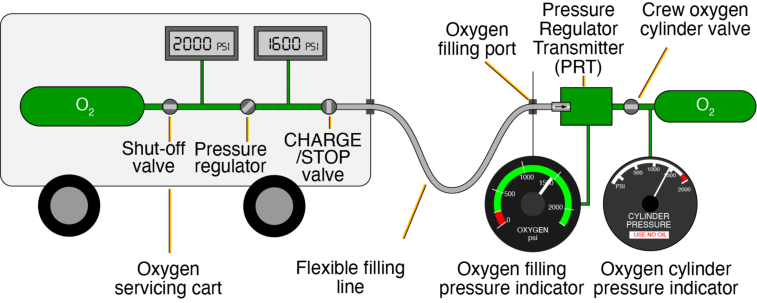
(fig.1) Initial setup of the oxygen servicing cart during the event
The maintenance crew then opened the CHARGE/STOP valve (set to the CHARGE position). This created a rapid pressurization inside the flexible filling line up to 1 600 psi, which caused the oxygen temperature to increase to approximately 800°C at the entry of the PRT. This phenomenon is called adiabatic compression. An O-ring located at the PRT inlet ignited at this temperature. The resulting fire propagated to the other PRT components and to the cylinder valve inlet, which separated from the PRT and released the oxygen from the cylinder (fig.2).
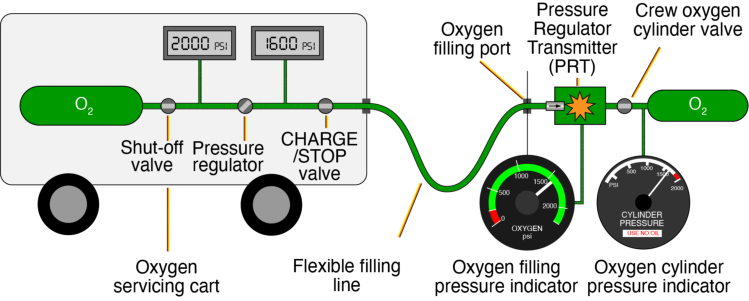
(fig.2) The sudden pressure build-up in the filling line led to a rapid increase of the oxygen temperature to 800°C. It triggered the ignition of an O-ring inside the PRT and the fire propagated to the cylinder valve.
Importance of following oxygen servicing instructions
Section titled “Importance of following oxygen servicing instructions”The instructions for use of the servicing cart states that the CHARGE/STOP valve must be open before opening the cart pressure regulator. The risk of rapid pressurization was specifically mentioned and carefully following the instructions would have prevented the incident. When pressurizing an oxygen system or device, it is essential to always slowly open the valves and to control the slow pressurization of the system.
OXYGEN AND THE RISK OF FIRE
Section titled “OXYGEN AND THE RISK OF FIRE”Oxygen is not a flammable gas but an excellent oxidizer, which is present at a concentration of approximately 21% in the ambient air. It is odorless, invisible, and difficult to detect.
When an oxidizer comes into contact with flammable materials in gas, liquid, or solid form, and if energy from a heat source or a spark is present, this starts a fire that burns until one of the three components of this fire triangle is removed (fig.3).
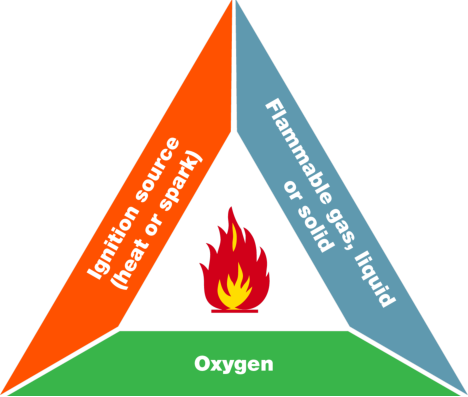
(fig.3) The fire triangle
Some flammable material such as grease or oil can self-ignite in a pure oxygen atmosphere, but only at fairly high temperatures above 200°C. In an oxygen-enriched environment, those same materials can self-ignite at much lower temperatures depending on the level of oxygen concentration present. In that case, the fire will be of higher intensity and temperature. Even without sparks or an ignition source, large fires and explosions can occur.
Even a small increase in the oxygen concentration level from 21% (standard air environment) to 24% can create a dangerous situation with rapid and explosive combustion.
SAFETY PRECAUTIONS DURING OXYGEN SERVICING
Section titled “SAFETY PRECAUTIONS DURING OXYGEN SERVICING”Oxygen cylinders need regular servicing and they can either be refilled or replaced. There are specific precautions to follow for these tasks. They can only be performed by qualified personnel who are trained to work on oxygen systems and aware of the associated risks, especially fire risks. Only approved tools, materials, and procedures should be used.
The general precautions to take are available in the Airbus AMM/MP/AMP maintenance procedures dealing with oxygen systems.
Prevent an oxygen enriched atmosphere
Section titled “Prevent an oxygen enriched atmosphere”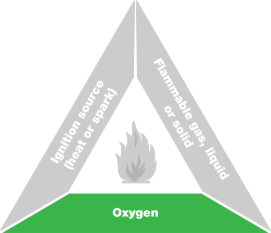
Use an oxygen detector and ventilate confined areas, when necessary
Section titled “Use an oxygen detector and ventilate confined areas, when necessary”Any oxygen leak can create an oxygen-enriched environment, which could lead to dangerous situations especially when oxygen cylinders are placed in confined spaces. During flight, these areas are ventilated by the aircraft air conditioning system. However, when on the ground there is no ventilation. Therefore, maintenance crews should be aware of the oxygen level before entering those confined areas.
The use of an oxygen detector is recommended (fig.4). If high levels of oxygen concentration is detected, the area must be ventilated before performing any maintenance actions.
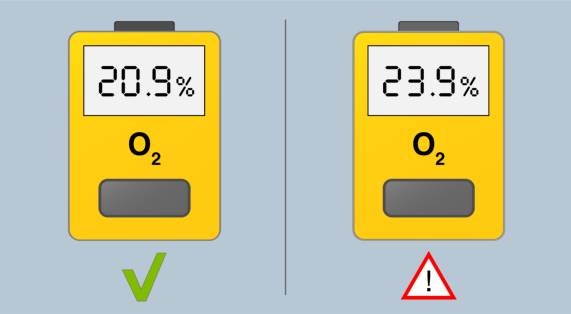
(fig.4) An oxygen detector enables a check of the oxygen concentration in a confined area before starting any maintenance task
Follow maintenance procedures and instructions of use
Section titled “Follow maintenance procedures and instructions of use”To prevent any oxygen leak during servicing, it is crucial to follow the AMM/AMP/MP procedures. It is also crucial to follow the operating instructions for the oxygen servicing cart and the instructions of use for the filling port adapter provided by the ground equipment manufacturer.
Keep track of your oxygen servicing
Section titled “Keep track of your oxygen servicing”It is recommended to keep track of the frequency of the oxygen servicing especially if it often occurs before the scheduled maintenance as this could indicate a leak in the oxygen system.
Prevent any ignition source
Section titled “Prevent any ignition source”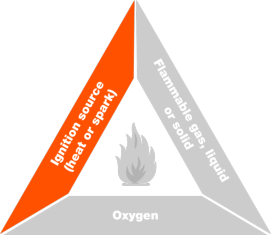
During oxygen servicing, all possible heat sources should be removed to avoid any fire risk.
Prevent heat coming from sparks or flames
Section titled “Prevent heat coming from sparks or flames”It is forbidden to smoke during oxygen servicing. Oxygen servicing must not be performed in the proximity of other maintenance activities that could create flames, heat, or sparks such as grinding or drilling.
Prevent heat coming from electrical discharge or electrical overheating
Section titled “Prevent heat coming from electrical discharge or electrical overheating”It is forbidden to use mobile phones during servicing and to perform oxygen servicing during thunderstorms. When refilling oxygen, it is mandatory to bond the aircraft to the oxygen servicing cart before connecting the refill valve (fig.5). This will ensure electrical continuity between the aircraft and the oxygen servicing cart and prevent the likelihood of sparks due to a potential difference between the aircraft and the cart. Airbus AMM/MP/AMP maintenance procedures do not require grounding (earthing) of the aircraft or of the oxygen servicing cart, but local authority regulations may request this.
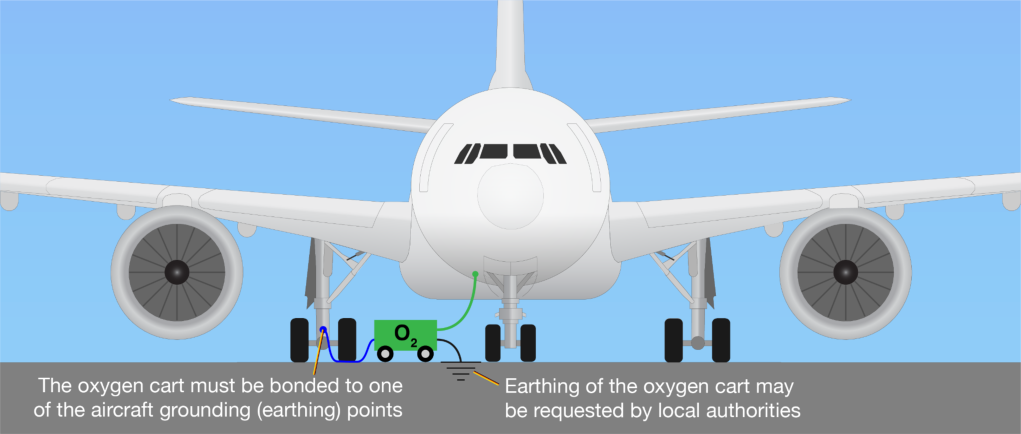
(fig.5) Mandatory bonding during oxygen servicing operations using an oxygen cart
Prevent rapid oxygen pressure build-up
Section titled “Prevent rapid oxygen pressure build-up”The event described earlier highlights the need to handle oxygen valves with care to prevent rapid oxygen pressure build-up and ignition of flammable materials. Also if dust or debris are present in the system, for example, due to contaminated tooling, a fast oxygen flow could create sparks as a result of particle impact.
Respect a safety zone
Section titled “Respect a safety zone”As an industry standard, a 5-meter safety zone must be maintained around the oxygen filling port during refilling.
Prevent presence of flammable gas, liquid or solid
Section titled “Prevent presence of flammable gas, liquid or solid”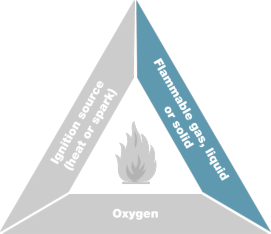
Restrict other maintenance activities
Section titled “Restrict other maintenance activities”Oxygen servicing must not be performed during refueling, cleaning, deicing, when working on fuel and hydraulics, or any systems using flammable materials. Oil, grease, lubricant, fuel, cleaning and deicing materials are flammable and can self-ignite the presence of concentrated levels of oxygen.
Only use approved lubricant/cleaner
Section titled “Only use approved lubricant/cleaner”The maintenance crew should only use approved lubricant and cleaner products on oxygen system components.
The importance of a clean work area, tools and servicing equipment
Section titled “The importance of a clean work area, tools and servicing equipment”A clean work area, tools and servicing equipment should be ensured to prevent dust or debris entering into the oxygen system from the reception and storage of oxygen system components through to the final installation on the aircraft. Check that each person working on the oxygen systems, or performing oxygen servicing tasks, has clean hands, clean clothes, clean tools, and clean working areas. This will avoid oil or grease stains from coming into contact with oxygen gas. This will also avoid the presence of particles or other contaminants that could lead to a fire if combined with a heat source and oxygen.
In an oxygen-enriched environment, even a rag with grease on it used during previous maintenance tasks can lead to a fire. Therefore, the maintenance crew must always use clean equipment during servicing to prevent any risk of fire or combustion.
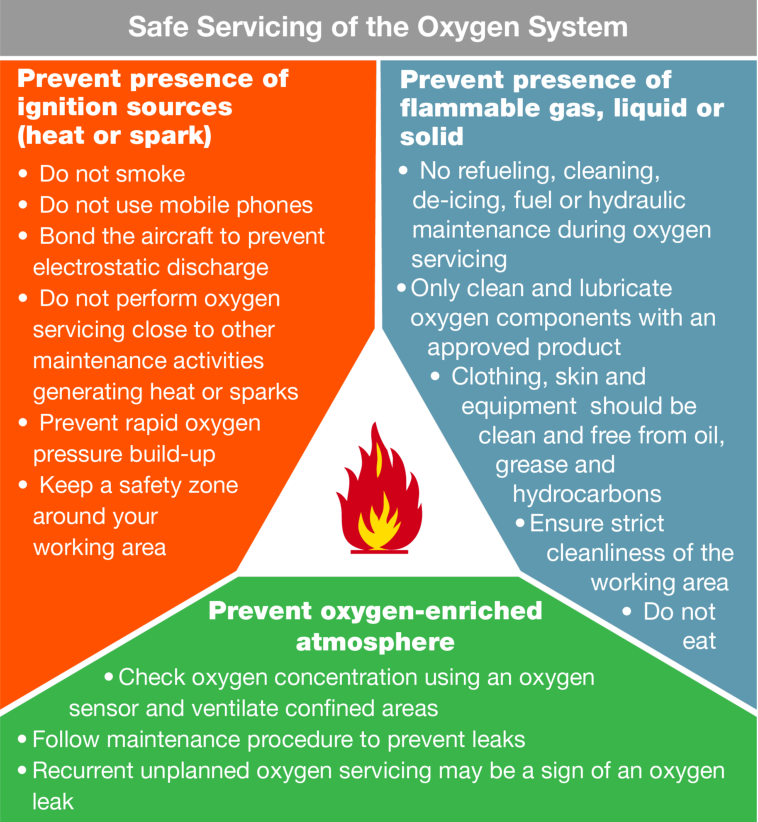
(fig.6) Summary of the safety precautions for oxygen servicing
Contributors :
Section titled “Contributors :”Patrick BRICARD
Section titled “Patrick BRICARD”Oxygen Systems Expert Design Office
Ian GOODWIN Safety Enhancements Product Safety
Stéphane PUGLIESE
Section titled “Stéphane PUGLIESE”Expert Fire Prevention and Protection Design Office
Jordane
Section titled “Jordane”SOULA-OUDOT Incident/Accident Investigator Product Safety
Pierre VILLEGER
Section titled “Pierre VILLEGER”Senior Oxygen Engineer Customer Support
With thanks to Thomas LEPAGNOT from Product Safety
Section titled “With thanks to Thomas LEPAGNOT from Product Safety”Oxygen in the presence of a source of heat and flammable material can lead to significant fire events. Oxygen-enriched environments can create even more intense fires and explosions. When working on oxygen systems such as during oxygen servicing, specific safety precautions need to be followed to avoid these hazardous situations.
There are safety precautions to reduce the risk of an oxygen-enriched environment due to oxygen leaks. The use of an oxygen detector and the ventilation of confined areas is recommended.
Other safety precautions are intended to remove any source of heat coming from either flames or sparks, from electrical discharge or electrical overheating. It is the reason why it is mandatory to bond the aircraft to the oxygen filling cart when performing oxygen servicing. Grounding the aircraft may also be required by local authorities. In all cases, a safety zone around the filling port must be maintained.
It is essential to remove any flammable material near the oxygen systems during servicing. A clean work area, tools, and servicing equipment must be ensured. Performing maintenance tasks on systems with flammable materials such as fuel, hydraulic fluid, or deicing products must be avoided during servicing of oxygen systems.
Following Airbus maintenance procedures and all procedures and instructions for use provided by the manufacturers of all ground equipment and products used is essential to ensure safe oxygen servicing.
Safety first, 2023. Safety first is published by Airbus S.A.S. 1, rond point Maurice Bellonte - 31707 Blagnac Cedex/France.
Editor: Yannick Malinge, Chief Product Safety Officer.
Editorial team: Guillaume Estragnat, Vanessa Sadi, Gwyneth Duggan, Tim Roach.
- Reference: X00D16031905.
Photos by Airbus.
安全氧气维修
Section titled “安全氧气维修”来源:Airbus Safety First 网址:https://safetyfirst.airbus.com/safe-oxygen-servicing/ 发布日期:2023-01-16 类别:维修、爆炸、火灾、氧气、氧气系统、维修
氧气是一种至关重要的气体,但当它与热源和可燃材料结合时,可能会造成严重的火灾风险。在富氧环境中,这种风险会增加,甚至可能导致爆炸。氧气维修需要采取特定的安全预防措施,以避免任何危险情况的发生。本文解释了火灾是如何在有氧气存在的情况下发生的,并重点说明了在维修氧气系统时必须始终遵守的安全预防措施。
本文也可在 safetyfirst.airbus.com 网站以及 iOS 和 Android 设备上的 Safety First 应用中获取。
在对一架 A319 进行日常检查时,维修人员检查了 DOOR/OXY(门/氧气)系统页面,发现机组氧气压力为 1 450 psi,而非运营商自身要求的 1 500 psi。他们决定在飞机放行前执行氧气加注任务。
在加注过程中,氧气服务车与机组氧气瓶之间的压力调节变送器(PRT)发生爆炸并起火,火势蔓延至氧气瓶。PRT 处的火焰熔化了气瓶活门的入口软管,导致其从 PRT 上脱离。加压氧气迅速排出,致一名维修人员的面部受伤,造成皮肤和眼睛刺激。另一名维修人员设法关闭了氧气服务车上的氧气供应。其他在场人员听到爆炸声后做出反应,关闭了正在排出的机组氧气瓶,切断了飞机电源,并呼叫了应急服务。该维修人员仅受了轻伤。
调查表明,导致火灾的最可能事件顺序如下:
机组氧气瓶活门处于打开状态,PRT 内部压力约为 1 450 psi。
维修人员打开了服务车上氧气瓶的关断活门,使服务车上游压力调节器的压力达到 2 000 psi。
然后打开服务车调压器,将其设定为 1 600 psi 的调定压力。此时,由于 CHARGE/STOP(充氧/停止)活门处于关闭位置,柔性加注管路尚未充压**(图1)**。
(图1) 事件中氧气服务车的初始设置
随后,维修人员打开了 CHARGE/STOP(充氧/停止)活门(置于充氧位置)。这在柔性加注管路内产生了快速增压,使氧气在 PRT 入口处的温度升高至约 800°C。这种现象称为绝热压缩。位于 PRT 入口处的 O 形圈在该温度下被点燃。由此产生的火焰蔓延至 PRT 的其他部件和气瓶活门入口,活门从 PRT 上脱离并释放了气瓶中的氧气**(图2)**。
(图2) 加注管路中的压力突然积聚导致氧气温度迅速升高至 800°C。这触发了 PRT 内 O 形圈的点燃,火焰蔓延至气瓶活门。
遵循氧气维修说明的重要性
Section titled “遵循氧气维修说明的重要性”服务车使用说明要求,必须在打开服务车压力调节器之前打开 CHARGE/STOP(充氧/停止)活门。快速增压的风险已被特别提及,严格遵循说明即可防止该事故的发生。在对氧气系统或设备进行增压时,必须始终缓慢打开各活门,并控制系统的缓慢增压过程。
氧气与火灾风险
Section titled “氧气与火灾风险”氧气不是可燃气体,而是一种优秀的氧化剂,在环境空气中以约 21% 的浓度存在。氧气无色、无味、难以察觉。
当氧化剂与气态、液态或固态的可燃材料接触,并且有热源或火花提供的能量时,就会引发燃烧,火焰将持续燃烧直到燃烧三角形的三个要素之一被移除**(图3)**。
(图3) 燃烧三角形
某些可燃材料(如油脂或机油)在纯氧环境中可以在高于 200°C 的相当高的温度下自燃。在富氧环境中,同样的材料可以在低得多的温度下自燃,具体取决于所存在的氧气浓度。在这种情况下,火灾将具有更高的强度和温度。即使没有火花或点火源,也可能发生大规模火灾和爆炸。
即使氧气浓度从小幅增加——从 21%(标准空气环境)增加到 24%——也可能造成危险的局面,导致快速和爆炸性燃烧。
氧气勤务期间的安全注意事项
Section titled “氧气勤务期间的安全注意事项”氧气瓶需要定期维护,可选择重新充注或更换。执行这些任务时需遵循特定的注意事项。这些工作只能由经过氧气系统操作培训并了解相关风险(尤其是火灾风险)的合格人员执行。应仅使用经批准的工具、材料和程序。
有关氧气系统维护的通用注意事项,请参阅空客 AMM/MP/AMP 维护程序。
防止富氧环境
Section titled “防止富氧环境”
必要时使用氧气探测器并通风封闭区域
Section titled “必要时使用氧气探测器并通风封闭区域”任何氧气泄漏都可能造成富氧环境,在封闭空间内放置氧气瓶时尤其危险。飞行期间,这些区域由飞机空调系统进行通风。然而,在地面时没有通风措施。因此,维护人员在进入封闭区域前应了解氧气浓度。
建议使用氧气探测器 (fig.4)。如果检测到高浓度氧气,必须在执行任何维护操作前进行通风。
(fig.4) 氧气探测器可在开始任何维护任务前检测封闭区域内的氧气浓度
遵循维护程序和使用说明
Section titled “遵循维护程序和使用说明”为防止勤务期间发生氧气泄漏,务必遵循 AMM/AMP/MP 程序。同样重要的是,遵循氧气勤务车的操作说明以及地面设备制造商提供的充氧口转接头的使用说明。
记录氧气勤务情况
Section titled “记录氧气勤务情况”建议记录氧气勤务的频率,尤其是当勤务频率经常超过计划维护间隔时,这可能表明氧气系统存在泄漏。
防止任何点火源
Section titled “防止任何点火源”
在氧气勤务期间,应移除所有可能的热源,以避免火灾风险。
防止火花或火焰产生的热量
Section titled “防止火花或火焰产生的热量”氧气勤务期间禁止吸烟。氧气勤务不得在可能产生火焰、热量或火花的邻近区域同时进行其他维护作业,如打磨或钻孔。
防止静电放电或电气过热产生的热量
Section titled “防止静电放电或电气过热产生的热量”勤务期间禁止使用手机,雷雨天气不得进行氧气勤务。重新充注氧气时,必须在连接充注阀门前将飞机与氧气勤务车进行搭接 (fig.5)。这将确保飞机与氧气勤务车之间的电气连续性,并防止因两者之间存在电位差而产生火花。空客 AMM/MP/AMP 维护程序不要求对飞机或氧气勤务车进行接地,但当地主管部门的规定可能另有要求。
(fig.5) 使用氧气车进行勤务操作时,必须进行搭接
防止氧气压力快速升高
Section titled “防止氧气压力快速升高”前文描述的事件表明,必须小心操作氧气阀门,以防止氧气压力快速升高并引燃易燃材料。此外,如果系统中存在灰尘或碎屑(例如由于工具污染),快速流动的氧气可能会因颗粒碰撞产生火花。
遵守安全区域
Section titled “遵守安全区域”作为行业标准,在重新充注期间,充氧口周围必须保持 5 米的安全区域。
防止易燃气体、液体或固体存在
Section titled “防止易燃气体、液体或固体存在”
限制其他维护活动
Section titled “限制其他维护活动”在加油、清洁、除冰、燃油和液压系统作业或使用易燃材料的任何系统作业期间,不得进行氧气勤务。油液、润滑脂、润滑剂、燃油、清洁剂和除冰材料均为易燃物,在高浓度氧气环境下可能自燃。
仅使用经批准的润滑剂/清洁剂
Section titled “仅使用经批准的润滑剂/清洁剂”维护人员仅应在氧气系统部件上使用经批准的润滑剂和清洁剂产品。
保持工作区域、工具和勤务设备清洁的重要性
Section titled “保持工作区域、工具和勤务设备清洁的重要性”必须确保工作区域、工具和勤务设备清洁,以防止灰尘或碎屑在氧气系统部件的接收、储存直至最终安装到飞机上的过程中进入氧气系统。检查每位从事氧气系统工作或执行氧气勤务任务的人员是否做到手部清洁、服装清洁、工具清洁和工作区域清洁。这将避免油液或油脂沾染到氧气上。同时也可避免可能与热源和氧气结合而引发火灾的颗粒或其他污染物存在。
在富氧环境中,即使是在先前维护任务中使用过的沾有油脂的抹布也可能导致火灾。因此,维护人员在勤务期间必须始终使用清洁的设备,以防止任何火灾或燃烧风险。
(fig.6) 氧气勤务安全注意事项汇总
Patrick BRICARD
Section titled “Patrick BRICARD”氧气系统专家设计室
Ian GOODWIN 安全改进产品安全
Stéphane PUGLIESE
Section titled “Stéphane PUGLIESE”消防与防护设计室专家
Jordane
Section titled “Jordane”SOULA-OUDOT 事故/事故调查员产品安全
Pierre VILLEGER
Section titled “Pierre VILLEGER”高级氧气工程师客户支援
感谢来自产品安全部门的 Thomas LEPAGNOT
Section titled “感谢来自产品安全部门的 Thomas LEPAGNOT”氧气在热源和易燃物质存在的情况下可能导致严重的火灾事故。富氧环境可能引发更加剧烈的火灾和爆炸。在进行氧气系统作业(如氧气加注)时,需要遵循特定的安全预防措施,以避免这些危险情况的发生。
有安全预防措施可降低因氧气泄漏导致富氧环境的风险。建议使用氧气探测器和通风封闭区域。
其他安全预防措施旨在消除来自火焰或火花、静电放电或电气过热的任何热源。因此,在进行氧气加注时,必须将飞机与氧气加注车进行连接。本地主管部门可能也会要求对飞机进行接地。在所有情况下,必须在加注口周围保持一个安全区域。
在进行氧气系统加注时,必须清除氧气系统附近的任何易燃物质。必须确保工作区域、工具和加注设备清洁。在进行氧气系统加注期间,应避免对含有燃油、液压油或除冰液等易燃材料的系统执行维护任务。
遵循空客维护程序以及所有地面设备和所用产品的制造商提供的所有程序和使用说明,对于确保安全的氧气加注至关重要。
Safety first,2023。Safety first 由空中客车股份有限公司出版。1, rond point Maurice Bellonte - 31707 Blagnac Cedex/法国。
编辑:Yannick Malinge,产品安全总监。
编辑团队:Guillaume Estragnat、Vanessa Sadi、Gwyneth Duggan、Tim Roach。
20192534。参考编号:X00D16031905。
照片由空中客车提供。