Fuel Leak Management in Flight
Source: Airbus Safety First URL: https://safetyfirst.airbus.com/fuel-leak-management-in-flight/ Published: 2025-10-29 Category: Flight Ops, crossfeed, fuel, leak PDF: Original PDF

A fuel leak can have serious consequences, especially because of the risk of fire and fuel starvation. When a fuel leak is detected, it is essential to follow the operational procedures to maintain the safety of the flight. This article highlights how to detect and confirm a fuel leak on A300-600, A310, A320 family, A330, A340, A350, and A380 aircraft. It also recalls which actions to perform, especially shutting down the engine in the case of an engine fuel leak to prevent any risk of engine fire. Fuel leak management for A220 aircraft will be addressed in a future article.
Check the latest version of this article on safetyfirst.airbus.com and on the Safety first app for iOS and Android devices.
CASE STUDY
Section titled “CASE STUDY”Event Description
Section titled “Event Description”An A330 aircraft was reaching its cruise flight level during a night flight. It was 35 minutes after takeoff (T0 + 35 mn) and the flight crew performed the first fuel check. The initial fuel quantity after refueling (BLOCK fuel) was 45 600 kg.
① The first fuel check showed a Fuel On Board (FOB) value of 37680 KG with an indicated fuel used quantity of 6480 KG. Their sum represented a discrepancy of 1_440 kg with the BLOCK fuel value. A non-significant lateral fuel imbalance between the two inner tanks (90 kg) was displayed. The captain attributed the 1.4 T fuel quantity discrepancy to the ongoing fuel transfers from the inner wing tanks to the trim tank and suggested monitoring the evolution of the fuel quantity.
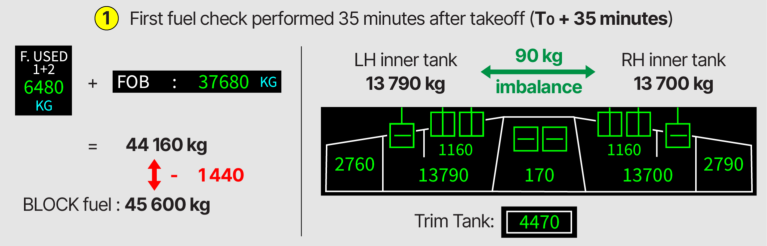
(fig.1) First fuel check performed during the event
② 30 minutes later (T0 + 1 h 05 mn) , the flight crew noticed that 2 670 kg of fuel was missing with an imbalance of 780 kg indicating a possible fuel leak on the left side.
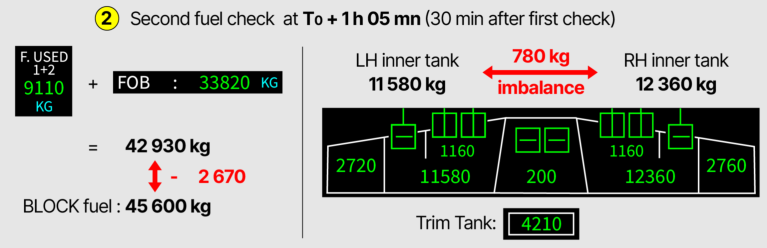
(fig.2) The flight crew noticed an increase in fuel loss and a significant imbalance
The flight crew initiated the FUEL LEAK QRH procedure: ③ They maintained the crossfeed valve closed, set the L CTR TANK and R CTR TANK pushbutton switches to OFF, and set the T TANK FEED selector to ISOL. The procedure then requests that the flight crew monitor the fuel depletion rate of each inner tank.
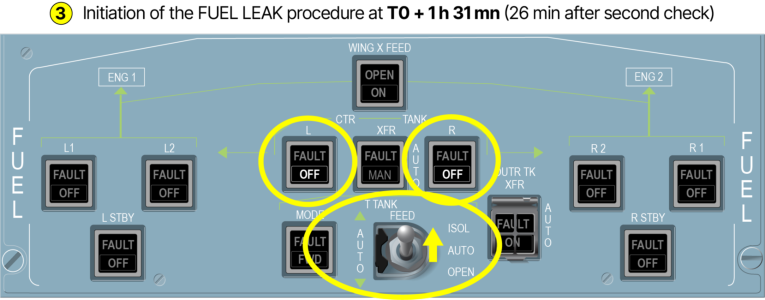
(fig.3) The flight crew applied the first step of the FUEL LEAK procedure to isolate the tanks
④ 26 minutes later (T0 + 1 h 31 mn) , 3 530 kg of fuel was missing and there was an imbalance of 1 770 kg (+990 kg in 26 minutes) between the two inner tanks. Given the significant fuel imbalance, the FUEL LEAK QRH procedure requests that the affected engine be shut down. The flight crew initiated a diversion and decided to keep the left engine running.
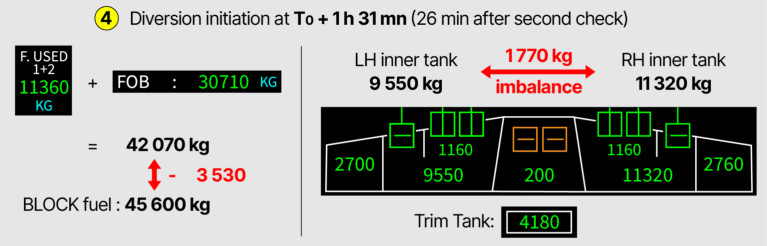
(fig.4) The fuel imbalance increased by almost 1 ton within 26 minutes with the tanks isolated
4 minutes later (T0 + 1 h 35 mn) the FUEL F. USED/FOB DISAGREE ECAM alert triggered referring to the FUEL LEAK QRH procedure, which the flight crew had initiated 30 minutes previously and stopped when requested to shut down the affected engine. Both engines were kept running. One maintenance technician, who was present onboard the aircraft, visually confirmed the fuel leak from the left engine.
30 minutes later (T0 + 2 h 05 mn) , the fuel imbalance advisory triggered (fuel quantity values of both inner and outer tanks were flashing) due to the imbalance of more than 3 000 kg. The QRH associated with this advisory requires that the flight crew consider that the imbalance may be due to a fuel leak. In this case, it redirects to the FUEL LEAK QRH procedure. Again, both engines were kept running.
15 minutes later (T0 + 2 h 20 mn) , the aircraft landed with 5.2 T of fuel missing and 3.5 T of imbalance. The thrust reversers were not used, in accordance with the FUEL LEAK QRH procedure. The flight crew decided to keep the left engine ON to ease the 180° turnaround maneuver at the end of the runway. They shut down the left engine after the turnaround, and shut down the right engine when they reached the parking area.
Firefighters sprayed water under the left engine and, when the aircraft was safe, the passengers disembarked uneventfully. A total of 5.7 T of fuel was lost during the flight.
Event Analysis
Section titled “Event Analysis”Incorrect assembly of the primary fuel hose as a root cause
Section titled “Incorrect assembly of the primary fuel hose as a root cause”Examination of the engine showed that the fuel leak was located downstream of the LP valve, at the interface between the left pylon and the left engine (fig.5). The primary fuel hose, which brings fuel from the pylon to the engine, was not correctly installed. Its mounting flange that connects it to the pylon was not correctly aligned. Vibrations caused the flange to move and created a leak.
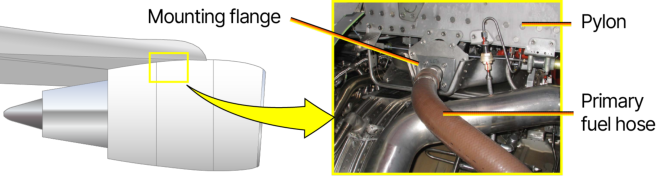
(fig.5) Location of the engine leak during the event
Prevention of incorrect primary fuel hose installation on A330 aircraft with CF6 engine
Section titled “Prevention of incorrect primary fuel hose installation on A330 aircraft with CF6 engine”The Aircraft Maintenance Manual (AMM) task 73-11-46-400-801-A “Installation of the Primary Fuel Hose” provides specific recommendations to prevent any incorrect installation with the associated risk of assembly distortion.
In addition, the engine manufacturer designed an improved mounting flange to limit the possibility of a mounting flange alignment error. This improved design can be installed by the Airbus Service Bulletin 73-3066.
Technical Follow Up TFU 73.11.00002 is also available on Airbusworld with further information.
Constant fuel leak
Section titled “Constant fuel leak”Recorder data analysis showed that the fuel leak from engine 1 was present from the start of the flight at a constant rate of about 45 liters per minute, equivalent to 2 tons per hour.
Fuel imbalance temporarily compensated by fuel aft transfer during climb
Section titled “Fuel imbalance temporarily compensated by fuel aft transfer during climb”The aft transfer starts above FL 255. If the fuel quantity between the two inner tanks differs by more than 500 kg, the aft transfer is done from the heavier inner tank to the trim tank until the balance is restored or the trim tank is full.
It explains why the imbalance was limited to 90 kg during the first fuel check performed at the beginning of the cruise phase. Shutting down the engine is necessary to confirm the left engine leak
The flight crew started to apply the leak identification step of the FUEL LEAK QRH procedure by making sure that the crossfeed valve was closed, setting the L CTR TANK and R CTR TANK pushbutton switches to OFF, and setting the T TANK FEED selector to ISOL.
A little more than 20 minutes later, the imbalance increased by 990 kg (from 780 kg to 1770 kg), confirming the presence of a leak on the left side. The next step of the procedure requires that the flight crew shut down the left engine to determine if the leak comes from the engine or from the left wing. However, the flight crew stopped applying the procedure at this stage and maintained the left engine ON, which continued to feed the fuel leak until the end of the flight. High risk of engine fire
Keeping the left engine running maintained a high risk of fire since fuel was leaking on hot parts of the engine.
Fuel loss and runway contamination
Section titled “Fuel loss and runway contamination”Keeping the engine running until the 180° turn on the runway created fuel diffusion in the atmosphere during the remainder of the flight and contamination of the runway.
Excessive AFT CG due to trim tank left isolated
Section titled “Excessive AFT CG due to trim tank left isolated”The flight crew interrupted their application of the FUEL LEAK QRH procedure at the leak identification step. Therefore, the fuel tanks remained isolated. Especially, with no possible fuel transfer from the trim tank, the aircraft CG increased further aft throughout the flight and reached 39.8 % at landing, only just below the threshold of 40.5 % for a gross weight of 174 T to trigger the FUEL EXCESS AFT CG red ECAM alert.
FUEL LEAK DETECTION
Section titled “FUEL LEAK DETECTION”A fuel leak can be detected visually with the presence of fuel spray from an engine, a pylon, or the wing. A smell of fuel in the cabin can also indicate a possible fuel leak. However, most of the time, it is the check of the fuel indications that enables timely detection of a fuel leak.
Regular Fuel Checks
Section titled “Regular Fuel Checks”Alerting indicators that could signal a fuel leak
Section titled “Alerting indicators that could signal a fuel leak”Indicators of a possible fuel leak are an abnormal decrease in a fuel tank quantity or the total fuel, a sudden overflow in a tank, an excessive fuel flow, or a low N1 from an engine. The development of a fuel imbalance can also be caused by a fuel leak.
A light fuel imbalance can exist at the start of the flight due to the APU that is fed only from one side and single engine taxi operations.
Regular fuel checks should be performed during cruise
Section titled “Regular fuel checks should be performed during cruise”The Standard Operating Procedures (SOPs) for A300-600, A310, A320 family, A330, A340, A350 and A380 aircraft recommend that the flight crew perform regular fuel checks during cruise. A check should be done when overflying a waypoint or at least every 30 minutes.
Check 1: (FOB + FU) - BLOCK fuel
Section titled “Check 1: (FOB + FU) - BLOCK fuel”Those regular checks consist of comparing the sum of the current FOB and FU with the FOB at the start of the flight (BLOCK fuel). If the sum is much less or is continually decreasing this can indicate a fuel leak.
On A350, the (FOB+FU) - BLOCK information is displayed on the Cruise SD page and on the Fuel SD page to help detect any anomaly more easily. An increasing negative value could indicate a fuel leak.
(fig.6) The (FOB + FU) - BLOCK information is displayed on the CRUISE and FUEL page
Check 2: FOB vs. FMS fuel prediction
Section titled “Check 2: FOB vs. FMS fuel prediction”Another check is to compare the FOB and the fuel predictions from the FMS with the estimated FOB information per waypoint from the Computerized Flight Plan (CFP) or any EFB performance application used. Any growing discrepancy can be an indication of a fuel leak. Further information on fuel monitoring is available in the Safety first article “Fuel Monitoring on A320 Family aircraft”.
Automatic Fuel Leak Detection
Section titled “Automatic Fuel Leak Detection”Performing manual checks enables the flight crew to detect a fuel leak as soon as possible. However, following an event on an A330 aircraft, which resulted in total fuel exhaustion and landing with empty fuel tanks, ECAM alerts were introduced as an additional safety net to help the flight crew detect a fuel leak and make sure necessary actions are performed in a timely manner. Fuel system leak detection: upstream of the fuel metering valve On A320 family, A330, A340, A350 and A380 aircraft, the consistency check between (FOB+FU) and BLOCK fuel is automatically computed and triggers an ECAM alert when the difference reaches a specific threshold: - FUEL F. USED/FOB DISAGREE on A320 family, A330 and A340 aircraft - FUEL LEAK SUSPECTED on A350 - FUEL LEAK DETECTED on A380. These alerts request the application of the FUEL LEAK procedure. The ECAM alerts available on some aircraft and indicating a possible fuel leak are just additional safety nets. Performing regular manual fuel checks is the best practice to ensure early detection of a fuel leak before the triggering of such alerts. Engine fuel leak detection: downstream of the fuel metering valve On A320neo family, A330, A340, A350 and A380, a significant difference between fuel flow or fuel used of the different engines triggers an ECAM alert: ● ENG FUEL LEAK on A320neo Family/A330/A340 aircraft ● ENG FUEL LEAK SUSPECTED on A350 aircraft ● ENG 1(2)(3)(4) FUEL LEAK DETECTED on A380 aircraft. In the previous case study, the fuel leak was located downstream of the LP valve but upstream of the fuel metering valve, therefore, the ENG FUEL LEAK alert could not be triggered. Following an engine fuel leak alert, the flight crew must confirm the fuel leak by checking the fuel parameters (FOB, FU, FF, fuel imbalance) and N1 parameter. If the leak is confirmed, the affected engine must be shut down.
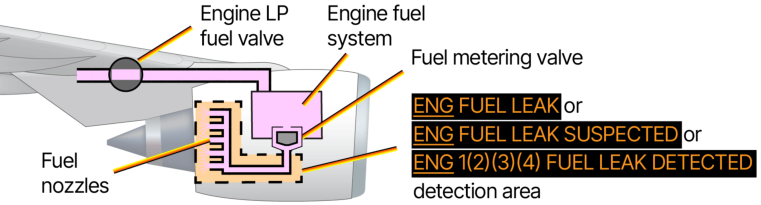
(fig.7) The engine fuel leak automatic detection detects potential leaks downstream of the fuel metering valve
FUEL LEAK HANDLING
Section titled “FUEL LEAK HANDLING”Significant Risks
Section titled “Significant Risks”A fuel leak is a serious event that requires immediate attention due to:
● The risk of fire Fuel spillage on hot components such as the engines or the brakes can start a fire.
- The risk of fuel starvation
Excessive loss of fuel may lead to a low fuel situation and ultimately may cause a flameout of the engines.
- The risk of environmental contamination
A fuel leak can lead to environmental contamination. On ground, contaminating the runway and taxiway with fuel may impair the operations of other aircraft.
To prevent these risks, when a fuel leak is confirmed, it is essential to apply the FUEL LEAK procedure to identify the source and contain the leak.
Fuel Leak Procedure
Section titled “Fuel Leak Procedure”For A300-600, A310, A320 family, A330, A340, A350 and A380 aircraft, the FUEL LEAK procedure has the same philosophy and follows similar steps that are described below. We use an example of a fuel leak on an A320 family aircraft to illustrate those steps.
The FUEL LEAK procedure is an approved procedure from the AFM and can also be found in:
-
QRH FUEL LEAK procedure for A300-600, A310, A320 family, A330, and A340 aircraft
-
FCOM ABN FUEL LEAK procedure for A350 aircraft
-
FCOM ABN FUEL LEAK DETECTED procedure for A380 aircraft.
The Flight Crew Techniques Manual of each aircraft describes the philosophy of the fuel leak procedure in the Abnormal and Emergency Procedures section.
The management of a fuel leak is also described in the “Fuel Leak Management” video available on the Airbus Worldwide Instructor News (Airbus WIN) website.
Fuel leak = Consider Landing
Section titled “Fuel leak = Consider Landing”As soon as a fuel leak is confirmed, the flight crew must consider landing at the nearest suitable airport.
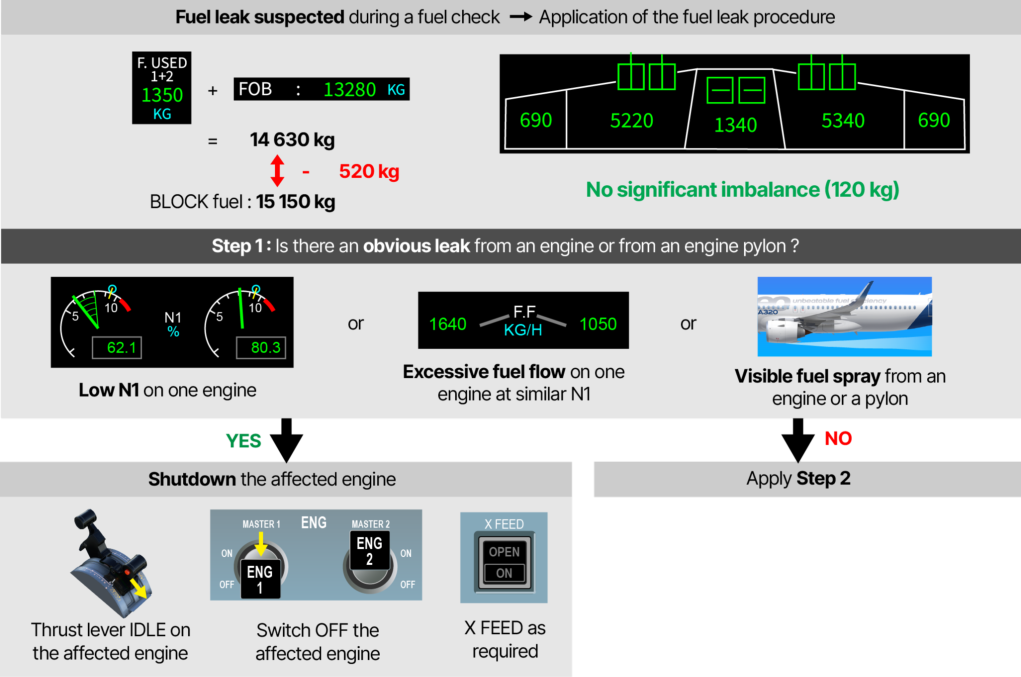
Step 1: Is there an obvious leak from an engine or an engine pylon?
Section titled “Step 1: Is there an obvious leak from an engine or an engine pylon?”On A300-600, A310, A320 family, A330, A340 aircraft, the first step of the fuel leak procedure is to consider an engine fuel leak as it is the most common cause of fuel leak. The indicators to confirm an engine fuel leak are:
-
Fuel spray directly visible from an engine/pylon
-
N1 indication significant decrease on one side
-
Excessive FF on one side.
If an engine fuel leak is confirmed, the affected engine must be shut down to avoid any fire risk and contain the leak.
When an engine fuel leak is confirmed, there is a high risk of engine fire. The affected engine must be shut down and must not be restarted for the remainder of the flight.
(fig.8) First step of the FUEL LEAK QRH procedure on an A320 family aircraft
Step 2: Isolation of fuel tanks and fuel quantity monitoring
Section titled “Step 2: Isolation of fuel tanks and fuel quantity monitoring”If an engine fuel leak is not directly confirmed, the next step of the fuel leak (fig.9) Second step of the procedure is to stop all fuel transfers and isolate each tank in order to locate the FUEL LEAK QRH source of the leak. By doing so, each engine will be supplied by its own associated procedure on an A320 wing tank. family aircraft
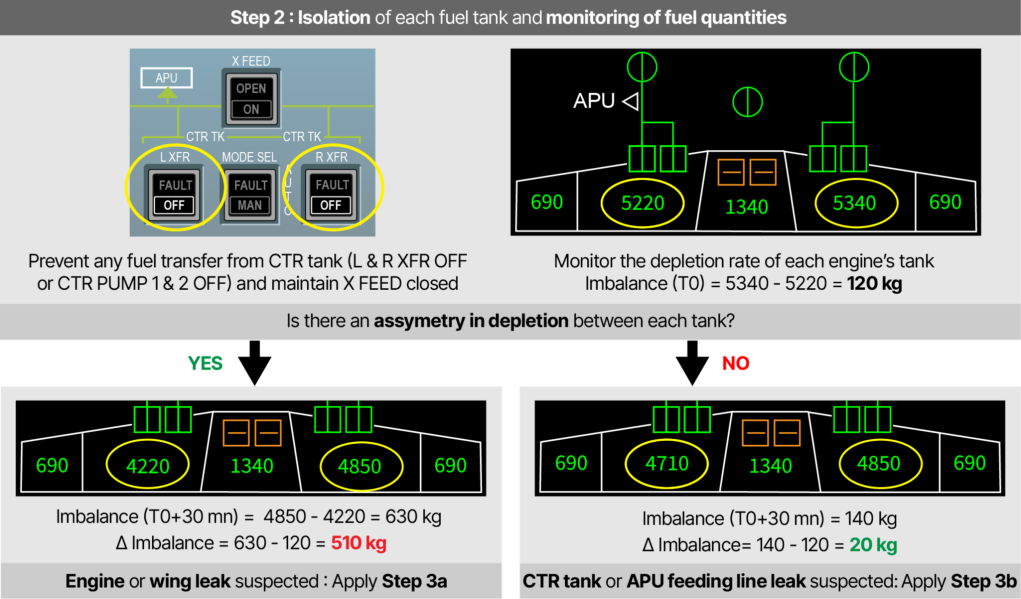
Step 3a: If there is an asymmetry in the fuel depletion rate between the two sides (left or right): Engine or wing leak suspected
Section titled “Step 3a: If there is an asymmetry in the fuel depletion rate between the two sides (left or right): Engine or wing leak suspected”A significant asymmetric depletion indicates a possible leak from the engine/pylon or from the wing of the side with the higher depletion rate. The engine from the affected side must be shut down to confirm the leak location :
-
If the leak stops after the engine shutdown (fuel quantity in the corresponding tank remains constant), it indicates that the leak comes from the engine. The engine must remain shut down for the remainder of the flight.
-
If the leak did not stop (fuel quantity in the corresponding tank is still decreasing), a wing leak is suspected , an engine restart can be considered. On A320 aircraft, fuel transfer can be enabled again on the non-leaking side.
If a wing leak is confirmed, it is important for the flight crew not to attempt to manually balance the wing tanks in order not to feed the leak even if requested by other procedures.
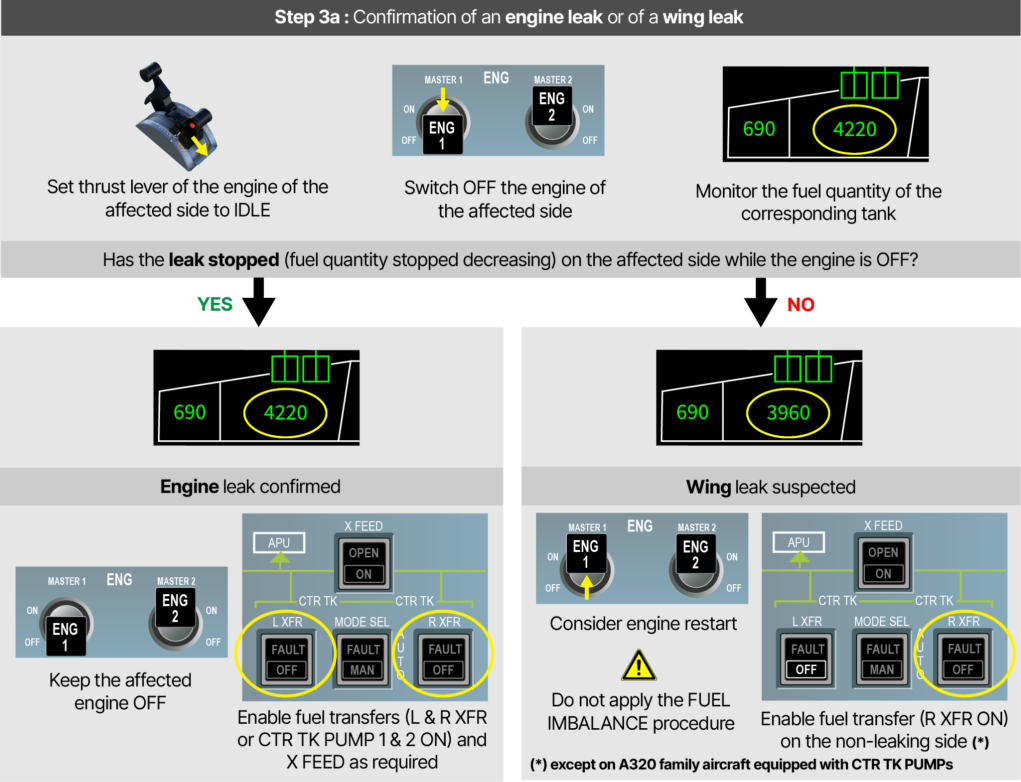
- (fig.10) Confirmation step in the case of a suspected engine or wing leak on an A320 family aircraft
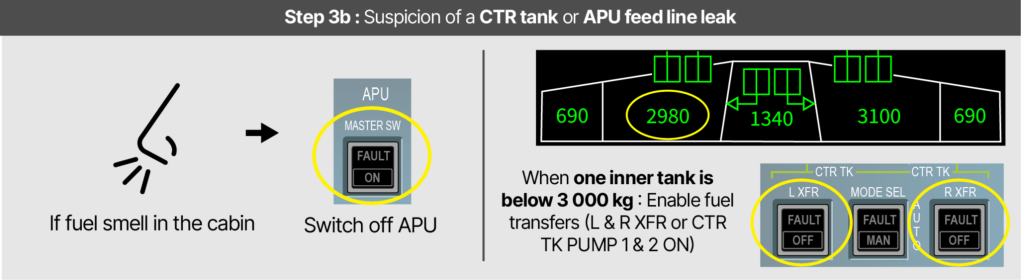
Step 3b: If there is no asymmetry in the fuel depletion rate between the two sides (left or right)
Section titled “Step 3b: If there is no asymmetry in the fuel depletion rate between the two sides (left or right)”If there is no asymmetry in the fuel depletion rate between the two sides (left or right), the possible locations of the fuel leak are the center tanks, the trim tank feed line or the trim tank (if installed), or the APU fuel feed system.
If the APU is ON and if there is a smell of fuel in the cabin, the APU must be switched off to prevent fuel loss through the APU feed line.
(fig.11) Actions to perform when a CTR tank or APU feed line leak is suspected on an A320 family aircraft
Do not use thrust reversers at landing
Section titled “Do not use thrust reversers at landing”Thrust reversers must not be used at landing to avoid blowing the leaking fuel toward the engine air inlet or the hot brakes. This could cause the overheat of the engine, reduced performance of the brakes, and most of all the start of a fire in the engine or on the hot brakes.
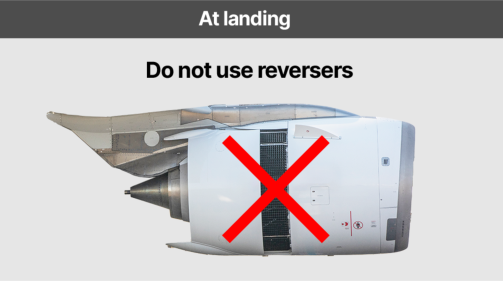
(fig.12) Thrust reversers must not be used at landing
Contributors:
Section titled “Contributors:”Sundeep GUPTA
Section titled “Sundeep GUPTA”Incident/Accident Investigator Aviation Safety
Christophe MATHE
Section titled “Christophe MATHE”Senior Flight Operations Engineer Flight Operations Support and Training Standard
Paul PILKINGTON
Section titled “Paul PILKINGTON”Expert Fuel Fuel Design Office
Stéphane PUGLIESE
Section titled “Stéphane PUGLIESE”Expert Fire Prevention and Protection Propulsion Design Office
Capt. Gilbert SAVARY
Section titled “Capt. Gilbert SAVARY”Adherence to operational procedures is crucial to ensure safe management of a fuel leak.
As per SOPs, the flight crew should regularly monitor the fuel consumption to detect a potential fuel leak as soon as possible. ECAM alerts indicating a possible fuel leak either in the aircraft fuel system or in the engine fuel system are also available as an additional safety net.
As soon as a fuel leak is confirmed, the flight crew must consider landing at the nearest suitable airport.
The flight crew must perform the various steps of the FUEL LEAK procedure to identify the location of the leak and contain it to prevent further fuel spillage.
If obvious cues enable the flight crew to confirm an engine fuel leak, the procedure requests that they shut down the affected engine immediately to prevent fire and contain the leak.
The thrust reversers must not be used at landing to avoid blowing fuel toward the engine air intake or toward the brakes.
Expert Pilot Flight Operations Support and Training Standard
Mohammed YAHYAOUI
Section titled “Mohammed YAHYAOUI”Expert Engine Fuel System & Fuel Propulsion Design Office
With thanks to Mélanie FIORUCCI from Customer Engineering Support, Cédric DESCHEEMAEKER from Aviation Safety and Marc LE LOUER from A300/A310 Flight Operations Support.
Safety first, 2025. Safety first is published by Airbus S.A.S. 1, rond point Maurice Bellonte - 31707 Blagnac Cedex/France.
Editor: Yannick Malinge, SVP AViation Safety.
Editorial team: Guillaume Estragnat, Vanessa Sadi, Gwyneth Duggan, Javier Martinez Marina, Lise Foubert, Bruno Fargeon.
Photos by Airbus.
来源: Airbus Safety First 网址: https://safetyfirst.airbus.com/fuel-leak-management-in-flight/ 发布时间: 2025-10-29 分类: 航班运营, 交输, 燃油, 泄漏 PDF: 原始PDF
燃油泄漏可能导致严重后果,尤其是存在火灾和燃油耗尽风险时。一旦检测到燃油泄漏,遵循操作程序以维护飞行安全至关重要。本文介绍了如何在 A300-600、A310、A320 系列、A330、A340、A350 和 A380 飞机上检测和确认燃油泄漏,同时还阐述了应采取的行动,特别是在发动机燃油泄漏情况下关闭发动机以防止火灾风险。后续文章将介绍 A220 飞机的燃油泄漏管理。
请在 safetyfirst.airbus.com 和 iOS 及 Android 设备的 Safety first 应用上查看本文最新版本。
一架 A330 飞机在夜间飞行中接近巡航高度。起飞后 35 分钟(T0 + 35 分钟),机组执行了首次燃油检查。加油后的初始燃油量(BLOCK 燃油)为 45 600 kg。
① 首次燃油检查显示机上燃油(FOB)为 37680 kg,已指示燃油消耗量为 6480 kg。两者之和与 BLOCK 燃油值相差 1 440 kg。两个内侧油箱之间存在 90 kg 的不显著横向燃油不平衡。机长将 1.4 吨的燃油量差异归因于内侧机翼油箱向配平油箱的燃油传输,并建议监控燃油量变化。
(图 1) 事件中执行首次燃油检查
② 30 分钟后(T0 + 1 小时 05 分钟),机组注意到缺失燃油 2 670 kg,不平衡量为 780 kg,表明可能存在左侧燃油泄漏。
(图 2) 机组注意到燃油损失增加和明显不平衡
机组启动了燃油泄漏 QRH 程序:③ 他们保持交输活门关闭,将 L CTR TANK 和 R CTR TANK 按钮电门设置到 OFF,并将 T TANK FEED 选择器设置到 ISOL。该程序随后要求机组监控每个内侧油箱的燃油消耗率。
(图 3) 机组执行燃油泄漏程序第一步以隔离油箱
④ 26 分钟后(T0 + 1 小时 31 分钟),缺失燃油 3 530 kg,两个内侧油箱之间的不平衡量为 1 770 kg(26 分钟内增加了 990 kg)。鉴于燃油不平衡显著,燃油泄漏 QRH 程序要求关闭受影响的发动机。机组启动备降并决定保持左发动机运转。
(图 4) 油箱隔离后,燃油不平衡在 26 分钟内增加近 1 吨
4 分钟后(T0 + 1 小时 35 分钟),触发了 FUEL F. USED/FOB DISAGREE ECAM 警告,提示参考燃油泄漏 QRH 程序,而机组已于 30 分钟前启动了该程序,并按要求在需要关闭受影响发动机时停止执行。两台发动机均保持运转。机上的一名维修技术人员目视确认了左发动机的燃油泄漏。
30 分钟后(T0 + 2 小时 05 分钟),由于不平衡量超过 3 000 kg,触发了燃油不平衡咨询(内侧油箱和外侧油箱的燃油量数值均闪烁)。该咨询相关的 QRH 要求机组考虑不平衡可能是由燃油泄漏引起的。在这种情况下,程序会重新指向燃油泄漏 QRH 程序。两台发动机再次保持运转。
15 分钟后(T0 + 2 小时 20 分钟),飞机着陆时缺失燃油 5.2 吨,不平衡量 3.5 吨。根据燃油泄漏 QRH 程序,反推未使用。机组决定保持左发动机运转,以方便在跑道尽头进行 180° 调头滑行。调头后关闭左发动机,滑行至停机位后关闭右发动机。
消防人员在左发动机下方喷水,飞机安全后,乘客顺利下机。整个飞行期间共损失燃油 5.7 吨。
初级燃油软管安装错误作为根本原因
Section titled “初级燃油软管安装错误作为根本原因”对发动机的检查表明,燃油泄漏位于低压活门下游,位于左侧吊架与左侧发动机之间的接口处 (图5)。将燃油从吊架输送到发动机的初级燃油软管安装不正确。其与吊架连接的安装法兰未正确对正。振动导致法兰移动并产生泄漏。
(图5) 事件中发动机泄漏的位置
预防 A330(CFM6 发动机)飞机上初级燃油软管安装错误
Section titled “预防 A330(CFM6 发动机)飞机上初级燃油软管安装错误”《飞机维护手册》(AMM) 任务 73-11-46-400-801-A “初级燃油软管的安装” 提供了防止任何错误安装及由此产生的装配变形风险的专门建议。
此外,发动机厂商设计了一种改进型安装法兰,以减少安装法兰对正错误的可能性。该改进设计可通过空客服务通告 73-3066 安装。
技术跟进文件 TFU 73.11.00002 也可在 Airbusworld 上获取,包含更多信息。
持续性燃油泄漏
Section titled “持续性燃油泄漏”记录器数据分析表明,1 号发动机的燃油泄漏从飞行开始时就存在,泄漏速率恒定,约为每分钟 45 升,相当于每小时 2 吨。
爬升过程中燃油不平衡暂时通过后传输得到补偿
Section titled “爬升过程中燃油不平衡暂时通过后传输得到补偿”后传输在 FL 255 以上启动。如果两个内侧油箱之间的燃油量差超过 500 公斤,则从较重的内侧油箱向后油箱传输燃油,直到恢复平衡或后油箱加满。
这解释了为什么在巡航阶段开始时进行的首次燃油检查中,不平衡量仅为 90 公斤。关停发动机是确认左侧发动机泄漏的必要步骤
飞行机组开始执行 FUEL LEAK QRH 程序中的泄漏识别步骤,确认交叉供油活门已关闭,将 L CTR TANK 和 R CTR TANK 按压开关设置为 OFF,并将 T TANK FEED 选择器设置为 ISOL。
约 20 多分钟后,不平衡量增加了 990 公斤(从 780 公斤增加到 1770 公斤),确认左侧存在泄漏。程序的下一步要求飞行机组关停左侧发动机,以确定泄漏是来自发动机还是来自左机翼。然而,飞行机组在此步骤停止了程序执行,并保持左侧发动机运转,继续向燃油泄漏供油直至飞行结束。发动机火灾风险很高
保持左侧发动机运转带来了很高的火灾风险,因为燃油正在泄漏到发动机的发热部件上。
燃油损失和跑道污染
Section titled “燃油损失和跑道污染”在跑道上保持发动机运转直至 180° 转向,导致了飞行剩余阶段燃油在大气中的扩散以及跑道的污染。
由于后油箱隔离导致的过大后载重心
Section titled “由于后油箱隔离导致的过大后载重心”飞行机组在泄漏识别步骤中断了 FUEL LEAK QRH 程序的执行。因此,油箱保持隔离状态。特别是,由于无法从后油箱进行燃油传输,飞机重心在整个飞行过程中进一步后移,在着陆时达到 39.8%,刚刚低于 174 吨总重触发燃油重心过度靠后红色 ECAM 警告的 40.5% 阈值。
燃油泄漏探测
Section titled “燃油泄漏探测”燃油泄漏可以通过观察到发动机、吊架或机翼上有燃油喷出而目视发现。机舱内闻到燃油味也可能表明存在可能的燃油泄漏。然而,大多数情况下,正是对燃油指示的检查使得燃油泄漏得以及时发现。
定期燃油检查
Section titled “定期燃油检查”可能表明燃油泄漏的警示指标
Section titled “可能表明燃油泄漏的警示指标”可能的燃油泄漏指标包括:某个油箱燃油量或总燃油量异常减少、某个油箱突然溢油、燃油流量过大或某台发动机 N1 低。燃油不平衡的发展也可能由燃油泄漏引起。
由于仅从一侧供油的 APU 和单发动机滑行,轻微的燃油不平衡可能在飞行开始时就存在。
应在巡航期间执行定期燃油检查
Section titled “应在巡航期间执行定期燃油检查”A300-600、A310、A320 系列、A330、A340、A350 和 A380 飞机的标准操作程序 (SOP) 建议飞行机组在巡航期间执行定期燃油检查。应在飞越航路点时进行检查,或至少每 30 分钟检查一次。
检查 1:(FOB + FU) - BLOCK 燃油
Section titled “检查 1:(FOB + FU) - BLOCK 燃油”这些定期检查包括将当前 FOB 与 FU 之和与飞行开始时的 FOB(BLOCK 燃油)进行比较。如果该总和小很多或持续下降,则可能表明存在燃油泄漏。
在 A350 上,(FOB+FU) - BLOCK 信息显示在巡航 SD 页和燃油 SD 页上,以便更容易地检测任何异常。负值越来越大可能表明存在燃油泄漏。
(fig.6) (FOB + FU) - BLOCK 信息显示在 CRUISE 和 FUEL 页上
(图6) (FOB + FU) - BLOCK 信息显示在 CRUISE 和 FUEL 页上
检查 2:FOB 与 FMS 燃油预测对比
Section titled “检查 2:FOB 与 FMS 燃油预测对比”另一项检查是将 FOB 与 FMS 的燃油预测同计算机飞行计划 (CFP) 或使用的任何 EFB 性能应用程序中每个航路点的预计 FOB 信息进行比较。不断扩大的差异可能是燃油泄漏的迹象。关于燃油监控的更多信息,请参阅 Safety first 文章 “A320 系列飞机的燃油监控”。
自动燃油泄漏探测
Section titled “自动燃油泄漏探测”手动检查使飞行机组能够尽快检测到燃油泄漏。然而,在一起A330飞机事件(该事件导致燃油完全耗尽并以空油箱着陆)之后,引入了ECAM警告作为额外的安全网,以帮助飞行机组检测燃油泄漏并确保及时执行必要的措施。 燃油系统泄漏探测:燃油计量活门上游 在A320系列、A330、A340、A350和A380飞机上,(FOB+FU)与BLOCK燃油之间的一致性检查会自动计算,当差值达到特定阈值时触发ECAM警告: - A320系列、A330和A340飞机上:FUEL F. USED/FOB DISAGREE - A350飞机上:FUEL LEAK SUSPECTED - A380飞机上:FUEL LEAK DETECTED。 这些警告要求执行燃油泄漏程序。在某些飞机上可用的ECAM警告(指示可能存在燃油泄漏)只是额外的安全网。执行定期手动燃油检查是确保在这些警告触发之前及早检测燃油泄漏的最佳做法。 发动机燃油泄漏探测:燃油计量活门下游 在A320neo系列、A330、A340、A350和A380上,不同发动机燃油流量或燃油使用量之间的显著差异会触发ECAM警告:● A320neo系列/A330/A340飞机上:ENG FUEL LEAK ● A350飞机上:ENG FUEL LEAK SUSPECTED ● A380飞机上:ENG 1(2)(3)(4) FUEL LEAK DETECTED。 在之前的案例研究中,燃油泄漏位于LP活门下游但燃油计量活门上游,因此无法触发ENG FUEL LEAK警告。收到发动机燃油泄漏警告后,飞行机组必须通过检查燃油参数(FOB、FU、FF、燃油不平衡)和N1参数来确认燃油泄漏。如果确认泄漏,必须关闭受影响的发动机。
(图7) 发动机燃油泄漏自动探测可检测燃油计量活门下游的潜在泄漏
燃油泄漏处置
Section titled “燃油泄漏处置”燃油泄漏是需要立即处理的重大事件,因为:
● 火灾风险 燃油溅到发动机或刹车等高温部件上可能引发火灾。
- 燃油耗尽风险
燃油过度损失可能导致低油量状况,最终可能导致发动机熄火。
- 环境污染风险
燃油泄漏可能导致环境污染。在地面上,燃油污染跑道和滑行道可能影响其他飞机的运行。
为防止这些风险,当确认燃油泄漏时,必须执行燃油泄漏程序以识别泄漏源并控制泄漏。
燃油泄漏程序
Section titled “燃油泄漏程序”对于A300-600、A310、A320系列、A330、A340、A350和A380飞机,燃油泄漏程序遵循相同的理念并遵循相似的步骤,如下所述。我们以A320系列飞机上的燃油泄漏为例来说明这些步骤。
燃油泄漏程序是AFM中经批准的程序,也可在此处找到:
-
A300-600、A310、A320系列、A330和A340飞机的QRH燃油泄漏程序
-
A350飞机的FCOM ABN燃油泄漏程序
-
A380飞机的FCOM ABN燃油泄漏检测程序。
每种飞机的飞行机组技术手册在异常和紧急程序部分描述了燃油泄漏程序的理念。
燃油泄漏管理也在Airbus全球教官新闻(Airbus WIN)网站上提供的“燃油泄漏管理”视频中进行了描述。
燃油泄漏 = 考虑着陆
Section titled “燃油泄漏 = 考虑着陆”一旦确认燃油泄漏,飞行机组必须考虑在最近的合适机场着陆。
第1步:是否存在来自发动机或发动机吊舱的明显泄漏?
Section titled “第1步:是否存在来自发动机或发动机吊舱的明显泄漏?”在A300-600、A310、A320系列、A330、A340飞机上,燃油泄漏程序的第一个步骤是考虑发动机燃油泄漏,因为这是最常见的燃油泄漏原因。确认发动机燃油泄漏的指标包括:
-
直接可见的发动机/吊舱燃油喷溅
-
单侧N1指示显著下降
-
单侧FF过高。
如果确认发动机燃油泄漏,必须关闭受影响的发动机以避免任何火灾风险并控制泄漏。
当确认发动机燃油泄漏时,存在发动机火灾的高风险。必须关闭受影响的发动机,且在本次飞行剩余时间内不得重新启动。
(图8) A320系列飞机燃油泄漏QRH程序的第一个步骤
第2步:隔离油箱并监控燃油量
Section titled “第2步:隔离油箱并监控燃油量”如果无法直接确认发动机燃油泄漏,燃油泄漏程序的下一个步骤是**(图9)**停止所有燃油传输并隔离每个油箱,以定位燃油泄漏的来源。通过这样做,每个发动机将由其相关的机翼油箱单独供应。
步骤 3a:如果两个侧(左侧或右侧)的燃油消耗率存在不对称:怀疑发动机或机翼泄漏
Section titled “步骤 3a:如果两个侧(左侧或右侧)的燃油消耗率存在不对称:怀疑发动机或机翼泄漏”显著的消耗不对称表明可能存在来自高消耗率一侧的发动机/挂架或机翼的泄漏。必须关闭受影响一侧的发动机以确认泄漏位置:
-
如果关闭发动机后泄漏停止(相应油箱的燃油量保持不变),则表明泄漏来自发动机。发动机必须在剩余飞行过程中保持关闭状态。
-
如果泄漏未停止(相应油箱的燃油量仍在减少),则怀疑是机翼泄漏,可以考虑重新启动发动机。在 A320 系列飞机上,非泄漏侧可以再次启用燃油传输功能。
如果确认是机翼泄漏,飞行机组必须注意不要尝试手动平衡机翼油箱,以免为泄漏提供更多燃油,即使其他程序提出此要求。
- (图 10) A320 系列飞机怀疑发动机或机翼泄漏时的确认步骤
步骤 3b:如果两个侧(左侧或右侧)的燃油消耗率无不对称
Section titled “步骤 3b:如果两个侧(左侧或右侧)的燃油消耗率无不对称”如果两个侧(左侧或右侧)的燃油消耗率无不对称,则燃油泄漏的可能位置包括中央油箱、配平油箱供油管路、配平油箱(若已安装)或 APU 燃油供给系统。
如果 APU 处于开启状态且机舱内有燃油气味,必须关闭 APU 以防止通过 APU 供油管路造成燃油损失。
(图 11) A320 系列飞机怀疑中央油箱或 APU 供油管路泄漏时应采取的措施
着陆时不要使用反推
Section titled “着陆时不要使用反推”着陆时不得使用反推,以避免将泄漏的燃油吹向发动机进气口或高温刹车。这可能导致发动机过热、刹车性能下降,最重要的是可能引发发动机或高温刹车上的火灾。
(图 12) 着陆时不得使用反推
Sundeep GUPTA
Section titled “Sundeep GUPTA”事故/事故调查员 航空安全
Christophe MATHE
Section titled “Christophe MATHE”高级飞行操作工程师 飞行操作支援与培训标准
Paul PILKINGTON
Section titled “Paul PILKINGTON”燃油专家 燃油设计办公室
Stéphane PUGLIESE
Section titled “Stéphane PUGLIESE”防火与防护专家 推进设计办公室
机长 Gilbert SAVARY
Section titled “机长 Gilbert SAVARY”飞行操作支援与培训标准专家飞行员
遵守操作程序对于确保安全处理燃油泄漏至关重要。
根据标准操作程序,飞行机组应定期监控燃油消耗,以便尽早检测出潜在的燃油泄漏。ECAM 警告提示飞机燃油系统或发动机燃油系统可能存在燃油泄漏,也可作为额外的安全屏障。
一旦确认燃油泄漏,飞行机组必须考虑在最近的合适机场着陆。
飞行机组必须执行燃油泄漏程序的各个步骤,以确定泄漏位置并加以控制,防止进一步的燃油泄漏。
如果明显的迹象使飞行机组能够确认是发动机燃油泄漏,程序要求他们立即关闭受影响的发动机,以防止火灾并控制泄漏。
着陆时不得使用反推,以避免将燃油吹向发动机进气口或刹车。
Mohammed YAHYAOUI
Section titled “Mohammed YAHYAOUI”发动机燃油系统与燃油推进设计办公室专家
特别感谢 Customer Engineering Support 的 Mélanie FIORUCCI、Aviation Safety 的 Cédric DESCHEEMAEKER 以及 A300/A310 Flight Operations Support 的 Marc LE LOUER。
Safety first,2025。Safety first 由空中客车公司出版。地址:1, rond point Maurice Bellonte - 31707 Blagnac Cedex/法国。
编辑:Yannick Malinge,航空安全高级副总裁。
编辑团队:Guillaume Estragnat、Vanessa Sadi、Gwyneth Duggan、Javier Martinez Marina、Lise Foubert、Bruno Fargeon。
照片由空中客车公司提供。