Preventing Loss of Engine Generators on A320 Family, A330 and A340 Aircraft
Source: Airbus Safety First URL: https://safetyfirst.airbus.com/preventing-loss-of-engine-generators-on-a320-family-a330-and-a340-aircraft/ Published: 2025-03-06 Category: Flight Ops, Maintenance, EMER ELEC, EMER GEN, emergency electrical configuration, generator failure, IDG, RAT, VFG PDF: Original PDF

Some cases of emergency electrical configurations on A320 aircraft were reported to Airbus where both Integrated Drive Generators (IDGs) failed in sequence due to worn components inside their Constant Speed Drive (CSD).
This article describes one of these events and explains why worn IDGs have issues in certain may frequency regulation circumstances that may lead to emergency electrical configuration. It also presents the preventive maintenance tasks that have been introduced to detect worn IDGs in advance. Recommendations are provided to flight crews to prevent a potential emergency electrical configuration in the case of one generator failure.
Check the latest version of this article on safetyfirst.airbus.com and on the Safety first app for iOS and Android devices.
CASE STUDY
Section titled “CASE STUDY”Event Description
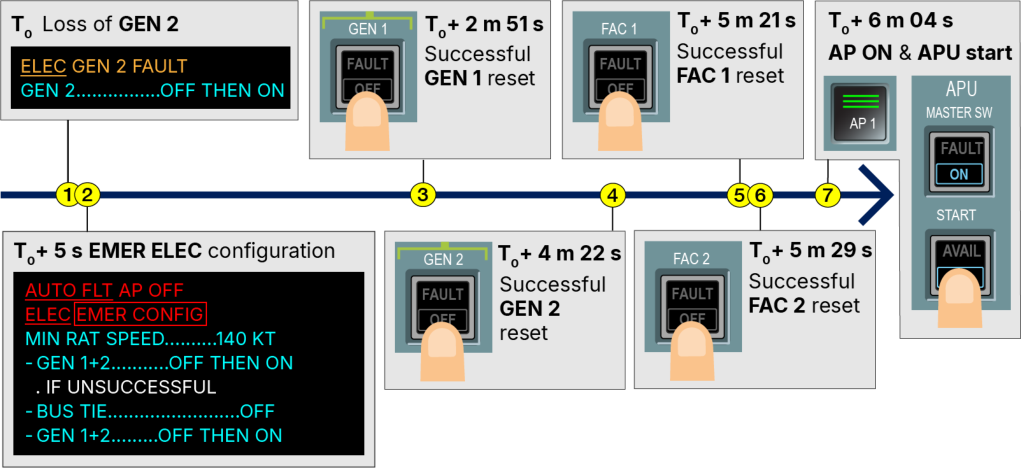
Section titled “Event Description”An A319 aircraft was initiating its descent from FL360 toward its destination airport. Autothrust and autopilot were engaged in THR IDLE l OP DES l NAV modes. The selected target altitude was 26 000 ft. ① Crossing 31 500 ft, (fig.1) the ELEC GEN 2 FAULT ECAM alert triggered (T0). ② 5 s later (T0+5s) , the aircraft switched to the emergency electrical configuration, and the Ram Air Turbine (RAT) deployed and activated accordingly. The autothrust and autopilot disconnected and the flight controls reverted to ALTERNATE law. Only the Captainʼs PFD and ND, and the upper ECAM displays remained ON. The AUTO FLT AP OFF and ELEC EMER CONFIG triggered. During the next 2 minutes and 46 seconds, the flight crew attempted to reset both generators. ③ At T0+2m51s , GEN 1 was successfully reset and electrical power restored to the network. The ELEC GEN 2 FAULT and ELEC IDG 2 OIL LO PR ECAM alerts were displayed on the ECAM. ④ 1 m 31 s later (T0+4m22s) , GEN 2 was also successfully reset. ⑤ 59 s later (T0+5m21s) , the flight crew successfully reset FAC 1, enabling the recovery of the normal flight control law. ⑥ 8 s later (T0+5m29s) , FAC 2 was also successfully reset. ⑦ 43 s later (T0+6m04s) , the flight crew re-engaged the autopilot and started the APU as a safety precaution. The aircraft continued its descent and safely landed at its destination airport (T0+19m38s).
(fig.1) Sequence of actions during the event
Event Analysis
Section titled “Event Analysis”Worn generator components
Section titled “Worn generator components”Both generators were removed from the aircraft and sent to the manufacturer for examination. It was confirmed that they both failed due to frequency regulation issues, which originated from worn hydraulic blocks inside their Constant Speed Drive (CSD) module.
Correct electrical reconfiguration
Section titled “Correct electrical reconfiguration”During the event, the successful electrical network reconfigurations enabled the aircraft to maintain safe flight conditions and recover a full electrical supply after the successful reset of GEN 1. The subsequent successful reset of GEN 2 enabled the flight crew to restore a dual generation configuration.
TECHNICAL BACKGROUND
Section titled “TECHNICAL BACKGROUND”Constant Frequency Generation vs Variable Frequency Generation
Section titled “Constant Frequency Generation vs Variable Frequency Generation”Two types of engine generators are used on Airbus aircraft: the Integrated Drive Generators (IDG) and the Variable Frequency Generators (VFG).
Integrated Drive Generators (Constant frequency generator)
Section titled “Integrated Drive Generators (Constant frequency generator)”IDGs are mounted on engines of A300, A310, A320 family, A330 and A340 aircraft.
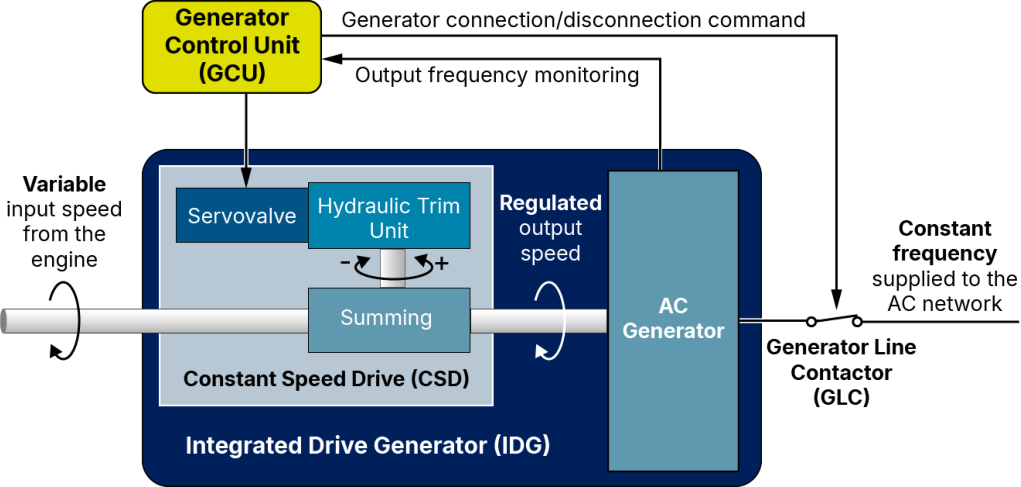
This type of generator provides AC power at a constant frequency. To do so, a Constant Speed Drive (CSD) is integrated into the IDG to convert the variable input rotation speed from the engine into a constant output rotation speed to the AC generator unit (fig.2). The Generator Control Unit (GCU) monitors the output frequency of the generator and sends regulation commands to the servovalve of the hydraulic trim unit to add or subtract rotation speed to the input speed coming from the engine in order to obtain a constant output speed.
(fig.2) IDG concept
Variable Frequency Generators (VFGs)
Section titled “Variable Frequency Generators (VFGs)”This type of generator does not have a CSD (fig.3). They provide AC power voltage with a variable frequency to the aircraft electrical network. These generators are installed on engines of A220, A350 and A380 aircraft. When necessary, frequency regulation is performed using power converter components within the aircraft’s systems
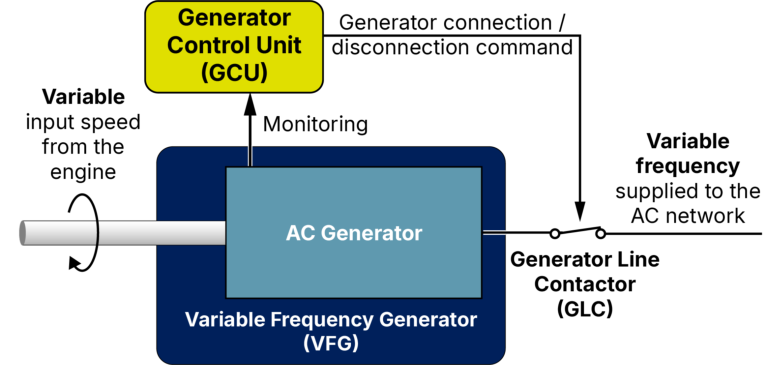
(fig.3) VFG concept
Focus on the IDGs of A320 family, A330 and A340 aircraft
Section titled “Focus on the IDGs of A320 family, A330 and A340 aircraft”Several reported events on A320 family aircraft
Section titled “Several reported events on A320 family aircraft”In recent years, Airbus received reports of emergency electrical configuration events on A320 family aircraft due to the loss of both engine generators, as in the event described previously. In all cases, the Ram Air Turbine (RAT) deployed and powered the emergency electrical network. In most cases, the full power supply was restored to the aircraftʼs electrical network by a successful reset of at least one generator or by starting the APU, which connected its generator to the network.
These events mainly occurred during descent, shortly after a loss of one generator. Some cases of total loss of electrical power have also been reported on ground during Single Engine Taxi Without APU (SETWA) operations.
A330 and A340 aircraft may also be affected by similar generator failures
Section titled “A330 and A340 aircraft may also be affected by similar generator failures”No similar events were reported on A330 and A340 aircraft, however, the design of the IDG is similar and so these aircraft can also be affected.
Worn hydraulic components leading to frequency regulation issues
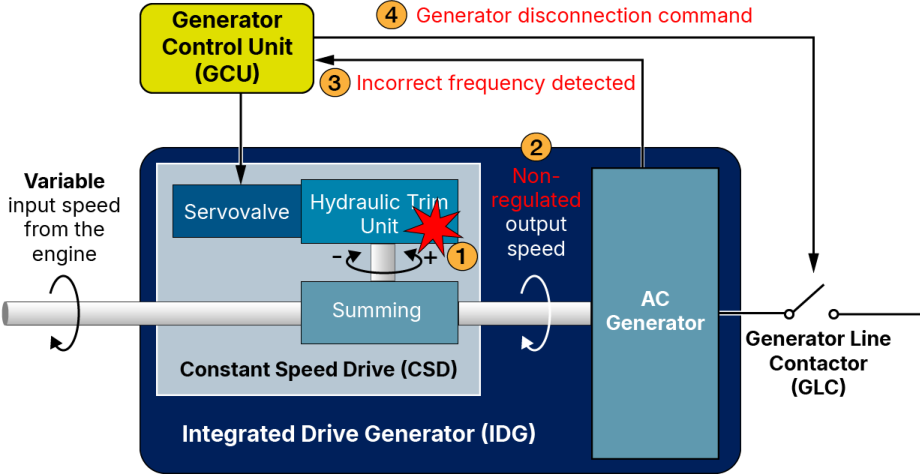
Section titled “Worn hydraulic components leading to frequency regulation issues”Analysis showed (fig.4) that the generators suffered from ① worn hydraulic blocks inside its CSD causing ② an incorrect regulation of the CSD output speed. ③ This resulted in electrical frequency fluctuations that were detected by the (fig.4) Frequency GCU, which ④ disconnected the generator from the electrical network to protect regulation issue due to the aircraftʼs systems. worn IDG
Low engine rotation speed also as a contributor
Section titled “Low engine rotation speed also as a contributor”A low engine rotation speed can also contribute to frequency regulation issues on worn generators. Most of the in-service events occurred during descent while the engines were at a close to idle thrust setting, providing an IDG input speed close to the so-called “straight through” rotation speed. At the straight-through speed, IDG input rotation speed does not need to be corrected by the CSD for the generator to produce a 400Hz current. When close to this speed, the regulation function of the CSD will toggle on and off. Worn hydraulic components may cause delays in the application of the speed correction by the CSD and this can cause frequency variation.
Sudden increased electrical load on the remaining generator as a contributor
Section titled “Sudden increased electrical load on the remaining generator as a contributor”After a failure of one generator, the other generator will have a sudden electrical load increase that may contribute to a frequency regulation issue, and could result in disconnection from the electrical network by its GCU if hydraulic components in its CSD are worn.
MAINTENANCE CONSIDERATIONS
Section titled “MAINTENANCE CONSIDERATIONS”Prevention of this kind of event relies on detecting worn IDG components prior to their failure in service. Modifications to the Airbus maintenance documentation provides additional guidance to prevent this kind of in-service occurrence.
Introduction of a MPD task for early detection of worn generators
Section titled “Introduction of a MPD task for early detection of worn generators”The Maintenance Planning Document (MPD) of A320 family, A330 and A340 aircraft has been updated to request repetitive applications of the A320 AMM task 24-20-00-710-801-A or of the A330/A340 AMM task 24-21-00-710-819 “Operational check of network reconfiguration in case of single generator failure” every 3 000 FH or 36 Mo for A320 family and A330/A340 aircraft.
-
A320 MPD 242000-25-1 “Operational check of network reconfiguration in case of single generator failure”
-
A320 AMM 24-20-00-710-801-A “Operational check of network reconfiguration in case of single generator failure”
-
A330/A340 MPD 242200-02-1 “Operational check of network reconfiguration in case of single generator failure”
-
A330/A340 AMM task 24-21-00-710-819 “Operational check of network reconfiguration in case of single generator failure”
Operators should perform the MPD task at the earliest maintenance opportunity for each aircraft so that worn generators are detected without being further exposed.
Update of the AMM test procedure
Section titled “Update of the AMM test procedure”Both the A320 AMM task 24-20-00-710-801-A and A330/A340 AMM task 24-21-00-710-819 “Operational Check of Network Reconfiguration in Case of Single Generator Failure” are updated to add additional loads on the network as well as an APU start in single generator configuration to check that the remaining generator can sustain this kind of sudden load increase. The AMM task update is already available for A320 family aircraft. The updated task for A330 and A340 aircraft is planned for publication by July 2025.
Introduction of a TSM Task “Loss of 115 V power”
Section titled “Introduction of a TSM Task “Loss of 115 V power””In the case of a loss of AC power occurring on ground during Single Engine Taxi Without APU (SETWA) operation, all the cockpit displays lose power and go black and the related ECAM alerts will therefore not display. An A320 TSM task 24-20-00-810-977 and an A330/A340 TSM task 24-20-00-810-A01 “Loss of Normal 115V AC” are now included to provide maintenance teams with an appropriate entry point for troubleshooting.
Specific Attention to Worn Hydraulic Blocks During IDG Shop Maintenance
Section titled “Specific Attention to Worn Hydraulic Blocks During IDG Shop Maintenance”In shop maintenance, maintenance organizations should replace CSD hydraulic blocks if wear is found out of allowable limit or, as a preventive measure, if the wear is considered as close to the limit or excessive.
OPERATIONAL CONSIDERATIONS
Section titled “OPERATIONAL CONSIDERATIONS”Prevention of a potential emergency electrical configuration in the case of one generator failure
Follow the** ELEC GEN 1(2) FAULT **ECAM procedure
Section titled “Follow the** ELEC GEN 1(2) FAULT **ECAM procedure”The ELEC GEN 1(2) FAULT ECAM procedure requests to reset the faulty generator. In most cases, if the loss of the generator is due to an incorrect frequency regulation due to worn hydraulic blocks, the reset of the faulty generator is often successful. Flight crews should however be aware that this procedure does not prevent a subsequent failure should the conditions that caused the frequency regulation issue occur again.
Start APU to recover a dual generator configuration
Section titled “Start APU to recover a dual generator configuration”In the case of a single generator failure, starting the APU enables recovery of the electrical network power supply redundancy by adding the APU generator to the network. This will prevent reversion to emergency electrical configuration should the second engine generator also fail.
PRODUCT ENHANCEMENTS
Section titled “PRODUCT ENHANCEMENTS”Enhanced CSD hydraulic blocks are under development to improve their service life. However, this improvement will not eliminate the need to perform the repetitive MPD task “Operational Check of Network Reconfiguration in Case of Single Generator Failure”.
The enhanced hydraulic blocks should be available through a Service Bulletin that is expected to be published by the end of 2025 for A320 family, A330 and A340 aircraft.
Contributors:
Section titled “Contributors:”Contributors: Airbus received few reports of A320 aircraft reverting to emergency electrical configuration after a failure of both IDGs one after the other. Olivier AUSSEIL Analysis showed that IDGs mounted on A320 family, A330 and A340 Customer Engineering Support Specialist aircraft may face output frequency regulation issues when the hydraulic
Customer Support blocks from their Constant Speed Drive (CSD) are worn.
Stéphane COTE After a first IDG failure, if the CSD of the remaining IDG is worn, it may fail Incident/Accident to regulate its output frequency, causing the generator to be Investigator disconnected from the network, leading to an emergency electrical
Aviation Safety configuration.
Maxime LANSONNEUR
Section titled “Maxime LANSONNEUR”Additional contributing factors to the frequency regulation issues have been identified. The first one being a sudden increase of the electrical load on the generator that could happen after the first generator failure. The second factor being a low input rotation speed when the engines are close to idle speed. Close to this speed, the frequency regulation components are particularly solicited due to the frequent toggling of the regulation.
Director Safety - Training and Flight Operations Customer Support
Fabien VERGNE
Section titled “Fabien VERGNE”Electrical & Electronic Development Engineer Design Office
The MPD of A320 family, A330 and A340 aircraft have been updated to request a repetitive application of an AMM task to test each IDG capability to handle the electrical load in mono-generator configuration, and therefore detect worn generators in advance.
Gonzalo ZUBIETA-GARCIA
Section titled “Gonzalo ZUBIETA-GARCIA”A320 family, A330 & A340 Electrical System ISeR Design Office
A TSM task has also been added to provide maintenance teams with an appropriate entry point for troubleshooting in the case of a loss of the IDG during Single Engine Taxi Without APU operation.
During flight, in the case of a generator failure, the flight crew should apply the ECAM procedure and attempt to reset the faulty generator. If unsuccessful, they should start the APU to recover a dual generator configuration. Flight crews should be aware that if a generator with worn components is successfully reset following the ECAM procedure, it could fail again in flight if the same conditions that caused the initial issue recur.
When generators are removed for shop maintenance, particular attention should be given to inspecting the CSD hydraulic blocks for close-to-limit or excessive wear.
Enhanced CSD hydraulic blocks are being developed. They should have an increased resistance to wear, but will not prevent from performing the repetitive MPD task to check the generatorsʼ health.
Safety first, 2025. Safety first is published by Airbus S.A.S. 1, rond point Maurice Bellonte - 31707 Blagnac Cedex/France.
Editor: Yannick Malinge, SVP AViation Safety.
Editorial team: Guillaume Estragnat, Vanessa Sadi, Gwyneth Duggan, Javier Martinez Marina, Tim Roach.
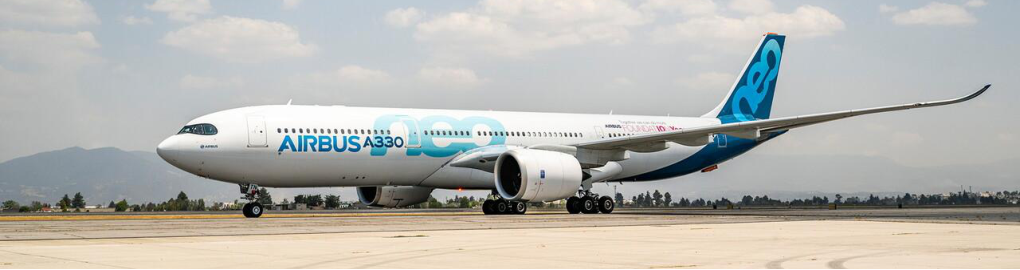
Photos by Airbus.
预防 A320 系列、A330 和 A340 飞机发动机发电机丢失
来源: Airbus Safety First 网址: https://safetyfirst.airbus.com/preventing-loss-of-engine-generators-on-a320-family-a330-and-a340-aircraft/ 发布日期: 2025-03-06 类别: 飞行运营、维护、EMER ELEC、EMER GEN、应急电气构型、发电机失效、IDG、RAT、VFG PDF: 原始 PDF
曾有 A320 系列飞机应急电气构型的案例向空客报告,在这些案例中,两个整体驱动发电机 (IDG) 因其恒速传动装置 (CSD) 内部部件磨损而相继失效。
本文描述了其中一起事件,并解释了为何磨损的 IDG 在某些频率调节情况下会出现问题,从而可能导致应急电气构型。同时还介绍了为提前检测磨损 IDG 而引入的预防性维护任务。针对机组人员,在发生单台发电机失效的情况下如何预防潜在的应急电气构型,提供了相关建议。
请在 safetyfirst.airbus.com 网站和适用于 iOS 和 Android 设备的 Safety first 应用上查看本文的最新版本。
一架 A319 飞机正从 FL360 开始下降,飞往目的地机场。自动推力和自动驾驶仪以 THR IDLE l OP DES l NAV 模式接通。选择的目标高度为 26 000 ft。① 通过 31 500 ft 时,(图1) ELEC GEN 2 FAULT ECAM 警告触发 (T0)。② 5 秒后 (T0+5s),飞机切换至应急电气构型,冲压空气涡轮 (RAT) 按需伸出并激活。自动推力和自动驾驶仪断开,飞行控制切换至备份法则。仅保留机长的 PFD 和 ND,以及上 ECAM 显示器。AUTO FLT AP OFF 和 ELEC EMER CONFIG 触发。在接下来的 2 分 46 秒内,机组人员尝试重置两台发电机。③ 在 T0+2m51s 时,GEN 1 成功重置,电网恢复供电。ECAM 上显示 ELEC GEN 2 FAULT 和 ELEC IDG 2 OIL LO PR 警告。④ 1 分 31 秒后 (T0+4m22s),GEN 2 也成功重置。⑤ 59 秒后 (T0+5m21s),机组人员成功重置了 FAC 1,使正常飞行控制法则得以恢复。⑥ 8 秒后 (T0+5m29s),FAC 2 也成功重置。⑦ 43 秒后 (T0+6m04s),机组人员重新接通了自动驾驶仪,并出于安全考虑启动了 APU。飞机继续下降,最终于 (T0+19m38s) 安全降落在目的地机场。
(图1) 事件期间动作时序
发电机部件磨损
Section titled “发电机部件磨损”两台发电机均从飞机上拆下并送至制造商处检查。经确认,两台发电机均因频率调节问题而失效,问题的根源在于恒速传动装置 (CSD) 模块内部磨损的液压组件。
正确的电气构型重置
Section titled “正确的电气构型重置”在事件过程中,成功的电气网络重置 使飞机得以保持安全飞行状态,并在 GEN 1 成功重置后恢复了完整的电力供应。后续 GEN 2 的成功重置使机组人员得以恢复双发电机构型。
恒频发电与变频发电
Section titled “恒频发电与变频发电”空客飞机使用两种类型的发动机发电机:整体驱动发电机 (IDG) 和变频发电机 (VFG)。
整体驱动发电机(恒频发电机)
Section titled “整体驱动发电机(恒频发电机)”IDG 安装于 A300、A310、A320 系列、A330 和 A340 飞机的发动机上。
此类发电机提供恒定频率的交流电。为此,IDG 内部集成了一个恒速传动装置 (CSD),将发动机输入的可变转速转换为交流发电机单元的恒定输出转速 (图2)。发电机控制组件 (GCU) 监测发电机的输出频率,并向液压配平装置的伺服阀发送调节指令,以在发动机输入转速的基础上增减转速,从而获得恒定的输出转速。
(图2) IDG 原理
变频发电机 (VFGs)
Section titled “变频发电机 (VFGs)”此类发电机不带 CSD (图3)。它们向飞机电网提供可变频率的交流电压。 这些发电机安装在 A220、A350 和 A380 飞机的发动机上。必要时,通过飞机系统内的电力转换部件进行频率调节。
(图3) VFG 原理
聚焦 A320 系列、A330 和 A340 飞机的 IDG
Section titled “聚焦 A320 系列、A330 和 A340 飞机的 IDG”A320 系列飞机报告的多起事件
Section titled “A320 系列飞机报告的多起事件”近年来,空客收到多份关于 A320 系列飞机因两台发动机发电机同时失效而触发应急电气构型的事件报告,如前文所述。在所有案例中,冲压空气涡轮 (RAT) 放出并为应急电网供电。在大多数情况下,通过成功复位至少一台发电机或启动 APU(其发电机并网)恢复了飞机电网的全功率供电。
这些事件主要发生在下降阶段,且发生于单台发电机失效后不久。也有部分案例报告在单发动机无 APU 滑行 (SETWA) 地面操作期间发生完全断电。
A330 和 A340 飞机也可能受到类似发电机故障的影响
Section titled “A330 和 A340 飞机也可能受到类似发电机故障的影响”目前尚未在 A330 和 A340 飞机上报告类似事件,但由于 IDG 设计相同,这些飞机也可能受到影响。
液压部件磨损导致频率调节问题
Section titled “液压部件磨损导致频率调节问题”分析表明 (图4),发电机内部的 CSD 液压部件存在 ① 磨损,导致 CSD 输出转速 ② 调节不正确。③ 这造成了电气频率波动,频率 GCU 检测到该情况后 ④ 将发电机从电网断开以进行保护。磨损的 IDG
低发动机转速也是一个影响因素
Section titled “低发动机转速也是一个影响因素”低发动机转速也会导致磨损发电机出现频率调节问题。大多数在役事件发生在下降阶段,当时发动机处于接近怠速推力状态,IDG 输入转速接近所谓的 “直通”转速。在直通转速下,IDG 输入转速无需 CSD 校正,发电机即可产生 400Hz 电流。当接近此转速时,CSD 的调节功能会在开启和关闭之间切换。磨损的液压部件可能导致 CSD 速度校正施加延迟,从而引起频率变化。
剩余发电机突然增加的电气负载也是一个影响因素
Section titled “剩余发电机突然增加的电气负载也是一个影响因素”一台发电机失效后,另一台发电机会突然承受电气负载增加,可能导致频率调节问题。如果其 CSD 内的液压部件磨损,GCU 可能将其从电网断开。
维护注意事项
Section titled “维护注意事项”预防此类事件的关键在于在发电机部件发生服役失效之前检测出磨损情况。对空客维护文档的修订为防止此类在役事件提供了额外指导。
引入 MPD 任务以尽早检测磨损发电机
Section titled “引入 MPD 任务以尽早检测磨损发电机”A320 系列、A330 和 A340 飞机的维护规划文件 (MPD) 已更新,要求定期执行 A320 AMM 任务 24-20-00-710-801-A 或 A330/A340 AMM 任务 24-21-00-710-819”单发电机失效时电网重构的操作检查”,A320 系列和 A330/A340 飞机每 3 000 飞行小时或 36 个月执行一次。
-
A320 MPD 242000-25-1 “单发电机失效时电网重构的操作检查”
-
A320 AMM 24-20-00-710-801-A “单发电机失效时电网重构的操作检查”
-
A330/A340 MPD 242200-02-1 “单发电机失效时电网重构的操作检查”
-
A330/A340 AMM 任务 24-21-00-710-819 “单发电机失效时电网重构的操作检查”
运营商应在每架飞机的最早维护时机执行 MPD 任务,以便检测出磨损的发电机,避免其进一步暴露运行。
维修手册测试程序的更新
Section titled “维修手册测试程序的更新”A320维修手册任务24-20-00-710-801-A和**A330/A340维修手册任务24-21-00-710-819“单发电机失效情况下的网络重新配置操作检查”**均已更新,在单发电机配置下向网络增加额外负载,并在单发电机配置下启动APU,以检查剩余发电机能否承受这种突发负载增加。A320系列飞机的维修手册任务更新已经发布。A330和A340飞机的更新任务计划于2025年7月发布。
维修手册任务“115V电源丢失”的引入
Section titled “维修手册任务“115V电源丢失”的引入”在地面单发动机无APU滑行(SETWA)操作过程中发生AC电源丢失时,所有驾驶舱显示屏断电变黑,相关ECAM警告将不会显示。A320维修手册任务24-20-00-810-977和**A330/A340维修手册任务24-20-00-810-A01“正常115V AC电源丢失”**现已纳入,为维修团队提供适当的故障排除入口点。
IDG车间维护中对磨损液压块的特别关注
Section titled “IDG车间维护中对磨损液压块的特别关注”在车间维护中,维修组织应更换发现超出允许限制磨损的CSD液压块,或者作为预防措施,如果磨损被认为接近限值或过度磨损,也应予以更换。
运营注意事项
Section titled “运营注意事项”单发电机失效时潜在紧急电气配置的预防
Section titled “单发电机失效时潜在紧急电气配置的预防”遵循ELEC GEN 1(2) FAULT ECAM程序
Section titled “遵循ELEC GEN 1(2) FAULT ECAM程序”ELEC GEN 1(2) FAULT ECAM程序要求复位故障发电机。在大多数情况下,如果发电机丢失是由于磨损液压块导致的频率调节不正确,则故障发电机的复位通常会成功。然而,飞行机组应了解,该程序不能防止在导致频率调节问题的条件再次发生时发生后续失效。
启动APU恢复双发电机配置
Section titled “启动APU恢复双发电机配置”在单发电机失效的情况下,启动APU可以通过将APU发电机接入网络来恢复电网电源供应冗余。这将防止第二台发动机发电机也失效时回退至紧急电气配置。
增强型CSD液压块正在开发中以延长其使用寿命。然而,此项改进不会消除执行重复MPD任务“单发电机失效情况下的网络重新配置操作检查”的必要性。
增强型液压块预计通过服务通告发布,A320系列、A330和A340飞机预计于2025年底前可用。
贡献者: 空客收到少量关于A320飞机在两个IDG相继失效后回退至紧急电气配置的报告。Olivier AUSSEIL 分析表明,安装在A320系列、A330和A340飞机上的IDG在客户工程支持专家飞机上可能面临输出频率调节问题,因为其恒速驱动(CSD)的液压块磨损。
客户支持 Stéphane COTE 在第一个IDG失效后,如果剩余IDG的CSD磨损,它可能无法调节其输出频率,导致发电机从网络中断开,从而导致紧急电气
事故/事故 调查员 配置。
航空安全
Maxime LANSONNEUR
Section titled “Maxime LANSONNEUR”已确定导致频率调节问题的其他因素。第一个因素是第一个发电机失效后发电机电气负载的突然增加。第二个因素是发动机接近慢车时的低输入转速。在该转速附近,频率调节组件因调节频繁切换而特别受力。
培训与飞行运营总监客户支持
Fabien VERGNE
Section titled “Fabien VERGNE”电气与电子开发工程师设计部
A320系列、A330和A340飞机的MPD已更新,要求重复应用维修手册任务测试每个IDG在单发电机配置下处理电气负载的能力,从而提前检测磨损的发电机。
Gonzalo ZUBIETA-GARCIA
Section titled “Gonzalo ZUBIETA-GARCIA”A320系列、A330 & A340电气系统ISeR设计部
维修手册任务也已添加,为维修团队在单发动机无APU滑行操作期间IDG失效的情况下提供适当的故障排除入口点。
飞行中发生发电机失效时,飞行机组应执行ECAM程序并尝试复位故障发电机。如果不成功,应启动APU恢复双发电机配置。飞行机组应了解,如果含有磨损部件的发电机在ECAM程序后成功复位,在导致初始问题的相同条件再次发生时可能会再次失效。
当发电机拆下进行车间维护时,应特别注意检查CSD液压块的接近限值或过度磨损情况。
增强型CSD液压块正在开发中。它们应具有更高的耐磨性,但不会阻止执行重复的MPD任务来检查发电机的健康状况。
Safety first,2025年。Safety first由空中客车公司出版。1, rond point Maurice Bellonte - 31707 法国布拉尼亚克。
编辑:Yannick Malinge,航空安全高级副总裁。
编辑团队:Guillaume Estragnat、Vanessa Sadi、Gwyneth Duggan、Javier Martinez Marina、Tim Roach。
照片由空客提供。