A380 - Flutter tests
Source: Airbus Safety First URL: https://safetyfirst.airbus.com/a380-flutter-tests/ Published: 2010-08-14 Magazine Issue: 2010-08 Category: Archive PDF: Original PDF
Claude LELAIE
Section titled “Claude LELAIE”Senior Vice President Product Safety
1. definition of flutter
Section titled “1. definition of flutter”Flutter is the coupling of different oscillation modes on a system. Let’s take an example on an aircraft. In flight, due to its flexibility, the wing can oscillate in torsion and in flexion. The frequencies of these two motions are depending on speed. If, in some conditions, they are identical or very close one to the other, there can be an “autoexcitation”. It means that the oscillation on one axis can amplify the other one and vice-versa, therefore increasing the energy. If the amplitude becomes too large, a rupture may occur very quickly.
This phenomenon is similar to what happens when a child is on a swing. Moving the legs at the right frequency amplifies the motion of the swing and increases the global energy.
Flutter can also occur on structures other than aircraft. Some of you may have seen the impressive images of the rupture of the Tacoma suspension bridge in the USA, about 60 years ago. The very strong wind led to amplify several oscillation modes until the rupture. Now all suspension bridges must be sized to resist to the strongest winds.
2. Flutter characteristics
Section titled “2. Flutter characteristics”On an airplane, flutter is characterized by oscillations diverging very quickly. Therefore, the risk of flutter inside the flight envelope, and even well outside the borders to have a safety margin, are not acceptable. On big transport aircraft,
envelope, the crews perform these tests with all the safety equipment: parachutes, helmets, life jackets, lifeboat… The emergency evacuation door (tunnel going through the cargo door) is also armed.
there is a huge number of vibration modes of different parts: wings, engines, empennage, control surfaces… On top of this, it depends on the quantity of fuel in the wings and in the empennage, on the speed and many other parameters.
Several parameters have to be considered: CAS, Mach, weight, fuel repartition. For the same flight conditions, for example, it is often necessary to perform flights with various amounts of fuel in the tank of the horizontal tail plane: full, half full and then empty, because this difference modifies the oscillation frequencies and therefore the flutter characteristics.
Theoretical computations are now very reliable and allow to determine in advance the potentially critical conditions. They are based on mathematical models of the structure of the aircraft. These models are then adjusted thanks to ground tests where the aircraft is excited with variable frequency oscillators. Such tests are performed on a development aircraft before the first flight and last several days. Despite this good level of analysis, exploring the flight envelope in speed and Mach must be done carefully.
Safety must be ensured well above VMO, because in case of wind gradient, this value may well be exceeded. In flight, the regulations ask for the demonstration that the aircraft is free of flutter up to VD (D for Dive, as in some cases, this speed can only be demonstrated in a dive). The difference between VMO and VD is usually around 50 kts on a classical aircraft. But on fly-by-wire aircraft, this margin has been reduced thanks to the high speed protection. In case of over speed the aircraft will react to limit the speed excursion. Depending on the type of aircraft, if the protec-
Four engines aircraft give more frequently difficulties in the area of flutter. The reason is that the external engines may be strong contributors to various oscillations.
3. Flutter test flights
Section titled “3. Flutter test flights”Flutter flights are obviously risky. Until the full opening of the flight
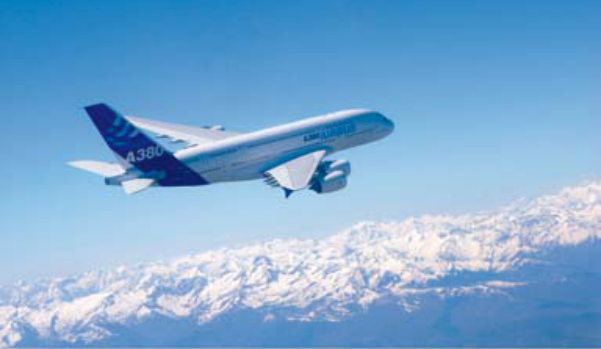
Figure 1 A380 first flight over the Pyrenees
Safety
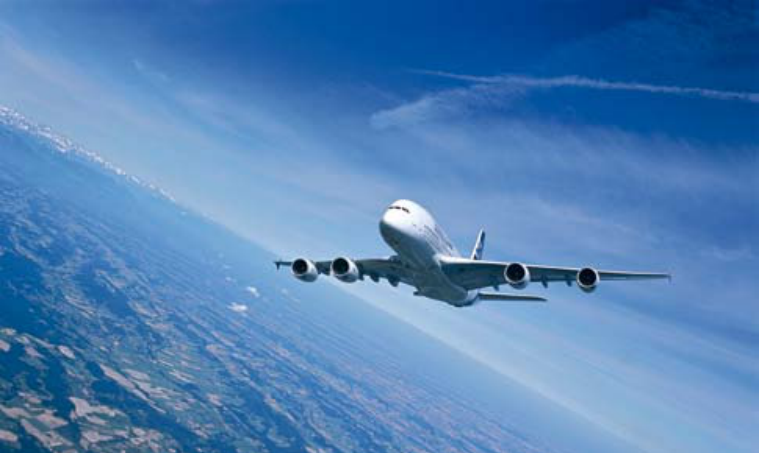
citation for each mode. Sometimes Figure 2 in flight, test points are restarted to A380 3/4 front view obtain an amplitude well adapted for the analysis, but not too strong to avoid damages of the airplane.
tions are lost, the maximum authorized speed may be reduced according to what has been validated. On the A380, we have VMO = 340 kt and VD = 375 kt.
All parameters are transmitted by telemetry to the ground. Each test point is analysed by specialists, as soon as the measurements are completed. This review takes a variable time, according to the degree of confidence and coherence with the models. Sometimes the clearance to go ahead for the following test point is given immediately. The crew may also have to wait several minutes for the clearance. It has also happened on some programmes that the flight had to be stopped for further analysis.
What has been explained for speed is also valid for Mach Number. On the A380, the values are MMO = 0,89 and MD = 0,96.
Above VD and MD, the certification regulations require a theoretical demonstration that there is a supplementary speed and Mach margin where the aircraft is clear of flutter.
For each test point in flight, oscillations at variable frequencies are sent to some flight controls via a specific computer. A single test lasts 3 minutes. The frequency increases during the first part, then decreases to come back to the initial value. The crew can feel well the coupling modes as, at this time, there is an increase of the amplitude of the oscillation. If necessary, the test can be stopped immediately either by the pilots or by the flight test engineers. It is difficult to know in advance what amplitude is adapted for each speed in order to have a sufficient structural response for a proper analysis. Therefore the engineers have at their disposal several levels of ex-
Flight controls are excited in different ways. For the ailerons, there are symmetrical and anti-symmetrical modes. For the first ones, the ailerons of both wings are deflected simultaneously in the same direction. For the anti-symmetrical modes they are in opposition (like in a roll control mode). Most of the tests are performed with the ailerons but some are also done using elevators or rudder.
The test points have to be performed in direct law in order to avoid introducing flight controls deflec-
tions due to an outside source. In the past, before the A380, the pilots were not authorized to touch the side stick during the test and therefore execution was rather difficult. The altitude was maintained using the trim wheel. The bank angle was kept close to zero with very small pressure on the pedals. At high Mach, differential thrust was sometimes used to control roll, due to the reduced roll induced by the rudder. The speed had to be maintained with a good precision with the thrust lever. One of the key difficulties was that any action on the thrust gave a pitching moment that had to be compensated with the trim wheel. One of the pilots was in charge of maintaining the trajectory: altitude and heading and the other one was keeping the speed. Obviously a good coordination was needed.
The crews were concerned about their ability to maintain the flight parameters very precisely due to the large inertias of the A380. Each test point lasted for 3 minutes and had to be performed with an electric trim and no trim wheel. Finally, the Design Office prepared a specific direct flight control law such that the test conditions could still be maintained by action on the stick. Everything then became straightforward.
Progression in speed (CAS) is generally slow, by step of 15 kts. In parallel, for each speed, the Mach Number has to be increased progressively as the relationship between Mach and CAS is a function of altitude.
For high Mach Numbers, it is not always possible to maintain the altitude during 3 minutes because drag increases rapidly with Mach. In this case, tests are performed in descent and, as variable frequency oscillations could not be used, it is replaced by what we call “pulses”, which are abrupt impulses sent by computers to the flight controls. Above MMO, it is quite frequent
to find buffeting of various levels. This buffeting generally reduces the risk of flutter as it disorganizes the potential oscillations of the different modes.
The final test is the dive at VD / MD. It is necessary to start at the ceiling of the aircraft. Then, with full thrust, the crew begins the dive until reaching MD in descent. MD is kept with a speed increasing up to VD. At the conjunction of MD / VD, the test is over and the pilots can throttle back and pull gently on the stick. During all the tests, pulses are sent to the flight controls on the various axes. The flight test engineers must act quickly as for some aircraft, the drag is such that the rate of descent is high.
4. History of the A380 flutter tests
Section titled “4. History of the A380 flutter tests”On the A380, the envelope opening at VMO / MMO was performed at flight n°5 without specific flutter test due to the good results obtained after analysis of the ground tests.
The first real flutter flight was flight n°21, on June 9th 2005, about one and a half months after the beginning of the flight tests. Take-off weight was 533 tons and landing weight 485 tons (normal MLW is 386 tons). During this flight, with maximum fuel in all tanks, the speed has been increased up to VD (375 kt) at a low Mach Number.
The following flutter tests were performed during flight n°51, at the beginning of August 2005. Why such a delay between these two flights ? The reason is that priority had been given to other activities, mainly the validation of the final aerodynamic configuration: slats and flaps deflections… During this second flutter flight, the envelope has been opened up to the conjunction VD and MMO, without any abnormal finding in flight. However, when on ground, it appeared that there were serious damages on the belly fair-
ings. Clearly, reinforcements were necessary before the next flutter flights.
The campaign was interrupted for some weeks due to a commercial campaign. Then, on the 1st of December 2005, the dive at VD / MD was performed. We were aware of the difficulty to stabilize precisely MD due to this shock wave influencing the measurement. The test was repeated several times, reaching an indication of 0.988. Finally the flutter specialists agreed that this was sufficient to certify the aircraft.
At the end od August, a new flutter flight was performed with modified belly fairings. The target was to open the flight envelope up to the conjunction of VMO / MD. It was the first opportunity to fly above MMO. This has been done by step, but when the aircraft reached a value slightly above 0.95, the Mach Number suddenly jumped up to 0.98. The reason was a shock wave crossing the static pressure sensor and it was not possible to stabilize precisely MD = 0.96.
After the flutter tests came the time of the tuning of the flight control laws, as it is necessary to demonstrate that with the protections, it is not possible to exceed the cleared flight envelope. This will be the subject of another article.
Starting from mid September, one or two flutter flights were performed every week. It was not possible to do more as some time was needed for data analysis and on top, as the aircraft was well shaken during each flight, there was a need for a thorough inspection. For all these flights, the amount of fuel in the tanks was adjusted to cover all the situations, one of the key issues being the fuel quantity in the trim tanks.
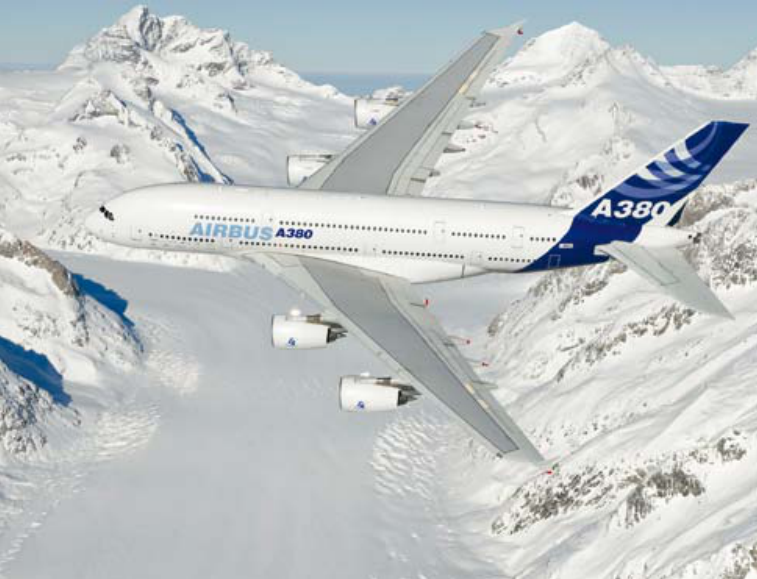
Figure 3 A380 over Switzerland
Safety
来源: Airbus Safety First URL: https://safetyfirst.airbus.com/a380-flutter-tests/ 发布日期: 2010-08-14 杂志期号: 2010-08 类别: 档案 PDF: 原始 PDF
Claude LELAIE
Section titled “Claude LELAIE”高级副总裁产品安全
1. 颤振的定义
Section titled “1. 颤振的定义”颤振是系统上不同振荡模态之间的耦合。让我们以飞机为例。在飞行中,由于其柔性,机翼可以进行扭转变形和弯曲变形。这两种运动的频率取决于速度。如果在某些条件下它们相同或非常接近,就可能发生”自激”。这意味着一个轴上的振荡可以放大另一个轴上的振荡,反之亦然,从而增加能量。如果振幅变得过大,可能很快就会发生断裂。
这种现象类似于孩子在荡秋千时发生的情况。以正确的频率摆动腿部可以放大秋千的运动并增加整体能量。
颤振也可能发生在飞机以外的结构上。你们中的一些人可能已经看到大约60年前美国塔科马悬索桥断裂的令人印象深刻的画面。非常强的风导致多种振荡模态被放大,直到发生断裂。现在所有悬索桥都必须按照能够抵抗最强风的规格设计。
2. 颤振特性
Section titled “2. 颤振特性”在飞机上,颤振的特征是振荡非常迅速发散。因此,飞行包线内甚至远在边界线以外(为了获得安全裕度)的颤振风险是不可接受的。在大型运输机上,
在这个包线范围内,机组人员在执行这些测试时配备所有安全设备:降落伞、头盔、救生衣、救生艇……应急撤离门(穿过货舱门的通道)也被激活。
机翼、发动机、尾翼、操纵面等各个部件都有大量不同的振动模态。除此之外,颤振还取决于机翼和尾翼中的燃油量、速度以及许多其他参数。
需要考虑多个参数:CAS、马赫数、重量、燃油分配。例如,在相同的飞行条件下,通常需要在水平安定面油箱中以不同的燃油量进行多次飞行:满油、半油然后排空,因为这种差异会改变振荡频率,从而改变颤振特性。
理论计算现在已经非常可靠,可以提前确定潜在的关键条件。这些计算基于飞机结构的数学模型。然后通过地面测试对这些模型进行修正,测试中使用变频振荡器对飞机进行激励。此类测试在首飞前在研制飞机上进行,持续数天。尽管分析水平很高,但必须在速度和马赫数方面谨慎地探索飞行包线。
安全裕度必须在 VMO 以上充分确保,因为在遇到风切变时,该值很可能被超过。在飞行中,法规要求证明飞机在 VD 以下无颤振(D 代表俯冲,因为在某些情况下,这一速度只能通过俯冲来演示)。在传统飞机上,VMO 和 VD 之间的差值通常约为 50 节。但对于电传操纵飞机,由于高速保护功能,这一裕度已减小。在超速情况下,飞机会做出反应以限制速度偏差。根据飞机类型的不同,如果保护功能被激活,可能需要特殊的机动程序。四发飞机在这个领域经常面临更多困难,原因是外侧发动机可能对各种振荡模态产生重要影响。
3. 颤振试验飞行
Section titled “3. 颤振试验飞行”颤振飞行显然存在风险。在飞行包线完全开放之前,需要进行大量准备工作,以确保在试验过程中不发生颤振。在每次试验飞行中,试验工程师和试飞员都会非常谨慎地逐步接近临界速度,同时在试验区域内保持适度的安全裕度。
Safety
citation for each mode. Sometimes in flight, test points are restarted to obtain an amplitude well adapted for the analysis, but not too strong to avoid damages of the airplane.
tion is lost, the maximum authorized speed may be reduced according to what has been validated. On the A380, we have VMO = 340 kt and VD = 375 kt.
所有参数通过遥测技术传输到地面。每个试验点的数据由专家在测量完成后立即分析。这种审查所需时间不定,取决于与模型的置信度和一致性。有时下一个试验点的放行指令会立即下达,机组也可能需要等待数分钟才能收到放行。在某些项目上,也曾出现过因需要进一步分析而不得不中止飞行的情况。
对于速度的说明同样适用于马赫数。A380 的数值为 MMO = 0.89,MD = 0.96。
高于 VD 和 MD 时,适航规章要求通过理论论证来证明存在一个附加的速度和马赫裕度,在此范围内飞机不会发生颤振。
对于每个飞行试验点,通过专用计算机向某些飞行控制系统发送可变频率的振荡信号。单次试验持续 3 分钟。前半段频率递增,随后递减至初始值。机组能够明显感受到耦合模态,因为此时振荡幅度会增加。如有需要,试验可由飞行员或飞行试验工程师立即中止。很难预先确定每个速度对应的适当幅值,以获得足够的结构响应来进行分析。因此,工程师可以选用多个激振级别——
图1 A380 首飞飞越比利牛斯山脉
Section titled “图1 A380 首飞飞越比利牛斯山脉”图2 A380 3/4 前视图
Section titled “图2 A380 3/4 前视图”飞行控制面的激振方式多种多样。对于副翼,有对称和反对称两种模式。对称模式下,两侧机翼的副翼同时向同一方向偏转;反对称模式下则方向相反(类似于滚转控制模式)。大多数试验使用副翼进行,但也会使用升降舵或方向舵进行部分试验。
试验点必须使用直接法则进行,以避免引入外部原因导致的飞行控制面偏转。在 A380 之前,飞行员不被允许在试验期间触碰侧杆,因此执行起来相当困难。高度通过配平手轮保持,坡度角通过极小的脚蹬压力维持在接近零的状态。在高马赫数时,由于方向舵产生的滚转效应减弱,有时会使用差动推力来控制滚转。速度必须通过推力手柄精确保持。其中一个关键难点是:任何推力变化都会产生俯仰力矩,需要用配平手轮来补偿。两名飞行员中,一人与保持轨迹(高度和航向),另一人保持速度。显然需要良好的协调配合。
由于 A380 的巨大惯性,机组曾担心能否非常精确地保持飞行参数。每个试验点持续 3 分钟,且必须使用电动配平而不能使用配平手轮。最终,设计部门专门研制了一种直接飞行控制律,使得试验条件仍可通过操作侧杆来保持。此后一切都变得简单直接了。
速度(CAS)的递增通常较为缓慢,以 15 节为一级逐步推进。同时,对于每个速度值,马赫数也必须随高度变化而逐步增加,因为马赫数与 CAS 的关系是高度的函数。
对于高马赫数,由于阻力随马赫数迅速增加,在 3 分钟内保持高度并非总能实现。在这种情况下,试验以下降方式进行,由于无法使用可变频率振荡,改为采用”脉冲”方式——即由计算机向飞行控制面发送突变脉冲。超过 MMO 后,经常会遇到各种程度的抖振。这种抖振通常会降低颤振风险,因为它会干扰各模态的潜在振荡。
最终试验是在 VD / MD 进行俯冲。必须从飞机的升限开始。然后,在全推力状态下,机组开始俯冲直到在下降中达到 MD。随后保持 MD 不变,速度增加至 VD。到达 MD / VD 交汇点时试验结束,飞行员可收油门并柔和拉杆。在整个试验过程中,各轴向的飞行控制面都会接收到脉冲信号。飞行试验工程师必须迅速操作,因为对于某些机型而言,阻力大导致下降率很高。
4. A380 颤振试验历史
Section titled “4. A380 颤振试验历史”在 A380 上,由于地面试验分析取得了良好结果,在第 5 次飞行中执行了 VMO/MMO 包线开放,无需进行专门的颤振试验。
首次真正的颤振飞行是 2005 年 6 月 9 日的第 21 次飞行,距飞行试验开始约一个半月。起飞重量为 533 吨,着陆重量为 485 吨(正常最大着陆重量为 386 吨)。此次飞行中,所有油箱满油,飞行速度在低马赫数下增加至 VD(375 节)。
接下来的颤振试验于 2005 年 8 月初的第 51 次飞行中进行。为什么会在这两次飞行之间出现如此长的间隔?原因是优先级被分配给了其他工作,主要是最终气动构型的验证:缝翼和襟翼偏度……在第二次颤振飞行中,包线开放至 VD 与 MMO 的交汇点,飞行中未发现任何异常。然而,落地后发现机身腹部整流罩出现严重损伤。显然,在下一次颤振飞行前必须进行加固。
由于商业活动,试验项目中断了数周。随后于 2005 年 12 月 1 日执行了 VD/MD 俯冲试验。我们清楚认识到,由于激波对测量的影响,精确稳定 MD 存在很大困难。该测试重复进行了多次,达到了 0.988 的读数。最终颤振专家一致认为这已足以完成飞机取证。
8 月底,使用经过改进的腹部整流罩进行了新的颤振飞行。目标是开放包线至 VMO/MD 的交汇点。这是首次飞越 MMO 的机会。飞行采用阶梯式爬升,但当飞机达到略高于 0.95 的数值时,马赫数突然跃升至 0.98。原因是激波穿过了静压传感器,无法精确稳定 MD = 0.96。
颤振试验之后进入了飞行控制律调校阶段,因为必须证明在保护系统作用下不可能超出许可飞行包线。这将是另一篇文章的主题。
从 9 月中旬开始,每周进行一至两次颤振飞行。由于需要时间进行数据分析,且每次飞行中飞机都会受到剧烈振动,因此需要进行彻底的检查,所以无法安排更多飞行。对于所有这些飞行,油箱中的燃油量经过调整以覆盖所有情况,其中一个关键问题是配平油箱的燃油量。
图 3 A380 飞越瑞士
Safety