Automatic Landings in Daily Operation
Source: Airbus Safety First URL: https://safetyfirst.airbus.com/automatic-landings-in-daily-operation/ Published: 2011-07-14 Category: Archive PDF: Original PDF
Safety
Capt. Christian NORdEN
Section titled “Capt. Christian NORdEN”A350 Flight Crew Training Policy and Development
1. Introduction
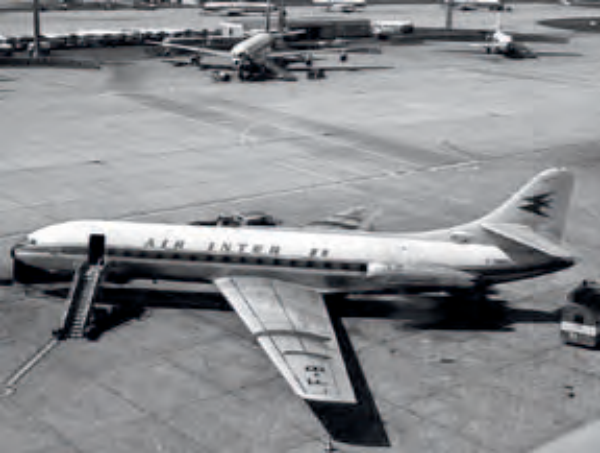
Section titled “1. Introduction”On January 9, 1969, the firstever fully-automatic landing of a commercial aircraft with passengers - a French domestic service on a Caravelle III - was conducted in Paris-Orly.
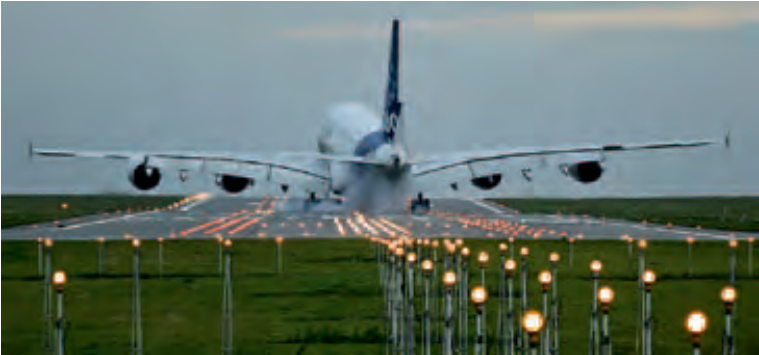
Today, “Autoland” is one of the key elements enabling standard and reliable flight operations, even in low visibility conditions. All Airbus aircraft, from the A300 to the A380, are certified to perform Automatic Landings (Autoland).
Although Autoland is commonly associated with bad-weather (Low Visibility Operations – LVO), there is a wider range of benefits applicable to the performance of automatic landings, even in good weather. This article will illustrate cases where Autoland provides such safety advantages, and will indicate the prerequisites required to ensure that the procedure is safely conducted.
2. Operational Advantages of Autoland
Section titled “2. Operational Advantages of Autoland”Low Visibility Operations (LVO) is the most commonly used (and known) reason for the performance of an automatic landing. But there are many other situations where the use of Autoland provides operational advantages, and where the decision to perform an Autoland is a smart flight crew decision.
3. Prerequisites for Autoland
Section titled “3. Prerequisites for Autoland”Here are some examples of the cases for which an Autoland can prove beneficial:
q Flight crew fatigue (e.g. an early-morning landing after a long and tiring night flight).
3.1. Aircraft Limitations
Section titled “3.1. Aircraft Limitations”As mentioned above, all Airbus aircraft are certified to land automatically. However, limitations and conditions specified in the FCOM must be taken into account. Be aware that other not-so-obvious Autoland-limitations, such as maximum airfield altitude, maximum (minimum) GS angle or maximum runway slope, must also be considered.
q Unfavorable operational conditions (e.g. Overweight landings. Autoland has been demonstrated with weights much above “Max Landing Weight”, as specified in the FCOM).
q Poor visual conditions (e.g. even if the reported weather conditions are VMC, a landing that faces a low-rising or a setting sun, aligned on the runway axis, can seriously affect and reduce the flight crew’s vision).
In addition, the flight crew must monitor possible dayto-day technical restrictions (stated in the MEL), or the consequence(s) of a failure that may have occurred during the flight and that may downgrade landing capability.
q Crew Incapacitation (e.g. the unaffected pilot could decide to exercise their emergency authority and use the Autoland function in order to benefit from the potential assistance and relief).
The Airbus Safety Magazine
On a few Airbus aircraft an other restriction concerning the ADIRS might also be a factor: they are (until a modification to come) fitted with ADIRS part numbers with out-ofdate magnetic variation tables. If the ADIRS magnetic variation differs by more than 2 or 3 deg. (depending on aircraft type) compared to the airport current magnetic variation, the lateral performance of the Autoland and automatic rollout is significantly affected. Each year Airbus publishes in the AFM/FCOM a list of airports where the automatic landing is no more authorized with these ADIRS part numbers.
3.2. Airport Limitations
Section titled “3.2. Airport Limitations”In other words, and to clarify a common misunderstanding, Low Visibility Operations (CAT III) require Autoland, but the use of Autoland is not limited to Low Visibility Operations. Autolands are also permitted on CAT II/CATIII runway when the ILS protection is not activated (LVP not in force) and even on CAT I runways, unless explicitly forbidden by local procedures or authorities.
Before making benefit of this extended operational use, operators must establish a list of runways authorized for automatic landing. This list will contain airports that have been checked for the AFM/FCOM limitations, including the specific precautions required for an Autoland on CAT I runways. For example, for the A330 (FCOM 3.01.22): Operators must check the runway ILS beam quality and the effect of the terrain profile.
CAT I runways, approved for Autoland by the operator, may be used provided:
q The flight crew is aware of possible beam fluctuations, and must be ready to disconnect the AP and take appropriate action(s) if guidance becomes affected
q The FMA displays at least CAT II landing capability, and the flight crew applies CAT II or CAT III tasksharing procedures (refer to FCOM) q The flight crew makes visual contact at the latest at CAT I minimum.
Beware:
Section titled “Beware:”If Low Visibility Operating procedures (verified on the ATIS, or by the ATC) are not in force, even a runway that is CAT II or CAT III capable must be considered to be a CAT I runway. When performing an automatic landing in such conditions, the crews should be particularly alert, as the integrity of the LOC/GS signal is not guaranteed, hence the risk of beam fluctuations.
3.3. Flight Crew Training
Section titled “3.3. Flight Crew Training”Obviously, flight crews must be trained to perform Autoland in Low Visibility Operation (LVO). However, training is also necessary before conducting Autoland in other operational cases. If an operator is not LVO-certified, it is the Operator’s responsibility to obtain any approval that might be required by Airworthiness Authorities and to conduct appropriate flight crew training to perform automatic landings.
Airbus offers a specific training program for LVO operation that includes self-study Computer-BasedTraining (CBT) modules and one simulator session for practical training. This LVO training program complies with ground training requirements, in accordance with EU-OPS 1.450.
Operators that do not have LVO should apply a syllabus that is similar to the Airbus LVO course, and omit all LVO-specific items.
4. Reliability of Autoland
Section titled “4. Reliability of Autoland”Autoland is very reliable. If Operators comply with applicable limitations and correctly apply procedures, they can achieve an Autoland success rate of approximately 100%.
Here is a typical practical example: A European Operator recently recorded the performance of 725 automatic landings over a three-year
period. Only 5 of the approaches were considered unsuccessful, but they did not have any significant consequences (e.g. landing capability changed from CAT III DUAL to CAT III single at 500 ft). This results in an impressive 99.3 % technical success rate.
Nevertheless, automatic landings must be carefully conducted. This is clearly illustrated by the following three examples reported by our Operators:
4.1. Case One
Section titled “4.1. Case One”Crew practicing automatic landing on runway 04L JFK (ILS CAT I) in visual conditions with AP/FD 1+2 and A/THR engaged.
At 500ft AGL, the aircraft was on G/S and LOC, in Landing Configuration. CAS was still 165kt (Vapp + 23). The crosswind component was approximately 22 kt from the left, and the drift angle was approximately 9° (aircraft heading was to the left of the track). Three minutes before TD, the ATC tower reported surface wind at 340/18 and METAR wind at 320/23G28.
At 50 ft, the CAS was VAPP + 10 kt. At 30 ft, ALIGN and RETARD modes engaged. At the same time, the LOC deviation started to increase, the aircraft was to the right of the beam, and the drift angle was 6.5° (aircraft heading was to the left of the track).
The aircraft touched down on the left-hand (LH) Main Landing Gear (MLG) with a 2° left bank angle. The thrust levers were retarded at touchdown.
The right-hand (RH) MLG touched down one second later, and ground spoilers extended. LOC deviation reached 1.5 dot, and was increasing (aircraft was to the right of beam). The rudder deflected left to 33°. The aircraft veered to the left (the heading changed from 40° to 32°).
The flight crew applied full right pedal input and disconnected the AP (three seconds after the first TD). The nose landing gear touched down. During the deviation to the left, the aircraft hit two runway
Safety
edge lights on the left-wheel bogey, just above the wheel-jacking point. The aircraft taxied to the gate, using its own power. Post-flight inspection revealed that the aircraft incurred paint-scrape damage, but no structural damage. The aircraft was certified to return to service on the next scheduled flight. The pilots reported that a narrow-body jet had lifted off from 04L just as they were passing below 200’ -100’ RA.
Commentary:
Section titled “Commentary:”This incident highlights the importance of observing the limitations of the Autoland system: The crosswind was around the maximum permissible component (23kts for the A340-500 at that time), in combination with a not properly stabilized approach and a slight (externally-caused) LOC deviation.
This incident is also a good example of the importance of taking a decisive decision: the flight crew should manually take over as soon as things start to go wrong, and should not try to “assist” the Autopilot by making rudder inputs.
4.2. Case Two
Section titled “4.2. Case Two”SIN RWY 02L (CAT II RWY): Autoland not successful. The red AUTO LAND warning light came on at approximately 200 ft AGL. The flight crew disconnected the autopilot and performed a manual landing (Remark: The flight crew had visual contact above 200 ft).
Findings:
Section titled “Findings:”Flight Recorder data revealed that both LOC signals suddenly became unreliable (down to -137 microA / up to +36 microA), with similar values on both sides for approximately 10 seconds, starting at 300 ft RA.
When crossing 200 ft RA, the LOC signals reached up -137microA. The red AUTO LAND warning triggered for three seconds, as per design, and the LOC deviations were more than 20microA in LAND mode. Then, LOC deviations returned to approximately 0 microA and the flight crew manually performed the landing without any consequences.
gan to deviate to the left, and then to the right. To correct this deviation, the flight crew disconnected the AP, and manually continued the rollout.
This case illustrates a typical example of externally-caused disturbances of the LOC signal: the system worked as per design (AUTO LAND warning triggered) and the flight crew made an appropriate decision.
Commentary:
Section titled “Commentary:”This case was also caused by external LOC deviations. Again, the flight crew reacted perfectly and manually took over the controls. This demonstrates that an Autoland is not completed until after the aircraft has reached taxi speed.
4.3. Case Three
Section titled “4.3. Case Three”Autoland TPE RWY 06 was not successful.
After a correct touchdown, and during the rollout, the aircraft be-
5. Conclusion
Section titled “5. Conclusion”q Autoland is a very dependable operational technique. Operational- and system limitations have to be observed nevertheless.
q The main operational use is for Low Visibilty Operations (LVO). However, there are many other operational scenarios that can benefit from the use of automatic landings.
q Autoland on CAT I ILS, or CAT II/III (without LVP) are possible provided precautionary measures are taken.
q Autolands must be carefully performed, at all times. If anything goes wrong, the flight crew must manually take over with decisiveness (i.e. disconnect the AP and manually fly the aircraft – as per Airbus Golden Rule).
q In all cases, effective and sufficient training is a requirement for the safe performance of automatic landings. Airbus provides Operators with appropriate solutions to perform this training.
Additional References
Section titled “Additional References”q AFM/FCOM/FCTM chapters on Automatic Landing
q FCOM Bulletin “Automatic Landing Performance” (A320 Family Bulletin N°803; A330 Bulletin n°816; A340 Bulletin N°816)
q Airbus “Getting To Grips with CAT II /CAT III Operations” available on the AirbusWorld website (Fight Operations portal)
q Airbus Operations Policy Manual (AOPM- Chapter 8.3. ALL WEATHER OPERATIONS), available on the AirbusWorld website (Fight Operations portal).
安全
机长 Christian NORdEN
Section titled “机长 Christian NORdEN”A350 飞行机组培训政策与研发
1969 年 1 月 9 日,一架法国国内航线上的 Caravelle III 客机在巴黎-奥利机场完成了人类历史上首次全自动商业客机载客着陆。
如今,“自动着陆”(Autoland)已成为确保标准可靠飞行的关键要素之一,即使在低能见度条件下亦是如此。从 A300 到 A380,所有空客飞机均已获得自动着陆(Autoland)的认证。
尽管自动着陆通常与恶劣天气(低能见度运行——LVO)相关联,但在良好天气条件下,自动着陆同样具有更广泛的益处。本文将阐述自动着陆在哪些情况下能够提供此类安全优势,并说明确保该程序安全执行的前提条件。
2. 自动着陆的运行优势
Section titled “2. 自动着陆的运行优势”低能见度运行(LVO)是执行自动着陆最常见(也是最知名)的原因。但在许多其他情况下,使用自动着陆也能带来运行优势,在这些情况下选择自动着陆是飞行机组明智的决策。
3. 自动着陆的前提条件
Section titled “3. 自动着陆的前提条件”以下是一些自动着陆可以发挥作用的场景示例:
q 飞行机组疲劳(例如经过一夜漫长而疲惫的飞行后进行清晨着陆)。
3.1. 飞机限制
Section titled “3.1. 飞机限制”如上所述,所有空客飞机都经过认证可以自动着陆。然而,必须考虑 FCOM 中规定的限制和条件。还需注意其他不太明显的自动着陆限制,如最高机场海拔、最大(最小)GS 角或最大跑道坡度等。
q 不利的运行条件(例如超过最大着陆重量的着陆。自动着陆已验证可在远高于 FCOM 中规定的”最大着陆重量”的重量下执行)。
q 恶劣的目视条件(例如即使报告的天气条件处于 VMC,对着陆时面对低升或落日、沿跑道轴线对齐的方式,可能会严重影响并削弱飞行机组的视野)。
此外,飞行机组必须注意可能出现的日常技术限制(MEL 中规定的),或飞行过程中可能发生的故障后果,这些故障可能会降低着陆能力。
q 机组失能(例如未受影响的飞行员可决定行使其紧急权力并使用自动着陆功能,以获得潜在的协助和缓解)。
空客安全杂志
在少数空客飞机上,另一个关于 ADIRS 的限制也可能是影响因素:这些飞机(直到即将进行的改装之前)安装的 ADIRS 件号使用的是过时的磁差表。如果 ADIRS 磁差与机场当前磁差相差超过 2 度或 3 度(取决于飞机类型),自动着陆和自动滑行的横向性能将受到显著影响。空客每年在 AFM/FCOM 中发布一份机场清单,列出在这些 ADIRS 件号下不再允许进行自动着陆的机场。
3.2. 机场限制
Section titled “3.2. 机场限制”换句话说,为了澄清一个常见的误解,低能见度运行(CAT III)需要自动着陆,但自动着陆的使用并不仅限于低能见度运行。在 ILS 保护未启用(LVP 未生效)的情况下,自动着陆也允许在 CAT II/CAT III 跑道上进行,甚至在 CAT I 跑道上也可以,除非当地程序或当局明确禁止。
在充分利用这一扩展运行使用之前,运营人必须建立一份获准进行自动着陆的跑道清单。该清单将包含已经过 AFM/FCOM 限制检查的机场,包括在 CAT I 跑道上进行自动着陆所需的特殊预防措施。例如,对于 A330(FCOM 3.01.22):运营人必须检查跑道 ILS 波束质量和地形剖面的影响。
经运营人批准可进行自动着陆的 CAT I 跑道可按以下条件使用:
q 飞行机组必须了解可能出现的波束波动,并在制导受到影响时准备好断开 AP 并采取适当的措施。
q FMA 显示至少达到 CAT II 着陆能力,飞行机组执行 CAT II 或 CAT III 分工程序(参考 FCOM)。
q 飞行机组在 CAT I 最低高度前最迟完成目视参考确认。
如果低能见度运行程序(通过 ATIS 或 ATC 确认)未生效,即使跑道具备 II 类或 III 类能力,也应视为 I 类跑道。在此条件下执行自动着陆时,机组应特别警觉,因为 LOC/GS 信号的完整性无法得到保证,因此存在波束波动的风险。
3.3. 机组培训
Section titled “3.3. 机组培训”显然,飞行机组必须在低能见度运行(LVO)中进行自动着陆培训。然而,在其他运行情况下执行自动着陆前,培训同样不可或缺。如果运营人未获得 LVO 认证,则有责任获取适航当局可能要求的任何批准,并开展适当的飞行机组培训以执行自动着陆。
空客提供专门的 LVO 运行培训项目,包括自学计算机培训(CBT)模块和一次模拟机实操训练。该 LVO 培训项目符合地面培训要求,符合 EU-OPS 1.450 的规定。
未实施 LVO 的运营人应采用与空客 LVO 课程类似的教学大纲,并省略所有 LVO 专用项目。
4. 自动着陆的可靠性
Section titled “4. 自动着陆的可靠性”自动着陆非常可靠。如果运营人遵守适用的限制并正确执行程序,可达到约 100% 的自动着陆成功率。
以下是一个典型的实际案例:某欧洲运营人近期记录了三年内 725 次自动着陆的性能。其中仅有 5 次进近被认为不成功,但均未产生任何重大后果(例如:着陆能力从 III 类双通道变为 500 ft 高度的单通道 III 类)。这意味着高达 99.3% 的技术成功率。
尽管如此,自动着陆必须谨慎实施。以下三个由运营人报告的案例清楚地说明了这一点:
4.1. 案例一
Section titled “4.1. 案例一”机组在 JFK 04L 跑道(ILS I 类)目视条件下,使用 AP/FD 1+2 和 A/THR 接通状态进行自动着陆练习。
在 500 ft AGL 时,飞机处于 G/S 和 LOC 状态,处于着陆形态。CAS 仍为 165 kt(Vapp + 23)。侧风分量约 22 kt,来自左侧,偏流角约 9°(飞机航向偏左)。TD 前三分钟,ATC 塔台报告地面风 340/18,METAR 风 320/23G28。
在 50 ft 时,CAS 为 VAPP + 10 kt。在 30 ft 时,ALIGN 和 RETARD 模式接通。同时,LOC 偏差开始增大,飞机在波束右侧,偏流角为 6.5°(飞机航向偏左)。
飞机以 2° 左坡度接地,左主起落架(MLG)触地。推力手柄在接地时收至慢车。
右主起落架(MLG)一秒钟后触地,地面扰流板伸出。LOC 偏差达到 1.5 点且持续增大(飞机在波束右侧)。方向舵左偏 33°。飞机向左偏转(航向从 40° 变为 32°)。
机组施加了全部右侧脚蹬输入,并在首次 TD 后三秒钟断开了 AP。 前起落架触地。在向左偏转期间,飞机撞上了左侧轮架上距轮顶举点稍高处的两个跑道边灯。飞机使用自身动力滑行至登机口。飞行后检查发现飞机仅受到漆面擦伤,无结构性损伤。飞机被认证可在下一航班计划飞行中返回使用。飞行员报告称,就在其通过 200’–100’ RA 以下时,一架窄体喷气机刚从 04L 起飞。
此次事件凸显了遵守自动着陆系统限制的重要性:侧风接近最大允许分量(当时 A340-500 的最大允许值为 23 kt),加之进近未充分稳定以及轻微的(外部原因的)LOC 偏差。
此次事件也是一个很好的案例,说明了果断决策的重要性:一旦情况开始恶化,机组应立即人工接管,不应试图通过方向舵输入来”协助”自动驾驶仪。
4.2. 案例二
Section titled “4.2. 案例二”SIN 02L 跑道(II 类跑道):自动着陆未成功。红色 AUTO LAND 警告灯在约 200 ft AGL 时亮起。机组断开了自动驾驶仪并执行了人工着陆(注:机组在 200 ft 以上已获得目视参考)。
飞行记录器数据显示,两侧 LOC 信号在 300 ft RA 时开始约 10 秒内突然变得不可靠(低至 -137 microA / 高至 +36 microA),两侧数值相近。
当穿越 200 ft RA 时,LOC 信号达到 -137 microA。红色 AUTO LAND 警告按设计触发三秒钟,LAND 模式下 LOC 偏差超过 20 microA。随后 LOC 偏差恢复到约 0 microA,机组无任何后果地人工完成了着陆。
飞机开始向左偏移,随后向右偏移。为修正该偏移,机组断开了 AP,并人工继续滑跑。
本案例说明了外部原因导致的 LOC 信号干扰的典型例子:系统按设计工作(AUTO LAND 警告触发),机组做出了适当的决断。
此案例同样由外部航向道(LOC)偏差引起。机组再次做出了完美反应,手动接管了控制。这表明,在飞机达到滑行速度之前,自动着陆并未完成。
4.3 案例三
Section titled “4.3 案例三”06 号跑道自动着陆未成功。
在正确的接地之后,滑跑过程中,飞机出现偏左偏移,随后机组手动接
q 自动着陆是一种高度可靠的运行技术。然而,必须遵守运行限制和系统限制。
q 自动着陆的主要运行用途是低能见度运行(LVO)。然而,还有许多其他运行场景可以受益于自动着陆的使用。
q 在采取预防措施的前提下,在一类ILS上,或在二类/三类(无低能见度程序)上实施自动着陆是可行的。
q 在所有情况下,自动着陆必须始终谨慎执行。一旦出现问题,机组必须果断手动接管(即断开自动驾驶仪并手动驾驶飞机——遵循空客黄金法则)。
q 在所有情况下,有效且充分的培训是安全实施自动着陆的必要条件。空客为运营人提供适当的培训解决方案。
补充参考资料
Section titled “补充参考资料”q AFM/FCOM/FCTM 中关于自动着陆的章节
q FCOM 公告“自动着陆性能”(A320 系列公告 N°803;A330 公告 n°816;A340 公告 N°816)
q 空客《CAT II/CAT III 运行实战手册》,可在 AirbusWorld 网站(飞行运行门户)获取
q 空客运营政策手册(AOPM- 第 8.3 章 全天候运行),可在 AirbusWorld 网站(飞行运行门户)获取。