Take Care of the Wheel Bearings
Source: Airbus Safety First URL: https://safetyfirst.airbus.com/take-care-of-the-wheel-bearings/ Published: 2025-12-16 Category: Maintenance, bearing, greasing, landing gear, lubrication, parts departing aircraft, PDA, torque, wheel PDF: Original PDF
Android devices.
CASE STUDY
Section titled “CASE STUDY”Event Description
Section titled “Event Description”An A330 aircraft was taxiing towards its departure runway. After being authorized to line up, the flight crew noticed that they needed to apply some engine thrust to align the aircraft on the runway, but they did not regard it as significant, because the runway was slightly uphill. The flight crew applied takeoff power, and the aircraft started to accelerate.
Rejected takeoff
Section titled “Rejected takeoff”At around 70 kt, the flight crew heard a loud bang, followed by a BRAKES_RELEASED ECAM alert. They performed a rejected takeoff at approximately 80 kt. The braking was not as efficient as expected. They selected the thrust reversers, but only the left reverser deployed. The aircraft safely decelerated, exited the runway, and stopped on a taxiway near the runway. The flight crew called for the airport emergency services.
Loss of a landing gear wheel
Section titled “Loss of a landing gear wheel”The firefighter arrived at the aircraft and informed the flight crew that the forward right wheel of the Right Hand (RH) main landing gear was missing and that debris from the incident was spread across the whole runway. The passengers were safely disembarked via stairs.
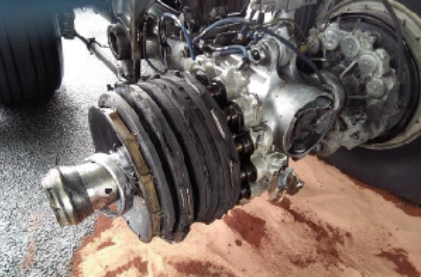
(fig.1) Picture of the RH landing gear after the event (photo from the investigation board)
Event Analysis
Section titled “Event Analysis”Investigation showed that the cause of the wheel separation was the failure of the wheel bearing. When the bearing failed, the wheel lost its location. It damaged the brakes and some hydraulic lines before being ejected.
Although the exact cause remains unconfirmed, the wheel bearing failure was most likely a result of improper maintenance.
AIRCRAFT WHEEL BEARINGS
Section titled “AIRCRAFT WHEEL BEARINGS”The bearing of an aircraft landing gear wheel ensures the following functions:
-
It maintains the wheel in the correct position
-
It transfers static loads from the landing gear axle to the wheel when the aircraft is parked (aircraft weight).
-
It transfers dynamic loads during taxi, takeoff, and landing:
-
vertical loads due to the touchdown or runway irregularities
-
longitudinal loads due to braking
-
lateral loads during turns or lateral deviations
-
It ensures low friction between the wheel and the axle, minimizing wear and heat generation during taxi, takeoff, and landing.
Tapered Roller Bearings
Section titled “Tapered Roller Bearings”The loads listed above apply both radially and axially on the wheel bearing. That is why tapered roller bearings are used for aircraft wheels, because they can sustain both high radial and axial loads.
A tapered roller bearing is a separable component, and it can be divided into two primary parts : the cone assembly and the cup. This enhances disassembly and assembly maintenance tasks.
The cone assembly is a complete, non-separable unit. It consists of the inner race, the tapered rollers, and a cage. The purpose of the cage is to hold the rollers in place and maintain their correct spacing.
The cup , the other separable part, functions as the outer race of the bearing.
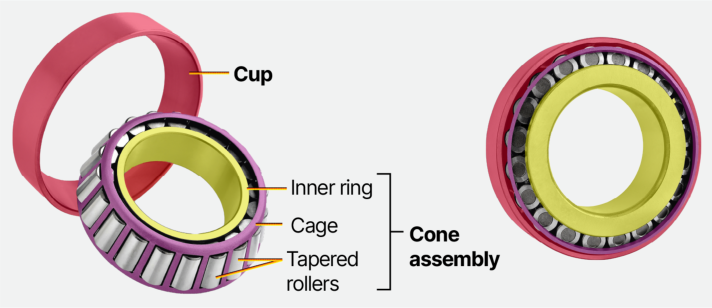
(fig.2) Structure of a tapered roller bearing
Wheel bearings
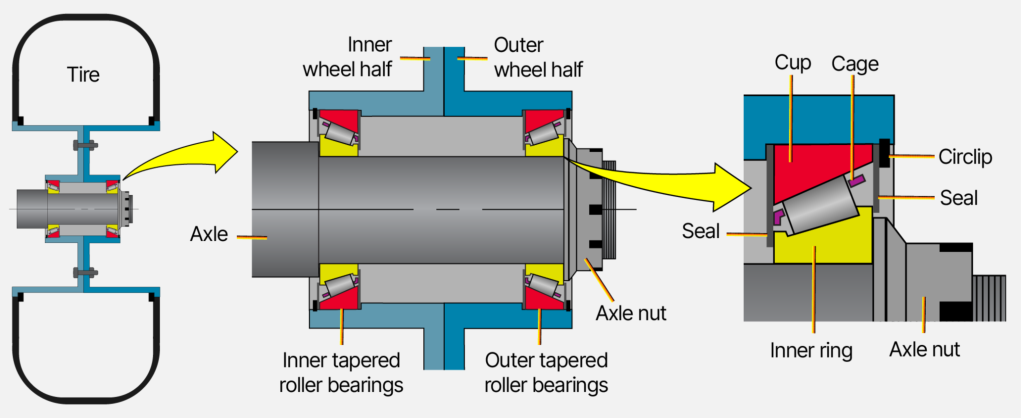
Section titled “Wheel bearings”Each aircraft wheel is equipped with two tapered roller bearings. The axle nut maintains the wheel assembly on the axle by seating on the inner cone of the outer bearing. It provides a preload that ensures correct positioning and optimum performance of the bearings.
On each bearing, two seals are used to contain the bearing grease and prevent contamination. A circlip maintains the seal in position.
Consequences of a Wheel Bearing Failure
Section titled “Consequences of a Wheel Bearing Failure”Due to the key role of the landing gear wheel bearing and the significant loads they are exposed to, the consequences of a bearing failure can be significant. They may include:
(fig.3) Example of a nose landing gear wheel with its two tapered roller bearings
-
Sudden seizure of the bearing
-
Damage to the landing gear axle and wheel
-
Damage to the brakes
-
Emission of sparks and heat that may lead to a fire
-
Parts Departing from the Aircraft (PDA), including the loss of the wheel and tire assembly.
PROPER MAINTENANCE FOR SAFE BEARING OPERATIONS
Section titled “PROPER MAINTENANCE FOR SAFE BEARING OPERATIONS”Importance of Adhering to Maintenance Procedures
Section titled “Importance of Adhering to Maintenance Procedures”The primary causes of wheel bearing failures are related to incorrect maintenance practices. It is essential to strictly follow the procedures of the Aircraft Maintenance Manual (AMM) or the Component Maintenance Manual (CMM) to ensure proper accomplishment of the maintenance tasks and reduce risks of error.
Safe operation of a wheel bearing is only possible if proper shop maintenance is carried out to prepare the wheel and its bearings, and if the wheel is properly installed on the aircraft.
Proper Bearing Maintenance in Shop
Section titled “Proper Bearing Maintenance in Shop”Each time a wheel is removed from an aircraft in an unserviceable condition, it must be sent to a certified MRO for shop maintenance. The wheel bearings must be dismantled, cleaned, inspected, lubricated, and reinstalled according to the wheel CMM procedures.
When a wheel and tire assembly is sent to the wheel shop, the level of inspection of the wheel differs if the removal was due to tire wear (standard overhaul) or following an abnormal event, such as a hard landing or a brake overheat.
Inspection of the circlip and seals
Section titled “Inspection of the circlip and seals”When removing a bearing from the wheel, the circlip and seals should be cleaned and their condition checked. If any damage is found, the damaged component must be discarded and replaced by a new one during reinstallation.
Check of the general condition of the bearing
Section titled “Check of the general condition of the bearing”After the bearing is removed from the wheel, its general condition must be checked. The radial clearance of the cage must not allow contact of the cage with the cup when the bearing is rotated.
If the bearing appears to be in bad condition, such as significant contamination of the grease, signs of overheating, or obvious damage, it must be replaced.
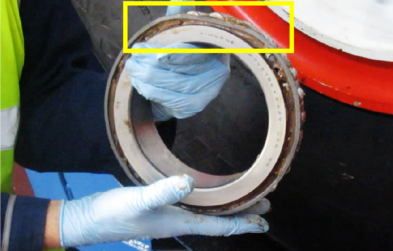
(fig.4) Example of a bent cage discovered while dismantling a bearing
Cleaning of the bearing cup and cone assembly
Section titled “Cleaning of the bearing cup and cone assembly”Removing the grease from the bearing cup and cone assembly is necessary to perform their detailed visual inspection.
Maintenance personnel must only use the cleaning materials that are listed in the wheel CMM to clean the bearing components.
Inspection of the cone assembly
Section titled “Inspection of the cone assembly”The bearing cage must be free of any deformation or damage and rotate without any friction.
The rollers must be free of any sign of corrosion, stain, marks, or the presence of spalled areas. Particular attention should be paid to the large end of the rollers for scoring damage.
The physical roughness of the rib of the inner ring that is in contact with each roller end must also be checked using a probe or a ball pen.
If damage is found on any cone assembly component, the full cone assembly must be discarded.
Inspection of the cup
Section titled “Inspection of the cup”The cup must be free of scratches, or spalled area. If stains are found on the cup raceway, they should be cleaned with the appropriate cleaning agent listed in the wheel CMM.
A probe or a ball pen can be used for roughness checks to detect any surface defect on the cup raceway: if a defect is felt while moving the probe/pen on the surface, the cup must be discarded.
If damage is found on the cup raceway, it must be discarded.
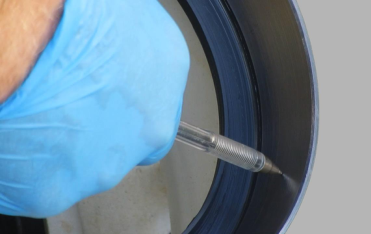
(fig.5) A probe or a ball pen can be used to detect any surface defect, and roughness on the cup raceway
Correct greasing of the bearing
Section titled “Correct greasing of the bearing”Applying the correct amount of grease is crucial for bearing integrity and performance.
Insufficient greasing is detrimental to the performance and reliability of the bearing. It can lead to premature bearing wear and corrosion.
Excessive greasing can increase the rotational resistance (torque) of the bearing and, consequently, generate excess heat, degrading the grease quality and affecting bearing life. In addition, excess grease may leak from the bearing onto hot adjacent components, resulting in smoke and potentially fire.
Clay-based vs. lithium-based greases
Section titled “Clay-based vs. lithium-based greases”Two types of grease are available for landing gear wheel bearing: clay-based grease and lithium-based grease.
Studies have shown that the lithium-based greases are very effective in repelling water and contaminants. The lithium-based greases are also more likely to stay in place, which guarantees the bearing is lubricated effectively and for a long time. Lithium-based greases should,therefore, be chosen, when available, because they can enhance both the protection and the longevity of the bearings.
Reassembly and reinstallation of the bearing
Section titled “Reassembly and reinstallation of the bearing”Mixing a cone assembly with a cup coming from another bearing should be avoided. Keeping the cone assembly and the cup of a bearing together ensures optimum fitting and performance.
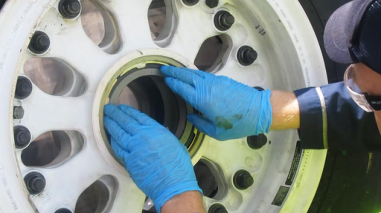
(fig.6) Reinstallation of a wheel bearing
Proper protection of the bearing and storage of the wheel
Section titled “Proper protection of the bearing and storage of the wheel”After the bearing is reinstalled and the wheel is overhauled, the CMM instructions for bearing protection and wheel storage must be respected to prevent contamination and degradation of the bearing pending the next reinstallation of the wheel on an aircraft.
Proper Wheel Installation
Section titled “Proper Wheel Installation”Proper wheel bearing maintenance is essential for safe bearing operations, however, it is not sufficient. The correct installation of the wheel on the landing gear axle is also necessary.
The wheel must be carefully installed to ensure that the bearings are properly aligned and preloaded so that they can operate correctly.
- The essential steps of the procedures for installing the landing gear wheels are available in following documentation: ● A300/A310/A320/A330/A340 AMM ref: 32-41-11, and 32-41-12 ● A350 MP ref A350-A-32-41-61, and A350-A-32-41-62 ● A380 AMM ref: 32-41-11; 32-41-12 & 32-41-13 ● A220 AMP ref: BD500-A-J32-42-01-01AAA-720A-A, and BD500-A-J32-41-01-01AAA-720A-A
Use of the appropriate tooling
Section titled “Use of the appropriate tooling”-
As for any maintenance procedure, the appropriate tools listed in the AMM must be used to perform the maintenance. They include: ● an axle thread protector ● an axle nut adaptor ● a torque wrench with the appropriate torque range.
-
The torque wrench must be calibrated to ensure correct torquing of the axle nut.
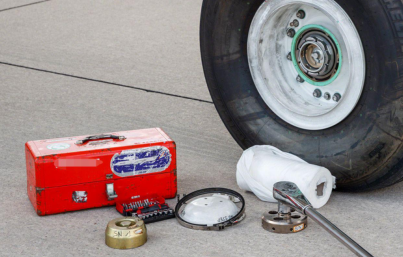
(fig.7) Use of the appropriate tooling for wheel installation is essential
Avoiding contamination of the wheel bearing
Section titled “Avoiding contamination of the wheel bearing”The protection fitted on the bearing of the new wheel to be installed should only be removed shortly before installation to prevent the risk of contamination of the bearing by external materials.
Protecting the landing gear axle thread
Section titled “Protecting the landing gear axle thread”The use of the cone-shaped protector during both removal and installation of the wheel prevents damage to the axle thread.
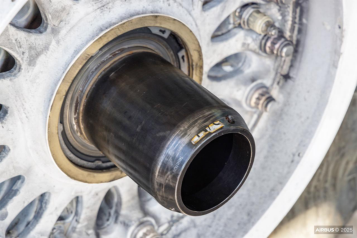
(fig.8) Axle thread protector fitted on the wheel axle
Initial seating torque: positioning the wheel and bearings correctly
Section titled “Initial seating torque: positioning the wheel and bearings correctly”When the wheel is positioned on the axle, an initial seating torque must be applied on the axle nut using the axle nut adaptor fitted on a torque wrench.
The initial seating torque ensures proper alignment of the wheel and bearings as well as the correct seating position of the rollers on the inner ring and cup raceway.
Application of the initial seating torque must be done while rotating the wheel at a constant speed, in the same direction that the axle nut is being tightened (clockwise).
As the wheel turns, the tapered rollers move along the inner race (the cone) and the outer race (the cup). Because of their conical shape, the rollers are guided into their correct operational position, aligning themselves precisely against the cone rib. It may take several rotations to ensure all rollers in both the inner and outer bearings are correctly seated.
Incorrect seating of the rollers may result in damage and premature failure of the bearing.
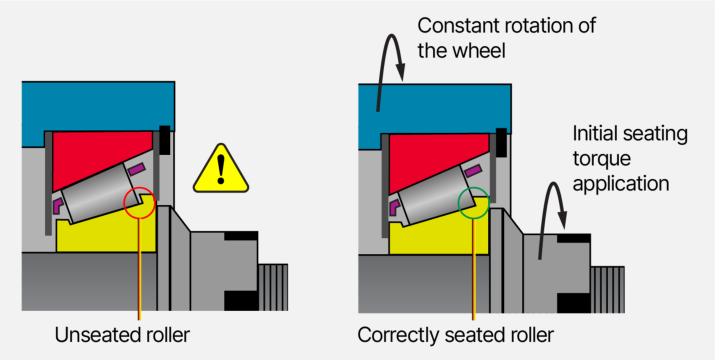
(fig.9) Initial seating torque application removes all wheel system free plays and sets the bearing rollers to their correct seating position
Backing off the nut: preparing for the final torque application
Section titled “Backing off the nut: preparing for the final torque application”The initial seating torque being too high for the normal wheel operation, the axle nut must be ‘backed off’ (loosened), in order to prepare for the final torque application.
The backing off of the axle nut should also be performed while rotating the wheel at a constant speed, in the same direction as the axle nut (counter-clockwise). A320 family and A300/A310 AMMs are being updated to add this recommendation.
The wheel rotation during the back-off eases the loosening of the axle nut. It also ensures that the rollers remain correctly seated.
Final torque application: ensuring optimum bearing operation
Section titled “Final torque application: ensuring optimum bearing operation”A final torque must then be applied to the axle nut. This crucial step sets the correct ‘preload’ (the optimal amount of internal load) for the bearing to operate efficiently.
Overtorquing the axle nut may result in increased bearing friction, leading to premature wear and failure.
Undertorquing the axle nut may result in incorrect roller seating, leading to potential damage and premature failure.
Application of the final torque must be done while rotating the wheel at a constant speed, in the same direction that the axle nut is being tightened (clockwise).
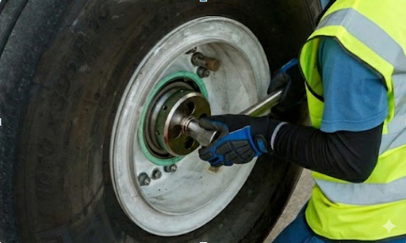
(fig.10) Application of the final torque during the wheel installation
Securing of the axle nut: maintaining the final torque
Section titled “Securing of the axle nut: maintaining the final torque”When the final torque is applied, the two cross bolts must be installed and locked to prevent the axle nut from moving.
Additional information can be found in the following two articles available on the AirbusWorld portal:
-
ISI 32.41.00098 - Wheel Bearing Failure - Explanation and
-
Recommendation
-
ISI 32.41.00102 Clarifications for wheel removal requirement after parking /
-
storage period exceeding 4 months.
Contributors:
Section titled “Contributors:”Andrew Ramshaw Bearings Specialist - Design Capability Design Office
Erica Wittmann
Section titled “Erica Wittmann”Wheel & Tire Operational Expert Customer Support
With thanks to Andy Samuels, Jake Jones and Dave Parr from the Landing Gear Design Office and to Xavier Barriola and Ian Goodwin from the Aviation Safety team.
Aircraft landing wheel bearings are critical components designed to sustain high radial and axial loads while ensuring low-friction rotation.
Due to their essential role in maintaining wheel position and transferring dynamic loads, their failure can have severe consequences, including damage to the landing gear, brakes, and ultimately Part Departing from the Aircraft (PDA) including the loss of the wheel.
To ensure optimal and safe performance, it is paramount to strictly adhere to all procedures outlined in the CMM and AMM/MP/AMP. This includes proper maintenance tasks in the wheel shop, such as thorough inspection, cleaning, and correct greasing. It also includes the critical steps of proper wheel installation, which involves careful use of appropriate tooling and the precise application of initial seating, and final preload torques to ensure correct position and operation of the bearings.
By following these documented procedures, maintenance personnel can significantly reduce the risk of maintenance-related bearing failures, thereby ensuring the continued safety and reliability of the aircraft.
Safety first, 2025. Safety first is published by Airbus S.A.S. 1, rond point Maurice Bellonte - 31707 Blagnac Cedex/France.
Editor: Yannick Malinge, SVP AViation Safety.
Editorial team: Guillaume Estragnat, Javier Martinez Marina, Vanessa Sadi, Gwyneth Duggan, Agathe Sanz, Bruno Fargeon.
Photos by Airbus.
善待轮毂轴承
Section titled “善待轮毂轴承”来源:Airbus Safety First 网址:https://safetyfirst.airbus.com/take-care-of-the-wheel-bearings/ 发布日期:2025-12-16 类别:维护、轴承、润滑、起落架、润滑、 aircraft 部件脱落、零件脱落(PDA)、扭矩、机轮 PDF:原始 PDF
适用于 Android 设备。
一架 A330 飞机在滑行前往起飞跑道。获得进入跑道许可后,机组注意到需要增加一些发动机推力才能将飞机对准跑道,但他们认为这并不严重,因为跑道略微上坡。机组施加了起飞推力,飞机开始加速。
在约 70 节时,机组听到一声巨响,随后出现 BRAKES_RELEASED ECAM 警戒。他们在约 80 节时执行了中断起飞。制动效率不如预期。他们选择了反推,但只有左侧反推展开。飞机安全减速,脱离跑道,停在了跑道附近的滑行道上。机组呼叫了机场应急救援服务。
起落架轮子脱落
Section titled “起落架轮子脱落”消防员到达飞机后通知机组,右主起落架的前轮已脱落,事件产生的碎片散落在整个跑道上。乘客通过登机梯安全下机。
(图 1) 事件后右起落架的照片(调查委员会提供的照片)
调查显示,轮子脱落的原因是轮毂轴承失效。当轴承失效时,轮子失去定位,在脱落前损坏了刹车和部分液压管路。
虽然确切原因尚未确认,但轮毂轴承失效很可能是由于维护不当所致。
飞机轮毂轴承
Section titled “飞机轮毂轴承”飞机起落架轮子的轴承确保以下功能:
- 将轮子保持在正确位置
- 当飞机停放时,将静载荷从起落架轮轴传递至轮子(飞机重量)。
- 在滑行、起飞和着陆期间传递动载荷:
- 由于接地或跑道不平整产生的垂直载荷
- 由于刹车产生的纵向载荷
- 转弯或侧向偏移时的侧向载荷
- 确保轮子与轮轴之间低摩擦,最大程度减少滑行、起飞和着陆期间的磨损和热量产生。
圆锥滚子轴承
Section titled “圆锥滚子轴承”上述载荷对轮毂轴承同时产生径向和轴向作用。这就是为什么飞机轮子使用圆锥滚子轴承的原因,因为它们能够承受高径向和轴向载荷。
圆锥滚子轴承是一种可分离部件,可以分为两个主要部分:锥形组件和外圈。这便于拆卸和组装维护作业。
锥形组件是一个完整的不可分离单元,由内圈、圆锥滚子和保持架组成。保持架的作用是将滚子固定到位并保持其正确的间距。
外圈是另一个可分离部件,作为轴承的外圈使用。
(图 2) 圆锥滚子轴承结构
每个飞机轮子都装有两个圆锥滚子轴承。轮轴螺母通过压在外部轴承内锥面上将轮子组件固定在轮轴上。它提供预紧力,确保轴承的正确定位和最佳性能。
每个轴承上使用两个密封件来容纳轴承润滑脂并防止污染。卡环将密封件固定在位。
轮毂轴承失效的后果
Section titled “轮毂轴承失效的后果”由于起落架轮毂轴承的关键作用及其承受的巨大载荷,轴承失效的后果可能非常严重。包括:
- 轴承突然卡滞
- 损坏起落架轮轴和轮子
- 损坏刹车
- 产生火花和热量,可能导致火灾
- 零件脱落(PDA),包括轮子和轮胎组件脱落。
(图 3) 带有两个圆锥滚子轴承的前起落架轮示例
确保轴承安全运行的正确维护
Section titled “确保轴承安全运行的正确维护”遵守维护程序的重要性
Section titled “遵守维护程序的重要性”轮毂轴承失效的主要原因与不正确的维护操作有关。必须严格遵循《飞机维护手册》(AMM)或《部件维护手册》(CMM)的程序,以确保正确完成维护任务并降低错误风险。
轮毂轴承的安全运行只有在完成正确的车间维护(准备轮子及其轴承)且轮子正确安装到飞机上才可能实现。
车间内的正确轴承维护
Section titled “车间内的正确轴承维护”每当轮子以不可用状态从飞机上拆下时,必须送至认证维修站(MRO)进行车间维护。轮毂轴承必须按照轮子 CMM 程序进行拆卸、清洁、检查、润滑和重新安装。
当轮子和轮胎组件送至轮子车间时,轮子的检查级别因拆下原因不同而异:如果是因为轮胎磨损(标准大修),或是在异常事件后(如硬着陆或刹车过热)。
卡环和密封件的检查
Section titled “卡环和密封件的检查”从轮子上拆卸轴承时,应清洁卡环和密封件并检查其状况。如发现任何损坏,必须在重新安装时更换新件。
轴承一般状况检查
Section titled “轴承一般状况检查”从轮子上拆卸轴承后,必须检查其一般状况。旋转轴承时,保持架的径向间隙不得使保持架与外圈发生接触。
如果轴承状况不佳,例如润滑脂严重污染、过热迹象或明显损坏,必须予以更换。
(图4) 拆卸轴承时发现的保持架变形示例
轴承外圈和内圈组件的清洁
Section titled “轴承外圈和内圈组件的清洁”必须清除轴承外圈和内圈组件上的润滑脂,才能进行详细的目视检查。
维修人员只能使用轮毂 CMM 中列出的清洁材料来清洁轴承组件。
内圈组件的检查
Section titled “内圈组件的检查”轴承保持架不得有任何变形或损坏,旋转时不得有任何摩擦。
滚子不得有腐蚀、斑点、标记或剥落区域的迹象。应注意检查滚子大端的划痕损伤。
还应使用探针或圆珠笔检查与每个滚子端面接触的内圈挡边的表面粗糙度。
如果发现任何内圈组件部件损坏,必须报废整个内圈组件。
外圈不得有划痕或剥落区域。如果在外圈滚道上发现污渍,应使用轮毂 CMM 中列出的适当清洁剂进行清洁。
可使用探针或圆珠笔进行粗糙度检查,以检测外圈滚道上的任何表面缺陷:如果在探针/笔在表面移动时感觉到缺陷,必须报废外圈。
如果发现外圈滚道损坏,必须报废。
(图5) 可使用探针或圆珠笔检测外圈滚道上的任何表面缺陷和粗糙度
轴承的正确润滑
Section titled “轴承的正确润滑”施加正确量的润滑脂对于轴承的完整性和性能至关重要。
润滑不足会损害轴承的性能和可靠性,可能导致轴承过早磨损和腐蚀。
润滑过度会增加轴承的旋转阻力(扭矩),从而产生过多热量,降低润滑脂质量并影响轴承寿命。此外,过多的润滑脂可能从轴承泄漏到附近的热部件上,导致冒烟甚至起火。
膨润土基润滑脂与锂基润滑脂
Section titled “膨润土基润滑脂与锂基润滑脂”起落架轮毂轴承有两种润滑脂可用:膨润土基润滑脂和锂基润滑脂。
研究表明,锂基润滑脂在防水和防污染物方面非常有效。锂基润滑脂也更有可能保持在原位,确保轴承得到有效且持久的润滑。因此,在条件允许时应选择锂基润滑脂,因为它们可以增强轴承的保护并延长其使用寿命。
轴承的重新组装和重新安装
Section titled “轴承的重新组装和重新安装”应避免将内圈组件与来自另一轴承的外圈混装。保持轴承的内圈组件和外圈配套可确保最佳配合和性能。
(图6) 轮毂轴承的重新安装
轴承的正确保护和轮子的储存
Section titled “轴承的正确保护和轮子的储存”轴承重新安装并完成轮毂翻修后,必须遵守 CMM 中关于轴承保护和轮子储存的说明,以防止在下次将轮子重新安装到飞机上之前轴承受到污染和性能下降。
正确的轮子安装
Section titled “正确的轮子安装”正确的轮毂轴承维护对安全轴承操作至关重要,但这还不够。轮子在起落架 axle(轴)上的正确安装也是必要的。
必须仔细安装轮子,以确保轴承正确对中和预载,使其能够正常运转。
- 起落架轮子安装程序的基本步骤可在以下文档中找到: ● A300/A310/A320/A330/A340 AMM ref: 32-41-11 和 32-41-12 ● A350 MP ref A350-A-32-41-61 和 A350-A-32-41-62 ● A380 AMM ref: 32-41-11; 32-41-12 & 32-41-13 ● A220 AMP ref: BD500-A-J32-42-01-01AAA-720A-A 和 BD500-A-J32-41-01-01AAA-720A-A
使用适当的工具
Section titled “使用适当的工具”-
与任何维护程序一样,必须使用 AMM 中列出的适当工具进行维护。包括: ● 轴颈螺纹保护套 ● 轴螺母适配器 ● 具有适当扭矩范围的扭矩扳手。
-
扭矩扳手必须经过校准,以确保正确拧紧轴螺母。
(图7) 轮子安装使用适当的工具是必不可少的
防止轮毂轴承污染
Section titled “防止轮毂轴承污染”新轮毂轴承上安装的保护装置仅应在安装前不久才能拆除,以防止外部物质污染轴承。
保护起落架轮轴螺纹
Section titled “保护起落架轮轴螺纹”在轮毂拆卸和安装过程中使用锥形保护套,可防止轮轴螺纹损坏。
(图 8) 轮毂轮轴上安装的轮轴螺纹保护套
初始就位扭矩:正确安装轮毂和轴承
Section titled “初始就位扭矩:正确安装轮毂和轴承”将轮毂安装到轮轴上后,必须使用安装在扭力扳手上的轮轴螺母适配器,对轮轴螺母施加初始就位扭矩。
初始就位扭矩可确保轮毂和轴承的正确对中,以及滚子在内环和杯形滚道上的正确就位位置。
施加初始就位扭矩时,必须沿轮毂旋转方向以恒定速度旋转轮毂,旋转方向应与轮轴螺母拧紧方向一致(顺时针)。
随着轮毂转动,锥形滚子沿内圈(锥体)和外圈(杯体)移动。由于其锥形形状,滚子被引导至正确的运行位置,精确地与锥体肋条对齐。可能需要转动数圈才能确保内、外轴承的所有滚子都正确就位。
滚子就位不正确可能导致轴承损坏和过早失效。
(图 9) 施加初始就位扭矩可消除整个轮毂系统的自由间隙,并将轴承滚子设置到正确的就位位置
回松螺母:为最终扭矩施加做准备
Section titled “回松螺母:为最终扭矩施加做准备”由于初始就位扭矩对于正常轮毂运行来说过高,必须将轮轴螺母”回松”(松开),以便为最终扭矩施加做准备。
回松轮轴螺母时也应沿轮毂旋转方向以恒定速度旋转轮毂,旋转方向应与轮轴螺母松开方向一致(逆时针)。A320 系列和 A300/A310 AMM 正在更新以增加此建议。
在回松过程中旋转轮毂可减轻轮轴螺母松开的难度,同时确保滚子保持正确就位。
最终扭矩施加:确保轴承最佳运行
Section titled “最终扭矩施加:确保轴承最佳运行”随后必须对轮轴螺母施加最终扭矩。这一关键步骤设定了轴承高效运行所需的正确”预载”(最佳内部载荷)。
轮轴螺母扭矩过大会导致轴承摩擦增加,造成过早磨损和失效。
轮轴螺母扭矩不足可能导致滚子就位不正确,造成潜在损坏和过早失效。
施加最终扭矩时必须沿轮毂旋转方向以恒定速度旋转轮毂,旋转方向应与轮轴螺母拧紧方向一致(顺时针)。
(图 10) 轮毂安装过程中施加最终扭矩
锁定轮轴螺母:保持最终扭矩
Section titled “锁定轮轴螺母:保持最终扭矩”施加最终扭矩后,必须安装并锁定两个十字螺栓,以防止轮轴螺母移动。
更多信息请参阅 AirbusWorld 门户上的以下两篇文章:
-
ISI 32.41.00098 - 轮毂轴承失效——解释与建议
-
ISI 32.41.00102 关于停放/存放超过 4 个月后轮毂拆卸要求的说明
Andrew Ramshaw 轴承专家 - 设计能力设计办公室
Erica Wittmann 轮毂与轮胎运维专家 客户支援
感谢起落架设计办公室的 Andy Samuels、Jake Jones 和 Dave Parr,以及航空安全团队的 Xavier Barriola 和 Ian Goodwin。
飞机起落架轮毂轴承是关键部件,设计用于承受高径向和轴向载荷,同时确保低摩擦旋转。
由于其在维持轮毂位置和传递动态载荷方面的关键作用,其失效可能导致严重后果,包括对起落架、制动器的损坏,最终可能导致机体部件脱落(Part Departing from the Aircraft, PDA),甚至整个轮毂脱落。
为确保最佳和安全性能,严格遵守 CMM 和 AMM/MP/AMP 中规定的所有程序至关重要。这包括轮毂车间的正确维护任务,如全面检查、清洁和正确润滑。还包括正确的轮毂安装关键步骤,涉及仔细使用适当的工具以及精确施加初始就位扭矩和最终预载扭矩,以确保轴承的正确位置和运行。
遵循这些文件化的程序,维护人员可以显著降低维护相关的轴承失效风险,从而确保飞机的持续安全和可靠性。
Safety first, 2025. Safety first 由空中客车公司出版。地址:1, rond point Maurice Bellonte - 31707 Blagnac Cedex/France。
编辑:Yannick Malinge,航空安全高级副总裁。
编辑团队:Guillaume Estragnat、Javier Martinez Marina、Vanessa Sadi、Gwyneth Duggan、Agathe Sanz、Bruno Fargeon。
图片由空中客车公司提供。