Training Pilots for Resilience
Source: Airbus Safety First URL: https://safetyfirst.airbus.com/training-pilots-for-resilience/ Published: 2021-10-22 Category: Flight Ops, CBTA, EBT, evidence PDF: Original PDF

Resilience is not a new in aviation. It was training concept introduced in mandatory Crew Resource Management (CRM) for a few Resilience is built on a training pilots years ago. pilot’s confidence and competencies. But what if they did not fly for many weeks or months?
With aircraft to service the massive many returning following fleet grounding our industry has faced as a result of the COVID-19 crisis, it is a good time to highlight the importance of resilience training.
This article is also available on safetyfrst.airbus.com and on the Safety first app for iOS and Android devices.
THE NEED FOR RESILIENCE
Section titled “THE NEED FOR RESILIENCE”When an A300 cargo aircraft was hit on the left wing by a surface-to-air missile, all three hydraulic systems were lost. The Captain who was Pilot Flying immediately realized that engine control was the only means to safely land the aircraft. This was done by applying symmetric thrust control to adjust the pitch and speed, and asymmetric thrust control to adjust the bank angle. He did this based on the memory of a similar event that occurred a few years before when the flight crew took the initiative to use differential thrust to manage the loss of all hydraulic systems. The landing gear was extended by gravity and the flight crew eventually managed to land the aircraft without causing any injuries. This was a clear demonstration of flight crew resilience in an extraordinary situation.
Events like these may be considered as extreme startle events that a majority of flight crews may never see in their flying careers. Some may believe that training for resilience is only useful for such rare situations. Resilience is in fact useful anytime an unexpected situation occurs. An unexpected situation is not necessarily an extreme case such as the A300 example above. Resilience training for flight crews will help them to overcome the startle effect and temporary loss of situational awareness, to react in a controlled manner, and to continue a safe flight.
What is resilience?
Section titled “What is resilience?”The term resilience has become widely used in recent years, and not only in aviation. Resilience is used to qualify and evaluate human performance when faced with unexpected disruptions in operation. EASA has defined flight crew resilience as, “the ability of a flight crew member to recognize, absorb and adapt to disruptions”.
Two key elements: competence and confidence
Section titled “Two key elements: competence and confidence”This high-level definition of resilience has been refined into two key elements by the Pilot Training Task Force (PTTF) of IATA: “flight crew resilience can be substantiated by raising the level of competence and by achieving the appropriate level of confidence (trust)” (fig.1). In other words, to build their resilience, the flight crew needs to develop their competencies and their confidence.

(fig.1) The two pillars of Resilience: Competence and Confidence
To build their resilience, the flight crew needs to develop their competencies and their confidence
One main cause: the startle effect
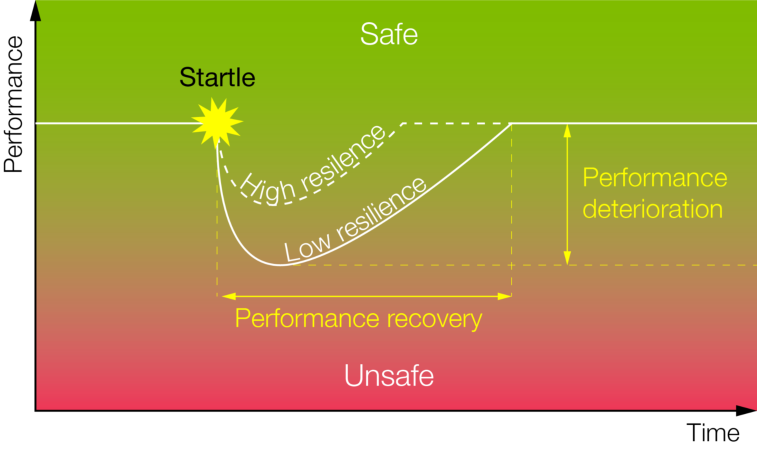
Section titled “One main cause: the startle effect”When a flight crew is exposed to unexpected disruptions, they may experience a physiological reaction, known as the startle effect. This involuntary and uncontrollable reaction may be accompanied by a momentary loss of situational awareness resulting in a temporary deterioration in performance. The goal of resilience training is to minimize this deterioration and to enable the flight crew to recover performance as quickly as possible (fig.2).
One main enemy: routine
Section titled “One main enemy: routine”Resilience is the ability to adapt to changing situations. Routine reduces this ability. Facing the same situations over again when training or during operations can create rigid patterns of actions. When rigid routines are established, it will require more effort from the flight crew to adapt to an unexpected situation.
Unexpected but not always abnormal
Section titled “Unexpected but not always abnormal”The “disruptions” mentioned in the EASA definition of resilience do not refer only to an abnormal situation associated with a failure or a critical event. A disruption can be any deviation from the expected plan. For example, when the flight crew is suddenly cleared direct to the FAP even though they expected to follow the entire STAR as usual. This disruption in operations requires resilience to some extent and for the flight crew to quickly adapt to the unexpected situation.
(fig.2) Chart showing how training to increase the level of flight crew resilience can support faster performance recovery following a “startle” event.
When rigid routines are established, it will require more effort from the flight crew to adapt to an unexpected situation.
The importance of resilience
Section titled “The importance of resilience”A flight crew will demonstrate resilience by the actions they perform to maintain sufficient safety margin following an unexpected or ‘startle’ event. How they apply their competencies to communicate, manage their workload, and make decisions, is illustrative of their level of resilience to these kinds of events and how they manage the threats and errors.
Resilience training for pilots throughout the process of pilot selection, education, training, and assessment has become an important element of flight safety.
EVOLUTION OF TRAINING TOWARD MORE RESILIENCE
Section titled “EVOLUTION OF TRAINING TOWARD MORE RESILIENCE”Task-Based vs. Competency-Based Training
Section titled “Task-Based vs. Competency-Based Training”Flight crew training was traditionally a task-based approach, which evolved into a competency-based approach. This places priority on training and assessment of a finite number of competencies over the training of tasks alone. Airbus decided to move from task-based training and checking to a competency-based training and assessment program in 2014 with the introduction of the A350 Type Rating.
Task-based training approach
Section titled “Task-based training approach”Traditional approaches to training development involve separating jobs into tasks. For each task there is an assigned learning objective with associated elements in a training plan and checks to ensure that all of the learning objectives are met.
A limitation of this approach is that each task must be taught and assessed. In complex systems, or when jobs evolve rapidly, it may not be possible to teach and assess every task. Some examples of the tasks to be performed in the recurrent training and checking programs today are listed below:
-
Takeoff with an engine failure
-
● Engine failure during the final approach segment
-
● Go around with one engine failed ● Landing with one engine failed ● Rejected takeoff
-
● 3D approach ● 2D approach ● System malfunctions in all ATA chapters ● Low visibility takeoff
-
● Low visibility approach ● Low visibility go around ● Low visibility landing
This task-based training approach is by nature only adapted to predictable scenarios. Flight crews have to apply this task-based approach, while developing their ability to also take into account the operational context.
Competency-based training approach
Section titled “Competency-based training approach”ICAO defines competency as, “ a dimension of human performance that is used to reliably predict successful performance on the job. A competency is manifested and observed through behaviours that mobilize the relevant knowledge, skills and attitudes to carry out activities or tasks under specified conditions. ” In other words, the competency of an individual to proficiently perform on the job is demonstrated through observable behaviors. The observation of these behaviors, which relies on relevant K nowledge, the right set of S kills, and the appropriate A ttitude or motivation ( KSA ), can be used to predict future performance.
In Competency Based Training and Assessment (CBTA), the training goal is not to train the flight crew to react to every specific situation, but to be prepared for an infinite number of situations by developing a finite number of competencies. The training and assessment of a finite number of competencies is prioritized over the training of tasks. This should enable pilots to successfully perform in a complex and changing operational environment. They should also be able to manage tasks and
In CBTA, the training goal is to be prepared for an infinite number of situations by developing a finite number of competencies.
situations that are unforeseen, and for which they have not been specifically trained. This builds strong resilience.
For instance, EASA defines nine competencies (also used by Airbus) for flight crew training:
-
Application of knowledge
-
● Application of procedures and compliance with regulations ● Communication ● Flight Path Management - Automation ● Flight Path Management - Manual control ● Leadership and Teamwork ● Problem Solving and Decision making ● Situation awareness and management of information ● Workload management
Observable behaviors are associated with each defined competency and are used for training and assessment purposes through a variety of scenarios. An assessment of competence is of course necessary in CBTA, but when completed, it provides the opportunity for pilots to learn most effectively when they are not under test conditions.
Task-Based Approach
Section titled “Task-Based Approach”Competency-Based Approach
Section titled “Competency-Based Approach”➔ Ever growing number of tasks to train
➔ Finite number of competencies to train
➔ Train only for predicted situations
➔ Train for unpredicted situations
-
➔ Isolated task training: difficulty to adapt
-
➔ Multi scenario-based training: strengthens ability to adapt
➔ More time spent on checking
➔ More time spent on training
➔ Generic training
➔ Individualized training
➔ Limited level of performance in complex and evolving environments
➔ Increased level of performance in complex and evolving environments
LOW RESILIENCE
Section titled “LOW RESILIENCE”HIGH RESILIENCE
Section titled “HIGH RESILIENCE”CBTA: Old concept, new application
Section titled “CBTA: Old concept, new application”The competency-based training approach has existed since the late 1950s. It has been progressively deployed in the aviation industry since the 2000s with the Multi-crew Pilot License (MPL) introduced in 2006, which was the first CBTA program for licensing training. The first CBTA program for recurrent training was introduced in 2013 with Evidence-Based Training (EBT).
In 2016, ICAO published Amendment 5 to ICAO Doc 9868 Procedures for Air Navigation Services - Training (PANS-TRG), which introduced general provisions for CBTA. The revision of ICAO Annex 1, published in 2020, recommends the use of CBTA as a principle of training in a wide range of other aviation disciplines such as Air Traffic Control, Aircraft Maintenance, and Flight Dispatch.
The latest PANS-TRG revision, published in 2020, further develops the CBTA training method as an important tool to ensure safe operations. It requires pilots to “demonstrate resilience when encountering an unexpected event”.
In the light of the COVID-19 pandemic and its impact on our industry, IATA published the “ Guidance for post-COVID Restart of Operations: CBTA Training Solutions” . The objective of this document is to provide guidance on training solutions to ensure a safe and efficient restart of operations after a long period of inactivity.
Additionally, Airbus introduced the Airbus Pilot Relaunch Program (APRP). The aim of the APRP is to enable flight crews of Airbus aircraft to do training to reinforce operational fundamentals after a long period without flying. The content of the training depends on the level of training requested by the Operator and on the flight crew competencies to be reinforced.
Example of CBTA: Evidence-Based Training (EBT)
Section titled “Example of CBTA: Evidence-Based Training (EBT)”IATA launched a qualitative initiative in 2007 to review the recurrent training system for flight crews, supported by ICAO and the International Federation of AirLine Pilots’ Associations (IFALPA). It was called the Training and Qualification Initiative (ITQI) and its goal was to continuously reduce the number of incidents and accidents. Previous to this, training was designed in the 1960s when only the second and third generation of commercial jet aircraft were flying, whereas air transport traffic today is mostly made up of third and fourth generation commercial jet aircraft. More information on the four generations of commercial jet aircraft is available on the Airbus accidents statistics website. This modernization of the fleet, and the increasing role of human factors, meant that reevaluating the training tools and methods was necessary.
This initiative relied on various data sources such as flight data analysis, air safety reports, Line Observation Safety Audits (LOSA), which includes flight observations, and more specifically threat and error management observations. It also relied on training criticality surveys, which addressed the effectiveness of training by highlighting the difference between the situations faced in line operations and in training. These sources, along with other data, were collected as evidence to evaluate the relevance of training depending on the generation of commercial jet aircraft the pilot is flying.
The result of this analysis is the ICAO Doc 9995 Manual of Evidence-Based Training (EBT) published in 2013. It focuses on a competency-based training approach, giving more emphasis to non-technical skills and Crew Resource Management (CRM) and depending on the generation of aircraft flown. More information on the EBT concept can be found in the “Learning From the Evidence” Safety first article, published in July 2014.
IATA published the Manual of EBT together with the EBT Implementation Guide , which already highlighted the importance of developing resilience training. IATA and ICAO were supported in their study with in-service data coming from aircraft manufacturers including Airbus and from Operators. This data formed the EBT Data Report, which allowed for a realistic evaluation of the relevance of the training.
BEST PRACTICES FOR TRAINING RESILIENCE
Section titled “BEST PRACTICES FOR TRAINING RESILIENCE”Helping flight crews to be aware of their own resilience
Section titled “Helping flight crews to be aware of their own resilience”The goal of CBTA is to be able to manage any situation, even situations that trainees have not been specifically trained for. Being aware of how well they perform in unpredictable situations can help the flight crew to develop their confidence and build their resilience. The instructor is there to support the trainees to develop this awareness. For example, the instructor can highlight how applying procedures and using checklists when appropriate is already one way to mitigate threats and errors. This maintains an acceptable level of safety and is an illustration of resilience. Similarly, another example of resilience is anticipating crosswind before descent and then reviewing the corresponding procedures to be better prepared for landing.
Recognizing and managing the startle effect
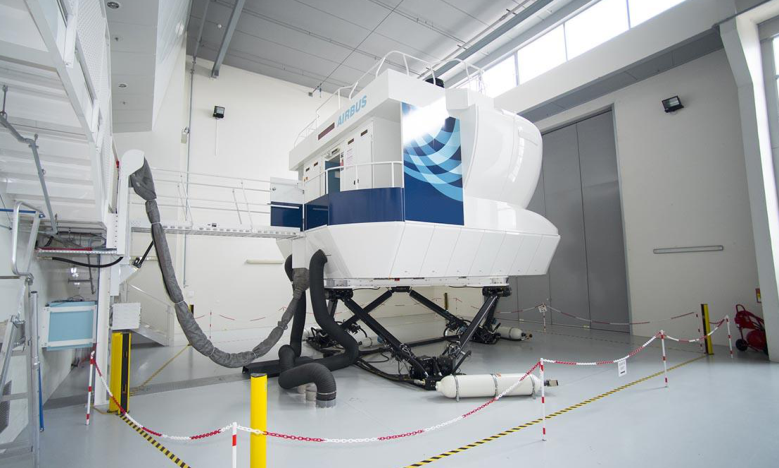
Section titled “Recognizing and managing the startle effect”The use of full-flight simulators is not always necessary for resilience training. An awareness session about the psychological and physiological effects of ‘startle’ can help pilots better understand the ‘startle effect’. They will be able to better recognize how they respond to unexpected disruptions in their daily routines and how they react to them. Knowing the physiological effects of ‘startle’ and controlling the initial response is an essential part of increasing a pilot’s own resilience and can prevent incorrect actions on the aircraft controls.
For more information about startle management, you can watch the video “The Two Sides of Fear” available on Airbus Worldwide Instructor News (WIN) website.
Exposing flight crews to different situations
Section titled “Exposing flight crews to different situations”Engine failure, autopilot disconnection in cruise, turbulence, and wake vortex encounters are some examples of situations that flight crews should be exposed to when training for resilience. Increasing the variety of situations will reduce the risk of a pilot forming behaviors that are too rigid due to the repetition of the same situations and affecting their ability to adapt to new ones. Behaviors that are too rigid or automatically applied are much more difficult to transfer to an unexpected situation. All Airbus Type Rating courses today offer multiple-choice scenarios, both operational and technical that the instructor can select. Multiple-choice scenarios provide the element of surprise to the flight crews and increase the variety of unexpected scenarios they can encounter. This allows for the design of better resilience training and assessment. Adapting training scenarios
The training scenarios should be well suited to the existing competencies of the flight crews. The instructor should adapt the training scenario based on the pilot’s previous assessment. It is recommended that the instructor end the training session in a positive manner with a situation that the pilot will be confident to manage with a successful outcome.
Importance of the debriefing
Section titled “Importance of the debriefing”Highlighting the positive Increasing resilience relies heavily on the principle of reinforcing confidence. Highlighting the positive outcomes during a debriefing session is essential to this. Instructors are still required to record notes of any observations during the training session, to give feedback, and to focus on them in future training sessions. However, to only focus on the errors or inadequacies of the pilot’s performance can A simple way have the unintended effect of decreasing their level of resilience. to ensure a Facilitation technique constructive A simple way to ensure a constructive debriefing session is to allow the trainees to debriefing debrief themselves and reflect on what they have done to reach a safe outcome. session is to The instructor may notice that they will not need to add many additional observations. They can, therefore, pay more attention to developing mitigation allow the trainees strategies together with the trainee to avoid any deficiencies in the future. This will to debrief help build the trainee’s confidence and increase their level of resilience. themselves CBTA is still relevant If the instructor considers that the facilitated debriefing is not sufficient to correct the root-cause of the problem, they should recommend further training. It is advisable to select a different exercise that requires the trainee to use the same competencies to manage the situation.
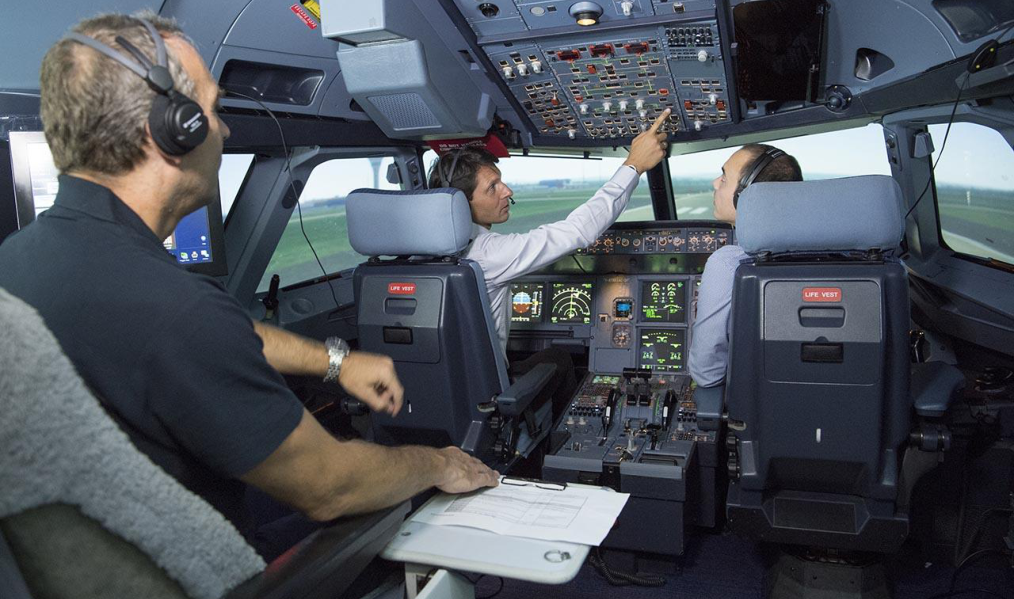
Debriefing after each flight is also an opportunity to increase the flight crew’s resilience by letting them reflect on how they react to threats and errors, and how they apply their competencies to keep sufficient margins of safety. The Flight Crew Techniques Manual (FCTM) is being updated to include a new part on how to conduct operational briefings. This new part is already available for A350 aircraft, and it will be available for A320/A330/A340/A380 aircraft at the end of 2021 and for A300-600/A310 aircraft in 2022. Debriefing is a powerful tool for long-term safety management.
Contributors:
Section titled “Contributors:”Florence BURRATTO Expert in Human Factors for Flight Operations - Customer Support
Capt. Robert GRAEF Head of Pedagogy and Flight Operations Standards - Customer Support
With thanks to Capt. Craig Hildebrandt from Product Safety, Thomas Gobeaut from A300/A310 Flight Operations Support, Eric Denoux from Flight Training, Capt. Christian Norden, and Claire Pellegrin.
The term “resilience” has become widely used in recent years. It is now used in every field of activity, not only in aviation. Resilience describes a flight crew’s ability to recognize, absorb, and adapt to disruptions according to EASA’s definition of resilience.
Resilience relies on two pillars: competence and confidence. It is the combination of a flight crew’s confidence to manage unexpected situations and how they apply their competencies in such situations that reflects their level of resilience. The goal of resilience training is to enable the flight crew to recover performance as quickly as possible after they experience the ‘startle effect’ caused by an unexpected situation.
The preferred training methodology to strengthen a pilot’s level of resilience is the CBTA approach. Instead of following the traditional task-based approach, which requires checking a continuously growing list of tasks, CBTA focuses on a limited number of competencies applied to a variety of situations. The objective of CBTA is to train pilots to manage any unforeseen situation during flight, and therefore, to develop their resilience when faced with any unexpected events.
EBT is a CBTA program that focuses on recurrent training for pilots. It was developed in 2014 by ICAO to increase the level of flight safety through resilience training for pilots, and it has since been adopted by Airbus for all type ratings.
The instructor has a key role to play in supporting pilots to strengthen their level of resilience during training sessions. In addition to developing and assessing each trainee’s competencies, the instructor needs to be mindful to reinforce the pilot’s confidence. This is a key component for increasing resilience. Exposing flight crews to a variety of situations, adapting training scenarios to their current level of performance, debriefing using the facilitation technique, or ending the training session on a positive outcome, are just some of the recommendations instructors should follow to increase the level of resilience in their trainees.
Targeting a high level of resilience for pilots, but also for cabin crews, air traffic controllers, maintenance personnel and all actors of the air transport system is crucial to ensure an even higher level of safety especially when facing unpredictable or unexpected situations.
Safety first, 2021. Safety first is published by Airbus S.A.S. 1, rond point Maurice Bellonte - 31707 Blagnac Cedex/France.
Editor: Yannick Malinge, Chief Product Safety Officer.
Editorial team: Guillaume Estragnat, Vanessa Sadi, Gwyneth Duggan, Tim Roach.
- Reference: X00D16031905.
Photos by Airbus.
来源:Airbus Safety First 网址:https://safetyfirst.airbus.com/training-pilots-for-resilience/ 发布日期:2021-10-22 类别:飞行运营、循证训练与基于能力的训练(CBTA)、循证训练(EBT)、证据 PDF:原始 PDF
韧性并不是航空业中的全新概念。它是多年前在强制性机组资源管理(CRM)培训中引入的一个概念。韧性建立在飞行员自信和能力的基础之上。但如果他们已经数周或数月没有飞行了呢?
随着因 COVID-19 危机而导致的大规模机队停飞后许多飞机恢复运营,我们的行业现在正好可以借此机会强调韧性训练的重要性。
本文也可在 safetyfirst.airbus.com 和适用于 iOS 和 Android 设备的安全第一(Safety First)应用程序上获取。
当一架 A300 货机左翼被地对空导弹击中时,三套液压系统全部失效。担任 PF 的机长立即意识到,发动机控制是安全着陆的唯一手段。他通过施加对称推力来调整俯仰和速度,通过非对称推力来调整横滚角。这是基于几年前发生的一次类似事件的记忆,当时机组人员主动利用差动推力来管理所有液压系统失效的情况。起落架通过重力放下,机组人员最终成功着陆,未造成任何人员伤亡。这充分展示了机组人员在极端情况下的韧性。
此类事件可能被认为是一种极端的惊吓事件,大多数机组人员在其飞行生涯中可能永远不会遇到。有些人可能认为,韧性训练仅对这种罕见情况有用。事实上,韧性在任何意外情况发生时都很有用。意外情况不一定是像上述 A300 那样的极端案例。对机组人员进行韧性训练将帮助他们克服惊吓效应和暂时性的情景意识丧失,以可控的方式做出反应,并继续安全飞行。
什么是韧性?
Section titled “什么是韧性?”近年来,“韧性”一词已被广泛使用,不仅限于航空领域。韧性用于描述和评估人员在面临运营中的意外干扰时的人类绩效。EASA 将机组人员韧性定义为”机组人员识别、吸收和适应干扰的能力”。
两个关键要素:能力和信心
Section titled “两个关键要素:能力和信心”IATA 飞行员培训工作组(PTTF)将韧性的这一定义细化为两个关键要素:“机组人员韧性可通过提高能力水平和实现适当的信心(信任)水平来支撑”(图 1)。换言之,为了建立韧性,机组人员需要发展其能力和信心。
(图 1) 韧性的两大支柱:能力和信心
为了建立韧性,机组人员需要发展其能力和信心
一个主要原因:惊吓效应
Section titled “一个主要原因:惊吓效应”当机组人员面临意外的干扰时,他们可能会经历一种生理反应,称为惊吓效应。这种非自愿且无法控制的反应可能伴随着情景意识的暂时丧失,导致绩效暂时下降。韧性训练的目标是最大限度地减少这种绩效下降,并使机组人员能够尽快恢复绩效**(图 2)**。
一个主要敌人:惯性
Section titled “一个主要敌人:惯性”韧性是适应变化情况的能力。惯性会降低这种能力。在培训或运营中反复面对相同的情况会产生僵化的行为模式。当僵化的惯性形成后,机组人员适应意外情况将需要付出更多努力。
意外但不总是异常
Section titled “意外但不总是异常”EASA 韧性定义中提到的”干扰”不仅指与故障或关键事件相关的异常情况。干扰可以是与预期计划的任何偏差。例如,当机组人员本应按预期遵循整个 STAR,却突然被许可直飞 FAP 时。这种运营中的干扰需要在一定程度上依赖韧性,并要求机组人员迅速适应意外情况。
(图 2) 图表展示了通过培训提高机组人员韧性水平如何能够在”惊吓”事件后支持更快的绩效恢复。
当僵化的惯性形成后,机组人员适应意外情况将需要付出更多努力。
韧性的重要性
Section titled “韧性的重要性”机组人员将通过在意外或”惊吓”事件发生后采取行动来维持足够的安全裕度,从而展示韧性。他们如何运用自身能力进行沟通、管理工作负荷和做出决策,体现了他们应对此类事件的韧性水平,以及他们如何管理威胁和错误。
在整个飞行员选拔、教育、培训和评估过程中对飞行员进行韧性培训已成为飞行安全的重要组成部分。
培训向更强韧性的演进
Section titled “培训向更强韧性的演进”基于任务培训与基于胜任力培训
Section titled “基于任务培训与基于胜任力培训”飞行机组培训传统上采用基于任务的方法,后来逐步演变为基于胜任力的方法。这种方法将有限数量的胜任力培训与评估置于优先地位,而非仅仅进行任务培训。空客在2014年随A350机型等级引入之际,决定从基于任务的培训与检查转向基于胜任力的培训与评估项目。
基于任务的培训方法
Section titled “基于任务的培训方法”传统的培训开发方法是将工作分解为任务。每个任务都设有相应的学习目标,并在培训计划中分配相关要素,同时通过检查确保所有学习目标均已达成。
这种方法存在一个局限性:每个任务都必须被教授和评估。在复杂系统中,或当工作快速演变时,可能无法对每个任务都进行培训和评估。当前定期培训和检查项目中需要执行的任务示例如下:
- 单发失效起飞
- 最后进近阶段发动机失效
- 单发失效复飞
- 单发失效着陆
- 中断起飞
- 三维进近
- 二维进近
- 所有ATA章节的系统故障
- 低能见起飞
- 低能见进近
- 低能见复飞
- 低能见着陆
这种基于任务的培训方法本质上只适用于可预见的情景。飞行机组必须在应用这种基于任务方法的同时,培养将运营环境纳入考量的能力。
基于胜任力的培训方法
Section titled “基于胜任力的培训方法”国际民航组织(ICAO)对胜任力的定义是:“用于可靠预测工作实际表现的人类绩效维度。胜任力通过行为表现和观察来展现,调动相关知识、技能和态度以在特定条件下执行活动或任务。”换言之,个人在工作中熟练表现的胜任力通过可观察的行为来证明。对这些行为的观察依赖于相关Knowledge(知识)、正确的Skills(技能)以及适当的Attitude(态度)或动机(KSA),可用于预测未来表现。
在基于胜任力的培训与评估(CBTA)中,培训目标不是让飞行机组对每一种具体情况做出反应,而是通过培养有限数量的胜任力来应对无限多样的情况。有限数量胜任力的培训与评估优先于任务培训。这应能使飞行员在复杂多变的运营环境中成功执行任务,还能使他们有能力管理任务和意外情况——对于这些情况他们并未接受过专门培训。这将建立起强大的韧性。
例如,欧洲航空安全局(EASA)定义了飞行机组培训的九项胜任力(空客同样采用):
- 知识运用
- 程序应用与规章合规
- 通讯
- 飞行轨迹管理——自动化
- 飞行轨迹管理——人工控制
- 领导力与团队协作
- 问题解决与决策制定
- 情景意识与信息管理
- 工作负荷管理
每项已定义的胜任力都有关联的可观察行为,并通过各种场景用于培训和评估目的。胜任力评估在CBTA中当然是必要的,但完成评估后,它为飞行员提供了在非测试条件下最有效学习的机会。
任务导向培训方法
Section titled “任务导向培训方法”能力胜任导向培训方法
Section titled “能力胜任导向培训方法”➔ 需要培训的任務数量日益增长
➔ 需要培训的能力数量有限
➔ 仅针对可预见的情况进行培训
➔ 针对不可预见的情况进行培训
-
➔ 孤立式任务培训:难以适应
-
➔ 基于多场景的培训:增强适应能力
➔ 更多时间用于考核
➔ 更多时间用于培训
➔ 通用性培训
➔ 个性化培训
➔ 在复杂多变环境中的绩效水平有限
➔ 在复杂多变环境中的绩效水平提升
CBTA:旧理念,新应用
Section titled “CBTA:旧理念,新应用”能力胜任导向培训(CBTA)方法自1950年代末就已存在。自2000年代起,该方法逐步在航空业推广应用。2006年推出的多人制飞行员执照(MPL)是首个用于执照培训的能力胜任导向培训项目。2013年推出的基于证据的培训(EBT)是首个用于复训的能力胜任导向培训项目。
2016年,国际民航组织(ICAO)发布了《空中航行服务培训程序》(PANS-TRG)第5号修正案,其中引入了能力胜任导向培训的一般性规定。2020年发布的《ICAO附件1》修订版,建议在空管、飞机维修、飞行签派等其他航空专业领域广泛采用能力胜任导向培训作为培训原则。
2020年发布的最新PANS-TRG修订版,进一步发展了能力胜任导向培训方法,将其作为确保安全运营的重要工具。该修订版要求飞行员“遇到意外事件时展现出韧性”。
鉴于新冠疫情及其对行业的影响,国际航空运输协会(IATA)发布了《新冠疫情后运营重启指南:能力胜任导向培训解决方案》。该文件的目的是提供培训解决方案指导,以确保在长时间停飞后安全、高效地恢复运营。
此外,空客推出了空客飞行员重启计划(APRP)。该计划的目的是使空客飞机飞行员能够在长时间无飞行后进行培训,以强化操作基础。培训内容取决于运营商要求的培训级别以及需要强化的飞行员能力。
能力胜任导向培训示例:基于证据的培训(EBT)
Section titled “能力胜任导向培训示例:基于证据的培训(EBT)”2007年,国际航空运输协会(IATA)在国际民航组织(ICAO)和国际航空飞行员协会联合会(IFALPA)的支持下,发起了一项定性倡议,对飞行机组复训系统进行审查。该倡议被称为培训与资格倡议(ITQI),目标是持续减少事故和事故征候数量。在此之前,培训体系设计于1960年代,当时仅有第二代和第三代商用喷气式飞机在运行,而如今航空运输的主要机型已是第三代和第四代商用喷气式飞机。有关商用喷气式飞机四代划分的更多信息,请访问空客事故统计数据网站。机队的现代化以及人为因素作用的日益增强,使得重新评估培训工具和方法成为必要。
该倡议依托多种数据来源,包括飞行数据分析、航空安全报告、航线观察安全审计(LOSA)——包括飞行观察,特别是威胁与差错管理观察。该倡议还依托培训关键性调查,该调查通过对比航线运营中遇到的情况与培训中的情况,评估培训的有效性。这些来源以及其他数据被收集为证据,用于评估培训与飞行员所飞机型的相关性。
该分析的成果是2013年发布的《ICAO Doc 9995 基于证据的培训手册》(EBT)。该手册采用能力胜任导向培训方法,更加注重非技术技能和机组资源管理(CRM),并根据所飞机型代别进行调整。有关EBT概念的更多信息,请参阅2014年7月发布的《从证据中学习》安全优先文章。
国际航空运输协会(IATA)发布了《EBT手册》以及《EBT实施指南》,后者已强调开展韧性培训的重要性。国际航空运输协会(IATA)和国际民航组织(ICAO)在研究中得到了来自包括空客在内的飞机制造商以及运营商的在役数据支持。这些数据形成了《EBT数据报告》,为评估培训相关性提供了现实依据。
韧性训练的最佳实践
Section titled “韧性训练的最佳实践”帮助机组人员认识自身韧性
Section titled “帮助机组人员认识自身韧性”CBTA 的目标是能够应对任何情况,甚至是学员未曾专门训练过的情况。让机组人员了解自己在不可预测情况下的表现,有助于他们建立信心并增强韧性。教员的作用是支持学员培养这种意识。例如,教员可以强调,在适当时候应用程序和使用检查单本身就是一种缓解威胁和差错的方法。这可以维持可接受的安全水平,也是韧性的体现。同样,韧性的另一个例子是在下降前预判侧风,然后复习相应的程序,以便更好地准备着陆。
认识和管理惊吓效应
Section titled “认识和管理惊吓效应”全动飞行模拟机并非韧性训练的必需品。关于“惊吓”的心理和生理效应认知课程可以帮助飞行员更好地理解“惊吓效应”。他们将能够更好地认识自己对日常工作中意外干扰的反应方式以及如何应对这些干扰。了解“惊吓”的生理效应并控制初始反应是提高飞行员自身韧性的重要组成部分,可以防止在飞机控制上做出错误动作。
有关惊吓管理的更多信息,您可以观看视频“The Two Sides of Fear”,该视频可在空客全球教员新闻(WIN)网站上获取。
让机组人员接触不同情境
Section titled “让机组人员接触不同情境”发动机失效、巡航中自动驾驶仪断开、颠簸和尾涡遭遇是机组人员在韧性训练中应接触的情境示例。增加情境的多样性将降低飞行员因重复相同情境而形成过于僵化行为的风险,并影响其适应新情境的能力。过于僵化或自动应用的行为更难转移到意外情况中。所有空客机型等级课程现都提供多种选择场景,包括运营和技术方面,教员可以选择。多种选择场景为机组人员提供了意外元素,增加了他们可能遇到的意外情境的多样性。这使得设计和实施更好的韧性训练与评估成为可能。调整训练场景
训练场景应与机组人员的现有能力相适应。教员应根据飞行员此前的评估调整训练场景。建议教员以积极的方式结束训练课程,让飞行员能够以成功的结局自信地处理相应情况。
讲评的重要性
Section titled “讲评的重要性”突出积极方面增强韧性在很大程度上依赖于强化信心原则。在讲评环节中突出积极成果对增强韧性至关重要。教员仍需记录培训期间的所有观察记录,给予反馈,并在未来的培训课程中重点关注。然而,仅关注飞行员表现中的错误或不足可能会产生降低其韧性水平的意外效果。确保建设性讲评的一种简单方法讲评的一种简单方法是允许学员进行自我讲评,反思他们为达到安全结局所采取的措施。教员可能会注意到他们不需要添加太多额外的观察。因此,他们可以将更多注意力放在与学员共同制定缓解策略上,以避免未来的任何不足。这将有助于建立学员的信心并提高其韧性水平。CBTA 仍然适用如果教员认为促进式讲评不足以纠正问题的根本原因,他们应建议进行进一步培训。建议选择需要学员使用相同能力来管理情况的不同练习。
每次飞行后的讲评也是通过让机组人员反思他们如何应对威胁和差错,以及如何应用其能力来保持足够安全裕度来增强其韧性的机会。飞行机组技术手册(FCTM)正在更新,将纳入关于如何进行运营简令的新部分。该部分已在 A350 飞机上可用,A320/A330/A340/A380 飞机将于 2021 年底可用,A300-600/A310 飞机将于 2022 年可用。讲评是长期安全管理的有力工具。
Florence BURRATTO 飞行操作人为因素专家 - 客户支持部
Capt. Robert GRAEF 教学法与飞行操作标准主管 - 客户支持部
同时感谢产品安全部的 Capt. Craig Hildebrandt、A300/A310 飞行操作支持部的 Thomas Gobeaut、飞行培训部的 Eric Denoux、Capt. Christian Norden 以及 Claire Pellegrin。
“适应能力(resilience)”一词近年来已被广泛使用。如今它不仅在航空领域使用,还应用于各行各业。根据 EASA 对适应能力的定义,它描述了飞行机组识别、吸收和适应各种干扰的能力。
适应能力建立在两大支柱之上:能力和信心。飞行机组管理意外情况的能力与他们在这些情况下运用自身能力的结合,反映了他们的适应能力水平。适应能力培训的目标是使飞行机组在遭遇意外情况引起的惊吓效应后,能够尽快恢复性能表现。
加强飞行员适应能力水平的首选培训方法论是 CBTA 方法。与需要检查不断增长的清单的传统任务型培训方法不同,CBTA 专注于有限数量的能力,并将其应用于各种场景。CBTA 的目标是培训飞行员管理飞行中任何不可预见的情况,从而在面对任何意外事件时发展他们的适应能力。
EBT 是一项专注于飞行员复训的 CBTA 计划。它于 2014 年由 ICAO 开发,旨在通过飞行员的适应能力培训提高飞行安全水平,此后空客已将其应用于所有机型等级。
教员在培训期间支持飞行员加强其适应能力水平方面发挥着关键作用。除了发展和评估每位学员的能力外,教员还需要注意增强飞行员的信心。这是提高适应能力的关键组成部分。让飞行机组接触各种场景、根据其当前绩效水平调整培训场景、使用引导技术进行讲评、或以积极成果结束培训课程,只是教员应遵循的一些建议,以增强其学员的适应能力水平。
为飞行员、客舱乘务组、空中交通管制员、维修人员以及航空运输系统的所有参与者设定高水平的适应能力目标,对于确保更高的安全水平至关重要,尤其是在面对不可预测或意外情况时。
Safety first,2021年。Safety first 由空中客车 S.A.S.出版。地址:1, rond point Maurice Bellonte - 31707 Blagnac Cedex/法国。
编辑:Yannick Malinge,产品安全首席官。
编辑团队:Guillaume Estragnat、Vanessa Sadi、Gwyneth Duggan、Tim Roach。
20192534。参考编号:X00D16031905。
照片由空客提供。