Prevention of Unstable Approaches
Source: Airbus Safety First URL: https://safetyfirst.airbus.com/prevention-of-unstable-approaches/ Published: 2020-10-22 Category: Flight Ops, go around, overrun, runway overrun, speed PDF: Original PDF

Unstable approach has been a problem since the very beginning of commercial aviation. Even so, it is still one the most common contributing factors to many of the incidents and accidents that occur on landing today.
Regardless of the changes or cycles our industry faces, this article is a timeless reminder for the importance of efficient preparation for approach including anticipation of late and the need for between crews changes, cooperation flight and air traffic controllers. The article also provides tips detect a potential unstable approach in advance so that it can be corrected long before the stabilization height. Respecting stabilized criteria is also as well as approach highlighted being go-around minded in the case of late destabilization.
This article is also available on safetyfirst.airbus.com and on the Safety first app for iOS and Android devices.
MANAGING CHANGES IN AVIATION
Section titled “MANAGING CHANGES IN AVIATION”New challenges
Section titled “New challenges”A global pandemic, such as COVID-19, has several ramifications for the aviation industry. This includes the challenge for pilots to maintain recency in the face of an unprecedented drop in air traffic. Ongoing concerns about the effects of the pandemic can also be distracting for flight crews. It is an important reminder for crews to remain focused on their tasks throughout the flight. Especially during very dynamic and variable phases such as arrival, approach, and landing.
Modified ATC guidance
Section titled “Modified ATC guidance”In a congested airspace, ATC sequences the large number of aircraft arriving at their destination airport by providing speed and trajectory guidance. However, ATC may not transmit this guidance when the traffic is low. Flight crews should therefore avoid the trap of expecting ATC to provide this guidance in usually congested airspaces, and always be aware of the need to monitor and control their energy.
Shortened approach trajectories
Section titled “Shortened approach trajectories”When an airspace is less congested in situations like the COVID-19 pandemic, ATC can clear flight crews on more direct routings. The flight crew must then quickly adapt their strategy to efficiently manage the aircraft energy due to the shortened approach trajectories.
In all cases, the flight crew must take advantage of the various tools and techniques available to efficiently manage and monitor their energy.
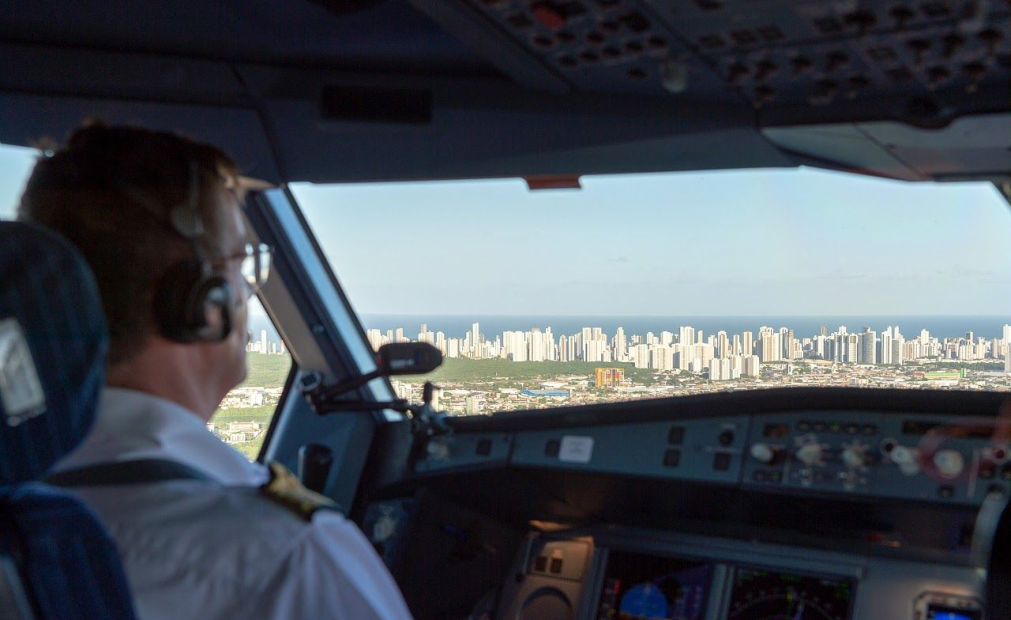
PREPARATION FOR A STABILIZED APPROACH
Section titled “PREPARATION FOR A STABILIZED APPROACH”Energy Management
Section titled “Energy Management”Good aircraft energy management from the top of descent is a prerequisite for a stabilized approach. Aircraft energy management is a combination of tools, anticipation, and a flexible flight crew action plan.
Use of the Flight Management System
Section titled “Use of the Flight Management System”The use of the FMS during descent, approach, and landing provides efficient assistance to the flight crew to manage the energy of the aircraft and reach the final approach at the correct speed. The “ Procedures - Normal Procedures Standard Operating Procedures - Descent ” from the FCTM provides details on how the FMS computes the descent profile and how the use of the managed guidance modes enables the aircraft to stay near this ideal profile during descent. This is also described in the “Control your speed during descent, approach and landing” Safety first article published in July 2017.
Anticipation of late changes
Section titled “Anticipation of late changes”In areas that use specifically constructed arrivals and approaches that enable sequencing of high volumes of traffic in congested environments, the anticipation of a late “direct to” request from ATC, if traffic is low, can help to reduce the crew workload and stress. The flight crew should review the planned approach trajectory and be prepared for the “worst case” scenario of a “direct to” that would significantly reduce the track miles to the runway.
|---| |Approach Briefing| |During the approach briefing, management of late changes due to ATC requests| |should be anticipated and discussed, ensuring the strategy and task sharing are| |Management (TEM) considerations.| |controllers| |Cooperation between flight crews and ATC is essential to prevent situations that| |may lead to an unstable approach. The Air Traffic Controller should inform the| |flight crew if a shorter route is expected as soon as possible . This would enable| |the flight crew to anticipate and adapt their strategy accordingly and avoid high| |workload in the last phases of the approach.| |Flight crews should alert ATC when they are unable to comply with any request| |and should ask for additional track miles to manage the aircraft’s energy if| |necessary.| |Selecting the appropriate approach speed technique| |The **decelerated approach **is the standard technique for approach using xLS| |(ILS, MLS, GLS or FLS) or FINAL APP guidance.|
However, Airbus recommends that the flight crews use an early stabilized approach technique when:
-
a selected guidance is used (TRK/FPA or LOC/FPA)
-
the final approach path is at a high glide path angle
-
the intermediate approach segment is at a lower altitude than usual, and as a result, the Final Descent Point (FDP) is at a shorter distance from the runway
The flight crew should enter Vapp as a speed constraint at the FDP, enabling the FMS to calculate the adjusted vertical descent profile (not applicable to A220 aircraft).
The “Control your speed during descent, approach and landing” Safety first article, published in July 2017, illustrates the two approach speed techniques.
EARLY DETECTION OF AN UNSTABLE APPROACH
Section titled “EARLY DETECTION OF AN UNSTABLE APPROACH”In many cases, a potential unstable approach can be detected long before the stabilization height. The flight crew should take advantage of the tools and techniques available for early detection of an unstable approach. This will enable them to take the time to recover the situation using trajectory modification cooperation with ATC. This will avoid the need for last-minute corrections by the flight crew or a discontinued approach.
Situational awareness
Section titled “Situational awareness”Use of the FMS V/DEV indication during descent
Section titled “Use of the FMS V/DEV indication during descent”The use of the FMS V/DEV indication available on the FMS PROG page (A320/A330/A340), PERF DES page (A380/A350), or FMS DES page (A220) and its indication on the PFD altitude scale (fig.1) and VSD (A220) provides the flight crew with an indication of the aircraft position compared with the FMS descent profile.
This indication is also useful when radar vectored and flying near the FMS route.
Sequencing of the FMS Flight Plan
Section titled “Sequencing of the FMS Flight Plan”The flight crew needs to sequence the FMS flight plan if it is not done automatically when in selected lateral modes during radar vectors. It enables the FMS to compute an updated descent and approach trajectory and therefore to still provide a useful reference to the crew. In addition, it allows the flight crew to switch back to managed guidance mode when cleared from ATC constraints. More information on the Flight Plan sequencing is available in “ Procedures Normal Procedures - Standard Operating Procedures - Approach - Configuration Management - Initial approach” in the FCTM .
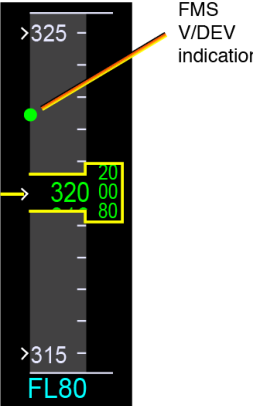
(fig.1) Example of a V/DEV indication on the PFD altitude scale of an A320
Use of the energy circle (A320/A330/A340/A350/A380)
Section titled “Use of the energy circle (A320/A330/A340/A350/A380)”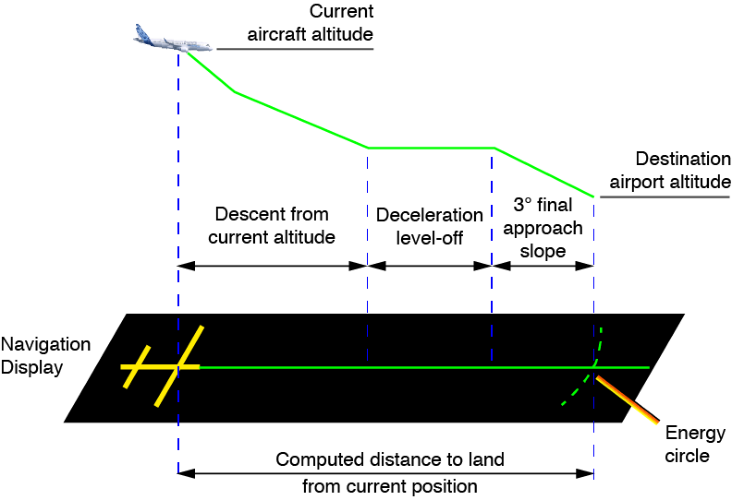
The ND will display the energy circle when the aircraft is in HDG or TRK lateral guidance modes and within 180 NM of its destination. It provides a visual cue of the minimum required distance to land, i.e. the distance required to descend in a straight line from the current aircraft position at its current speed down to the altitude of the destination airport at approach speed. The descent profile used to compute the distance takes into account speed limits, the wind, a deceleration level-off segment and a 3° final approach segment (fig.2). If the airport is inside the energy circle, the flight crew should take action to adjust the situation using speed or rate of descent adjustments or speedbrakes as necessary or by requesting additional track miles from ATC.
The flight crew needs to keep in mind the computation logics of the energy circle to better take advantage of the indications displayed on the ND.
Use of the bearing/distance field in the PROG page
Section titled “Use of the bearing/distance field in the PROG page”The flight crew should consider inserting the landing threshold in the BRG/DIST field of the FMS PROG page. This will provide the direct distance to the landing threshold, and therefore, a very conservative estimation of the shortest possible distance to land. To do a quick mental estimation of the vertical position vs. distance, the flight crew can use the formula DELTA FL = DIST (nm) * 3 DEG.
Continuous Descent Approach (CDA) function (A320/A330/A350)
Section titled “Continuous Descent Approach (CDA) function (A320/A330/A350)”The CDA function is standard on all A350 aircraft and is an option on A320 and A330 aircraft equipped with Release 2 FMS standard. The CDA function computes a continuous descent profile that ensures the aircraft is configured for landing and is at VAPP, at 1 000 ft AAL. The CDA function displays pseudo waypoints on the ND (fig.3) indicating to the flight crew the latest position to extend the slats and flaps in order to follow the vertical profile of the approach.
(fig.2) Computation principle of the energy circle
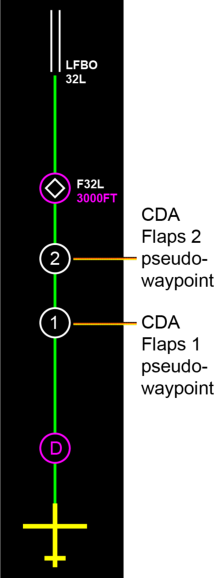
(fig.3) CDA pseudo waypoints on the Navigation Display
Cross-crew Communication
Section titled “Cross-crew Communication”Efficient crew communication is essential during the entire flight, especially during the whole dynamic approach phase that can include several changes speed and aircraft configuration in addition to the navigation and the guidance toward the final segment. Flight crewmembers should express any concern they may have about a parameter they are not comfortable with, even before reaching the stabilization height. Such an exchange can bring the attention of the other flight crewmember to a parameter that may not have been noticed. This communication between the crewmembers will also prepare them for a potential discontinued approach or go-around and will prevent a rushed go-around maneuver at the last minute.
BE PREPARED TO INTERRUPT THE APPROACH AT ANY TIME
Section titled “BE PREPARED TO INTERRUPT THE APPROACH AT ANY TIME”The flight crew should be prepared to discontinue the approach or go-around any time, if it is not possible to reach or maintain a stabilized flight path.
Discontinued approach versus go-around
Section titled “Discontinued approach versus go-around”If the flight crew needs to interrupt the approach at or above the FCU altitude, then the “Discontinued approach” procedure should be considered. If the flight crew interrupts the approach below the FCU altitude, then the go-around procedure should be applied. For more information, refer to the “Flying Go-around, Managing Energy “ Safety first article published in January 2014.
Soft go-around
Section titled “Soft go-around”To limit the aircraft acceleration during go-around, especially when the aircraft light, the soft go-around can be used on aircraft equipped with the soft go-around function. Refer to the “Introduction to the Soft Go-around Function” Safety first article published in January 2017 for more information.
THE STABILIZATION GATE
Section titled “THE STABILIZATION GATE”Rigorous respect of a stabilization gate provides a good basis for the accomplishment of a subsequent safe landing: a stabilized aircraft at the stabilization height enables the pilot flying to be prepared for a safe and efficient landing flare.
Operators should define and provide their flight crew with a clear definition their stabilization criteria and stabilization height based on the FCOM guidance, their local regulations and experience.
Operators should encourage their flight crews to strictly respect the stabilization gate and to perform a go-around if they cannot achieve the criteria or if they do not feel comfortable with the stabilization of their aircraft. A non-punitive policy regarding go-arounds combined with adequate go-around training using various
scenarios will increase flight crew confidence in their handling of the maneuver and will improve their go-around decision making.
Stabilization criteria from the FCOM (fig.4) illustrated below provides guidance to help Operators define their own stabilization policy. If one of the conditions is not satisfied, the flight crew should initiate a go-around, unless they estimate that only small corrections are required to recover stabilized approach conditions.
(fig.4) FCOM stabilization criteria for an A320 aircraft
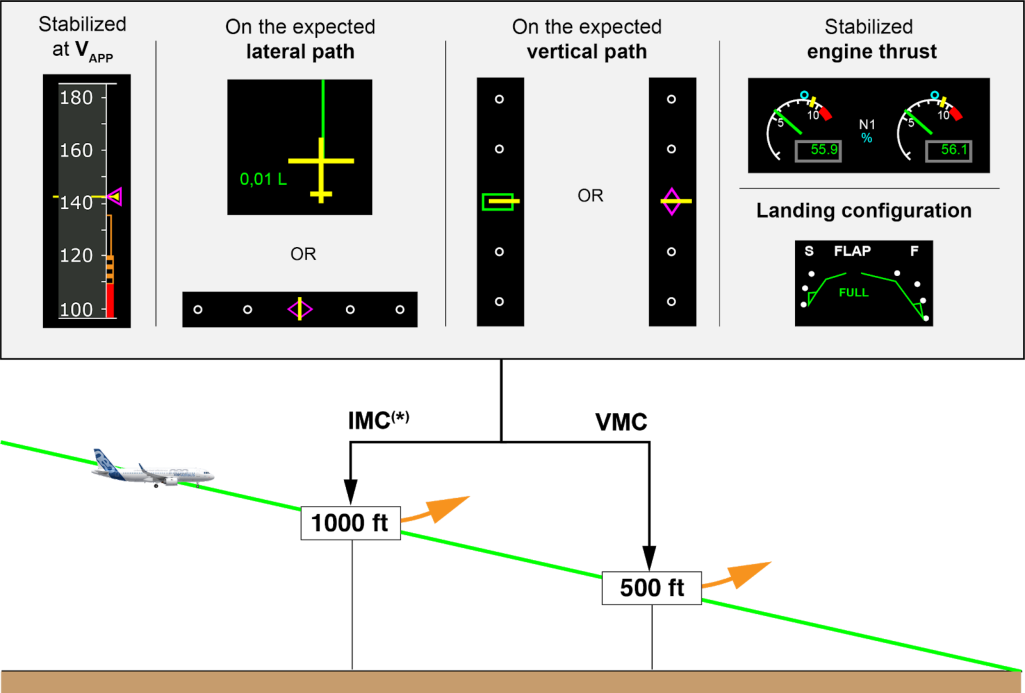
(*) In IMC, a later speed and thrust stabilization can be acceptable provided that:
-
It is allowed by Operator policies and regulations
-
The aircraft is decelerating toward the target approach speed
-
The flight crew stabilizes speed and thrust as soon as possible and no later than 500 ft AAL.
-
The flight crew does not detect any excessive flight parameter deviation.
LATE AIRCRAFT DESTABILIZATION
Section titled “LATE AIRCRAFT DESTABILIZATION”Being stabilized at a gate is not sufficient to ensure a safe and efficient landing. The flight crew must keep the flight parameters stable and within the limits until the landing.
However, some external conditions such as wind gradients may lead to late destabilization.
Close monitoring of the flight parameters
Section titled “Close monitoring of the flight parameters”The nearer the aircraft gets to the ground, the greater the importance of efficient monitoring of the flight parameters is.
The PM must make a callout if any flight parameter deviates above the defined thresholds. The PF must then either correct the deviating parameter, if possible, or initiate a go-around if the correction cannot be made in a timely manner.
Refer to the FCOM “ Procedures - Normal Procedures - Standard callouts - Flight parameters ” for information about the callouts to be used during approach and the thresholds for flight parameters deviations.
The “A focus on the Landing Flare” Safety first article, published in September 2020, provides an example of a late destabilization in final approach and the associated recommendations for go-around near the ground.
Contributors:
Section titled “Contributors:”Dirk DE-WINTER Flight Ops & Training Pilot Expert Customer Support
Craig HILDEBRANDT Senior Director Safety & Flight Operations Technical Affairs Airbus America
Vincent SIBELLE Flight Ops & Training Pilot Expert Customer Support
With thanks to Marc LE-LOUER from the A300/A310 Flight Operations Support and Andris LITAVNIKS from Airbus Canada.
Every pilot is already aware of the potential safety consequences of an unstable approach condition. Knowing that an unstable approach is still contributing factor to many accidents or incidents during approach and landing, it is why repeating and sharing the lessons learned can ensure the flight crew is well prepared to ensure a safe landing.
Flight crews should anticipate scenarios that can happen during descent and approach during their approach briefing, such as late changes requested by ATC. The aircraft’s energy can then be efficiently managed by using the available tools and techniques provided in Airbus documentation. This will also enable the flight crew to identify any possibility of an unstable approach as soon as possible, allowing for early intervention to either recover the situation or to interrupt the approach. Anticipating late change in the action plan for the approach and landing phases is part of the Threat and Error Management (TEM) considerations.
Cooperation with ATC is essential to ensure that the flight crew are informed of any expected shortened trajectory in advance, so they can adapt their strategy accordingly. Flight crews should alert ATC when they are not able to comply with a request, and if necessary, ask for additional track miles to manage the aircraft’s energy.
Operators should promote strict adherence to stabilization criteria with flight crews and to consider the stabilization height as a hard decision gate that should not be passed if any of the stabilization criteria is not met. non-punitive policy regarding go-around should apply together with appropriate training for go-around in various situations. This will increase the confidence and competencies of the flight crews to discontinue the approach or perform a safe go-around at the appropriate time in the case -or with the risk- of an unstable approach.
Safety first , 2020. Safety first is published by Airbus S.A.S. 1, rond point Maurice Bellonte - 31707 Blagnac Cedex/France.
Publisher and Editor: Yannick Malinge, Chief Product Safety Officer.
Editorial team: Guillaume Estragnat, Gwyneth Duggan, Timothy Roach, Vanessa Sadi.
Source: Airbus Safety First URL: https://safetyfirst.airbus.com/prevention-of-unstable-approaches/ Published: 2020-10-22 Category: Flight Ops, go around, overrun, runway overrun, speed PDF: Original PDF
不稳定进近自商业航空诞生之初就一直是问题所在。尽管如此,它至今仍是当今许多着陆事故和事件最常见的致因之一。
无论我们的行业面临怎样的变化或周期,本文都将作为一个永恒的提醒,强调高效准备进近的重要性,包括预见晚期变化以及机组之间协调的需要、与飞行机组和空中交通管制员(ATC)之间的协作。本文还提供了提前识别潜在不稳定进近的技巧,以便在到达稳定高度之前很久就能进行修正。本文同样强调了尊重稳定进近标准的重要性,以及在晚期进近不稳定时具备复飞意识的重要性。
本文也可在 safetyfirst.airbus.com 网站以及适用于 iOS 和 Android 设备的安全优先(Safety first)应用程序上获取。
航空变化管理
Section titled “航空变化管理”全球性流感(如 COVID-19)对航空业产生了多方面的影响。其中包括飞行员在面临空前下降的空 traffic 量时保持近期飞行经历的挑战。对流感持续影响的担忧也可能分散飞行机组的注意力。对于机组来说,重要的是在整个飞行过程中保持对任务的专注,尤其是在到达、进近和着陆等高度动态和多变的飞行阶段。
调整后的ATC引导
Section titled “调整后的ATC引导”在拥挤的空域中,ATC通过提供速度和轨迹引导来安排大量抵达目的地机场的飞机顺序。然而,当 traffic 量较低时,ATC可能不会传达此类引导。因此,飞行机组应避免陷入在通常拥挤的空域中依赖ATC提供引导的陷阱,并始终意识到监控和控制自身能量的必要性。
缩短的进近轨迹
Section titled “缩短的进近轨迹”在COVID-19流感等空域不那么拥挤的情况下,ATC可以为飞行机组安排更直接的航路。飞行机组必须迅速调整策略,以有效管理因进近轨迹缩短而产生的飞机能量。
在所有情况下,飞行机组必须充分利用各种可用的工具和技术来有效地管理和监控其能量。
为稳定进近做准备
Section titled “为稳定进近做准备”从下降顶点开始的良好飞机能量管理是稳定进近的先决条件。飞机能量管理是工具、预见性和灵活的飞行机组行动计划相结合的结果。
飞行管理系统(FMS)的使用
Section titled “飞行管理系统(FMS)的使用”在下降、进近和着陆过程中使用FMS为飞行机组提供了高效辅助,以管理飞机能量并以正确速度到达最后进近。FCTM中的”程序 - 正常程序 - 标准操作程序 - 下降”详细说明了FMS如何计算下降剖面,以及如何使用管理引导模式使飞机在下降过程中保持在接近此理想剖面的位置。2017年7月发布的”控制下降、进近和着陆过程中的速度”安全优先文章中也对此进行了描述。
预见性处理晚期变化
Section titled “预见性处理晚期变化”在使用专门构建的进场和进近程序以在拥挤环境中对大量 traffic 进行排序的区域,如果 traffic 量较低,机组预见性地考虑ATC可能提出的晚期”直飞”请求,有助于减少机组工作负荷和压力。飞行机组应审查计划的进近轨迹,并为”最坏情况”的”直飞”做好准备,因为这将显著减少到跑道的跟踪里程。
|---| |进近简报| |在进近简报期间,应预见并讨论因ATC请求导致的晚期变化的管理,| |确保策略和任务分工符合机组资源管理(CRM)和威胁与错误| |管理(TEM)的考虑。| |管制员| |飞行机组与ATC之间的协作对于防止可能导致不稳定进近的情况| |至关重要。空中交通管制员应在尽可能早的时候通知飞行机组预期| |的较短航路。这将使飞行机组能够相应地预见和调整其策略,避免| |在进近的最后阶段工作负荷过高。| |当无法满足任何请求时,飞行机组应提醒ATC,并可在必要时请求| |额外的跟踪里程以管理飞机能量。| |选择适当的进近速度技术| |减速进近是使用xLS(ILS、MLS、GLS或FLS)或FINAL APP| |引导的标准技术。|
然而,空客建议在以下情况下飞行机组使用早期稳定进近技术:
- 使用选定引导时(TRK/FPA或LOC/FPA)
- 最后进近航道具有高下滑角时
- 中间进近航段的标高低于平时,导致最后下降点(FDP)距离跑道更短时
飞行机组应在FDP处输入Vapp作为速度限制,使FMS能够计算调整后的垂直下降剖面(不适用于A220飞机)。
2017年7月发布的”控制下降、进近和着陆过程中的速度”安全优先文章说明了两种进近速度技术。
提前发现不稳定进近
Section titled “提前发现不稳定进近”在很多情况下,潜在的不稳定进近可以在到达稳定高度之前很久就被发现。飞行机组应利用可用于提前发现不稳定进近的工具和技术。这将使他们有足够时间通过与ATC的轨迹修正配合来恢复情况。这将避免飞行机组需要进行最后一刻的修正或中断进近。
下降时FMS V/DEV显示的使用
Section titled “下降时FMS V/DEV显示的使用”使用FMS PROG页面(A320/A330/A340)、PERF DES页面(A380/A350)或FMS DES页面(A220)上提供的FMS V/DEV显示及其在PFD高度刻度上的显示 (图1) 和VSD(A220),可以为飞行机组提供飞机位置相对于FMS下降剖面的指示。
当雷达引导并沿FMS航路附近飞行时,此显示也很有用。
FMS飞行计划的顺序排列
Section titled “FMS飞行计划的顺序排列”在雷达引导期间处于选择横向模式时,如果FMS飞行计划未自动排序,飞行机组需要手动排序。这使FMS能够计算更新的下降和进近轨迹,从而仍然为机组提供有用的参考。此外,它允许飞行机组在获得ATC限制解除后切换回管理引导模式。有关飞行计划排序的更多信息,请参阅FCTM中的” 程序—正常程序—标准操作程序—进近—构型管理—初始进近”。
(图1) A320 PFD高度刻度上V/DEV显示示例
能量圈的使用(A320/A330/A340/A350/A380)
Section titled “能量圈的使用(A320/A330/A340/A350/A380)”
当飞机处于HDG或TRK横向引导模式且距离目的地180海里以内时,ND将显示能量圈。它提供最小所需着陆距离的视觉提示,即从飞机当前位置以当前速度沿直线下降至目的地机场进近高度的进近所需距离。计算该距离时使用的下降剖面考虑了速度限制、风、减速平飞阶段和3°最后进近阶段 (图2)。如果机场在能量圈内部,飞行机组应使用速度或下降率调整或必要时使用减速板来调整情况,或向ATC申请额外的航迹距离。
飞行机组需要记住能量圈的计算逻辑,以便更好地利用ND上显示的指示。
PROG页面方位/距离字段的使用
Section titled “PROG页面方位/距离字段的使用”飞行机组应考虑在FMS PROG页面的BRG/DIST字段中输入着陆入口点。这将提供至着陆入口点的直线距离,因此是至着陆点最短可能距离的非常保守的估算。为了快速心算垂直位置与距离的关系,飞行机组可使用公式 DELTA FL = DIST (nm) * 3 DEG。
连续下降进近(CDA)功能(A320/A330/A350)
Section titled “连续下降进近(CDA)功能(A320/A330/A350)”CDA功能是所有A350飞机的标准功能,是配备FMS Release 2标准的A320和A330飞机的选装功能。CDA功能计算连续下降剖面,确保飞机在1000 ft AAL时已做好着陆构型并处于VAPP。CDA功能在ND上显示伪航路点 (图3),向飞行机组指示为遵循进近垂直剖面而需要放出缝翼/襟翼的最晚位置。
(图2) 能量圈计算原理
(图3) 导航显示器上的CDA伪航路点
交叉机组通信
Section titled “交叉机组通信”在整个飞行过程中,高效的机组通信至关重要,尤其是在整个动态进近阶段,该阶段除导航和引导至最后航段外,还可能包括多次改变速度和飞机构型。飞行机组成员应表达他们对任何不满意的参数的担忧,甚至在到达稳定高度之前。这种交流可以引起另一名飞行机组成员对可能未被注意到的参数的注意。机组之间的这种沟通也可以为他们准备潜在的中断进近或复飞,并防止在最后一刻仓促执行复飞机动。
随时准备中断进近
Section titled “随时准备中断进近”如果无法达到或保持稳定的飞行轨迹,飞行机组应随时准备中止进近或执行复飞。
中止进近与复飞
Section titled “中止进近与复飞”如果飞行机组需要在等于或高于 FCU 高度时中断进近,则应考虑执行“中止进近”程序。如果飞行机组在低于 FCU 高度时中断进近,则应执行复飞程序。更多信息请参阅 2014 年 1 月发布的《复飞飞行,能量管理》Safety First 文章。
为了限制复飞期间的飞机加速,特别是在飞机重量较轻时,可在配备柔和复飞功能的飞机上使用柔和复飞。更多信息请参阅 2017 年 1 月发布的《柔和复飞功能介绍》Safety First 文章。
严格执行稳定点要求为实现后续安全着陆提供了良好基础:在稳定点高度保持稳定状态的飞机能使操纵飞机的飞行员为安全高效的着陆拉平做好准备。
航空公司应根据 FCOM 指南、本地法规和经验,为飞行机组明确制定并提供稳定标准和稳定点高度的定义。
航空公司应鼓励飞行机组严格遵守稳定点要求,在无法达到标准或对飞机稳定性感到不适时执行复飞。结合使用各种场景进行充分复飞培训的无惩罚政策,将增强飞行机组处理该机动动作的信心,并改善其复飞决策。
下面所示的 FCOM 稳定标准 (图 4) 为航空公司定义自己的稳定政策提供了指导。如果任一条件未满足,飞行机组应启动复飞,除非他们估计只需小幅修正即可恢复稳定的进近状态。
(图 4) A320 飞机 FCOM 稳定标准
(*) 在 IMC 条件下,如果满足以下条件,稍后达到速度和推力稳定是可以接受的:
- 航空公司政策和法规允许
- 飞机正在减速至目标进近速度
- 飞行机组应尽快稳定速度和推力,且不得晚于距机场高度 500 ft
- 飞行机组未检测到任何过度的飞行参数偏差
飞机后期失稳
Section titled “飞机后期失稳”在某个检查点稳定并不足以确保安全高效的着陆。飞行机组必须在整个着陆过程中保持飞行参数稳定并在限制范围内。
然而,某些外部条件(如风切变)可能导致后期失稳。
飞行参数密切监控
Section titled “飞行参数密切监控”飞机越接近地面,高效监控飞行参数的重要性就越高。
若任何飞行参数偏离设定阈值,PM 必须做出喊话。PF 随后需纠正偏离的参数(如可行),或若无法及时纠正,则执行复飞。
有关进近期间使用的喊话以及飞行参数偏差阈值的信息,请参阅 FCOM “程序 - 正常程序 - 标准喊话 - 飞行参数”。
2020年9月发布的《聚焦着陆拉平》Safety first 技术文章提供了一个在最后进近中后期失稳的案例及近地面复飞的相关建议。
Dirk DE-WINTER 飞行运营与训练飞行员专家客户支持
Craig HILDEBRANDT 高级总监安全与飞行运营技术事务 空客美洲
Vincent SIBELLE 飞行运营与训练飞行员专家客户支持
感谢 A300/A310 飞行运营支持的 Marc LE-LOUER 以及空客加拿大的 Andris LITAVNIKS。
每位飞行员都已意识到不稳定进近状态可能带来的安全后果。鉴于不稳定进近仍是进近和着陆阶段许多事故或事故征候的致因因素,反复分享经验教训可确保飞行机组做好充分准备以确保安全着陆。
飞行机组应在进近简令中预判进近和下降期间可能发生的场景,如 ATC 提出的临时变更要求。通过使用空客文件中提供的可用工具和技术,飞机能量可以得到有效管理。这也将使飞行机组能够尽早识别任何不稳定进近的可能性,从而能够及早干预以恢复状况或中断进近。预判进近和着陆阶段行动计划的临时变更属于威胁与差错管理(TEM)的考量范畴。
与 ATC 的协作对于确保飞行机组提前获知预期的缩短航迹至关重要,以便其相应调整策略。飞行机组在无法满足某项要求时应提醒 ATC,必要时可申请额外航迹里程以管理飞机能量。
运营人应在飞行机组中推广严格执行稳定标准,并将稳定高度视为硬性决策关口——若任何稳定标准未满足,则不应通过该高度。应实施关于复飞的无惩罚政策,并配合各种情况下的复飞培训。这将增强飞行机组在出现不稳定进近或存在不稳定进近风险时中断进近或在适当时机执行安全复飞的信心和能力。
Safety first,2020年。Safety first 由空客 S.A.S. 出版。 地址:1, rond point Maurice Bellonte - 31707 Blagnac Cedex/法国。
出版人和编辑:Yannick Malinge,首席产品安全官。
编辑团队:Guillaume Estragnat、Gwyneth Duggan、Timothy Roach、Vanessa Sadi。