A Recall on the Correct Use of the MEL
Source: Airbus Safety First URL: https://safetyfirst.airbus.com/a-recall-on-the-correct-use-of-the-mel/ Published: 2018-01-29 Category: Flight Ops, Maintenance, dispatch, MEL, MMEL PDF: Original PDF

The dispatch under a Minimum Equipment List (MEL) item allows the dispatch of an aircraft in a safe and airworthy condition when certain functions or are system equipment temporarily unavailable or inoperative. This enables the aircraft to continue earning revenue without compromising the safety of the flight.
However, what are the MEL principles and are there good to when an aircraft with an MEL practices apply dispatching item in the technical logbook?
Check the latest version of this article on safetyfrst.airbus.com and on the Safety first app for iOS and Android devices.

In the daily operations of an aircraft, failures that have an impact on flight dispatch can happen. A lack of spare parts or other constraints may make it unfeasible to fix the issue before the next scheduled flight. Using the MEL to dispatch an aircraft with a system function or equipment which is inoperative can avoid costly operation disruptions and ensures that the safety of the aircraft is not impaired. The operator can then schedule the necessary maintenance action at the next most suitable opportunity, such as a return to a main base or a station, when spares parts are available. This article recalls the principles of the Master Minimum Equipment List (MMEL) which is the baseline for the establishment of the Operator’s Minimum Equipment List (MEL). It also provides an overview of the best practices for using the MEL.
This article was initially published in January 2018. It has been updated in September 2024.
THE MMEL AND THE MEL
Section titled “THE MMEL AND THE MEL”Definitions
Section titled “Definitions”The Airbus MMEL is a dispatch document that is produced by the aircraft manufacturer and approved by the certification authorities.
The MMEL is used as a reference by the operators to create their own MEL, which will permit the dispatch and operation of an aircraft with one or more inoperative equipment or unavailable system function while maintaining an acceptable level of safety.
The MEL is a dispatch document developed by the operator based on the aircraft manufacturer’s MMEL. The MEL cannot be less restrictive than the MMEL and must be approved by the operator’s national airworthiness authorities.
The MEL permits the Operator to assess the impact on their operations (flight schedule, route, environmental conditions,…) while operating an aircraft with system, functions or component inoperative, thus to optimize aircraft dispatch reliability and profitability without impairing safety.
How is the MMEL developed?
Section titled “How is the MMEL developed?”The MMEL gives the baseline to maintain an acceptable level of safety when flying with failed equipment.
To demonstrate an acceptable level of safety, Airbus has defined a safety methodology that is applied for the development of each MMEL item. This safety methodology is based on the EASA certification requirements that defines this acceptable level of safety, based on safety classifications. This safety methodology was reviewed and accepted by EASA.
The safety classifications Minor (MIN), Major (MAJ), Catastrophic (CAT) and Hazardous (HAZ) are defined in the regulation documents EASA CS 25.1309 and FAA FAR 25.1309.
Step 1: consequence of the failure
Section titled “Step 1: consequence of the failure”The consequence of the failure itself is assessed based on its safety impact at aircraft level. The safety objective is MINOR. Specific limitations or procedures can be put in place to mitigate initial consequences and meet the safety objective.
Step 2: next critical failure
Section titled “Step 2: next critical failure”The next critical failure, which is the failure that would have the most critical consequences when combined with the initial failure present at dispatch, is assessed. The safety objective is MAJOR. As for step 1, it is a purely qualitative analysis, and as for step 1, additional limitations or procedures can be put in place to meet this safety classification.
Step 3: quantitative analysis
Section titled “Step 3: quantitative analysis”All HAZ and CAT failures in which the MMEL item is involved are analyzed. This time, the analysis is quantitative. Compliance with all the safety objectives has to be ensured. This can lead to reduced exposure with a limited time for the dispatch.
For each MMEL item, an acceptable level of safety is ensured by complying to all the safety objectives for all steps. Based on the above assessments, a dispatch status is defined for each MMEL item as either:
-
“GO” when the dispatch is permitted for a limited period of time without specific dispatch condition, or
-
“GO IF” when the dispatch is permitted for a limited period of time with specific dispatch condition, or
-
“NO GO” when the dispatch is not permitted and corrective maintenance action must be undertaken before the aircraft can continue operations.
How is the MEL developed?
Section titled “How is the MEL developed?”The Operator MEL is a dispatch document which should be tailored according to the operator’s routes and procedures and within the constraints defined by the aircraft manufacturer’s MMEL.

When does the MEL apply?
Section titled “When does the MEL apply?”As per regulations, when there are failures or defects that cannot be rectified, and which are covered by an MEL item, the MEL must be applied prior to departure and accepted by the Captain. The “departure” corresponds to the “commencement of the flight”. “The commencement of the flight” is defined as the moment when the aircraft starts to move under its own power for the purpose of takeoff (i.e. the taxi phase). EASA and FAA require Operators to define procedures in their MEL for the management of any failure that occurs during the taxi-out phase.
EASA regulations
Section titled “EASA regulations”The EASA regulations require that Operators define an appropriate guidance for flight crew for the management of failures if they occur between the start of taxi and commencement of take-off roll.
The EASA regulations also state that the captain may decide to continue with the flight based on their “good judgment and airmanship”. Additionally, their regulations allow flight crew to consult the MEL if it will help them to make a decision. Communication with dispatch, or the Operator’s maintenance control centre, may assist the flight crew in their assessment of the MEL item and aid the Captain to decide if they will continue with the flight or not. The final decision to continue with the flight is the responsibility of the Captain. This decision should be based on any operational considerations that could impair the current flight and also consider any impact on the subsequent missions of the aircraft. FAA regulations
The FAA regulations require that Operators establish a procedure for the Pilot In Command (PIC) to communicate with the aircraft dispatch and maintenance organizations when a failure occurs after an aircraft departs the gate or ramp area, during pushback, taxi or prior to take-off.
This procedure permits the flight crew to review the situation and determine if the aircraft can be either dispatched with the failure under the MEL item, or if the failure must be rectified before take-off. If a dispatch with the failure under the relevant MEL item is advised, the return to the gate to accomplish the appropriate maintenance or operational procedure must be considered. In coordination with the Operator’s dispatch and maintenance organization, certain MEL procedures may be accomplished by the flight crew without returning to the gate, provided these procedures are approved by the FAA’s Principal Operations Inspector (POI).
Other local regulations
Section titled “Other local regulations”Other National Aviation Authorities (NAA) may have regulations that differ to regulations defined by EASA or FAA. It is the responsibility of each Operator to check the applicable regulations with their relevant NAA.
MEL consultation in flight
Section titled “MEL consultation in flight”The MEL is defined as a dispatch document and therefore the MEL is not applicable in flight. However, if a system or equipment defect is detected during flight, the MEL information may be useful to assess the likely dispatch condition for the next flight. A detailed description of the defect detected should be entered in
the technical logbook, and operator’s dispatch or Maintenance Control Centre notified so they can consult MEL when the aircraft arrives.
What about multiple failures?
Section titled “What about multiple failures?”If several aircraft system functions or equipment are inoperative, operators should consult the MEL for each individual item to check if there are any incompatibilities for each of the associated dispatch conditions. It is the flight crew’s responsibility to assess the situation and to decide whether or not to dispatch the aircraft with multiple inoperative items.
RULES AND RECOMMENDATIONS ON HOW TO USE THE MEL
Section titled “RULES AND RECOMMENDATIONS ON HOW TO USE THE MEL”From the moment the failure has occurred until the dispatch of the aircraft, the following steps should be followed to ensure that the aircraft can be dispatched in an airworthy condition.
Step 1: Detection of the failure
Section titled “Step 1: Detection of the failure”A failure is detected:
| ● | Through an ECAM alert or an indication on the Master Warning Panel (A300 |
|---|---|
| B2/B4 only) or a failure indication on the Maintenance Panel (A300/A310 | |
| only) | |
| Display (SD) page, inoperative button or display, etc…) | |
| ○a defective component detected during the external walkaround (e.g. | |
| external light not illuminating) | |
| ● | Through an observation of the maintenance personnel. |
Step 2: Reporting the failure
Section titled “Step 2: Reporting the failure”Any aircraft system function unavailability or equipment failure has to be reported in the technical logbook by the flight crew.
This technical logbook entry is the starting point for assessing any defect using the MEL. The flight crew should write any additional information associated to the defect that will help identify the cause of the defect such as the ECAM alert title, time of occurrence, SD page indication and flight phase. Line Maintenance personnel can also make an entry in the aircraft’s technical logbook to report any system function defect or inoperative equipment detected during ground operations.
Aircraft system defects detected in the passenger cabin may be reported by the cabin crew in the cabin logbook. Should the defect have an impact on dispatch, these entries must be transferred to the aircraft’s technical logbook before assessing the relevant MEL item applicability.
Step 3: Identification of the correct dispatch condition or MEL item associated to the failure
Section titled “Step 3: Identification of the correct dispatch condition or MEL item associated to the failure”The identification of the failure is usually based on the ECAM alert’s title and the dispatch assessment is provided in the MEL Entries section under the “CONDITION OF DISPATCH” header (fig.1).
(fig.1) Example of a MEL entry with an associated MEL item
If a failure is classified as “NO DISPATCH” (fig.2) , the aircraft must not be dispatched until the equipment or function is rectified.
(fig.2) Example of a MEL entry with a “NO DISPATCH” condition
In some cases, MEL Entries section may require additional action by the flight crew or the maintenance crew in order to assess the dispatch conditions, particularly when: ● One ECAM alert refers to several MMEL items (fig.3)
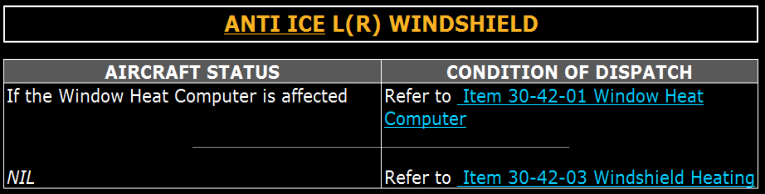
(fig.3) Example of a MEL entry with several associated MEL items
- The dispatch condition assessment depends whether the ECAM alert is actual or false (spurious) (fig.4)
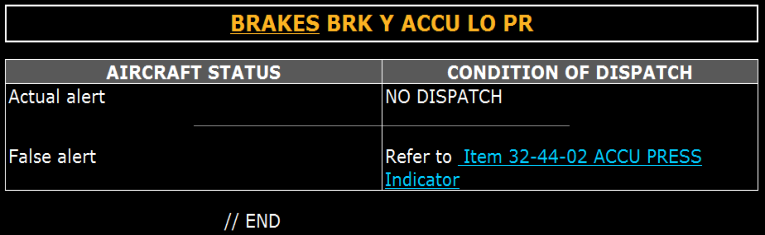
(fig.4) Example of a MEL with dispatch condition depending whether the alert is actual of false
- The dispatch condition assessment requires additional information such as ECAM indication on the SD page (fig.5)
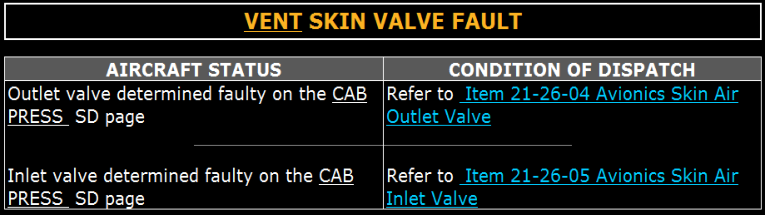
(fig.5) Example of a MEL entry with the dispatch condition depending on indications on the associated SD page
On A350, the ECAM Dispatch Messages are a straight forward help for dispatch. The flight crew finds the Dispatch Message in the MEL entries section to get the condition of dispatch or identify the applicable MEL item (fig.6)
(fig.6) Example of a Dispatch Message on A350
The A380 and A350 MEL also show a “Crew Observations” section in the MEL entries (fig.7) covering failures of monitored systems that are indicated with flight deck effects that don’t have an associated ECAM alert or Dispatch Message, for example, an amber indication on system display (SD) page or when the FAULT light of a pushbutton switch illuminates. The “Crew Observations” section also covers malfunctions that can be visually detected by the flight crew or the maintenance personnel, for example during the external walk around.
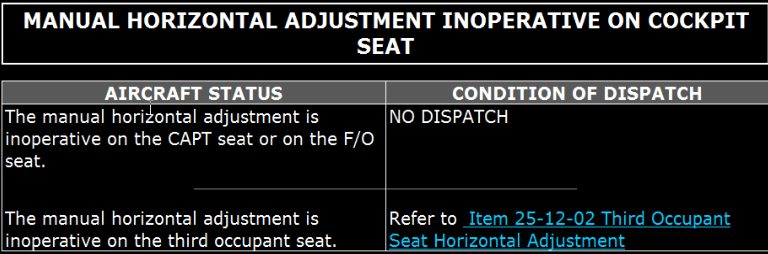
(fig.7) Example of a Crew Observation in the MEL Entries section on A380
If the failure is not linked to an ECAM alert or to a failure reflected in the Crew Observation section (A380 & A350), the correct MEL item should be identified directly into the MEL items section.
It is important to identify the MEL item correctly. The application of a MEL item that does not correspond to the inoperative equipment or unavailable system function may have unintended consequences for the safety of the flight.
Step 4: Review of the dispatch conditions
Section titled “Step 4: Review of the dispatch conditions”When the MEL item is correctly identified, the flight crew should carefully review the dispatch condition.
If there are several dispatch conditions, the title of the associated dispatch condition helps to identify which one is applicable (fig.8).
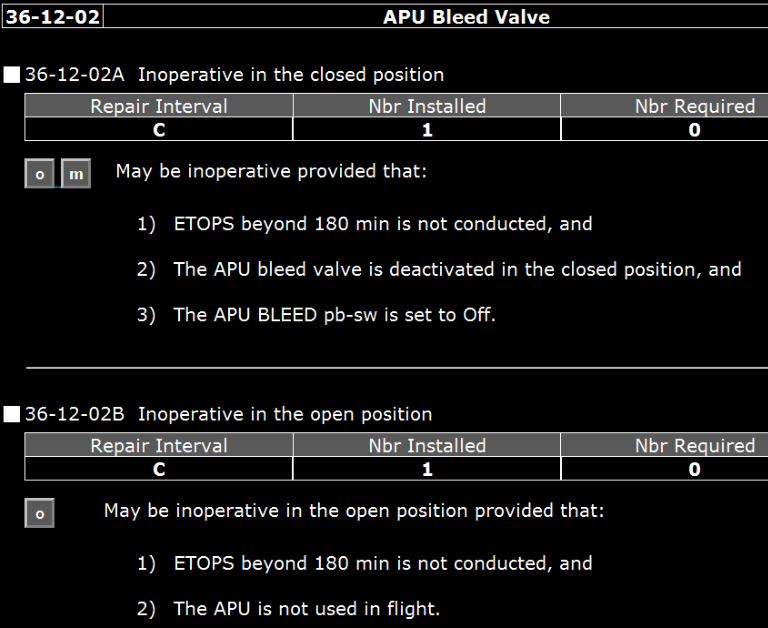
(fig.7) Example of a MEL item with two dispatch conditions: 36-12-02A and 36-12-02B
Step 5: Decision for dispatch
Section titled “Step 5: Decision for dispatch”Maintenance personnel may propose to dispatch the aircraft under MEL item provided that all of the associated dispatch conditions are fulfilled.
It is the Captain’s responsibility to accept the aircraft dispatch under the MEL item for the flight; taking into account not only the MEL dispatch condition but also the applicable operator’s policy and the operational constraints.

|---|---|
Specificity of Category “A” repair intervals
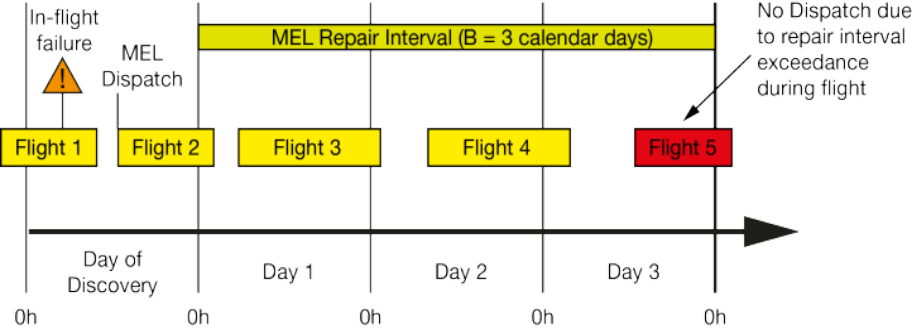
Section titled “Specificity of Category “A” repair intervals”MEL with category “A” repair intervals can use different references, e.g. calendar days, flight cycles…
Step 7: Initial dispatch
Section titled “Step 7: Initial dispatch”For the first dispatch after applying the MEL item, all dispatch conditions and associated limitations must be accounted for and any relevant maintenance (m) and operational (o) procedures must be applied to maintain an acceptable level of safety for the operation of the aircraft, even with the inoperative equipment or unavailable system function.
For a complete awareness of aircraft dispatch conditions, maintenance personnel should also consult the operational procedure (when applicable).
An incorrect or incomplete application of the maintenance or operational procedure may impair the safety of the flight.
Step 8: Subsequent flights dispatched under MEL item
Section titled “Step 8: Subsequent flights dispatched under MEL item”For the subsequent flights, the flight crew must check that any open MEL item in the logbook is within the window of the repair interval and that this time limit won’t be exceeded during the next flight mission.
When the dispatch conditions are accepted by the captain (as described in step 5), all necessary operational procedures must also be applied.
In the case when a new MEL item is recorded in the technical logbook, the maintenance personnel must also review all of the pre-existing MEL items to ensure that all of the dispatch conditions for each item are fulfilled.
In the case of multiple MEL items logged, flight crew and maintenance personnel must check before each flight that dispatch conditions of all MEL items are fulfilled.
Contributor:
Section titled “Contributor:”Yannick DUMOLLARD
Section titled “Yannick DUMOLLARD”MMEL Expert - Flight Operations Support
The MEL is a commonly used tool allowing for the safe and continuous operation of the aircraft until rectification of certain inoperative equipment or unavailable system functions that are not adversely affecting the airworthiness of the aircraft. But incorrectly using the MEL could lead to dispatching an aircraft in a configuration that is not airworthy and with potential consequences that could impair the safety of the flight.
Understanding the principles and rules for correctly applying MEL items is crucial for both maintenance personnel and flight crews.
When dispatching under a MEL item, the conditions of dispatch and the interval must be taken into account and the rectification associated maintenance and operational procedures must be accurately applied.
It is ultimately the Captain’s responsibility to decide to dispatch the aircraft for flight under the MEL conditions.
Safety first, 2018. Safety first is published by Airbus S.A.S. 1, rond point Maurice Bellonte - 31707 Blagnac Cedex/France.
Editor: Yannick Malinge, SVP AViation Safety.
Editorial team: Guillaume Estragnat, Vanessa Sadi, Gwyneth Duggan, Javier Martinez Marina, Tim Roach.
Photos by Airbus.
来源:Airbus Safety First 网址:https://safetyfirst.airbus.com/a-recall-on-the-correct-use-of-the-mel/ 发布日期:2018-01-29 类别:飞行运营、维护、放行、MEL、MMEL PDF:原文 PDF
依据最低设备清单(MEL)项目进行放行,允许飞机在某些功能或系统设备暂时不可用或不工作的状态下,以安全且适航的状态进行放行。这使飞机能够在不影响飞行安全的前提下继续创造收益。
然而,最低设备清单的原则是什么?在技术记录本中以最低设备清单项目放行飞机时,有哪些良好实践需要遵循?
请在 safetyfirst.airbus.com 网站及 iOS 和 Android 设备上的 Safety First 应用上查看本文最新版本。
在飞机的日常运营中,可能发生影响飞行放行的故障。由于备件短缺或其他限制,可能无法在下一个计划航班前完成故障修复。利用 MEL 放行装有失效系统功能或设备的飞机,可以避免代价高昂的运营中断,并确保飞机安全不受影响。运营商可以在随后最合适的时机安排必要的维护工作,例如返回主基地或某个航站时,届时备件已备齐。本文旨在回顾主最低设备清单(MMEL)的原则,该清单是航空公司制定最低设备清单(MEL)的基础。文章同时概述了使用 MEL 的最佳实践。
本文最初发表于 2018 年 1 月,已于 2024 年 9 月更新。
MMEL 与 MEL
Section titled “MMEL 与 MEL”空客 MMEL 是由飞机制造商编制并经认证当局批准的一份放行文件。
MMEL 是运营商编制自身 MEL 的参考依据。MEL 允许在飞机的一个或多个设备不工作或系统功能不可用的情况下进行放行和运营,同时保持可接受的安全水平。
MEL 是由运营商基于飞机制造商的 MMEL 制定的放行文件。MEL 不得比 MMEL 限制更宽松,且必须经运营商所在国民航当局批准。
MEL 允许运营商评估在系统、功能或部件不工作的情况下运营飞机对其运营(航班时刻表、航线、环境条件等)的影响,从而在不影响安全的前提下优化飞机放行可靠性和盈利能力。
MMEL 是如何制定的?
Section titled “MMEL 是如何制定的?”MMEL 确立了在使用失效设备飞行时保持可接受安全水平的基础。
为证明可接受的安全水平,空客定义了适用于每个 MMEL 项目制定过程的安全方法论。该安全方法论基于 EASA 认证要求,该要求基于安全等级分类定义了可接受的安全水平。该安全方法论已经 EASA 审查并接受。
安全等级分类 Minor(轻微)、Major(重大)、Catastrophic(灾难性)和 Hazardous(危险)在法规文件 EASA CS 25.1309 和 FAA FAR 25.1309 中有定义。
步骤 1:故障后果
Section titled “步骤 1:故障后果”故障本身的后果根据其对飞机层面的安全影响进行评估。安全目标是 MINOR(轻微)。可设置特定限制或程序以减轻初始后果并满足安全目标。
步骤 2:下一个关键故障
Section titled “步骤 2:下一个关键故障”下一个关键故障(即与放行时存在的初始故障组合时后果最严重的故障)将被评估。安全目标是 MAJOR(重大)。与步骤 1 相同,这是一个纯定性分析;与步骤 1 相同,可设置额外限制或程序以满足此安全等级。
步骤 3:定量分析
Section titled “步骤 3:定量分析”涉及 MMEL 项目的所有 HAZ(危险)和 CAT(灾难性)故障均需分析。这一次,分析是定量的。必须确保满足所有安全目标。这可能导致缩短放行时限。
**对于每个 MMEL 项目,通过遵守所有步骤的所有安全目标来确保可接受的安全水平。**基于上述评估,每个 MMEL 项目被定义为以下放行状态之一:
-
“GO”(可放行):允许在无特定放行条件下有限期内放行,或
-
“GO IF”(有条件放行):允许在满足特定放行条件下有限期内放行,或
-
“NO GO”(不可放行):不允许放行,必须在飞机继续运营前采取纠正性维护措施。
MEL 是如何制定的?
Section titled “MEL 是如何制定的?”运营人 MEL 是一份放行文件,应根据运营人的航线和程序进行定制,并在飞机制造商的主最低设备清单(MMEL)所定义的限制范围内制定。
MEL 何时适用?
Section titled “MEL 何时适用?”根据规章,当存在无法排除的故障或缺陷,且该故障或缺陷属于 MEL 项目时,必须在起飞前应用 MEL 并由机长确认。“起飞”对应”飞行开始”。“飞行开始”定义为飞机为起飞目的开始依靠自身动力移动的时刻(即滑行阶段)。EASA 和 FAA 要求运营人在其 MEL 中制定滑出阶段发生故障时的管理程序。
EASA 规章
Section titled “EASA 规章”EASA 规章要求运营人为飞行机组制定适当的指导,用于管理从滑行开始到起飞滑跑开始之间发生的故障。
EASA 规章还规定,机长可根据其”良好判断和飞行技艺”决定继续飞行。此外,其规章允许飞行机组查阅 MEL 以协助决策。与签派或运营人维修控制中心的通信可帮助飞行机组评估 MEL 项目,并协助机长决定是否继续飞行。继续飞行的最终决定由机长负责。此决定应基于可能影响本次飞行的任何运营考虑因素,并需考虑对飞机后续任务的影响。
FAA 规章
FAA 规章要求运营人建立程序,使飞机在离开机位或停机坪区域后,在推出、滑行或起飞前发生故障时,飞机机长(PIC)能与飞机签派和维修部门进行沟通。
该程序允许飞行机组评估情况,确定飞机是否可以按照 MEL 项目带故障放行,或必须在起飞前排除故障。如果建议按照相关 MEL 项目带故障放行,应考虑返回机位以完成适当的维修或运营程序。在与运营人签派和维修部门协调后,某些 MEL 程序可由飞行机组在不返回机位的情况下完成,但须经 FAA 首席运行监察员(POI)批准。
其他当地规章
Section titled “其他当地规章”其他国家航空局(NAA)可能制定有别于 EASA 或 FAA 规章的规章。每个运营人有责任与其相关 NAA 确认适用规章。
飞行中咨询 MEL
Section titled “飞行中咨询 MEL”MEL 被定义为放行文件,因此 MEL 不适用于飞行中。然而,如果在飞行中检测到系统或设备缺陷,MEL 信息可能有助于评估下一次飞行的可能放行条件。应在技术记录本中详细记录所检测到的缺陷描述,并通知运营人签派或维修控制中心,以便飞机到达时查阅 MEL。
如果存在多个故障怎么办?
Section titled “如果存在多个故障怎么办?”如果多个飞机系统功能或设备失效,运营人应查阅 MEL 中每个单独项目,检查每个相关放行条件是否存在任何不兼容性。评估情况并决定是否带多个失效项目放行飞机是飞行机组的责任。
使用 MEL 的规则与建议
Section titled “使用 MEL 的规则与建议”从故障发生到飞机放行,应遵循以下步骤以确保飞机能够以适航状态放行。
步骤 1:检测故障
Section titled “步骤 1:检测故障”故障检测方式:
| ● | 通过 ECAM 警告或主警告面板指示(A300 |
|---|---|
| B2/B4 机型)或维修面板上的故障指示(A300/A310 | |
| 仅限) | |
| 显示屏(SD)页面、失效的按钮或显示屏等) | |
| ○外部绕机检查时发现的缺陷部件(例如: | |
| 外部灯光不亮) | |
| ● | 通过维修人员的观察。 |
步骤 2:报告故障
Section titled “步骤 2:报告故障”飞行机组必须在技术记录本中报告任何飞机系统功能不可用或设备故障。
该技术记录本记录是使用 MEL 评估任何缺陷的起点。飞行机组应记录与缺陷相关的任何补充信息,以帮助确定缺陷原因,例如 ECAM 警告标题、发生时间、SD 页面指示和飞行阶段。航线维修人员也可在飞机技术记录本中记录在地面操作期间检测到的任何系统功能缺陷或失效设备。
客舱中检测到的飞机系统缺陷可由客舱乘务员记录在客舱记录本中。如果该缺陷影响放行,则必须在评估相关 MEL 项目适用性之前将这些记录转移到飞机技术记录本中。
步骤 3:识别与故障相关的正确放行条件或 MEL 项目
Section titled “步骤 3:识别与故障相关的正确放行条件或 MEL 项目”故障识别通常基于 ECAM 警告的标题,放行评估在 MEL 条目部分的“放行条件(CONDITION OF DISPATCH)”标题下提供 (图1)。
(图1) 带有相关 MEL 项目的 MEL 条目示例
如果故障被归类为“禁止放行(NO DISPATCH)” (图2) ,则在该设备或功能得到修复之前,不得放行飞机。
(图2) 带有“禁止放行”条件的 MEL 条目示例
在某些情况下,MEL 条目部分可能需要飞行机组或维修人员采取额外行动来评估放行条件,特别是当:
- 一个 ECAM 警告涉及多个 MMEL 项目时 (图3)
(图3) 带有多个相关 MEL 项目的 MEL 条目示例
- 放行条件评估取决于 ECAM 警告是真实故障还是假(虚假)警告 (图4)
(图4) 放行条件取决于警告是真实故障还是虚假警告的 MEL 示例
- 放行条件评估需要额外信息,例如系统显示(SD)页面上的 ECAM 指示 (图5)
(图5) 放行条件取决于相关 SD 页面指示的 MEL 条目示例
在 A350 上,ECAM 放行信息是放行的直接帮助。飞行机组在 MEL 条目部分找到放行信息,以获取放行条件或识别适用的 MEL 项目 (图6)
(图6) A350 上的放行信息示例
A380 和 A350 MEL 还在 MEL 条目部分显示“机组观察(Crew Observations)”部分 (图7) ,涵盖被监控系统的故障,这些系统故障表现为飞行舱效应,但没有相关的 ECAM 警告或放行信息,例如系统显示(SD)页面上的琥珀色指示,或按下开关的 FAULT(故障)灯亮起。“机组观察”部分还涵盖可由飞行机组或维修人员目视检测到的故障,例如外部绕机检查期间发现的故障。
(图7) A380 MEL 条目部分中机组观察的示例
如果故障与 ECAM 警告无关,也不在机组观察部分(A380 和 A350)中反映,则应直接在 MEL 项目部分识别正确的 MEL 项目。
正确识别 MEL 项目非常重要。应用与不工作设备或不可用系统功能不对应的 MEL 项目可能会对飞行安全产生意想不到的后果。
步骤 4:审查放行条件
Section titled “步骤 4:审查放行条件”正确识别 MEL 项目后,飞行机组应仔细审查放行条件。
如果存在多个放行条件,相关放行条件的标题有助于识别适用的一项 (图8)。
(图7) 具有两个放行条件的 MEL 项目示例:36-12-02A 和 36-12-02B
步骤 5:放行决策
Section titled “步骤 5:放行决策”维修人员可在满足所有相关放行条件的前提下,建议按照 MEL 项目放行飞机。
机长有责任接受按照 MEL 项目放行飞机执行飞行;同时考虑 MEL 放行条件、适用的公司政策以及运行限制。
|---|---|
A 类修复间隔的特殊性
Section titled “A 类修复间隔的特殊性”带有 A 类修复间隔的 MEL 可使用不同的参照标准,例如日历日、飞行循环数……
步骤 7:首次放行
Section titled “步骤 7:首次放行”应用 MEL 项目后的首次放行,必须考虑所有放行条件和相关限制,并必须执行任何相关的维修(m)和运行(o)程序,以在设备不工作或系统功能不可用的情况下,保持可接受的飞机运行安全水平。
为了全面了解飞机放行条件,维修人员还应查阅运行程序(如适用)。
不正确或不完整地应用维修或运行程序可能会损害飞行安全。
步骤 8:后续按 MEL 项目放行的飞行
Section titled “步骤 8:后续按 MEL 项目放行的飞行”对于后续飞行,飞行机组必须检查记录本中任何未关闭的 MEL 项目是否在修复间隔窗口内,并且该时间限制不会在下次飞行任务中被超出。
当机长接受放行条件后(如步骤 5 所述),还必须执行所有必要的运行程序。
如果技术记录本中记录了新的 MEL 项目,维修人员还必须审查所有先前存在的 MEL 项目,以确保每个项目的放行条件均已满足。
在存在多个 MEL 项目记录的情况下,飞行机组和维修人员必须在每次飞行前检查所有 MEL 项目的放行条件是否已满足。
Yannick DUMOLLARD
Section titled “Yannick DUMOLLARD”MMEL 专家 - 航班运行支援
最低设备清单(MEL)是一种常用工具,允许在某些失效设备或不可用系统功能未对飞机适航性产生不利影响的情况下,实现飞机安全持续的运行,直至完成修复。但如果错误使用 MEL,可能导致放行一架不适航的飞机,并可能产生危及飞行安全的潜在后果。
正确理解和应用 MEL 项目的原则与规则,对于维护人员和飞行机组均至关重要。
依据 MEL 项目放行时,必须考虑放行条件和间隔时间,并准确执行相关的维修和运行程序以完成修复。
最终,由机长负责决定是否在 MEL 条件下放行飞机进行飞行。
Safety first, 2018. Safety first 由空中客车公司出版。地址:1, rond point Maurice Bellonte - 31707 Blagnac Cedex/France。
编辑:Yannick Malinge,航空安全高级副总裁。
编辑团队:Guillaume Estragnat、Vanessa Sadi、Gwyneth Duggan、Javier Martinez Marina、Tim Roach。
照片由空中客车公司提供。