Safe Handling of TCAS Alerts
Source: Airbus Safety First URL: https://safetyfirst.airbus.com/safe-handling-of-tcas-alerts/ Published: 2021-09-22 Category: Flight Ops, ATM, Resolution advisory , traffic advisory PDF: Original PDF

TCAS RAs are not correctly followed in more than 40% of cases according to a recent study published by Eurocontrol, making non-compliance with TCAS RAs one of the top 5 Air Traffic Management (ATM) operational and safety risks.
This article explains how the TCAS Alert Prevention (TCAP) and AP/FD TCAS functions can improve the situation by respectively reducing the number of RAs in congested airspace, and assisting flight crews to follow TCAS RAs in an optimum manner. The article also recalls the TCAS warning procedure step-by-step, with and without the AP/FD TCAS function and provides guidance for training flight crews.
This article is also available on safetyfirst.airbus.com and on the Safety first app for iOS and Android devices.
TCAS ALERTS IN OPERATIONS
Section titled “TCAS ALERTS IN OPERATIONS”Flight crews reacted correctly to a TCAS Resolution Advisory (RA) in only 58.7% of cases according to a recent study published by Eurocontrol(*) in April 2021. In 29.8% of cases, the flight crew reacted by modifying the aircraft trajectory but did not reach the expected target. In 11.5% of cases, the flight crew did not react, or they reacted excessively and sometimes had the opposite reaction to what the RA requested.
Flight crews must always remember that a prompt and accurate response to TCAS RAs is important to maintain the highest level of safety.
(*) “The assessment of pilot compliance with TCAS RAs, TCAS mode selection, and serviceability using ATC radar data” issue 2.1 published on 09-APR-2021 by Eurocontrol.
Only a third of the “climb” and “descend” RAs were correctly followed”
The Eurocontrol study observed a low level of compliance with “Climb” or “Descend” RAs : only 33.7% of the “climb” and “descend” RAs were correctly followed, 44.2% did not reach the expected target, and 22.1% were not flown correctly.
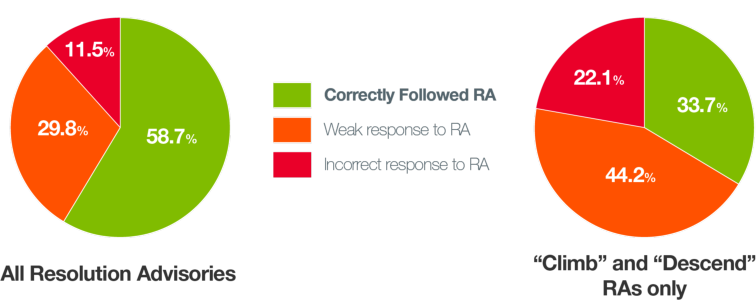
(fig.1) Flight crew response to TCAS RAs (data from the Eurocontrol study*)
Why “level off” RAs are triggered in congested airspace?
Section titled “Why “level off” RAs are triggered in congested airspace?”The TCAS warning logic uses the current trajectory of the aircraft to predict collision threats. This does not anticipate the expected level off when the aircraft finishes its climb or descent and reaches its expected flight level. If another aircraft approaches on an adjacent flight level, it can trigger a “level off” RA, or a “level off” with a corresponding “climb” or “descend” RA (fig.2). This is more likely to occur in congested airspace.
(fig.2) Example of an RA triggered when reaching a cleared flight level, near an aircraft flying on an adjacent flight level
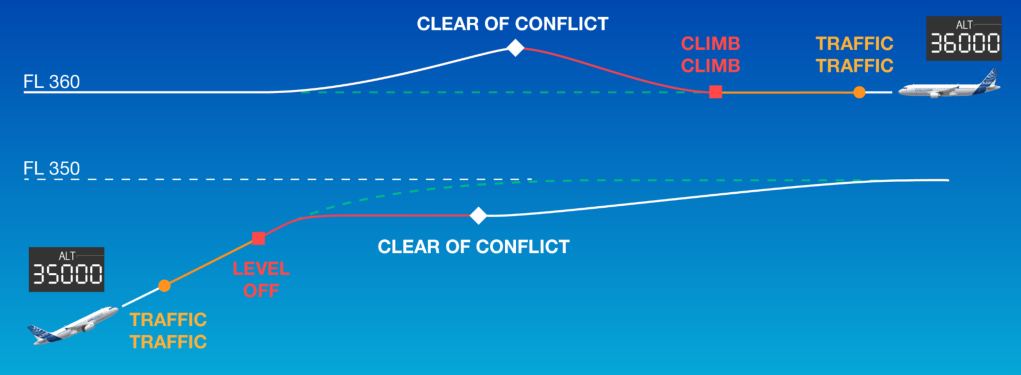
“Level off” RAs made up 65% of all observed RAs in the Eurocontrol Study. ICAO recommends that the flight crew manually select a lower vertical speed when approaching the target flight level to prevent the triggering of “level off” RAs. This solution is effective but not always optimal, because it requires intervention by the flight crew. This is why Airbus developed the TCAS Alert Prevention (TCAP) function.
Level off” RAs made up 65% of all observed RAs in the Eurocontrol Study.
TCAP PREVENTS RAS
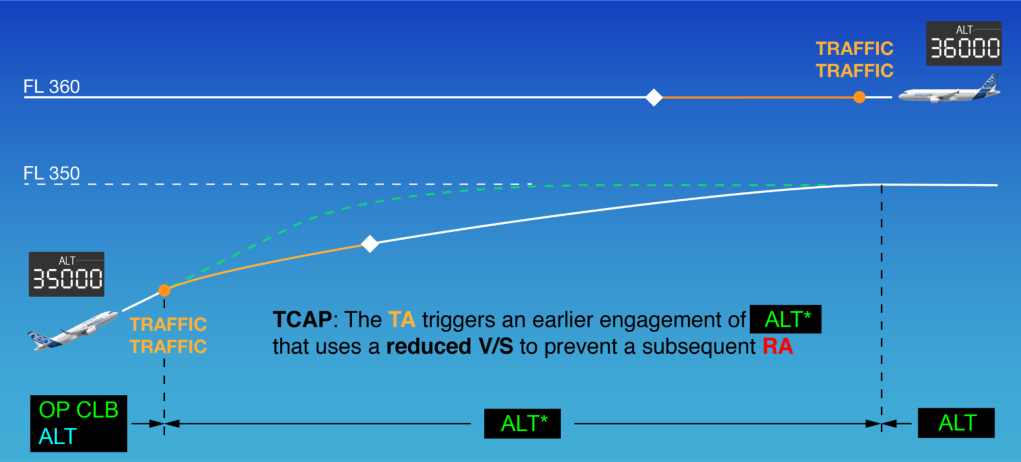
Section titled “TCAP PREVENTS RAS”The TCAP function is an improved _ALT*- altitude capture law for flight guidance computers. When a TCAS Traffic Advisory (TA) is triggered for an aircraft that is almost at its target flight level, the _ALT*- guidance mode will engage earlier and use a reduced vertical speed to reach the target altitude. This will prevent the need for an RA (fig.3). If the _ALT*- guidance mode is already engaged when the TA is triggered, the TCAP function will further reduce the _ALT*- vertical speed to prevent the RA.
If an Operator has a mixed fleet configuration of aircraft with and without the TCAP function activated, the flight crew can still manually select a lower vertical speed when approaching the target flight level on any aircraft depending on the Operator’s policy.
(fig.3) Principle of the TCAP function
TCAP Availability
Section titled “TCAP Availability”The TCAP function is installed on A350 aircraft and on A380 aircraft delivered since July 2013. TCAP is also installed on all A320 family aircraft produced since early 2021, and on all A330 aircraft produced since October 2017 (since February 2016 on A330 aircraft with RR engines).
A380 aircraft delivered before July 2013 can be retrofitted using the activation Service Bulletin (SB) A380-22-8011.
Operators can retrofit TCAP on older A320 family and A330 aircraft. These aircraft must be fitted with a minimum standard of TCAS and a minimum standard of FMG(E)C. The minimum TCAS computer standard must be:
-
ACSS TCAS 2000 Change 7.0, or
-
ACSS T2CAS Std 1, or
-
ACSS T3CAS Std 1, or
-
Collins TCAS TTR920 Change 7.0, or
-
○ Honeywell TCAS TPA81A Change 7.0.
On A320 family aircraft , the TCAP function is automatically activated on aircraft equipped with the following:
-
An FMGC with flight guidance Standard PI17 , PC20 or a subsequent standard
-
- Wiring installed by Mod 38790 (+Mod 30248 if T2CAS) between the FMGC and the TCAS/T2CAS/T3CAS computer.
On A330 aircraft , an activation service bulletin is necessary in addition to installing an FMGEC with flight guidance standard HJ2 or H3.
AP/FD TCAS ENSURES AN OPTIMUM HANDLING OF THE TCAS RAS
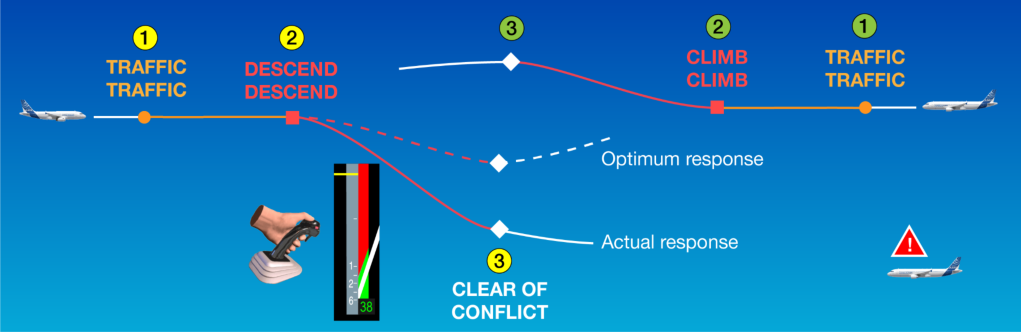
Section titled “AP/FD TCAS ENSURES AN OPTIMUM HANDLING OF THE TCAS RAS”Sometimes the flight crew does not comply with RAs as expected or performs a maneuver that is too weak or excessive (fig.4). To help the flight crew perform optimum maneuvers in accordance with the RA, Airbus developed the AP/FD TCAS function.
(fig.4) Response to TCAS RAs are not always optimum
AP/FD TCAS enables the flight crew to follow TCAS RAs with AP ON or FD guidance
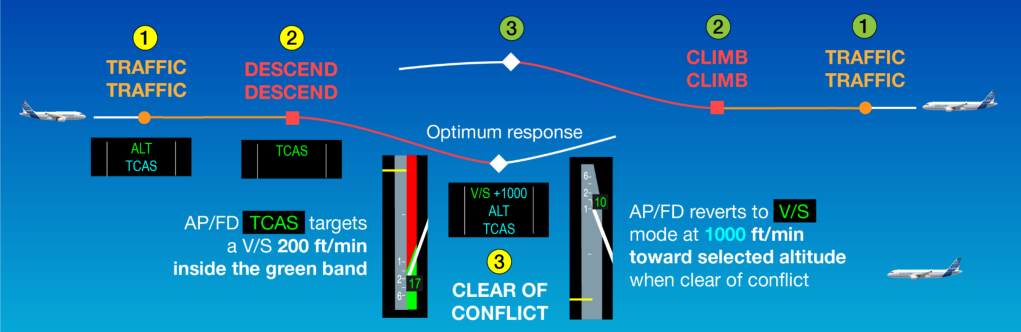
Section titled “AP/FD TCAS enables the flight crew to follow TCAS RAs with AP ON or FD guidance”The AP/FD TCAS function is an additional flight guidance mode of the autoflight system available for A320, A330, A350 and A380 aircraft. This function enables flight crews to either keep the autopilot ON to automatically follow the RA, or to manually perform the RA maneuver using FD guidance (fig.5) : ① When a TA is triggered, the -TCAS mode is armed. ② When an RA is triggered, the TCASmode is engaged and targets a vertical speed 200 ft/min inside the RA green band. ③ When the aircraft is clear of conflict, the TCAS mode then reverts to a V/S +/-1000- vertical speed mode toward the initially selected altitude.
(fig.5) AP/FD TCAS ensures optimum handling of the TCAS RAs
The AP/FD TCAS function assists flight crews to:
-
Correctly respond to the RA and in a timely manner
-
Perform a maneuver only to the extent necessary
-
Perform a maneuver with a moderate load factor to ensure passenger comfort and to reduce the risk of injury.
-
Prevent the triggering of TCAS alerts on other aircraft.
Possible reversion to the standard procedure
Section titled “Possible reversion to the standard procedure”If the flight crew prefers to follow the RA using the standard TCAS warning procedure, they can revert to it at any time. However, an Airbus analysis of more than 130 000 flights performed by A350 and A380 aircraft confirms the confidence of flight crews in the AP/FD TCAS function: in 91% of the RA situations, the flight crew kept the autopilot ON.
If the flight crew prefers to follow the RA using the standard TCAS warning procedure, they can revert to it at any time.
|---|---|---| |Minimum system prerequisites for A320 family aircraft||| |FWCH2F5|MOD 37871|| |EIS: EIS2 S8-2 or EIS1 V70|MOD 38146 or MOD 150603|| |TCASchange 7 or T2CAS or T3CAS|MOD 27740 or 27698 or 36559 or 34637 or 39146|| |FDIMUwith new FDIU Standard S15|MOD 150037 or MOD 150038|| |FCUstandard 4|MOD 38132|| |Wiring provisions|MOD 38790|| |||| |Minimum system prerequisites for A330 aircraft||| |FMGECP4H3 or P5H3 or P5H3 or T5AH3|MOD 205773 or MOD 204758 or MOD 207492 or MOD 204775|| |FWCT3|MOD 58751|| |EIS: EIS2 L7 or EIS1 V513|MOD 57115 or MOD 201332|| |FCUStandard 3|MOD 200272|| ||||
|---|---|---| |Minimum system prerequisites for A320 family aircraft||| |FWCH2F5|MOD 37871|| |EIS: EIS2 S8-2 or EIS1 V70|MOD 38146 or MOD 150603|| |TCASchange 7 or T2CAS or T3CAS|MOD 27740 or 27698 or 36559 or 34637 or 39146|| |FDIMUwith new FDIU Standard S15|MOD 150037 or MOD 150038|| |FCUstandard 4|MOD 38132|| |Wiring provisions|MOD 38790|| |||| |Minimum system prerequisites for A330 aircraft||| |FMGECP4H3 or P5H3 or P5H3 or T5AH3|MOD 205773 or MOD 204758 or MOD 207492 or MOD 204775|| |FWCT3|MOD 58751|| |EIS: EIS2 L7 or EIS1 V513|MOD 57115 or MOD 201332|| |FCUStandard 3|MOD 200272|| ||||
Many in-service aircraft have all prerequisites for activation of AP/FD TCAS
Section titled “Many in-service aircraft have all prerequisites for activation of AP/FD TCAS”An analysis of the in-service fleet shows that only slightly more than 30% of A320 family and A330 aircraft have the AP/FD TCAS function activated. The analysis also shows that a number of A320 family and A330 aircraft have all the system prerequisites installed and only need to activate the function to be able to use it. Operators should contact their Airbus Customer Support Director for information on the service bulletin about activating the AP/FD TCAS function on A320 family and A330 aircraft.
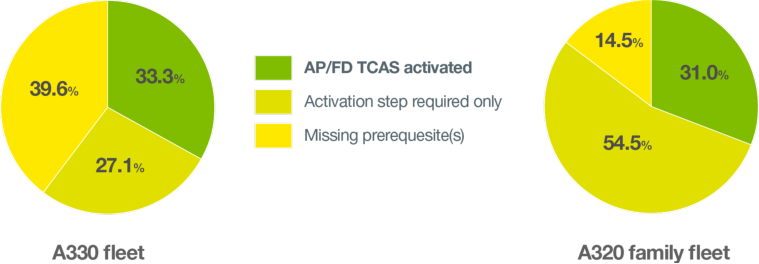
(fig.5) AP/FD TCAS installation status for A320 family and A330 aircraft
AP/FD TCAS: Mixed Fleet is not an Issue
Section titled “AP/FD TCAS: Mixed Fleet is not an Issue”Despite the possibility of retrofitting the AP/FD TCAS function on in-service A320 and A330 aircraft, some Operators may not be able to equip a full fleet with AP/FD TCAS. This should not stop Operators from activating the function on their capable aircraft, because operations with a mixed fleet are possible.
When operating a mixed fleet, flight crews can easily check the Aircraft Configuration Summary (ACS) table in the QRH during cockpit preparation. This will tell them if the aircraft has the AP/FD TCAS function activated.
In addition, flight crews must know how to apply both TCAS warning procedures (with and without AP/FD TCAS function), because even with the AP/FD TCAS activated, they will need to apply the standard TCAS warning procedure if the AP/FD TCAS function is inoperative.
Both procedures are described in the FCOM and QRH Memory Items part [MEM] SURV / TCAS WARNING.
When operating a mixed fleet, flight crews can easily check the Aircraft Configuration Summary (ACS) table in the QRH during cockpit preparation.
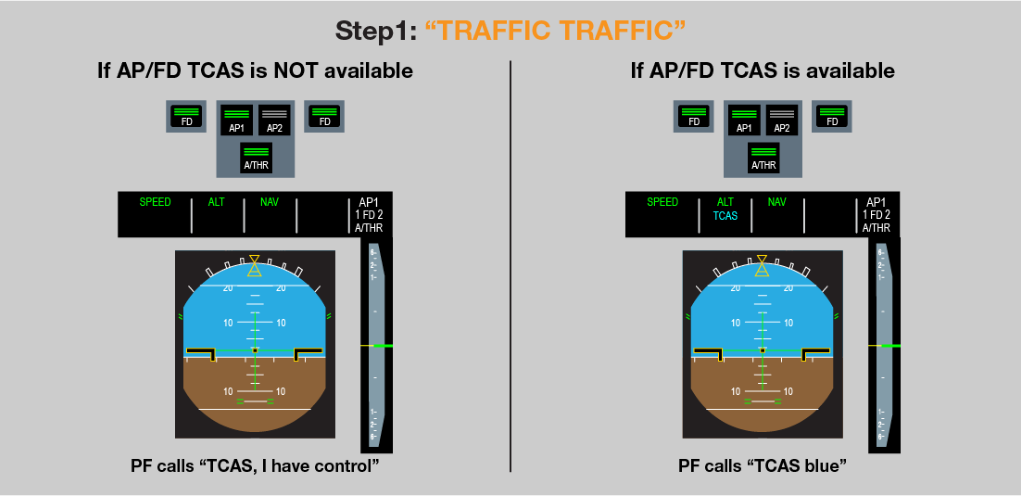
Step 1: If a TA is triggered, select the appropriate procedure to apply
Section titled “Step 1: If a TA is triggered, select the appropriate procedure to apply”-
If TCAS is NOT displayed on the FMA, it is not available or not “ ”
-
installed. If a TA is triggered, the PF announces TCAS, I have control and must be prepared to apply the standard TCAS warning procedure.
-
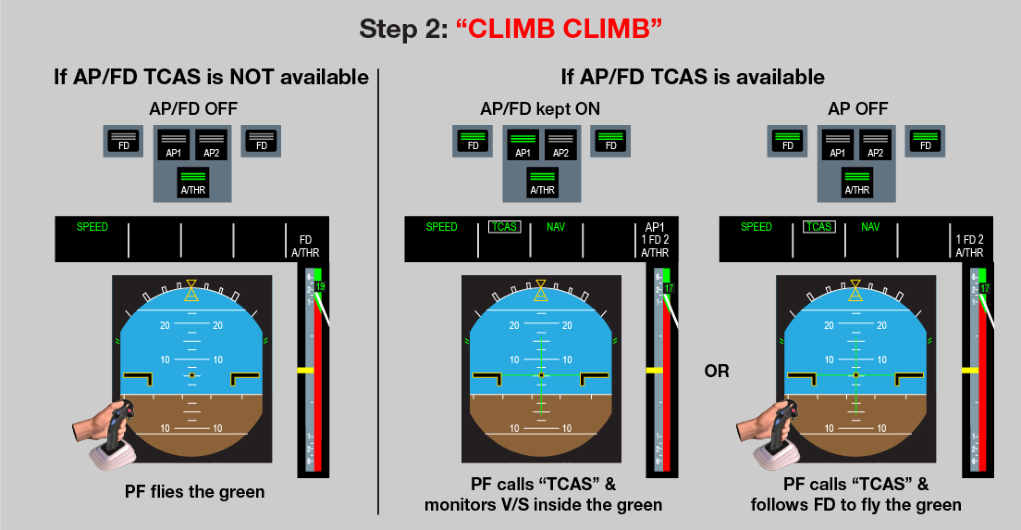
If TCAS is displayed as armed on the FMA, the flight crew can use the AP/FD TCAS function in automatic or manual flight. In this case, the PF announces “ TCAS blue ”, ensures that the autothrust is engaged, and prepares to either fly the potential RA maneuver using autopilot or manually fly the RA with FD guidance.
Step 2: Use the appropriate level of automation to follow the RA
Section titled “Step 2: Use the appropriate level of automation to follow the RA”Depending on the availability of the TCAS mode, the PF follows the RA with the appropriate level of automation:
-
If the TCAS mode is not available or does not engage when the RA is triggered, the PF disconnects both the AP and the FD and flies the green on the V/S scale as per the standard TCAS warning procedure.
-
If the TCAS mode engages when the RA is triggered, the PF can either leave the AP ON and monitor that the V/S reaches the green zone on the PFD, or manually follow the RA using FD guidance. The FD bars will automatically appear when the TCAS mode engages if they were previously switched off.
Step 3: Return to the initial trajectory when clear of conflict
Section titled “Step 3: Return to the initial trajectory when clear of conflict”When the aircraft is clear of conflict:
-
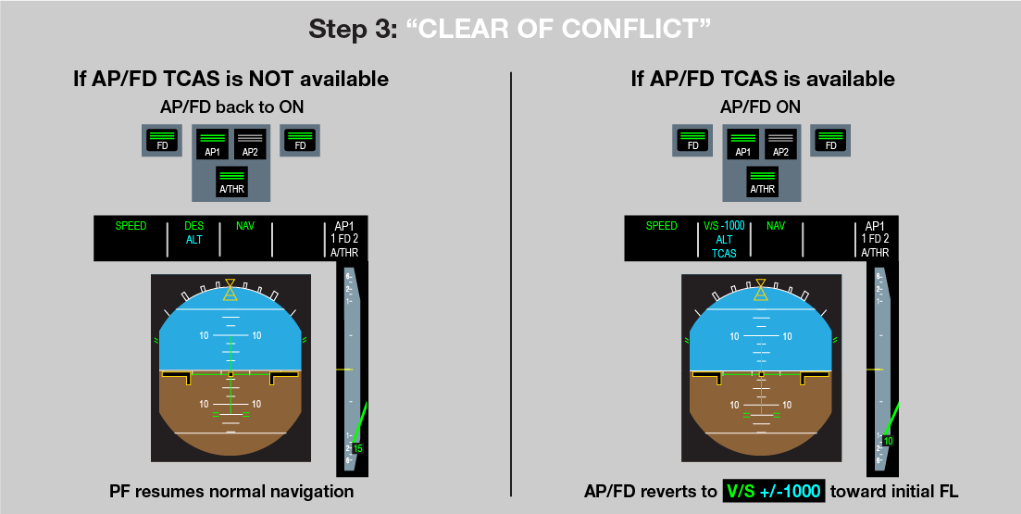
If the RA was flown manually, the PF may adjust both the lateral and vertical trajectory to resume normal navigation in accordance with ATC instructions and may re-engage the AP and FD.
-
● If the RA was flown in TCAS mode, the flight guidance reverts to V/S +/-1000 mode when clear of conflict to go back to the selected altitude. The PF should then engage an appropriate vertical mode, or adjust the V/S target, in accordance with ATC instructions.
The “Operational use of the TCAS” video available on the Worldwide Instructor News (WIN) website provides detailed information about the TCAS and how to use it. The video also describes the AP/FD TCAS function and provides answers to frequently asked questions.
The “Getting to Grips with Surveillance” brochure issue 2 also provides information about the TCAS and is available for download on the AirbusWorld portal.
Refer also to our first Safety first article on AP/FD TCAS published in February 2009: “Airbus AP/FD TCAS mode: a new step towards safety Improvement”.
Training on TCAS Warning Procedures
Section titled “Training on TCAS Warning Procedures”The Airbus Flight Crew Training Standards (FCTS) manuals provide recommendations for both type rating and recurrent training programs on how to train flight crews to apply the TCAS procedures. The manuals contain recommendations to define the training objectives in line with ICAO (doc 9995 Manual of Evidence-Based Training) and IATA recommendations (Evidence-Based Training Implementation Guide). FCTS manuals are available for download from the AirbusWorld portal.
During the type rating and recurrent training courses, flight crews should be trained on how to apply the TCAS procedure both with and without the AP/FD TCAS function. This is to ensure that the flight crew will react correctly to a TCAS warning if the AP/FD TCAS function is not available or if it is inoperative on their aircraft.
flight crews should be trained on how to apply the TCAS procedure both with and without the AP/FD TCAS function.
Evidence-Based Training (EBT) programs recommend that the TCAS procedure training should be performed at least one time every three years.
Upcoming modification (May 2022) of the TCAS Warning procedure in approach:
Section titled “Upcoming modification (May 2022) of the TCAS Warning procedure in approach:”The TCAS WARNING procedure will be updated in May 2022 to standardize the procedure on all Airbus aircraft (all aircraft types, with or without AP/FD TCAS) and to comply with EASA and FAA regulation requirements. The procedure will be amended as follows:
● If any ‘’CLIMB’’ audio indicator sounds during the final approach: GO AROUND……………………………..…………………….PERFORM.
Contributors:
Section titled “Contributors:”Christophe BAROUX Product Development Architect - Upgrade Services Customer Support
Florence CARDONA Airframe Services Marketing
Cédric CORRAL
Section titled “Cédric CORRAL”Flight Management & Auto Flight Systems Manager Design Office
Xavier DUREPAIRE Training & Flight Ops Pilot Instructor Customer Support
Maria Luisa LOPEZ VILLAREJO
Section titled “Maria Luisa LOPEZ VILLAREJO”Product Safety Enhancement Product Safety
Christine VILLENEUVE Product Development Architect - Upgrade Services Customer Support
It is crucial that flight crews respond promptly and accurately to TCAS Resolution Advisories (RAs) to maintain the highest levels of safety. However, TCAS RAs are not always followed as expected in operations according to a study published by Eurocontrol in April 2021. This confirms why non-compliance with TCAS RAs is identified as one of the current top-5 ATM operational risks.
The TCAP function can improve the situation by preventing RAs in congested airspace. The AP/FD TCAS function can provide assistance to the flight crew for following the TCAS RAs in an optimum way. The TCAP and AP/FD TCAS functions are now activated on all newly built aircraft. Many A320 family and A330 in-service aircraft have all the system prerequisites and can easily activate the AP/FD TCAS function. Airbus encourages Operators to contact their Customer Support Directors for details on how to implement AP/FD TCAS on their aircraft and benefit from this function.
Flight crews can identify if an aircraft is equipped with the AP/FD TCAS function by checking the Aircraft Configuration Summary table in the QRH. In addition, the flight crew will know if the AP/FD TCAS function is available when the TCAS guidance mode is displayed as armed on the FMA in the case of a TA. Flying a mixed fleet of aircraft with or without the AP/FD TCAS function is therefore not an issue.
During type rating and recurrent training, flight crews should be trained on how to apply both TCAS warning procedures, with and without the AP/FD TCAS function, so that they can apply the standard TCAS procedure if the AP/FD TCAS function is not available.
Evidence-Based Training programs recommend training flight crews on how to apply the TCAS warning procedures at least one time every three years.
Safety first , 2021. Safety first is published by Airbus S.A.S. 1, rond point Maurice Bellonte - 31707 Blagnac Cedex/France.
Editor: Yannick Malinge, Chief Product Safety Officer.
Editorial team: Guillaume Estragnat, Vanessa Sadi, Gwyneth Duggan, Tim Roach.
- Reference: X00D16031905.
Photos by Airbus, S. Ramadier
© Airbus S.A.S. 2021 – All rights reserved. Proprietary documents.
Section titled “© Airbus S.A.S. 2021 – All rights reserved. Proprietary documents.”来源: Airbus Safety First 网址: https://safetyfirst.airbus.com/safe-handling-of-tcas-alerts/ 发布日期: 2021-09-22 类别: 飞行运营、ATM、避让指令、交通咨询 PDF: 原始 PDF
根据欧洲空中交通管理组织(Eurocontrol)近期发表的一项研究,TCAS 避让指令(RA)的正确执行率不足 40%,这使得不遵守 TCAS 避让指令成为空中交通管理(ATM)五大运营与安全风险之一。
本文阐述了 TCAS 警报预防功能(TCAP)以及 AP/FD TCAS 功能如何通过以下方式改善这一状况:前者可在繁忙空域减少避让指令的触发次数,后者可协助飞行机组以最佳方式执行 TCAS 避让指令。本文还回顾了 TCAS 警告程序的详细步骤,包括有无 AP/FD TCAS 功能两种情况,并为飞行机组培训提供指导。
本文也可在 safetyfirst.airbus.com 网站以及 iOS 和 Android 设备上的 Safety first 应用中获取。
运营中的 TCAS 警报
Section titled “运营中的 TCAS 警报”根据欧洲空中交通管理组织(Eurocontrol)于 2021 年 4 月发布的最新研究,飞行机组仅在 58.7% 的情况下正确响应了 TCAS 避让指令(RA)。在 29.8% 的情况下,飞行机组修改了飞机轨迹但未能达到预期目标。在 11.5% 的情况下,飞行机组未做出响应,或响应过度,有时甚至做出与避让指令要求相反的动作。
飞行机组必须始终牢记,对 TCAS 避让指令做出迅速、准确的响应对于维持最高安全水平至关重要。
(*) 《使用 ATC 雷达数据评估飞行员对 TCAS 避让指令的遵守情况、TCAS 模式选择及可用性》第 2.1 版,欧洲空中交通管理组织于 2021 年 4 月 9 日发布。
仅三分之一的“上升”和“下降”避让指令被正确执行
欧洲空中交通管理组织的研究观察到对“上升”或“下降”避让指令的遵守程度较低:仅有 33.7% 的“上升”和“下降”避让指令被正确执行,44.2% 未达到预期目标,22.1% 未被正确执行。
(图 1) 飞行机组对 TCAS 避让指令的响应(数据来源:欧洲空中交通管理组织研究*)
为什么在繁忙空域会触发“平飞”避让指令?
Section titled “为什么在繁忙空域会触发“平飞”避让指令?”TCAS 警告逻辑使用飞机的当前轨迹来预测碰撞威胁。该逻辑不会预测飞机完成上升或下降并到达预期飞行高度时的预期平飞状态。如果另一架飞机从相邻飞行高度接近,则可能触发“平飞”避让指令,或带有相应“上升”或“下降”避让指令的“平飞”指令 (图 2)。这种情况在繁忙空域更易发生。
(图 2) 当飞机到达许可飞行高度并接近相邻飞行高度飞行的飞机时触发避让指令的示例
在欧洲空中交通管理组织的研究中,“平飞”避让指令占所有观察到的避让指令的 65%。国际民用航空组织(ICAO)建议,飞行机组在接近目标飞行高度时手动选择较低的垂直速度,以防止触发“平飞”避让指令。这一解决方案有效,但并非始终最优,因为它需要飞行机组的干预。这就是空客开发 TCAS 警报预防功能(TCAP) 的原因。
“平飞”避让指令占欧洲空中交通管理组织研究中所有观察到的避让指令的 65%。
TCAP 预防避让指令
Section titled “TCAP 预防避让指令”TCAP 功能是飞行引导计算机的改进版 _ALT 高度捕获法则。当某架接近目标飞行高度的飞机触发了 TCAS 交通咨询(TA)时,_ALT 引导模式将提前接通,并使用降低的垂直速度到达目标高度,从而防止触发避让指令 (图 3)。如果在触发交通咨询时 _ALT 引导模式已经接通,TCAP 功能将进一步降低 _ALT 垂直速度以防止避让指令。
如果运营商的机队配置中同时包含已激活和未激活 TCAP 功能的飞机,飞行机组可根据运营商的政策,在任何飞机上于接近目标飞行高度时手动选择较低的垂直速度。
(图 3) TCAP 功能原理
TCAP 可用性
Section titled “TCAP 可用性”TCAP 功能安装于 A350 飞机和 2013 年 7 月以后交付的 A380 飞机。TCAP 也安装于 2021 年初以来生产的所有 A320 系列飞机,以及 2017 年 10 月以来生产的所有 A330 飞机(配备罗尔斯·罗伊斯发动机的 A330 飞机自 2016 年 2 月起)。
2013 年 7 月之前交付的 A380 飞机可通过服务通告(SB)A380-22-8011 进行改装。
运营商可对较早的 A320 系列和 A330 飞机进行 TCAP 改装。这些飞机必须配备最低标准的 TCAS 和最低标准的 FMG(E)C。最低 TCAS 计算机标准必须为:
-
ACSS TCAS 2000 7.0 版,或
-
ACSS T2CAS 标准 1,或
-
ACSS T3CAS 标准 1,或
-
Collins TCAS TTR920 7.0 版,或
-
○ Honeywell TCAS TPA81A 7.0 版。
在 A320 系列飞机 上,TCAP 功能在配备以下设备的飞机上自动激活:
-
配备飞行引导标准 PI17、PC20 或更高标准的 FMGC
-
通过改装 38790(若使用 T2CAS,则加改装 30248)在 FMGC 与 TCAS/T2CAS/T3CAS 计算机之间安装的布线。
在 A330 飞机 上,除安装配备飞行引导标准 HJ2 或 H3 的 FMGEC 外,还需要服务通告进行激活。
AP/FD TCAS 确保对 TCAS RA 的最佳处理
Section titled “AP/FD TCAS 确保对 TCAS RA 的最佳处理”有时飞行机组未按预期响应 RA,或执行的机动动作过弱或过强**(图4)**。为了帮助飞行机组按照 RA 执行最佳机动动作,空客开发了 AP/FD TCAS 功能。
(图4) 对 TCAS RA 的响应并非总是最佳的
AP/FD TCAS 使飞行机组能够在自动驾驶仪接通或飞行指引仪引导下跟随 TCAS RA
Section titled “AP/FD TCAS 使飞行机组能够在自动驾驶仪接通或飞行指引仪引导下跟随 TCAS RA”AP/FD TCAS 功能是自动驾驶飞行系统的一种附加飞行引导模式,适用于 A320、A330、A350 和 A380 飞机。该功能使飞行机组能够选择保持自动驾驶仪接通以自动跟随 RA,或使用 FD 引导手动执行 RA 机动动作**(图5)**:① 当触发 TA 时,-TCAS 模式待命。② 当触发 RA 时,TCAS 模式接通,目标垂直速度为 RA 绿色区域以内 200 ft/min。③ 当飞机脱离冲突后,TCAS 模式随即回退至朝着初始选择高度方向的 V/S +/-1000 垂直速度模式。
(图5) AP/FD TCAS 确保对 TCAS RA 的最佳处理
AP/FD TCAS 功能协助飞行机组:
- 正确且及时地响应 RA
- 仅在必要范围内执行机动动作
- 以适中的载荷因子执行机动动作,确保乘客舒适度并降低受伤风险
- 防止触发其他飞机的 TCAS 警报
可能的程序回退至标准程序
Section titled “可能的程序回退至标准程序”如果飞行机组更倾向于使用标准 TCAS 警告程序跟随 RA,他们可以随时回退至该程序。然而,空客对 A350 和 A380 飞机执行的超过 130 000 次飞行进行的分析证实了飞行机组对 AP/FD TCAS 功能的信心:在 91% 的 RA 情况下,飞行机组保持自动驾驶仪接通。
如果飞行机组更倾向于使用标准 TCAS 警告程序跟随 RA,他们可以随时回退至该程序。
|---|---|---| |A320 系列飞机最低系统先决条件||| |FWCH2F5|MOD 37871|| |EIS:EIS2 S8-2 或 EIS1 V70|MOD 38146 或 MOD 150603|| |TCASchange 7 或 T2CAS 或 T3CAS|MOD 27740 或 27698 或 36559 或 34637 或 39146|| |FDIMU配备新型 FDIU 标准 S15|MOD 150037 或 MOD 150038|| |FCU标准 4|MOD 38132|| |线路预装|MOD 38790|| |||| |A330 飞机最低系统先决条件||| |FMGECP4H3 或 P5H3 或 P5H3 或 T5AH3|MOD 205773 或 MOD 204758 或 MOD 207492 或 MOD 204775|| |FWCT3|MOD 58751|| |EIS:EIS2 L7 或 EIS1 V513|MOD 57115 或 MOD 201332|| |FCU标准 3|MOD 200272|| ||||
|---|---|---| |A320 系列飞机最低系统先决条件||| |FWCH2F5|MOD 37871|| |EIS:EIS2 S8-2 或 EIS1 V70|MOD 38146 或 MOD 150603|| |TCASchange 7 或 T2CAS 或 T3CAS|MOD 27740 或 27698 或 36559 或 34637 或 39146|| |FDIMU配备新型 FDIU 标准 S15|MOD 150037 或 MOD 150038|| |FCU标准 4|MOD 38132|| |线路预装|MOD 38790|| |||| |A330 飞机最低系统先决条件||| |FMGECP4H3 或 P5H3 或 P5H3 或 T5AH3|MOD 205773 或 MOD 204758 或 MOD 207492 或 MOD 204775|| |FWCT3|MOD 58751|| |EIS:EIS2 L7 或 EIS1 V513|MOD 57115 或 MOD 201332|| |FCU标准 3|MOD 200272|| ||||
许多在役飞机具备激活 AP/FD TCAS 的全部先决条件
Section titled “许多在役飞机具备激活 AP/FD TCAS 的全部先决条件”对在役机队的分析表明,仅略多于 30% 的 A320 系列和 A330 飞机已激活 AP/FD TCAS 功能。分析还表明,部分 A320 系列和 A330 飞机已安装所有系统先决条件,仅需激活该功能即可使用。运营商应联系其空客客户支持总监,以获取有关在 A320 系列和 A330 飞机上激活 AP/FD TCAS 功能的维修通告信息。
(图5) A320 系列和 A330 飞机的 AP/FD TCAS 安装状态
AP/FD TCAS:混编机队不成问题
Section titled “AP/FD TCAS:混编机队不成问题”尽管在役 A320 和 A330 飞机可以改装 AP/FD TCAS 功能,但部分运营商可能无法为整个机队配备 AP/FD TCAS。这不应阻止运营商在其具备条件的飞机上激活该功能,因为混编机队运行是可行的。
运行混编机队时,飞行机组可以在驾驶舱准备期间轻松查阅 QRH 中的飞机配置摘要 (ACS) 表。这将告知他们该飞机是否已激活 AP/FD TCAS 功能。
此外,飞行机组必须了解如何应用两种 TCAS 警告程序(有无 AP/FD TCAS 功能),因为即使 AP/FD TCAS 已激活,当 AP/FD TCAS 功能失效时,他们仍需应用标准 TCAS 警告程序。
两种程序均在 FCOM 和 QRH 记忆项目部分 [MEM] SURV / TCAS WARNING 中有描述。
运行混编机队时,飞行机组可以在驾驶舱准备期间轻松查阅 QRH 中的飞机配置摘要 (ACS) 表。
步骤 1:如果触发了 TA,选择相应的程序执行
Section titled “步骤 1:如果触发了 TA,选择相应的程序执行”- 如果 FMA 上没有显示 TCAS,则表示 TCAS 不可用或未” ” 安装。如果触发了 TA,PF 宣布 “TCAS,我来操纵”,并必须准备好执行标准 TCAS 警告程序。
- 如果 FMA 上显示 TCAS 为待命,机组可以使用自动或手动飞行模式下的 AP/FD TCAS 功能。在这种情况下,PF 宣布” TCAS 蓝色”,确保自动推力已衔接,并准备使用自动驾驶仪执行潜在 RA 机动飞行,或使用 FD 指引手动驾驶 RA。
步骤 2:使用适当的自动化等级跟随 RA
Section titled “步骤 2:使用适当的自动化等级跟随 RA”根据 TCAS 模式的可获得性,PF 以适当的自动化等级跟随 RA:
- 如果 TCAS 模式不可用或 RA 触发时未能衔接,PF 断开自动驾驶仪和 FD,并根据标准 TCAS 警告程序,驾驶 V/S 刻度上的绿色区域。
- 如果 RA 触发时 TCAS 模式衔接,PF 可以保持自动驾驶仪接通并监控 V/S 是否达到 PFD 上的绿色区域,或者使用 FD 指引手动跟随 RA。如果之前已关闭,FD 指引杆将在 TCAS 模式衔接时自动出现。
步骤 3:当脱离冲突后恢复初始轨迹
Section titled “步骤 3:当脱离冲突后恢复初始轨迹”当飞机脱离冲突时:
- 如果手动执行了 RA,PF 可以根据 ATC 指令调整横向和垂直轨迹以恢复正常导航,并可以重新衔接自动驾驶仪和 FD。
- ● 如果使用 TCAS 模式执行了 RA,当脱离冲突时飞行指引将恢复为 V/S +/-1000 模式以返回所选高度。然后 PF 应根据 ATC 指令选择适当的垂直模式,或调整 V/S 目标。
Worldwide Instructor News(WIN)网站上的”Operational use of the TCAS”视频提供了关于 TCAS 及其使用方法的详细信息。该视频还介绍了 AP/FD TCAS 功能,并回答了常见问题。
“Getting to Grips with Surveillance”手册第 2 版也提供了关于 TCAS 的信息,可在 AirbusWorld 门户下载。
另请参阅我们 2009 年 2 月发表的首篇关于 AP/FD TCAS 的 Safety first 文章:“Airbus AP/FD TCAS mode: a new step towards safety improvement”。
TCAS 警告程序培训
Section titled “TCAS 警告程序培训”Airbus Flight Crew Training Standards(FCTS)手册为机型改装训练和复训提供了关于如何培训飞行机组执行 TCAS 程序的建议。这些手册包含根据 ICAO(doc 9995 基于证据的培训手册)和 IATA 建议(基于证据的实施指南)定义培训目标的建议。FCTS 手册可在 AirbusWorld 门户下载。
在机型改装训练和复训课程期间,应培训飞行机组掌握有或无 AP/FD TCAS 功能两种情况下的 TCAS 程序。这样可以确保如果 AP/FD TCAS 功能不可用或其飞机上的该功能不工作,飞行机组也能正确响应 TCAS 警告。
应培训飞行机组掌握有或无 AP/FD TCAS 功能两种情况下的 TCAS 程序。
基于证据的训练(EBT)程序建议 TCAS 程序培训应至少每三年进行一次。
TCAS 进近警告程序的即将更新(2022 年 5 月):
Section titled “TCAS 进近警告程序的即将更新(2022 年 5 月):”TCAS 警告程序将于 2022 年 5 月更新,以标准化所有 Airbus 飞机(所有机型,有或无 AP/FD TCAS)的程序,并符合 EASA 和 FAA 法规要求。程序修订如下:
● 如果在最后进近期间出现任何”CLIMB”音频指示: 复飞 ………………………………………………………………… 执行。
Christophe BAROUX 产品开发架构师 - 升级服务客户支持
Florence CARDONA 机身服务市场部
Cédric CORRAL 飞行管理与自动飞行系统经理 设计办公室
Xavier DUREPAIRE 培训与飞行操作飞行员教官 客户支持
Maria Luisa LOPEZ VILLAREJO
Section titled “Maria Luisa LOPEZ VILLAREJO”产品安全改进 产品安全
Christine VILLENEUVE 产品开发架构师 - 升级服务客户支持
飞行员能否迅速、准确地响应 TCAS 脱避建议(RA),对于维持最高安全水平至关重要。然而,根据欧洲空管组织(Eurocontrol)2021年4月发布的一项研究,TCAS 脱避建议在运营中的执行情况并不总是符合预期。这证实了为什么不遵循 TCAS 脱避建议被列为当前五大 ATM 运营风险之一。
TCAP 功能可以通过在拥挤空域中预防脱避建议来改善这一状况。AP/FD TCAS 功能可以为飞行员提供最佳执行 TCAS 脱避建议的辅助。TCAP 和 AP/FD TCAS 功能现已在新造飞机上激活。许多 A320 系列和 A330 在役飞机具备所有系统先决条件,可以轻松激活 AP/FD TCAS 功能。空客鼓励运营商联系其客户支持总监,了解如何在飞机上实施 AP/FD TCAS 并从中受益。
飞行员可以通过查阅 QRH 中的飞机配置概要表来确认飞机是否配备了 AP/FD TCAS 功能。此外,在出现交通告警(TA)时,如果 TCAS 引导模式在 FMA 上显示为预位,飞行员即可知道 AP/FD TCAS 功能可用。因此,运营混合机队(部分飞机配备 AP/FD TCAS 功能,部分不配备)不存在问题。
在机型等级和复训期间,应对飞行员进行如何使用两种 TCAS 警告程序(包括配备和不配备 AP/FD TCAS 功能的情况)的培训,使其能够在 AP/FD TCAS 功能不可用时应用标准 TCAS 程序。
证据式培训(Evidence-Based Training)计划建议至少每三年对飞行员进行一次 TCAS 警告程序应用的培训。
Safety first,2021年。Safety first 由空中客车 S.A.S. 出版。地址:1, rond point Maurice Bellonte - 31707 Blagnac Cedex/France。
编辑:Yannick Malinge,产品安全总监。
编辑团队:Guillaume Estragnat、Vanessa Sadi、Gwyneth Duggan、Tim Roach。
20192534。参考编号:X00D16031905。
照片来源:空客,S. Ramadier