Late Changes before Departure
Source: Airbus Safety First URL: https://safetyfirst.airbus.com/late-changes-before-departure/ Published: 2013-07-14 Magazine Issue: 2013-07 Category: Archive PDF: Original PDF
Captain Peter KRuPA Training Captain A320 and Chief Accident Investigator Lufthansa
Nicolas BARdOu
Section titled “Nicolas BARdOu”Director, Flight Safety
1. Introduction
Section titled “1. Introduction”Following the presentation that was made at the 18th Airbus Flight Safety Conference in berlin, we decided to come back on this topic that affects pilots on nearly all flights.
Additional information will be provided on how a small mistake affects the calculation of aircraft performance and also on design improvements that are now available (update of Safety first n°8 dealing with the Take-Off Securing Function, TOS).
Finally, to balance the “manufacturer’s view”, an open forum is offered to an experienced airline pilot that will share his views and tips on handling these challenging situations.
2. Examples of Late Changes
Section titled “2. Examples of Late Changes”Many things can affect departure preparation. Some cause distractions, which can then lead to the introduction of small unnoticed but incorrect changes that affect the safety of the take-off.
A few examples that may occur either individually or often together:
-
External disturbance during check lists
-
Noisy cockpit ambiance
-
Weather change
-
Runway change
-
Runway state change
-
New taxi routing
-
Updated take-off data
-
ATC pressure
-
High workload
-
Multitasking
-
Technical conditions of aircraft (e.g. MEL)
-
New fuel figures
-
Updated cargo
-
Late pax
-
Late luggage
-
De-icing
-
Ground staff
-
NOTAMS
-
Passengers pressure
-
…
Those are typical examples of changes but they often occur when time pressure and workload are high just before departure and they can have big consequences, as illustrated by the following two case studies.

Figure 1 Time pressure and workload are high just before departure
Safety
3. Event Analysis
Section titled “3. Event Analysis”3.1 Case Study 1
Section titled “3.1 Case Study 1”3.1.1 description
Section titled “3.1.1 description”While preparing the flight in the cockpit, the flight crew was constantly interrupted by conversations in the cockpit, cabin crew, ground staff, discussion on SID, etc…
This resulted in crosschecks on take-off data not being properly done and the gross weight entered was lower than the actual aircraft weight by 100 tons. Only one digit difference in the pilot selection, but it resulted in a tailscrape, a liftoff after the end of the runway and a broken runway light. Selection of TOGA provided enough power, in this case, to allow the aircraft to climb away (fig. 2 and 3).
3.1.2 understanding the Impact
Section titled “3.1.2 understanding the Impact”Entering a lower gross weight than the actual leads to:
q Lower speeds
Section titled “q Lower speeds”Calculated stall speed will be lower, giving a lower V2 and lower Vspeeds. As a consequence there will be poor
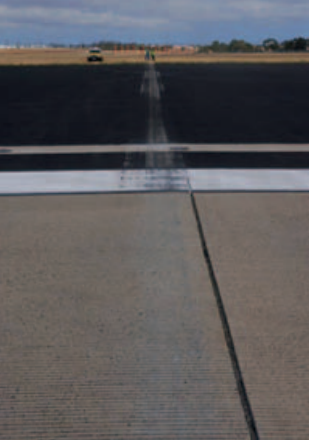
or no rotation at VR, leading potentially to a tailscrape.
q Higher Flex temp
Section titled “q Higher Flex temp”Taking off with a higher Flex temperature reduces the available thrust and take-off performance might not be reached. This is illustrated by fig. 4.
Figure 3 …and to a collision with a runway light.
The take-off reference speeds
Section titled “The take-off reference speeds”-
q V1 : Maximum speed at which the crew can decide to reject the take-off, and is ensured to stop the aircraft within the limits of the runway.
-
q VR : Speed at which the pilot initiates the rotation, at the appropriate rate (~3°/s).
-
q V2 : Minimum climb speed that must be reached at a height of 35 ft above the runway surface, in case of engine failure.
3.2.1 description
Section titled “3.2.1 description”(thus available runway length) and the obstacles mentioned on the airport charts.
Another example is shown below where many pre-flight interruptions led to some mistakes that “normally” would never happen.
Changes to all those factors led the aircraft to fly through the top of the trees at the end of the runway.
Take-off data was computed using the given weather, runway access
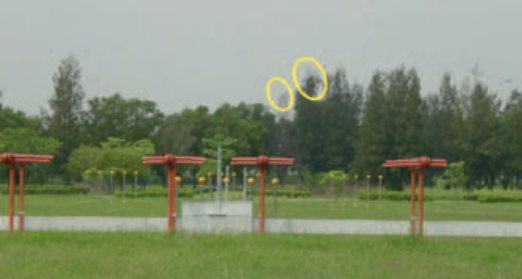
Figure 5 The departure end of the runway before the incident
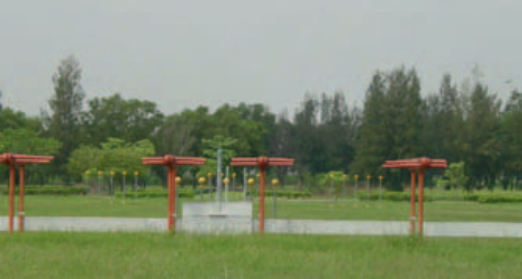
Figure 6 The same view after the aircraft clipped the trees
3.2.2 understanding the Impact
Section titled “3.2.2 understanding the Impact”q Upon departure, there was a reported 3.5 kt tailwind whilst predeparture computation was done for zero wind. This alone would have given a lower VR (-4 kt) and V2 (-3 kt) and reduced the vertical flight path by 54 ft.
q The initial departure computations were made using the full length of the runway whereas it was entered for take-off via an intersection (350 m shift). This alone would have given a lower VR (-4 kt) and V2 (-3 kt) and reduced the vertical flight path by 34 ft.
q The chart was indicating 40 ft high trees at 655 m from the end of the runway, whereas the actual trees were 54 ft high at 393 m from the end of the runway. This alone would have given a lower V1 (-5 kt), VR (-7 kt) and V2 (-5 kt) and reduced the flight path even further.
The combination of these factors ensured that the immediate post take-off climb profile was so reduced as to hit the obstacles whilst the crew thought that the flight path would be clear.
4. design Improvements
Section titled “4. design Improvements”Despite flight crew cross checks, mistakes can be made and some errors might remain undetected. In order to help flight crews, some design improvements have been developed. As a follow up to the Safety First n°8 (July 2009) article, the Take-Off
Securing (TOS) pack 1 includes a series of checks of take-off data:
q Weight check: to avoid an erroneous ZFW input in the FMS.
q ZFW entry must be within defined range per aircraft type.
q Speed check:
-
Take-off speeds order
-
Speeds between their limits
-
Speeds consistent with weight, thrust & slat/flap configuration
q Trim setting check: to avoid error of TRIM, erroneous ZFWCG input, auto-rotation or “heavy nose”.
q Slat/Flaps configuration check: to avoid error of S/F conf settings that will impact speeds and distance.
q Temperature check: to avoid takeoff with MCT (Maxi Continuous Thrust) instead of FLEX thrust.
Those improvements are developed for all fly-by-wire airbus aircraft
Reminder
Section titled “Reminder”V1 ≤ VR ≤ V2 V1 ≥ VMCG VR ≥ 1.05 x VMCA VR[≥] kVR x Vs1g V2 ≥ 1.10 x VMCA V2 ≥ kV2 x Vs1g
types, will be available via FMS and/or FWC upgrade (Upgrade depends on actual A/C configuration: approach your field service representatives or customer support directors for detailed information and operational impact).
5. A Pilot’s View
Section titled “5. A Pilot’s View”Last minute changes, disturbances and all imaginable versions of disruptions during flight preparation are normal issues to airline pilots, they set the stage for the daily “business as usual”activities.
All the information regarding a flight and all decisions merge in the cockpit where a good part of the flight crew´s duty consists of managing the right things at the right time.
The challenge is that not all things are right things and even less occur at the right time.
To simply promote the idea of not allowing any disturbance during critical phases of flight preparation would be an impracticable solution. by the time somebody “knocks on the door”, he or she has already disturbed the flight crew, and if you close the cockpit door, they will certainly return, be it on the interphone, via cell phone or any other creative means. Finally, in contrast to many other professions, problems usually cannot be deferred for long times in airline operations. If not managed they usually return like a boomerang.
Summing up, there is a general experience based acceptance in the
Safety
pilot community for disruptions. To ensure safe operations anyhow, it is important to have an easy and reliable concept to manage them instead of tilting at the windmills of disruption.
A proven way is to divide all tasks into small packages of measures. These packages should be stringent and complete in themselves, but small enough to allow for short time deferment by disruptions. An easy formula might be: allow for disruptions during overall tasks but do not allow any disruption to break up a defined package. This eases the safe return into the workflow after the disruption is managed.
As an example, during cockpit preparation, the F/O has done all the necessary FMS inputs and now it is your turn to check the entries. While you review the flight plan on the MCDU F-PLN page the ramp agent steps into the cockpit with an important question regarding loading. It would be rather impractical to let him wait until you have completed the entire FMS check. On the other hand, shifting your attention directly to the loading problem could result in an FMS entry error remaining undetected. Starting the complete FMS check anew after the distraction could result in an endless activity because there will certainly be another disruption during your next try. Dividing the task of checking the FMS entries into separate working packages for each MCDU page gives you the chance to finish one of these packages in a reasonable time short enough for any disruption to be deferred and well enough defined to allow for a safe continuation after the interruption.
A second very important point is time management. Captain Murphy has a reliable companion: F/O Hastemakeswaste. A human reaction on time pressure is the intention to speed things up with the motivation being not to bust schedules. Humans have a maximum design speed like every machine and it is hardly possible to exceed it. Ironically, if we exceed our design speed, things get even slower simply because the number of faults increases
exponentially. One is lucky if this results only in a slower pace. The history of accident investigation is full of dramatic examples where some well meant shortcuts and quick actions resulted in fatal faults. If a slot expires, there will be a new one. If there is a major bug in takeoff data calculation there might not be a second chance.
Always remember: the pacemakers are sitting in the pilot’s seats, not in a Central Flow Management Unit, not in a Collaborative Decision Making Computer, not in an Operational Control Center or whatever well intentioned institutions there may be in our worldwide working environment. Take your time and slow down when you are in a hurry!
Finally, there is a very important caesura in your flight: Going Offblocks. In the majority of flights, the circumstances for flight prepa-
6. Lessons learnt
Section titled “6. Lessons learnt”“Anything that can go wrong, will go wrong”. Capt Ed. Murphy
Interruptions, disturbances, last minute changes will always happen at the worst moment. Normally at that precise moment many issues have to be solved at the same time. It is when pressure is increasing a lot, that a small but critical mistake may sneak into the pilot’s computations. That small mistake (maybe only one digit) can have big consequences. To help the crews, the following hints can be highlighted:
q At the briefing, explain to the flight crew what you will be doing in the cockpit to prepare the flight and that there are phases when you can be interrupted and others when you need “sterile environment” for a few minutes.
ration do not obey the rule books. This means you can count on disruptions, time pressure, surprises and pretty well any kind of trouble. Often, there is no practicable way to circumnavigate these challenges. However you should never allow them to get airborne. Off-blocks is the last time to leave all these disturbances behind and revert to an unrushed flight SOP’s.
As a conclusion, there is no practicable way to avoid disruptions, they simply exist. To guarantee safe operations, we should not try to avoid, but manage them. Regarding time, we need to know the limitations of human pace and the crews ability to accept them. And whatever the conditions were during flight preparation, make a clear distinction after Off-blocks and continue thereafter with a regular flight.
q Know the rough order of magnitude of values before computing them, e.g: for a very long flight (more than 12 hours), an A340-500 will weight over 300 tons. A high Flex temp of 75°C is generally associated with a light weight take-off.
q Recognize when you are being distracted and double check at a quieter time using all available means (paper doc, LPC, …).
q Split your task into small packages that you can reasonably do and secure before being interrupted.
q Finally, in case of a doubt or a last minute change, take a break, re-do the computation.
Safety
Captain Peter KRuPA A320 教学机长兼汉莎航空首席事故调查员
Nicolas BARdOu
Section titled “Nicolas BARdOu”飞行安全总监
继在第 18 届 Airbus 飞行安全大会上所作的报告之后,我们决定重提这一影响几乎所有航班飞行员的话题。
本文将提供更多关于一个小错误如何影响飞机性能计算的信息,以及目前可用的设计改进(Safety First 第 8 期关于起飞安全功能 Take-Off Securing Function, TOS 的更新)。
最后,为了平衡“制造商视角”,我们提供了一个开放论坛,由一位经验丰富的航空公司飞行员分享他对这些挑战性情况的处理方法和技巧。
2. 临飞变更的案例
Section titled “2. 临飞变更的案例”许多因素会影响起飞前的准备工作。其中一些会造成干扰,进而导致引入不易察觉但错误的小变更,影响起飞安全。
可能单独或经常同时发生的几个例子:
-
检查单执行过程中的外部干扰
-
驾驶舱环境嘈杂
-
天气变化
-
跑道变更
-
跑道状况变化
-
新的滑行路线
-
更新的起飞数据
-
ATC 压力
-
高工作负荷
-
多任务处理
-
飞机技术状况(如 MEL)
-
新燃油数据
-
更新的货物
-
晚到旅客
-
晚到行李
-
除冰
-
地面工作人员
-
NOTAMS
-
旅客压力
-
……
这些是典型的变更案例,但它们经常发生在起飞前时间紧迫和工作负荷繁重的情况下,可能造成重大后果,如以下两个案例研究所示。
图 1 起飞前时间压力和工作负荷都很高
Safety
3. 事件分析
Section titled “3. 事件分析”3.1 案例研究 1
Section titled “3.1 案例研究 1”3.1.1 描述
Section titled “3.1.1 描述”在驾驶舱准备飞行时,机组人员不断被驾驶舱内的交谈、客舱乘务员、地面工作人员、关于 SID 的讨论等打断……
这导致起飞数据的交叉检查未能正确执行, entered 的总重量比实际飞机重量低了 100 吨。仅是飞行员选择时的一个数字差异,但导致的结果是擦尾、起飞后冲出跑道末端以及跑道灯损坏。选择 TOGA 在这种情况下提供了足够的功率,使飞机能够爬升脱离 (图 2 和 3)。
3.1.2 理解其影响
Section titled “3.1.2 理解其影响”输入低于实际的总重量会导致:
q 速度偏低
Section titled “q 速度偏低”计算的失速速度会更低,给出更低的 V2 和更低的 V 速度。结果是在 VR 时旋转不足或无旋转,可能导致擦尾。
q 灵活温度更高
Section titled “q 灵活温度更高”使用更高的灵活温度起飞会减少可用推力,可能无法达到起飞性能。如 图 4 所示。
图 3 ……以及撞到跑道灯。
起飞参考速度
Section titled “起飞参考速度”-
q V1 : 机组可以决定中断起飞的 最大速度,且能够确保在跑道限制范围内停止飞机。
-
q VR : 飞行员开始以适当速率(约 3°/秒)执行抬头动作的速度。
-
q V2 : 在距跑道表面 35 英尺高度必须达到的 最小爬升速度,在单发失效情况下。
3.2.1 描述
Section titled “3.2.1 描述”(即可用跑道长度)以及机场图表上标注的障碍物。另一个示例如下所示,许多飞行前的中断导致了一些“正常情况下”永远不会发生的错误。
所有这些因素的变更导致飞机飞越跑道末端的树顶。
起飞数据是使用给定的天气、跑道接入情况计算的
图 5 事故前跑道的起飞端
图 6 飞机擦碰树木后的相同视角
3.2.2 理解其影响
Section titled “3.2.2 理解其影响”q 起飞时报告有 3.5 海里的顺风,而起飞前计算时是按无风条件。仅此一项就会导致 VR 降低(-4 海里)和 V2 降低(-3 海里),垂直飞行轨迹减少 54 英尺。
q 初始起飞计算是使用跑道全长,而实际是从交叉道口进入起飞(偏移 350 米)。仅此一项就会导致 VR 降低(-4 海里)和 V2 降低(-3 海里),垂直飞行轨迹减少 34 英尺。
q 图表标注的树木高度为 40 英尺,位于距跑道末端 655 米处,而实际树木高度为 54 英尺,位于距跑道末端 393 米处。仅此一项就会导致 V1 降低(-5 海里)、VR 降低(-7 海里)和 V2 降低(-5 海里),进一步减少飞行轨迹。
这些因素的综合影响使得起飞后立即的爬升轨迹大幅缩减,最终撞到了障碍物,而机组人员认为飞行轨迹应该是安全的。
4. 设计改进
Section titled “4. 设计改进”尽管有飞行机组交叉检查,仍可能发生错误且某些错误可能无法被检测到。为了帮助飞行机组,已开发了一些设计改进措施。作为《Safety First》第8期(2009年7月)文章的后续,起飞固定(TOS)包1包含一系列起飞数据检查:
q 重量检查:避免FMS中输入错误的ZFW。
q ZFW输入必须在按机型定义的范围内。
q 速度检查:
- 起飞速度顺序
- 速度在限制范围内
- 速度与重量、推力和缝翼/襟翼构型一致
q 配平设置检查:避免TRIM错误、ZFWCG输入错误、自动旋转或“机头重”。
q 缝翼/襟翼构型检查:避免S/F构型设置错误,因为这将影响速度和距离。
q 温度检查:避免使用MCT(最大连续推力)代替FLEX推力起飞。
这些改进措施将为所有电传空客飞机开发。
V1 ≤ VR ≤ V2 V1 ≥ VMCG VR ≥ 1.05 × VMCA VR[≥] kVR × Vs1g V2 ≥ 1.10 × VMCA V2 ≥ kV2 × Vs1g
机型提供,将通过FMS和/或FWC升级实现(升级取决于实际飞机构型:请联系现场服务代表或客户支持总监了解详细信息和运营影响)。
5. 飞行员的视角
Section titled “5. 飞行员的视角”起飞前的最后时刻变更、干扰以及飞行准备过程中所有能想象到的各种中断,对航空公司飞行员来说是常见问题,它们构成了日常“例行工作”的背景。
与某次飞行相关的所有信息以及所有决策都汇聚在驾驶舱中,飞行机组的大部分职责就是在正确的时间管理正确的事情。
挑战在于,并非所有事情都是正确的事情,而且更少能在正确的时间发生。
简单地提倡在飞行准备的关键阶段不允许任何干扰是一个不切实际的解决方案。因为当有人“敲门”时,他已经干扰了飞行机组,如果你关上驾驶舱门,他们肯定会以其他方式回来,无论是通过对讲机、手机还是任何其他创造性的方式。最后,与许多其他职业不同的是,航空公司运营中的问题通常不能被长期推迟。如果不加以管理,它们通常会像回旋镖一样返回。
总而言之,飞行员群体中普遍存在基于经验的干扰接受度。为了确保安全运营,重要的是拥有一个简单可靠的概念来管理干扰,而不是徒劳地对抗干扰。
一个经过验证的方法是将所有任务分成小的工作包。这些工作包本身应该是严格且完整的,但又要足够小,以便在受到干扰时允许短期推迟。一个简单的公式可能是:允许在整体任务中出现干扰,但不允许任何干扰破坏已定义的工作包。这样可以更容易地在管理完干扰后安全地恢复工作流程。
举例来说,在驾驶舱准备期间,副驾驶已完成所有必要的FMS输入,现在轮到你检查这些输入。当你在MCDU F-PLN页面上审查飞行计划时,地面保障人员走进驾驶舱询问一个关于装载的重要问题。让他等到你完成整个FMS检查是不太实际的。另一方面,如果直接转移注意力去处理装载问题,可能导致FMS输入错误未被检测到。在分心后重新开始完整的FMS检查可能导致无休止的活动,因为在下次尝试期间肯定还会有其他干扰。将检查FMS输入的任务分成每个MCDU页面的独立工作包,这样你就有机会在合理的时间内完成其中一个工作包——这段时间短到任何干扰都可以被推迟,同时定义足够明确以允许在中断后安全继续。
第二个非常重要的点是时间管理。墨菲定律有一个可靠的同伴:副驾驶“急躁浪费”。人类在时间压力下的反应是加快做事的意图,动机是不打乱时刻表。人类和每台机器一样都有最大设计速度,几乎不可能超越它。具有讽刺意味的是,如果我们超过自己的设计速度,事情反而会变得更慢,因为错误数量呈指数级增长。幸运的话,这只会导致节奏变慢。事故调查史上充满了戏剧性的例子,一些善意的捷径和快速行动导致了致命的错误。如果一个时隙过期了,会有新的时隙。但如果起飞数据计算中存在重大错误,可能不会有第二次机会。
永远记住:起搏器坐在飞行员座椅上,而不是在中央流量管理单元、协同决策计算机、运营控制中心或我们全球工作环境中可能存在的任何其他善意机构中。当你有急事时,花点时间放慢脚步!
最后,你的飞行中有一个非常重要的分界线:推出挡轮挡。在大多数航班中,飞行准备的时机
6. 经验教训
Section titled “6. 经验教训”“会出错的事总会出错”。 埃德·墨菲机长
中断、干扰、最后一刻的变更总是在最糟糕的时刻发生。通常在那个精确的时刻,许多问题必须同时解决。正是当压力越来越大时,一个小但关键的错误可能悄悄混入飞行员的计算中。这个小错误(也许只是一个数字)可能造成重大后果。为帮助机组人员,可以强调以下几点:
q 在简令中,向飞行机组说明 你在驾驶舱中将如何准备飞行,并告知哪些阶段可以被打断,哪些阶段需要几分钟的“隔离环境”。
实际运行并不遵守规则手册。这意味着你可以预见到各种干扰、时间压力、意外以及几乎任何类型的麻烦。通常,没有切实可行的方法来规避这些挑战。然而,你绝不能让它们飞上天。撤轮挡是最后将所有这些干扰抛在身后、恢复从容不迫的飞行SOP的时刻。
总而言之,没有切实可行的方法来避免干扰,它们就是客观存在的。为了保证安全运行,我们不应试图规避,而应管理它们。关于时间,我们需要了解人类节奏的局限性以及机组接受这些局限性的能力。无论飞行准备期间的条件如何,在撤轮挡后做出明确的区分,此后按照正常飞行继续。
q 在计算之前了解数值的大致数量级,例如:对于一个非常长的航程(超过12小时),A340-500的重量将超过300吨。75°C的高灵活温度通常与轻重量起飞相关。
q 意识到自己被分心时,在更安静的时候使用所有可用手段(纸质文件、LPC等)进行双重检查。
q 将任务分解成小的可管理的模块,以便在被打断之前能够合理地完成并确认。
q 最后,如果有疑问或最后一刻的变更,休息一下,重新进行计算。
Safety