Aircraft Protection, during Washing and Painting
Source: Airbus Safety First URL: https://safetyfirst.airbus.com/aircraft-protection-during-washing-and-painting/ Published: 2014-01-29 Magazine Issue: 2014-01 Category: Ground Ops, Maintenance, ground, ingress, painting, probe, static, washing, water PDF: Original PDF
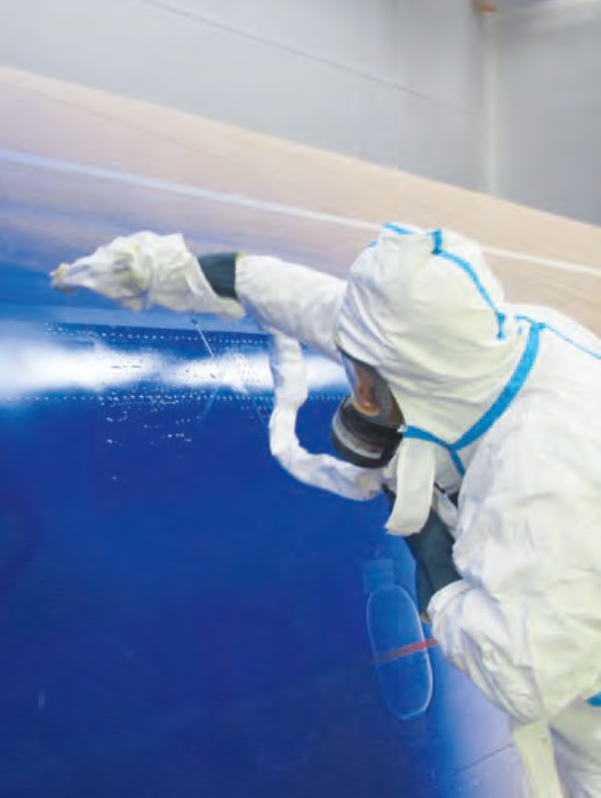
Introduction Non-adherence to the correct aircraft washing/cleaning and painting procedures regularly generate safety events. This article will illustrate, through real in-service occurrences, that even activities performed primarily to improve the appearance of the aircraft and better display the airline logo may affect the safety of operations. The lessons learnt from these events are common: washing or painting an aircraft must be done according to the published procedures and using the correct equipment. These are specified in the Aircraft Maintenance Manual (AMM), Structure Repair Manual (SRM) and Tool and Equipment Manual (TEM).

Uwe EGGERLING Senior Director Safety Engineering & Maintenance Customer Services
Aircraft Protection , during Washing and Painting
Section titled “Aircraft Protection , during Washing and Painting”Case Study n°1
Section titled “Case Study n°1”What happened?
Section titled “What happened?”An A320 performed a landing with the Nose Landing Gear (NLG) in a position of about 90° from the aircraft centreline (fig. 1). The aircraft landed safely and stopped on the runway. The NLG was damaged.
Why did it happen?
Section titled “Why did it happen?”Inspection of parts confirmed traces of water in the Nose Wheel Steering (NWS) feedback sensors and water ingress inside the NLG turning tube.
During the flight, the water froze and blocked the sensors. The sensors could therefore no longer provide the correct feedback on the NLG position. The Brake System Control Unit (BSCU) tried to align the NWS to the aircraft centreline. In absence of a correct feedback signal, the NWS was rotated further until the steering system was detected as faulty. The hydraulic supply to the steering system was shut-off, but the NWS was already at an almost 90° position from the centreline and could not be re-centred mechanically.
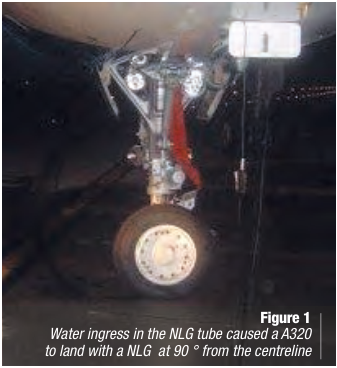
Further investigation on the maintenance history revealed that the aircraft had a scheduled maintenance check just few flights prior to the reported event. During the check, the maintenance provider performed aircraft external cleaning using a high pressure jet device. Consequently, water entered into the NLG and feedback sensors through a vent hole located at the top of the NLG.
Lessons learned
Section titled “Lessons learned”Pay special attention to the instructions and cautions requesting to use protective devices as required in the AMM procedures for external cleaning of the aircraft.
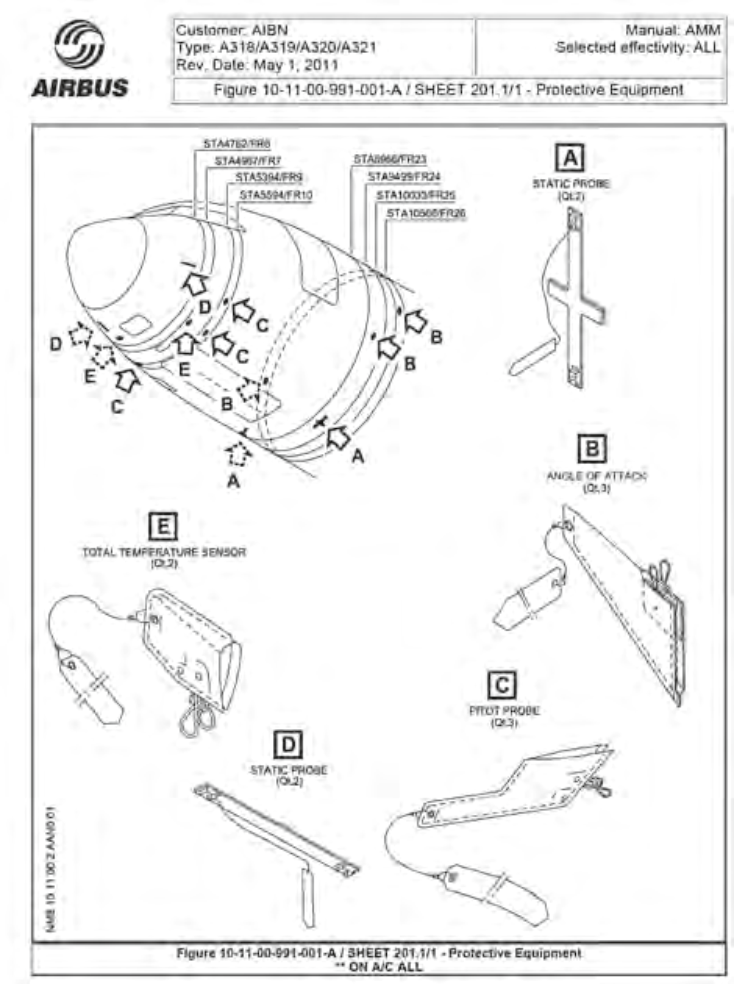
The instructions and cautions are applicable for all sensors and probes such as Angle of Attack sensors, pitot probes, temperature sensors, static probes, ice detection probes,…
In particular, do not use high pressure jets or vapour for cleaning. This type of equipment can force water and moisture into the parts and cause damage to them.
References:
Section titled “References:”-
AMM 12-21-11 Page Block 301, “External Cleaning”
-
AMM 32-11-00 Page Block 701, “Main Gear Cleaning / Painting”
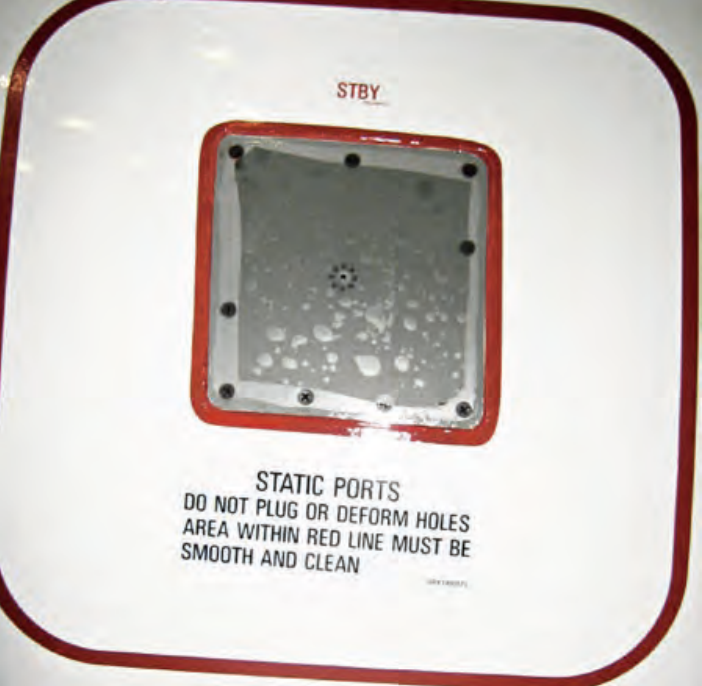
Figure 2 A clear plastic film over the static ports was left on the aircraft when it was handed back to the operator
-
AMM 32-21-00 Page Block 701, “Nose Gear Cleaning / Painting”
-
Operators Information Transmission (OIT), ref. 999.0067/13, dated 26 Sep 2013
Subject: ATA 34 – Protection of Angle of Attack (AoA) sensors during aircraft exterior cleaning. This OIT reminds operators of the AoA sensor protection to be used during aircraft exterior cleaning and the importance of respecting this guidance.
- Operator Information Transmission (OIT), ref. SE 999.0042/10, dated 06 May 2010
Subject: ATA 32 – Water ingress in nose wheel steering feedback sensors.
Case Study n°2
Section titled “Case Study n°2”What happened?
Section titled “What happened?”An aircraft was re-painted by a third party maintenance organisation. The operator discovered, before the aircraft
was returned into service, that there was a clear plastic film over one of the static ports that was almost impossible to detect visually (fig. 2, 3 & 4).
If the clear plastic film had not been discovered and removed, it would have caused incorrect indications on the related cockpit instruments
Why did it happen?
Section titled “Why did it happen?”Inadequate protections were applied during aircraft painting in such a way that they were difficult to see from the ground. As a result, they were not removed after the painting job was done.
The transparent plastic was only noticed because of the presence of air bubbles under the film.
Lessons learned
Section titled “Lessons learned”Follow the AMM and SRM instructions for stripping, paint removal, cleaning and painting as summarised below:
Aircraft Maintenance Manual (AMM)
Section titled “Aircraft Maintenance Manual (AMM)”In AMM chapter 51-75-11 PB 701 – Stripping/paint removal – cleaning/ painting, the following Warning and Caution are included:
- The “Caution” provides a list of materials, areas, and parts for which a correct protection from chemical paint strippers are required. This list includes:
Rubber, all composite parts, acrylic materials, aerodynamic smoother, metal bonded edges, pitot tubes, sensors, static ports, engine air intake, pre-cooler air outlet screen, engine exhaust duct, APU exhaust, APU intakes and outlets, air conditioning ram air inlets, landing gears, door seals, access doors, cabin window and windshield panels and seals, electrical equipment and cables, plastic materials, external ski panel joints, high strength steel parts, drain holes, vents, and all antennas.
– The “Warning” notice highlights that adhesive tapes must not be applied on the probes, ducts, and sensors (static, pitot, TAT, AoA). Only specified tools should be used to seal the aircraft, which will ensure:
-
Correct protection of the aircraft equipments
-
Good visibility from the ground
-
Ease of removal
The Warning notice also explains how the incomplete removal of tapes or tape adhesive from probes, ducts or sensors may lead to incorrect indications on the related cockpit instruments.
Tool and Equipment Manual (TEM)
Section titled “Tool and Equipment Manual (TEM)”The description of the protective equipments is given in the Tool and Equipment Manual (TEM)
Structure Repair Manual (SRM)
Section titled “Structure Repair Manual (SRM)”Chapter 51-75-11 contains recommendations for stripping and paint removal. The SRM provides also cautions in chapter 51-75-12, Repair of Paint Coatings, about the materials, areas and parts affected by the painting activities, which must be properly protected. A caution includes instructions to remove all masking materials upon work completion, with a special attention to pitot heads and static ports.
Figure 3 The aircraft protection equipment to be used for the static probes is given in the AMM chapter 10-11-00 Page Block 201
| Part No. | 98D10103500001( FAPE3) |
|---|---|
| Designation | COVER-STATIC PROBE |
| See drawings | 98D10103500 COVER STATIC PROBE |
Figure 4 Fig 4: TEM description of the static probe cover
Conclusion
Section titled “Conclusion”In-service experience has taught us that even activities performed on the aircraft mainly for cosmetic reasons, like washing or painting, may have an impact on the safety of operations.
The in-service incidents described in this article illustrate the need to carefully follow the indicated instructions available in the Aircraft Maintenance Manual, Structure Repair Manual as well as Tool and Equipment Manual.
来源:Airbus Safety First URL:https://safetyfirst.airbus.com/aircraft-protection-during-washing-and-painting/ 发布日期:2014-01-29 杂志期号:2014-01 分类:地面操作、维修、地面、进入、喷漆、探头、静压孔、清洗、水
PDF:原始 PDF
引言 不遵守正确的飞机清洗/清洁和喷漆程序会定期引发安全事故。本文将通过真实的服务中事件说明,即使是主要为了改善飞机外观、更好地展示航空公司标志的活动,也可能影响运行安全。从这些事件中吸取的教训是共通的:清洗或喷漆飞机必须按照已发布的程序并使用正确的设备进行。这些要求在《 aircraft maintenance manual》(AMM)、《 Structure Repair Manual》(SRM)和《 Tool and Equipment Manual》(TEM)中有所规定。
Uwe EGGERLING 资深总监 安全工程与维修客户服务
飞机清洗和喷漆期间的防护
Section titled “飞机清洗和喷漆期间的防护”案例研究 n°1
Section titled “案例研究 n°1”发生了什么?
Section titled “发生了什么?”一架 A320 在前起落架(Nose Landing Gear,NLG)偏离飞机中线约 90° 的位置进行了着陆(图 1)。飞机安全着陆并停在跑道上。前起落架受损。
为什么发生?
Section titled “为什么发生?”部件检查确认在前轮转向(Nose Wheel Steering,NWS)反馈传感器和前起落架转向管内部发现了水迹。
在飞行过程中,水结冰并阻塞了传感器。因此传感器无法再提供正确的前起落架位置反馈。制动系统控制单元(Brake System Control Unit,BSCU)试图将前轮转向系统对中至飞机中线。由于没有正确的反馈信号,前轮转向系统继续旋转,直到检测到转向系统故障。转向系统的液压供应被切断,但前轮转向系统此时已偏离中线近 90°,无法通过机械方式回中。
对维修历史的进一步调查显示,该飞机在报告事件前几天进行过一次计划维修检查。在检查期间,维修服务商使用高压喷射装置对飞机外部进行了清洗。因此,水从前起落架顶部的通气孔进入了前起落架和反馈传感器。
在 AMM 程序的飞机外部清洁程序中,特别注意要求使用防护装置的说明和警告。
这些说明和警告适用于所有传感器和探头,如迎角(Angle of Attack)传感器、皮托管(pitot probes)、温度传感器、静压孔(static probes)、结冰探测探头等……
特别要注意,不要使用高压喷射或蒸汽进行清洁。此类设备会将水和湿气压入部件内部,导致部件损坏。
-
AMM 12-21-11 Page Block 301,“外部清洗”
-
AMM 32-11-00 Page Block 701,“主起落架清洁/喷漆”
图 2 将静压孔上的透明塑料保护膜留在飞机上交给运营商
-
AMM 32-21-00 Page Block 701,“前起落架清洁/喷漆”
-
运营商信息传输(Operator Information Transmission,OIT),编号 999.0067/13,日期:2013 年 9 月 26 日
主题:ATA 34 – 飞机外部清洗期间迎角(AoA)传感器的防护。本 OIT 提醒运营商在飞机外部清洗期间应使用的 AoA 传感器防护措施,以及遵守该指南的重要性。
- 运营商信息传输(Operator Information Transmission,OIT),编号 SE 999.0042/10,日期:2010 年 5 月 6 日
主题:ATA 32 – 前轮转向反馈传感器进水
案例分析 n°2
Section titled “案例分析 n°2”一架飞机由第三方维修机构进行重新喷漆。运营商在飞机恢复服役前发现,一个静压孔上覆盖了一层透明塑料薄膜,几乎无法通过目视检查发现(图2、3和图4)。
如果未发现并移除这层透明塑料薄膜,将会导致相关驾驶舱仪表显示异常。
在飞机喷漆过程中应用的防护措施不够充分,导致这些防护物难以从地面观察到。因此,喷漆作业完成后未能将其移除。
这层透明塑料薄膜之所以被发现,是因为膜下存在气泡。
按照 AMM 和 SRM 中关于除漆、漆层清除、清洁和喷漆的说明进行操作,概述如下:
aircraft Maintenance Manual (AMM)
Section titled “aircraft Maintenance Manual (AMM)”在 AMM 第 51-75-11 章 PB 701——除漆/漆层清除——清洁/喷漆中,包含以下警告和注意事项:
- “注意事项”列出了需要正确防护以免受化学除漆剂影响的材料、区域和部件清单,其中包括:
橡胶、所有复合材料、丙烯酸材料、整流罩、金属粘接边缘、皮托管、传感器、静压孔、发动机进气口、预冷器排气口滤网、发动机排气导管、APU 排气口、APU 进气口和排气口、空调冲压空气进口、起落架、门密封件、舱门密封、舷窗和风挡玻璃面板及密封件、电气设备和电缆、塑料材料、外置滑雪板面板接头、高强度钢部件、放水孔、通风口以及所有天线。
-
“警告”明确指出,不得在探头、导管和传感器(静压、皮托管、总温 TAT、迎角 AoA)上粘贴胶带。应仅使用指定的工具对飞机进行密封,以确保:
-
飞机设备得到正确防护
-
从地面能够良好观察
-
易于移除
该警告还说明了如果未能完全清除探头、导管或传感器上的胶带或胶带残留,可能导致相关驾驶舱仪表显示异常。
Tool and Equipment Manual (TEM)
Section titled “Tool and Equipment Manual (TEM)”防护设备的详细说明见 Tool and Equipment Manual (TEM)
Structure Repair Manual (SRM)
Section titled “Structure Repair Manual (SRM)”第 51-75-11 章包含关于除漆和漆层清除的建议。SRM 在第 51-75-12 章《漆层修补》中也提供了关于受喷漆活动影响的材料、区域和部件的注意事项,这些部件必须得到适当防护。注意事项中包含在作业完成后移除所有遮盖材料的说明,并特别关注皮托管探头和静压孔。
图 3 AMM 第 10-11-00 章 Page Block 201 中给出了静压探头应使用的飞机防护设备
| 件号 | 98D10103500001( FAPE3) |
|---|---|
| 名称 | COVER-STATIC PROBE |
| 参见图纸 | 98D10103500 COVER STATIC PROBE |
图 4 图 4:静压探头罩的 TEM 描述
服役经验告诉我们,即使主要出于外观原因在飞机上进行的活动(如清洗或喷漆),也可能对运营安全产生影响。
本文描述的服役期间事件说明了必须严格遵守 Aircraft Maintenance Manual、Structure Repair Manual 以及 Tool and Equipment Manual 中提供的相关说明。