Understanding Weight and Balance
Source: Airbus Safety First URL: https://safetyfirst.airbus.com/understanding-weight-and-balance/ Published: 2015-01-29 Magazine Issue: 2015-01 Category: Flight Ops, Ground Ops, balance, cg, envelope, gravity, load, performance, tail strike, tailstrike, trim, weight PDF: Original PDF
Understanding Weight & Balance
Understanding Weight & Balance
Section titled “Understanding Weight & Balance”To “feel” the aircraft response through the flight controls as being “heavier or lighter” than anticipated at take-off can result from a weight & balance inaccuracy. In fact, when the CG is out of the operational limits, the safety consequences can be far more critical than just a strange feeling.
CATHERINE BONNET XAVIER BARRIOLA
Section titled “CATHERINE BONNET XAVIER BARRIOLA”Senior Director Performance and Weight & Balance Customer services
Director Flight Safety – Accident investigator

What does actually lie behind the aircraft weight and the %RC or %MAC mentioned on the load and trim sheet? What do these limits account for? Beyond the compliance with regulatory requirements dimension, let’s take a journey through the underlying physical phenomena at stake. But first let’s take a look at what can happen when the loading and C of G is incorrect or becomes out of limits.
A VARIETY OF EVENTS, A COMMON ORIGIN
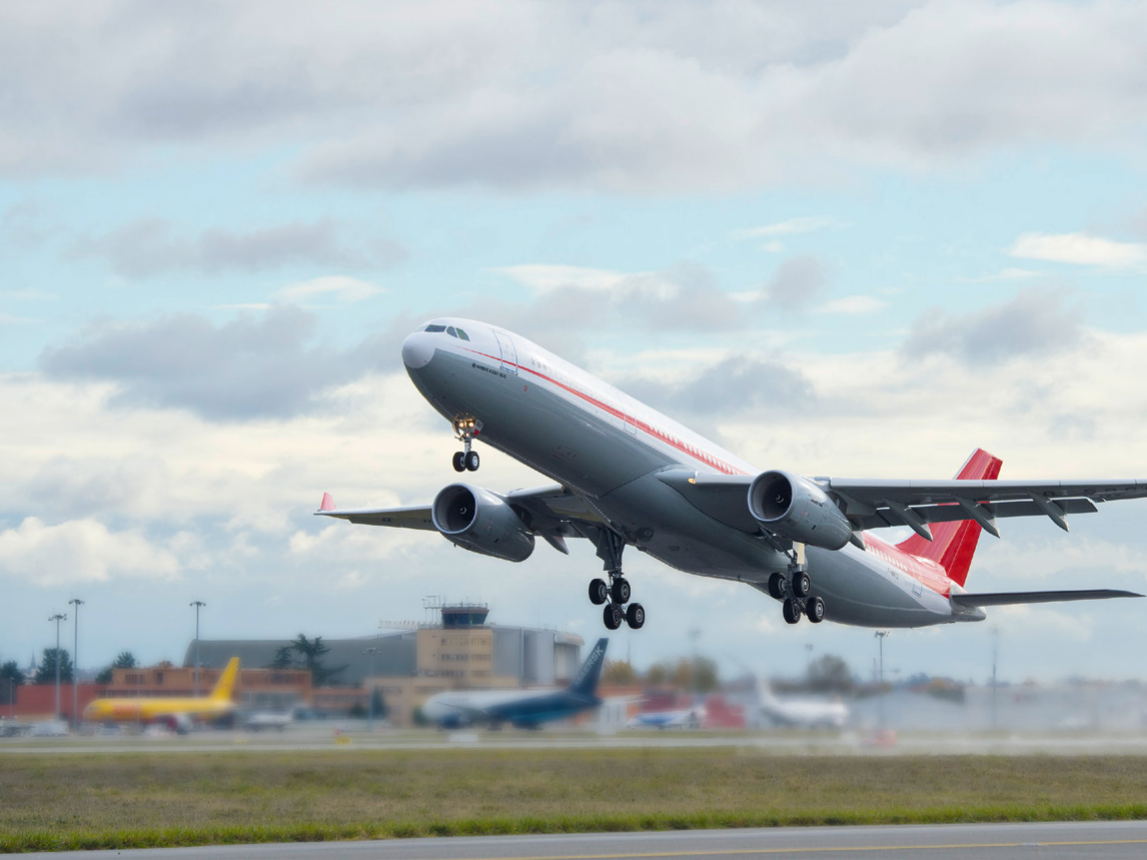
Section titled “A VARIETY OF EVENTS, A COMMON ORIGIN”Images of airplanes sitting on their tail or experiencing a severe tail strike or even stalling right after take-off unfortunately do not all belong to the past. In recent years, commercial aviation has faced multiple accidents or serious incidents related to weight & balance issues.
Tail strike at take-off
Section titled “Tail strike at take-off”While taking-off for the second leg of a flight, a single aisle aircraft experienced a tail strike. Despite significant damage, the aircraft was able to turn back and land at departure airport. The first leg had been uneventful. During the intermediate stop over, some of the passengers disembarked the aircraft and their luggage was offloaded. No new passengers boarded nor was any new cargo
loaded. The investigation revealed that the passengers proceeding to the second destination airport were all seated at the back of the cabin and their luggage was loaded in the aft cargo bay. No movement of passengers between legs took place. The load sheet had been prepared for the first leg only. The CG position for the second leg turned out to be outside of the safe envelope: it was too far aft.
Unexpected pitch-up during climb
Section titled “Unexpected pitch-up during climb”The next story is based on a real event with a wide body cargo aircraft. The aircraft was carrying several similar heavy pieces of special cargo. During climb, the aircraft experienced an unexpected pitch-up when the
cargo detached and moved aft. The CG warning alert went off and the AP disconnected. The pilot successfully manually controlled the aircraft and eventually landed safely.
Tail tipping
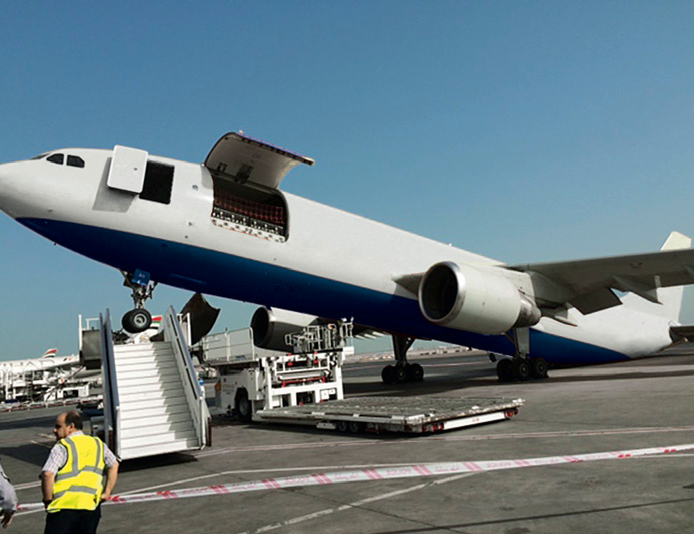
Section titled “Tail tipping”While being unloaded, a wide body cargo aircraft tipped up on its tail. It turned out that a less than optimum shift handover had taken place, and
lack of training of the load master on the aircraft type contributed to the non-compliance with the correct unloading sequence.
Understanding Weight & Balance
Tail strike and take-off after runway end
Section titled “Tail strike and take-off after runway end”DID YOU KNOW
Section titled “DID YOU KNOW”A long-range aircraft type failed to take-off within the runway length, and experienced a significant tail strike whilst ultimately managing to take-off way outside the runway limits. The aircraft was severely damaged but fortunately, was ultimately able to make a successful landing. The investigation revealed that the aircraft weight entered into the system to compute the take-off speed was incorrect. One digit was incorrectly entered. While the aircraft weight was 362 tons, the take-off performance data were calculated for a 262 tons aircraft, thus the expected performance was significantly over estimated. The real aircraft performance was much worse than that which had been calculated.
Among the accidents related to a weight and balance issue*:
-
21% are due to overweight
-
35% are due to a CG which exceeds the certified limits
*National Aerospace Laboratory (NLR) study for the period 1997-2004
Stall and crash
Section titled “Stall and crash”Right after take-off, a long-range wide-body cargo aircraft experienced a violent pitch-up that couldn’t be recovered by the crew. The rapid decrease in airspeed led to the aircraft stalling and crash. It turned out that the load had broken free and had shifted aft just after take-off.
Four recent events, one safety lesson: the impact of weight & balance issues on a flight can range from merely a “strange feeling” to a fatal accident.
WEIGHT & BALANCE: WHAT IS IT ABOUT?
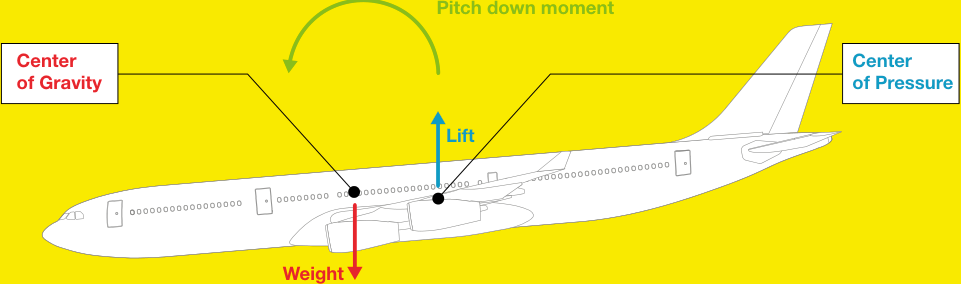
Section titled “WEIGHT & BALANCE: WHAT IS IT ABOUT?”In order to well understand the impact of weight and balance on the stability and maneuverability of the aircraft, it is worth getting back to the forces that apply to the aircraft, and more specifically to focus on the vertical ones.
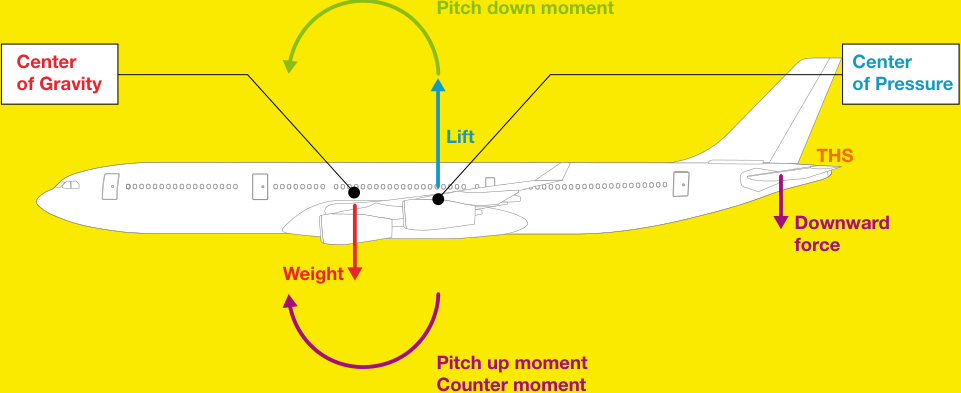
There are two of them, applying at distinct points along the aircraft longitudinal axis:
• The Weight of the aircraft, applied at the Center of Gravity (CG) of the aircraft;
• The Lift, applied at the Center of Pressure (CP).
The CG is further forward than the CP for aircraft stability reasons. Thus, the more distant the two points, the bigger the pitch-down moment.
Understanding Weight & Balance
KEEPING THE CG WITHIN THE OPERATIONAL ENVELOPE: A MUST FOR A SAFE FLIGHT
Section titled “KEEPING THE CG WITHIN THE OPERATIONAL ENVELOPE: A MUST FOR A SAFE FLIGHT”The influence of the CG position on aircraft performance, stability and maneuverability varies along the flight, depending on the phase of flight. The main safety issues related to an inappropriate position of the CG depend on whether the CG is forward or aft as developed hereafter.
CG forward
Section titled “CG forward”As explained earlier, the more distant the CG and the CP, the bigger the pitch-down moment. Since for aircraft stability reasons the CP is always located behind the CG, a forward CG
increases the distance between the CP and the CG. A CG position further forward than the most forward position of the operational envelope can affect the safety of the flight in many ways.
Impact on aircraft maneuverability at all phases of flight
Section titled “Impact on aircraft maneuverability at all phases of flight”A CG position that is too far forward induces such a big pitchdown moment that the aircraft maneuverability can no longer be guaranteed.
A CG position that is too far forward induces such a big pitch-down moment that the aircraft maneuverability can no longer be guaranteed.
Indeed, the more forward the CG, the bigger the horizontal stabilizer and elevator deflections needed to give the aircraft a pitch-up attitude to compensate for the pitch-down moment. However, at some point of CG forward position, the horizontal stabilizer and elevator maximum deflections are reached, and the aircraft cannot
be maneuvered any more.
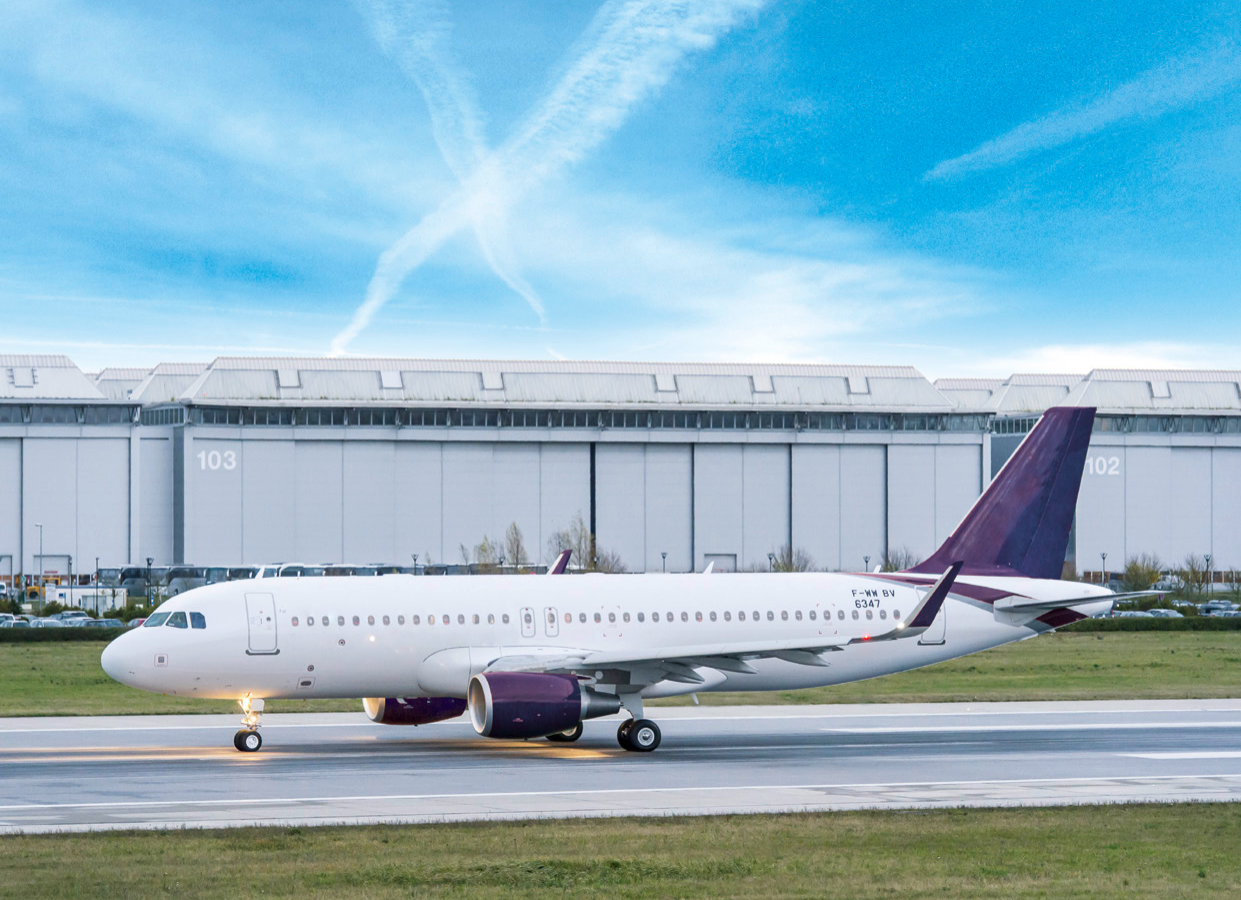
As an example for take-off, if the CG position is too far forward, the aircraft has such a “heavy nose” that the correct take-off rotation rate using the elevator becomes impossible to reach. The impact of an excessively forward CG position on aircraft maneuverability applies at all phases of flight. However, it is most noticeable at low speed due to the reduced effectiveness of the elevators.
Impact on aircraft performance at all phases of flight
Section titled “Impact on aircraft performance at all phases of flight”A CG exceeding the most forward CG position of the envelope is also the most penalizing situation in terms of aircraft performance.
formance is calculated based on the most forward CG position within the envelope. Therefore, if the CG position is even more forward, the actual aircraft performance will be lower than the calculated one.
Indeed, the take-off and landing per-
Impact on aircraft structure at take-off
Section titled “Impact on aircraft structure at take-off”On the ground, the total weight of the aircraft is supported by both the nose and main gears, the further forward the CG, the bigger the proportion of total weight is carried by the nose landing gear. At high weights (TOW),
if the CG position exceeds the most forward CG position of the envelope, the aircraft structural limits of the nose landing gear can be reached with a consequent risk of damage.
A CG exceeding the most forward CG position of the envelope is also the most penalizing situation in terms of aircraft performance.
Understanding Weight & Balance
CG aft
Section titled “CG aft”A CG aft position brings the CG close most aft position of the envelope can to the CP. Yet, exceeding the CG lead to a variety of safety issues.
Impact on aircraft controllability at …
Section titled “Impact on aircraft controllability at …”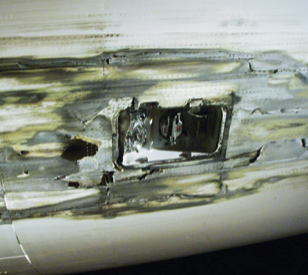
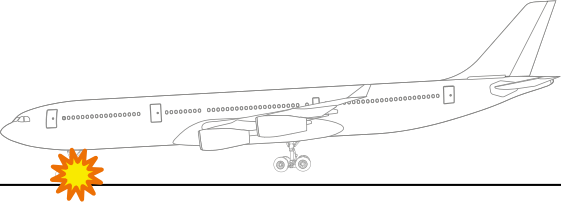
(fig.1) Tail strike at take off
… Go-around
Section titled “… Go-around”In case of go-around, setting TOGA power induces a significant pitch-up moment that needs to be compensated for. The more aft the CG, the bigger the pitch-up moment. If the CG is too far aft, and outside the envelope, the pitch-up moment induced by initiating the go-around may be too big to be compensated for.
At low speed, high angle of attack and TOGA power, the pitch-up moment increase due to having a CG position too far aft, may also trigger the alpha floor protection, thus prevent its sufficient compensation.
… Take-off
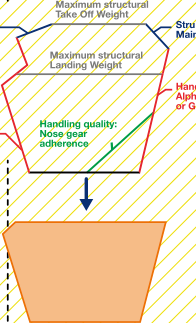
Section titled “… Take-off”At lower take-off weight (for example for a positioning flight or short leg flight), a CG position too far aft impairs the nose wheel controllability during taxi and at the beginning of the take-off run. Indeed, the weight of the aircraft being mostly on the main gear, the adherence of the nose wheel to the ground is limited. This is especially true on wet or contaminated runway surfaces. Until the aircraft reaches a sufficient speed for the rudder to be effective, nose wheel steering is the only way to control the aircraft. The nose wheel adherence is even further reduced when full power is applied for take-off due the induced pitch-up moment.
This “very light nose” effect of too aft a CG position also makes the rotation so easy that it could as easily lead to a tail strike (fig.1). In some cases, the aircraft will “self rotate” without any action by the pilot.
Impact on aircraft structure at take-off
Section titled “Impact on aircraft structure at take-off”As mentioned earlier, on the ground, landing gear can be reached with a the total weight of the aircraft is supconsequent risk of damage. ported by both the nose and main gears. Therefore, the further aft the Likewise, in such high TOW conCG, the bigger the weight on the ditions, the load on the wings may main landing gears. At high weights exceed their structural limit. This is (TOW), if the CG position exceeds the the reason why the speed is limited most aft CG position of the envelope, during taxi for turns. the aircraft structural limits of the main
Likewise, in such high TOW conditions, the load on the wings may exceed their structural limit. This is the reason why the speed is limited during taxi for turns.
Eventually, a CG outside the operational envelope may significantly impair the aircraft capabilities, and thus ultimately jeopardize the safety of the flight.
A CG outside the operational envelope may significantly impair the aircraft capabilities, and thus ultimately jeopardize the safety of the flight.
Understanding Weight & Balance
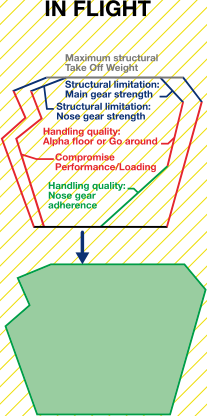
Summary along the flight path of the main safety impacts of an ill-located CG
Section titled “Summary along the flight path of the main safety impacts of an ill-located CG”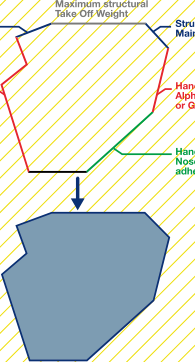
HOW TO MAKE SURE THE CG IS AND REMAINS WITHIN A SAFE ENVELOPE THROUGHOUT THE FLIGHT?
Section titled “HOW TO MAKE SURE THE CG IS AND REMAINS WITHIN A SAFE ENVELOPE THROUGHOUT THE FLIGHT?”Both the CG position and the safe envelope evolve throughout the flight. Indeed, the weight of the aircraft evolves mainly as fuel is burned. As for the CG, its position is sensitive to various phenomena ranging from landing gear, flaps and slats position to passengers or cabin crew movements from one end of the cabin to the other.
Although there were attempts at developing systems to measure the aircraft weight and CG position, no robust solution has yet been found. The best way to make sure the CG remains within a safe envelope throughout the flight is to both define
an operational envelope that includes safety margins and to perform a correct CG calculation. Indeed, as explained in the previous section, an excursion of the CG outside of its operational envelope could lead to dramatic consequences.
DID YOU KNOW
Section titled “DID YOU KNOW”On an A320 37,57m long, the maximum distance along which the CG position may move is 1.34m i.e 4%.
On an A380 72.57m long, it is 1.97m i.e 3%.
Understanding the safety margins
Section titled “Understanding the safety margins”Determining the CG safe envelope results from calculations based on a number of assumptions. These assumptions are simplifications of the actual but evolving aircraft situation. They include inaccuracies and uncertainties that need to be compensated for. This is the purpose of the safety margins taken to define the operational envelope. Among the sources of inaccuracies and uncertainties are:
-
The determination of the dry operating weight of the aircraft: This weight is based on the aircraft weighing results and on assumptions on the weight of items on board such as catering or crew. From one weighing to another the aircraft weight may evolve;
-
Weight of passengers and their hand luggage: In the CG determination a single average passenger weight is taken into account to reflect as much as possible the reality.
-
Passengers embarkation: Some changes in passengers seating may occur either before or during the flight. Their impact on the aircraft
actual CG position is usually limited. In case of free seating though, some significant difference may exist between the actual and the calculated CG positions with potential impact on safety (see insert Free seating section );
• Moving parts of the aircraft: The CG position is calculated based on a given aircraft configuration. Yet, in the course of the flight, the aircraft configuration evolves: flaps and slats are retracted, landing gear moves up…;
- In-flight cabin movements: A single passenger moving from one end of an aircraft to the other is sufficient to affect the CG position.
DID YOU KNOW
Section titled “DID YOU KNOW”On an A320, a duty free trolley of 150kg rolling from the back end to the front of the aircraft moves the CG by more than 5cm out of a 1.34m leeway.
Understanding Weight & Balance
-
Cargo loading: Although there are the difference may require to fill relatively few errors on the cargo in the trim tank with a significant weight there may be some in the impact on the CG. The fuel logic distribution of containers; of the A340-500/600, A380, 350 is based on weight rather than vol-
-
• Fuel weight and distribution: TheThe ume. Therefore these aircraft types fuel density used to perform the are less sensitive to this aspect;
-
Fuel weight and distribution: TheThe fuel density used to perform the calculation is not always the actual density. It is indeed quite sensitive to temperature. A tank full in volume doesn’t always correspond to the same weight. In some cases,
-
Calculation method: The figures used to calculate the CG position are rounded off.
FREE SEATING: FREEDOM UNDER CLOSE SCRUTINY
Section titled “FREE SEATING: FREEDOM UNDER CLOSE SCRUTINY”As a passenger, choosing your seat at the very last minute, when entering an aircraft relatively empty may be exciting. From a weight and balance viewpoint, it is another story. Free seating means uncertainty in terms of CG position, thus special caution to make sure the CG is within operational limits. Indeed, if free seating doesn’t affect the total weight of the aircraft, it affects weight distribution, even more so if the cabin is not fully occupied.
In order to determine the aircraft CG position, the aircraft cabin is divided and modeled in several sections, usually 2 to 4. The aircraft CG position is calculated based on each section’s weight and relative CG position. The assumption is that passengers are at the barycenter of the section.
When less than 80% of the seats are occupied in the cabin, not knowing where the passengers are seated may lead to a difference between the actual CG and the calculated one that can reach 2 to 3%. This translates into a significant difference between the actual and expected aircraft behavior.
The pilot will trim the aircraft for take-off using the calculated CG. If at take-off, the actual aircraft behavior is different from the expected one, the risk is that the pilot overreacts to this discrepancy. The type of reaction will depend whether he/she feels the aircraft nose too heavy or too light.
In order to prevent this, except for A318/319 where the cabin is small enough, it is needed to split the cabin into at least 3 sections to have sufficient precision.
Ensuring consistency between actual operations and load and trim sheet calculations
Section titled “Ensuring consistency between actual operations and load and trim sheet calculations”For each flight, a load and trim sheet is to be developed to ensure the CG will remain within the operational envelope. A number of assumptions are made when doing so. Ensuring that the calculated CG corresponds to the actual aircraft CG requires consistency between these assumptions and the actual operational framework and practices. Among the aspects that can challenge this consistency are:
- Assumptions on the weight of passengers and their hand luggage: The average weight to be considered for a passenger and his/ her carry-on luggage is mentioned in regional regulations. Yet, in some regions, the assumptions date back from quite a long time whereas a variety of sociological evolutions have taken place. The average weight of passengers tends to increase. So does the weight of car-
ry-on luggage with new items commonly taken onboard such as computers, cameras, cell phones…;
-
Last minute changes: To load a container at the last minute is an operational practice that may significantly impact the aircraft weight and balance. If not updated accordingly, both the weight of the aircraft and the CG position calculated are incorrect (see insert Last minute changes );
-
Fuel burned during taxi: In reality, mis-conception as they believed the impact of the fuel burned for that the fuel burned first was that of taxiing on the CG position is very the tank filled last, namely the trim limited. The fuel mainly comes from tank (for aircraft equipped), which is the inner tanks. For a while, some not the case in reality. people in the industry held a serious
Eventually, if the calculation underlying assumptions are realistic, the calculated CG position is as good an estimate as possible. Still, in order to compensate for a number of inaccuracies, safety margins are required to make sure that the CG will remain within a safe envelope throughout the flight. These margins are the ones that allow for defining the operational envelope.
LAST MINUTE CHANGES
Section titled “LAST MINUTE CHANGES”To load a container at the last minute, because “there is room for it” is tempting for an airline. Recalculating the weight and CG position “at the last minute” is no option from an operations viewpoint for the delay it would induce. Yet, from a safety standpoint, a last minute change involves not only an increase in weight but also a change in the CG position that need to be considered carefully to avoid an excursion of the CG outside the safe envelope in the course of the flight. A good compromise that allows for reconciling the two perspectives is to calculate the maximum impact of LMCs and integrate it into the safety margins calculation.
Keeping the CG within a safe envelope throughout the flight: a collective effort
Section titled “Keeping the CG within a safe envelope throughout the flight: a collective effort”As mentioned earlier, the CG safe envelope depends on the aircraft weight. As for the CG position, it depends on the weight distribution along the aircraft. In practice, making sure the CG remains within the operational limits relies on a wide range of actors and actions that can be summarized as follows:
|---|---| |||
理解重量与平衡
理解重量与平衡
Section titled “理解重量与平衡”起飞时通过飞行操纵感到飞机响应“比预期更重或更轻”,可能是重量与平衡不准确造成的。事实上,当重心超出运行限制时,安全后果可能远比一种奇怪的感觉严重得多。
CATHERINE BONNET XAVIER BARRIOLA
Section titled “CATHERINE BONNET XAVIER BARRIOLA”性能与重量平衡客户服务高级总监
飞行安全总监 – 事故调查员
载量和平衡表中实际包含的飞机重量以及 %RC 或 %MAC 指的是什么?这些限制意味着什么?除了满足法规要求的维度之外,让我们深入探讨所涉及的潜在物理现象。但首先让我们看看当载重和重心不正确或超出限制时会发生什么。
多种事件,同一根源
Section titled “多种事件,同一根源”飞机尾部触地、发生严重尾撬碰撞,甚至在起飞后立即失速的画面遗憾的是并非都属于过去。近年来,商业航空面临着多起与重量和平衡问题相关的事故或严重事故征候。
起飞时的尾撬碰撞
Section titled “起飞时的尾撬碰撞”一架单通道飞机在执行航班第二航段起飞时发生了尾撬碰撞。尽管飞机受损严重,但仍能够返航并在出发机场着陆。第一航段飞行正常。在经停期间,部分乘客下了飞机,其行李也被卸下。没有新乘客登机,也没有装载新货物。调查显示,乘坐第二航段前往目的地的乘客都坐在客舱后部,他们的行李装载在后方货舱。两个航段之间没有乘客换位。载量单只准备了第一航段的。由于乘客都坐在后部且行李装载在后方,重心位置对于第二航段来说已超出安全包线:位置过于靠后。
爬升过程中的意外自动抬头
Section titled “爬升过程中的意外自动抬头”下一个故事基于一架宽体货运飞机的一次真实事件。该飞机运载了多件相似的重型特种货物。在爬升过程中,当货物分离并向后移动时,飞机经历了意外的自动抬头。重心警告警报响起,自动驾驶仪断开。飞行员成功手动控制飞机,最终安全着陆。
在卸载过程中,一架宽体货运飞机的尾部翘起。调查发现,工作交接不够优化,加上装载Master对该机型培训不足,导致未按规定卸载顺序操作。
理解重量与平衡
起飞滑跑结束后发生尾撬碰撞
Section titled “起飞滑跑结束后发生尾撬碰撞”某远程机型在跑道长度内未能完成起飞,在跑道尽头之外仍努力尝试起飞时遭受了严重的尾撬碰撞。飞机严重受损,但幸运的是最终成功着陆。调查表明,输入系统计算起飞速度的飞机重量有误。一个数字输入错误。飞机实际重量为362吨,而起飞性能数据是按262吨计算的,因此预期性能被严重高估。实际飞机性能远比计算值差很多。
在与重量和平衡问题相关的事故中*:
-
21% 是由于超重
-
35% 是由于重心超出认证限制
*美国国家航空实验室(NLR)针对1997-2004年期间的研究
一架远程宽体货运飞机在起飞后立即经历了剧烈且无法改出的自动抬头。空速的快速下降导致飞机失速并坠毁。调查发现,货物在起飞后不久发生断裂并向后移动。
四起近期事件,一个安全教训:重量与平衡问题对航班的影响可从仅仅是“奇怪的感觉”到致命事故不等。
重量与平衡:它涉及什么?
Section titled “重量与平衡:它涉及什么?”为了更好地理解重量与平衡对飞机稳定性和机动性的影响,有必要回顾作用在飞机上的力,特别是垂直方向的力。
有两个力,它们作用在沿飞机纵轴的不同点上:
• 飞机重量,作用于飞机重心(CG);
• 升力,作用于压力中心(CP)。
出于飞机稳定性原因,重心位于压力中心前方。因此,两点距离越远,低头力矩越大。
理解重量与平衡
将重心保持在运行包线内:安全飞行的必要条件
Section titled “将重心保持在运行包线内:安全飞行的必要条件”重心位置对飞机性能、稳定性和机动性的影响会随着飞行进程而变化,取决于不同的飞行阶段。以下将阐述重心位置不当所涉及的主要安全问题,具体取决于重心是靠前还是靠后。
如前所述,重心与压力中心之间的距离越大,低头力矩就越大。出于飞机稳定性的原因,压力中心始终位于重心后方,因此重心靠前会增加压力中心与重心之间的距离。重心位置如果超出运行包线中最靠前的位置,可能会在多方面影响飞行安全。
对飞机全飞行阶段机动性的影响
Section titled “对飞机全飞行阶段机动性的影响”重心位置过于靠前会产生过大的低头力矩,导致飞机机动性无法得到保证。
重心位置过于靠前会产生过大的低头力矩,导致飞机机动性无法得到保证。
确实,重心越靠前,就需要更大的水平安定面和升降舵偏转来使飞机产生抬头姿态以抵消低头力矩。然而,当重心前移到某一位置时,水平安定面和升降舵达到最大偏转,飞机将无法再进行机动。
以起飞为例,如果重心位置过于靠前,飞机会出现”沉重的机头”状态,使得使用升降舵进行正常起飞抬轮速率变得不可能。重心过于靠前对飞机机动性的影响适用于所有飞行阶段,但在低速时最为明显,因为升降舵效能降低。
对飞机全飞行阶段性能的影响
Section titled “对飞机全飞行阶段性能的影响”超出包线中最靠前位置的重心也是飞机性能方面最不利的情况。
性能是根据包线中最靠前的重心位置计算的。因此,如果重心位置更加靠前,实际飞机性能将低于计算值。
确实,起飞和着陆性能都是根据最靠前的重心计算的。
对飞机起飞时结构的影响
Section titled “对飞机起飞时结构的影响”在地面上,飞机的总重量由前起落架和主起落架共同支撑,重心越靠前,前起落架承受的总重量比例就越大。在高重量(起飞重量)情况下,如果重心位置超出包线中最靠前的位置,前起落架可能达到其结构极限,存在随之而来的损坏风险。
超出包线中最靠前位置的重心也是飞机性能方面最不利的情况。
Understanding Weight & Balance
重心靠后会使重心接近压力中心。然而,超出包线中最靠后的位置可能导致多种安全问题。
对飞机可控性的影响……
Section titled “对飞机可控性的影响……”
(图1) 起飞时的尾撬擦地
在复飞时,设置 TOGA 推力会产生一个需要补偿的显著抬头力矩。重心越靠后,抬头力矩越大。如果重心过于靠后且超出包线范围,复飞产生的抬头力矩可能过大而无法补偿。
在低速、大迎角和 TOGA 推力条件下,由于重心过于靠后而增加的抬头力矩也可能触发 alpha floor 保护,从而阻止其得到充分补偿。
在较低的起飞重量下(例如调机飞行或短航段飞行),重心过于靠后会削弱滑行和起飞初始阶段的前轮可控性。由于飞机重量主要集中在主起落架上,前轮与地面的附着力有限。在潮湿或受污染的跑道表面上这种情况更为明显。在飞机达到足够速度使方向舵生效之前,前轮转向是控制飞机的唯一方式。由于起飞时施加全推力产生的抬头力矩,前轮的附着力会进一步降低。
这种重心过于靠后导致的”非常轻的机头”效应也使得抬轮变得非常容易,以至于很容易导致尾撬擦地 (图1)。在某些情况下,飞机会”自动旋转”,无需飞行员进行任何操作。
起飞时对飞机结构的影响
Section titled “起飞时对飞机结构的影响”如前所述,在地面上,飞机全部重量由前起落架和主起落架共同支撑。因此,重心越靠后,主起落架承受的重量就越大。在高起飞重量(TOW)条件下,如果重心位置超过包线的最靠后位置,在滑行转弯时,主起落架可能会超过飞机的结构限制。同样,在这种高起飞重量条件下,翼载荷可能会超过其结构极限。这就是为什么在滑行转弯时需要限制速度的原因。
最终,重心超出运行包线可能会严重削弱飞机的性能,从而危及飞行安全。
沿飞行路径重心位置不当的主要安全影响概述
Section titled “沿飞行路径重心位置不当的主要安全影响概述”
如何确保重心在整个飞行过程中保持在安全包线内?
Section titled “如何确保重心在整个飞行过程中保持在安全包线内?”重心位置和安全包线在整个飞行过程中都会发生变化。事实上,飞机重量主要随燃油消耗而变化。至于重心,其位置对各种现象敏感,从起落架、缝翼和襟翼的位置,到乘客或客舱乘务员从机舱一端到另一端的移动。
虽然曾尝试开发测量飞机重量和重心位置的系统,但尚未找到可靠的解决方案。确保重心在整个飞行过程中保持在安全包线内的最佳方法,既包括定义包含安全裕度的运行包线,也包括进行正确的重心计算。事实上,如前节所述,重心超出其运行包线可能导致严重后果。
对于长度为37.57米的A320飞机,重心位置可能移动的最大距离为1.34米,即4%。
对于长度为72.57米的A380飞机,这一数值为1.97米,即3%。
理解安全裕度
Section titled “理解安全裕度”确定重心安全包线是基于许多假设进行计算的结果。这些假设是对实际但不断变化的飞机状况的简化。它们包含需要补偿的不准确性和不确定性。这就是为定义运行包线而采取安全裕度的目的。不准确性和不确定性的来源包括:
-
飞机干操作重量的确定:该重量基于飞机称重结果和对机上物品(如餐食或机组人员)重量的假设。从一次称重到下一次称重,飞机重量可能会发生变化;
-
乘客及其手提行李的重量:在重心确定中,采用单一平均乘客重量来尽可能反映实际情况。
-
乘客登机:乘客座位可能会在飞行前或飞行期间发生变化。其对飞机实际重心位置的影响通常有限。然而,在自由座位的情况下,实际与计算重心位置之间可能存在显著差异,并对安全产生潜在影响(参见侧栏自由座位部分);
-
飞机活动部件:重心位置基于特定飞机构型计算。然而,在飞行过程中,飞机构型会发生变化:缝翼和襟翼收上、起落架收上……;
-
飞行中客舱移动:单个乘客从飞机一端移动到另一端就足以影响重心位置。
在A320上,一个150公斤的免税餐车从机舱后部滚到前部,会使重心移动超过5厘米,而可允许的范围是1.34米。
理解重量与平衡
-
货物装载:虽然货舱中可能存在一些集装箱装载方面的差异,但需要用相当少的误差来填充配平油箱中的重大重量影响。油量分布对重心位置的影响可能比集装箱分布更大。
-
• 燃油重量和分布:A340-500/600、A380、350的燃油密度逻辑基于重量而非体积。因此这些机型对此方面的敏感度较低;
-
燃油重量和分布:用于计算燃油密度并非总是实际密度。该参数确实对温度相当敏感。体积加满的油箱并不总是对应相同的重量。在某些情况下
-
计算方法:用于计算重心位置的数值是经过四舍五入的。
自由选座:在严格审视下的自由
Section titled “自由选座:在严格审视下的自由”作为乘客,在登机时飞机相对空旷的情况下,最后一刻选择座位可能是令人兴奋的。但从重量与平衡的角度来看,这是另一回事。自由选座意味着重心位置的不确定性,因此需要特别谨慎以确保重心在运行限制范围内。事实上,如果自由选座不影响飞机的总重量,它会影响重量分布,在客舱未满员的情况下影响更为显著。
为了确定飞机重心位置,客舱被划分为多个区域进行建模,通常为2至4个区域。飞机重心位置是根据每个区域的重量和相对重心位置计算的。假设乘客位于该区域的质心处。
当客舱座位占用率低于80%时,不知道乘客的具体座位可能导致实际重心与计算重心之间的差异达到2%至3%。这意味着实际与预期飞机行为之间存在显著差异。
飞行员将使用计算得出的重心来调整飞机以进行起飞。如果在起飞时,实际飞机行为与预期不符,则存在飞行员对此偏差反应过度的风险。反应类型取决于他/她感觉飞机是机头过重还是过轻。
为了防止这种情况,除非A318/319因其客舱足够小可以不需考虑外,其他机型需要将客舱至少分为3个区域以达到足够的精度。
确保实际运行与装载和配平单计算之间的一致性
Section titled “确保实际运行与装载和配平单计算之间的一致性”每次飞行都需要制作装载和配平单,以确保重心保持在运行包线内。进行计算时会做出若干假设。确保计算得出的重心与实际飞机重心相符,需要这些假设与实际运行框架和实践之间保持一致。可能影响这种一致性的方面包括:
-
关于乘客及其手提行李重量的假设:乘客及其随身行李的平均重量在区域规章中有所规定。然而,在某些区域,这些假设已经沿用很长时间,而各种社会学演变已经发生。乘客的平均体重趋于增加。随身行李的重量也在增加,因为通常会带上笔记本电脑、相机、手机等新物品……;
-
最后一刻的变更:在最后一刻装载集装箱是一种运行实践,可能会显著影响飞机的重量和平衡。从运行角度来说,“在最后一刻”重新计算重量和重心位置是不可行的,因为这会造成延误。然而,从安全角度来看,最后一刻的变更不仅涉及重量的增加,还涉及重心位置的变化,需要仔细考虑,以避免重心在飞行过程中超出安全包线。一个能够兼顾两种观点的良好折中方案是计算LMC(最后一刻变更)的最大影响,并将其纳入安全余量计算中。
-
滑行期间消耗的燃油:事实上,他们认为滑行消耗的燃油对重心位置的影响非常有限。燃油主要来自内侧油箱。有一段时间,业界的一些人错误地认为首先消耗的是最后加注的油箱的燃油,即配平油箱(对于配备该油箱的飞机而言),而实际情况并非如此。
最终,如果计算的基本假设是合理的,那么计算得出的重心位置就是尽可能好的估计。然而,为了补偿若干不精确之处,需要设置安全余量以确保重心在整个飞行过程中保持在安全包线内。这些余量正是用于定义运行包线的参数。
最后一刻变更
Section titled “最后一刻变更”在最后一刻装载集装箱,因为“还有空间”——这对航空公司来说是很诱人的做法。从运行角度来看,“在最后一刻”重新计算重量和重心位置并不可行,因为这会造成延误。然而,从安全角度来看,最后一刻的变更不仅涉及重量的增加,还涉及重心位置的变化,需要仔细考虑以避免重心在飞行过程中超出安全包线。一个能够兼顾两种观点的良好折中方案是计算LMC的最大影响,并将其纳入安全余量计算中。
在整个飞行过程中将重心保持在安全包线内:集体努力
Section titled “在整个飞行过程中将重心保持在安全包线内:集体努力”如前所述,重心安全包线取决于飞机重量。同样,重心位置取决于沿飞机长度的重量分布。在实践中,确保重心保持在运行限制内依赖于广泛的参与者和行动,可总结如下:
|---|---|