Non-Engagement of the Go-Around Modes in CLEAN Flaps Configuration
Source: Airbus Safety First URL: https://safetyfirst.airbus.com/non-engagement-of-the-go-around-modes-in-clean-flaps-configuration/ Published: 2023-02-24 Category: Flight Ops PDF: Original PDF

There were several events reported to Airbus where the go-around guidance modes did not engage when flight crews initiated a go-around. The analysis of these events indicated that the aircraft were on approach in CLEAN flaps configuration. Some of these events led to a high-energy situation toward the ground at low altitudes.
This article explains why the go-around guidance modes do not engage on some aircraft if the go-around is initiated while the aircraft is in CLEAN flaps configuration. The article provides recommendations for flight crews if they face this situation. It describes the modifications that are planned to ensure that the go-around guidance modes engage when the flight crew initiates a go-around, even if the aircraft is on approach in CLEAN flaps configuration.
This article is also available on safetyfrst.airbus.com and on the Safety first app for iOS and Android devices.
Section titled “This article is also available on safetyfrst.airbus.com and on the Safety first app for iOS and Android devices.”CASE STUDY
Section titled “CASE STUDY”Event Description
Section titled “Event Description”An A319 aircraft was on descent with autopilot and autothrust ON. The flight crew was preparing to perform an ILS interception from above. The aircraft experienced moderate turbulence conditions during the approach phase. ① The aircraft captured the localizer 10 NM from the runway threshold. The aircraft was descending in V/S mode at 2 000 ft/min in CLEAN flaps configuration, and with a selected altitude of 2 500 ft QNH. ② The aircraft intercepted the ILS 3° glidepath from above at approximately 2 500 ft QNH, which was 7 NM from the runway threshold, at a speed of 225 kt.
③ Crossing 2 300 ft QNH, the aircraft speed was 236 kt increasing. The flight crew decided to extend the landing gear to reduce the speed.
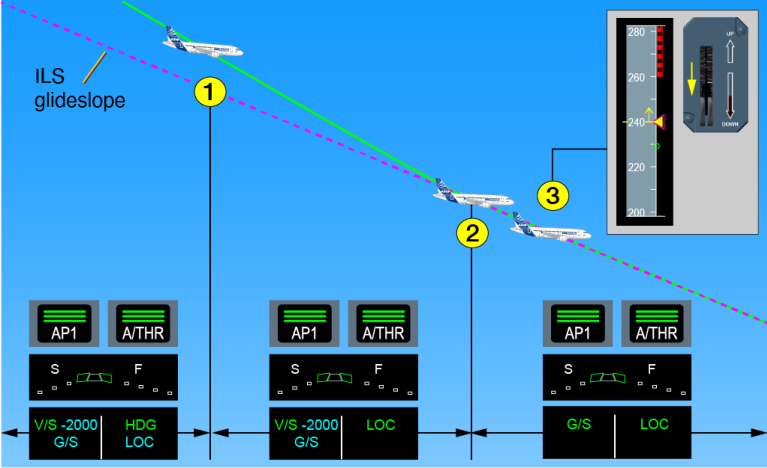
(fig.1) Description of the event - part 1
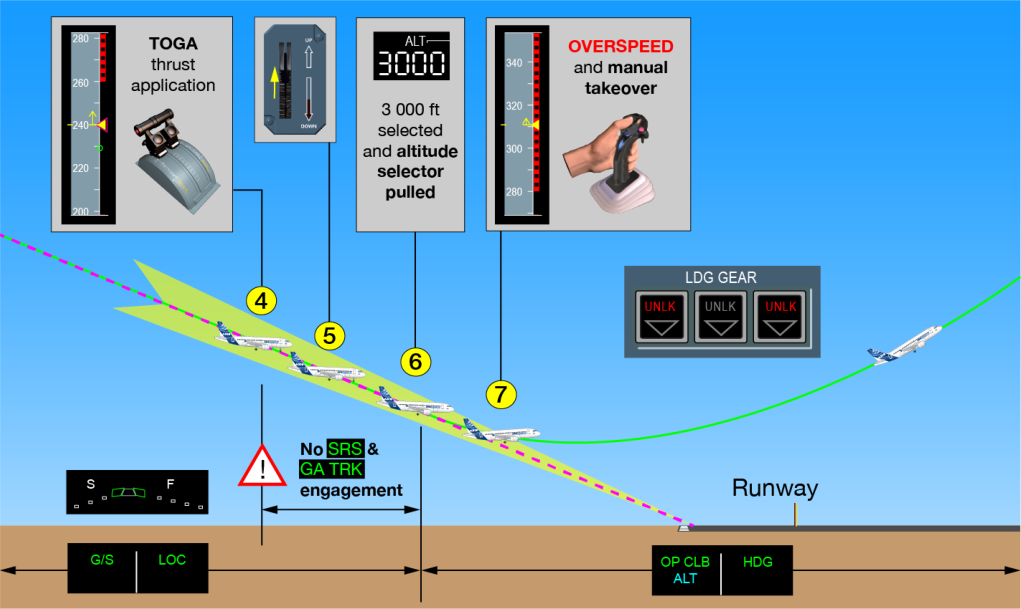
④ Crossing 1 300 ft QNH, the aircraft was still in CLEAN flaps configuration and its speed was 240 kt. The flight crew pushed the thrust levers to TOGA to initiate a go-around. The LOC and G/S guidance modes remained engaged and the aircraft started to accelerate toward the ground, along the 3° glideslope.
⑤ Crossing 1 130 ft QNH, the aircraft speed was 243 kt increasing. The flight crew selected gear up, but the VLO for retraction of 220 kt was already exceeded.
⑥ At approximately 800 ft, the flight crew selected a 3 000 ft target altitude and pulled on the altitude knob-selector. The OP CLB guidance mode engaged and sent a nose-up command to the autopilot. Aerodynamic forces meant that retraction of the landing gear was difficult. The nose landing gear retracted, but the left and right Main Landing Gear (MLG) remained extended.
⑦ The overspeed warning triggered due to the VLE (280 kt) exceedance. The PF disconnected the autopilot and applied nose-up inputs. The aircraft reached 312 kt at 600 ft before climbing back up to 3 000 ft where the PF reengaged the autopilot in ALT mode. The MLG fully retracted 2 min 30 s later while in level flight, with a speed of 205 kt at 3_000 ft. The flight crew eventually performed a second approach and safely landed the aircraft.
Event Analysis
Section titled “Event Analysis”(fig.2) Description of the event - part 2
High-energy approach
Section titled “High-energy approach”The aircraft started its glideslope interception from above in CLEAN configuration at high speed. As a result, the flight crew was not able to sufficiently slow down the aircraft to stabilize its speed and they decided to perform a go-around.
Non-engagement of the go-around guidance modes
Section titled “Non-engagement of the go-around guidance modes”On A320 family, the SRS go-around mode and GA TRK mode engages if:
-
The flight crew sets a thrust lever at the TOGA detent, and
-
The aircraft is airborne, or on ground for less than 30 s, and
-
The slats or the flaps are extended.
Therefore, when the PF pushed the thrust levers to TOGA, the SRS and GA TRK modes did not engage and the autopilot remained in G/S and LOC final approach modes.
Crew reaction time
Section titled “Crew reaction time”It took 30 s for the crew to react and disconnect the autopilot, leading to an overspeed condition (312 kt with main gear extended) near the ground (600 ft).
FLIGHT GUIDANCE BEHAVIOR DURING GO-AROUND IN CLEAN FLAPS CONFIGURATION
Section titled “FLIGHT GUIDANCE BEHAVIOR DURING GO-AROUND IN CLEAN FLAPS CONFIGURATION”At the time of publication of this article, on all Airbus aircraft except the A220 and the A350 with PRIM P12 and subsequent standards, the flaps configuration must be selected other than a CLEAN flaps configuration in order to activate the go-around guidance modes. Table 1 summarizes the slats/flaps condition for the activation of the go-around guidance modes applicable for each Airbus aircraft type. Full conditions for activation can be found in the FCOM description chapter for flight guidance on each aircraft type.
Table 1 : Summary of the slats/flaps condition for engagement of the go-around guidance modes
|---|---|---|---|---|---|---|---|
*The slats/flaps condition may be the flap lever position and/or the actual flap position depending on the aircraft type. Refer to the FCOM for more information.
Table 1 : Summary of the slats/flaps condition for engagement of the go-around guidance modes
A220 and A350 aircraft with PRIM P12 and subsequent standards
Section titled “A220 and A350 aircraft with PRIM P12 and subsequent standards”A220 aircraft are not concerned by this non-engagement of the go-around modes in CLEAN flaps configuration: the VGA and GA modes are activated when the flight crew presses one of the TOGA switches on the thrust lever regardless of the position of the slats/flaps.
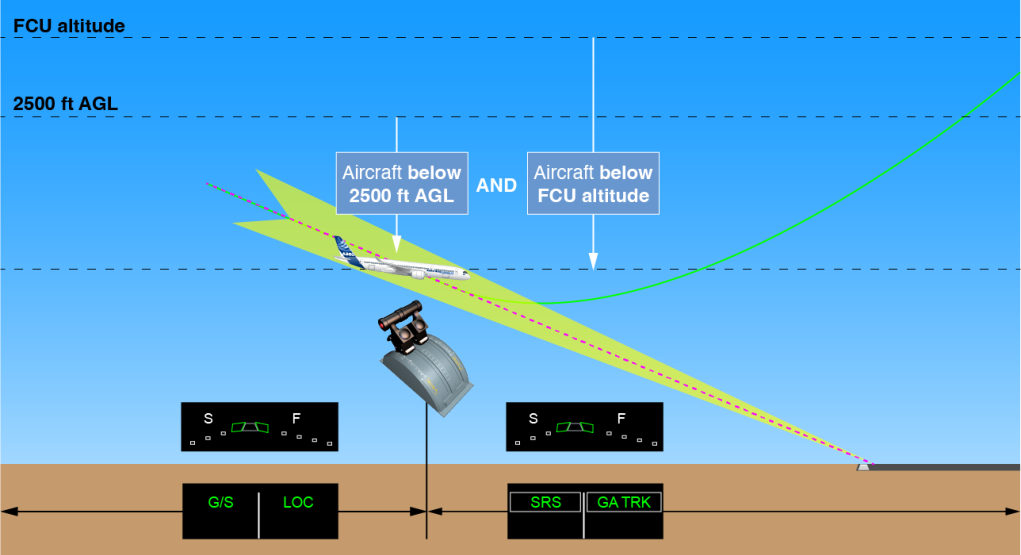
On A350 aircraft with PRIM computer standard P12 and subsequent standards, the go-around modes are also engaged in CLEAN flaps configuration if the aircraft is below the altitude selected on the FCU altitude and below 2 500 ft RA.
OPERATIONAL CONSIDERATIONS
Section titled “OPERATIONAL CONSIDERATIONS”Flight crews must be aware of the potential for go-around guidance modes to not engage on some aircraft when the aircraft is in CLEAN flaps configuration.
Risk of high energy near the ground
Section titled “Risk of high energy near the ground”The FCTM states that if the thrust levers are set to the TOGA detent (or the go levers are triggered on A300-600/A310) during approach with the FLAPS lever at 0, the following occurs:
| ● | The AP/FD remains engaged | in approach | or | landing | mode (e.g. | G/S, LOC, | G/S, LOC, |
|---|---|---|---|---|---|---|---|
| LAND,FLAREon the FMA) | |||||||
| ● | The FMS does not engage | the go-around | phase | and remains in | APPR | ||
| phase |
This means that when the thrust levers are set to the TOGA detent (or the go-levers are triggered on A300-600/A310), the aircraft energy will rapidly increase, but the aircraft will remain on its approach path. In this situation, the flight crew must take appropriate action without delay.
SOPs guidance for configuration on approach
Section titled “SOPs guidance for configuration on approach”Correct SOPs application should prevent the aircraft from being in a CLEAN configuration during final approach. The SOPs state that the aircraft should be at least in CONF 1 at the start of the final approach in the case of a decelerated approach, or in landing configuration in the case of an early stabilized approach.
For more information about the two approach speed techniques, decelerated and early stabilized, refer to the FCTM Normal Procedures - Standard Operating Procedures - Approach - Configuration management and the “ Control your speed…During Descent, Approach and Landing “ Safety first article.
Glideslope interception from above
Section titled “Glideslope interception from above”When intercepting an ILS glideslope from above, the FCTM recommends that the flight crew should select at least CONF 2 to ensure that the aircraft speed does not increase during the interception.
Check of the FMA
Section titled “Check of the FMA”Constant monitoring of the FMA as per SOPs enables a quick detection of the non-engagement of the go-around modes, allowing a quick flight crew reaction.
SYSTEM ENHANCEMENTS
Section titled “SYSTEM ENHANCEMENTS”An update of the flight guidance mode was launched on A320 family, A330, and A380 aircraft to have a similar engagement logic as the A350 fleet fitted with the PRIM P12 or subsequent standards. The updated logic will enable the engagement of the SRS and GA TRK when in CLEAN flaps configuration, if the flight crew sets the thrust lever to TOGA and provided that the aircraft is below 2 500 ft AGL AND is below the FCU altitude (fig.3). The planned availability of the flight guidance modification of each aircraft type is indicated in Table 2.
(fig.3) Go-around engagement logic on A350 aircraft with PRIM P12 and subsequent standards.
|---|---|---|---|---|---|---|---|---|
Table 2 : Planned availability of the engagement of the go-around modes in CLEAN flaps configuration.
Contributors:
Thierry BOURRET Flight Control Development Expert Design Office
Severine CHEVALIER Flight Control Development Engineer Design Office
Dirk DE-WINTER Flight Ops & Training Pilot Expert Customer Support
Maxime LANSONNEUR Flight Operations Standards Expert Customer Support
Today, on most Airbus aircraft (except the A220 and the A350 with PRIM P12 and subsequent standards), the flaps configuration must be different than CLEAN to activate the go-around guidance modes. The flight crew must be aware of the potential non-engagement of the go-around modes when initiating a go-around in CLEAN flaps configuration. If this happens, the flight crew must take appropriate action without delay to prevent them from being in a high-energy situation near the ground.
Application of the SOPs should prevent the flight crew from being in CLEAN flaps configuration during final approach as the SOPs recommend to be at least in CONF 1 at the start of the final descent.
As an additional safety net, an update of the flight guidance modes is planned on A320 family, A330, and A380 aircraft to enable engagement of the go-around modes in CLEAN flaps configuration. This is provided that the aircraft is below the FCU selected altitude and below 2 500 ft, as on A350 aircraft.
Fabien ROZEN Senior Flight Operations Support Engineer Customer Support
With thanks to Marc LE-LOUER from the A300/A310 Flight Operations Support and Daniel LOPEZ FERNANDEZ from the Product Safety Enhancement team.
Safety first, 2023. Safety first is published by Airbus S.A.S. 1, rond point Maurice Bellonte - 31707 Blagnac Cedex/France.
Editor: Yannick Malinge, Chief Product Safety Officer.
Editorial team: Guillaume Estragnat, Vanessa Sadi, Gwyneth Duggan, Javier Martinez Marina, Tim Roach.
- Reference: X00D16031905.
Photos by Airbus.
来源: Airbus Safety First 网址: https://safetyfirst.airbus.com/non-engagement-of-the-go-around-modes-in-clean-flaps-configuration/ 发布日期: 2023-02-24 类别: 飞行运行 PDF: 原始 PDF
空中客车收到多起报告,当飞行机组执行复飞时,复飞引导方式未接通。分析这些事件表明,飞机在 CLEAN 形态下进近。其中一些事件导致了在低高度向地面接近的高能量状态。
本文解释了为什么在某些飞机上,如果复飞是在飞机处于 CLEAN 形态时启动的,复飞引导方式不会接通。本文为此情况下的飞行机组提供了建议,并描述了为确保复飞引导方式在飞行机组启动复飞时能够接通(即使飞机在 CLEAN 形态下进近)而计划的改装。
本文也可在 safetyfrst.airbus.com 和 Safety first 应用(iOS 和 Android)上获取。
Section titled “本文也可在 safetyfrst.airbus.com 和 Safety first 应用(iOS 和 Android)上获取。”一架 A319 飞机在下降,自动驾驶仪和自动推力接通。飞行机组正准备从上方截获 ILS。飞机在进近阶段遇到了中度颠簸条件。① 飞机在距跑道入口 10 海里处截获了航向道。飞机以 2 000 ft/min 的垂直速率在 V/S 方式下下降,采用 CLEAN 形态,目标高度 2 500 ft QNH。② 飞机在距跑道入口约 7 海里处、高度约 2 500 ft QNH、速度 225 kt 时,从上方截获了 ILS 3° 下滑道。
③ 通过 2 300 ft QNH 时,飞机速度为 236 kt 并在增加。飞行机组决定放起落架以减速。
(图 1) 事件描述 - 第一部分
④ 通过 1 300 ft QNH 时,飞机仍在 CLEAN 形态,速度为 240 kt。飞行机组将推力杆推至 TOGA 以执行复飞。LOC 和 G/S 引导方式保持接通,飞机沿 3° 下滑道开始加速向地面接近。
⑤ 通过 1 130 ft QNH 时,飞机速度为 243 kt 并在增加。飞行机组选择了收上起落架,但收上速度限制 VLO 220 kt 已被超过。
⑥ 约在 800 ft 时,飞行机组选择了 3 000 ft 的目标高度并拉出高度旋钮选择器。OP CLB 引导方式接通,并向自动驾驶仪发出抬头指令。气动力使起落架收上困难。前起落架收上,但左、右主起落架(MLG)仍保持放下状态。
⑦ 由于超过了最大起落架放下速度 VLE(280 kt),触发了超速警告。PF 断开自动驾驶仪并施加抬头输入。飞机在 600 ft 达到 312 kt,随后爬升至 3 000 ft,PF 在此高度以 ALT 方式重新接通自动驾驶仪。2 分 30 秒后,在 3 000 ft 平飞、速度 205 kt 时,主起落架完全收上。飞行机组最终执行了第二次进近并安全落地。
(图 2) 事件描述 - 第二部分
飞机以 CLEAN 形态在高速状态下从上方开始截获下滑道。结果,飞行机组无法充分减速飞机以稳定速度,决定执行复飞。
复飞引导方式未接通
Section titled “复飞引导方式未接通”在 A320 系列飞机上,SRS 复飞方式和 GA TRK 方式的接通条件包括:
- 飞行机组将推力杆设置在 TOGA 卡位,且
- 飞机在空中,或在地面少于 30 秒,且
- 缝翼或襟翼已伸出。
因此,当 PF 将推力杆推至 TOGA 时,SRS 和 GA TRK 方式未接通,自动驾驶仪保持在 G/S 和 LOC 最终进近方式。
机组反应时间
Section titled “机组反应时间”机组用了 30 秒才反应过来并断开自动驾驶仪,导致在低空(600 ft)出现超速状况(主起落架放下时达 312 kt)。
CLEAN 形态下复飞期间的飞行引导行为
Section titled “CLEAN 形态下复飞期间的飞行引导行为”在本文发布时,除 A220 和装有 PRIM P12 及之后标准的 A350 外,所有空中客车飞机都必须将襟翼选择为非 CLEAN 形态才能接通复飞引导方式。表 1 总结了每种空中客车飞机机型复飞引导方式接通的缝翼/襟翼条件。完整的接通条件可在各机型 FCOM 的飞行引导章节中找到。
表 1:复飞引导方式接通的缝翼/襟翼条件汇总
|---|---|---|---|---|---|---|---|
*缝翼/襟翼条件可能是襟翼手柄位置和/或实际襟翼位置,具体取决于机型。更多信息请参阅 FCOM。
表 1: 复飞引导方式接通的缝翼/襟翼条件汇总
配备 PRIM P12 及后续标准的 A220 和 A350 飞机
Section titled “配备 PRIM P12 及后续标准的 A220 和 A350 飞机”A220 飞机不存在光洁构型下复飞模式不衔接的问题:当飞行机组按下油门杆上的任一 TOGA 电门时,VGA 和 GA 模式即被激活,与缝翼/襟翼的位置无关。
在配备 PRIM 计算机标准 P12 及后续标准的 A350 飞机上,若飞机低于 FCU 选择的高度且低于 2500 ft 无线电高度,光洁构型下也会衔接复飞模式。
运营注意事项
Section titled “运营注意事项”飞行机组必须意识到,在某些飞机上,当飞机处于光洁构型时,复飞指引模式可能不会衔接。
接近地面时的高能量风险
Section titled “接近地面时的高能量风险”FCTM 规定,若在 FLAPS 杆在 0 位时进近过程中将推力杆设置到 TOGA 卡位(或在 A300-600/A310 上触发 go 电门),则会发生以下情况:
| 当推力杆设置到 TOGA 卡位(或在 A300-600/A310 上触发 go 电门)时 | AP/FD 保持接通 | 进近或着陆模式(例如 FMA 上的 G/S、LOC、G/S、LOC、LAND、FLARE) |
|---|---|---|
| FMS 不会衔接复飞阶段 | 保持在 | APPR 阶段 |
这意味着,当推力杆设置到 TOGA 卡位(或在 A300-600/A310 上触发 go 电门)时,飞机能量将迅速增加,但飞机将保持在进近轨迹上。在这种情况下,飞行机组必须毫不迟疑地采取适当措施。
关于进近构型的 SOP 指导
Section titled “关于进近构型的 SOP 指导”正确应用 SOP 应防止飞机在最后进近阶段处于光洁构型。SOP 规定,在减速进近的情况下,飞机应在最后进近开始时至少处于 CONF 1;在提前稳定进近的情况下,飞机应处于着陆构型。
有关两种进近速度技术(减速进近和提前稳定进近)的更多信息,请参阅 FCTM _正常程序——标准操作程序——进近——构型管理_以及” 控制你的速度……在下降、进近和着陆期间 “Safety first 文章。
从上方切入下滑道
Section titled “从上方切入下滑道”从上方切入 ILS 下滑道时,FCTM 建议飞行机组选择至少 CONF 2,以确保飞机在切入过程中速度不会增加。
FMA 检查
Section titled “FMA 检查”按照 SOP 持续监控 FMA 能够快速发现复飞模式不衔接的情况,使飞行机组能够快速做出反应。
A320 系列、A330 和 A380 飞机已启动飞行指引模式更新,以具备与配备 PRIM P12 或后续标准的 A350 机队相似的衔接逻辑。更新后的逻辑将能够在光洁构型下,当飞行机组将推力杆设置为 TOGA 且飞机低于 2500 ft AGL 且低于 FCU 高度时衔接 SRS 和 GA TRK(图 3)。各机型飞行指引改装的计划适用性如表 2所示。
(图 3) 配备 PRIM P12 及后续标准的 A350 飞机上的复飞衔接逻辑。
|---|---|---|---|---|---|---|---|---|
表 2:光洁构型下复飞模式衔接的计划适用性。
撰稿人:
Thierry BOURRET 飞行控制发展专家 设计办公室
Severine CHEVALIER 飞行控制发展工程师 设计办公室
Dirk DE-WINTER 飞行运营与培训飞行员专家 客户支援
Maxime LANSONNEUR 飞行运营标准专家 客户支援
如今,在大多数空客飞机上(除 A220 和配备 PRIM P12 及后续标准的 A350 外),必须将襟翼构型设置为非光洁才能激活复飞指引模式。飞行机组必须意识到,在光洁构型下执行复飞时,复飞模式可能出现不衔接的情况。如果发生这种情况,飞行机组必须毫不迟疑地采取适当措施,防止其处于接近地面时的高能量状态。
SOP 的应用应防止飞行机组在最后进近阶段处于光洁构型,因为 SOP 建议在最后下降开始时至少处于 CONF 1。
作为额外的安全网,A320 系列、A330 和 A380 飞机计划更新飞行指引模式,以在光洁构型下衔接复飞模式,前提是飞机低于 FCU 选择的高度且低于 2500 ft,与 A350 飞机相同。
Fabien ROZEN 高级飞行运营支援工程师 客户支援
特别感谢 A300/A310 飞行运营支援的 Marc LE-LOUER 以及产品安全增强团队的 Daniel LOPEZ FERNANDEZ。
Safety first,2023。Safety first 由空中客车股份有限公司出版,地址:法国布拉尼亚克,塞德克斯 31707,莫里斯·贝隆特 1 号环岛。
编辑:Yannick Malinge,首席产品安全官。
编辑团队:Guillaume Estragnat,Vanessa Sadi,Gwyneth Duggan,Javier Martinez Marina,Tim Roach。
20192534。参考编号:X00D16031905。
照片由空中客车公司提供。