Thrust Reverser Selection Means Full-Stop
Source: Airbus Safety First URL: https://safetyfirst.airbus.com/thrust-reverser-selection-means-full-stop/ Published: 2012-07-14 Magazine Issue: 2012-06 Category: Archive PDF: Original PDF
Xavier Barriola
Section titled “Xavier Barriola”Flight Safety
1. Introduction
Section titled “1. Introduction”When full forward thrust (TOGA) is applied after thrust reverser selection, there is a risk of non availability of maximum thrust on one or more engines, if the associated reversers do not stow.
This is exactly what happened to an A300-600 equipped with PW4158 engines, which carried out an aborted landing whilst the thrust reversers were still in transit and not fully deployed. As a result of a failure of the electrical restow circuit, the aborted landing was performed with only one engine delivering take-off thrust.
This article will describe the event and review operational recommendations on throttle handling.
This event illustrates the necessity to strictly follow the rule specified in the FCOM: “After reverse thrust is initiated, a full-stop landing must be performed.” This statement is valid for all Airbus aircraft types.
2. Event description and Analysis
Section titled “2. Event description and Analysis”2.1 Approach
Section titled “2.1 Approach”The Captain was the pilot flying. The autopilot was not engaged and the approach speed (Vapp) was 143kt. The weather report indicated rain and cross wind conditions (160°, 20kt gusting at 30kt). The flare was performed at 30ft Above Ground Level (AGL).
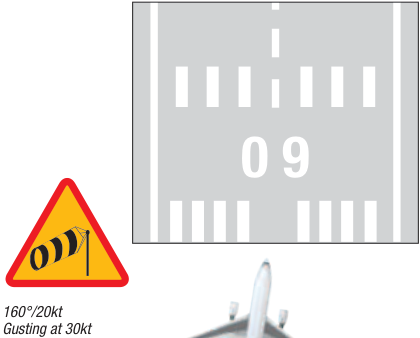
The A300-600 touched down with an Indicated Air Speed (IAS) of 138kt and landed hard with a vertical acceleration of 1.82g.
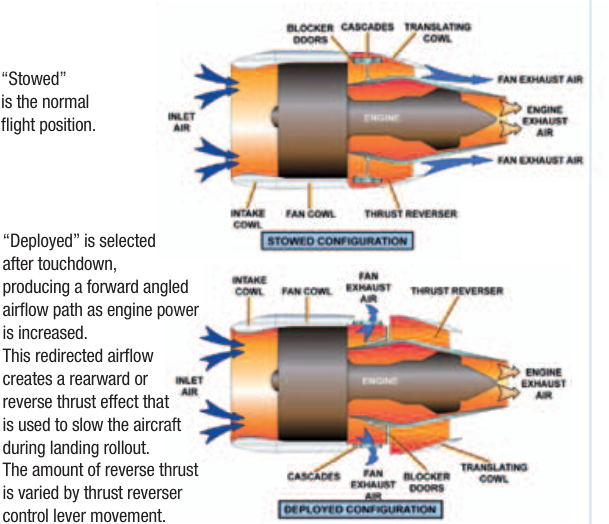
At touchdown the pilot immediately selected the thrust reverser levers to max reverse and the reversers started to deploy (refer to note 1).
The aircraft bounced, and consequently the Captain decided to abort the landing while the thrust reversers were still in transit and therefore not fully deployed.
note 1
Section titled “note 1”The purpose of the thrust reverser system is to direct fan air forward, to produce reverse thrust and thus to reduce aircraft speed during landing rollout.
Safety
2.3 Aborted Landing
Section titled “2.3 Aborted Landing”While the thrust reversers were still in transit to deploy and the amber REV UNLK lights were ON, they were selected to be stowed, then TOGA was applied on both engines.
On engine 1, the thrust reverser stowed and consequently the FADEC 1 commanded engine 1 at TOGA.
note 2
Section titled “note 2”A defective pin at connector level (junction box D5010P) was at the origin of the electrical restow circuit failure.
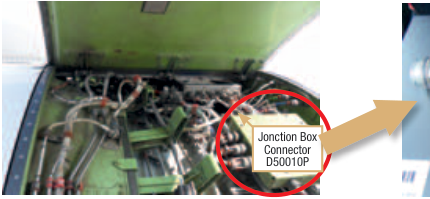
On engine 2, the thrust reverser did not stow and stayed half open due to failure of the electrical restow circuit (refer to note 2).
Consequently, as per design with reverser not stowed, the Auto Idle function of FADEC 2 commanded engine 2 to Idle thrust. A tail strike was experienced during rotation.The liftoff was performed in conf 30/40 (FULL), with an IAS of 125kt.
note 3
Section titled “note 3”Reverse stowed and latched (ReV UNLK light OFF) means that it is stowed within 0.125 inch of the full stow stop. At this point, the movement of the thrust reverser sleeve can only be due to vibration, aerodynamic loads (external and in the fan duct), or airplane maneuvers.
Consequently temporary intermittent unlocked indication could be considered to be due to vibration during final transit of the translating sleeve to the full stow stop position.
During liftoff, temporary and intermittent ENG1 REV UNLK (refer to note 3) and permanent ENG2 REV UNLK lights were ON (refer to note 4).
note 4
Section titled “note 4”2.4 diversion
Section titled “2.4 diversion”Once airborne, the pilot put the engine 2 thrust lever into the Idle position, then cycled the reverser lever to stow the reverser. The engine 2 thrust reverser remained in the partially deployed position (half open) because:
q The electrical failure of the restow circuit prevented the reverser from stowing correctly
q A design protection prevents reverser movement in flight.
The pilot then advanced the engine 2 thrust lever to check for thrust response, but the thrust did not increase due to the FADEC’s Auto Idle function.
The thrust reverser lights indicate the operational status of the thrust reverser systems. When all lights are OFF, the translating sleeves are in the stowed position, the systems are latched.
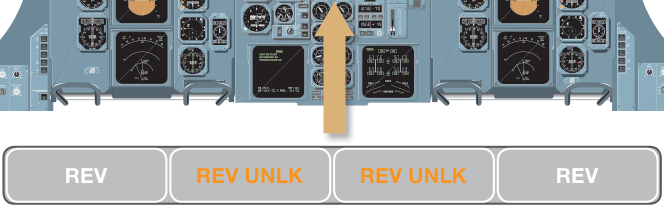
A light co mes on amber when:
-
The rel
ated thrust reversersystem is unlatched, -
Thetranslating sleevestravelbetween the status position and 90% of their travel.
The pilot then shut down engine 2 and diverted to an alternate airport where a single engine landing was performed with engine 1 thrust reverser selected.
R E V LI GHTS
Section titled “R E V LI GHTS”A ligh t comes on gr e e n when th e translating sleeves of the related thrust reverser system are beyond 90% of their travel.
Saf e t y first #14 June 2 012 - 2 /4
3. Operational Recommendations
Section titled “3. Operational Recommendations”3.1 Throttle Handling in Flight
Section titled “3.1 Throttle Handling in Flight”According to the A300-600 FCOM 2.05.70 (ENG REV UNLK procedure), the throttle of the affected engine has to be put and left in the Idle position. No movement of the thrust and reverser levers is authorized while the engine is ON.
3.2 Throttle Handling during Aborted Landing / Touch and Go
Section titled “3.2 Throttle Handling during Aborted Landing / Touch and Go”a) The A300-600 FCOM 2.03.22 (At TOUCHDOWN) mentions:
q After reverse thrust is initiated, a full-stop landing must be performed.
This statement is valid for all Airbus aircraft types, and is also mentioned in the associated FCOM (Normal Procedure – SOP – Landing).
q Do not move reverse levers towards stow position while reverser are in transit; such action may cause system damage.
b) The A300-600 FCOM 2.02.01 (BOUNCING AT LANDING) has been updated in June 2012 with the following additional statement:
“In any case, if reverse thrust has been selected, a full stop landing must be performed.”
The FCOM of the other Airbus aircraft types will be updated accordingly in the next revisions.
ENG REV UNLK
Section titled “ENG REV UNLK”THROTTLe (affected engine) … IDLe DIVeRSION …CONSIDeR MAX SPD … 300 • IF BUFFET OR BANK: FUeL LeVeR … OFF MAX SPD …240 PROC: SINGLe eNG OPeRATION (12.08)…APPLY eNG AT IDLe
Displayed only if engine is automatically set at idle by FADeC
AT TOUCHDOWN
Section titled “AT TOUCHDOWN”-
REVERSE LEVERS… … … … … … . Pull - Immediately after touch-down of main landing gear, pull reverse levers to the idle reverse point, when REV (green) appears, apply max reverse.
-
- After reverse thrust is initiated, a full-stop landing must be performed.
-
Note 1: Maximum efficiency of the reverse is obtained at high speed
-
Note 2: Do not move reverse levers towards stow position while reversers are in transit; such action may cause system damage.
-
Note 3: If one or both REV UNLK lt remains on, apply reverse normally.
-
Note 4: If the use of max reverse is restricted due to noise consideration, maintain reverse idle until taxi speed is reached.
-
Note 5: If directional control problems are encountered, reduce thrust to reverse idle until directional control is satisfactory.
-
MAX. REVERSE THRUST … … … … … Apply - N1, EGT and IAS … … … … … … … .Monitor
BOUNCING AT LANDING
Section titled “BOUNCING AT LANDING”In case of light bounce (5 ft or less), maintain pitch attitude and complete the landing. Do not increase pitch attitude, as this could lead to a tailstrike.
In case of a high bounce (more than 5 ft) maintain pitch attitude and configuration, and initiate a go-around by advancing throttle levers while triggering the go-levers. This will soften the second touchdown that will most probably occur and prevent damage to the aircraft.
Retract flaps one step and landing gear only when safely established in the go-around and no risk of further touchdown exists.
4. Conclusion
Section titled “4. Conclusion”As a result of the crew’s decision to abort the landing after they had selected reverse thrust, the aircraft took off with one engine on Idle and the aircraft’s tail impacted the runway.
This occurrence illustrates that when TOGA is applied after thrust reverser selection, there is a risk of non availability of maximum thrust on one or more engines if the associated reversers do not stow. This protection is triggered by the Auto Idle function of the FADEC, which maintains the engine thrust at Idle as long as the reversers are not stowed. The consequence could be a loss of control if an aborted landing is initiated at that time.
We therefore strongly encourage all crews to adhere to the following FCOM recommendation, which is common to all Airbus aircraft types:
“After reverse thrust is initiated, a full-stop landing must be performed.”
Section titled ““After reverse thrust is initiated, a full-stop landing must be performed.””A previous article published in the first issue of this magazine: “A320 In-Flight Thrust Reverser Deployment”, dated Jan 2005, describes an event where a takeoff was carried despite a REV UNLK warning.
The common key message from these two articles is that it is essential to strictly adhere to any procedure associated with the operation of thrust reversers.
A landing should not be attempted after a high bounce, as the remaining runway length might not be enough to stop the aircraft.
In any case, if reverse thrust has been selected, a full stop landing must be performed.
Safety
来源: Airbus Safety First 网址: https://safetyfirst.airbus.com/thrust-reverser-selection-means-full-stop/ 发布日期: 2012-07-14 杂志期号: 2012-06 类别: 档案 PDF: 原始PDF
Xavier Barriola
Section titled “Xavier Barriola”飞行安全
当在选择反推后施加全正向推力(TOGA)时,如果相应的反推装置未能收上,一个或多个发动机存在无法提供最大推力的风险。
这正是一架配备PW4158发动机的A300-600发生的情况,该机在反推装置仍在收放过程中且未完全展开的情况下实施了中断着陆。由于电复位回路故障,中断着陆时仅有一台发动机提供起飞推力。
本文将描述该事件并回顾关于油门操作的运行建议。
此事件说明了严格遵守FCOM中规定的规则的必要性:“启动反推后,必须完成全停着陆。“此规定适用于所有空客机型。
2. 事件描述与分析
Section titled “2. 事件描述与分析”2.1 进近
Section titled “2.1 进近”机长为操纵飞行员。自动驾驶仪未接通,进近速度(Vapp)为143节。气象报告显示有雨和侧风条件(160°方向,20节阵风达30节)。在距地面30英尺(AGL)高度执行了拉平。
A300-600以指示空速(IAS)138节接地,垂直加速度为1.82g的硬着陆。
接地时,飞行员立即将反推力手柄选择至最大反推位,反推装置开始展开**(见注1)**。
飞机弹跳,因此机长决定中断着陆,此时反推装置仍在收放过程中,因此未完全展开。
反推装置系统的目的是将风扇气流向前导向,产生反推力,从而在着陆滑跑过程中降低飞机速度。
安全
2.3 中断着陆
Section titled “2.3 中断着陆”当反推装置仍在展开收放过程中且琥珀色REV UNLK灯亮起时,选择将其收上,然后在两台发动机上施加TOGA。
在1号发动机上,反推装置收上,因此FADEC 1指令1号发动机以TOGA推力工作。
连接器级别的缺陷插针(接线盒D5010P)是电复位回路故障的根本原因。
在2号发动机上,由于电复位回路故障,反推装置未能收上,保持在半展开位置**(见注2)**。
因此,按照设计,当反推装置未收上时,FADEC 2的自动怠速功能指令2号发动机处于怠速推力。在抬轮过程中发生了擦尾。以CONF 30/40(FULL)构型起飞,指示空速为125节。
反推收上并锁定(REV UNLK灯熄灭)意味着其位于完全收上止动点0.125英寸范围内。此时,反推套筒的运动仅可能由振动、气动载荷(外部和风扇通道内)或飞机机动动作引起。因此,暂时的间歇性未锁定指示可视为归因于移动套筒在最终移至完全收上止动点位置过程中的振动。
在起飞过程中,1号发动机REV UNLK灯为短暂间歇性亮起**(见注3),2号发动机REV UNLK灯为持续亮起(见注4)**。
2.4 备降
Section titled “2.4 备降”离地后,飞行员将2号发动机推力手柄置于怠速位,然后反复操作反推手柄以收上反推装置。2号发动机反推装置保持在部分展开位置(半开),原因是:
- 电复位回路故障导致反推装置无法正确收上
- 设计保护功能防止反推装置在飞行中移动。
然后飞行员向前推动2号发动机推力手柄以检查推力响应,但由于FADEC的自动怠速功能,推力未增加。
反推灯指示反推系统的操作状态。当所有灯熄灭时,滑动套筒处于收上位置,系统已锁定。
琥珀色灯亮起表示:
- 相关反推系统未锁定,
- 滑动套筒在状态位置与行程90%之间移动。
然后飞行员关闭了2号发动机,并备降至备降机场,在该机场使用1号发动机反推选择了单发着陆。
R E V LI GHTS
Section titled “R E V LI GHTS”当相应反推系统的伸缩套筒位移超过其行程的90%时,相关指示灯亮起绿色。
安全优先 #14 2012年6月 /4
3. 操作建议
Section titled “3. 操作建议”3.1 飞行中推力手柄的操作
Section titled “3.1 飞行中推力手柄的操作”根据A300-600 FCOM 2.05.70(ENG REV UNLK程序),受影响发动机的推力手柄必须置于并保持在慢车位。发动机运转时,不允许移动推力手柄和反推手柄。
3.2 中断着陆/连续起飞时推力手柄的操作
Section titled “3.2 中断着陆/连续起飞时推力手柄的操作”a) A300-600 FCOM 2.03.22(着地时)指出:
q 一旦反推被启动,必须执行全停着陆。
该声明适用于所有空客机型,并在相关FCOM(正常程序—SOP—着陆)中提及。
q 在反推未完全收上时,不要将反推手柄移向收上位置;此举可能导致系统损坏。
b) A300-600 FCOM 2.02.01(着陆弹跳)已于2012年6月更新,新增以下声明:
“在任何情况下,一旦反推被选择,必须执行全停着陆。”
其他空客机型的FCOM将在后续修订中相应更新。
ENG REV UNLK
Section titled “ENG REV UNLK”受影响发动机的推力手柄 … 慢车 备降 …考虑最大速度 最大速度 … 300 • 如遇抖振或坡度: 燃油控制开关 … 关断 最大速度 … 240 程序:单发操作(12.08)…发动机慢车时执行
仅在发动机由FADEC自动设置为慢车时显示
-
反推手柄 … … … … … … 拉出 - 主起落架一接地即拉出反推手柄至反推慢车位,当REV(绿色)出现时,实施最大反推。
-
- 一旦反推被启动,必须执行全停着陆。
-
注1:高速时反推效率最高
-
注2:在反推未完全收上时,不要将反推手柄移向收上位置;此举可能导致系统损坏。
-
注3:如一个或两个REV UNLK灯仍然亮起,正常使用反推。
-
注4:如因噪声限制无法使用最大反推,保持反推慢车直至滑行速度。
-
注5:如方向控制出现问题,将推力减至反推慢车直至方向控制满意。
-
最大反推 … … … … … … … . . 实施
-
N1、EGT和IAS … … … … … … … … 监控
如轻度弹跳(5英尺或以下),保持俯仰姿态并完成着陆。不要增加俯仰姿态,因为这可能导致擦尾。
如高度弹跳(超过5英尺),保持俯仰姿态和形态,通过前推推力手柄并触发复飞手柄来执行复飞。这将减轻很可能发生的第二次接地,并防止对飞机造成损坏。
只有在复飞已安全建立且不存在进一步接地的风险时,才收起缝翼一个位置和起落架。
由于机组在选择反推后决定中断着陆,飞机以一台发动机慢车状态起飞,飞机尾翼与跑道发生碰撞。
该事件表明:在选择反推后如应用TOGA,如果相应的反推未能收上,存在一台或多台发动机无法获得最大推力的风险。这一保护由FADEC的自动慢车功能触发,该功能在反推未收上之前将发动机推力保持在慢车状态。其后果可能是在发起中断着陆时失去控制。
因此,我们强烈建议所有机组遵守以下FCOM建议,该建议适用于所有空客机型:
“一旦反推被启动,必须执行全停着陆。”
Section titled ““一旦反推被启动,必须执行全停着陆。””本杂志第一期曾发表过一篇相关文章:“A320飞行中反推展开”,日期为2005年1月,描述了一起在REV UNLK警告存在的情况下仍进行起飞的事件。
这两篇文章的共同关键信息是:严格遵守与反推操作相关的任何程序至关重要。
高度弹跳后不应尝试着陆,因为剩余跑道长度可能不足以使飞机停下。
在任何情况下,一旦反推被选择,必须执行全停着陆。
安全优先