Cabin Attendant Falling through the Avionics Bay Access Panel in Cockpit
Source: Airbus Safety First URL: https://safetyfirst.airbus.com/cabin-attendant-falling-through-the-avionics-bay-access-panel-in-cockpit/ Published: 2008-07-29 Magazine Issue: 2008-07 Category: Archive PDF: Original PDF
By: Per-Oliver GUENZEL Flight Safety Advisor A330/A340 program
2 Avionics bay access hatch
Section titled “2 Avionics bay access hatch”1 Introduction
Section titled “1 Introduction”Airbus has received reports of cabin attendants falling through the avionics hatch door located in the cockpit, when it is open for maintenance purposes. In most of the cases the cabin attendant hurt him/herself only slightly and could continue his/her duty. But there were also some occurrences where the cabin attendant couldn’t continue his/her duty. In 2001, an OIT (ref.: AI/SE 999.0002/01) was published to inform operators about such events and to provide some general recommendations. In addition, Airbus has developed a device that should contribute to prevent such mishaps.
The avionics compartment access hatch is located in the cockpit behind the captain’s seat.
It opens upwards from front to back. When the hatch is open, it rests vertically and covers approximately 80% of the corridor width. This makes the hatch position noticeable and requires care to be taken to move around it when entering the cockpit. Therefore anyone entering the cockpit while the hatch is open should notice it ( see fig. 1 and 2 ).
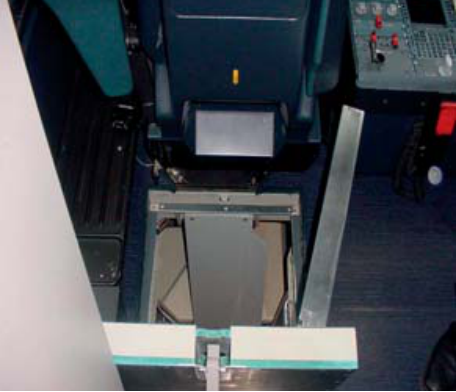
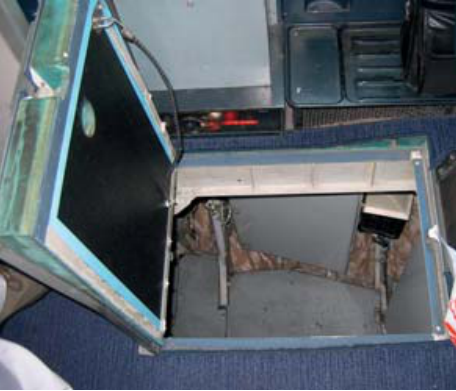
Figure 1: Open access hatch seen from cockpit door (prototype of protective arm shown)
Figure 2: Open access hatch seen from behind the first officer’s seat
The reports received by Airbus about a cabin attendant falling into the hatch are not very detailed, but usually the cabin attendant entered the cockpit to provide some beverage to the flight crew, he/she stepped in the open hatch not realizing that there was a “hole” or fell in when stepping backwards to leave the cockpit.
Airbus decided to develop a protective device to help airlines prevent such events.
3 Avionics bay access hatch protective arm
Section titled “3 Avionics bay access hatch protective arm”Mechanics need to have easy access to the avionics bay from the cockpit, sometimes with electronics equipment, thus it was necessary to develop a “protection” that doesn’t interfere with the mechanics work area. This “protection” had to be easily retrofittable, act as a visual attention getter to warn those who don’t realize the “hole” in front of them and provide enough physical resistance to somebody stepping back against it. However, its intent is not to act as a solid barrier to prevent somebody from falling.
The best compromise found by Airbus engineers is a protective arm that is attached to the hatch and unfolded when the hatch is open (see fig 3 & 4).
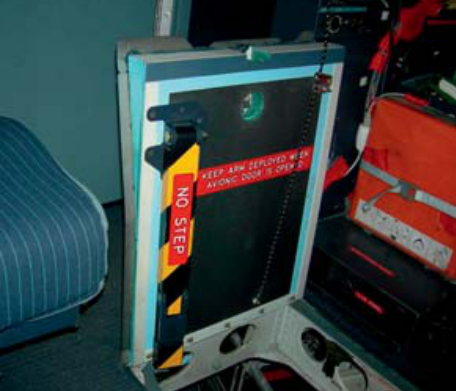
Figure 3: Avionics access hatch with folded protective arm
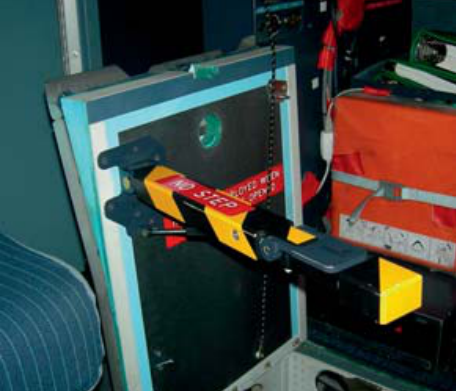
Figure 4: Avionics access hatch with unfolded protective arm
The following SBs are available to retrofit an avionics compartment access hatch with a protective arm on the different aircraft series. A330–200/-300: SB 25-3356 A340-200/-300: SB 25-4292 A340-500/-600: SB 25-5146 The estimated installation time of the SB is 3 hours.
The same modification is available as an option for production a/c.
Safety First
Section titled “Safety First”The Airbus Safety Magazine For the enhancement of safe flight through increased knowledge and communications.
Safety First is published by the Flight Safety Department of Airbus. It is a source of specialist safety information for the restricted use of flight and ground crew members who fly and maintain Airbus aircraft. It is also distributed to other selected organisations.
requirements or technical orders. The contents do not supersede any requirements mandated by the State of Registry of the Operator’s aircraft or supersede or amend any Airbus type-specific AFM, AMM, FCOM, MEL documentation or any other approved documentation.
Material for publication is obtained from multiple sources and includes selected information from the Airbus Flight Safety Confidential Reporting System, incident and accident investigation reports, system tests and flight tests. Material is also obtained from sources within the airline industry, studies and reports from government agencies and other aviation sources.
来源:Airbus Safety First 网址:https://safetyfirst.airbus.com/cabin-attendant-falling-through-the-avionics-bay-access-panel-in-cockpit/ 发布日期:2008-07-29 杂志期号:2008-07 分类:档案 PDF:原始 PDF
作者:Per-Oliver GUENZEL 飞行安全顾问 A330/A340 项目
2 电子设备舱舱门
Section titled “2 电子设备舱舱门”空中客车公司收到报告称,在维护期间舱门打开的状态下,客舱乘务员从驾驶舱内的电子设备舱舱门处坠落。在大多数情况下,客舱乘务员仅受轻伤,能够继续履行职责。但也有一些事件中,客舱乘务员无法继续履行职责。2001 年,空中客车公司发布了 OIT(参考:AI/SE 999.0002/01),以通知运营商此类事件并提供一些通用建议。此外,空中客车公司还开发了一种有助于防止此类事故的装置。
电子设备舱舱门位于驾驶舱内机长座椅后方。
舱门从前往后向上开启。舱门打开时,垂直放置,覆盖约 80% 的通道宽度。这使得舱门位置显而易见,进入驾驶舱时需要小心绕行。因此,任何人在舱门打开时进入驾驶舱都应该能够注意到它( 见图 1 和 2 )。
图 1:从驾驶舱舱门处看到的打开的舱门(图中显示保护臂样机)
图 2:从第一副驾驶座椅后方看到的打开的舱门
空中客车公司收到的关于客舱乘务员坠入舱门的报告细节不多,但通常是客舱乘务员进入驾驶舱为飞行机组提供饮料时,踏入打开的舱门而没有意识到面前有”空洞”,或者在离开驾驶舱后退时坠落。
空中客车公司决定开发一种防护装置,以帮助航空公司防止此类事件。
3 电子设备舱舱门防护臂
Section titled “3 电子设备舱舱门防护臂”机械师需要从驾驶舱方便地进入电子设备舱,有时还需携带电子设备,因此有必要开发一种不干扰机械师工作区域的”防护”装置。该”防护”装置必须易于改装,当有人没有意识到面前的”空洞”时能够引起视觉注意,并在有人后退撞上时提供足够的物理阻力。但是,其目的不是作为防止人员坠落的坚固屏障。
空中客车公司工程师找到的最佳折中方案是安装在舱门上的防护臂,在舱门打开时展开(见图 3 和 4)。
图 3:收起的防护臂状态的电子设备舱舱门
图 4:展开的防护臂状态的电子设备舱舱门
以下 SB 可用于在不同系列飞机上为电子设备舱舱门加装防护臂:A330–200/-300:SB 25-3356;A340–200/-300:SB 25-4292;A340–500/-600:SB 25-5146。预计 SB 安装时间为 3 小时。
相同改装可在生产线飞机上作为选装配置。
Safety First
Section titled “Safety First”空中客车公司安全杂志 通过增加知识和交流促进安全飞行。
Safety First 由空中客车公司飞行安全部出版。它是空客飞机飞行和维修机组人员专用的专业安全信息来源。也被分发至其他选定的组织。
本文档不构成强制要求或技术指令。内容不取代运营商飞机注册国规定的任何要求,也不取代或修改任何空中客车具体型号的 AFM、AMM、FCOM、MEL 文件或任何其他批准文件。
出版材料来源于多个渠道,包括选自空中客车飞行安全保密报告系统的信息、事故和事故调查报道、系统测试和飞行测试。材料还来源于航空公司行业、政府机构的研究和报告以及其他航空来源。