Flying a Go-Around Managing Energy
Source: Airbus Safety First URL: https://safetyfirst.airbus.com/flying-a-go-around-managing-energy/ Published: 2014-01-29 Magazine Issue: 2014-01 Category: Flight Ops, approach, CLB, discontinued, energy, FMS, go around, speed, SRS, TOGA PDF: Original PDF

David MARCONNET
Section titled “David MARCONNET”Manager, Flight Operations Safety Enhancement Flight Operations and Training Support Customer Services
Mickaël ROLAND
Section titled “Mickaël ROLAND”Engineer, A320/A330/A340 Flight Operations Flight Operations and Training Support Customer Services
Introduction
Section titled “Introduction”Airbus recently performed some research on the quality of goaround execution. This involved examining nearly 500,000 approaches flown by many airlines from around the world.
The results highlighted that in some cases crews are choosing not to apply the Airbus Standard Operating Procedure (SOP) for the go-around phase.
Particularly when a go-around was performed above 1,200 ft, the flight crew often decided to adapt the engines thrust selection instead of setting TOGA thrust. Feedback from operators also indicates a similar tendency. As a result, Airbus received several reports of unexpected aircraft trajectories and energy management techniques during the go-around procedure.
Therefore, it was decided to address these issues by:
-
Better defining an optional thrust levers management technique during the a go-around, as per Airbus SOP.
-
Developing a “Discontinued Approach” technique that would allow crews to effectively “abort” the approach without selecting TOGA detent.
The Flight Crew Training Manual (FCTM) and the Flight Crew Operating Manual (FCOM) were updated accordingly end 2013 (updates respectively in March and May 2014 for the A300/A310 and A380).
pitch control and the use of automation versus manual flight.
Feedback from Operators
Section titled “Feedback from Operators”To initiate a go-around, Airbus has always recommended the application of the standard go-around procedure with the selection of TOGA detent. With an aircraft that is flown according to the SOP there is no particular difficulty with such a procedure. But if the pitch target is not achieved and a go-around with maximum thrust is applied to a light weight aircraft, this may give rise to an excess energy situation. So the questions being asked were: is there a solution to limit the excess aircraft energy, and is there an alternative to the standard go-around procedure for these “high altitude” go-arounds?
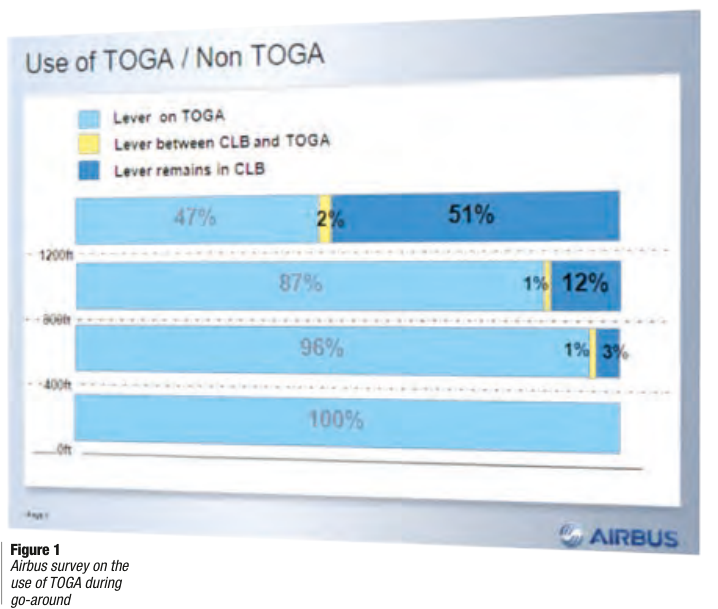
Between 2010 and 2012, Airbus performed a survey on go-arounds that required a close examination of the approach phase of nearly 500,000 flights. The confidential survey gathered data from 12 airlines from all areas around the world. Amongst many facts that were established was the general go-around rate which was one go-around in 340 approaches for the A320 family fleet and one go-around in 240 approaches for the A330/A340 fleet.
The main outcome of this survey was that, above 1,200 ft AAL, over half of the go-arounds were performed without selecting the thrust levers to the TOGA detent (fig1).
Recommendations on the Go-Around Procedure
Section titled “Recommendations on the Go-Around Procedure”Perhaps the most obvious result of this research was that with go-arounds at heights above 1,200 ft the adherence to the Airbus standard go-around procedure was only about 50%.
To initiate a go-around, flight crews set the thrust levers to the TOGA detent. The engine thrust then increases to the maximum available thrust. Setting the thrust levers to the TOGA detent is important because the lever movement to TOGA engages the correct FMA modes and then, the FMS sequences the Missed Approach guidance that is pre-coded in the FMS Navigation Database.
The reason is that crews are reluctant to use TOGA power, even briefly, if they only have a short climb to their FCU Altitude.
In addition to the figure above, several other discreet areas of go-around management were analysed. These included configuration management, speed control,
This triggers the:
-
Disarming or disengagement of approach modes in the flight guidance
-
Engagement of the go-around mode in the flight guidance (SRS – GA TRK)
-
Engagement of the go-around phase in the FMS.
However, in some cases, maximum thrust is often not required to perform a safe goaround and at some airfields the Missed Approach Altitude is quite low.
The SOP already mentioned that after having set the thrust levers to TOGA detent, if TOGA thrust was not required, the flight crew might retard the thrust levers as required. However, there was no additional recommendation for the flight crew on which position the thrust levers had to be set.
Airbus now specifies in the procedure:
If TOGA thrust is not required, the flight crew should set the thrust levers to the CL detent, after having selected them to TOGA position just at the go-around initiation point.
This action aims at limiting the aircraft energy during the go-around phase.
Discontinued Approach Technique
Section titled “Discontinued Approach Technique”Some operators have developed their own customized go-around procedures. These procedures have resulted in unexpected aircraft trajectory and energy situations. Therefore, Airbus developed a technique, based on the knowledge of all associated aircraft systems, to achieve the objective of performing a goaround without applying TOGA thrust. The technique, called “Discontinued Approach”, enables the flight crew to abort an approach without setting the thrust levers to the TOGA detent.
The main actions that flight crew have to perform are:
-
De-selection of the approach mode
-
Management of aircraft trajectory
-
Selection of a new destination in the FMS, if required.
Figure 2 Depending on the altitude selected on the FCU, the flight crew may discontinue the approach.
Apply go-around procedure
Section titled “Apply go-around procedure”Discontinue the approach
The FCU altitude during a descent and approach is normally reduced in steps, with ATC clearance, until the initial approach altitude (typically 3,000 ft) is reached. At glide slope capture (G/S) or final approach commencement (FINAL APP) the FCU altitude is set to the missed approach altitude.
The flight crew uses this selected FCU altitude for the decision-making:
-
At or above the FCU selected altitude: use either the go-around SOP for the Discontinued Approach Technique (fig. 2)
-
When below the FCU selected altitude: use the go-around SOP.
If the flight crew wants to apply the discontinued approach technique, they must go through the five following steps :
1) Call “CANCEL APPROACH”
Section titled “1) Call “CANCEL APPROACH””2) Leave the thrust levers in the CL detent
Section titled “2) Leave the thrust levers in the CL detent”3) De-selects APPR mode(s)
Section titled “3) De-selects APPR mode(s)”To de-select the approach modes, the flight crew can use the applicable pushbutton: APPR or LOC (if a LOC only approach is being executed). In the case of an ILS approach, for example, both these actions disarm or disengage the LOC and G/S approach modes on the FMA. This action ensures that possible spurious LOC and/or G/S capture (fig. 3) are avoided.
4) Manage the aircraft trajectory in vertical and lateral axis.
Section titled “4) Manage the aircraft trajectory in vertical and lateral axis.”- Depending on the ATC orders, select a
heading (HDG), or re-engage NAV if the intention is to fly the missed approach in the FMS Flight Plan (F-PLN).
-
Select the appropriate vertical mode to descend or to level-off according to the altitude assigned by the ATC.
-
Select a new speed according to the situation.
5) Enter a new DEST in the FMS, if required (fig. 4)
Section titled “5) Enter a new DEST in the FMS, if required (fig. 4)”If the flight crew intends to fly the missed approach and overflies the last waypoint of the approach, the FMS considers that the “destination” in the F-PLN has been achieved. The flight crew will have to enter a new destination, which could be the same airport or a diversion airport.
APPR modes remains engaged
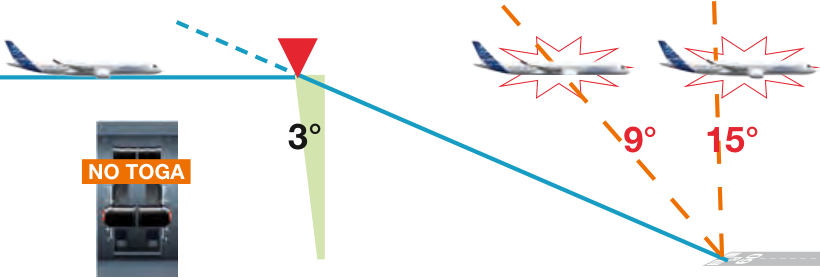
Figure 3 Spurious LOC and/or The “false” ILS trajectory could be based on the secondary beam of the ILS at 9 or 15 degrees. As a result, the aircraft can perform a very G/S capture abrupt trajectory change to follow the secondary G/S beam.
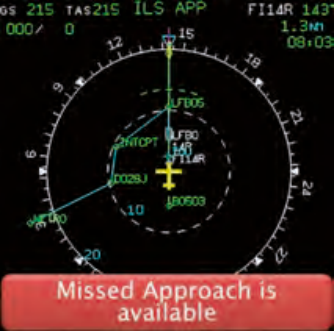
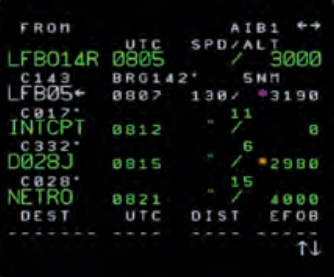
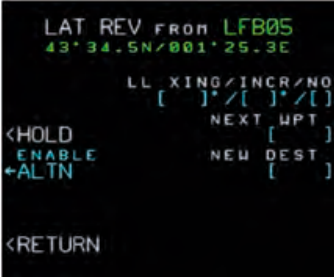
Figure 4
The missed approach remains available when discontinuing the approach. However, the FMS may have “lost” the destination
Conclusion
Section titled “Conclusion”A thorough go-around survey and in-service feedback highlighted that flight crews were applying customized procedures to interrupt the approach, instead of applying the Airbus go-around SOP procedure. This occasionally led to some poorly flown go-arounds with unexpected trajectories and some mis-configuration issues.
-
It was therefore decided, in order to avoid excess aircraft energy during the go-around, to:
-
Refine the go-around SOP with a recommendation, if TOGA thrust is not required, to set the thrust levers to CL detent just after the TOGA detent selection.
-
Develop a new optional technique to discontinue the approach when at or above the FCU altitude, without setting the thrust levers to TOGA.
-
This technique consists in the five following steps:
-
- Call “CANCEL APPROACH”
-
- Leave the thrust levers in the CL detent
-
- De-selects APPR mode(s)
-
- Manage the aircraft trajectory in vertical and lateral axis
-
- Enter a new DEST in the FMS, if required.
It is important to remember that the standard go-around procedure remains the only procedure within the SOPs that addresses all the go-around requirements in term of performance. Therefore, if there is any doubt about the performance criteria (obstacles, climb gradients etc) during the intended go-around, the standard goaround procedure must be applied.
This article highlights the two recommendations that were introduced in the FCOM PRO-NOR-SOP “Approach General” and in the FCTM Normal Operations NO-180 “Approach” at the end of 2013 (updates respectively in March and May 2014 for the A300/A310 and A380).
Two ‘Safety first’ articles have in the past been devoted to the go-around procedure:
-
The first, “Go-around Handling” issue 10, August 2010, highlighted that on Airbus Fly By Wire aircraft the go-around flight guidance modes of the Auto Flight System are triggered by setting the thrust levers to TOGA.
-
The second, “The go-around Procedure” issue 12, July 2011, insisted on the need to fly and maintain the proper pitch and on the necessity to retard the thrust levers from TOGA to CL detent without delay in the event of an early capture of altitude.
复飞时能量管理
Section titled “复飞时能量管理”
David MARCONNET
Section titled “David MARCONNET”飞行运行安全增强经理 飞行运行与培训支援 客户服务中心
Mickaël ROLAND
Section titled “Mickaël ROLAND”A320/A330/A340 飞行运行工程师 飞行运行与培训支援 客户服务中心
空客近期就复飞执行质量开展了一些研究。研究涉及对全球多家航空公司近 500,000 次进近飞行数据进行分析。
研究结果表明,在某些情况下,机组选择不采用空客标准操作程序(SOP)规定的复飞阶段程序。
特别是当复飞高度在 1,200 ft AAL 以上时,飞行机组往往选择调整发动机推力设置,而非设定 TOGA 推力。运营商反馈也表明了类似趋势。因此,空客收到多份关于复飞程序期间出现非预期飞机轨迹和能量管理技术的报告。
因此,决定通过以下方式解决这些问题:
-
根据空客 SOP,更好地定义复飞期间可选的推力手柄管理技术。
-
开发一种”中断进近”技术,使机组能够在不选择 TOGA 卡位的情况下有效”中止”进近。
飞行机组训练手册(FCTM)和飞行机组操作手册(FCOM)已于 2013 年底相应更新(A300/A310 和 A380 的更新分别于 2014 年 3 月和 5 月完成)。
俯仰控制和自动化与手动飞行的使用。
对于发起复飞,空客始终建议采用将推力手柄置于 TOGA 卡位的标准复飞程序。按照 SOP 飞行的飞机,执行此类程序没有特殊困难。但是,如果未能达到俯仰目标,且对轻重量飞机实施最大推力复飞,可能会产生能量过剩情况。因此提出的问题是:是否有解决方案可以限制过多的飞机能量?对于这些”高高度”复飞,标准复飞程序是否有替代方案?
2010 年至 2012 年间,空客对复飞进行了调查,需要详细检查近 500,000 次飞行的进近阶段。这份保密调查收集了来自全球各地 12 家航空公司的数据。在已确定的众多事实中,总体复飞率为:A320 系列机队每 340 次进近中有一次复飞,A330/A340 机队每 240 次进近中有一次复飞。
此次调查的主要结论是:在 1,200 ft AAL 以上,超过一半的复飞未将推力手柄设置到 TOGA 卡位(图 1)。
关于复飞程序的建议
Section titled “关于复飞程序的建议”这项研究最明显的结果之一可能是:在 1,200 ft 以上高度进行的复飞,对空客标准复飞程序的遵循率仅为约 50%。
为了发起复飞,飞行机组将推力手柄设置到 TOGA 卡位。发动机推力随后增加至最大可用推力。将推力手柄设置到 TOGA 卡位很重要,因为推力手柄移动到 TOGA 会接通正确的 FMA 方式,然后 FMS 序列预编程在 FMS 导航数据库中的复飞引导。
原因是,如果机组只需要短距离爬升至 FCU 高度,他们不愿意使用 TOGA 推力,即使是短暂使用。
除了上述数据外,研究还分析了复飞管理的其他几个隐蔽方面,包括形态管理、速度控制、
此操作触发:
-
飞行引导中进近方式的断开或脱离
-
飞行引导中复飞方式的接通(SRS – GA TRK)
-
FMS 中复飞阶段的接通。
然而在某些情况下,执行安全复飞并不总是需要最大推力,而且某些机场的复飞高度相当低。
SOP 已提到,在将推力手柄设置到 TOGA 卡位后,如果不需要 TOGA 推力,飞行机组可以根据需要收回推力手柄。但是,对于推力手柄应设置到什么位置,没有向飞行机组提供额外建议。
空客目前在程序中明确规定:
如果不需要 TOGA 推力,飞行机组应在复飞起始点将推力手柄选择至 TOGA 位置后,将其设置到 CL 卡位。
此操作的目的是限制复飞阶段的飞机能量。
中止进近技术
Section titled “中止进近技术”部分运营商已开发了自己的定制复飞程序。这些程序导致了意想不到的飞机轨迹和能量状况。因此,空客基于对所有相关飞机系统的了解,开发了一种在不将推力手柄设置到 TOGA 卡位的情况下执行复飞的技术。该技术称为”中止进近”,使飞行机组能够在不将推力手柄设置到 TOGA 卡位的情况下中止进近。
飞行机组需要执行的主要动作包括:
-
取消进近模式的选择
-
管理飞机轨迹
-
如需要,在 FMS 中选择新的目的地。
图 2 根据 FCU 上选择的高度,飞行机组可以中止进近。
执行复飞程序
Section titled “执行复飞程序”中止进近
在下降和进近期间,FCU 高度通常随着 ATC 许可逐步降低,直至达到起始进近高度(通常为 3000 英尺)。在截获下滑道(G/S)或最后进近开始(FINAL APP)时,FCU 高度被设置为复飞高度。
飞行机组使用此选定的 FCU 高度进行决策:
-
在 FCU 选择的高度或高于该高度:使用中止进近技术的复飞 SOP(图 2)
-
低于 FCU 选择的高度:使用复飞 SOP。
如果飞行机组希望执行中止进近技术,必须按照以下五个步骤进行:
1) 喊话”取消进近”(CANCEL APPROACH)
Section titled “1) 喊话”取消进近”(CANCEL APPROACH)”2) 将推力手柄保持在 CL 卡位
Section titled “2) 将推力手柄保持在 CL 卡位”3) 取消进近模式(APPR)
Section titled “3) 取消进近模式(APPR)”要取消进近模式,飞行机组可使用适用的按键:APPR 或 LOC(如正在执行仅 LOC 进近)。以 ILS 进近为例,这两个动作中的任何一个都会在 FMA 上解除或脱离 LOC 和 G/S 进近模式。此动作确保避免可能的虚假 LOC 和/或 G/S 截获(图 3)。
4) 在垂直轴和横侧轴上管理飞机轨迹
Section titled “4) 在垂直轴和横侧轴上管理飞机轨迹”-
根据 ATC 指令,选择航向(HDG),或在计划沿 FMS 飞行计划(F-PLN)飞复飞航段时重新接通 NAV。
-
根据 ATC 指定的高度,选择适当的垂直模式以下降或改平。
-
根据情况选择新的速度。
5) 如需要,在 FMS 中输入新的目的地(图 4)
Section titled “5) 如需要,在 FMS 中输入新的目的地(图 4)”如果飞行机组打算飞越复飞航段并飞越进近的最后航点,FMS 认为 F-PLN 中的”目的地”已到达。飞行机组需要输入新的目的地,可以是同一机场或备降机场。
进近模式保持接通
图 3 虚假的 LOC 和/或 G/S 截获 “虚假” ILS 轨迹可能基于 ILS 的副瓣波束,角度为 9 度或 15 度。因此,飞机可能执行非常_突兀的轨迹变化以跟随副瓣 G/S 波束。
图 4
中止进近时复飞程序仍然可用。但是,FMS 可能已”丢失”目的地
全面的复飞调查和现场反馈表明,飞行机组使用的是定制程序来中断进近,而不是执行空客复飞 SOP 程序。这偶尔导致一些复飞飞行动作不佳,出现意外轨迹和一些构型问题。
因此,为避免复飞期间飞机能量过剩,决定:
-
完善复飞 SOP,建议如不需要 TOGA 推力,在选择 TOGA 卡位后立即将推力手柄设置到 CL 卡位。
-
开发一种新的可选技术,用于在 FCU 高度或高于 FCU 高度时中止进近,不将推力手柄设置到 TOGA。
-
该技术包括以下五个步骤:
-
- 喊话”取消进近”(CANCEL APPROACH)
-
- 将推力手柄保持在 CL 卡位
-
- 取消进近模式
-
- 在垂直轴和横侧轴上管理飞机轨迹
-
- 如需要,在 FMS 中输入新的目的地。
重要的是要记住,标准复飞程序是 SOP 中唯一满足所有复飞性能要求的程序。因此,如果在计划复飞期间对性能标准(障碍物、爬升梯度等)存在任何疑问,必须执行标准复飞程序。
本文强调了 2013 年底在 FCOM PRO-NOR-SOP”进近总则”和 FCTM 正常操作 NO-180”进近”中引入的两项建议(A300/A310 和 A380 分别于 2014 年 3 月和 5 月更新)。
过去有两篇”Safety First”文章专门讨论复飞程序:
-
第一篇,“复飞操控”,2010 年 8 月第 10 期,强调了在空客电传飞机上,自动飞行系统的复飞飞行引导模式是通过将推力手柄设置到 TOGA 来触发的。
-
第二篇,“复飞程序”,2011 年 7 月第 12 期,强调了正确保持俯仰的必要性,以及在提前截获高度时毫不犹豫地将推力手柄从 TOGA 收回到 CL 卡位的必要性。