Flight Crews and De-Icing Personnel
Source: Airbus Safety First URL: https://safetyfirst.airbus.com/flight-crews-and-de-icing-personnel/ Published: 2013-07-14 Magazine Issue: 2013-07 Category: Archive PDF: Original PDF
Alun WILLIAMS
Section titled “Alun WILLIAMS”Manager, General Mechanical Systems Engineering
Flight Crews and De-Icing Personnel Working together in Temporary Teamwork for safe Skies
Section titled “Flight Crews and De-Icing Personnel Working together in Temporary Teamwork for safe Skies”1. Introduction
Section titled “1. Introduction”Flying aircraft in winter conditions is not an abnormal condition - but it does require more attention to detail and some specific knowledge. It is normal to be relieved at the end of winter and to relax a little as the threat subsides, but the memory of winter needs to be preserved for the next seasonal repeat. This “winter threat” also requires a high level of additional team-work between flight crew and ground staff. For a fairly short periods of time flight crew and ground staff are focused on one objective: the safe take-off of the aircraft, and must therefore work together towards a common aim.
In this article we will be speaking about this important interaction between flight crews and ground crews and how their complementary action can enhance safety. Pilots ultimately have responsibility for their aircraft and, in winter, they need more input from ground crews, in order that their decision making is fully informed
2. Importance of proper Training
Section titled “2. Importance of proper Training”It is of prime importance that all ground de-icing personnel of whatever grade or function are fully trained to recognize icing of all types and in all forms – even to recognize the conditions prevailing when ice or frost can form (active icing conditions).
A good pair of eyes is crucial in many ways to the safety of the aircraft. Ground staff can sometimes be the only way that flight crews (in the cockpit) can be informed of icing safety issues on their aircraft in unseen areas.
All crews (flight and ground) need regular training for winter operations and this needs to be constantly in the memory – not something which is put to the back of the mind in summer and therefore comes as a shock - next winter.
Another aspect of the flight/ground crew interaction, is that flight crews are not always ‘informed’ on AMM Procedures (de-icing etc) and ground crews are not generally ‘informed’ on FCOM content. Some general cross training for both crews serves to improve the flow of information between both.
The worst statistics for dispatch reliability, loss of aircraft slots and even cancellations tend to occur in the October/November period every year, when this transitional period into winter operations has not been properly prepared for.
The best time to prepare for this is in August/September, using simulators if possible but certainly practicing procedures and scenarios and refreshing the memories of what happened last winter.
Safety
3. Typical de-Icing Procedure
Section titled “3. Typical de-Icing Procedure”There is no ‘typical’ operation – all airports are different, the buildup of activity is ‘organic’ and activities occur differently in different locations. A de-icing procedure, which is inherently good for bolivia may not be the best for Siberia or Paris. This is why all authorities require each airline to write their own individual procedures for their own locations and to work with de-icing service providers to ensure the procedures they create are correct for their aircraft.
4. Importance of proper Teamwork
Section titled “4. Importance of proper Teamwork”To illustrate the importance of good flight crew / de-icing personnel teamwork, we have split a winter ground operation workflow into the following representative phases:
q Pre-boarding
q Start of Engines and Taxi to DeIcing Pad
q Ground De-Icing
q Taxi to Runway
q Pre Take-Off
And for each phase, we look at how their complementary action can enhance safety.
4.1 Pre-Boarding
Section titled “4.1 Pre-Boarding”After receiving the weather briefing aircrew will inspect the exterior of the aircraft during their pre-flight inspection. At this time the flight crew may request de-icing or further antiicing depending on the aircraft condition and the weather. (The aircraft may or may not have been treated prior to their arrival. It is more likely now that the aircraft is boarded first and then de-iced on the way to takeoff via the de-icing pan.)
Flight crew should also remember that the ground crew are outside ‘in’ the weather and may have advice on the immediate conditions prevailing.
The three different contamination checks required to be accomplished
Section titled “The three different contamination checks required to be accomplished”1. Pre-Flight Contamination Check
Section titled “1. Pre-Flight Contamination Check”-
q Normally accomplished by the flight crew. However in the absence of the flight
-
crew the Controller (De-Ice Coordinator) can accomplish the check.
2. Post De-Ice Contamination Check
Section titled “2. Post De-Ice Contamination Check”- q Accomplished by the De-Ice Inspector.
3. Pre Take-Off Check
Section titled “3. Pre Take-Off Check”- q Accomplished periodically during taxi out and prior to take-off by the flight crew.
Various different terms can be used to describe the activities of people on the team:
• One person should be designated as the manager or responsibility holder for all de-icing activities. He or she would normally be called the Controller, De-Ice Coordinator, sometimes also ‘Ice-Man’.
• One person must be designated as the inspector – normally called ‘De-Ice Inspector’. This person is responsible for making sure and confirming that the aircraft ‘critical surfaces’ – wings, stabilizers and fin are free from frozen contamination (contamination = ice, frost, snow etc). The final required method is by touching the aircraft wing skin (Tactile Test).
This person can be anyone from the teams. Different airports have different personnel configurations; what is important is that one person is designated for this responsibility.
4.2 Start of Engines and Taxi to de-Icing Pad
Section titled “4.2 Start of Engines and Taxi to de-Icing Pad”pilots will be given a weather briefing, often the ground crew can give details for short local changes, which can be valuable to pilots.
Understanding the significance of Holdover Times (HoT) is important as these will directly affect the preflight phase planning. Prepare the aircraft for de-icing – close intakes, and outflow valves. Set aircraft in Ditch mode.
Here the aircrew and the ground deicing crew come together. The flight crew taxi the aircraft into position on the de-icing pan and the de-icing vehicles drive up to the aircraft. If necessary, the aircraft is de-iced and anti-iced, in accordance with the pilot’s request and the prevailing weather conditions.
Anti-icing is a less aggressive stage which ensures the aircraft remains clear of contamination for the required time.
The ground de-icing crew should consist of a Controller (De-Ice Coordinator), the relevant number of vehicle drivers and de-icing lance operators and a De-Ice Inspector. There must always be a ground DeIce Inspector, qualified locally and to national and international standards to confirm to the pilot that the de-icing has been effective and that the aircraft carries no contamination before moving off to the flight area.
Aircrew need to remind themselves that they are following procedures (FCOM) and are highly occupied with cockpit work and preparation. Any extra information and assistance they can get from ground crew should not be forgotten or dismissed.
4.3 Ground de-Icing
Section titled “4.3 Ground de-Icing”De-Icing procedures are basically written and designed to remove ‘contamination’ from the aircraft critical surfaces. Fuselage cleaning and front fuselage cleaning needs to be performed carefully to ensure aerials are not damaged and windscreens and wipers are not clogged with fluid.
In most cases the preferred method of confirmation is by ‘Tactile Test’ – or basically, De-Ice Inspector will touch the aircraft wing surface with bare fingers (fig. 1). This is probably still the only trusted method of confirming the wing is clear of contamination – particularly clearice (fig. 2).
Ground crews are local, often pilots are not. That means that although
4.4 Taxi to Runway
Section titled “4.4 Taxi to Runway”When the aircraft is ready and declared free of ice, the flight crew will taxi on towards the runway. Flight crew still need to be vigilant to watch the time and ensure HoT is not over-run, weather conditions do not change and the aircraft starts to collect contamination. If in doubt turn back.
Use as much of the ground resource as possible and keep checking that no contamination has formed or stuck.
Aircrew must also be vitally aware that contamination can grow in areas they cannot see. For example, in extreme low temperatures and in precipitation, particularly snow, it is possible for the precipitation to hit the windscreen and melt. The windscreen (externally) is not necessarily at a very high temperature but hot enough not to freeze. Thus any clear melt water will run down the side of the aircraft underneath the windscreen and out of the pilot’s vision. If the aircraft is required to return for re-treatment and the time builds, this can build a fairly thick ice-bridge which may cause a problem with unreliable airspeed at a later time, because it will deflect the airflow away from the pitot tube (fig. 4, 5 and 6).
If an aircraft is slow to take-off for any reason and needs to be de-iced again or retreated for anti-icing (sometimes more than once) aircrew must bear in mind the potential growth of these ice-bridges and their potential to cause ‘unreliable airspeed’ indications during take-off. This is not to be confused with unreliable airspeed caused by ice crystals in cruise.
4.5 Pre Take-Off
Section titled “4.5 Pre Take-Off”For the previously described situations it would be necessary for ground crew to approach the aircraft, for example to confirm icing on the front fuse. If that is the case, it is the responsibility of the flight crew to call them forward and ensure their safety.
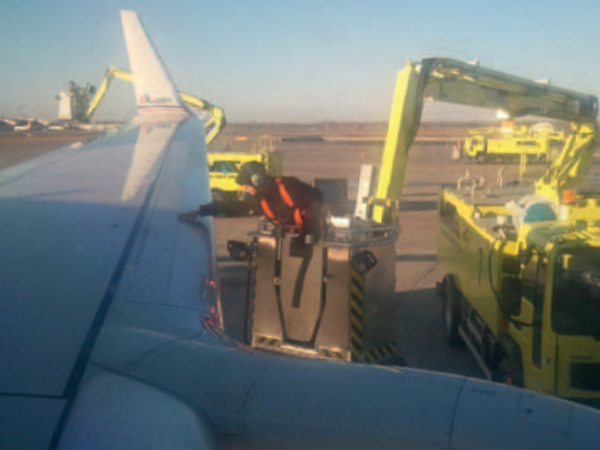
Figure 1 Tactile Test
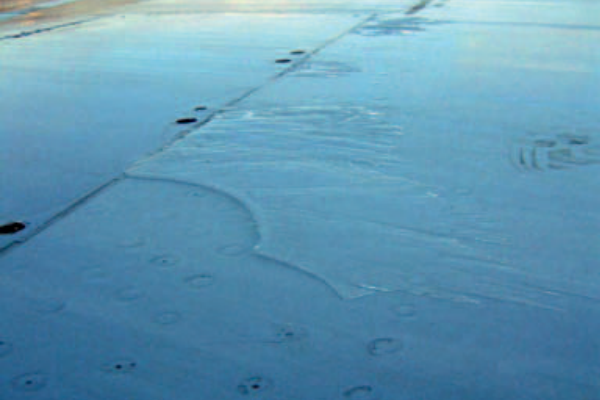
Figure 2 Clear-ice contamination on the wing
Safety
5. Conclusion
Section titled “5. Conclusion”1. Know your de-ice and anti-ice procedures
Section titled “1. Know your de-ice and anti-ice procedures”2. Be ready to adapt:
Section titled “2. Be ready to adapt:”There are good rules and procedures, but we cannot be rigid as the weather situation can alter quickly, All situations need to be treated with intelligent adaptation.
3. Maximise Teamwork:
Section titled “3. Maximise Teamwork:”Good team work between flightcrews and ground crews is an essential ingredient of safe winter operations.
Ground crew local knowledge may be invaluable – it should be sought and used by flight crews. Flight crew have the ultimate responsibility but they need to make use of ground their crew capability until the latest possible moment.
4. Always maintain vigilance : It leads to improved safety levels.
References
Section titled “References”A320 Family, A330/A340, A380:
Section titled “A320 Family, A330/A340, A380:”-
q Flight Crew Operating Manual (FCOM): PRO SUP - ADVERSE WEATHER - COLD WEATHER
-
q Flight Crew Training Manual (FCTM): NORMAL OPERATIONS - SUPPLEMENTARY INFORMATION - COLD WEATHER
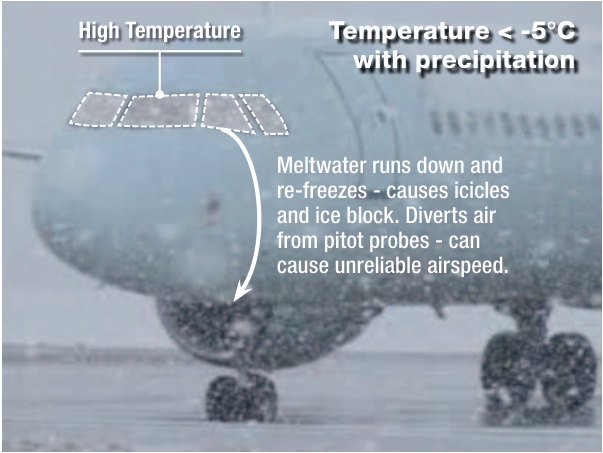
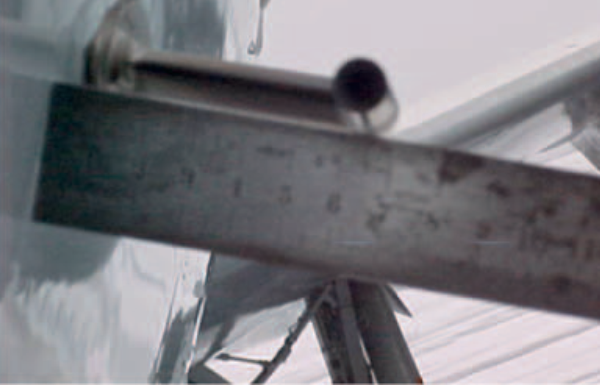
Figure 5 Clear pitot tube
A300/A310:
Section titled “A300/A310:”-
q FCOM 2.02.13 - PROCEDURES AND TECHNIQUES - INCLEMENT WEATHER OPERATION; OPERATION IN ICING CONDITIONS
-
q FCTM 2.34.10 - SUPPLEMENTARY INFORMATION - INCLEMENT WEATHER COLD WEATHER OPERATIONS AND ICING CONDITIONS
-
q AMM: Chapters 12-30-00 and 12-31-00 Complete
Safety
来源:Airbus Safety First 网址:https://safetyfirst.airbus.com/flight-crews-and-de-icing-personnel/ 发布日期:2013-07-14 杂志期号:2013-07 分类:档案 PDF:Original PDF
Alun WILLIAMS
Section titled “Alun WILLIAMS”系统与机械工程部门经理
飞行机组与除冰人员——临时协作共筑安全蓝天
Section titled “飞行机组与除冰人员——临时协作共筑安全蓝天”在冬季条件下飞行并非异常情况——但确实需要更加注重细节,并掌握一些特定知识。冬季结束时感到如释重负并稍微放松是正常的,因为威胁已经消退,但需要将冬季的记忆保留到下一个季节性重复。这一”冬季威胁”还需要飞行机组与地面人员之间更高水平的额外团队协作。在相当短的时间内,飞行机组和地面人员专注于一个目标:飞机安全起飞,因此必须共同努力实现共同目标。
在本文中,我们将讨论飞行机组与地面机组之间的这种重要互动,以及他们的互补行动如何能够提高安全性。飞行员最终对其飞机负责,在冬季,他们需要更多来自地面机组的输入,以便其决策能够获得充分的信息支持。
2. 正确培训的重要性
Section titled “2. 正确培训的重要性”所有地面除冰人员,无论级别或职能,都必须接受充分培训,能够识别各种类型和形式的积冰——甚至能够识别可能导致结冰或结霜的条件(活跃结冰条件)。
一双敏锐的眼睛在飞机安全的许多方面都至关重要。地面人员有时可能是飞行机组(在驾驶舱内)了解其飞机不可见区域积冰安全问题的唯一途径。
所有机组(飞行和地面)都需要接受冬季运行的定期培训,并且需要将其牢记于心——而不是在夏季将其抛诸脑后,因此在下一个冬季来临时才如梦初醒。
飞行/地面机组互动的另一个方面是,飞行机组并非总是”了解”AMM程序(除冰等),而地面人员通常也不”了解”FCOM内容。为两个机组进行一些基本的交叉培训有助于改善双方之间的信息流通。
每年十月/十一月期间,往往会出现最差的放行可靠率、航班时刻损失甚至取消的统计数据,这是因为向冬季运行的过渡期没有得到适当的准备。
为此进行准备的最佳时机是八月/九月,尽可能使用模拟机,但肯定要练习程序和场景,并刷新对去年冬季所发生事情的记忆。
安全
3. 典型除冰程序
Section titled “3. 典型除冰程序”没有”典型”的运行——所有机场都不一样,活动安排是”有机”的,不同地点的活动也不相同。在玻利维亚固有的良好除冰程序可能不是西伯利亚或巴黎的最佳方案。这就是为什么所有当局都要求每家航空公司为其各自的地点编写各自的程序,并与除冰服务提供商合作,确保他们创建的程序适合其飞机。
4. 正确团队协作的重要性
Section titled “4. 正确团队协作的重要性”为了说明良好的飞行机组/除冰人员团队协作的重要性,我们将冬季地面运行工作流程分为以下具有代表性的阶段:
q 登机前
q 发动机启动并滑行至除冰坪
q 地面除冰
q 滑行至跑道
q 起飞前
对于每个阶段,我们将关注他们的互补行动如何能够提高安全性。
4.1 登机前
Section titled “4.1 登机前”在收到气象简报后,机组人员将在其飞行前检查期间检查飞机外部。此时,飞行机组可根据飞机状况和天气情况要求除冰或进一步防冰。(飞机在他们到达之前可能已经过处理,也可能没有处理。现在更可能的情况是飞机先登机,然后通过除冰坪前往起飞时再进行除冰。)
飞行机组还应记住,地面人员在户外”置身于”天气中,可能对当前条件有建议。
需要完成的三种不同污染检查
Section titled “需要完成的三种不同污染检查”1. 飞行前污染检查
Section titled “1. 飞行前污染检查”- q 通常由飞行机组完成。然而,在飞行机组不在场的情况下,控制器(除冰协调员)可以完成检查。
2. 除冰后污染检查
Section titled “2. 除冰后污染检查”- q 由除冰检查员完成。
3. 起飞前检查
Section titled “3. 起飞前检查”- q 由飞行机组在滑出期间定期完成,并在起飞前完成。
可以使用各种不同的术语来描述团队中人员的活动:
• 应指定一人为所有除冰活动的负责人或责任承担者。他或她通常被称为控制器、除冰协调员,有时也称为”冰人”。
• 必须指定一人为检查员——通常称为”除冰检查员”。此人有责任确保并确认飞机的”关键表面”——机翼、平尾和垂尾没有冻结污染(污染 = 冰、霜、雪等)。最终要求的检查方法是通过触摸飞机机翼蒙皮(触感测试)。
此人可以是团队中的任何人。不同机场有不同的配置;重要的是要指定一人承担此责任。
4.2 启动发动机与滑行至除冰坪
Section titled “4.2 启动发动机与滑行至除冰坪”飞行员将收到天气简报,通常地面工作人员能够提供当地短期变化的详细信息,这对飞行员非常有价值。
理解保持时间(HoT)的重要性至关重要,因为这将直接影响飞行前阶段的计划。为除冰做好准备——关闭进气口和排气活门。将飞机设置在漂浮(Ditch)模式。
此时,空中机组和地面除冰人员汇聚在一起。飞行机组将飞机滑行至除冰坪并到位,除冰车辆驶向飞机。如有必要,按照飞行员的请求和当前天气条件对飞机进行除冰和防冰处理。
防冰是较为温和的阶段,确保飞机在所需时间内保持无污染物状态。
地面除冰小组应由一名控制员(除冰协调员)、相应数量的车辆驾驶员和除冰喷枪操作员以及一名除冰检查员组成。必须始终配备一名地面除冰检查员,该检查员须具备当地、国家和国际标准的资质,以向飞行员确认除冰有效,且飞机在滑出至飞行区域前不带任何污染物。
飞行机组需要提醒自己,他们正在按照程序(FCOM)操作,且正忙于驾驶舱内的工作和准备。他们能从地面工作人员那里获得的任何额外信息和帮助都不应被遗忘或忽视。
4.3 地面除冰
Section titled “4.3 地面除冰”除冰程序的基本编写和设计目的是清除飞机关键表面上的”污染物”。机身清洁和前机身清洁需要仔细进行,以确保天线不被损坏,风挡和雨刷不会被液体堵塞。
在大多数情况下,首选的确认方法是”触感测试”——或简单来说,除冰检查员会用裸露的手指触摸飞机机翼表面**(图1)。这可能仍然是确认机翼无污染物的唯一可靠方法——尤其是透明冰(图2)**。
地面工作人员是本地人,而飞行员通常不是本地人。这意味着虽然
4.4 滑行至跑道
Section titled “4.4 滑行至跑道”当飞机准备就绪并确认无冰后,飞行机组将滑行至跑道。飞行机组仍需保持警惕,关注时间并确保未超出保持时间(HoT),天气条件未发生变化,且飞机开始聚集污染物。如有疑问,应返回。
尽可能利用地面资源,持续检查是否已形成或粘附了污染物。
飞行机组还必须高度重视,污染物可能在无法观察到的区域积聚。例如,在极端低温和降水条件下,尤其是降雪,降水可能撞击风挡并融化。风挡(外部)不一定处于非常高的温度,但足够热而不会结冰。因此,任何透明的融水都会沿着风挡下方流到飞机侧面,滑出飞行员的视野范围。如果飞机需要返回重新处理,且时间延长,可能会形成相当厚的冰桥,这可能在后续造成不可靠空速的问题,因为冰桥会将气流偏转,使其远离皮托管**(图4、5和6)**。
如果飞机因任何原因延迟起飞,需要再次除冰或重新进行防冰处理(有时不止一次),飞行机组必须牢记这些冰桥潜在的增长及其在起飞时导致”不可靠空速”指示的可能性。这与巡航时由冰晶引起的不可靠空速不同,不应混淆。
4.5 起飞前
Section titled “4.5 起飞前”对于前述情况,地面工作人员需要接近飞机,例如确认前机身的结冰情况。如果是这样,飞行机组负责召唤他们上前,并确保其安全。
图1 触感测试
图2 机翼上的透明冰污染物
安全
1. 熟悉除冰和防冰程序
Section titled “1. 熟悉除冰和防冰程序”2. 做好适应准备:
Section titled “2. 做好适应准备:”规则和程序是好的,但天气情况可能迅速变化,我们不能过于死板。所有情况都需要智能地适应处理。
3. 最大化团队协作:
Section titled “3. 最大化团队协作:”飞行机组与地面工作人员之间的良好团队协作是安全进行冬季运行的基本要素。
地面工作人员的本地知识可能非常宝贵——飞行机组应寻求并利用这些知识。飞行机组承担最终责任,但他们需要在最晚的时刻利用地面工作人员的能力。
4. 始终保持警惕:这能提高安全水平。
A320系列、A330/A340、A380:
Section titled “A320系列、A330/A340、A380:”-
q 飞行机组操作手册(FCOM):PRO SUP - 不利天气 - 寒冷天气
-
q 飞行机组训练手册(FCTM):正常操作 - 补充信息 - 寒冷天气
图5 清洁的皮托管
A300/A310:
Section titled “A300/A310:”-
q FCOM 2.02.13 - 程序和技术 - 不利天气运行;在结冰条件下的运行
-
q FCTM 2.34.10 - 补充信息 - 不利天气寒冷天气运行和结冰条件
-
q AMM:第12-30-00章和第12-31-00章完整内容
安全