Compliance to Operational Procedures
Source: Airbus Safety First URL: https://safetyfirst.airbus.com/compliance-to-operational-procedures/ Published: 2007-12-14 Magazine Issue: 2007-12 Category: Archive PDF: Original PDF
Compliance to Operational Procedures Why do well trained and experienced pilots not always follow procedures?
Section titled “Compliance to Operational Procedures Why do well trained and experienced pilots not always follow procedures?”By: Claire Pelegrin Director Human Factors
1 Introduction
Section titled “1 Introduction”In the aviation domain, the purpose of introducing procedures was to enhance safety in normal and abnormal conditions, by reducing uncertainty and thus risks. The rationale was obvious, and the benefits so blatant that the aeronautical industry has been using procedures for many years. It is now undisputed that pilots shall adhere to the procedures designed for them. But real life is not always that simple.
The objective of this article is to understand the complete picture: good procedures design is important as well as appropriate explanations to ensure pilots have sufficient confidence in their skills and judgment to manage the situation.
Each procedure is designed as the best and safest way to do a given task. Flight deck procedures are the skeleton of flight operations. They are the structure and the organisation by which a pilot can fly and interact with the aircraft and other crewmembers.
For years, everybody has shared that same idea that safety will be guaranteed if pilots are selected and trained, so as to strictly apply procedures.
The method was:
-
tell them
-
• train them • enforce them
-
to follow procedures.
When incidents or accidents occur, most of the time a non-adherence to procedures is mentioned. But this is not sufficient to explain accidents, because every day pilots do not follow procedures and this does not always lead to accidents!
2 Role of rocedures p
Section titled “2 Role of rocedures p”Everybody knows the obvious role of procedures as a guide for action (individual and collective guide). It tells the pilot
-
What to do
-
When to do it
-
Sequence, order, synchronisation
3) Error management
Section titled “3) Error management”-
a) Guideline prevents the likeliness of errors, b) Common reference allows error detection. Built around an organised task-sharing, the procedures allow each crewmember to stand back from the actions performed by the other one, which gives a kind of “fresh eye” on the tasks performed by the other crewmember.
-
- Support risk management within complex and dynamic situations
-
How to do it
-
Who should do it
Organised task sharing
-
What to observe and what to check
-
What type of feed back is provided to the other crewmember
But procedures also have additional safety functions, which sometimes are not taught and explained well enough:
They support:
1) Situation awareness and anticipation
Section titled “1) Situation awareness and anticipation”-
a) They support a shared plan of action and shared awareness. The organised task sharing creates a shared action plan, that will be the “mental template” to act, synchronize actions and manage time. Thus, this shared action plan will be a support to build and manage situation awareness.
-
b) The call out which represents a collective reading of the procedure is a basement for coordination.
2) Decision making by providing
Section titled “2) Decision making by providing”3 Procedures implementation
Section titled “3 Procedures implementation”Not everything is predictable, and there is no magic in procedures. Mismatches do exist between procedures and actions. Implementing a procedure is not a simple automatic process. A procedure implementation is by nature different from the procedure itself: the first one is an action, the second one is an instruction. The procedure specifies the tasks, then the pilot will have his/her own way for implementing the task.
Human performance is not stable, and can be impaired by a variety of factors such as fatigue, stress, workload or operational pressure. This can impair procedure implementation. This is why it is important to understand the triggering factors behind procedure deviations in order to minimize them.
-
a) Elements of diagnosis to prepare the action,
-
b) Elements of execution,
-
c) Elements of control: cautions, what to do under different conditions and what to check.
Most of the time, crew action includes much more than what is written. It requires sophisticated mental functions such as:
- Understanding the situation This requires an organized perception and good situation awareness, which means a clear and up-to-date understanding of what is going on around the crew
-
- Understanding the procedure and its meaning 3) Ensuring that all pre-conditions are checked 4) Anticipating the expected results This is possible because pilots do more than just follow procedures. A procedure is more that a mere instruction: it refers to the pilot’s own skills and experience, his “good judgment”, “common sense” and “airmanship”. Confidence in oneself, in the aircraft and in the other crewmember is paramount because it supports decision and action.
-
- Ensuring that all actions requested by the procedures are performed in the right order, with good judgment and with good synchronization between crewmembers This requires dedicated skills. It is thus linked to the pilot’s knowledge of his own skills, his self-confidence, his confidence in the other crewmember and in the airplane. It also implies the ability to manage time and priorities.
4 Role of managers
Section titled “4 Role of managers”Once a procedure is designed and disseminated, the managers’ duties are not over. They also have responsibility for how the pilots use them. The pilots should be convinced that procedures are useful and relevant to the situation. The probability for an instruction to be followed is based on:
-
the perceived risk
-
the user’s knowledge
-
the situation
-
the presentation of information
While developing procedures, airline managers may use the 4Ps model.
- Philosophy:
is the over-arching view of the top management on how they conduct the business.
-
Policies:
-
are a broad specification of the way the management expects things to be done. For example, the commercial role of the Captain to stand at the cockpit door when passengers disembark will influence the “Shut down” procedure, to be then performed by the Copilot alone.
-
Procedures:
-
shall be consistent with the policies and overall philosophy.
-
Practices:
cover all flight deck activities.
If philosophies and policies are articulated, then it will be easier to generate logical and consistent procedures, and it will allow detecting the discrepancies and inconsistencies between procedures.
While the lack of procedures may generate risk and poor standards and standardisation, too many of them will sometimes create complacency. Alike, pilots experiencing trouble with a specific procedure may end up with lack of confidence in all other procedures. “I have already experienced this, I know a better way to do the task”.
The rationale for procedure changes should be documented and explained. Human beings often resist a change if they do not understand its justification and benefits (whether in terms of effectiveness or safety).
The level and type of explanations should be adapted to the context. When transitioning onto a new type, the focus will be on the link with design principles. Recurrent training will rather focus on routine situations, emergency situations and return of experience.
• the user’s attitude This means that procedures need to be explained and taught at all phases of pilot activities.
In some circumstances, the role of airmanship and good judgment should be clarified.
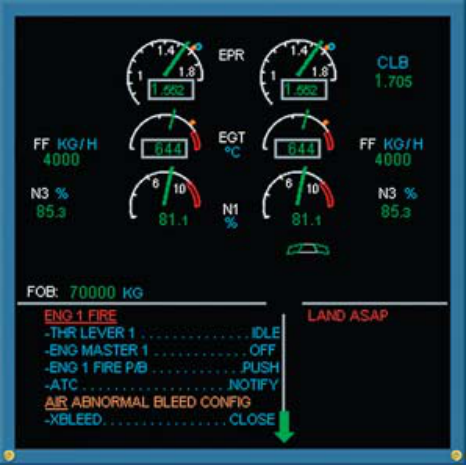
Example: Land ASAP
Section titled “Example: Land ASAP”Even in this situation (red warning), procedures do not decide on behalf of the crew. The level of emergency and the time available should be evaluated. Crew good judgment and decision are based on the time available, the type of failure, the flight situation and the environment (weather, characteristics of surrounding terrain, etc…)
5 Conclusion
Section titled “5 Conclusion”To repeat: “Follow procedures” is not sufficient. Not even the best procedures can be considered perfect. Extensively tested before implementation, SOPs are the outcome of a lot of expertise. However, the environment is dynamic, and procedures can only provide baselines. No set of procedures can substitute for human intelligence and flight experience.
SAFETY
Section titled “SAFETY”=
Safe aircraft
Section titled “Safe aircraft”-
procedures
-
pilot’s competence as an ability to manage the expected and unexpected
Sometimes, the main reasons behind the procedures should be explained.
For example, in case of Tail pipe fire
-
The flight crew must perform the following actions:
-
Shut down the engine
(MASTER switch set to OFF)
Do NOT press ENG FIRE pushbutton
Why? Because (FCTM02.03):
Section titled “Why? Because (FCTM02.03):”-
this would stop power to the FADECs and would stop the motoring sequence
-
the fire extinguisher must no be used, as it
-
will not extinguish any internal engine fire
-
as a first priority, the engine must be ventilated
对操作程序的遵守——为什么训练有素、经验丰富的飞行员并不总是遵循程序?
Section titled “对操作程序的遵守——为什么训练有素、经验丰富的飞行员并不总是遵循程序?”作者:Claire Pelegrin 人为因素总监
第1节 引言
Section titled “第1节 引言”在航空领域,引入程序的目的是通过减少不确定性和风险,在正常和异常情况下提高安全性。理由是显而易见的,其好处也非常明显,航空业已经使用程序多年。如今毫无疑问,飞行员应当遵守为他们设计的程序。但现实生活并不总是那么简单。
本文的目的是理解全貌:好的程序设计很重要,适当的解释也很重要,以确保飞行员对自己的技能和判断有足够的信心来管理情况。
每个程序都被设计为完成特定任务的最佳、最安全的方式。驾驶舱程序是飞行操作的核心框架。它们是飞行员驾驶飞机、与飞机以及其他机组人员进行互动的结构和组织。
多年来,每个人都有同样的想法:如果对飞行员进行选拔和培训,使其能够严格遵守程序,就能保证安全。
方法是:
- 告知 他们
- 培训 他们
- 强制 他们
遵守程序。
当发生事故或事故时,大多数情况下都会提到不遵守程序。但这不足以解释事故,因为每天飞行员都不遵守程序,但这并不总是导致事故!
第2节 程序的作用
Section titled “第2节 程序的作用”每个人都知道程序作为行动指南的明显作用(个人和集体指南)。它告诉飞行员
- 做什么
- 何时做
- 顺序、命令、同步
3)错误管理
Section titled “3)错误管理”-
a)指南防止错误发生的可能性,b)共同参考允许错误检测。围绕有组织的任务分工,程序允许每个机组人员从其他人员执行的动作中退后一步,从而对其他机组人员执行的任务提供一种“新的视角”。
-
4)在复杂和动态情况下支持风险管理
-
如何做
-
谁应该做
有组织的任务分工
-
观察什么和检查什么
-
向其他机组人员提供何种反馈
但程序也有额外的安全功能,有时这些功能没有得到很好的教学和解释:
它们支持:
1)情景意识和预测
Section titled “1)情景意识和预测”-
a)它们支持共同行动计划方案和共同意识。有组织的任务分工创建了共同行动计划方案,这将是行动、同步动作和时间管理的“思维模板”。因此,这个共同行动计划方案将有助于建立和管理情景意识。
-
b)喊话代表了程序的集体阅读,是协调的基础。
2)通过提供以下内容支持决策
Section titled “2)通过提供以下内容支持决策”3 程序实施
Section titled “3 程序实施”并非所有事情都是可预测的,程序中也没有魔法。程序与行动之间确实存在不匹配。实施程序不是一个简单的自动过程。程序实施本质上不同于程序本身:前者是行动,后者是指令。程序规定任务,然后飞行员将有自己执行任务的方式。
人的表现不是稳定的,可能受到多种因素的影响,如疲劳、压力、工作负荷或操作压力。这可能损害程序的实施。这就是为什么重要的是理解程序偏离背后的触发因素,以便尽量减少它们。
- a)准备行动的诊断要素,
- b)执行要素,
- c)控制要素:注意事项,在不同条件下要做什么和要检查什么。
大多数情况下,机组行动包括的内容比书面写的更多。它需要复杂的心理功能,例如:
1)理解情况 这需要有条理地感知和良好的情景意识,这意味着对机组周围正在发生的事情有清晰和最新的理解
2)理解程序及其含义 3)确保所有前提条件都已检查 4)预测预期结果 这是可能的,因为飞行员做的不仅仅是遵循程序。程序不仅仅是一个指令:它涉及飞行员自己的技能和经验,他的“良好判断力”、“常识”和“飞行素养”。对自己、对飞机和对其他机组人员的信心至关重要,因为它支持决策和行动。
5)确保程序要求的所有行动都按正确顺序执行,具有良好的判断力,并且在机组人员之间具有良好的同步性 这需要专门的技能。因此,它与飞行员对自己技能的了解、自我信心、对其他机组人员和飞机的信任有关。它还意味着管理时间和优先事项的能力。
4 管理人员的作用
Section titled “4 管理人员的作用”一旦程序设计完成并发布,管理人员的工作并未结束。他们还负责监督飞行员如何使用程序。应使飞行员确信程序对该情况有用且相关。指令被执行的概率取决于:
-
感知到的风险
-
使用者的知识
-
当时的情况
-
信息的呈现方式
在制定程序时,航空公司管理人员可采用 4P 模型。
- 理念(Philosophy):
是高层管理者对如何开展业务的核心观点。
- 政策(Policies):
是对管理层期望事物如何完成方式的宽泛规定。例如,机长在乘客下机时站在驾驶舱门口的职责角色,将影响“关机”程序——该程序将由副驾驶单独执行。
- 程序(Procedures):
必须与政策及整体理念保持一致。
- 实践(Practices):
涵盖所有飞行甲板活动。
如果理念和政策得到明确阐述,那么生成逻辑一致的程序将更加容易,也有助于发现程序之间的差异和不一致之处。
缺乏程序可能导致风险增加和标准及标准化水平下降,而程序过多有时会产生自满情绪。同样,如果飞行员在某个具体程序上遇到困难,可能会对所有其他程序失去信心。“我已经经历过这种情况,我知道更好的方法来完成这项任务。”
程序变更的理由应被记录和解释。人们通常会抵制不了解其理由和收益(无论是效能还是安全方面)的变更。
解释的深度和类型应根据具体情况调整。在机型改装时,重点应放在与设计原理的关联上。复训则应重点关注常规情况、紧急情况以及经验反馈。
• 使用者的态度 这意味着程序需要在飞行员活动的各个阶段进行解释和培训。
在某些情况下,应明确机组资源管理(airmanship)和良好判断力的作用。
示例:尽快着陆
Section titled “示例:尽快着陆”即使在这种情况下(红色警告),程序也不会替机组做出决定。应评估紧急程度和可用时间。机组的良好判断和决策取决于可用时间、故障类型、飞行状况和环境(天气、周围地形特征等)。
再次强调:_“遵守程序”_是不够的。即使是最好的程序也不能被认为是完美的。标准操作程序(SOP)在实施前经过广泛测试,是大量专业知识的结晶。然而,环境是动态的,程序只能提供基准。没有哪套程序能够替代人类的智慧和飞行经验。
=
-
程序
-
飞行员的胜任力——即管理预期和意外情况的能力
有时,应解释程序背后的主要理由。
例如,遇到尾管火灾时
-
飞行机组必须执行以下操作:
-
关闭发动机
(将 MASTER 开关设置到 OFF)
不要按压 ENG FIRE(发动机灭火)按钮
为什么?因为(FCTM02.03):
Section titled “为什么?因为(FCTM02.03):”-
这将切断 FADEC 的电源并停止电动序列
-
不应使用灭火器,因为
-
它无法扑灭任何内部发动机火灾
-
作为首要任务,必须对发动机进行通风