System Reset: Use With Caution
Source: Airbus Safety First URL: https://safetyfirst.airbus.com/system-reset-use-with-caution/ Published: 2021-07-07 Category: Flight Ops, Maintenance, maintenance reset, manual reset, reporting reset, reset, system reset, system reset table PDF: Original PDF

A reset is not the fix that it seem. system always quick may Performing an inappropriate manual system reset in flight can seriously impair the safety of the flight. Multiple system resets on the ground without performing the necessary troubleshooting actions can also have serious consequences.
This article addresses when resets are system applicable and how to perform them correctly.
This article is also available on safetyfirst.airbus.com and on the Safety first app for iOS and Android devices.
CASE STUDY
Section titled “CASE STUDY”Event Description
Section titled “Event Description”AUTO BRK FAULT at engine start
Section titled “AUTO BRK FAULT at engine start”At engine start of an A320, the BRAKES AUTO BRK FAULT ECAM alert triggered. The flight crew set the A/SKID & N/W STRG switch to OFF and then back to ON (fig.1). This action cleared the alert. First A/SKID N/WS FAULT during the takeoff roll The BRAKES A/SKID N/WS FAULT ECAM alert triggered during the takeoff roll prior to the inhibition phase. After the aircraft became airborne, the flight crew cleared the alert by setting the A/SKID & N/W STRG switch to OFF then ON. Second A/SKID N/WS FAULT during approach The BRAKES A/SKID N/WS FAULT ECAM alert triggered again on approach. The flight crew set the A/SKID & N/W STRG switch to OFF and ON for a third time and this action cleared the alert. (fig.1) A/SKID & N/W STRG switch Main landing gear tires burst at landing The flight crew noticed unusual braking behavior immediately after touchdown. They applied full reverse thrust and manual braking. The aircraft came to a stop, but the flight crew was unable to begin taxiing. The four main landing gear tires had burst during landing. Event Analysis Similar faults were observed during the previous flights There were seven occurrences of BRAKES AUTO BRK FAULT and two occurrences of BRAKES A/SKID N/WS FAULT recorded on this aircraft over the two months prior to the event. System resets and testing the BSCU were the only maintenance actions carried out each time. Unauthorized resets of the braking and steering functions hid the deteriorating condition of the braking system There is no reset procedure associated with BRAKES AUTO BRK FAULT and BRAKES A/SKID N/WS FAULT ECAM alerts in the A320 QRH. The use of the A/SKID & N/W STRG switch to reset the braking and steering functions in flight is mentioned in the System Reset table of the QRH, but it is only authorized with the BRAKES SYS 1(2) FAULT and BRAKES BSCU CH 1(2) FAULT ECAM alerts. The unauthorized resets that the flight crew performed during the flight hid the deteriorating condition of the braking system. Dual tachometer failure A dual tachometer failure was at the origin of the delay in the braking system activation. The unauthorized in-flight reset prevented the BSCU from detecting the failure of the tachometers and this led to the BSCU considering that 0 kt was the actual wheel speed. After 15 seconds, the braking function was recovered with a default deceleration speed. At the same time, the BSCU was unable to compute the anti-skid order and sent full hydraulic pressure to the brakes and caused the four tires to burst.
WHAT IS A SYSTEM RESET?
Section titled “WHAT IS A SYSTEM RESET?”A system reset is the action of switching off a system and then switching it back on again with the objective to retrieve normal system behavior or recover a previously lost function. It is different from re-engaging a tripped Circuit Breaker (C/B).
Tripped Circuit Breaker
Section titled “Tripped Circuit Breaker”A C/B will trip when there is an overload of electrical current detected in the circuit. This is to protect from overheating or a short-circuit condition in the wiring that could lead to further damage or fire. Management of tripped C/Bs is not covered by this article. In this article, the term “reset” describes the action of switching off a system and switching it back on again. This action can also be called a “cycle”.
Automatic Reset vs. Manual Reset
Section titled “Automatic Reset vs. Manual Reset”Certain avionic systems, such as the Flight Management System (FMS), have an automatic reset function. The reset action is completely managed by the system that has an automatic failure detection mode. Maintenance or flight crews perform a manual reset by using the cockpit control for the system, a circuit breaker, or a dedicated reset button (also called a reset switch). This article focuses only on these types of manual resets.
Manual Reset Using System Controls
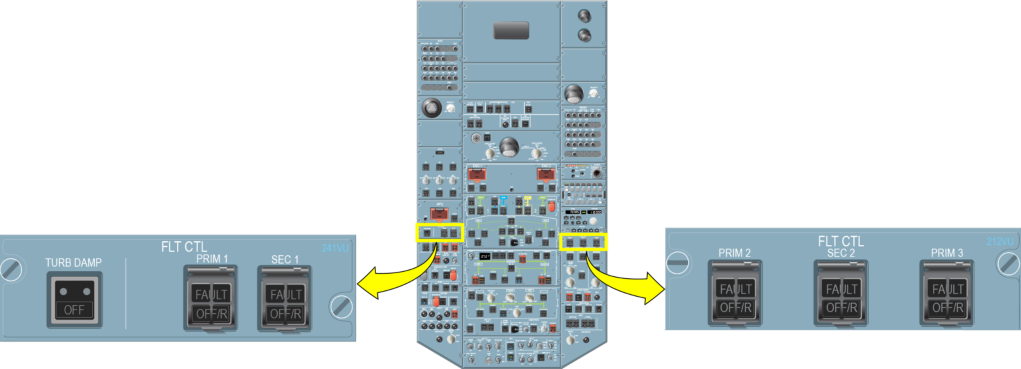
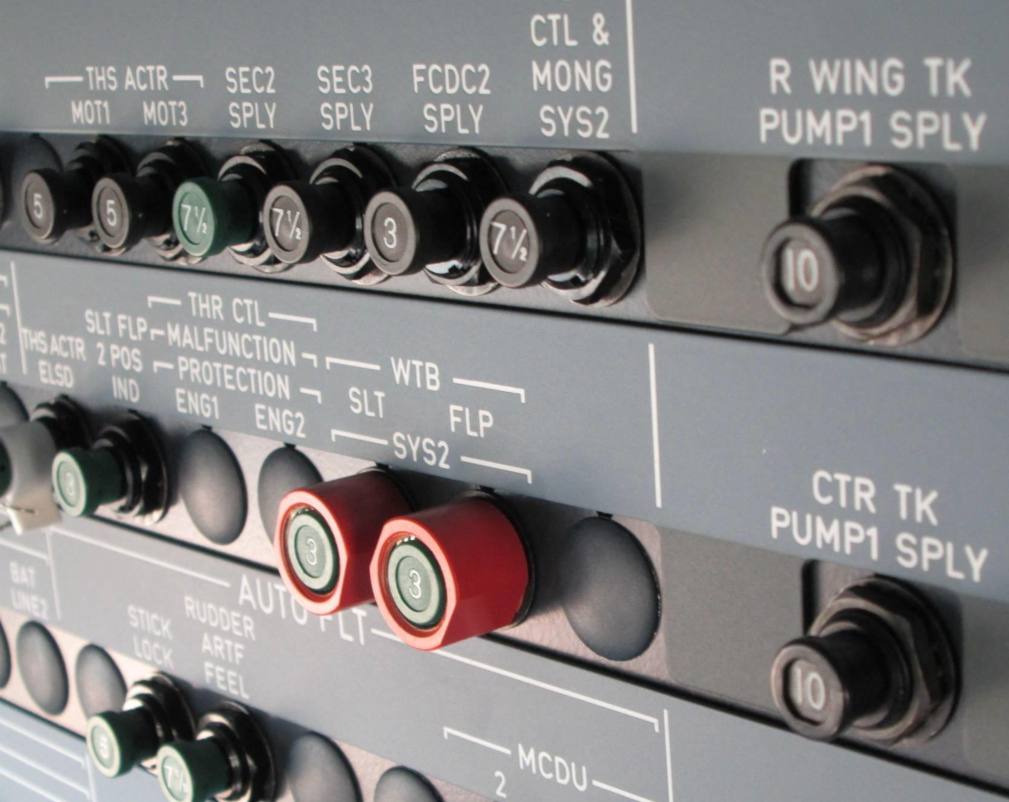
Section titled “Manual Reset Using System Controls”For specific systems, such as the flight control system, the maintenance or flight crews can perform a system reset from the cockpit using pushbutton-switches available on the overhead panel (fig.2).
(fig.2) Example of pushbutton-switches on the overhead panel of an A330 aircraft
Manual Reset Using a Circuit Breaker
Section titled “Manual Reset Using a Circuit Breaker”Pulling a system C/B and then pushing it back in will trigger a system reset because this will isolate and then restore the power supply to all parts of the system. It will also cause the software of the system to reload. This is considered as a “hard system reset”.
There are two types of C/Bs: traditional C/Bs and electronic C/Bs. The traditional C/B is manually opened and closed. The electronic C/B, also called Solid State Power Controller (SSPC), is controlled by a remote interface (on A220/A380/A350). Various system C/Bs are located in the cockpit of Airbus
A220/A300/A310/A320 aircraft, the avionics bay, the cabin, and the cargo compartments. There are no C/Bs in the cockpit of Airbus A330/A340/A350/A380 aircraft. They are replaced by system reset buttons on the overhead panel.
Manual Reset Using a Reset Button
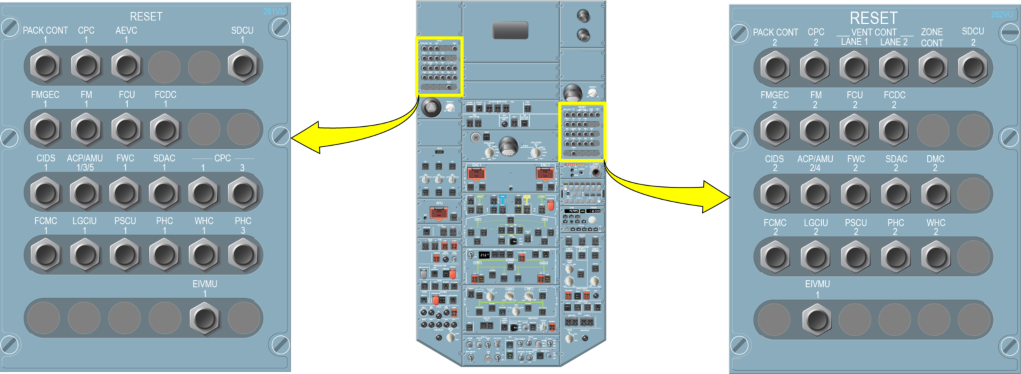
Section titled “Manual Reset Using a Reset Button”Pulling a system reset button (fig.3) then pushing it back in the cockpit will only reset the system software part (only available on Airbus A330/A340/A350/A380 aircraft). This is known as a “soft reset” because the system will remain powered.
(fig.3) Reset buttons available on the top part of the overhead panel of an A330 aircraft
Inappropriate system resets can have serious consequences
Section titled “Inappropriate system resets can have serious consequences”Past events have highlighted how some system resets can have irreversible consequences. One example is where a system cannot be recovered after an inappropriate system reset in flight. Another example is where a reset of flight control computers is unduly performed. Depending on the system malfunction encountered, this can cause unexpected movements of the flight control surfaces, which may lead to serious consequences if performed in flight.
Avionics systems are interconnected systems, therefore, a system reset of one system can have significant consequences for the other systems that rely on its data. Inappropriate system resets can have unexpected side effects and hide deteriorating conditions of the system. In combination with a failure of another system, the safety of the flight can be impaired. Therefore, it is important that maintenance personnel and flight crews only perform system resets in accordance with the guidance in the relevant procedures, as for the cases described in this article.
A220 reset philosophy
Section titled “A220 reset philosophy”For A220 aircraft, the flight crew can perform system resets only if specifically requested in an EICAS*/FCOM/QRH procedure. There is no system reset table published for the A220, contrary to all other Airbus aircraft, except for the A300B2/B4.
Maintenance resets must only be performed when requested by a specific task in the A220 Fault Isolation Manual or in the Aircraft Maintenance Publication (AMP).
*EICAS: Engine-Indication and Crew-Alerting System on A220 is the equivalent of the ECAM on other Airbus aircraft.
SYSTEM RESETS BY THE FLIGHT CREW
Section titled “SYSTEM RESETS BY THE FLIGHT CREW”The flight crew can perform system resets only in the three cases listed below.
CASE 1: A Dedicated Step in the ECAM/OEB/FCOM/QRH Procedure
Section titled “CASE 1: A Dedicated Step in the ECAM/OEB/FCOM/QRH Procedure”A system reset can be specifically requested in an ECAM/OEB/FCOM/QRH procedure (fig.4).
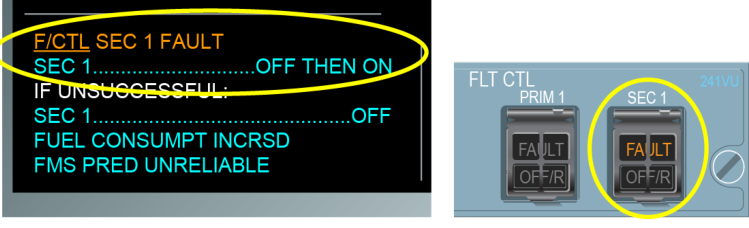
(fig.4) Example of a SEC 1 FAULT ECAM alert on A330 aircraft
CASE 2: As an Option After ECAM Procedure (except A300B2/B4)
Section titled “CASE 2: As an Option After ECAM Procedure (except A300B2/B4)”ECAM procedures do not necessarily request a system reset. In this case, as per the “Airbus Operational Philosophy” section of the FCTM, the PF should call out “STOP ECAM” after they perform the ECAM actions.
Before the review of the status of the aircraft on the STATUS page, if the PF considers that it is necessary to perform a system reset to recover the operation of the affected system, it is the responsibility of the flight crew to first check if such reset is authorized in the System Reset table of the FCOM/QRH.
If there is no reset procedure available in the System Reset table of the FCOM/QRH associated with the malfunction or ECAM alert encountered, the flight crew must not attempt a reset.
Section titled “If there is no reset procedure available in the System Reset table of the FCOM/QRH associated with the malfunction or ECAM alert encountered, the flight crew must not attempt a reset.”For A320 family aircraft, on the ground only , the flight crew can still perform a reset that is not listed in the A320 System Reset table as described in Case 3 below.
The System Reset table lists the specific conditions necessary for the reset procedure
Section titled “The System Reset table lists the specific conditions necessary for the reset procedure”The reset procedures are the result of in-depth analysis to define the authorized resets and their associated conditions, such as the maximum number of resets possible, if they are authorized on the ground only, or also in flight. These conditions must be respected.
Resets that are only authorized on the ground can have dramatic consequences if performed in flight.
Section titled “Resets that are only authorized on the ground can have dramatic consequences if performed in flight.”System resets can trigger functional tests that may lead to movement of the flight control surfaces, which is why they must not be performed in flight. This can also cause reversion of the flight control laws with associated loss of flight envelope protection.
Read and do the procedure
Section titled “Read and do the procedure”A reset procedure must be performed in “read and do” mode. The flight crew must not apply the system reset procedure from memory and they must always follow the relevant procedure (ECAM/OEB/QRH/FCOM), or refer to the System Reset table in the QRH/FCOM.
The need for crosscheck
Section titled “The need for crosscheck”Performing a system reset is an action that can have irreversible consequences. A crosscheck action is necessary before resetting a system when using a guarded cockpit control, a C/B, or a reset button.
Report any reset to maintenance
Section titled “Report any reset to maintenance”Any manual system reset that the flight crew does on the ground or in flight must be reported to maintenance and recorded in the aircraft logbook regardless of it being successful (i.e. system recovered) or not. The number of attempted resets should also be specified to help maintenance monitor the resets as an indication of the system condition.
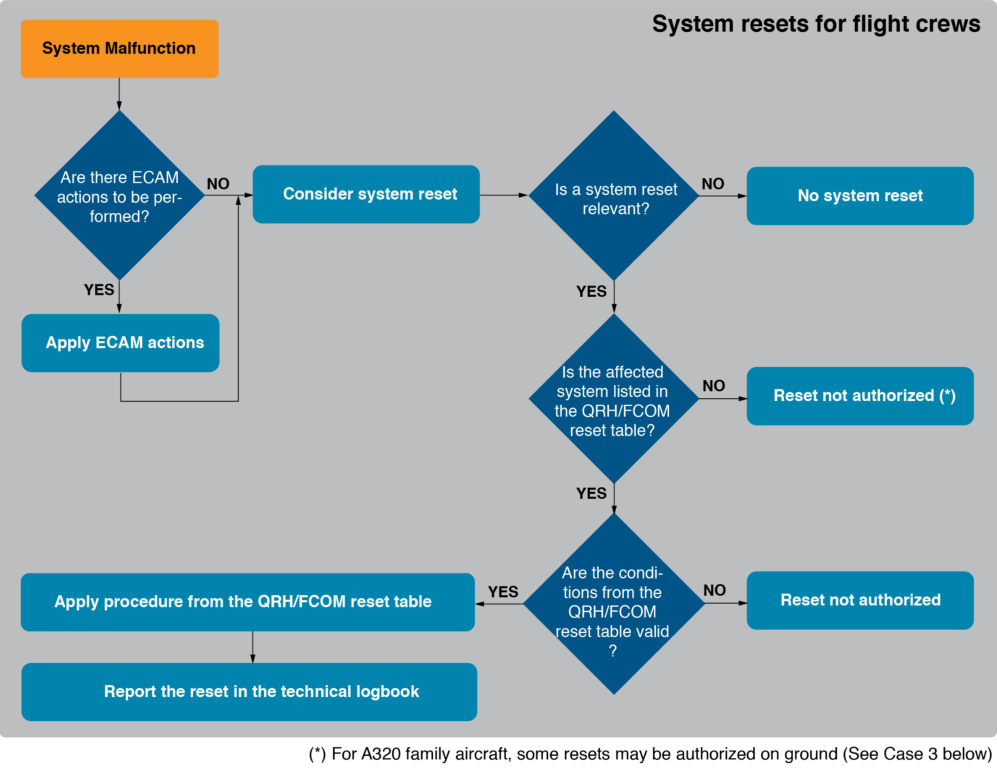
(fig.5) Flow diagram for flight crew system resets
CASE 3: System Resets for Electrical Transient Faults for A320 Family Aircraft on the Ground Only
Section titled “CASE 3: System Resets for Electrical Transient Faults for A320 Family Aircraft on the Ground Only”Electrical transients may lead to intermittent system failures
Section titled “Electrical transients may lead to intermittent system failures”A320 family aircraft systems can be affected by electrical transients during power-up, APU, or engine start, or any electrical transfer.
To manage the side-effects of these transients, depending on the affected system, it is possible to perform system resets from the A320 QRH System Reset table and also system resets that are not specifically listed in the System Reset table.
The affected system is listed in the QRH System Reset table
Section titled “The affected system is listed in the QRH System Reset table”If the affected system is listed in the QRH System Reset table , the associated reset procedure and conditions must be applied, but only for the corresponding ECAM alerts or system malfunctions listed in the reset table. For other ECAM alerts or malfunctions of the affected system not specifically listed in the System Reset table, a system reset is not authorized.
The affected system is not listed in the QRH System Reset table
Section titled “The affected system is not listed in the QRH System Reset table”If the affected system is not listed in the QRH System Reset table, the system can be reset on the ground only by applying the general guidelines provided in the General part of the System Reset section of the A320 QRH.
Crosscheck and report
Section titled “Crosscheck and report”As for any reset, a crosscheck must be done when using a guarded cockpit control, a C/B, or a reset button and the reset must be reported in the aircraft technical logbook.
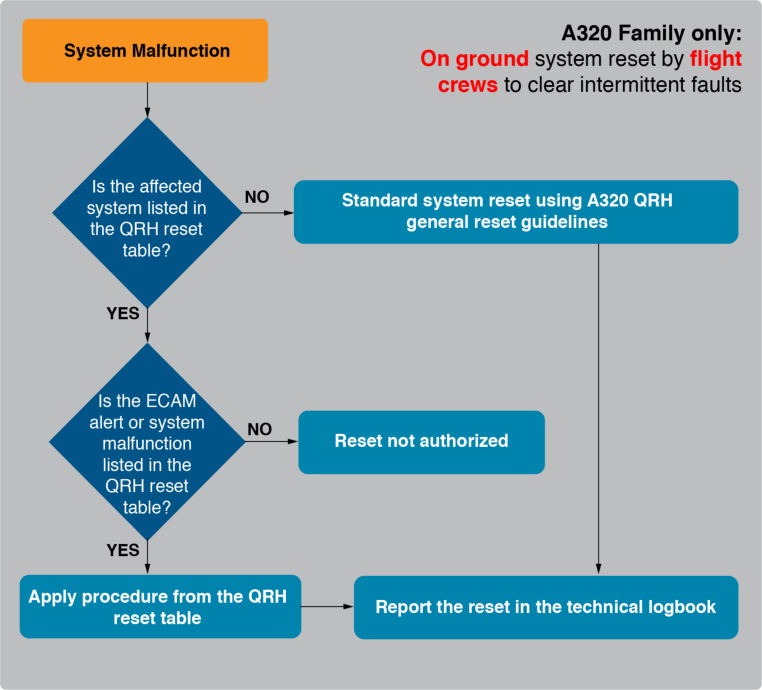
(fig.6) Flow diagram for flight crew system resets on A320 family aircraft on the ground
SYSTEM RESETS BY MAINTENANCE PERSONNEL
Section titled “SYSTEM RESETS BY MAINTENANCE PERSONNEL”Caution for System Resets on Ground
Section titled “Caution for System Resets on Ground”System resets can cause system components to move or operate, which is a risk of serious or fatal injury to people in close proximity to the aircraft. This can also cause damage to the aircraft if in contact with ground equipment. Specific precautions must be taken when performing tasks on or near flight controls, flight control surfaces, around landing gears and landing gear doors, or any other moving parts or components.
Maintenance personnel can perform system resets only in the two cases listed below.
CASE 1: Resets Requested in a Maintenance
Section titled “CASE 1: Resets Requested in a Maintenance”Procedure
Section titled “Procedure”Resets may be required when applying a troubleshooting procedure from the Troubleshooting Manual (TSM) for A300/A310/A320/A330/A340/A380 or the Aircraft Fault Isolation document (AFI) for A350.
Performing a system reset on the ground must always be part of a troubleshooting procedure.
Section titled “Performing a system reset on the ground must always be part of a troubleshooting procedure.”Performing unauthorized “quick fix” resets on the ground to dispatch an aircraft can affect the conditions of the next flights. The ECAM alert may be cleared for dispatch, but the underlying issue is not fixed and this can hide a deteriorating condition in the system.
Use of third party smartphone or tablet applications is not authorized by Airbus
Section titled “Use of third party smartphone or tablet applications is not authorized by Airbus”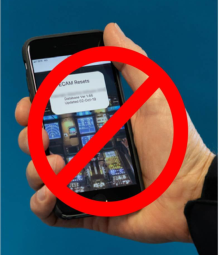
There is a growing number of unauthorized applications that present a list of system resets for Airbus aircraft. These applications are not validated by Airbus. The specific conditions for each system reset are not described by these applications and the information can be inaccurate and out of date. Therefore, these applications must not be used, because they can represent a safety risk. An OIT about this topic is available on the AirbusWorld portal: OIT 999.0042/19 “Un-approved maintenance instructions available on the internet or as applications”.
CASE 2: Specific Condition for A320 Aircraft
Section titled “CASE 2: Specific Condition for A320 Aircraft”Electrical Transients
Section titled “Electrical Transients”As already described in Case 3 for flight crew resets, A320 family aircraft operations can be affected by electrical transients at power-on. That is why it is allowable to perform resets on A320 family aircraft that are not part of a dedicated TSM task.
TSM System Reset Table
Section titled “TSM System Reset Table”The A320 TSM contains a list of authorized resets with their associated conditions in the “System Reset Guidelines” task of the ATA 24 chapter. These authorized resets are the same as the authorized resets on the ground in the System Reset table of the A320 QRH.
Fault due to Electrical Transient or Without Previous Record
Section titled “Fault due to Electrical Transient or Without Previous Record”When it is obvious that a fault is due to electrical transients, or is not present in the fault history, the affected system can be reset under certain conditions. If the affected system is listed in the System Reset table of the ATA 24 TSM task, a system reset is authorized, but only for the ECAM alerts or system malfunctions specifically listed in the table. For other ECAM alerts or system malfunctions not listed in the System Reset table, a reset is not authorized, despite the system itself being listed in the reset table. If the affected system is not listed in the System Reset table, a reset is authorized with no specific restrictions.
Fault not Obviously due to Electrical Transient With Previous Record
Section titled “Fault not Obviously due to Electrical Transient With Previous Record”If the fault is not obviously due to electrical transients and is present in the fault history (repeated intermittent failure), then the application of the appropriate TSM procedure(s) is required.
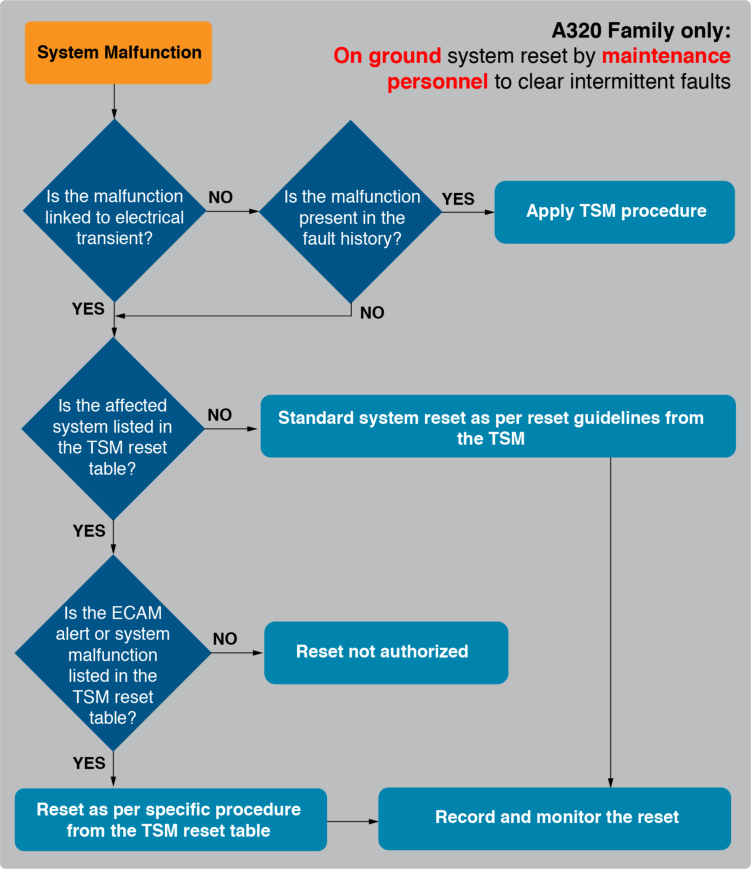
(fig.7) Flow diagram for maintenance personnel system resets on A320 family aircraft on the ground
Monitoring System Resets
Section titled “Monitoring System Resets”Always Record System Resets
Section titled “Always Record System Resets”An efficient method to record and monitor system resets must be implemented. Any attempted reset must be recorded whether a maintenance reset requested during the fault confirmation part of a TSM/AFI task is successful (intermittent failure, no further action required) or not successful (permanent failure, fault isolation actions to perform).
A Management System for System Resets
Section titled “A Management System for System Resets”Repetitive failures can occur despite maintenance actions, but they may not necessarily reappear over consecutive flights. Operators shall have a dedicated management system for repetitive failures to comply with continued airworthiness regulations.
Repetitive Failure Management
Section titled “Repetitive Failure Management”Repetitive resets of the same system could indicate a permanent failure. Appropriate troubleshooting actions must be initiated to mitigate the risk of latent failures on the ground with multiple resets, which could reappear later in flight.
It is important to properly track repetitive occurrences of system malfunctions over several flights. This is usually an indication that the fault condition still exists and deeper troubleshooting is required.
Contributors:
Section titled “Contributors:”Serge BLIND Engineering Safety Aircraft Safety Enhancement
Jean-François BOURCHANIN
Section titled “Jean-François BOURCHANIN”Flight Control System Technical Advisor Engineering Support
Olivier FERRAN Senior Flight Operations Engineer Flight Operations Support and Training Standards
Franck GAY
Section titled “Franck GAY”Maintenance Instructor Technical Training Development
Cyril MONTOYA Maintenance Safety Enhancement Manager Customer Support
Capt. Vincent SIBELLE Training and Flight Operations Pilot Instructor Flight Operations Support and Training Standards
With thanks to Denis CADOUX and Ian GOODWIN from Product Safety, Fabien ARNE and Laurent COUTURET from Braking and Steering System Engineering Support, Marc LE-LOUER f rom A300/A310 Flight Operations Support and Capt. Xavier LESCEU from Airbus Canada.
Unauthorized resets of an aircraft system can hide a deteriorating condition of the system. What may seem to be a “quick-fix” on the ground to dispatch the aircraft can lead to a system fault reappearing in flight that may even affect the safety of the flight.
If not specifically requested in an ECAM/OEB/FCOM/QRH procedure, the flight crew can only consider attempting a reset to recover the operation of an affected system if it is listed in the System Reset table of the FCOM/QRH. If there is no reset procedure available in the System Reset table of the FCOM/QRH, which is associated with the malfunction or ECAM alert encountered, then the flight crew must NOT attempt to reset the system. Any system reset performed by the flight crew needs to be reported to maintenance personnel and must be recorded in the aircraft technical logbook, including the number of attempts and outcomes.
For A320 aircraft only, due to possible electrical transients, the flight crew can perform on ground resets that are not listed in the reset table.
Maintenance system resets are only performed in accordance with specific TSM/AFI tasks. Troubleshooting can start with resets but should not end there. The appropriate troubleshooting actions or at least recording actions should always follow.
For A320 aircraft only, the same on-ground resets from the System Reset table of the QRH are available in the A320 TSM and can be used to manage intermittent faults and ease the aircraft dispatch. In this case, it is possible to perform system resets that are not specifically listed in the TSM.
Manual system resets performed by flight crew or maintenance personnel are not a way to fix repetitive faults. Multiple and unreported resets can hide degraded system conditions. The fault could reappear later and have significant consequences during a flight. An efficient system for reporting and managing system resets is crucial for monitoring the health of all aircraft systems, which is key to maintaining safe aircraft operations.
Safety first , 2021. Safety first is published by Airbus S.A.S. 1, rond point Maurice Bellonte - 31707 Blagnac Cedex/France.
Editor: Yannick Malinge, Chief Product Safety Officer.
Editorial team: Guillaume Estragnat, Vanessa Sadi, Gwyneth Duggan, Tim Roach.
- Reference: X00D16031905.
Photos by Airbus.
© Airbus S.A.S. 2021 – All rights reserved. Proprietary documents.
Section titled “© Airbus S.A.S. 2021 – All rights reserved. Proprietary documents.”来源:Airbus Safety First 网址:https://safetyfirst.airbus.com/system-reset-use-with-caution/ 发布日期:2021-07-07 类别:飞行运行、维修、维修复位、手动复位、报告复位、复位、系统复位、系统复位表 PDF:原始 PDF
复位并非表面上看起来的修复方法。执行不当的飞行中手动系统复位可能会严重损害飞行安全。在地面上进行多次系统复位而不执行必要的故障排除程序,也可能造成严重后果。
本文讨论的是复位适用的时机以及如何正确执行复位。
本文也可在 safetyfirst.airbus.com 以及 iOS 和 Android 设备上的 Safety first 应用中获取。
自动刹车故障(AUTO BRK FAULT)——发动机启动时
Section titled “自动刹车故障(AUTO BRK FAULT)——发动机启动时”在一架 A320 发动机启动时,触发了 BRAKES AUTO BRK FAULT(刹车自动刹车故障)ECAM 警告。机组将 A/SKID & N/W STRG(防滞/前轮转向)电门设置到 OFF(关)位,然后再设置到 ON(开)位 (图1)。此操作消除了警告。 起飞滑跑期间首次 A/SKID N/WS FAULT(防滞/前轮转向故障)
BRAKES A/SKID N/WS FAULT(刹车防滞/前轮转向故障)ECAM 警告在起飞滑跑期间、抑制阶段之前触发。飞机离地后,机组通过将 A/SKID & N/W STRG 电门设置到 OFF 再到 ON 消除了警告。 进近期间第二次 A/SKID N/WS FAULT
BRAKES A/SKID N/WS FAULT ECAM 警告在进近期间再次触发。机组第三次将 A/SKID & N/W STRG 电门设置到 OFF 再到 ON,这次操作消除了警告。 (图1) A/SKID & N/W STRG 电门 着陆时主起落架轮胎爆胎
机组在接地后立即注意到异常的刹车行为。他们使用了最大反推和人工刹车。飞机停了下来,但机组无法开始滑行。四个主起落架轮胎在着陆时爆胎。 事件分析——前序航班观察到类似故障
在该事件发生前的两个月内,该飞机共记录了七次 BRAKES AUTO BRK FAULT(刹车自动刹车故障)和两次 BRAKES A/SKID N/WS FAULT(刹车防滞/前轮转向故障)。每次都只进行了系统复位和 BSCU 测试。 未经授权的刹车和转向功能复位掩盖了刹车系统不断恶化的状况
A320 QRH 中没有与 BRAKES AUTO BRK FAULT 和 BRAKES A/SKID N/WS FAULT ECAM 警告相关的复位程序。QRH 系统复位表中提及的使用 A/SKID & N/W STRG 电门复位刹车和转向功能的方法,仅适用于 BRAKES SYS 1(2) FAULT 和 BRAKES BSCU CH 1(2) FAULT ECAM 警告。机组在飞行中执行的未经授权复位掩盖了刹车系统不断恶化的状况。 双转速表故障
双转速表故障是刹车系统启动延迟的根本原因。未经授权的飞行中复位导致 BSCU 无法检测到转速表的故障,这使得 BSCU 将 0 节作为实际轮速。15 秒后,刹车功能以默认减速度恢复。与此同时,BSCU 无法计算防滞指令,发送了最大液压压力到刹车,导致四个轮胎爆胎。
什么是系统复位?
Section titled “什么是系统复位?”系统复位是通过关闭系统然后重新打开来恢复系统正常行为或恢复先前丢失功能的行为。这与重新接通跳开的断路器(C/B)不同。
跳开的断路器
Section titled “跳开的断路器”当电路中检测到电流过载时,断路器会跳开。这是为了防止线路过热或短路,以免造成进一步损坏或火灾。本文不涉及跳开断路器的处理方法。在本文中,“复位”一词指的是关闭系统然后重新打开的操作。这种操作也可以称为“循环”。
自动复位与手动复位
Section titled “自动复位与手动复位”某些航空电子系统(如 FMS)具有自动复位功能。复位操作完全由具有自动故障检测模式的系统管理。维修或飞行机组通过使用驾驶舱内的系统控制装置、断路器或专用复位按钮(也称为复位开关)来执行手动复位。本文仅聚焦于这类手动复位。
使用系统控制进行人工复位
Section titled “使用系统控制进行人工复位”对于特定系统(如飞行控制系统),维修人员或飞行机组可以使用顶板上的按键开关在驾驶舱内执行系统复位 (fig.2)。
(fig.2) A330飞机顶板上的按键开关示例
使用断路器进行人工复位
Section titled “使用断路器进行人工复位”断开系统C/B然后重新闭合将触发系统复位,因为这将隔离然后恢复系统各部分的电源供应。它还将导致系统软件重新加载。这被称为”硬系统复位”。
断路器有两种类型:传统C/B和电子C/B。电子C/B,也称为固态功率控制器(Solid State Power Controller,SSPC),通过远程接口控制(在A220/A380/A350上)。各种系统C/B位于以下位置:空客A220/A300/A310/A320飞机的驾驶舱、电子设备舱、客舱和货舱。空客A330/A340/A350/A380飞机的驾驶舱内没有C/B。它们被系统复位按钮取代。
使用复位按钮进行人工复位
Section titled “使用复位按钮进行人工复位”在驾驶舱内拉出系统复位按钮 (fig.3) 然后推回将仅复位系统软件部分(仅在空客A330/A340/A350/A380飞机上可用)。这被称为”软复位”,因为系统将保持通电状态。
(fig.3) A330飞机顶板上方的复位按钮
不当系统复位可能造成严重后果
Section titled “不当系统复位可能造成严重后果”过去的事件表明,某些系统复位可能产生不可逆转的后果。一个例子是在飞行中进行不当系统复位后系统无法恢复。另一个例子是不恰当地执行飞行控制计算机复位。根据遇到的系统故障情况,这可能导致飞行控制面的意外移动,如果在飞行中进行可能造成严重后果。
航电系统是相互连接的系统,因此一个系统的复位可能对其依赖该系统数据的其他系统产生重大影响。不当系统复位可能产生意外的副作用,并掩盖系统状况的恶化。与另一系统故障结合可能损害飞行安全。因此,维修人员和飞行机组必须仅按照相关程序中的指导执行系统复位,正如本文所述的案例。
A220复位理念
Section titled “A220复位理念”对于A220飞机,飞行机组仅在ECIAS*/FCOM/QRH程序中明确要求时才能执行系统复位。与所有其他空客飞机不同(除A300B2/B4外),A220没有发布系统复位表。
维修复位仅在A220故障隔离手册或飞机维修出版物(AMP)中特定任务要求时才能执行。
*EICAS:A220上的发动机指示和机组警告系统相当于其他空客飞机上的ECAM。
飞行机组的系统复位
Section titled “飞行机组的系统复位”飞行机组仅能在以下三种情况下执行系统复位。
情况1:ECAM/OEB/FCOM/QRH程序中的专用步骤
Section titled “情况1:ECAM/OEB/FCOM/QRH程序中的专用步骤”系统复位可在ECAM/OEB/FCOM/QRH程序中明确要求 (fig.4)。
(fig.4) A330飞机上SEC 1 FAULT ECAM警告示例
情况2:ECAM程序后的选项(除A300B2/B4外)
Section titled “情况2:ECAM程序后的选项(除A300B2/B4外)”ECAM程序不一定要求系统复位。在这种情况下,按照FCTM的”空客操作理念”部分,PF应在完成ECAM动作后喊话”STOP ECAM”。
在审查飞机状态页面状态之前,如果PF认为需要执行系统复位以恢复受影响系统的运行,飞行机组有责任首先检查该复位是否在FCOM/QRH的系统复位表中获得授权。
如果在FCOM/QRH系统复位表中没有与所遇故障或ECAM警告相关的复位程序可用,飞行机组不得尝试复位。
Section titled “如果在FCOM/QRH系统复位表中没有与所遇故障或ECAM警告相关的复位程序可用,飞行机组不得尝试复位。”对于A320系列飞机,仅在地面飞行机组仍可执行情况3所述的A320系统复位表中未列出的复位。
系统复位表列出了复位程序所需的特定条件
Section titled “系统复位表列出了复位程序所需的特定条件”复位程序是深入分析的结果,用于定义授权的复位及其相关条件,例如最大可能复位次数、是否仅在地面授权、或也可在空中执行。这些条件必须遵守。
仅在地面授权的复位如果在飞行中执行可能造成严重后果。
Section titled “仅在地面授权的复位如果在飞行中执行可能造成严重后果。”系统复位可以触发可能导致飞行控制面移动的功能测试,这就是为什么它们不得在飞行中执行。这也可能导致飞行控制法则的改版并伴随飞行包线保护的丧失。
复位程序必须以”读即做”模式执行。飞行机组不得凭记忆应用系统复位程序,他们必须始终遵循相关程序(ECAM/OEB/QRH/FCOM),或参考FCOM/QRH中的系统复位表。
交叉检查的必要性
Section titled “交叉检查的必要性”执行系统复位是一项可能产生不可逆后果的操作。当使用有保护盖的驾驶舱控制装置、断路器(C/B)或复位按钮时,复位前必须进行交叉检查。
将任何复位操作报告给维修部门
Section titled “将任何复位操作报告给维修部门”无论是否成功(即系统恢复),飞行员在地面或飞行中执行的任何人工系统复位都必须报告给维修部门,并记录在飞机技术日志本中。还应说明尝试复位的次数,以帮助维修部门监控复位情况,作为系统状况的参考。
(fig.5) 飞行机组系统复位流程图
案例 3:仅限 A320 系列飞机在地面进行电气瞬态故障系统复位
Section titled “案例 3:仅限 A320 系列飞机在地面进行电气瞬态故障系统复位”电气瞬态可能导致间歇性系统故障
Section titled “电气瞬态可能导致间歇性系统故障”A320 系列飞机系统可能在电源接通、APU 启动、发动机启动或任何电气转换过程中受到电气瞬态的影响。
为了处理这些瞬态的副作用,根据受影响的系统,可以从 A320 QRH 系统复位表中执行系统复位,也可以执行未专门列在系统复位表中的系统复位。
受影响的系统列在 QRH 系统复位表中
Section titled “受影响的系统列在 QRH 系统复位表中”如果受影响的系统列在 QRH 系统复位表中,则必须应用相关的复位程序和条件,但仅限于复位表中列出的相应 ECAM 警戒或系统故障。对于受影响系统的其他 ECAM 警戒或故障,如果未专门列在系统复位表中,则不允许进行系统复位。
受影响的系统未列在 QRH 系统复位表中
Section titled “受影响的系统未列在 QRH 系统复位表中”如果受影响的系统未列在 QRH 系统复位表中,则仅限在地面按照 A320 QRH 系统复位部分概述中的通用指南对该系统进行复位。
交叉检查并报告
Section titled “交叉检查并报告”与任何复位操作一样,使用有保护盖的驾驶舱控制装置、断路器(C/B)或复位按钮时必须进行交叉检查,并且必须在飞机技术日志本中报告该复位操作。
(fig.6) A320 系列飞机飞行机组地面系统复位流程图
维修人员执行的系统复位
Section titled “维修人员执行的系统复位”地面系统复位的注意事项
Section titled “地面系统复位的注意事项”系统复位可能导致系统部件移动或运转,对靠近飞机的人员构成严重或致命伤害风险。如果人员与地面设备有接触,还可能造成飞机损坏。在操作或靠近飞行控制装置、飞行控制面、起落架和起落架舱门,或任何其他运动部件或组件时,必须采取特定的预防措施。
维修人员仅可在以下两种情况下执行系统复位。
案例 1:维修程序中要求的复位
Section titled “案例 1:维修程序中要求的复位”在 A300/A310/A320/A330/A340/A380 故障排除手册(TSM)或 A350 飞机故障隔离文件(AFI)中应用故障排除程序时,可能需要进行复位。
在地面执行系统复位必须始终作为故障排除程序的一部分。
Section titled “在地面执行系统复位必须始终作为故障排除程序的一部分。”在地面执行未经授权的“快速修复”复位以放行飞机可能会影响后续飞行条件。ECAM 警戒可能会被清除以满足放行要求,但根本问题并未解决,这可能掩盖系统中正在恶化的状况。
未经空客授权,禁止使用第三方智能手机或平板电脑应用程序
Section titled “未经空客授权,禁止使用第三方智能手机或平板电脑应用程序”
目前存在大量未经授权的应用程序,它们列出了空客飞机的系统复位清单。这些应用程序未经空客验证。每项系统复位操作的具体条件未在应用程序中描述,相关可能不准确或已过时。因此,严禁使用这些应用程序,因为它们可能构成安全风险。关于此主题的 OIT 可在 AirbusWorld 门户网站上查阅:OIT 999.0042/19“互联网或应用程序上提供的未经批准的维修说明”。
案例 2:A320 飞机的特定条件
Section titled “案例 2:A320 飞机的特定条件”如飞行机组复位案例 3 中所述,A320 系列飞机在电源接通时可能受到电气瞬态的影响。因此,允许对 A320 系列飞机执行不属于专用 TSM 任务的复位操作。
TSM 系统复位表
Section titled “TSM 系统复位表”A320 TSM 在 ATA 24 章节的“系统复位指南”任务中列出了经授权的复位操作及其相关条件。这些经授权的复位操作与 A320 QRH 系统复位表中经授权的地面复位操作相同。
由电气瞬态引起的故障或无先前记录的故障
Section titled “由电气瞬态引起的故障或无先前记录的故障”当明显确定故障是由电气瞬态引起,或在故障历史记录中未出现时,可在特定条件下对受影响的系统进行复位。如果受影响的系统列在 ATA 24 TSM 任务中的系统复位表内,则允许进行系统复位,但仅限于表中专门列出的 ECAM 警戒或系统故障。对于系统复位表中未列出的其他 ECAM 警戒或系统故障,即使系统本身列在复位表中,也不允许进行复位。如果受影响的系统未列在系统复位表中,则允许进行复位,无特定限制。
故障明显非电气瞬变导致且存在于历史记录中
Section titled “故障明显非电气瞬变导致且存在于历史记录中”如果故障明显非电气瞬变导致,且存在于故障历史记录中(重复性间歇性故障),则需要执行相应的 TSM 程序。
(fig.7) 维修人员 A320 系列飞机地面系统复位流程图
系统复位的监控
Section titled “系统复位的监控”始终记录系统复位
Section titled “始终记录系统复位”必须建立有效的系统复位记录和监控方法。任何复位尝试都必须被记录下来,无论是在 TSM/AFI 任务故障确认阶段请求的维修复位是成功(间歇性故障,无需进一步操作)还是不成功(永久性故障,需要进行故障隔离操作)。
系统复位管理系统
Section titled “系统复位管理系统”尽管采取了维修措施,重复性故障仍可能发生,但不一定会在连续飞行中再次出现。运营商必须建立专门的重复性故障管理系统,以符合持续适航规章的要求。
重复性故障管理
Section titled “重复性故障管理”同一系统的反复复位可能表明存在永久性故障。必须启动相应的故障排查措施,以降低因地面多次复位而导致的潜在故障风险,这类故障可能在后续飞行中再次出现。
重要的是,在多次飞行中妥善追踪系统故障的重复出现。这通常表明故障条件仍然存在,需要进行更深入的故障排查。
(fig.9) 系统复位管理流程图
Serge BLIND Engineering Safety Aircraft Safety Enhancement
塞尔日·布林德 工程安全 飞机安全增强
Jean-François BOURCHANIN Flight Control System Technical Advisor Engineering Support
让-弗朗索瓦·布尔沙宁 飞控系统技术顾问 工程支持
Olivier FERRAN Senior Flight Operations Engineer Flight Operations Support and Training Standards
奥利维耶·费朗 高级飞行操作工程师 飞行运行支持与培训标准
Franck GAY Maintenance Instructor Technical Training Development
弗兰克·盖 维修教员 技术培训开发
Cyril MONTOYA Maintenance Safety Enhancement Manager Customer Support
西里尔·蒙托亚 维修安全增强经理 客户支持
Capt. Vincent SIBELLE Training and Flight Operations Pilot Instructor Flight Operations Support and Training Standards
文森特·西贝尔 机长 训练与飞行操作飞行员教员 飞行运行支持与培训标准
With thanks to Denis CADOUX and Ian GOODWIN from Product Safety, Fabien ARNE and Laurent COUTURET from Braking and Steering System Engineering Support, Marc LE-LOUER from A300/A310 Flight Operations Support and Capt. Xavier LESCEU from Airbus Canada.
特别感谢 产品安全部门的丹尼斯·卡杜和伊恩·古德温,制动和转向系统工程支持部门的法比安·阿恩和洛朗·库特雷,A300/A310 飞行运行支持部门的马克·勒卢埃尔,以及空中客车加拿大的泽维尔·莱斯奥 机长。
未经授权的飞机系统复位可能会掩盖系统状况的恶化。表面上用于放行飞机的地面”快速修复”,可能导致系统故障在飞行中再次出现,甚至可能影响飞行安全。
除非 ECAM/OEB/FCOM/QRH 程序中有明确要求,否则飞行机组只有在 FCOM/QRH 系统复位表中列出时,才能考虑尝试复位受影响的系统以恢复正常运行。如果 FCOM/QRH 系统复位表中没有与所遇故障或 ECAM 警告相关的复位程序,则飞行机组不得尝试复位该系统。飞行机组执行的任何系统复位都必须向维修人员报告,并记录在飞机技术记录本中,包括尝试次数和结果。
仅适用于 A320 系列飞机,由于可能存在电气瞬变,飞行机组可以在地面执行系统复位表中未列出的复位操作。
维修系统复位只能按照特定的 TSM/AFI 任务执行。故障排查可以从复位开始,但不应以复位结束。相应的故障排查措施或至少记录措施必须始终执行。
仅适用于 A320 系列飞机,QRH 系统复位表中相同的地面复位操作在 A320 TSM 中也可获取,并可用于管理间歇性故障和简化飞机放行。在这种情况下,可以执行 TSM 中未明确列出的系统复位。
飞行机组或维修人员执行的手动系统复位并非修复重复性故障的方法。多次且未报告的复位可能掩盖系统状况的恶化。故障可能在后续飞行中再次出现并产生严重后果。有效的系统复位报告和管理机制对于监控所有飞机系统的健康状况至关重要,这是维护安全飞机运营的关键。
Safety first,2021 年。Safety first 由空中客车股份有限公司出版,地址为法国布拉尼亚克市邮政信箱 31707,莫里斯·贝隆特广场 1 号。
主编:Yannick Malinge,首席产品安全官。
编辑团队:Guillaume Estragnat、Vanessa Sadi、Gwyneth Duggan、Tim Roach。
20192534。参考编号:X00D16031905。
照片由空中客车提供。