Take Care of the Wheel Tie Bolts
Source: Airbus Safety First URL: https://safetyfirst.airbus.com/take-care-of-the-wheel-tie-bolts/ Published: 2021-04-23 Category: Flight Ops, Maintenance, brake, gear, landing gear, nut, screw, tire, tyre PDF: Original PDF

A significant number of missing wheel tie bolts have been reported to Airbus over the last 5 years. A few of these have described to the wheel or reports significant damage brakes.
Carefully checking the condition of the wheel tie bolts during aircraft walkarounds can allow detection of or missing damaged bolts and help to prevent serious incidents in service or during maintenance. Strictly observing the preventive maintenance practices, including planned inspection intervals, ensure that any damaged wheel tie bolts are replaced before they are at risk of failing.
This article is also available on safetyfirst.airbus.com and on the Safety first app for iOS and Android devices.
ANALYSIS OF AN EVENT
Section titled “ANALYSIS OF AN EVENT”Event Description
Section titled “Event Description”An A321 was in cruise when the HYD G ENG 1 PUMP LO PR and HYD G RSVR LO LVL ECAM alerts were triggered. The flight crew applied the FCOM procedures and switched off the PTU and green hydraulic pump on engine 1.
During the approach, the flight crew switched the green hydraulic pump on again (not requested by the FCOM procedure). The landing gear was extended. Landing and rollout were uneventful and performed with the green hydraulic system selected ON.
The flight crew stopped the aircraft before commencing the taxi-in to switch the green hydraulic system to OFF once again. They resumed the taxi, and finally parked the aircraft at the gate. The engines were selected to OFF and the parking brake was set to ON. The yellow hydraulic pressure started to decrease toward 0 PSI, which was indicating an issue with the yellow hydraulic circuit.
In the meantime, the ground personnel observed that the right main landing gear wheel was on fire and extinguished it using a fire extinguisher at the gate.
Event Analysis
Section titled “Event Analysis”The investigation showed that the head of one of the tie bolts of wheel n°3 had sheared off and progressively migrated toward the brake, causing damage to the brake assembly during the previous flights. This damage eventually caused a leak from the green hydraulic system, which triggered the ECAM messages that indicated low hydraulic system pressure and low fluid levels during the flight. The leak from the yellow hydraulic system happened when the parking brake was set to ON at the gate, causing hydraulic fluid to be in contact with the hot brakes and resulting in the wheel fire.
THE CRITICALITY OF WHEEL TIE BOLTS
Section titled “THE CRITICALITY OF WHEEL TIE BOLTS”Ensuring the structural integrity of the wheel
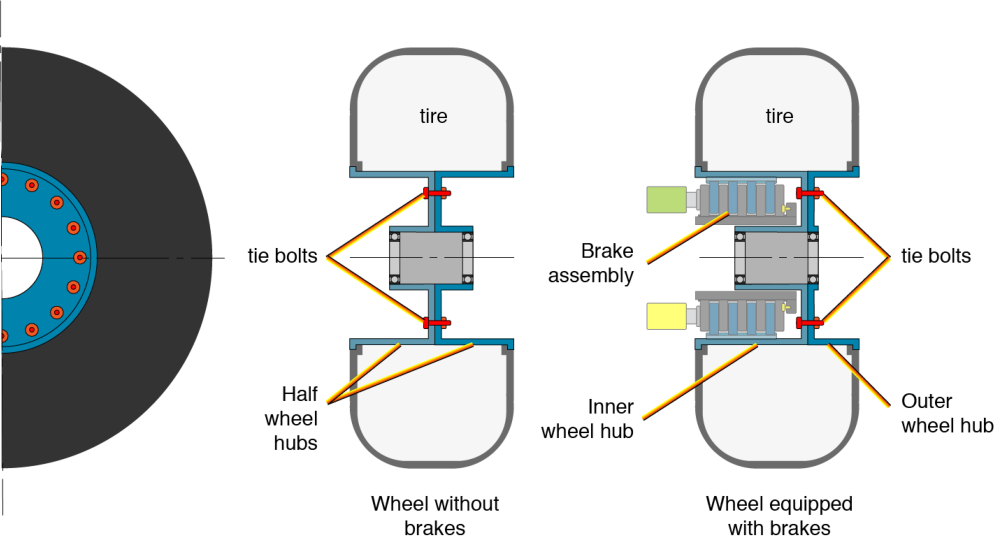
Section titled “Ensuring the structural integrity of the wheel”Aircraft landing gear wheels (nose, main, body or wing landing gear) have a similar basic structure, regardless of the wheel manufacturer. Each wheel assembly consists of a tire fitted over two half hubs, which are fastened together by tie bolts. (fig.1). For wheels fitted over brake assemblies, the inner hub of the wheel is designed to house the brake.
The tie bolts ensure the structural integrity of the wheel by sustaining the loads from the tire pressure, the aircraft weight, and the dynamic loads due to the impact of the landing gear during landing. Therefore, wheel tie bolts should be considered as one of the critical components of the landing gear assembly.
Consequences of a damaged tie bolt
Section titled “Consequences of a damaged tie bolt”(fig.1) Typical aircraft wheel structure
A tie bolt may be damaged and its screw or nut may migrate from its location, potentially causing damage and safety risks.
A reduced structural resistance of the wheel
Section titled “A reduced structural resistance of the wheel”Any missing tie bolt will result in an increase in the loads on the remaining tie bolts. This can adversely affect their condition and it may reduce the structural integrity of the wheel if it is not replaced (fig.2). Damage to the wheel and the aircraft can occur with the associated risk of injury to ground personnel during ground operations.
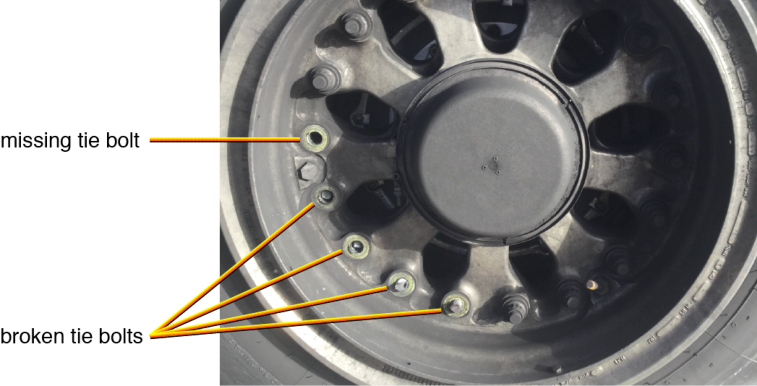
(fig.2) Example of tie bolts rupture leading to wheel deflation (picture send by an operator)
A risk of Parts Departing the Aircraft (PDA)
Section titled “A risk of Parts Departing the Aircraft (PDA)”A damaged tie bolt that falls from a wheel can cause damage to the aircraft or injury to people on the ground. If the damaged tie bolt falls on the runway, there is a risk of damage to subsequent aircraft taking off or landing, and especially a risk of engine ingestion.
A risk of damage to the brakes and the aircraft
Section titled “A risk of damage to the brakes and the aircraft”When a tie bolt is missing from a wheel that houses brakes, the tie bolt can migrate toward the brake, causing extensive damage and a risk of brake jamming. If the pistons of the brake are damaged, there is a risk of hydraulic fluid leak that may trigger a brake fire, as in the example described above.
A significant number of events related to damaged tie bolts
Section titled “A significant number of events related to damaged tie bolts”Airbus identified a significant number of reported events related to tie bolt loss in the last five years, although only a few of these events resulted in significant damage. Prevention is key to reducing this trend by early detection of any missing tie bolts in line operations or even by anticipating a tie bolt failure through regular wheel tie bolt inspections that are requested by the maintenance planning.
DETECTION OF MISSING/DAMAGED TIE BOLTS IN LINE OPERATIONS
Section titled “DETECTION OF MISSING/DAMAGED TIE BOLTS IN LINE OPERATIONS”There are numerous opportunities in the line of operations where maintenance personnel and flight crews can detect a missing or damaged tie bolt and prevent potential damage.
Inspection by maintenance personnel
Section titled “Inspection by maintenance personnel”A missing or damaged tie bolt or may be detected during the daily check or preflight walkaround (fig.3). If the tie bolt damage is located on the inner hub side of a wheel equipped with brakes, or if the wheel has a brake cooling fan assembly fitted to it, it is more difficult to see if the tie bolts are damaged.
Inspection by flight crews
Section titled “Inspection by flight crews”As an additional safety net, the flight crew should check for the presence of all the tie bolts when checking the condition of the wheels and tires during the exterior walkaround.
Check of the wheel and brake condition if one bolt is found missing
Section titled “Check of the wheel and brake condition if one bolt is found missing”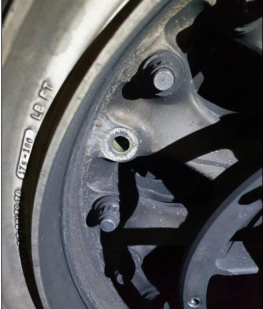
(fig.3) Example of missing tie bolt detected during a preflight walkaround (picture sent by an operator)
As per the AMM/AMP/MP procedure, if one of the tie bolts is found missing, the wheel must be removed and visually inspected for damage as well as the brake assembly.
Depending on the wheel type and manufacturer, the MEL may permit dispatch with one tie bolt missing on a wheel for a limited number of flights. In this case, the condition of the wheel and brake must also be checked before dispatch as per MEL maintenance procedure.
DETECTION OF DAMAGED TIE BOLTS DURING WHEEL SHOP MAINTENANCE
Section titled “DETECTION OF DAMAGED TIE BOLTS DURING WHEEL SHOP MAINTENANCE”Many tie bolt ruptures and losses can be avoided if the damaged tie bolt is detected during planned shop maintenance inspections.
Regular visual inspections
Section titled “Regular visual inspections”At each tire replacement, the tie bolts must be removed and visually inspected for any damage (refer to the CMM of the wheel manufacturer for the complete procedure).
Storage of the tie bolts after removal
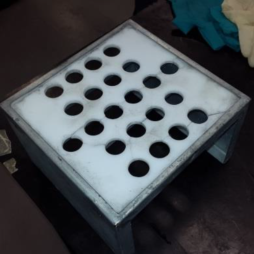
Section titled “Storage of the tie bolts after removal”The removed wheel tie bolts must not be put together in a box without suitable separation and protection before inspection and reinstallation.
When the bolts are removed from the wheel, they should be handled with care and placed into a box with dedicated compartments for each bolt to ensure that they are not in contact with each other. This prevents contact damage to the bolts.
Regular Non-Destructive Testing (NDT) inspections
Section titled “Regular Non-Destructive Testing (NDT) inspections”Regular NDT inspections are planned to detect any structural damage on the bolt or any indications of fatigue or cracks and ensure that any damaged bolt is replaced before it fails. Inspection intervals vary for each wheel manufacturer and must be observed. These intervals may consider a maximum number of tire replacements on the wheel, or the number of flight cycles, or the maximum number of calendar days since the previous inspection. Often it is a combination of these and whichever occurs first. Refer to each wheel manufacturer CMM to determine the inspection intervals. In the case of an overload (e.g. Hard landing), some additional specific checks might be requested (refer to the CMM).
Traceability is key
Section titled “Traceability is key”Traceability is key to ensure that the wheel tie bolts are inspected at the required intervals using NDT inspection methods.
Tie bolts do not have a serial number. Therefore, it is the wheel serial number that must be used to ensure there is a record of the number of tire replacements, flight cycles, and the last recorded NDT inspection date.
The good practices listed below should be followed to ensure that the bolts are inspected at the required intervals:
-
After a tire replacement, the same set of tie bolts removed from a wheel assembly should be reinstalled on the same wheel to ease traceability, and the number of tire replacements since the last NDT inspection should be recorded
-
When reinstalling the same set of wheel tie bolts onto a wheel assembly it is important to make sure that the tie bolts have not exceeded the number of allowable flight cycles, tire replacements, or calendar days passed since the last NDT inspection date, in accordance with the wheel assembly CMM
-
If a wheel tie bolt is removed from a set, the replacement bolt must be a new bolt or a substitute bolt, but only if this bolt was inspected using NDT as per the CMM
-
If a new set of tie bolts is installed on a wheel, the maintenance record of the wheel must be updated to indicate this accordingly
-
Any tie bolt installed on the wheel must be the same part number specified by the wheel assembly CMM.
Observe the correct torque value
Section titled “Observe the correct torque value”Correctly torquing and greasing the wheel tie bolts is important to ensure the overall structural integrity of the wheel assembly and to prevent damaging the bolts. The correct tightening torque value to apply for the wheel tie bolts is specified in the CMM and must be observed when assembling the wheel.
To improve the protection of wheels and brakes during parking and storage of aircraft, the recommendations provided in the AMM/MP/AMP procedure for parking/storage of aircraft should be applied.
Contributors:
Section titled “Contributors:”Xavier BARRIOLA Accident/Incident Investigator Product Safety
Cesar GARCIA CASTILLA
Section titled “Cesar GARCIA CASTILLA”Product Safety Enhancement Product Safety
Arturo MARTINEZ GRACIDA
Section titled “Arturo MARTINEZ GRACIDA”Aircraft Operability Design Office
Marina MESTRE HERRERA
Section titled “Marina MESTRE HERRERA”Braking & Steering System Engineer Customer Support
Wheel tie bolts should be considered as a key component of the aircraft landing gear because they ensure the structural integrity of the wheels. The wheel assembly must sustain significant loads and any damaged bolt could shear under stress and reduce the capability of the wheel to resist these loads. This could have the potential to cause injury to personnel on the ground or be a risk of wheel failure on taxi, take off or most likely upon landing. A sheared wheel tie can migrate toward the brake assembly and cause damage that may lead to hydraulic system leak, resulting in loss of brake pressure, and possibly brake fire.
Early detection by maintenance and flight crew who can check for any damaged or missing tie bolts during the preflight exterior walkaround can help to prevent this.
Preventive maintenance allows for early detection of any damaged bolt by regular visual and NDT inspection. Careful traceability of the bolts installed on each wheel assembly will help to ensure that the required NDT inspection intervals are observed. This will enable an early detection of any indication of structural fatigue on the wheel tie bolts so that they may be replaced before there is a risk that they shear in service.
Safety first , 2021. Safety first is published by Airbus S.A.S. 1, rond point Maurice Bellonte - 31707 Blagnac Cedex/France.
Editor: Yannick Malinge, Chief Product Safety Officer.
Editorial team: Guillaume Estragnat, Vanessa Sadi, Gwyneth Duggan, Tim Roach.
- Reference: X00D16031905.
Photos by Airbus, except where mentioned..
© Airbus S.A.S. 2021 – All rights reserved. Proprietary documents.
Section titled “© Airbus S.A.S. 2021 – All rights reserved. Proprietary documents.”来源:Airbus Safety First 网址:https://safetyfirst.airbus.com/take-care-of-the-wheel-tie-bolts/ 发布日期:2021-04-23 类别:飞行运营、维修、刹车、起落架、螺母、螺栓、轮胎 PDF:原始 PDF
在过去的 5 年中,空客收到大量关于轮毂连接螺栓缺失的报告。其中一些已造成轮毂损坏或刹车严重损坏的报告。
在飞机绕机检查期间仔细检查轮毂连接螺栓的状况,可以发现缺失或损坏的螺栓,有助于防止在服役期间或维修过程中发生严重事故。严格遵守预防性维修规范,包括计划检查间隔,确保任何损坏的轮毂连接螺栓在存在失效风险之前得到更换。
本文也可在 safetyfirst.airbus.com 以及 iOS 和 Android 设备上的 Safety first 应用中获取。
一架 A321 在巡航阶段触发了 HYD G ENG 1 PUMP LO PR(液压 G 发动机 1 泵低压)和 HYD G RSVR LO LVL(液压 G 储液罐低液位)ECAM 警告。飞行机组按照 FCOM 程序,关闭了 1 号发动机上的 PTU(动力转换组件)和绿色液压泵。
在进近期间,飞行机组重新接通了绿色液压泵(FCOM 程序未要求此操作)。起落架正常放下。着陆和滑跑顺利,使用绿色液压系统。
飞行机组在开始滑行前将飞机停下,再次将绿色液压系统关闭。然后继续滑行,最终将飞机停靠廊桥。发动机设置到 OFF,停留刹车设置到 ON。黄色液压压力开始下降到 0 PSI,表明黄色液压系统存在问题。
与此同时,地面人员发现右侧主起落架轮毂起火,在廊桥处使用灭火器将其扑灭。
调查表明,3 号轮毂的一个连接螺栓头部已断裂,并在之前的飞行中逐步向刹车方向迁移,对刹车组件造成损坏。这种损坏最终导致绿色液压系统泄漏,触发了飞行期间的 ECAM 消息,显示液压系统压力低和液位低。当在廊桥处设置停留刹车时,黄色液压系统发生泄漏,导致液压油与高温刹车接触,造成轮毂起火。
轮毂连接螺栓的重要性
Section titled “轮毂连接螺栓的重要性”确保轮毂结构完整性
Section titled “确保轮毂结构完整性”无论轮毂制造商如何,飞机起落架轮毂(前、主、机身或机翼起落架)具有相似的基本结构。每个轮毂组件包括安装在两个半轮毂上的轮胎,两个半轮毂通过连接螺栓紧固在一起 (图 1)。对于安装在刹车组件上的轮毂,轮毂的内轮毂设计用于容纳刹车。
连接螺栓通过承受来自轮胎气压、飞机重量以及着陆时起落架冲击产生的动态载荷,确保轮毂的结构完整性。因此,轮毂连接螺栓应被视为起落架组件的关键部件之一。
损坏连接螺栓的后果
Section titled “损坏连接螺栓的后果”(图 1) 典型飞机轮毂结构
连接螺栓可能损坏,其螺钉或螺母可能从原位置迁移,从而可能造成损坏和安全风险。
轮毂结构阻力降低
Section titled “轮毂结构阻力降低”任何缺失的连接螺栓都会导致剩余连接螺栓的载荷增加。这会对其状况产生不利影响,如果不予更换,可能会降低轮毂的结构完整性 (图 2)。可能造成轮毂和飞机损坏,并在地面操作期间对地面人员造成伤害风险。
(图 2) 连接螺栓断裂导致轮毂失压示例(由运营商提供的图片)
零件脱落飞机(PDA)风险
Section titled “零件脱落飞机(PDA)风险”从轮毂脱落的损坏连接螺栓可能造成飞机损坏或地面人员伤害。如果损坏的连接螺栓落在跑道上,可能对后续起飞或着陆的飞机造成损坏风险,尤其是发动机吞咽异物风险。
刹车和飞机损坏风险
Section titled “刹车和飞机损坏风险”当连接螺栓从装有刹车的轮毂上缺失时,连接螺栓可能向刹车方向迁移,造成广泛损坏和刹车卡滞风险。如果刹车活塞损坏,存在液压油泄漏风险,可能引发刹车起火,如上文所述示例。
大量关于损坏连接螺栓的事件
Section titled “大量关于损坏连接螺栓的事件”空中客车公司在过去五年中发现大量关于连接螺栓丢失的报告事件,尽管其中只有少数导致了重大损坏。通过在航线运营中尽早检测任何缺失的连接螺栓,或通过维护计划中要求的定期轮毂连接螺栓检查来预测连接螺栓故障,是降低这一趋势的关键。
航线运营中缺失/损坏连接螺栓的检测
Section titled “航线运营中缺失/损坏连接螺栓的检测”在航线运营中有许多机会,维护人员和飞行机组可以检测到缺失或损坏的连接螺栓并防止潜在损坏。
维护人员的检查
Section titled “维护人员的检查”缺失或损坏的连接螺栓可以在日常检查或飞行前绕机检查期间被检测到 (图3)。如果连接螺栓损坏位于装有刹车的轮毂内侧,或者轮毂装有刹车冷却风扇组件,则更难看到连接螺栓是否损坏。
飞行机组的检查
Section titled “飞行机组的检查”作为额外的安全网,飞行机组应在外部绕机期间检查轮毂和轮胎状况时,检查所有连接螺栓是否存在。
发现一颗螺栓缺失时轮毂和刹车状况的检查
Section titled “发现一颗螺栓缺失时轮毂和刹车状况的检查”
(图3) 飞行前绕机检查期间发现缺失连接螺栓的示例(由航空公司发送的图片)
根据 AMM/AMP/MP 程序,如果发现一颗连接螺栓缺失,必须拆下轮毂并目视检查其损坏情况,同时检查刹车组件。
根据轮毂类型和制造商的不同,MEL 可能允许在有限的飞行次数内放行一颗连接螺栓缺失的轮毂。在此情况下,根据 MEL 维护程序,放行前还必须检查轮毂和刹车的状况。
轮毂车间维护期间损坏连接螺栓的检测
Section titled “轮毂车间维护期间损坏连接螺栓的检测”如果在计划的车间维护检查中发现损坏的连接螺栓,可以避免许多连接螺栓断裂和丢失的情况。
定期目视检查
Section titled “定期目视检查”每次更换轮胎时,必须拆下连接螺栓并目视检查是否有任何损坏(有关完整程序请参阅轮毂制造商的 CMM)。
拆下后连接螺栓的存放
Section titled “拆下后连接螺栓的存放”拆下的轮毂连接螺栓在检查和重新安装前,不得放入没有适当隔离和保护的盒子中。
当螺栓从轮毂上拆下后,应小心处理,并放入带有专用隔间的盒子中,确保每个螺栓之间不相互接触。这可以防止螺栓之间产生接触损坏。
定期无损检测(NDT)检查
Section titled “定期无损检测(NDT)检查”定期进行 NDT 检查是为了检测螺栓上的任何结构损坏、疲劳或裂纹迹象,并确保任何损坏的螺栓在失效前得到更换。各轮毂制造商的检查间隔可能不同,必须遵守。这些间隔可能考虑轮毂上的最大轮胎更换次数、飞行循环数,或自上次检查以来的最大日历天数限制。通常是这些条件的组合,以先到者为准。请参阅各轮毂制造商的 CMM 以确定检查间隔。在发生超载(例如硬着陆)的情况下,可能需要一些额外的专项检查(请参阅 CMM)。
可追溯性是关键
Section titled “可追溯性是关键”可追溯性是确保轮毂连接螺栓按要求的间隔使用 NDT 检查方法进行检查的关键。
连接螺栓没有序列号。因此,必须使用轮毂序列号来确保有轮胎更换次数、飞行循环数以及上次记录 NDT 检查日期的记录。
应遵循以下良好实践以确保螺栓按要求的间隔进行检查:
-
轮胎更换后,从轮毂组件上拆下的同一组连接螺栓应重新安装到同一轮毂上,以简化可追溯性,并记录自上次 NDT 检查以来的轮胎更换次数
-
将同一组轮毂连接螺栓重新安装到轮毂组件上时,重要的是确保连接螺栓未超过允许的飞行循环数、轮胎更换次数,或自上次 NDT 检查日期以来的日历天数(根据轮毂组件 CMM 的规定)
-
如果从一组中拆下一个轮毂连接螺栓,替换螺栓必须是新螺栓或替代螺栓,但前提是该螺栓已按照 CMM 进行过 NDT 检查
-
如果在轮毂上安装了新的一组连接螺栓,必须相应更新轮毂的维护记录以注明此情况
-
安装在轮毂上的任何连接螺栓必须是轮毂组件 CMM 规定的相同件号。
注意正确的扭矩值
Section titled “注意正确的扭矩值”正确地对轮毂连接螺栓进行扭矩紧固和润滑,对于确保轮毂组件的整体结构完整性以及防止螺栓损坏至关重要。轮毂连接螺栓的正确紧固扭矩值在 CMM(组件维修手册)中规定,组装轮毂时必须遵守。
为提升飞机停场和存放期间对轮毂和刹车的保护,应遵循 AMM/MP/AMP(飞机维修手册/维护程序/飞机维修程序)中关于飞机停场/存放的相关建议。
Xavier BARRIOLA 事故/事故征候调查员 产品安全
Cesar GARCIA CASTILLA
产品安全提升 产品安全
Arturo MARTINEZ GRACIDA
飞机运营性 设计办公室
Marina MESTRE HERRERA
制动与转向系统工程师 客户支援
轮毂连接螺栓应被视为飞机起落架的关键组件,因为它们确保了轮毂的结构完整性。轮毂组件必须承受巨大的载荷,任何受损的螺栓都可能在应力作用下发生剪切,从而降低轮毂抵抗这些载荷的能力。这有可能对地面人员造成伤害,或在滑行、起飞或最可能在着陆时造成轮毂失效的风险。断裂的轮毂连接螺栓可能移位至刹车组件并造成损坏,进而可能导致液压系统泄漏,造成制动压力丧失,甚至可能引发刹车起火。
维护人员和飞行机组通过在起飞前外部绕机检查期间检查是否有任何受损或缺失的连接螺栓,可实现早期发现,从而有助于防止此类事故的发生。
预防性维护通过对螺栓进行定期目视检查和无损检测(NDT),可实现对任何受损螺栓的早期发现。仔细追溯每个轮毂组件上安装的螺栓的可追溯性,将有助于确保遵守所需的 NDT 检查间隔。这将使轮毂连接螺栓结构疲劳的任何迹象能够在它们有剪切风险之前被及早发现并更换。
Safety first,2021。Safety first 由 Airbus S.A.S. 出版。地址:1, rond point Maurice Bellonte - 31707 Blagnac Cedex/France。
编辑:Yannick Malinge,产品安全首席官。
编辑团队:Guillaume Estragnat、Vanessa Sadi、Gwyneth Duggan、Tim Roach。
20192534。参考编号:X00D16031905。
照片由 Airbus 提供,另有说明的除外。