Lightning Strikes
Source: Airbus Safety First URL: https://safetyfirst.airbus.com/lightning-strikes/ Published: 2023-11-29 Category: Flight Ops, Ground Ops, Maintenance, repair, weather PDF: Original PDF

Each in-service aircraft is struck at least once by lightning on Even if the level of of per year, average. energy lightning strikes is high, their effects on an aircraft are limited.
This article explains the lightning phenomenon and why aircraft are to strikes. It describes how prone lightning aircraft are designed to limit the effects of a lightning strike and ensure that the safety of the flight is not impaired. It also recalls several safety precautions to take in flight and on the ground, and what must be done when an aircraft is struck by lightning.
Check the latest version of this article on safetyfrst.airbus.com and on the Safety first app for iOS and Android devices.
LIGHTNING PHENOMENON
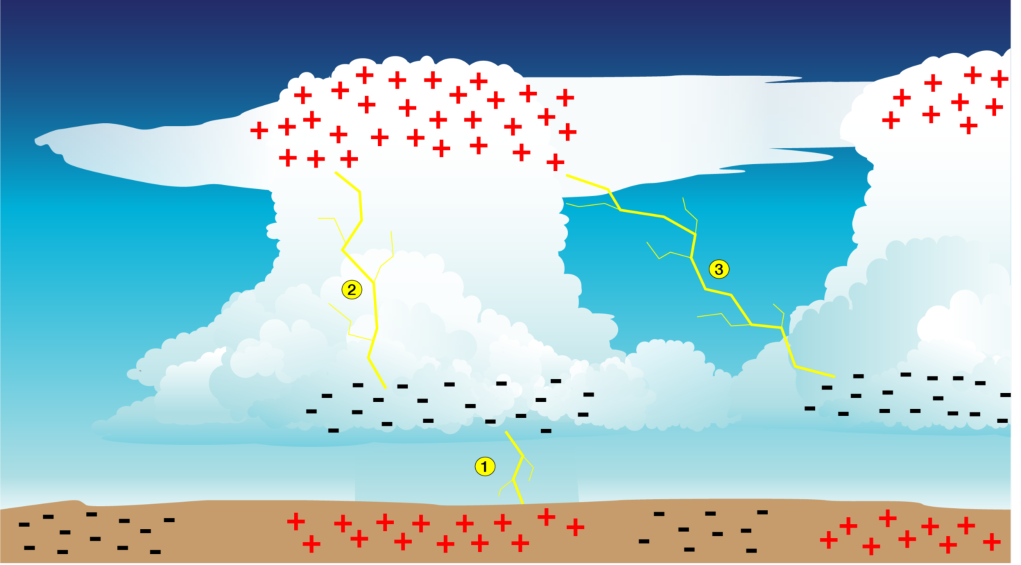
Section titled “LIGHTNING PHENOMENON”Within storm clouds, thermal convection causes collisions between ice particles resulting in the transfer of electrons between them. This process leads to the accumulation of electrical charges inside the cloud. When the electrical tension between these charged areas reaches a critical point, it overcomes the insulating properties of the air that separates them, resulting in a lightning discharge. (fig.1). Lightning can happen ① between cloud and ground, ② inside a cloud, or ③ between two clouds. Earth experiences an average of approximately 44 lightning strikes every second.
(fig.1) Typical types of lightning
Lightning bolts
Section titled “Lightning bolts”A lightning bolt initiates with a column of ionized air (fig.2) that generally ① starts from the negative part of the cloud and moves towards the positively charged area. This column is called a ‘leader’. As it nears the positively charged area, ② secondary leaders develop from it. ③ When the two leaders come into contact with each other, an electrical current flows to neutralize the opposite electrical charges accumulated in the two areas.
There are often several successive discharges in a single lightning bolt. The discharge current can reach 200 000 A and the temperature inside the lightning channel can reach 30 000 °C. Cloud-to-ground lightning bolts are usually the most powerful.
Worldwide distribution of lightning strikes to ground
Section titled “Worldwide distribution of lightning strikes to ground”The average worldwide frequency is 3 lightning strikes per square km per year (strike/km²/yr). However, there is a strong disparity of this value depending on the location on the planet. Based on a National Aeronautics and Space Administration (NASA) study, the regions more prone to lightning strikes are Central Africa and South America with more than 20 strikes/km²/yr and more than 70 strikes/km²/yr in Central Africa, reaching 158 strikes/km²/yr in Congo. In comparison, oceanic areas have a frequency of less than 1 strike/km²/yr reaching less than 0.1 strike/km²/yr in the polar regions and South Pacific area (fig.3).
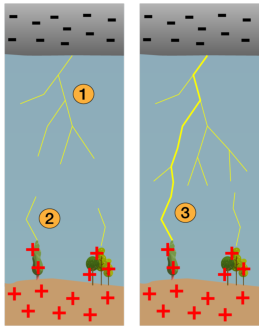
(fig.2) Lightning initiation
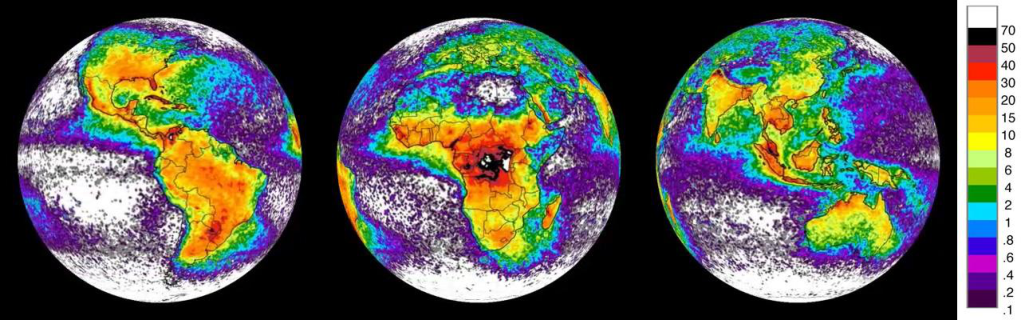
(fig.3) Worldwide lightning distribution from 1995 to 2003 with color range indicating the average annual number of lightning flashes per square kilometre. Credits: National Oceanic and Atmospheric Administration (NOAA) Science and National Aeronautics and Space Administration (NASA).
AIRCRAFT AND LIGHTNING STRIKES
Section titled “AIRCRAFT AND LIGHTNING STRIKES”Using the 3 strikes/km²/yr average value and an average aircraft surface of 300 m², an aircraft should theoretically be struck by lightning once every 1 000 years. The operational reality is that an in-service aircraft will be struck by lightning on average once a year, or every 3 000 flight hours. This is 1 000 times the projected value above.
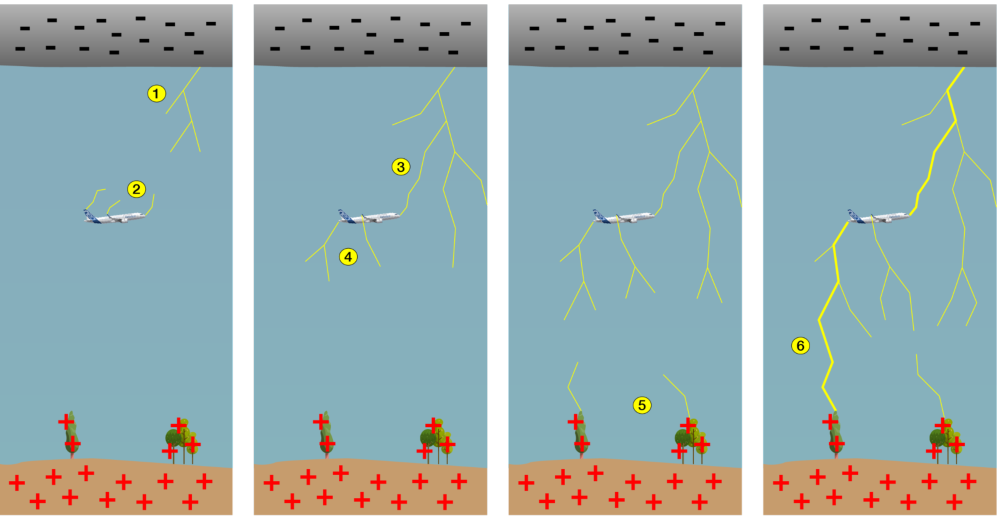
This difference can be explained by the fact that an aircraft will tend to attract lightning in flight when it is in the proximity of a storm’s high electrical field (fig.4).
If a lightning leader initiates close to an aircraft ① , some lightning leaders will also initiate from the aircraft extremities (e.g. nose cone, wing tips, vertical tailplane) toward the lightning leader. ②
If one aircraft leader joins with the lightning leader, the aircraft becomes part of the lightning channel ③ , and continuing leaders initiate from the other extremities of the aircraft toward the positively charged area (ground) ④.
When one of these leaders nears this positively charged area, ⑤ new leaders initiate from it and ⑥ create lightning when joining the main leader.
(fig.4) How lightning strikes an aircraft.
Aircraft design considerations
Section titled “Aircraft design considerations”All large aircraft must be designed and certified to withstand lightning strikes without sustaining significant damage to their structure or effects on their systems that would adversely affect safety for the remainder of the flight. This includes protection of the airframe structure against the direct effects of lightning, and the protection of the electronic circuitry versus lightning current induced effects.
Conductive structure
Section titled “Conductive structure”The aircraft structure is designed to conduct the electrical current induced by a lightning strike. For composite fuselages or components, integrated conductive metallic foils and metallic strips are used to ensure this.
All components of the aircraft structure (metallic or composite) must be bonded together with bonding leads or with fasteners to ensure electrical continuity (fig.5). This will enable the lightning current to travel through the aircraft structure without creating significant damage.
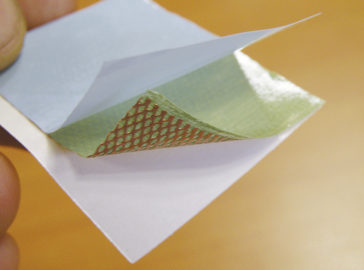
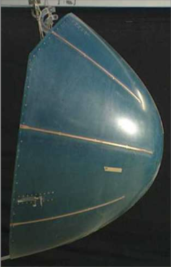
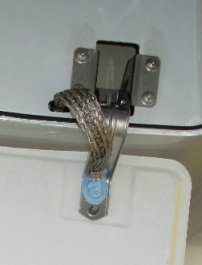
(fig.5) Metallic foil integrated into composite structure (left), conductive metallic strips on the radome (centre), and bonding leads ensure electrical continuity between structural components (right).
Direct effects of a lightning strike are normally limited to the damage caused by the lightning strike at its initial point of contact. The observable effects of a lightning strike include:
-
Metallic components: Burns, pitting, holes, and melt marks on the aircraft skin or structure, structural deformation, heat damage, and paint discoloration.
-
Composite components: Paint discoloration, skin punctures, fiber damage (including fiber tufts or fiber delamination), loss or damage of copper foil mesh and metallic strips.
As the aircraft moves during the strike, and due to the pulsating discharge of the electrical current, the lightning attachment points (on entry or exit) can move along the surface of the aircraft creating the so-called multiple “ swept strokes ” (up to 20 strokes) (fig.6). They can also remain fixed on the rearmost parts of the aircraft (known as a “hang-on” attachment point), which is a single attachment point sustaining several discharges.
The level of damage at the attachment points depends on the intensity of the lightning strike.
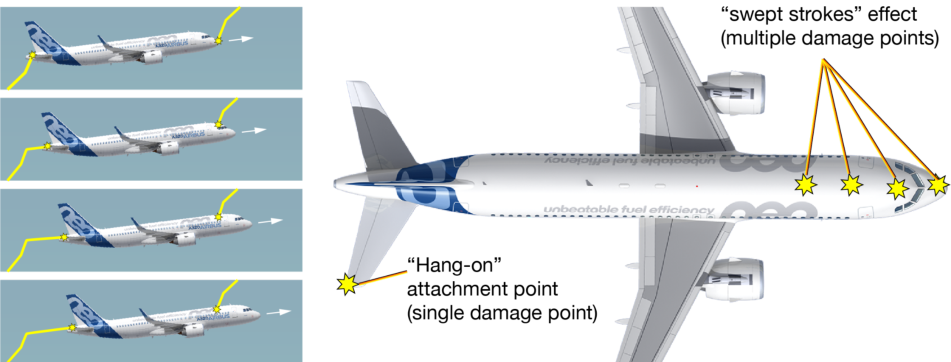
(fig.6) Example of “swept strokes” and “hang-on” attachment points shown on an A320 aircraft with the initial entry point of the lightning current on the nose cone and an exit point on the left side of the horizontal tailplane.
Aircraft Lightning Attachment Zones
Section titled “Aircraft Lightning Attachment Zones”Lightning attachment zones are identified depending on the probability and type of lightning attachment on the aircraft structure (fig.7).
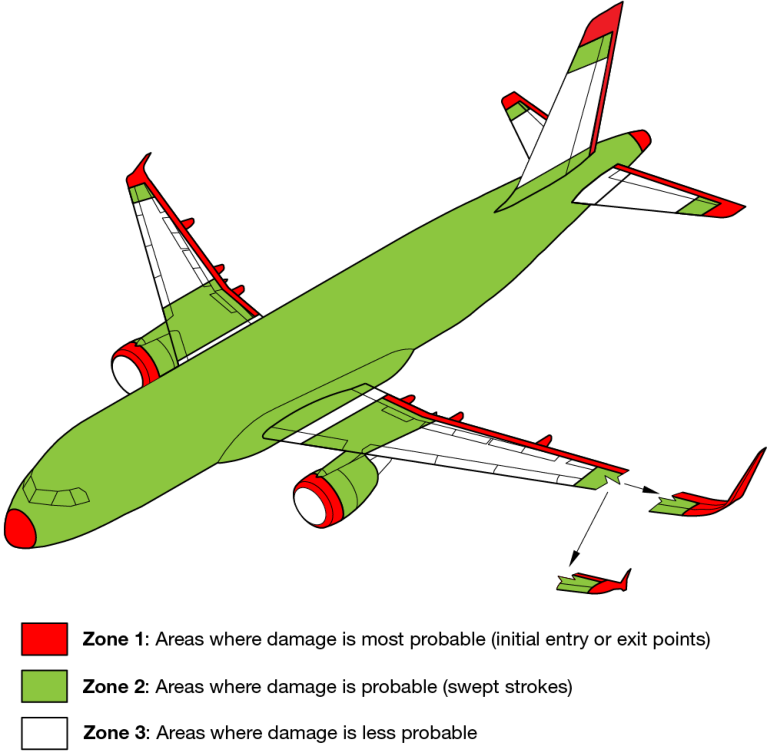
(fig.7) Lightning attachment zones shown on an A320 aircraft (AMM extract)
Protection against the indirect effects of lightning strikes
Section titled “Protection against the indirect effects of lightning strikes”Electromagnetic fields related to a lightning strike can cause unwanted transient voltages and currents in the aircraft wiring and its systems. As required by the regulations, aircraft must be designed so that there is no perturbation of a critical or essential system in the case of a lightning strike that could temporarily or permanently affect its operation. The level of protection given to a particular system depends on the likelihood of the system being affected by lightning and the impact that a loss of this system would have on the safety of the flight.
Protection from the indirect effects of lightning strikes is ensured by:
-
System redundancy
-
Physical and electrical segregation of the redundant systems
-
Electromagnetic protection on the electrical harness where required, using differential transmission lines, shielding and over-shielding, and specific routing rules
-
Electrical isolation or use of lightning surge arrestors specified inside equipment ports depending on their potential exposure to lightning strike effects
-
Management of corrupted data by system software.
Detailed information on the lightning phenomenon and its effect on aircraft can be found in the “Lightning Protection of Aircraft Handbook” created by Franklin A. Fisher and J. Anderson Plumer, available for download on the FAA Technical library.
The standard ED-91A - Lightning Zoning and the SAE Aerospace Recommended Practice (ARP) ARP5414B - Aircraft Lightning Zone, provides information on lightning strike zones and guidelines for locating them on particular aircraft.
LIGHTNING STRIKE PREVENTION & SAFETY PRECAUTIONS
Section titled “LIGHTNING STRIKE PREVENTION & SAFETY PRECAUTIONS”Most of the reported lightning strike events on aircraft usually occur in flight between 5 000 ft and 15 000 ft, or when the aircraft is on the ground.
Lightning Avoidance In-flight
Section titled “Lightning Avoidance In-flight”Flight crews should take advantage of all available means to avoid lightning conditions such as weather forecasts, use of the onboard weather radar, and ATC guidance.
Certain weather radars are equipped with a lightning prediction function that provides additional indications to the flight crew of areas within a storm where an aircraft may be more prone to lightning strikes (fig.8).
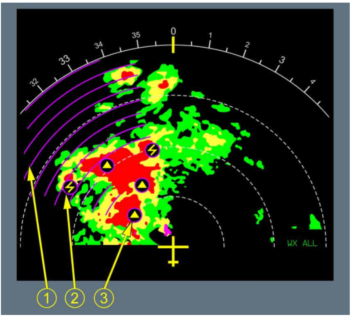
(fig.8) FCOM illustration of the Honeywell weather radar RDR-4000 with ① rain echo attenuation indication, ② lightning prediction, and ③ hail prediction icons
Information on the use of weather radar and storm avoidance can be found in:
-
A220 FCOM1 (section 16-06) and A320/A330/A340/A350/A380 FCTM Aircraft Systems/weather radar
-
● Safety first article “Optimum use of weather radar” published in July 2016 ● Airbus WIN video “Operational Use of the Weather Radar” published in November 2017
Safety Precautions when on Ground
Section titled “Safety Precautions when on Ground”In the case of a storm with lightning activity when the aircraft is parked or stored outside for maintenance activities, the maintenance and ground servicing personnel should apply specific safety precautions to limit the consequences of a potential lightning strike. Aircraft electrical grounding (earthing) Grounding (earthing) the aircraft reduces the risk of injury to personnel and risk of damage to the aircraft in the case of a lightning strike. If the aircraft is not grounded, the lightning current can exit from any point of the aircraft structure. This is normally close to the landing gears where it can cause significant damage and a risk of serious injury. Any ground servicing equipment (e.g. platforms, access stairs, cargo loaders, ground service carts, cargo loaders, and pushback vehicles) that may be in contact with an aircraft that is not grounded when it is struck by lightning, may also be damaged. A grounding cable with less than 500 mOhm of resistance and with a minimum cross section of 22 mm[2] (0.034 in[2] ) must be attached to one of the aircraft grounding points. Suspension of maintenance and servicing activities Maintenance or ground servicing operations should be stopped pending the end of the storm and lightning conditions. Even if the aircraft is grounded, the resulting shockwave created by a lightning strike can cause injuries to ground personnel. Anyone working in the vicinity of the aircraft should not touch metal parts equipment or any other item connected to the aircraft.
Disconnection of all external equipment
Section titled “Disconnection of all external equipment”Disconnection of external equipment (e.g. external power supply, air conditioning carts, and other ground servicing vehicles) prevents damage in the case of a lightning strike.
In lightning conditions, ground operators should disconnect or remove their headsets and communicate with the crew in the cockpit using standard hand signals.
Adherence to local regulations
Section titled “Adherence to local regulations”When available, the operators must review and follow the local airport or airline policy and procedures for managing safety when there is lightning and storms.
More information and guidelines can be found in the International Air Transport Association (IATA) documentation:
IATA Airport Handling Manual , (AHM) 462 “Safe Operating Practices In Aircraft Handling”, section 11; 11.3 Weather Terms and Definitions; 11.5 Severe Weather Forecasting; 11.6 Severe Weather Notification; 1.6.2 Notification Methods; 11.7.3 Thunderstorm/Lightning; 11.8 Thunderstorm/Lightning Safety.
IATA Ground Operations Manual, (IGOM) 3.3 Adverse Weather Conditions
MANAGING LIGHTNING STRIKES
Section titled “MANAGING LIGHTNING STRIKES”|---|---|
This alternative was added in the A320 family AMM to enable further flexibility and allows a maximum of 2 FC (ferry or revenue flight) to return the aircraft to an airfield with sufficient manpower and logistics to perform a standard or quick release
inspection. However, this procedure is not applicable if one of the following conditions occurred:
-
The flight crew reported a lightning flash with the sound of detonation
-
● The flight crew decided to divert the flight after a lightning strike event in flight
-
There were Injuries to passengers and/or crew members caused by the lightning strike event.
-
The 1 flight back inspection consists of:
-
A visual Inspection of the Air Data/Inertial Reference System (ADIRS) probes and sensors (at touching distance)
-
A visual inspection of the flight control surfaces (from a 3m platform or passenger entry stairs)
-
A functional check of the aileron and elevator servo controls
-
A functional test of the flight control surfaces.
The 1-flight-back inspection was made available for A350 aircraft in the 01-NOV-2023 revision and is under study for A330, A340, and A380 aircraft.
|---|---|---|---|---|---|---|---|---|
Damage Evaluation & Repair
Section titled “Damage Evaluation & Repair”Damage due to lightning strikes should be repaired using an approved repair as per local authority regulations. Airbus recommends using the SRM or ASR (for A350) or ASRP (for A220) to evaluate and repair the damage. SRM/ASR/ASRP repairs are certified to be capable of withstanding additional lightning strikes.
Damage outside of the SRM/ASR/ASRP limits
Section titled “Damage outside of the SRM/ASR/ASRP limits”When the lightning strike damage is outside of the SRM/ASR/ASRP limits, it is necessary to obtain repair instructions either from Airbus via a Repair and Design Approval Form (RDAF) or a Repair Engineering Order (REO) for A220 aircraft, or via an instruction provided by an EASA PART 21 approved organization.
To obtain the Airbus RDAF/REO, the operator or repair organization should prepare a damage assessment as required in SRM/ASR/ASRP.
The “SRM for Mechanics” (SRM4M) mobile application provides a quick and easy way to use the SRM for A320 family aircraft.
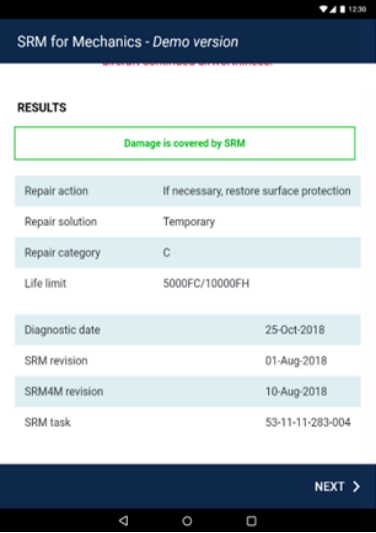
(fig.9) SRM for Mechanics (SRM4M) application for Android and iOS
Report lightning strike events to Airbus
Section titled “Report lightning strike events to Airbus”Airbus analyzes any reported lightning strike events in order to further increase knowledge in this domain. Operators and repair organizations are encouraged to report lightning strike occurrences to Airbus even if no damage is found on the aircraft after the inspection. Operators can also participate in the forums and working groups organized by Airbus. For example, Airbus hosts a Lightning Strikes Expert Forum in order to exchange experience about managing lightning strikes with all operators. An SRM working group (except A220) also meets regularly since 2014 to exchange experience about structural repair topics.
Further information can be found in the AMM/MP, SRM/ASR/ASRP documents available on the AirbusWorld portal and in the following published documents:
-
OIT 999.0066/15
-
OIT 999.0003/20 ATA 51 – STRUCTURAL REPAIR MANUALS AND AIRCRAFT STRUCTURAL REPAIR MANUALS CONTINUOUS
IMPROVEMENTS
Section titled “IMPROVEMENTS”-
Safety first #18 - Safe Operations with Composite Aircraft
-
FAST #22 - Lightning Strikes and Airbus Fly-By-Wire Aircraft
Contributors: Audrey BIGAND Expert - EMH & Lightning Direct Effects
Chia-Chi CHEN Abnormal Events Engineer - Overall A/C In-Service Engineering
Alexandre GREKOV A220 Customer Services / SMS Safety Officer
Dominique GRISEL Cargo Guidance Manager BCV SMS Representative
Robert KEBEL EMC and Lightning Protection Expert
CHRISTELLE KUTYLA EMH Specialist
Renard PUJOL HO SRM Development
Aircraft are often struck by lightning. Aircraft manufacturers must demonstrate that their aircraft remain safe after a lightning strike.
Flight crews should avoid areas with lightning conditions as much as possible by using weather forecasts, onboard weather radar, and ATC guidance.
When an aircraft is parked or stored outside in lightning conditions, it is important to apply precautionary measures such as electrically grounding the aircraft, pausing ground or maintenance operations, and disconnecting any external equipment. It is also important that all operators are familiar with the local airport regulations and procedures for severe storms and lightning events, and have their own policies in place for their flight crews, maintenance crews, and ground crews. For every lightning strike event, it is essential for flight crews to make an accurate logbook entry and for maintenance crews to adhere to the AMM/MP/AMP procedures to perform inspection and damage assessment. Any repair must be done using the SRM (ASR on A350 and ASRP on A220).
Operators should report all their lightning strike events to Airbus, even if there is no damage found in the post lightning strike inspection. This will provide data that contributes to further enhancing industry knowledge on the subject.
With Thanks to Diego Alonso TABARES from Airport Operations Expert, Olivier DUROU from Particular Risk Analyses expert, Ian GOODWIN from Product Safety
Safety first, 2023. Safety first is published by Airbus S.A.S. 1, rond point Maurice Bellonte - 31707 Blagnac Cedex/France.
Editor: Yannick Malinge, Chief Product Safety Officer.
Editorial team: Guillaume Estragnat, Vanessa Sadi, Gwyneth Duggan, Javier Martinez Marina, Tim Roach.
- Reference: X00D16031905.
Photos by Airbus and Kyle - stock.adobe.com
在雷暴云内部,热对流导致冰晶粒子之间发生碰撞,从而产生电子转移。这一过程导致云内部积聚电荷。当带电区域之间的电位差达到临界点时,会克服分隔这些区域的空气绝缘性能,从而引发闪电放电。(图1) 闪电可能发生在 ① 云与地之间、② 云内部,或 ③ 两云之间。地球平均每秒大约遭受 44 次雷击。
(图1) 闪电的典型类型
闪电通道以一列电离空气开始 (图2),通常 ① 从云层的负电荷区域开始,向带正电的区域移动。这列电离空气被称为“梯级先导”。当它接近正电荷区域时,② 次级先导从其上发展而来。③ 当两个先导相互接触时,电流流动以中和两个区域积聚的相反电荷。
一次闪电中往往存在多次连续的放电。放电电流可达 200,000 A,闪电通道内的温度可达 30,000 °C。云对地闪电通道通常最为强大。
全球雷击地面分布
Section titled “全球雷击地面分布”全球平均频率为每年每平方公里 3 次雷击(次/公里²/年)。然而,该数值因地理位置而存在显著差异。根据美国国家航空航天局(NASA)的研究,易遭受雷击的区域包括中非和南美洲,分别超过 20 次/公里²/年,中非地区高达 70 次/公里²/年,刚果更达到 158 次/公里²/年。相比之下,海洋区域的频率低于 1 次/公里²/年,南极地区和南太平洋区域更低至 0.1 次/公里²/年以下 (图3)。
(图2) 闪电的产生
(图3) 1995 年至 2003 年全球闪电分布,色彩范围表示每平方公里年平均闪电次数。资料来源:美国国家海洋和大气管理局(NOAA)科学与美国国家航空航天局(NASA)。
使用每年每平方公里 3 次雷击的平均值以及飞机平均表面积 300 m²,理论上飞机每 1,000 年才会被雷击一次。实际运营中,在役飞机平均每年被雷击一次,或每飞行 3,000 小时被雷击一次。这一数值是上述预测值的 1,000 倍。
这种差异可以解释为:飞机在飞行中处于风暴高电场附近时会吸引雷击 (图4)。
如果闪电先导在飞机附近产生 ①,一些闪电先导也会从飞机端部(如机鼻、翼尖、垂直尾翼)向闪电先导发展。②
如果某条飞机先导与闪电先导汇合,飞机会成为闪电通道的一部分 ③,持续的先导从飞机的其他端部向带正电区域(地面)发展 ④。
当其中一条先导接近该正电荷区域时 ⑤,新的先导从其产生 ⑥,并在与主先导汇合时形成闪电。⑦
(图4) 闪电如何击中飞机
飞机设计注意事项
Section titled “飞机设计注意事项”所有大型飞机在设计和认证时必须能够承受雷击,不会对其结构造成重大损坏,也不会对其系统产生会影响剩余飞行安全的影响。这包括对机身结构免受雷击直接影响的保护,以及对电子电路免受雷击电流感应效应影响的保护。
飞机结构设计用于传导雷击产生的电流。对于复合材料机身或部件,使用集成导电金属箔和金属条带来确保这一点。
飞机结构的所有部件(金属或复合材料)必须通过搭接导线或紧固件连接在一起以确保电气连续性 (图5)。这将使雷击电流能够穿过飞机结构而不会造成重大损坏。
(图5) 集成在复合材料结构中的金属箔(左)、天线罩上的导电金属条带(中),以及搭接导线确保结构部件之间的电气连续性(右)。
雷击的直接影响通常仅限于雷击在其初始接触点造成的损坏。雷击的可观察效应包括:
-
金属部件: 飞机蒙皮或结构上的烧蚀、凹坑、孔洞和熔化痕迹,结构变形,热损伤,以及油漆变色。
-
复合材料部件: 油漆变色,蒙皮穿孔,纤维损坏(包括纤维散丝或纤维分层),铜箔网和金属条带的损失或损坏。
由于飞机在雷击过程中移动,加上电流的脉动放电,雷击附着点(进入或退出点)可以沿飞机表面移动,形成所谓的多次“扫掠放电”(最多可达20次放电)(图6)。它们也可能固定在飞机后部(称为“持续附着”点),即单一附着点承受多次放电。
附着点的损坏程度取决于雷击的强度。
(图6) A320 飞机上“扫掠放电”和“持续附着”点的示例,雷击电流的初始进入点在鼻锥,退出点在水平尾翼左侧。
飞机雷击附着区域
Section titled “飞机雷击附着区域”雷击附着区域根据雷击在飞机结构上附着的概率和类型来识别 (图7)。
(图7) A320 飞机上的雷击附着区域(AMM 节选)
防止雷击间接影响的保护
Section titled “防止雷击间接影响的保护”与雷击相关的电磁场可能在飞机线路及其系统中引起不想要的瞬态电压和电流。根据适航规章要求,飞机设计必须确保在雷击情况下关键或必要系统不会受到扰动,无论是暂时性还是永久性地影响其运行。对特定系统给予的保护级别取决于该系统受到雷击影响的可能性,以及该系统失效对飞行安全的影响。
防止雷击间接影响的保护通过以下方式实现:
-
系统冗余
-
冗余系统的物理和电气隔离
-
在需要时通过差分传输线、屏蔽和外包屏蔽层以及特定布线规则对电气线束进行电磁保护
-
根据设备端口可能暴露于雷击效应的程度,采用电气隔离或指定的雷击浪涌抑制器
-
通过系统软件对损坏数据进行管理。
有关雷击现象及其对飞机影响的详细信息,请参阅由 Franklin A. Fisher 和 J. Anderson Plumer 编写的《飞机雷击防护手册》,该手册可在 FAA 技术资料库下载。
标准 ED-91A - 雷击区域划分和 SAE 航空航天推荐实践 (ARP) ARP5414B - 飞机雷击区域提供了雷击区域的信息以及在特定飞机上定位这些区域的指南。
雷击预防与安全防护措施
Section titled “雷击预防与安全防护措施”大多数报告的飞机雷击事件通常发生在**飞行中 5000 ft 至 15000 ft 之间,**或飞机在地面时。
飞行中的雷击规避
Section titled “飞行中的雷击规避”飞行机组应充分利用一切可用手段来避开雷击条件,例如天气预报、机载气象雷达的使用以及 ATC 引导。
某些气象雷达配备了雷击预测功能,能够为飞行机组提供额外指示,显示飞机可能更容易遭受雷击的风暴区域 (图8)。
(图8) FCOM 中 Honeywell 气象雷达 RDR-4000 的图示,包含 ① 降雨回波衰减指示、② 雷击预测和 ③ 冰雹预测图标
有关气象雷达使用和风暴规避的信息,请参阅:
-
A220 FCOM1(第 16-06 节)和 A320/A330/A340/A350/A380 FCTM 飞机系统/气象雷达
-
● Safety first 文章“最佳使用气象雷达”于 2016 年 7 月发布 ● Airbus WIN 视频“气象雷达的操作使用”于 2017 年 11 月发布
地面安全注意事项
Section titled “地面安全注意事项”当飞机在停机或在外停放进行维护活动时遭遇雷暴天气,维护和地面勤务人员应采取特定安全预防措施,以限制潜在雷击可能造成的后果。飞机电气接地 飞机接地可降低雷击时人员受伤和飞机损坏的风险。如果飞机未接地,雷电流可从飞机结构的任何部位泄放。这通常发生在起落架附近,可能造成重大损坏和严重人身伤害风险。任何地面勤务设备(如平台、登机梯、货物装载机、地面勤务车、行李牵引车和推脱车),在飞机遭受雷击时若与未接地的飞机接触,也可能受到损坏。接地电缆的电阻必须小于 500 mOhm,截面积至少为 22 mm² (0.034 in²),必须连接至飞机接地点之一。暂停维护和勤务活动维护或地面勤务作业应在雷暴和闪电天气结束前停止。即使飞机已接地,雷击产生的冲击波仍可能造成地面人员受伤。在飞机附近工作的任何人员不得触摸金属设备部件或任何其他与飞机连接的物品。
断开所有外部设备
Section titled “断开所有外部设备”断开外部设备(如外部电源、空调车和其他地面勤务车辆)的连接可防止雷击造成的损坏。
在闪电天气条件下,地面操作人员应断开或取下耳机,使用标准手势信号与驾驶舱机组人员进行沟通。
遵守当地规定
Section titled “遵守当地规定”在有相关规定的情况下,运营商必须查阅并遵循当地机场或航空公司关于闪电和雷暴天气安全管理政策和程序。
更多信息和指南可在国际航空运输协会(IATA)文件中找到:
IATA Airport Handling Manual (AHM) 462 “Safe Operating Practices In Aircraft Handling”,第 11 节;11.3 天气术语和定义;11.5 恶劣天气预报;11.6 恶劣天气通知;1.6.2 通知方法;11.7.3 雷暴/闪电;11.8 雷暴/闪电安全。
IATA Ground Operations Manual (IGOM) 3.3 恶劣天气条件
|---|---|
该替代方案已纳入 A320 系列飞机 AMM,以提供更大的灵活性,允许最多 2 次 FC(调机飞行或商业航班)将飞机返回拥有足够人员和后勤保障的机场,执行标准或快速放行检查。但是,如果发生以下任一情况,则不适用此程序:
-
飞行机组报告闪电伴随爆炸声
-
● 飞行机组在雷击事件后决定改航
-
雷击事件导致乘客和/或机组人员受伤。
-
1 次飞行返回检查包括:
-
目视检查大气数据/惯性基准系统(ADIRS)探头和传感器(在可触及距离内)
-
目视检查飞行控制面(从 3m 平台或客舱登机梯处)
-
副翼和升降舵伺服控制的功能检查
-
飞行控制面的功能测试。
1 次飞行返回检查程序于 2023 年 11 月 1 日修订版在 A350 飞机上推出,目前正在对 A330、A340 和 A380 飞机进行评估。
损伤评估与修复
Section titled “损伤评估与修复”雷击造成的损伤应按照当地主管部门的规定,使用经批准的修复方案进行修复。空客建议使用结构修理手册(SRM)或结构修理(ASR,适用于A350)或结构修理程序(ASRP,适用于A220)来评估和修复损伤。SRM/ASR/ASRP修复方案经认证能够承受后续的雷击。
超出SRM/ASR/ASRP限制的损伤
Section titled “超出SRM/ASR/ASRP限制的损伤”当雷击损伤超出SRM/ASR/ASRP限制时,必须通过以下方式获取修复说明:对于A220飞机,通过空客的修理和设计批准表(RDAF)或修理工程指令(REO),或通过EASA PART 21批准组织提供的说明。
要获取空客RDAF/REO,运营商或修理机构应按照SRM/ASR/ASRP的要求准备损伤评估。
“机械师用结构修理手册”(SRM4M)移动应用程序提供了一种快速简便的方式,可用于A320系列飞机的SRM查询。
(图9) 适用于Android和iOS的机械师用结构修理手册(SRM4M)应用程序
向空客报告雷击事件
Section titled “向空客报告雷击事件”空客分析所有报告的雷击事件,以进一步增强该领域的知识。即使在检查后飞机上未发现损伤,空客也鼓励运营商和修理机构报告雷击事件。运营商还可以参加空客组织的论坛和工作组。例如,空客主办雷击专家论坛,与所有运营商交流关于雷击管理的经验。自2014年以来,SRM工作组(A220除外)也定期召开会议,交流关于结构修理专题的经验。
更多信息可在空客World门户网站上找到,包括AMM/MP、SRM/ASR/ASRP文件以及以下已发布文件:
-
OIT 999.0066/15
-
OIT 999.0003/20 ATA 51 – 结构修理手册和飞机结构修理手册持续更新
-
Safety first #18 - 复合材料飞机安全运营
-
FAST #22 - 雷击与空客电传操纵飞机
撰稿人:Audrey BIGAND EMH与雷击直接效应专家
Chia-Chi CHEN 异常事件工程师 - 整机在役工程
Alexandre GREKOV A220客户服务/ SMS安全官员
Dominique GRISEL 货机引导经理 BCV SMS代表
Robert KEBEL EMC与雷电防护专家
CHRISTELLE KUTYLA EMH专家
Renard PUJOL SRM开发主管
飞机经常遭受雷击。飞机制造商必须证明其飞机在雷击后仍然安全。
飞行机组应尽可能通过使用天气预报、机载气象雷达和ATC引导来避开有闪电活动的区域。
当飞机在雷电条件下停放或存放于室外时,采取预防措施非常重要,例如对飞机进行电气接地、暂停地面或维修作业、以及断开任何外部设备。同样重要的是,所有运营商都应熟悉当地机场关于雷暴和雷电事件的法规和程序,并为飞行机组、维修人员和地面人员制定自己的政策。对于每一次雷击事件,飞行机组必须准确填写飞行日志,维修人员必须遵守AMM/MP/AMP程序进行检查和损伤评估。任何修复必须使用SRM(A350使用ASR,A220使用ASRP)。
运营商应向空客报告所有雷击事件,即使在雷击后检查中未发现损伤。这将提供数据,有助于进一步增强行业对该主题的知识。
特别致谢Diego Alonso TABARES(机场运营专家)、Olivier DUROU(特殊风险分析专家)和Ian GOODWIN(产品安全)。
Safety first,2023年。Safety first由空客SAS出版。地址:1, rond point Maurice Bellonte - 31707 Blagnac Cedex/法国。
编辑:Yannick Malinge,产品安全总监。
编辑团队:Guillaume Estragnat、Vanessa Sadi、Gwyneth Duggan、Javier Martinez Marina、Tim Roach。
20192534。参考编号:X00D16031905。
照片由空客和Kyle - stock.adobe.com提供。