Takeoff Surveillance & Monitoring Functions
Source: Airbus Safety First URL: https://safetyfirst.airbus.com/takeoff-surveillance-monitoring-functions/ Published: 2019-10-15 Magazine Issue: 2019-10 Category: Flight Ops, flight preparation, FMS, performance, RTO, take off PDF: Original PDF
AIRCRAFT
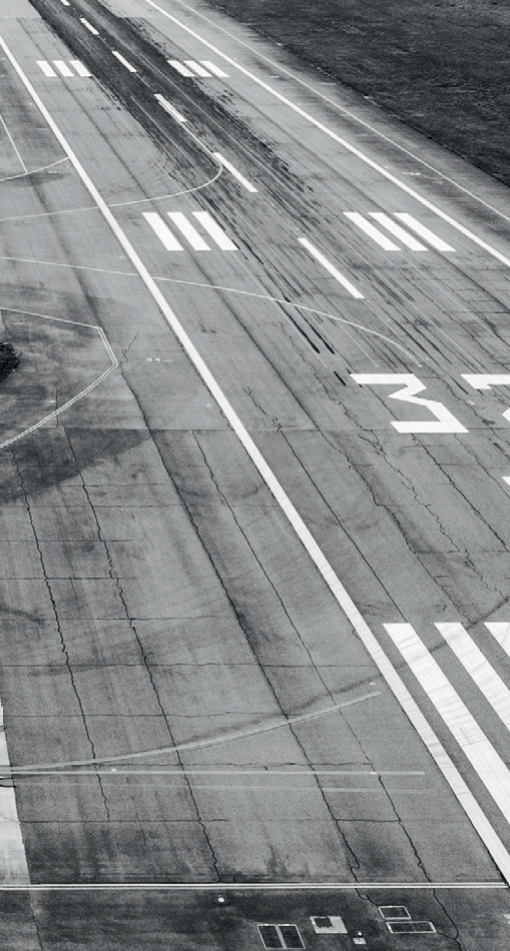
Airbus has continuously improved takeoff safety since the “TO CONFIG TEST” pushbutton was fi rst introduced on A300 and A310 aircraft, and with the development of the Takeoff Surveillance (TOS1 & TOS2) and Takeoff Monitoring (TOM) functions.
The TOS2 package that was initially developed for the A350 is now available for A320 family and A330 aircraft. This is an opportunity to review the checks that are performed by each function, from cockpit preparation to takeoff.
This article supersedes “The Takeoff Securing function” article published in the Safety fi rst issue #8 (July 2009).
SECURING THE TAKEOFF
Section titled “SECURING THE TAKEOFF”There have been several events during takeoff over this last decade. In certain cases, the aircraft took off with incorrect trim or fl aps settings, which increases the risk of runway overrun or tail strike event. Erroneous parameters were sometimes used for the performance calculation, leading to incorrect takeoff speeds or Flex thrust computation. On other occasions takeoff data was not updated in the FMS following a late runway change, leading to takeoff without the correct performance data in the FMS. A number of aircraft started takeoff from a taxiway intersection when the computed performance was for the entire length of runway. There were also takeoffs starting on a taxiway or from the opposite QFU. Finally, few cases of residual braking leading to an abnormal aircraft acceleration were reported during takeoff roll.
Most of these events can be avoided by complying with the FCOM Standard Operating Procedures (SOP). Indeed, several crosschecks enable the fl ight crew to identify discrepancies. These examples however show that errors can still be made, which typically occur when there are stressful situations, high crew workload, last minute changes or demanding ATC requests.
Airbus developed Takeoff Surveillance and Monitoring functions to provide additional safety-nets to support the fl ight crew during takeoff preparation and takeoff roll.
Evolution of the Takeoff Surveillance & Monitoring functions on Airbus aircraft
Section titled “Evolution of the Takeoff Surveillance & Monitoring functions on Airbus aircraft”The “TO CONFIG TEST” pushbutton was fi rst introduced on A300/A310 aircraft. When pressed, it checks the correct aircraft confi guration for takeoff. If the aircraft confi guration is not correct, the CONFIG light comes on the Master Warning Panel (A300) or an ECAM alert triggers (A300-600/A310).
Airbus introduced the fi rst step of the Takeoff Surveillance functions (TOS1) on A320 family aircraft in 2009 and then on A330/A340 aircraft in 2013. TOS1 improves the checks performed on fl aps and trim settings and adds a check of the performance parameters entered in the FMS (aircraft weight and takeoff speeds).
The second step of the Takeoff Surveillance functions (TOS2) was introduced on A350 aircraft in 2018 and is now available on A320 family and A330 aircraft. TOS2 checks that the aircraft is positioned on the intended runway and that the expected takeoff performance – based on data entered in the FMS by the crew – is compatible with the runway distance available.
The Takeoff Monitoring function (TOM) was fi rst developed on A380 in 2018 and is now also available on A350. TOM monitors the acceleration of the aircraft during the takeoff phase and warns the fl ight crew if a lower-than-expected acceleration is detected.
AIRCRAFT
Section titled “AIRCRAFT”TOS CHECKS DURING COCKPIT PREPARATION
Section titled “TOS CHECKS DURING COCKPIT PREPARATION”ZFW and takeoff speeds check (TOS1)
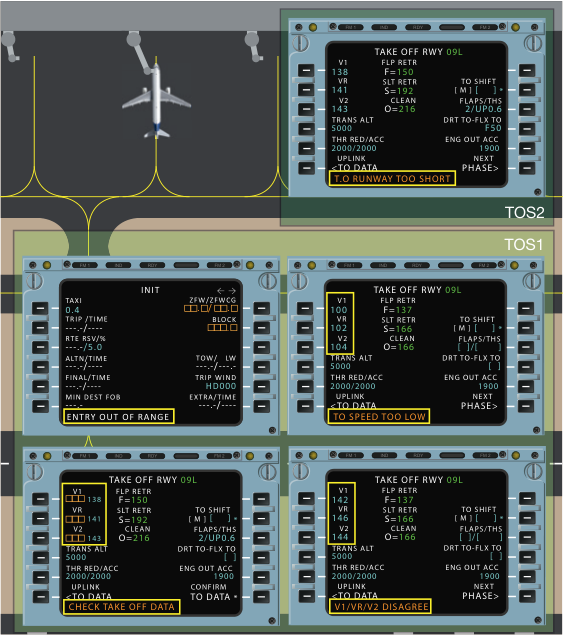
Section titled “ZFW and takeoff speeds check (TOS1)”During the cockpit preparation, TOS1 checks for gross errors on weight or takeoff speeds inserted into the FMS. The MCDU/MFD can display the below scratchpad messages (fi g.1).
-
ENTRY OUT OF RANGE: Inserted Zero Fuel Weight value is outside of the correct range.
-
TO SPEED TOO LOW (A320/A330) or T.O SPEED TOO LOW CHECK TOW AND T.O DATA (A380/A350): Inserted takeoff speeds do not respect the required margins with minimum control (VMCG, VMCA) or stall (VS1G) speeds.
-
V1/VR/V2 DISAGREE: Inserted takeoff speeds do not respect the rule V1 ≤ VR ≤ V2.
-
CHECK TAKE OFF DATA: The fl ight crew changed the takeoff runway but takeoff speeds that were entered are applicable for another runway. The takeoff speeds are therefore invalidated and must be either re-entered or re-validated.
Lift-off distance check (TOS2)
Section titled “Lift-off distance check (TOS2)”TOS2 computes the Lift Off Distance (LOD) expected with the performance dataset entered by the crew (weight, thrust, Flaps, OAT and VR/V2) and compares it with the available runway length of the takeoff runway selected in the FMS. The LOD computation takes into account any takeoff shift entered in the MCDU/MFD. If the available runway length is lower than the LOD, the MCDU/MFD scratchpad displays a T.O RWY TOO SHORT message (fi g.1).
TOS CHECKS AT ENGINE START
Section titled “TOS CHECKS AT ENGINE START”Lift-off distance check (TOS2)
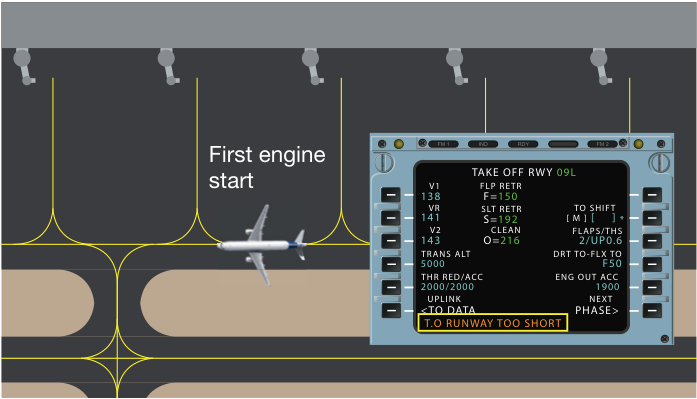
Section titled “Lift-off distance check (TOS2)”TOS2 re-performs a LOD check at engine start, using actual fuel quantity data now available from the fuel system. If the available runway length is lower than the LOD, the MCDU/MFD scratchpad displays a T.O RWY TOO SHORT message (fi g.2).
TOS CHECKS DURING TAXI PHASE (T.O CONFIG PUSHBUTTON PRESSED)
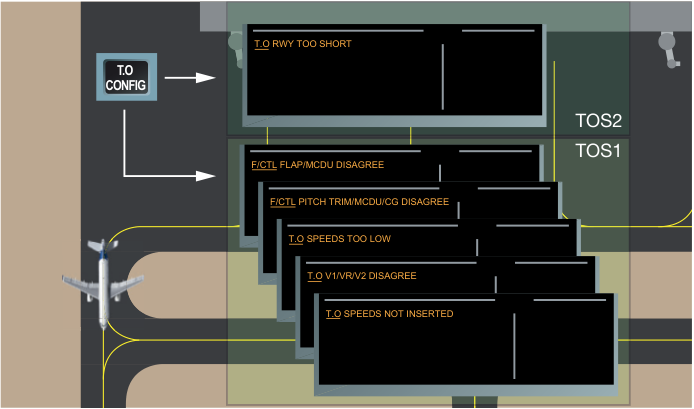
Section titled “TOS CHECKS DURING TAXI PHASE (T.O CONFIG PUSHBUTTON PRESSED)”During taxi, the SOP request the fl ight crew to press the T.O CONFIG pushbutton. TOS functions then perform the following checks:
Flaps check (TOS1)
Section titled “Flaps check (TOS1)”TOS1 checks consistency between the Flaps setting inserted by the crew in the Takeoff PERF page and the actual fl aps setting. If there is an inconsistency, this will trigger the F/CTL FLAP/MCDU DISAGREE (A320/A330/A340) (fi g.3) or F/CTL FLAP/FMS DISAGREE (A350/A380) ECAM message.
Trim Check (TOS1)
Section titled “Trim Check (TOS1)”TOS1 also compares the trim setting entered by the crew into the Takeoff PERF page with the actual Trimmable Horizontal Stabilizer (THS) position and with the trim computed by the FAC/FMGEC/FE based on the CG value provided by the fuel management system. If an inconsistency is detected, this will trigger the F/CTL PITCH TRIM/MCDU/CG DISAGREE (A320/A330/A340) (fi g.3) or F/CTL PITCH TRIM/FMS/CG DISAGREE (A350/A380) ECAM message.
AIRCRAFT
Section titled “AIRCRAFT”Takeoff speeds check (TOS1)
Section titled “Takeoff speeds check (TOS1)”TOS1 performs an additional takeoff speeds check in the same way as it was done during the cockpit preparation phase. If one of the checks fails, the Flight Warning System triggers an ECAM alert and displays the associated MCDU/MFD scratchpad message (fi g.3) :
• T.O SPEEDS TOO LOW
• T.O V1/VR/V2 DISAGREE
• T.O SPEEDS NOT INSERTED
Lift-off distance check (TOS2)
Section titled “Lift-off distance check (TOS2)”TOS2 performs an additional LOD check. If the available runway length is lower than LOD, the Flight Warning System triggers the ECAM alert T.O RWY TOO SHORT (fi g.3) and displays the associated scratchpad message.
(fi g.3)
Section titled “(fi g.3)”TOS1 and TOS2 potential alerts when the T.O CONFIG pushbutton is pressed
When the fl ight crew initiates the takeoff roll by setting the thrust levers to takeoff thrust, TOS2 provides additional safety nets by checking that the aircraft is on the intended runway and that the required liftoff distance is compatible with the available runway distance, taking into account the real aircraft position on the runway.
Check of takeoff start position (TOS2)
Section titled “Check of takeoff start position (TOS2)”When the crew applies takeoff thrust, TOS2 checks if the aircraft is positioned within an area that contains the takeoff runway entered in the FMS (fi g.4).
If the fl ight crew applies takeoff thrust when the aircraft is still on a taxiway and outside the runway area, this will trigger the red ECAM warning NAV ON TAXIWAY.
The alert can also be an amber caution depending on the FWS standard.
If the fl ight crew applies takeoff thrust while the aircraft is positioned on a different runway from the one entered into the FMS, this will trigger the ECAM caution NAV NOT ON FMS RUNWAY.
Lift-off distance check (TOS2)
Section titled “Lift-off distance check (TOS2)”When the fl ight crew applies takeoff thrust, TOS2 performs a fi nal LOD check based on the real aircraft position. If the runway distance available in front of the aircraft is lower than the computed LOD (e.g. an aircraft commencing takeoff from a wrong runway intersection or from an incorrect runway with an insuffi cient length), this will trigger the red ECAM warning T.O RWY TOO SHORT (fi g.4).
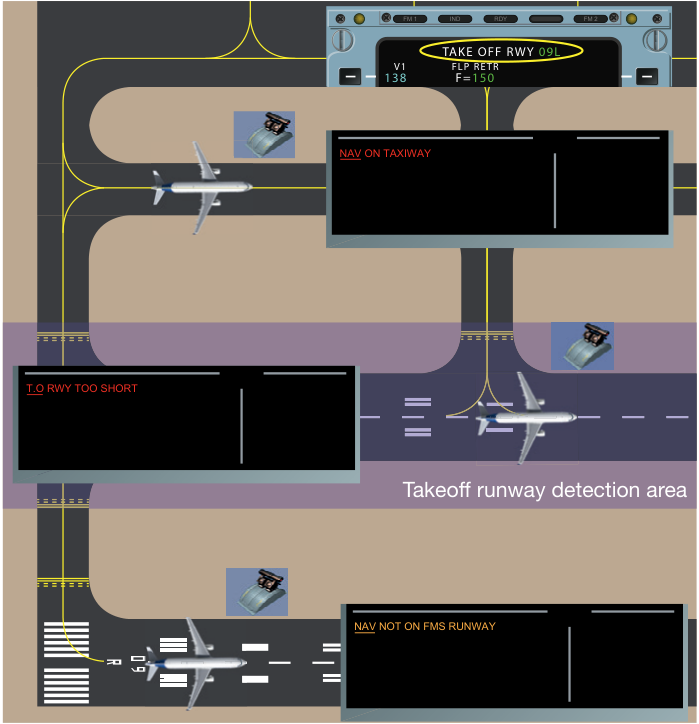
TOS2 potential alerts at takeoff thrust application
De-activation of TOS 2 function
Section titled “De-activation of TOS 2 function”The T.O SURV pushbutton switch de-activates TOS2 function to avoid spurious alerts if the Navigation/Airport database information for a particular airport is not up-to-date. This pushbutton switch is installed on A320/A330 aircraft equipped with the TOS2 and can be installed on A350 as an option.

(fi g.5)
Section titled “(fi g.5)”Example of the T.O SURV pushbutton switch on A320 aircraft
AIRCRAFT
Section titled “AIRCRAFT”TAKEOFF MONITORING (TOM)
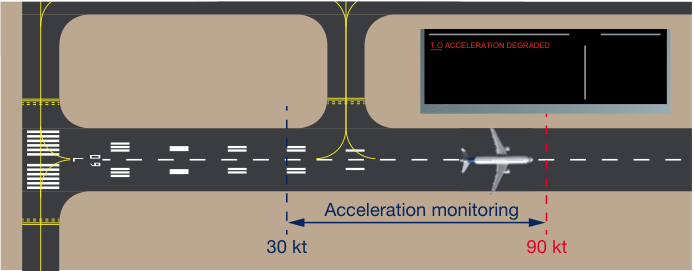
Section titled “TAKEOFF MONITORING (TOM)”TOM provides an additional safety-net during the takeoff roll. From 30 kt, it compares the expected acceleration with the real acceleration of the aircraft. If the difference between the real aircraft acceleration and its expected acceleration is more than 15 % when the aircraft reaches 90 kt, TOM will trigger the red ECAM warning T.O ACCELERATION DEGRADED.
TOM can be de-activated on A350 aircraft using the T.O SURV pushbutton switch (if installed).
(fi g.6)
Section titled “(fi g.6)”TOM alert displayed if the difference between the aircraft’s actual acceleration and its expected acceleration is more than 15 % when the aircraft reaches 90 kt
SOP ensure correct takeoff preparation and request checks for error identifi cation
Section titled “SOP ensure correct takeoff preparation and request checks for error identifi cation”Adherence to SOP ensures takeoff preparation is completed correctly regardless of whether an aircraft is equipped with the Takeoff Surveillance and Monitoring functions. Correct takeoff preparation by the crew is ensured by promoting the following:
-
A takeoff briefi ng should be relevant, concise and chronological
-
The takeoff performance computation should be independently performed by both fl ight crew members and crosschecked
-
Ensure accurate aircraft positioning data by systematically inserting T.O SHIFT during the departure phase when the takeoff will start from an intersection.
The Takeoff Surveillance and Monitoring functions must be considered as a safety net and are not replacements for full application of SOP actions.
An up-to-date Navigation/Airport database is key
Section titled “An up-to-date Navigation/Airport database is key”TOS2 function relies on the FMS Navigation Database (for A320/A330/A380) and on the Airport database (for A350). Therefore the database must be up-todate to fully take advantage of the TOS2 function. An outdated database may lead to spurious TOS2 ECAM alerts or non-triggering of an alert.
NOTAMs impacting the TOS2 function
Section titled “NOTAMs impacting the TOS2 function”NOTAMs that modify the runway length available may not always be incorporated into the Navigation/Airport database. Airbus recommends that Operators evaluate the impact on TOS2 of these NOTAMs and request that their flight crew deactivates the function to avoid spurious alerts if necessary (fig.5).
Takeoff Surveillance alerts and RTO
Section titled “Takeoff Surveillance alerts and RTO”Airbus recommends to reject the takeoff if TOS2 ECAM alerts are triggered at takeoff thrust application – including:
- NAV ON TAXIWAY
- NAV NOT ON FMS RUNWAY - T.O RWY TOO SHORT
Takeoff Monitoring alert and RTO
Section titled “Takeoff Monitoring alert and RTO”Many ECAM alerts are inhibited between 80 kt and 400 ft (takeoff inhibition phase). Any warning received during this period must be considered as significant. For this reason, Airbus recommends to reject the takeoff if the T.O ACCELERATION DEGRADED warning is triggered. The TOM function is designed so that if this warning appears when the aircraft reaches 90 kt, the flight crew can safely perform a rejected takeoff before V1.
SUMMARY & AVAILABILITY OF TOS AND TOM FUNCTIONS
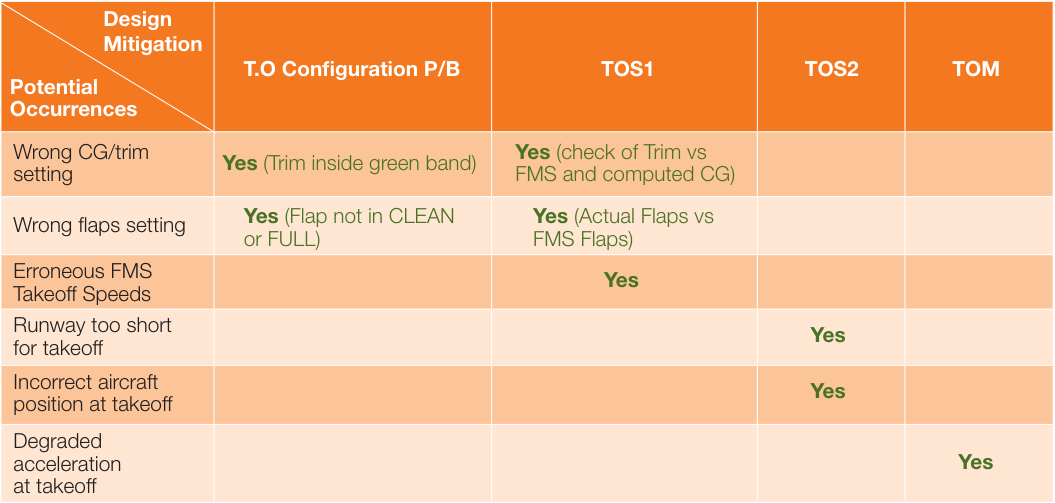
Section titled “SUMMARY & AVAILABILITY OF TOS AND TOM FUNCTIONS”Focusing on the types of event that were reported to Airbus in the last ten years shows that the takeoff surveillance and monitoring functions would detect the majority of them and alert the flight crew.
(fig.7)
Section titled “(fig.7)”Summary of the potential occurrences addressed by TOS and TOM functions
AIRCRAFT
Section titled “AIRCRAFT”The table below summarizes the availability of the TOS and TOM functions on the various aircraft types. The availability for retrofit depends on the exact aircraft configuration (FMS, EIS, ADIRU, and FWS standards). For more details on the system pre-requisites, operators are invited to contact Airbus customer support.
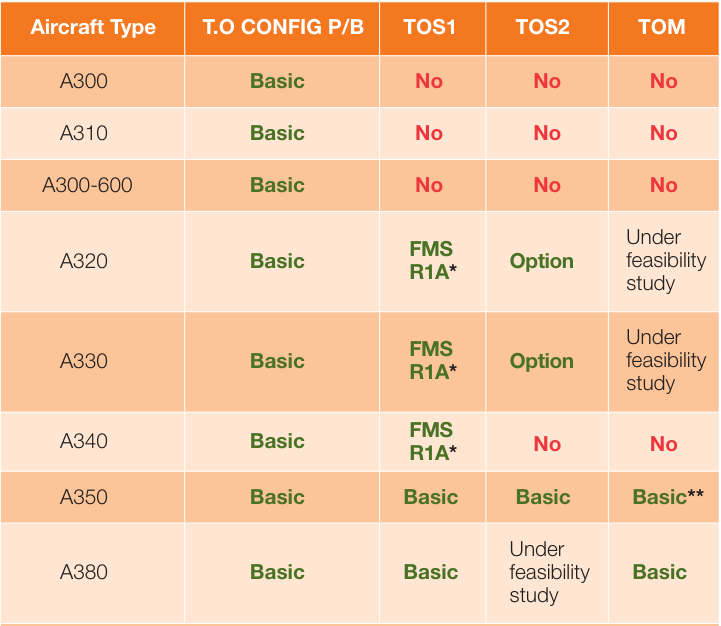
Availability of the Takeoff Surveillance and Monitoring functions
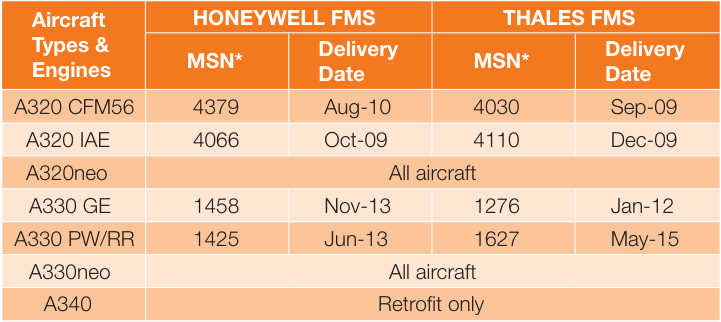
(fig.9)
Section titled “(fig.9)”Availability of the TOS1 (Release 1A FMS standard or later standards) for A320/A330/A340 aircraft
- TOS1 is basically activated on all aircraft fitted with FMS2 release 1a and later standards (see below table for availability) **Available on A350-1000 in 2020
CONTRIBUTORS:
Section titled “CONTRIBUTORS:”Daniel LOPEZ FERNANDEZ Director Product Safety Enhancement Product Safety
Marie PALARIC
Section titled “Marie PALARIC”TOS/TOM Product Leader Engineering Aircraft Performance
Annabelle BLUSSON Flight Operations Support
Airbus developed the Takeoff Surveillance TOS 1 & TOS 2 and Takeoff Monitoring (TOM) functions to provide an additional safety-net against the risks of runway overrun or tailstrike at takeoff that may occur due to:
-
Errors in takeoff performance computation, or errors when entering takeoff data
-
Takeoff starting from an incorrect position
-
A degraded acceleration condition, where the aircraft’s actual acceleration is lower than the expected acceleration during the takeoff roll.
The TOS2 was initially developed for the A350 aircraft and it is now available for the A320 family and on A330 aircraft.
It is important to remember that these Takeoff Surveillance functions are enhancements that act as an additional safety-net. They do not replace the correct application of SOP by the flight crew.
Safety fi rst, #29 October, 2019. Safety fi rst is published by Airbus S.A.S. - 1, rond point Maurice Bellonte - 31707 Blagnac Cedex/France. Publisher and Editor: Yannick Malinge, Chief Product Safety Offi cer. Concept Design by Airbus MultiMedia Studio 20192534. Reference: X00D16031905 Issue 29. Photos by Airbus, P. Masclet.
起飞监视与监控功能
Section titled “起飞监视与监控功能”
自A300和A310飞机首次引入“起飞形态测试”(TO CONFIG TEST)按钮以来,空客不断改进起飞安全性能,并持续开发起飞监视(TOS1和TOS2)和起飞监控(TOM)功能。
最初为A350开发的TOS2功能包现已适用于A320系列和A330飞机。这是一个回顾从驾驶舱准备到起飞各功能执行检查的机会。
本文取代《安全优先》第8期(2009年7月)发表的“起飞锁定功能”一文。
过去十年间,起飞过程中发生过多起事件。在某些情况下,飞机以不正确的配平或缝翼设置起飞,增加了跑道越障或擦尾事件的风险。有时使用错误的参数进行性能计算,导致起飞速度或Flex温度推力计算不正确。在其他情况下,由于跑道更换较晚,起飞数据未在FMS中更新,导致飞机起飞时FMS中未加载正确的性能数据。部分飞机从滑行道交叉口开始起飞,而计算的性能基于整条跑道长度。还有从滑行道或相反航道起飞的起飞事件。最后,据报告有少量残余制动导致起飞滑跑过程中飞机加速异常的情况。
遵守FCOM标准操作程序(SOP)可以避免大多数此类事件。确实,多项交叉检查使飞行机组能够识别差异。然而,这些例子表明错误仍可能发生,通常发生在压力情况、高工作负荷、临时变更或苛刻的ATC要求时。
空客开发了起飞监视和监控功能,为飞行机组在起飞准备和起飞滑跑期间提供额外的安全网。
空客飞机起飞监视与监控功能的发展
Section titled “空客飞机起飞监视与监控功能的发展”“起飞形态测试”按钮首次引入A300/A310飞机。按下该按钮时,系统检查飞机的正确起飞形态。如果飞机形态不正确,A300上的形态灯亮起(A300-600/A310上触发ECAM警告)。
空客于2009年在A320系列飞机上首次引入起飞监视功能的第一步(TOS1),随后于2013年在A330/A340飞机上引入。TOS1改进了对缝翼和配平设置的检查,并增加了对FMS中输入的性能参数(飞机重量和起飞速度)的检查。
起飞监视功能的第二步(TOS2)于2018年在A350飞机上引入,现已适用于A320系列和A330飞机。TOS2检查飞机是否位于预定跑道上,并确认基于机组在FMS中输入的数据计算得出的预期起飞性能是否与可用跑道距离相匹配。
起飞监控功能(TOM)于2018年首次在A380上开发,现也已适用于A350。TOM监控飞机在起飞阶段的加速情况,并在检测到低于预期的加速时警告飞行机组。
起飞监视功能(TOS)在驾驶舱准备期间的检查
Section titled “起飞监视功能(TOS)在驾驶舱准备期间的检查”无燃油重量和起飞速度检查(TOS1)
Section titled “无燃油重量和起飞速度检查(TOS1)”在驾驶舱准备期间,TOS1检查输入FMS的重量或起飞速度是否存在重大错误。MCDU/MFD可显示以下草签行消息(图1)。
-
ENTRY OUT OF RANGE(输入超出范围):输入的无燃油重量值超出正确范围。
-
TO SPEED TOO LOW(A320/A330)或 T.O SPEED TOO LOW CHECK TOW AND T.O DATA(A380/A350):输入的起飞速度未满足与最小控制速度(VMCG、VMCA)或失速速度(VS1G)之间的所需余量。
-
V1/VR/V2 DISAGREE(V1/VR/V2不一致):输入的起飞速度未满足V1 ≤ VR ≤ V2的规则。
-
CHECK TAKE OFF DATA(检查起飞数据):飞行机组更改了起飞跑道,但输入的起飞速度适用于另一条跑道。因此起飞速度被判定无效,必须重新输入或重新确认。
起飞滑跑距离检查(TOS2)
Section titled “起飞滑跑距离检查(TOS2)”TOS2根据机组输入的性能数据集(重量、推力、缝翼形态、外界温度和VR/V2)计算预期的起飞滑跑距离(LOD),并将其与FMS中选定的起飞跑道的可用跑道长度进行比较。LOD计算考虑了在MCDU/MFD中输入的任何起飞位移。如果可用跑道长度低于LOD,MCDU/MFD草签行显示 T.O RWY TOO SHORT(起飞跑道过短)消息(图1)。
发动机起动时的起飞监控检查
Section titled “发动机起动时的起飞监控检查”起飞距离检查(TOS2)
Section titled “起飞距离检查(TOS2)”TOS2 在发动机起动时使用燃油系统提供的实际燃油量数据重新执行一次 LOD 检查。如果可用跑道长度低于 LOD,MCDU/MFD 草稿栏将显示 T.O RWY TOO SHORT 信息 (图 2)。
滑行阶段的起飞监控检查(按下 T.O CONFIG 按键后)
Section titled “滑行阶段的起飞监控检查(按下 T.O CONFIG 按键后)”滑行期间,标准操作程序(SOP)要求机组按下 T.O CONFIG 按键。TOS 功能随后执行以下检查:
襟翼检查(TOS1)
Section titled “襟翼检查(TOS1)”TOS1 检查机组在起飞性能(Takeoff PERF)页面输入的襟翼设置与实际襟翼设置之间的一致性。如果存在不一致,将触发 F/CTL FLAP/MCDU DISAGREE(A320/A330/A340)(图 3) 或 F/CTL FLAP/FMS DISAGREE(A350/A380)ECAM 信息。
配平检查(TOS1)
Section titled “配平检查(TOS1)”TOS1 还将机组在起飞性能页面输入的配平设置与可调水平安定面(THS)的实际位置以及由 FAC/FMGEC/FE 根据燃油管理系统提供的重心(CG)值计算的配平值进行比较。如果检测到不一致,将触发 F/CTL PITCH TRIM/MCDU/CG DISAGREE(A320/A330/A340)(图 3) 或 F/CTL PITCH TRIM/FMS/CG DISAGREE(A350/A380)ECAM 信息。
起飞速度检查(TOS1)
Section titled “起飞速度检查(TOS1)”TOS1 以与驾驶舱准备阶段相同的方式执行额外的起飞速度检查。如果其中任一检查失败,飞行警告系统将触发 ECAM 警告并显示相关的 MCDU/MFD 草稿栏信息 (图 3):
• T.O SPEEDS TOO LOW
• T.O V1/VR/V2 DISAGREE
• T.O SPEEDS NOT INSERTED
起飞距离检查(TOS2)
Section titled “起飞距离检查(TOS2)”TOS2 执行额外的 LOD 检查。如果可用跑道长度低于 LOD,飞行警告系统将触发 ECAM 警告 T.O RWY TOO SHORT (图 3) 并显示相关的草稿栏信息。
按下 T.O CONFIG 按键时 TOS1 和 TOS2 可能产生的警告
当机组通过将推力手柄设置到起飞推力来启动起飞滑跑时,TOS2 通过检查飞机是否在预定跑道上以及所需起飞距离是否与可用跑道距离兼容来提供额外的安全保护,同时考虑飞机在跑道上的实际位置。
起飞起始位置检查(TOS2)
Section titled “起飞起始位置检查(TOS2)”当机组施加起飞推力时,TOS2 检查飞机是否位于包含 FMS 中输入的起飞跑道的区域内 (图 4)。
如果机组在飞机仍在滑行道上且位于跑道区域外时施加起飞推力,将触发红色 ECAM 警告 NAV ON TAXIWAY。
根据 FWS 标准,该警告也可能为琥珀色警戒。
如果机组在飞机位于与 FMS 中输入的不同跑道上时施加起飞推力,将触发 ECAM 警戒 NAV NOT ON FMS RUNWAY。
起飞距离检查(TOS2)
Section titled “起飞距离检查(TOS2)”当机组施加起飞推力时,TOS2 基于飞机实际位置执行最终 LOD 检查。如果飞机前方可用的跑道距离低于计算得出的 LOD(例如,飞机从错误的跑道交叉口或长度不足的错误跑道开始起飞),将触发红色 ECAM 警告 T.O RWY TOO SHORT (图 4)。
施加起飞推力时 TOS2 可能产生的警告
TOS 2 功能的取消激活
Section titled “TOS 2 功能的取消激活”T.O SURV 按键开关可取消激活 TOS2 功能,以避免在特定机场的导航/机场数据库信息未更新时产生虚假警告。该按键开关安装于配备 TOS2 的 A320/A330 飞机上,也可作为选项安装在 A350 飞机上。
A320 飞机上 T.O SURV 按键开关示例
起飞监控(TOM)
Section titled “起飞监控(TOM)”TOM 在起飞滑跑期间提供额外的安全保护网。从 30 kt 起,它将预期加速度与飞机实际加速度进行比较。如果飞机到达 90 kt 时实际加速度与预期加速度的差值超过 15%,TOM 将触发红色 ECAM 警告 T.O ACCELERATION DEGRADED。
TOM 可使用 T.O SURV 按键开关(如已安装)在 A350 飞机上取消激活。
若飞机在到达 90 节时,其实际加速度与预期加速度的差值超过 15%,则显示 TOM 警告
标准操作程序确保正确的起飞准备并请求检查以识别错误
Section titled “标准操作程序确保正确的起飞准备并请求检查以识别错误”遵守 SOP 可确保正确完成起飞准备,无论飞机是否配备了起飞监控与监测功能。通过以下措施确保机组正确完成起飞准备:
-
起飞简令应相关、简洁且按时间顺序进行
-
起飞性能计算应由两名飞行组成员独立进行并交叉检查
-
当从交叉道口起飞时,系统性地插入 T.O SHIFT(起飞滑行偏移),以确保准确的飞机位置数据
起飞监控与监测功能必须被视为安全网,不能替代 SOP 动作的完整执行。
及时的导航/机场数据库是关键
Section titled “及时的导航/机场数据库是关键”TOS2 功能依赖于 FMS 导航数据库(用于 A320/A330/A380)和机场数据库(用于 A350)。因此,数据库必须保持最新状态,以充分利用 TOS2 功能。数据库过期可能导致虚假的 TOS2 ECAM 警告或警报不触发。
影响 TOS2 功能的航行通告(NOTAM)
Section titled “影响 TOS2 功能的航行通告(NOTAM)”修改可用跑道长度的航行通告可能并不总是被纳入导航/机场数据库。空客建议运营商评估这些航行通告对 TOS2 的影响,并在必要时请求机组停用该功能,以避免虚假警告 (图 5)。
起飞监控警报与中断起飞(RTO)
Section titled “起飞监控警报与中断起飞(RTO)”空客建议,如果在起飞推力施加时触发 TOS2 ECAM 警告,应中断起飞——包括:
- NAV ON TAXIWAY(导航在滑行道上)
- NAV NOT ON FMS RUNWAY - T.O RWY TOO SHORT(导航不在 FMS 跑道上 - 起飞跑道太短)
起飞监控警告与中断起飞
Section titled “起飞监控警告与中断起飞”在 80 节至 400 英尺之间(起飞抑制阶段),许多 ECAM 警告被抑制。在此期间收到的任何警告都必须被视为重要警告。因此,空客建议,如果触发了 T.O ACCELERATION DEGRADED(起飞加速性能下降) 警告,应中断起飞。TOM 功能的设计方式是:如果此警告出现在飞机到达 90 节时,机组可以在 V1 之前安全地执行中断起飞。
TOS 和 TOM 功能的总结与可用性
Section titled “TOS 和 TOM 功能的总结与可用性”关注过去十年向空客报告的事件类型表明,起飞监控与监测功能可以检测大多数此类事件并向机组发出警报。
TOS 和 TOM 功能可应对的潜在事件总结
下表总结了各机型上 TOS 和 TOM 功能的可用性。改装的可用性取决于确切的飞机构型(FMS、EIS、ADIRU 和 FWS 标准)。有关系统先决条件的更多详情,建议运营商联系空客客户支持。
起飞监控与监测功能的可用性
A320/A330/A340 飞机上 TOS1(FMS 标准 Release 1A 或更高版本)的可用性
- TOS1 基本上在所有配备 FMS2 Release 1a 及更高版本标准的飞机上激活(可用性见下表)**2020 年起在 A350-1000 上可用
Daniel LOPEZ FERNANDEZ 产品安全增强总监产品安全
Marie PALARIC
Section titled “Marie PALARIC”TOS/TOM 产品负责人工程飞机性能
Annabelle BLUSSON 飞行运营支持
空客开发了起飞监控 TOS 1 和 TOS 2 以及起飞监测(TOM)功能,作为防止起飞时可能发生的跑道越界或擦尾事故的额外安全网,原因可能包括:
-
起飞性能计算错误,或输入起飞数据时出错
-
从不正确的位置开始起飞
-
加速性能下降状况,即飞机在起飞滑跑过程中的实际加速度低于预期加速度。
TOS2 最初为 A350 飞机开发,现已可用于 A320 系列和 A330 飞机。
重要的是要记住,这些起飞监控功能是作为额外安全网的增强功能。它们不能替代机组正确执行 SOP。
Safety first, #29 2019 年 10 月。Safety first 由空客 S.A.S. 出版 - 1, rond point Maurice Bellonte - 31707 Blagnac Cedex/France。出版人和编辑:Yannick Malinge,首席产品安全官。概念设计:空客多媒体工作室 20192534。参考编号:X00D16031905 第 29 期。照片来源:空客,P. Masclet。