Cockpit Control Confusion
Source: Airbus Safety First URL: https://safetyfirst.airbus.com/cockpit-control-confusion/ Published: 2023-10-16 Category: Flight Ops, training PDF: Original PDF

Inadvertent use of the wrong cockpit control instead of the intended control is a potential situation that pilots may encounter on any aircraft type. This kind of error can occur with even the most experienced pilots and this article explores what factors can influence and lead to this type of occurrence.
The resilience of the aircraft systems to cope with such an error provides effective safety barriers to prevent serious events. The aim of this article is also to raise awareness of the potential causes and effects of cockpit control confusion incidents and provide information about best practices, which can help pilots to reduce the risks that may lead to operational and safety consequences.
Check the latest version of this article on safetyfrst.airbus.com and on the Safety first app for iOS and Android devices.
CASE STUDY
Section titled “CASE STUDY”Event Description
Section titled “Event Description”The First Officer, who was Pilot Flying (PF), called the ground crew operating the towbarless pushback vehicle connected to the A319, to state that they were cleared for pushback and engine start. The ground crew called to release the brakes and the First Officer set the PARKING BRK handle to OFF. The flight crew completed the “Before Start” checklist and a few moments after the aircraft began to move, the First Officer called out “starting engine one”. The Captain acknowledged the First Officer’s call. The First Officer then inadvertently set the PARKING BRK handle to ON causing the aircraft to abruptly stop. The sudden stop caused the nose landing gear to jump out of the tow clamp of the towbarless pushback vehicle and it became lodged on top of the vehicle platform with the nosewheel deflected at more than 90 degrees (fig.1). Two cabin crew members, who were performing the safety demonstration at the time of the incident, received minor injuries. The passengers and crew exited the aircraft using steps positioned at the rear cabin door, with no further injuries.
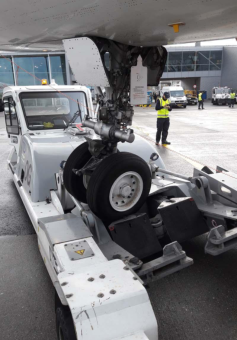
(fig.1) Picture of the event (Source: Operator)
Event Analysis
Section titled “Event Analysis”Parking Brake Handle vs. Engine Mode Selector
Section titled “Parking Brake Handle vs. Engine Mode Selector”During the engine start sequence, the PF inadvertently set the PARKING BRK handle to ON instead of setting the ENG MODE selector to IGN/START. Both controls are located on the pedestal. The PARKING BRK handle needs to be pulled, turned in the clockwise direction to ON, and released. The ENG MODE selector also needs to be turned in the clockwise direction to IGN/START. Both controls are used in the pushback and start sequence by either: (fig.2) :
-
Setting the PARKING BRK handle to OFF before pushback, and setting it back to ON when pushback is complete, and then setting the ENG MODE selector to IGN/START to start the engine, or
-
- Setting the PARKING BRK handle to OFF before pushback, then setting the ENG MODE selector to IGN/START to start the engine during pushback, and setting the PARKING BRK handle back to ON when pushback is complete.
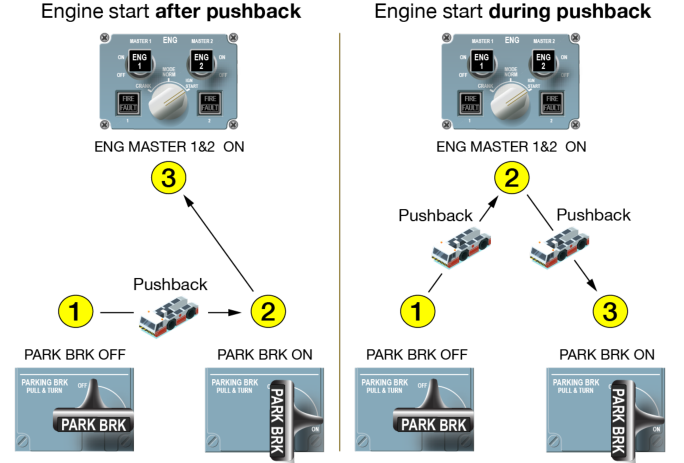
(fig.2) The pushback/engine start sequence may vary depending on the situation
Many pilots position their hand on the PARKING BRK handle without making any visual check before moving it as they know very well the specific shape of the PARKING BRK handle on the pedestal and the specific action of pulling and turning to move it.
CAUSES OF COCKPIT CONTROL CONFUSION
Section titled “CAUSES OF COCKPIT CONTROL CONFUSION”Situations and Context
Section titled “Situations and Context”The cockpit control confusion situation described in this article occurred in normal operational conditions. Situations that cause high workload, additional stress, and cognitive overload for flight crews can lead to human errors. This is, however, not necessarily the case for cockpit control confusion incidents. In these cases, it is not due to a lack of knowledge and skills of the flight crews. In fact, even the most experienced pilots on current type can experience cockpit control confusion and so there are other contributing factors.
Humans create routines
Section titled “Humans create routines”Humans evolved by optimizing capabilities, and when a skill is acquired and frequently used in the same environment, the human brain creates routines. This human ability for pattern seeking and automatically performing actions allows us to preserve our brain’s cognitive resources, making it possible to focus on something else when performing routine actions. For example, flight crews can often perform instantaneous monitoring of the aircraft in normal flight conditions whilst communicating with air traffic control.
Skill-Based Errors
Section titled “Skill-Based Errors”Behaviors based on routines, or so-called “skill-based behaviors”, are when humans perform automatic actions with low conscious control on how they are performing them. According to aviation human factors expert, James Reason*, there are two types of skill-based errors:
-
Lapses: when an action is missed
-
Slips: when an action is performed incorrectly
*Reason, James. Human error. Cambridge university press, 1990.
Inadvertently using a cockpit control instead of another in normal situations is a “slip”. Although performed incorrectly, the intention of the action was correct. The momentary absence of attentional control and active thinking when performing the action caused the error and it is not related to a lack of skills or knowledge.
Cockpit control confusion incidents are skill-based errors or, “slips”, where the intention is correct, but there is a failure of execution. These incidents happen when a pilot is acting without conscious control over their actions.
Contributing Factors
Section titled “Contributing Factors”Routines
Section titled “Routines”Cockpit control confusion situations are often encountered on the most frequently used controls , because routines are more developed on those controls. This is why cockpit control confusion is more often observed with experienced pilots performing well-known procedures.
Human Factors
Section titled “Human Factors”Other contributing factors for slips are fatigue , overconfidence , and momentary distractions such as pilot preoccupation or an unexpected interruption when performing a well-known sequence of actions or a flow pattern. Anticipation of the action is also a contributing factor. For example, when a pilot habitually rests their hand on the control before activating it, this indicates that the pilot’s mind is already committed to performing the next action with that control even if a different control action is called for. This can result in the inadvertent use of that cockpit control.
Shape & Position of the Controls
Section titled “Shape & Position of the Controls”There are reported cases of confusion between the expedite (EXPED) pushbutton and the approach (APPR) pushbutton (fig.3). The EXPED and APPR pushbuttons are located next to each other on the FCU panel, and they have a similar shape and action to select.
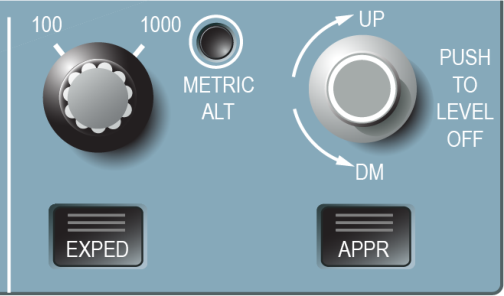
(fig.3) EXPED and APPR pushbutton on the FCU of an A320 aircraft
Similarly on the A220 aircraft, there are reported cases of control confusion between the autopilot (AP) pushbutton-switch and the autothrottle (AT) pushbutton-switch. For more information about this example, refer to the Safety first “ ” article on Inadvertent Autopilot Engagement During Takeof on A220 aircraft.
In the case of cockpit control confusion, a pilot performs a skill without conscious control over their action, therefore, even controls with different shapes and locations in the cockpit can still be confused. For example, there are reported cases of control confusion between the landing gear lever (located on the main instrument panel) and the flaps lever (located on the pedestal).
Proximity Factors
Section titled “Proximity Factors”When a control is positioned closer for the pilot to reach, then it is more likely to be subject to cockpit control confusion. For example, when PFs are in the left seat they are more likely to experience a skill-based error or slip, related to the EXPED pushbutton, because it is located on the left side of the FCU panel. When Pilots Monitoring (PMs) are in the right seat they are more likely to experience cockpit
control confusion related to the flaps lever because it is located on the right of the pedestal.
Challenges
Section titled “Challenges”The lack of attentional control and active thinking when performing the action that caused the error is not due to the lack of skills or knowledge, and therefore, cockpit control confusion or slips, cannot be mitigated by conventional training.
Changing the design of a cockpit control that is very familiar to many thousands of pilots can be counterintuitive, and it is not possible to cover all cockpit control confusion cases.
The Importance of Reporting
Section titled “The Importance of Reporting”The aircraft systems are very resilient to inadvertent use of cockpit controls, pilots will react quickly to correct their error, and there is often no operational consequence. It may not seem necessary for the flight crew to report the cockpit control confusion incident, but it is important to better understand the contributing factors and identify the possible mitigations. That is why it is so important for airlines to foster a speak-up culture and just and fair policy, that encourages pilots to report such events.
Given the challenges faced to reduce the number of cockpit control confusion incidents, it is important for flight crews to report such events. The more cases that are reported, the more accurate the analysis and identification of trends will be, allowing for the most effective mitigations.
PREVENTIVE ACTIONS
Section titled “PREVENTIVE ACTIONS”Reporting cockpit control confusion events, analyzing trends, developing best practices, and raising awareness among pilots is the most effective means of prevention. Some operators have reinforced this by creating additional callouts for their flight crews when carrying out routine tasks in the cockpit.
Recognized best practices are described in the Flight Crew Techniques Manual (FCTM) of all Airbus aircraft (A300-600, A310, A320 Family, A330/A340 Family, A380, A350, A220) in the “Cockpit Philosophy” chapter.
The main recommendations for flight crews are:
-
Do not rest your hands on controls.
-
Do not anticipate actions by putting your hands on the controls before you need to.
-
Perform a visual check on the control before using it. Even if you are focused on the PFD you should look at the controls before using them.
-
Check the result of the action, which is essential.
-
Break the automated loop and raise the level of active thinking and attention. Use the standard callouts and use additional callouts, if necessary.
Examples of additional callouts from an Operator:
Section titled “Examples of additional callouts from an Operator:”-
During the Engine Start procedure, the PF points to the ENG MODE selector and calls “ENG MODE SELECTOR” before using it.
-
Before using the flaps, the PM puts their hand on the lever and calls out “Flaps” before moving the lever and calling out the flap position.
-
Before using the landing gear, the PM puts their hand on the lever and calls out “Gear” before moving the lever and calling out “Up” or “Down”.
These additional callouts reduced the number of inadvertent uses of the parking brake handle instead of the ENG MODE selector, and the inadvertent flaps selection or landing gear selection, by increasing the attentional focus of the flight crew. However, the risk remains that such “attention-getters” can also become routine.
During training sessions, instructors should be vigilant to identify cockpit control confusion and debrief the flight crew to raise their awareness of this behavior. This is more likely to occur during recurrent training and is less often seen during initial training sessions.
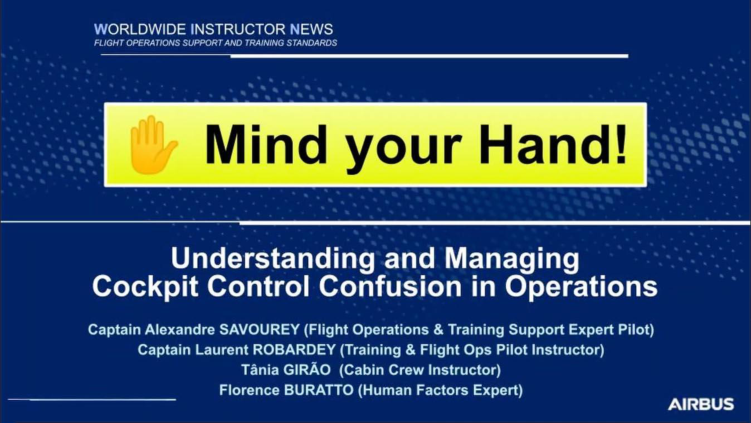
For more information on cockpit control confusion, the video “Understanding and Managing Cockpit Control Confusion in Operations” is available on the Airbus Worldwide Instructor News (WIN) website.
Thank you to both easyJet and KLM for their contribution to this article. With effective speak-up cultures and just and fair policies, flight crews were empowered to report several incidents that were studied to better understand the circumstances that contributed to cockpit control confusion. This allowed for more precise and targeted recommendations to reduce the risk of cockpit control confusion for all flight crews.
Contributors:
Section titled “Contributors:”Florence BURATTO
Section titled “Florence BURATTO”Human Factors Expert for Flight Operations
Customer Support
Ian GOODWIN
Section titled “Ian GOODWIN”Safety Enhancement Manager
Product Safety
Michel RICHARME
Section titled “Michel RICHARME”The human mind creates routines for acquired skills in an effort to save cognitive resources for other tasks. When pilots are performing routine tasks in the cockpit, they may occasionally lose attentional control over the actions they are performing. This can lead to a cockpit control confusion scenario.
Fatigue, overconfidence, distraction, and anticipation are some of the contributing factors to cockpit control confusion. A lack of attentional control and active thinking when performing the action causes the error, and not a lack of skills or knowledge. Cockpit control confusion can happen on any aircraft type and to any pilot, regardless of their experience. It can be the case that more experienced pilots are even more likely to have cockpit control confusion due to the longer time they have spent performing repetitive and routine tasks.
Synthetic Flight Instructor
Customer Support
Laurent SPAGGIARI
Section titled “Laurent SPAGGIARI”Human Factors Expert for Safety Enhancements
Design Office
Martin NIJHOF (KLM Royal Dutch Airlines)
Section titled “Martin NIJHOF (KLM Royal Dutch Airlines)”Senior Flight Safety Investigator/Senior Risk Analyst
Capt. Jeroen WOOLDERINK (easyJet)
Section titled “Capt. Jeroen WOOLDERINK (easyJet)”Flight Operations Safety Captain
The most effective mitigation means are to always check the control before acting on it and to always check the result of the action. Reporting cockpit control confusion events, analyzing trends, raising awareness, and sharing best practices are other mitigation means to also take into account. Recommendations for pilots to prevent cockpit control confusion are available in the FCTM for all Airbus aircraft (A300-600, A310, A320 Family, A330/A340 Family, A380, A350, and A220). The key point for pilots is to consciously maintain their focus on each action they perform. Operators who have also developed additional callouts for their flight crews observed a reduction in the number of reported cockpit control confusion events.
The aircraft systems are resilient to many of the effects from cockpit control confusion. Their protections offer an effective safety barrier to prevent more serious situations from occurring. It is a timely reminder to apply the golden rules for pilots and always “take action if things do not go as expected.”
Safety first, 2023. Safety first is published by Airbus S.A.S. 1, rond point Maurice Bellonte - 31707 Blagnac Cedex/France.
Editor: Yannick Malinge, Chief Product Safety Officer.
Editorial team: Guillaume Estragnat, Vanessa Sadi, Gwyneth Duggan, Javier Martinez Marina, Tim Roach.
Photos by Airbus.
Source: Airbus Safety First URL: https://safetyfirst.airbus.com/cockpit-control-confusion/ Published: 2023-10-16 Category: Flight Ops, training PDF: Original PDF
意外使用错误的驾驶舱控制而非预期控制是飞行员在任何机型上都可能遇到的一种潜在情况。这种错误即使在最资深飞行员身上也可能发生,本文探讨了哪些因素会影响并导致此类事件的发生。
飞机系统的韧性能够应对此类错误,提供了有效的安全屏障以防止严重事件的发生。本文的另一目的是提高对驾驶舱控制混淆事件的潜在原因和影响的认识,并提供最佳实践信息,以帮助飞行员降低可能导致运营和安全后果的风险。
请在 safetyfirst.airbus.com 网站以及 iOS 和 Android 版 Safety first 应用上查看本文的最新版本。
作为主飞(PF)的副驾驶通知操作无牵引杆推车的地面工作人员,A319 已获准推后和启动发动机。地面工作人员通知解除刹车,副驾驶将停机刹车手柄设置为 OFF。飞行机组完成了“开车前”检查单,飞机开始移动片刻后,副驾驶喊话“启动一号发动机”。机长确认了副驾驶的喊话。随后副驾驶意外地将停机刹车手柄设置为 ON,导致飞机骤然停止。突然停止使得前起落架从无牵引杆推车的牵引夹中跳出,架在车辆平台上,前轮偏转超过 90 度**(图1)**。事件发生时正在执行安全演示的两名客舱乘务员受轻伤。乘客和机组人员通过放置在后客舱门的舷梯下机,未造成其他伤害。
(图1) 事件现场照片(来源:运营商)
停机刹车手柄与发动机模式选择器
Section titled “停机刹车手柄与发动机模式选择器”在发动机启动程序中,PF 意外地将停机刹车手柄设置为 ON,而不是将 ENG MODE 选择器设置为 IGN/START。两个控制装置都位于中央控制台上。停机刹车手柄需要拉出,顺时针旋转至 ON,然后松手。ENG MODE 选择器同样需要顺时针旋转至 IGN/START。在推后和启动程序中,两个控制装置的使用顺序如下:(图2):
-
在推后前将停机刹车手柄设置为 OFF,推后完成后将其设置回 ON,然后将 ENG MODE 选择器设置为 IGN/START 以启动发动机,或
-
- 在推后前将停机刹车手柄设置为 OFF,然后在推后过程中将 ENG MODE 选择器设置为 IGN/START 以启动发动机,推后完成后再将停机刹车手柄设置回 ON。
(图2) 推后/发动机启动程序可能因情况而异
许多飞行员在移动停机刹车手柄前不做任何视觉检查,因为他们非常熟悉控制台上停机刹车手柄的特殊形状以及拉动和旋转的具体操作方式。
驾驶舱控制混淆的原因
Section titled “驾驶舱控制混淆的原因”本文所述的驾驶舱控制混淆发生在正常运营条件下。导致飞行机组工作负荷增大、压力增加和认知过载的情况可能导致人为错误。然而,驾驶舱控制混淆事件的情况并非必然如此。在这些情况下,并非由于飞行机组的知识和技能不足。事实上,即使是当前机型上最资深的飞行员也可能发生驾驶舱控制混淆,因此还存在其他促成因素。
人类创建习惯
Section titled “人类创建习惯”人类通过优化能力而进化,当一项技能在相同环境中习得并频繁使用时,人脑会创建习惯。这种寻找模式并自动执行动作的人类能力使我们能够保存大脑的认知资源,使我们在执行习惯性动作时能够专注于其他事情。例如,飞行机组在正常飞行条件下往往能够即时监控飞机,同时与空中交通管制进行通信。
基于习惯的行为,或所谓的“技能型行为”,是指人类以低意识控制的方式执行自动动作。根据航空人体工效学专家 James Reason* 的观点,技能型错误有两类:
-
遗漏:动作用被漏做
-
失误:动作执行不正确
*Reason, James. Human error. Cambridge university press, 1990.
在意图正确的情况下,在正常情境中意外使用错误的驾驶舱控制是一种“失误”。虽然执行不正确,但动作的意图是正确的。执行动作时注意力控制和主动思维的短暂缺失导致了错误,这与技能或知识的缺乏无关。
驾驶舱控制混淆事件是技能型错误或“失误”,其意图正确,但执行失败。这些事件发生在飞行员对自己的动作缺乏有意识控制的情况下。
日常操作程序
Section titled “日常操作程序”驾驶舱控制混淆情况经常发生在使用最频繁的控制装置上,因为对这些控制的操作程序更加熟练。这就是为什么驾驶舱控制混淆更常见于执行熟悉程序的资深飞行员身上。
其他导致误选的促成因素包括疲劳、过度自信,以及短暂分心,例如飞行员注意力集中在其他事项上,或在执行熟悉的动作序列或流程时突然被打断。预判动作也是促成因素之一。例如,当飞行员习惯性地将手放在某个控制装置上再激活它时,这表明飞行员的思维已经确定要对该控制装置执行下一个动作,即使要求的可能是不同的控制动作。这可能导致该驾驶舱控制装置的误用。
控制装置的形状与位置
Section titled “控制装置的形状与位置”有报告案例显示,加速(EXPED)按钮和进近(APPR)按钮之间存在混淆 (图3)。EXPED 和 APPR 按钮位于 FCU 面板上彼此相邻的位置,且形状相似,选择操作方式也相同。
(图3) A320 飞机 FCU 上的 EXPED 和 APPR 按钮
同样在 A220 飞机上,也有报告案例显示自动驾驶(AP)按压开关与自动油门(AT)按压开关之间存在控制混淆。关于此案例的更多信息,请参阅 Safety First 文章《A220 飞机起飞期间自动驾驶意外接通》。
在驾驶舱控制混淆的情况下,飞行员是在没有对自身动作进行意识控制的情况下执行某一技能的,因此,即使形状和位置不同的控制装置也可能被混淆。例如,有报告案例显示起落架手柄(位于主仪表板)和襟翼手柄(位于中央操纵台)之间存在控制混淆。
当某个控制装置的布置位置更便于飞行员触及,它就更可能受到驾驶舱控制混淆的影响。例如,当 PF 坐在左侧座位时,他们更可能在 EXPED 按钮相关操作上出现技能型错误或误选,因为该按钮位于 FCU 面板的左侧。当监控飞行员(PM)坐在右侧座位时,他们更可能发生与襟翼手柄相关的驾驶舱控制混淆,因为襟翼手柄位于中央操纵台的右侧。
导致错误的动作缺乏注意力控制和主动思考,并非由于技能或知识不足,因此,驾驶舱控制混淆或误选无法通过传统培训来减轻。
改变一个被成千上万飞行员所熟悉使用的驾驶舱控制装置的设计可能违背直觉,而且也不可能覆盖所有驾驶舱控制混淆的情况。
报告的重要性
Section titled “报告的重要性”航空器系统对驾驶舱控制装置的误用具有很强的容错能力,飞行员会迅速反应纠正错误,因此通常不会产生运营后果。机组可能认为没有必要报告驾驶舱控制混淆事件,但更好地理解其促成因素并确定可能的缓解措施至关重要。这就是为什么航空公司建立畅所欲言的文化氛围和公正政策至关重要,这可以鼓励飞行员报告此类事件。
鉴于减少驾驶舱控制混淆事件所面临的挑战,机组报告此类事件非常重要。报告的案例越多,分析就越准确,趋势识别就越清晰,从而能够制定最有效的缓解措施。
报告驾驶舱控制混淆事件、分析趋势、制定最佳实践并提高飞行员的警惕意识,是最有效的预防手段。部分运营人通过为飞行机组在执行驾驶舱日常任务时制定额外喊话来强化这一点。
公认的的最佳实践均收录于所有空客机型(A300-600、A310、A320系列、A330/A340系列、A380、A350、A220)的《飞行机组技术手册》(FCTM)“驾驶舱理念”章节中。
对飞行机组的主要建议如下:
- 不要将手放在操纵装置上休息。
- 不要通过提前将手放在操纵装置上来预判动作。
- 使用操纵装置前进行目视检查。即使专注于主飞航显示器(PFD),也应在使用前查看操纵装置。
- 检查动作结果,这一点至关重要。
- 打破自动化循环,提高主动思考和注意力水平。使用标准喊话,必要时使用额外喊话。
某运营人的额外喊话示例:
Section titled “某运营人的额外喊话示例:”- 在发动机启动程序中,PF指向ENG MODE选择器并喊出”ENG MODE SELECTOR”,然后再使用。
- 在使用襟翼前,PM将手放在手柄上,喊出”Flaps”,移动手柄后再喊出襟翼位置。
- 在使用起落架前,PM将手放在手柄上,喊出”Gear”,移动手柄后再喊出”Up”或”Down”。
这些额外喊话通过提高飞行机组的注意力集中程度,减少了误将驻车刹车手柄当作ENG MODE选择器、误选襟翼或误选起落架的情况。然而,这种”注意力提醒”也存在变为例行程序的风险。
在训练期间,教员应保持警惕,识别驾驶舱控制混淆,并对飞行机组进行讲评以提高其对该行为的认识。此类情况更可能在复训中出现,在初始培训阶段则较少发生。
如需了解更多关于驾驶舱控制混淆的信息,可在空客全球教员新闻(WIN)网站上观看视频”Understanding and Managing Cockpit Control Confusion in Operations”。
感谢easyJet和KLM对本文的贡献。通过有效的 speak-up 文化和公正公平的政策,飞行机组被鼓励报告了多起事件,经过研究以更好地了解导致驾驶舱控制混淆的环境因素。这使得能够提出更精确、更有针对性的建议,以降低所有飞行机组驾驶舱控制混淆的风险。
Florence BURATTO
Section titled “Florence BURATTO”飞行运营人为因素专家
客户支持
Ian GOODWIN
Section titled “Ian GOODWIN”安全增强经理
产品安全
Michel RICHARME
Section titled “Michel RICHARME”合成飞行教官
客户支持
Laurent SPAGGIARI
Section titled “Laurent SPAGGIARI”安全增强人为因素专家
设计办公室
Martin NIJHOF(荷兰皇家航空公司)
Section titled “Martin NIJHOF(荷兰皇家航空公司)”高级飞行安全调查员/高级风险分析师
Capt. Jeroen WOOLDERINK(easyJet)
Section titled “Capt. Jeroen WOOLDERINK(easyJet)”飞行运营安全机长
人脑会为习得的技能创建自动化程序,以节省认知资源用于其他任务。当飞行员在驾驶舱执行日常任务时,可能会偶尔失去对所执行动作的注意力控制。这可能导致驾驶舱控制混淆场景。
疲劳、过度自信、分心和预判是导致驾驶舱控制混淆的部分因素。导致错误的原因是执行动作时缺乏注意力控制和主动思考,而非技能或知识的缺乏。驾驶舱控制混淆可能发生在任何机型和任何飞行员身上,无论其经验如何。经验更丰富的飞行员反而可能更容易出现驾驶舱控制混淆,因为他们花费更长时间执行重复性和日常性任务。
最有效的缓解手段是:在操作前始终检查操纵装置,在操作后始终检查结果。报告驾驶舱控制混淆事件、分析趋势、提高认识和分享最佳实践是也需要考虑的其他缓解手段。供飞行员参考的预防驾驶舱控制混淆建议已收录于所有空客机型(A300-600、A310、A320系列、A330/A340系列、A380、A350和A220)的FCTM中。飞行员的关键要点是有意识地保持对所执行每个动作的专注。已为飞行机组制定额外喊话的运营人观察到报告的驾驶舱控制混淆事件数量有所减少。
飞机系统对驾驶舱控制混淆的许多影响具有抵御能力。系统的保护措施提供了有效的安全屏障,防止更严重情况的发生。这是一个及时的提醒:应遵守飞行员的黄金法则,始终*“在事情不符合预期时采取行动”*。
Safety first,2023。Safety first由空中客车股份有限公司出版。地址:1, rond point Maurice Bellonte - 31707 Blagnac Cedex/法国。
编辑:Yannick Malinge,首席产品安全官。
编辑团队:Guillaume Estragnat、Vanessa Sadi、Gwyneth Duggan、Javier Martinez Marina、Tim Roach。
照片由空客提供。