Fuel Microbiological Contamination Treatment
Source: Airbus Safety First URL: https://safetyfirst.airbus.com/fuel-microbiological-contamination-treatment/ Published: 2022-07-12 Category: Maintenance, fuel PDF: Original PDF

An aircraft fuel tank provides the perfect conditions for microbiological contamination to develop, especially when operating in hot and humid environments. Problems caused by microbiological contamination of fuel can range from inaccurate or erroneous fuel quantity readings to structural corrosion and engine fuel supply difficulties caused by clogged fuel filters.
As a result, if treatment is not correctly applied, contamination can also cause microbiological significant safety issues. This article describes why prevention is important and focuses on why it is essential to follow the maintenance procedures when treatment is required.
This article is also available on safetyfrst.airbus.com and on the Safety first app for iOS and Android devices.
WHAT IS MICROBIOLOGICAL CONTAMINATION?
Section titled “WHAT IS MICROBIOLOGICAL CONTAMINATION?”Microbiological contamination refers to the presence of microorganisms such as bacteria, yeast, or fungi. It can be seen as deposits, which vary in color from translucent to dark, with a viscosity that ranges from oily gel to solid.
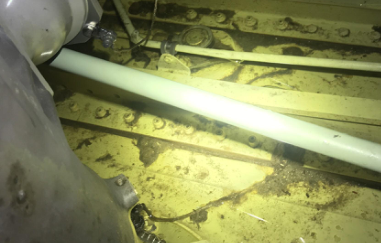
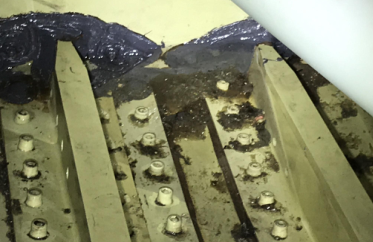
Microorganisms need a food source, water, and warm temperatures to grow. A fuel tank provides the perfect conditions for microorganisms to develop, because they feed on the fuel hydrocarbons, and water is always present in a fuel tank. This water comes from two main sources: dissolved water in uplifted fuel and condensation due to vent air, which enters the fuel tank during normal operations, especially during descent from dry, cold air in cruise to warmer wetter air at lower altitudes. This is the reason why the risk of contamination from microorganisms increases in locations with hot and humid weather conditions.
Effects of fuel microbiological contamination
Section titled “Effects of fuel microbiological contamination”(fig.1 ) Examples of fuel tank contamination
Microorganisms need a food source, water, and warm temperatures to grow.
Erroneous fuel quantity measurement
Section titled “Erroneous fuel quantity measurement”Fuel microbiological contamination can affect the measurement of fuel quantity on board the aircraft. This can result in the flight crew observing false fuel quantity indications, which are often overreads. In extreme cases, these can lead to the total loss of fuel quantity indication for one or several fuel tanks.
Fuel filter clogging, pump failure, and engine malfunction
Section titled “Fuel filter clogging, pump failure, and engine malfunction”Deposits from contamination can clog fuel pumps and engine fuel filters, leading to fuel pump failures and degradation in the engine fuel supply.
Corrosion
Section titled “Corrosion”Microorganisms can sometimes emit acid that causes corrosion, affects coatings, and deteriorates sealants in the fuel tank, which can eventually lead to fuel leaks.
Prevention is essential
Section titled “Prevention is essential”As stated above, microbiological contamination can cause significant operational disruptions, which can affect the safety and efficiency of operations. An effective maintenance strategy needs to be developed to prevent contamination. Regular drainage of water from fuel tanks is necessary, even if the fuel system on Airbus aircraft is designed to manage and reduce the quantity of water in the fuel tanks. Regular tests to check for the presence of microorganisms are also crucial. If contamination is detected, curative treatment must be used.
microbiological contamination can cause significant operational disruptions, which can affect the safety and efficiency of operations
Operators are responsible for ensuring that the correct quality of fuel is uplifted into the aircraft and managing this with their fuel suppliers. Poor quality fuel is one of the main causes of severe contamination inside a fuel tank. This can be due to fuel supply difficulties, or poor condition of the refueling infrastructure of an airport. Sharing knowledge at industry level, for example through the IATA Global Fuel Portal (IGPF), can provide Operators with early warning of any potential fuel supply and contamination issues. Operators can take additional steps, if necessary, to ensure that their contamination and prevention measures are adhered to.
Further information can be found in the “Fuel Contamination - Prevention and Maintenance Actions” article of the Airbus FAST magazine issue 38 and in the “Fuel Systems - Water Management” article of the Airbus FAST magazine issue 42. The “Microbiological Contamination in Fuel Tanks” In-Service Information (ISI) article 28.11.00002 is also available on the AirbusWorld portal.
CASE STUDY
Section titled “CASE STUDY”Event Description
Section titled “Event Description”Before the event flight
Section titled “Before the event flight”A moderate level of fuel microbiological contamination was detected during scheduled maintenance checks of an Airbus A321 aircraft. As recommended in the Aircraft Maintenance Manual (AMM), a biocide curative treatment was performed using Kathon® FP 1.5 biocide.
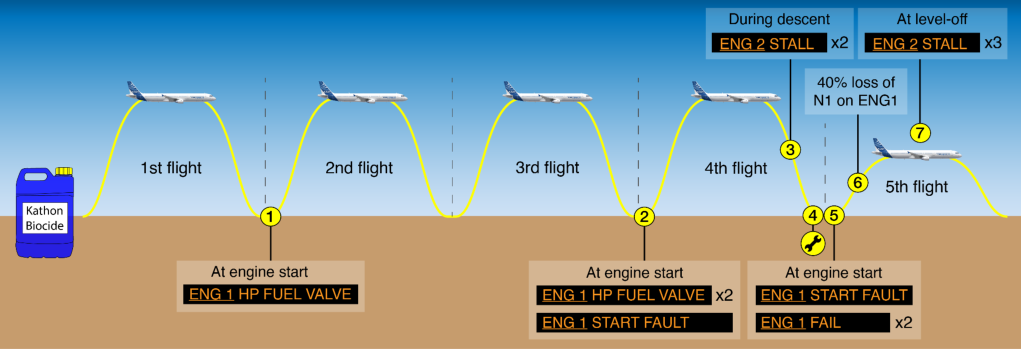
Following the biocide treatment, there were four flights before the event occurred on the fifth flight (fig.1). The first flight was uneventful. ① On the second flight, the ENG 1 HP FUEL VALVE ECAM alert triggered, but ENG 1 start was successful on the second attempt. The third flight was uneventful. ② On the fourth flight, it took four attempts to successfully start ENG 1 with the reappearance of the ENG 1 HP FUEL VALVE ECAM alert and the ENG 1 START FAULT alert. This led to an automatic restart. ③ The ENG 2 STALL ECAM alert triggered twice during the descent and the flight crew felt airframe vibrations. They reduced N1 below 50 % and safely landed the aircraft.
④ Line maintenance performed the troubleshooting actions related to the ENG 2 STALL ECAM alert, but they could not confirm the fault. They released the aircraft back into service.
The event on the fifth flight
Section titled “The event on the fifth flight”⑤ During ENG 1 start, the ENG 1 START FAULT ECAM alert triggered. The second start attempt generated the ENG 1 FAIL ECAM alert. This ENG 1 FAIL alert briefly appeared on the third attempt, but quickly disappeared and the ENG 1 start was finally successful. All engine parameters were normal during the taxi. At the runway holding point, the flight crew accelerated the engines twice for more than 10 seconds. All engine parameters were normal and the flight crew decided to take off.
⑥ ENG 1 began to surge at 500 ft RA and the engine parameters were fluctuating. N1 decreased below 40 % for 25 seconds. The Captain made a MAYDAY call and asked for an immediate return to the runway. He switched off the AP and noticed that the engine parameters of ENG 2 were also beginning to fluctuate. ⑦ During the level-off at 3 600 ft, the ENG 2 STALL ECAM alert triggered three times. The Captain reduced the thrust on both engines and was prepared to glide the aircraft, if necessary. The aircraft eventually landed safely. It was observed that the engine parameters had returned to normal when the aircraft came to a complete stop. The flight crew reported that they shut down both engines on the taxiway when they heard unusual noises from the engines.
(fig.2) Flight chronology: from the biocide treatment until the event flight
Event Analysis
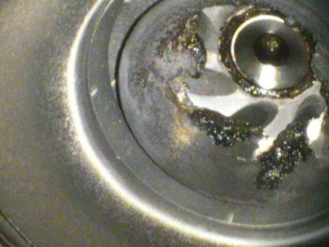
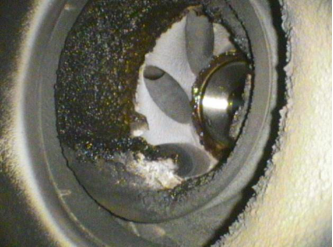
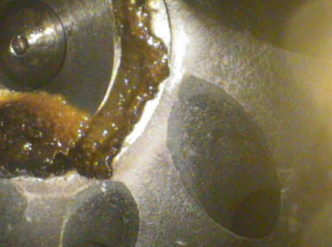
Section titled “Event Analysis”(fig.3) Brown deposits found in Engine 2 during borescope inspection
The fuel from the aircraft showed contamination and an amount of undissolved Kathon® FP 1.5 biocide. An inspection of the engine found the presence of viscous, gelatinous deposits on the engine parts.
Biocide overdose
Section titled “Biocide overdose”The maintenance crew who performed the biocide curative treatment, was not familiar with the use of the “parts per million” (ppm) unit, which was used in the associated AMM task. They incorrectly used an online conversion tool and this led to a concentration of Kathon® FP 1.5 biocide that was more than 37 times the correct dosage.
Biocide not correctly mixed with the fuel
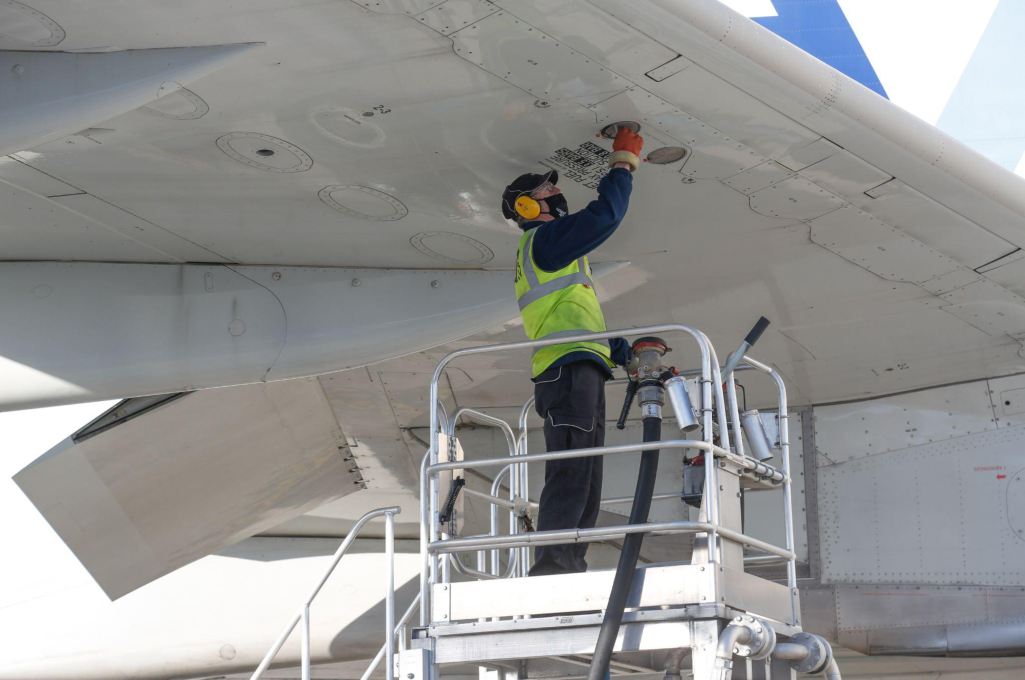
Section titled “Biocide not correctly mixed with the fuel”The maintenance engineer used the overwing refuel aperture to deliver the biocide into the aircraft fuel tanks, which prevented the biocide from correctly mixing with the fuel. It remained at the bottom of the tank and migrated along the wing towards the fuel pump.
The AMM task provided two options to introduce the biocide into the aircraft fuel tank. One method was to premix the fuel and biocide and then uplift the mixture into the fuel tank using the normal refueling procedure, but not using the overwing refuel aperture. The other method was to use an adjustable metered injection rig to inject the biocide and correctly mix the fuel during a normal refueling procedure.
Wrong troubleshooting procedure
Section titled “Wrong troubleshooting procedure”Before the event flight, the maintenance crew used the TroubleShooting Manual (TSM) to perform the troubleshooting actions associated with the ENG 2 STALL ECAM alert. However, they referred to tasks that were applicable to CFM LEAP-1A32 engines, but the A321 aircraft from the event was equipped with CFM56 engines. Therefore, the troubleshooting actions did not correctly guide the maintenance crew to identify the cause of the ECAM alert and the aircraft was released for flight. If the crew had applied the CFM56 troubleshooting actions, it is likely that they would have identified the fuel contamination issue.
TREATMENT OF FUEL MICROBIOLOGICAL CONTAMINATION
Section titled “TREATMENT OF FUEL MICROBIOLOGICAL CONTAMINATION”When fuel microbiological contamination is confirmed, curative treatment based on fuel additives with antimicrobial properties, or biocides, is used to arrest and remove the contamination. If biocide treatment is not available, the fuel tanks must be thoroughly cleaned, which is a long process and not always 100 % effective. That is why the use of biocide is the preferred method to treat microbiological contamination.
The right biocide
Section titled “The right biocide”There were two widely-used biocides approved for use in the aviation industry: Kathon® FP 1.5 and Biobor® JF. Further to in-service experience with Kathon® FP 1.5, including the above event and another case of dual loss of thrust control, GE took the proactive decision to remove the approval for Kathon® FP 1.5 as an approved additive for use in their engines, including CFM and Engine Alliance (EA). At the same time, the manufacturer of Kathon® FP 1.5 stopped producing its biocide for aviation applications to avoid any further risk of misuse.
In addition, currently the use of Biobor® JF is not approved in the European Union (EU) except under specific derogations that airlines and their local authorities discuss on a case-by-case basis.
Biocide overdose can cause unstable engine operations regardless of what type of biocide is used (Kathon® FP 1.5 or Biobor® JF).
Only Biobor® JF biocide can be used on Airbus aircraft equipped with GE, CFM, or EA engines. For other engines, such as Rolls-Royce (RR) and Pratt & Whitney (PW), Biobor® JF and any existing stock of Kathon® FP 1.5 can be used. When maintenance is performed in EU countries, Biobor® JF can be used if derogations are obtained.
| A220 | A300/A310 | A300/A310 | A320 | A320 | A320 | A330 | A330 | A330 | A340 | A340 | A350 | A380 | A380 | ||
|---|---|---|---|---|---|---|---|---|---|---|---|---|---|---|---|
| PW | GE | PW | CFM | IAE | PW | GE | RR | PW | CFM | RR | RR | EA | RR |
- Maintenance can be performed in EU countries if derogations are negotiated.
** Production of Kathon® FP 1.5 for use in aviation ceased in 2020. Only existing stocks of Kathon® FP 1.5 can be used.
Engine manufacturer recommendations should always be checked before the use of a biocide.
Production of Kathon® FP 1.5 for aviation applications was stopped in 2020. Kathon® FP 1.5 has a shelf life of only 2 years and this means that any existing stock should be used this year (2022). Only Biobor® JF biocide will remain available for fuel contamination treatment. New biocides are under study, but are not expected to be available for several years due to the high cost and complexity of the approval process.
The right dosage
Section titled “The right dosage”Unit standardization
Section titled “Unit standardization”The dosage of biocide required was previously provided in ppm by weight for Biobor® JF and by ppm by volume for Kathon® FP 1.5 . There is now industry-wide agreement to use mL/L unit for both Biobor® JF and Kathon® FP 1.5 biocides. Airbus maintenance procedures for all Airbus aircraft, the AMM for A300/A310/A320/A330/A340/A380, MP for A350 aircraft and AMP for A220 aircraft, were updated accordingly by removing the use of the ppm unit.
There is now industry-wide agreement to use mL/L unit for both Biobor® JF and Kathon® FP 1.5 biocides.
Table of maximum biocide quantities
Section titled “Table of maximum biocide quantities”To prevent any future case of biocide overdose, Airbus maintenance procedures for biocide treatment now include a table, which provides the maximum quantity of biocide that can be uplifted in the aircraft for different fuel quantities. Maintenance crews should use this table as a guide to check if their computed quantity of biocide is correct before uplifting it into the aircraft.
The right mix
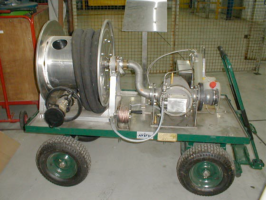
Section titled “The right mix”As another lesson learned from the previous case study, a metered injection rig must be used to correctly mix the biocide with the fuel and uplift it into the aircraft fuel tanks. All Airbus AMM/MP/AMP procedures were updated to reflect this change and there is no alternative method if a metered injection rig is not available.
The biocide must never be directly added to fuel using the overwing refuel port and relying on the fuel pumps and transfers to mix the biocide with fuel. Only a metered injection rig must be used to uplift biocide.
(fig.4) Metered injection rig
The right procedure
Section titled “The right procedure”Lessons learned from previous events involving incorrect use or overdose of biocide helped to define new curative treatment procedures that reduce the risk of incorrect mixing or overdose errors. The main steps of the procedure for efficient curative biocide treatment are:
Drain water from the fuel tank If water remains in the tank it may cause crystallization inside the fuel tank following biocide treatment. Defuel the aircraft Contaminated fuel must be removed from the aircraft. Clean the inside of the fuel tank Only in the case of heavy contamination, thorough cleaning of the fuel tank must be performed to remove all deposits. Compute the quantity of biocide needed There is a table in the AMM/MP/AMP procedure that provides maximum biocide quantities depending on fuel quantities that should be used to avoid any risk of overdose. Uplift the mix fuel/biocide inside the fuel tank using a metered injection rig The only allowable method to uplift the biocide inside the fuel tank is by using a metered injection rig. The fuel tank should be full, because this will ensure that the contamination is treated in all areas, including on the upper surface of the tank. Final crosscheck computation Perform a new computation to crosscheck and confirm that the uplifted biocide quantity is correct and minimize any risk of biocide overdose. It is recommended to keep as internal records the fuel quantity and biocide quantity uplifted in the aircraft during each biocide treatment. Wait for 72 hours (Biobor® JF) or 24 hours (Kathon® FP 1.5) Soak time is necessary before any engine operations. Replace fuel filters Fuel filters and engine filters that were in contact with the contaminated fuel must be replaced. Burn fuel or defuel within 48 hours The biocide is a corrosive product for the tank and must be removed after treatment, either by being burnt during normal engine operations or by defueling. For large aircraft, such as the A380, completely filling the fuel tanks may cause the authorized Maximum TakeOff Weight (MTOW) to be exceeded, depending on the payload. Partial defuel in this case is necessary.
Preventive Fuel Contamination Treatment: Specific Case of Parking and Storage
Section titled “Preventive Fuel Contamination Treatment: Specific Case of Parking and Storage”In the case of aircraft parking and storage, fuel tanks must be checked for microbiological contamination every 30 days and before the return to operation. Depending on the level of contamination detected, either preventive treatment or curative treatment must be performed. The quantity of biocide to be used differs for the two types of treatment and the filling of the fuel tank. (Note: completely filling the fuel tank is not required for preventive treatment). The AMM/MP/AMP procedures for preventive and curative treatments must be carefully applied.
Contributors:
Hélène CARROLS Incident/Accident Investigator Product Safety
Roy DEAN Fuel & Additive Specialist Fuel Design Office
Ian GOODWIN Director Product Safety Enhancement Product Safety
Benoit MERENCIANO Fuel Product Leader Fuel Engineering Support Customer Support
Mohammed YAHYAOUI Engine Fuel and Fuel Systems Referent Propulsion Design Office
With thanks to Patrick Gervais from the A220 propulsion systems team, Airbus Canada.
Microbiological contamination can cause significant operational disruptions with safety and economic effects. Therefore, prevention is essential with the development of an effective maintenance strategy that includes regular drainage of water from the aircraft fuel tanks and periodical tests to check for the presence of microorganisms. If contamination is detected, curative biocidal treatment or deep cleaning of the tank surface must be performed.
When biocide treatment is necessary, it is important to have the right biocide with the right dosage, and the right method to mix and uplift the curative treatment to the aircraft fuel tanks by use of a metered injection rig. Lessons learned from a previous event helped to improve the AMM/MP/AMP content by making the procedures clearer, and as a result, reducing the risk of incorrect mixing or overdose errors. This includes the replacement of the ppm (part per million) unit with mL/L unit and the inclusion of a table that provides the maximum biocide quantities depending on fuel quantities. To minimize any risk of biocide overdose, maintenance crews should use this table to crosscheck and confirm that the uplifted biocide quantity is correct. These updates are implemented for both the curative treatment procedure and preventive treatment procedure, which is dedicated to parking, storage, and return-to-service situations.
Only Biobor® JF biocide can be used on Airbus aircraft equipped with GE, CFM, EA engines. For other engines, such as Rolls-Royce (RR), Pratt & Whitney (PW), and IAE, Biobor® JF and existing stocks of Kathon® FP 1.5 may be used. The use of Biobor® JF is not approved in the European Union (EU). When treatment of microbiological contamination is performed in EU countries, derogations must be negotiated with national aviation authorities before using Biobor® JF.
Prevention of microbiological contamination in an aircraft fuel tank, and strictly applying the Airbus maintenance procedures and engine manufacturer recommendations, will ensure safe and efficient engine operations.
Safety first, 2022. Safety first is published by Airbus S.A.S. 1, rond point Maurice Bellonte - 31707 Blagnac Cedex/France.
Editor: Yannick Malinge, Chief Product Safety Officer.
Editorial team: Guillaume Estragnat, Vanessa Sadi, Gwyneth Duggan, Tim Roach.
- Reference: X00D16031905.
Photos by Airbus.
来源: Airbus Safety First 网址: https://safetyfirst.airbus.com/fuel-microbiological-contamination-treatment/ 发布日期: 2022-07-12 类别: 维护,燃油 PDF: Original PDF
飞机燃油箱为微生物污染的滋生提供了完美的条件,特别是在炎热潮湿的环境中运行时。燃油微生物污染导致的问题可轻可重,轻则造成燃油量读数不准确或错误,重则导致结构腐蚀,以及因燃油滤堵塞而引起的发动机供油困难。
因此,如果未正确实施处理,污染还可能造成重大的安全隐患。本文阐述了预防的重要性,并着重强调了在需要进行治理时遵循维护程序为何至关重要。
本文亦可在 safetyfirst.airbus.com 以及适用于 iOS 和 Android 设备的 Safety First 应用上阅读。
什么是微生物污染?
Section titled “什么是微生物污染?”微生物污染是指细菌、酵母菌或真菌等微生物的存在。污染表现为沉积物,颜色从透明到深色不等,黏稠度从油状凝胶到固态不等。
微生物的生长需要食物来源、水和适宜的温度。燃油箱为微生物的滋生提供了完美的条件,因为它们以燃油烃类为食,而且燃油箱中始终存在水分。这些水分主要来自两个途径:燃油中所溶解的水分,以及因通气口进入燃油箱的空气冷凝产生的水分——这发生在正常运营期间,尤其是在从干燥寒冷高空巡航空气下降到较低高度更温暖潮湿空气的下降过程中。这就是为什么在炎热潮湿气候地区,微生物污染的风险会更高。
燃料微生物污染的影响
Section titled “燃料微生物污染的影响”(图1) 燃油箱污染示例
微生物的生长需要食物来源、水和适宜的温度。
燃油量测量错误
Section titled “燃油量测量错误”燃料微生物污染会影响机上燃油量的测量。这可能导致飞行机组观察到虚假的燃油量显示,且通常为偏高显示。在极端情况下,甚至可能造成一个或多个燃油箱的燃油量指示完全失效。
燃油滤堵塞、泵失效和发动机故障
Section titled “燃油滤堵塞、泵失效和发动机故障”污染产生的沉积物可能堵塞燃油泵和发动机燃油滤,导致燃油泵故障和发动机供油性能下降。
微生物有时会产生酸,导致燃油箱腐蚀、影响涂层并使密封剂老化,这最终可能导致燃油泄漏。
预防至关重要
Section titled “预防至关重要”如上所述,微生物污染可能导致严重的运营中断,影响运营的安全性和效率。因此,需要制定有效的维护策略来防止污染。定期排放燃油箱中的水分是必要的,尽管空客飞机上的燃油系统设计已能够管理并减少燃油箱中的水分含量。定期检测以确认微生物的存在也至关重要。如果检测到污染,必须采用治理性处理方法。
微生物污染可能导致严重的运营中断,影响运营的安全性和效率
运营商有责任确保加注飞机的燃油质量合格,并与燃油供应商共同管理此事。劣质燃油是燃油箱内部严重污染的主要原因之一。这可能是由于燃油供应困难,或机场加油基础设施状况不佳造成的。通过行业层面的信息共享,例如通过 IATA 全球燃油门户(IGPF),可以为运营商提供任何潜在燃油供应和污染问题的早期预警。运营商可在必要时采取额外措施,确保其污染预防措施得到遵守。
更多信息可参阅空客 FAST 杂志第 38 期的”燃油污染——预防与维护措施”文章,以及第 42 期的”燃油系统——水管理”文章。“燃油箱中的微生物污染”在役信息(ISI)文章 28.11.00002 亦可在 AirbusWorld 门户网站上查阅。
事件航班之前
Section titled “事件航班之前”在一架空客 A321 飞机的计划维护检查中,检测到中等程度的燃油微生物污染。根据《 aircraft maintenance manual /维护手册》(AMM)的建议,使用 Kathon® FP 1.5 生物杀灭剂进行了处理。
生物杀灭剂处理后,发生了四次飞行,事件发生在第五次飞行 (fig.1)。第一次飞行正常。① 第二次飞行时,触发了 ENG 1 HP FUEL VALVE(发动机1高压燃油活门)ECAM 警告,但发动机1第二次启动成功。第三次飞行正常。② 第四次飞行时,发动机1启动尝试了四次才成功,同时 ENG 1 HP FUEL VALVE ECAM 警告和 ENG 1 START FAULT(发动机1启动故障)警告再次出现。这导致了自动重新启动。③ 在下降过程中,ENG 2 STALL(发动机2失速)ECAM 警告触发了两次,机组感觉到机体振动。他们将 N1 降至 50% 以下并安全着陆。
④ 航线维护人员执行了与 ENG 2 STALL ECAM 警告相关的故障排除操作,但无法确认故障。他们将飞机重新投入运行。
第五次飞行时的事件
Section titled “第五次飞行时的事件”⑤ 在发动机1启动过程中,触发了 ENG 1 START FAULT ECAM 警告。第二次启动尝试产生了 ENG 1 FAIL(发动机1失效)ECAM 警告。第三次尝试时该 ENG 1 FAIL 警告短暂出现,但迅速消失,发动机1最终启动成功。滑行期间所有发动机参数正常。在跑道等待点,机组两次将发动机加速超过 10 秒。所有发动机参数正常,机组决定起飞。
⑥ 在 500 ft 无线电高度,发动机1开始喘振,发动机参数波动。N1 在 25 秒内降至 40% 以下。机长发出了 MAYDAY(紧急求救)呼叫,要求立即返场。他关闭了 AP(自动驾驶仪),注意到发动机2的参数也开始波动。⑦ 在 3 600 ft 高度改平时,ENG 2 STALL ECAM 警告触发了三次。机长减小了两个发动机的推力,并准备在必要时进行滑翔。最终飞机安全着陆。据观察,当飞机完全停稳时,发动机参数已恢复正常。机组报告称,他们在滑行道上听到发动机发出异常声响后关闭了两台发动机。
(fig.2) 飞行时间线:从生物杀灭剂处理到事件航班
(fig.3) 发动机孔探检查中发现发动机2内的棕色沉积物
该飞机的燃油显示存在污染,并且含有未溶解的 Kathon® FP 1.5 生物杀灭剂。对发动机的检查发现发动机部件上存在粘稠的胶状沉积物。
生物杀灭剂过量
Section titled “生物杀灭剂过量”执行生物杀灭剂处理的维护人员不熟悉相关 AMM 任务中使用的”百万分之一”(ppm)单位。他们错误地使用了一个在线换算工具,导致 Kathon® FP 1.5 生物杀灭剂的浓度超过了正确剂量的 37 倍以上。
生物杀灭剂未与燃油正确混合
Section titled “生物杀灭剂未与燃油正确混合”维护工程师使用翼上加油口将生物杀灭剂注入飞机燃油箱,这阻碍了生物杀灭剂与燃油的正确混合。生物杀灭剂停留在油箱底部,并沿机翼向燃油泵方向迁移。
AMM 任务提供了两种将生物杀灭剂引入飞机燃油箱的方法。一种方法是将燃油与生物杀灭剂预先混合,然后使用正常加油程序将混合物注入燃油箱,但不使用翼上加油口。另一种方法是使用可调节的计量注射装置,在正常加油程序中注入生物杀灭剂并使燃油正确混合。
错误的故障排除程序
Section titled “错误的故障排除程序”在事件航班之前,维护人员使用故障排除手册(TSM)执行了与 ENG 2 STALL ECAM 警告相关的故障排除操作。然而,他们参考的任务适用于 CFM LEAP-1A32 发动机,但事件中的 A321 飞机配备的是 CFM56 发动机。因此,故障排除操作未能正确引导维护人员识别 ECAM 警告的原因,飞机被放行执行飞行。如果维护人员当时采用了 CFM56 的故障排除程序,他们很可能会识别出燃油污染问题。
燃油微生物污染的处理
Section titled “燃油微生物污染的处理”当确认存在燃油微生物污染时,采用具有抗菌特性的燃油添加剂(即生物杀灭剂)进行修复性处理,以阻止并清除污染。如果无法进行生物杀灭剂处理,则必须对燃油箱进行全面清洁,这是一个耗时的过程,且并非 100% 有效。这就是为什么使用生物杀灭剂是处理微生物污染的首选方法。
正确的生物杀灭剂
Section titled “正确的生物杀灭剂”航空业曾广泛使用两种获得批准的生物杀灭剂:Kathon® FP 1.5 和 Biobor® JF。基于 Kathon® FP 1.5 的使用经验(包括上述事件及另一起双发推力控制失效案例),GE 主动决定撤销 Kathon® FP 1.5 作为其发动机(包括 CFM 和 Engine Alliance (EA))批准添加剂的许可。与此同时,Kathon® FP 1.5 的制造商停止生产航空用生物杀灭剂,以避免任何进一步的误用风险。
此外,目前 Biobor® JF 在欧盟(EU)的使用未获批准,除非航空公司及其当地主管部门根据具体情况进行讨论并获得特定豁免。
无论使用何种生物杀灭剂(Kathon® FP 1.5 或 Biobor® JF),生物杀灭剂过量都可能导致发动机运行不稳定。
仅 Biobor® JF 生物杀灭剂可用于配备 GE、CFM 或 EA 发动机的空客飞机。对于其他发动机,如罗尔斯-罗伊斯(RR)和普惠(PW),可使用 Biobor® JF 和任何现有的 Kathon® FP 1.5 库存。当在欧盟国家进行维护时,如果获得豁免,可使用 Biobor® JF。
| A220 | A300/A310 | A300/A310 | A320 | A320 | A320 | A330 | A330 | A330 | A340 | A340 | A350 | A380 | A380 | ||
|---|---|---|---|---|---|---|---|---|---|---|---|---|---|---|---|
| PW | GE | PW | CFM | IAE | PW | GE | RR | PW | CFM | RR | RR | EA | RR |
* 在欧盟国家可进行维护,但需协商豁免。
** Kathon® FP 1.5 的航空应用生产已于 2020 年停止。仅可使用现有的 Kathon® FP 1.5 库存。
使用生物杀灭剂前应始终检查发动机制造商的建议。
Kathon® FP 1.5 的航空应用生产已于 2020 年停止。Kathon® FP 1.5 的保质期仅为 2 年,这意味着任何现有库存都应在今年(2022 年)内用完。Biobor® JF 生物杀灭剂将仍是唯一可用于燃油污染处理的生物杀灭剂。新生物杀灭剂正在研究中,但由于审批流程的高成本和复杂性,预计数年之内无法投入使用。
生物杀灭剂所需的剂量此前以 ppm 表示:Biobor® JF 按重量计,Kathon® FP 1.5 按体积计。现在整个行业已达成一致,对 Biobor® JF 和 Kathon® FP 1.5 两种生物杀灭剂均使用 mL/L 单位。空客已相应更新了所有空客飞机的维护程序:A300/A310/A320/A330/A340/A380 的 AMM、A350 飞机的 MP 以及 A220 飞机的 AMP,均取消了 ppm 单位的使用。
现在整个行业已达成一致,对 Biobor® JF 和 Kathon® FP 1.5 两种生物杀灭剂均使用 mL/L 单位。
最大生物杀灭剂量表
Section titled “最大生物杀灭剂量表”为防止任何未来的生物杀灭剂过量案例,空客生物杀灭剂处理维护程序现在包含一个表格,提供不同燃油量下可添加的最大生物杀灭剂量。维护人员应将此表格作为指南,在添加到飞机之前检查计算出的生物杀灭剂量是否正确。
正确的混合方式
Section titled “正确的混合方式”作为先前案例研究吸取的另一个经验教训,必须使用计量注射装置将生物杀灭剂与燃油正确混合并添加到飞机燃油箱中。所有空客 AMM/MP/AMP 程序均已更新以反映此变更,如果没有计量注射装置,则没有替代方法。
绝不能通过翼上加油口直接将生物杀灭剂添加到燃油中,并依赖燃油泵和传输系统来混合生物杀灭剂与燃油。必须使用计量注射装置来添加生物杀灭剂。
(图 4) 计量注射装置
从前几次生物杀灭剂使用不当或过量事件中吸取的经验教训,有助于制定新的纠正性处理程序,以降低混合错误或过量错误的风险。高效纠正性生物杀灭剂处理程序的主要步骤如下:
排放燃油箱中的水 如果水残留在油箱中,则生物杀灭剂处理后可能导致燃油箱内部结晶。排放飞机燃油 必须清除飞机上的受污染燃油。清洁燃油箱内部 仅在严重污染的情况下,必须对燃油箱进行彻底清洁,以清除所有沉积物。计算所需的生物杀灭剂用量 AMM/MP/AMP程序中有一个表格,根据燃油量提供最大生物杀灭剂用量,应使用该表格以避免任何过量风险。使用计量注射装置将混合燃油/生物杀灭剂加入燃油箱 将生物杀灭剂加入燃油箱的唯一允许方法是使用计量注射装置。燃油箱应处于满油状态,因为这将确保所有区域(包括油箱上表面)的污染都得到处理。最终交叉检查计算 进行新的计算以交叉检查并确认加入的生物杀灭剂量正确,最大限度地降低任何生物杀灭剂过量的风险。建议将每次生物杀灭剂处理期间加入飞机的燃油量和生物杀灭剂量作为内部记录保存。等待72小时(Biobor® JF)或24小时(Kathon® FP 1.5) 在任何发动机运转之前必须有浸润时间。更换燃油滤芯 必须更换接触过污染燃油的燃油滤芯和发动机滤芯。在48小时内消耗燃油或排放燃油 生物杀灭剂是对油箱有腐蚀性的产品,处理后必须清除,要么在正常发动机运转期间消耗,要么通过排放燃油清除。对于大型飞机(如A380),完全加满燃油箱可能导致超过授权的最大起飞重量(MTOW),具体取决于业载。在这种情况下,需要进行部分排油。
预防性燃油污染处理:停场和封存的特殊情况
Section titled “预防性燃油污染处理:停场和封存的特殊情况”对于飞机停场和封存,必须每30天检查一次燃油箱的微生物污染情况,并在恢复运营前进行检查。根据检测到的污染程度,必须进行预防性处理或纠正性处理。两种处理方式和燃油箱加满所需的生物杀灭剂量有所不同。(注:预防性处理不需要完全加满燃油箱。)必须严格遵守AMM/MP/AMP中预防性处理和纠正性处理的程序。
贡献者:
Hélène CARROLS 事故/事故调查员 产品安全
Roy DEAN 燃油与添加剂专家 燃油设计办公室
Ian GOODWIN 产品安全增强总监 产品安全
Benoit MERENCIANO 燃油产品负责人 燃油工程支持 客户支持
Mohammed YAHYAOUI 发动机燃油与燃油系统专家 推进设计办公室
感谢加拿大空客A220推进系统团队的Patrick Gervais。
微生物污染可能导致严重的运营中断,带来安全和经济效益影响。因此,预防至关重要,需要制定有效的维护策略,包括定期从飞机燃油箱排水以及定期检测微生物的存在。如果检测到污染,必须进行纠正性生物杀灭剂处理或油箱表面深度清洁。
当需要进行生物杀灭剂处理时,重要的是使用正确类型的生物杀灭剂和正确的剂量,并使用正确的方法通过计量注射装置将纠正性处理混合并加入飞机燃油箱。从以前的事件中吸取的经验教训有助于改进AMM/MP/AMP的内容,使程序更加清晰,从而降低混合错误或过量错误的风险。这包括将ppm(百万分之一)单位替换为mL/L单位,以及加入根据燃油量提供最大生物杀灭剂量的表格。为了最大限度地降低任何生物杀灭剂过量的风险,维护人员应使用该表格交叉检查并确认加入的生物杀灭剂量正确。这些更新已在纠正性处理程序和专门针对停场、封存和恢复运营情况的预防性处理程序中实施。
只有Biobor® JF生物杀灭剂可用于配备GE、CFM、EA发动机的空客飞机。对于其他发动机(如罗尔斯·罗伊斯(RR)、普惠(PW)和IAE),可使用Biobor® JF和现有库存的Kathon® FP 1.5。在欧盟(EU)内未批准使用Biobor® JF。在欧盟国家进行微生物污染处理时,使用Biobor® JF之前必须与国家航空当局协商获得豁免。
预防飞机燃油箱中的微生物污染,严格遵守空客维护程序和发动机厂商建议,将确保安全、高效的发动机运营。
Safety first, 2022. Safety first由空客S.A.S.出版。1, rond point Maurice Bellonte - 31707 Blagnac Cedex/France。
编辑:Yannick Malinge首席产品安全官。
编辑团队:Guillaume Estragnat、Vanessa Sadi、Gwyneth Duggan、Tim Roach。
20192534。参考编号:X00D16031905。
照片由空客提供。