Preventing Violent Door Opening due to Residual Cabin Pressure
Source: Airbus Safety First URL: https://safetyfirst.airbus.com/preventing-violent-door-opening-due-to-residual-cabin-pressure/ Published: 2018-10-30 Category: Cabin Ops, Flight Ops, Ground Ops, Maintenance, ASPSU, cabin pressure, delta p, door, Residual cabin pressure, residual pressure, RPCU, RPWS PDF: Original PDF


002
This article supersedes the “Residual Cabin Pressure” article published in the Safety first issue #3.
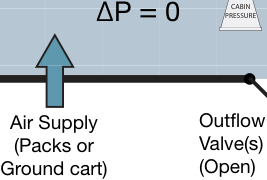
After landing, the cabin pressure equalizes with the external air pressure when the outflow valves are fully open (fig.1). There is one outflow valve on the A320 family, two on A300/A300-600/A310/A330/A340 and A350 aircraft, and four on A380 aircraft.
In some abnormal cases, outflow valves can remain closed, when the aircraft is on the ground, causing the air pressure in the cabin to be higher than the ambient air pressure outside the aircraft. In this case, there is a risk that an aircraft door could violently open and injure the operator or damage the aircraft.
(fig.1)
Normal and abnormal configuration of the outflow valves on ground
The Residual Pressure Warning Light (fig.2), part of the residual pressure warning function, warns anyone who wants to open a door if the aircraft is pressurized. This device is installed on all Airbus aircraft except for some A300, A310 and A300-600 where it was offered as an option. On these aircraft not fitted with the warning light, a caution placard located on the door reminds the operator of the risk that residual pressure may cause violent door opening.
INFORMATION
Section titled “INFORMATION”The Residual Pressure Warning Light can be installed on cabin doors by the SB A300-52-0148, A310-52-2039, A300-52-6024.
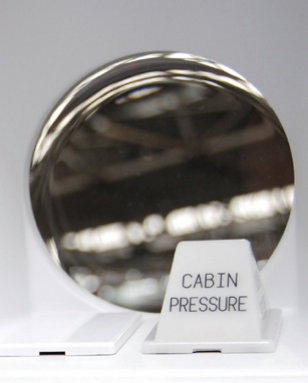
(fig.2)
Section titled “(fig.2)”Cabin door with the residual pressure warning light
Depending on aircraft type, the Residual Pressure Warning Light is fi tted on:
A320 AIRCRAFT FAMILY CARGO DOOR EXCEPTION
Section titled “A320 AIRCRAFT FAMILY CARGO DOOR EXCEPTION”-
Passenger doors,
-
Emergency exits,
-
FWD and AFT cargo-compartments doors,
There is no residual pressure indicator on forward and aft cargo doors of A320 aircraft due to the presence of a vent door that equalizes the air pressure inside the cargo compartment with the outside when the operator opens the cargo door.
- Main Deck Cargo Door on Freighter aircraft
Refer to the FCOM, CCOM and AMM for Residual Pressure Warning Light locations on your aircraft.
The Residual Pressure Warning Light fl ashes if the following conditions are met at the same time (fi g.3):
-
The slide of the door is disarmed (for passenger doors and emergency exits only)
-
Engines are off or the aircraft is on ground (depending on the aircraft type)
-
The residual cabin pressure exceeds a defi ned threshold
(fi g.3)
Section titled “(fi g.3)”Residual pressure warning unction activation logic
Cabin doors residual pressure warning light
Aircraft or ground cart electrical power
A350/A380: Aircraft on ground
Safety fi rst #27 | October 2018 004
On A350 and A380 aircraft, there is an aural warning in addition to the Residual Pressure Warning Light. It will sound, together with the fl ashing warning light, when the 3 triggering conditions mentioned above are met and the operator begins to lift the door handle a few degrees.
General Recommendations to avoid violent door opening
Section titled “General Recommendations to avoid violent door opening”In several events reported to Airbus, an operator tried to open a door even though the warning light was fl ashing. Due to the overpressure, the door violently opened, causing damage to the aircraft and injury to the operator.
If the operator observes that the Residual Pressure Warning Light is fl ashing, they must not attempt to open the door.
Recommendations
Section titled “Recommendations”Anyone operating an aircraft door must be trained to the associated procedures.
If the operator (fl ight crew, cabin crew or ground staff) observes that the Residual Pressure Warning Light is fl ashing, they must not attempt to open the door. If the cabin crew sees the light fl ashing from inside the cabin, they must immediately alert the fl ight crew (as per CCOM SOP). The fl ight crew should check the differential pressure and outfl ow valves position on the ECAM and take the necessary actions. Then, the cabin crew must wait for fl ight crew authorization to open the doors.
If the Residual Pressure Warning Light is seen fl ashing from the outside of an aircraft, the position of the outfl ow valves should be checked (fi g.4). If outfl ow valves are observed closed, the ground staff should remove any connected external air source and check if an inward opening door, such as the forward avionics compartment door (fi g.5) can be opened. If the avionics door cannot be opened, residual pressure still remains. The operator should then wait until the pressure dissipates by leakage.
Residual Pressure Warning function specifi cities and limitations
Section titled “Residual Pressure Warning function specifi cities and limitations”Emergency evacuation
Section titled “Emergency evacuation”In the case of an emergency evacuation, due to the logic of the system, the residual pressure warning light will not fl ash as long as the slides are ARMED (fi g.3).
The CCOM “EMERGENCY PASSENGER DOOR OPERATION” procedure provides guidance to identify residual cabin pressure such as a higher resistance of the door’s control handle when lifted, or a “hissing noise” around the immediate door area. In this situation, immediate communication must be established with the fl ight crew.
(fi g.4) A350 Outfl ow valve in the open position
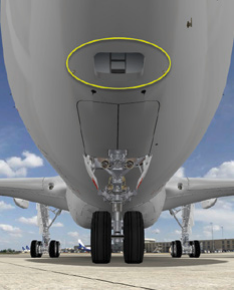
(fi g.5) A330 FWD avionics compartment access door (inward opening)
Limitation of the autonomous power supply of the residual pressure warning function
Section titled “Limitation of the autonomous power supply of the residual pressure warning function”When there is no aircraft power supply and its main batteries are switched off, the residual pressure warning function is powered by the battery of the Autonomous Standby Power Supply Unit (ASPSU).
The ASPSU battery autonomy is (fi g.3):
-
4 days (5 days for A380 and A350) in “stand-by” mode
-
50 minutes (45 minutes for A380 and A350) in “active” mode with the warning light fl ashing.
If the aircraft is unpowered for more than 4 days (5 days for A380 and A350), its residual pressure warning function is not available until the aircraft is re-energized.
Therefore, if the aircraft is unpowered for more than 4 days (5 days for A380 and A350), its residual pressure warning function is not available until the aircraft is re-energized.
BEST PRACTICE
Section titled “BEST PRACTICE”Check outfl ow valves are open before opening a cabin or a cargo door from outside to ensure there is no residual pressure in the fuselage, especially if the aircraft does not have power connected to it. The avionics compartment access door (fi g.5) can be used to check for residual pressure and release it safely because it is an inward opening door.
INFORMATION
Section titled “INFORMATION”On A330/A340 aircraft delivered before June 2013, an “engine running” signal is incorrectly sent to the residual pressure warning function when the aircraft is de-energized, causing the warning function to be inactive. A modifi cation to correct this issue is available in the following Service Bulletins:
- A330-52-3094 • A340-52-4102 • A330-52-3096 • A340-52-5024
ALERTING THE FLIGHT CREW: THE EXCESS RESIDUAL PRESSURE ECAM WARNING
Section titled “ALERTING THE FLIGHT CREW: THE EXCESS RESIDUAL PRESSURE ECAM WARNING”In addition to the residual pressure warning function, the CAB PR EXCES RESIDUAL PR ECAM warning (fi g.6) triggers if residual pressure is detected in the cabin after landing and the engines are switched off. The fl ight crew must follow the ECAM procedure, alert cabin crew and ground crew about the situation, and advise them not to operate the aircraft doors.
(fi g.6) A320 CAB PR EXCES RESIDUAL PR ECAM Warning
INFORMATION
Section titled “INFORMATION”This ECAM alert is basic on all A350 and A380 aircraft and on A320/A330/ A340 built since 2004. The alert can also be implemented on aircraft built prior to 2004 and on A300-600/A310 aircraft with the following Service Bulletins:
-
A300-31-6135 • A330-21-3112
-
A310-31-2135 • A340-21-4121 • A320-21-1164 • A340-21-5020
Safety first #27 | October 2018 006
On A350 and A380 aircraft, the ECAM alert is CAB PRESS EXCESS RESIDUAL DIFF PRESS
This alert is not available for the A300 aircraft, however standard operating procedures at parking instruct the flight crew to check zero ΔP prior to informing the cabin crew that aircraft doors can be opened.
AVOIDING UNINTENTIONAL PRESSURIZATION OF THE AIRCRAFT ON GROUND
Section titled “AVOIDING UNINTENTIONAL PRESSURIZATION OF THE AIRCRAFT ON GROUND”Several reported incidents of violent door opening occurred after an unintentional pressurization of the aircraft on the ground.
Event Description
Section titled “Event Description”Due to winter conditions, an A320 aircraft was secured for cold soak. As per procedure, the outflow valve was closed using the DITCHING pushbutton. The next day, a ground cart was connected to the aircraft for pre-conditioning while the aircraft doors and the outflow valve were still closed. This resulted in a cabin pressure build-up. An operator did not rely on the residual pressure warning light flashing and tried to open a passenger door. The door violently opened and the operator was injured.
Recommendations
Section titled “Recommendations”When connecting a ground cart to the LP or HP ground air connectors, the maintenance personnel must ensure that the outflow valves are open and stay open, or one or more passenger doors are open and stay open, or the forward avionics compartment access door is open and stays open.
When connecting a ground cart to the LP or HP ground air connectors, the maintenance personnel must ensure that the outflow valves are open and stay open, or one or more passenger doors are open and stay open, or the forward avionics compartment access door is open and stays open.
INFORMATION
Section titled “INFORMATION”Improved warning placards (fig.7) with additional recommendations for ground personnel are installed on the LP/HP ground connection area or maintenance doors of A320 family aircraft delivered since March 2015, on A330/A340 aircraft delivered since February 2014 and A380 aircraft delivered since October 2010 and on all A350 aircraft. The placards can be installed on the remaining aircraft by the following Service Bulletins:
-
SB A320-11-1097 • SB A340-21-5050
-
SB A330-21-3171 • SB A380-21-8040
-
SB A340-21-4158
(fig.7)
Section titled “(fig.7)”Example of an improved placard on A330
WARNING
Section titled “WARNING”MAKE SURE THAT AT LEAST THE FWD AVIONICS-COMPARTMENT ACCESS DOOR IS OPEN AND STAYS OPEN OR ONE OR MORE PASSENGER DOORS OR THAT ALL OUTFLOW VALVES ARE FULL Y OPEN AND STAY OPEN
WHEN AN EXTERNAL AIR SOURCE IS CONNECTED TO THE AIRCRAFT DURING THIS PROCEDURE YOU MUST ATTACH A WARNING NOTICE TO THE OPEN DOORS TO TELL PERSONS NOT TO CLOSE THEM THIS PREVENTS ACCIDENTAL PRESSURIZATION OF THE AIRCRAFT
On A310 aircraft delivered after May 1994 and A300-600 aircraft delivered after December 1994, a modification introduces a mechanical fool-proof device which prevents connection of the ground supply to the aircraft LP ground connector until the service door 136AR has been removed. This avoids build-up of cabin pressure and subsequent risks of violent door opening when a LP ground source is connected to the aircraft. On aircraft not fitted with this modification from production this can be embodied by application of recommended SB A300-21-0119, A310-21-2045 or A300-21-6029.
RESIDUAL CABIN PRESSURE FOLLOWING THE USE OF THE MANUAL PRESSURE CONTROL MODE
Section titled “RESIDUAL CABIN PRESSURE FOLLOWING THE USE OF THE MANUAL PRESSURE CONTROL MODE”If all cabin pressure controllers fail, the ECAM procedure requires the flight crew to manually control the cabin pressure.
Incorrect manual pressure control by the flight crew following landing can lead to the outflow valves to remain closed when the aircraft taxis to the gate.
On A320/A330/A340 aircraft, Airbus developed a solution to this issue: the Residual Pressure Control Unit (RPCU). The RPCU automatically opens the outflow valves on the ground when the aircraft is operated in manual pressure control mode.
INFORMATION
Section titled “INFORMATION”The RPCU is installed in production on A320 family aircraft delivered after August 2005 and on A330/A340 aircraft delivered after October 2005.
The RPCU can be installed on A320 family aircraft delivered before August 2005 through the SB A320-21-1154.
On A380 and A350 aircraft, the RPCU functionality is integrated into the Cabin Pressure Controllers that prevent closure of the outflow valves when residual cabin pressure is detected on ground.
The RPCU is not available on A300/A300-600/A310 aircraft.
来源:Airbus Safety First
URL: https://safetyfirst.airbus.com/preventing-violent-door-opening-due-to-residual-cabin-pressure/
发布日期:2018-10-30
类别:客舱运营、飞行运营、地面运营、维修、ASPSU、客舱压力、delta p、门、残余客舱压力、残余压力、RPCU、RPWS
PDF:原始 PDF
002
本文取代《Safety First》第3期刊载的”残余客舱压力”一文。
降落后,当排气活门完全打开时,客舱压力与外部大气压力达到平衡(图1)。A320系列飞机有1个排气活门,A300/A300-600/A310/A330/A340和A350飞机有2个,A380飞机有4个。
在某些异常情况下,排气活门可能在飞机停场时保持关闭,导致客舱空气压力高于飞机外部环境气压。在这种情况下,飞机舱门可能会猛烈打开,存在伤害操作人员或损坏飞机的风险。
(图1)
地面排气活门的正常与异常构型
残余压力警告灯**(图2)**是残余压力警告功能的一部分,用于在有人试图开门时发出警告。该装置安装于所有空客飞机上,但部分A300、A310和A300-600除外——在这些飞机上该灯为可选装设备。未安装警告灯的飞机上,舱门上贴有警告标牌,提醒操作人员残余压力可能导致舱门猛烈打开的风险。
残余压力警告灯可通过以下SB安装于舱门上:A300-52-0148、A310-52-2039、A300-52-6024。
带有残余压力警告灯的舱门
根据飞机型号,残余压力警告灯安装位置如下:
A320系列飞机货舱门的例外情况
Section titled “A320系列飞机货舱门的例外情况”- 旅客舱门
- 紧急出口
- 前和后货舱门
由于A320飞机存在通风门,当操作人员打开货舱门时可将货舱内部空气压力与外部大气压平衡,因此前货舱门和后货舱门上无残余压力指示器。
- 货机主货舱门
有关残余压力警告灯在您飞机上的具体位置,请参阅FCOM、CCOM和AMM。
以下条件同时满足时,残余压力警告灯将闪烁**(图3):**
- 舱门的滑梯处于解除待命状态(仅适用于旅客舱门和紧急出口)
- 发动机已关车或飞机在地面(取决于飞机型号)
- 残余客舱压力超过设定阈值
残余压力警告功能激活逻辑
舱门残余压力警告灯
飞机或地面电源车电源
A350/A380:飞机在地面状态
Safety First #27 | 2018年10月 004
在A350和A380飞机上,除残余压力警告灯外还有听觉警告。当上述3个触发条件全部满足且操作人员将舱门手柄抬起几度时,听觉警告将与闪烁的警告灯同时响起。
避免舱门猛烈打开的通用建议
Section titled “避免舱门猛烈打开的通用建议”在多起向空客报告的事件中,即使警告灯闪烁,操作人员仍试图打开舱门。由于过压作用,舱门猛烈打开,造成飞机损坏和操作人员受伤。
如果操作人员观察到残余压力警告灯闪烁,绝不能尝试打开舱门。
任何操作飞机舱门的人员都必须接受相关程序的培训。
如果操作人员(机组、客舱乘务组或地面人员)观察到残余压力警告灯闪烁,绝不能尝试打开舱门。如果客舱乘务员在客舱内部看到警告灯闪烁,必须立即提醒机组(按CCOM标准操作程序)。机组应检查ECAM上的压差和排气活门位置,并采取必要措施。然后,客舱乘务员必须等待机组授权后才能开门。
如果在飞机外部观察到残余压力警告灯闪烁,应检查排气活门的位置**(图4)。如果观察到排气活门处于关闭状态,地面人员应移除任何连接的外部气源,并检查是否可以打开向内开启的舱门,例如前电子设备舱门(图5)。**如果无法打开电子设备舱门,则说明残余压力仍然存在。操作人员应等待压力通过泄漏自行消散。
残余压力警告功能的特点与局限性
Section titled “残余压力警告功能的特点与局限性”在紧急撤离的情况下,由于系统逻辑,只要滑梯处于预位状态,残余压力警告灯就不会闪烁**(图3)。**
CCOM”紧急旅客舱门操作”程序提供了识别客舱残余压力的指导,例如提起舱门控制手柄时阻力较大,或在舱门周围区域听到”嘶嘶声”。在这种情况下,必须立即与飞行机组建立通信。
(图4) A350 排气活门处于打开位置
(图5) A330 前部航电设备舱舱门(向内开启)
残余压力警告功能自主电源的局限性
Section titled “残余压力警告功能自主电源的局限性”当飞机电源不可用且主电瓶已关闭时,残余压力警告功能由自主备用电源装置(ASPSU)的电瓶供电。
ASPSU 电瓶续航能力为**(图3):**
-
“待机”模式下 4 天(A380 和 A350 为 5 天)
-
“激活”模式下警告灯闪烁时 50 分钟(A380 和 A350 为 45 分钟)
如果飞机断电超过 4 天(A380 和 A350 为 5 天),其残余压力警告功能将不可用,直至飞机重新通电。
因此,如果飞机断电超过 4 天(A380 和 A350 为 5 天),其残余压力警告功能将不可用,直至飞机重新通电。
在从外部打开客舱门或货舱门之前,检查排气活门是否处于打开状态,以确保机身内没有残余压力,尤其是在飞机未连接电源的情况下。航电设备舱舱门**(图5)**可用于检查残余压力并安全释放,因为它是向内开启的舱门。
对于 2013 年 6 月之前交付的 A330/A340 飞机,当飞机断电时会错误地向残余压力警告功能发送”发动机运行”信号,导致警告功能处于非激活状态。修正此问题的改装可在以下服务通告中获得:
- A330-52-3094 • A340-52-4102 • A330-52-3096 • A340-52-5024
提醒飞行机组:过余残余压力 ECAM 警告
Section titled “提醒飞行机组:过余残余压力 ECAM 警告”除残余压力警告功能外,CAB PR EXCES RESIDUAL PR ECAM 警告**(图6)**会在着陆后发动机关闭且客舱检测到残余压力时触发。飞行机组必须遵循 ECAM 程序,提醒客舱乘务组和地面人员注意此情况,并建议他们不要操作飞机舱门。
(图6) A320 CAB PR EXCES RESIDUAL PR ECAM 警告
此 ECAM 警报是所有 A350 和 A380 飞机以及自 2004 年以来生产的 A320/A330/A340 飞机的基本配置。该警报也可通过以下服务通告在 2004 年之前生产的飞机以及 A300-600/A310 飞机上实现:
-
A300-31-6135 • A330-21-3112
-
A310-31-2135 • A340-21-4121 • A320-21-1164 • A340-21-5020
Safety first #27 | October 2018 006
在 A350 和 A380 飞机上,ECAM 警报为CAB PRESS EXCESS RESIDUAL DIFF PRESS
此警报不适用于 A300 飞机,但停机标准操作程序要求飞行机组在通知客舱乘务组可以打开飞机舱门之前,检查 ΔP 是否为零。
避免飞机在地面意外增压
Section titled “避免飞机在地面意外增压”多起舱门暴力开启事故发生在飞机在地面意外增压之后。
由于冬季条件,一架 A320 飞机按照冷浸程序进行停场保护。按照程序,使用 DITCHING(应急漂浮)按钮关闭了排气活门。第二天,在飞机舱门和排气活门仍处于关闭状态时,连接了地面空调车进行预调节。这导致了客舱压力上升。一名操作人员没有依赖残余压力警告灯闪烁,而是试图打开旅客舱门。舱门被暴力开启,该操作人员受伤。
将地面气源车连接至低压或高压地面气源接头时,维修人员必须确保排气活门处于打开状态并保持打开,或至少有一个客舱门处于打开状态并保持打开,或前部电子舱接近门处于打开状态并保持打开。
将地面气源车连接至低压或高压地面气源接头时,维修人员必须确保排气活门处于打开状态并保持打开,或至少有一个客舱门处于打开状态并保持打开,或前部电子舱接近门处于打开状态并保持打开。
改进型警告标牌 (图 7) 已安装在以下机型的低压/高压地面接头区域或维修门上,并附带对地面人员的额外建议:A320 系列飞机(2015 年 3 月以后交付)、A330/A340 飞机(2014 年 2 月以后交付)、A380 飞机(2010 年 10 月以后交付)以及所有 A350 飞机。其他飞机可通过以下服务通告安装该标牌:
-
SB A320-11-1097 • SB A340-21-5050
-
SB A330-21-3171 • SB A380-21-8040
-
SB A340-21-4158
A330 上的改进型标牌示例
确保至少前部电子舱接近门处于打开状态并保持打开,或至少一个客舱门处于打开状态,或所有排气活门完全打开并保持打开
当在此程序中将外部气源连接至飞机时,必须在打开的舱门上贴附警告提示,告知人员不要关闭舱门。此举可防止飞机意外增压
对于 1994 年 5 月以后交付的 A310 飞机以及 1994 年 12 月以后交付的 A300-600 飞机,已通过改装引入了机械防误装置。该装置可防止将地面气源连接至飞机低压地面接头,除非已拆除服务舱门 136AR。这可避免在将低压地面气源连接至飞机时产生客舱压力积聚,从而防止随后可能发生的舱门剧烈打开。未从生产线安装此改装的飞机,可通过适用推荐服务通告 SB A300-21-0119、A310-21-2045 或 A300-21-6029 来实施该改装。
使用人工压力控制模式后的残余客舱压力
Section titled “使用人工压力控制模式后的残余客舱压力”如果所有客舱压力控制器失效,ECAM 程序要求机组人员人工控制客舱压力。
着陆后机组人员不正确的人工压力控制可能导致排气活门在飞机滑行至停机位时保持关闭。
在 A320/A330/A340 飞机上,空客针对此问题开发了解决方案:残余压力控制组件 (RPCU)。当飞机以人工压力控制模式运行时,RPCU 可自动在地面打开排气活门。
RPCU 已作为生产标准安装在 2005 年 8 月以后交付的 A320 系列飞机上,以及 2005 年 10 月以后交付的 A330/A340 飞机上。
2005 年 8 月之前交付的 A320 系列飞机可通过 SB A320-21-1154 安装 RPCU。
在 A380 和 A350 飞机上,RPCU 功能已集成到客舱压力控制器中,可在地面检测到残余客舱压力时防止排气活门关闭。
RPCU 不适用于 A300/A300-600/A310 飞机。