Aircraft Parking and Storage
Source: Airbus Safety First URL: https://safetyfirst.airbus.com/aircraft-parking-and-storage/ Published: 2020-05-12 Category: Maintenance, chocks, earthing, grounding, lightning strike, mooring, outflow valve, probes, protection PDF: Original PDF

Facing the unprecedented and massive fleet storage worldwide which is needed in the current COVID-19 pandemic, Airbus has launched an active support to all operators about the grounding, parking and storage conditions.
To complement this on-going effort, this article aims at reminding some of the key safety considerations for a proper parking and storage.
This article is also available on safetyfirst.airbus.com and on the Safety first app for iOS and Android devices.
PARKING AND STORAGE PROCEDURES
Section titled “PARKING AND STORAGE PROCEDURES”The AMM/MP/AMP provides operators with detailed procedures for parking and storage. It is essential that these procedures are followed to preserve the safety, airworthiness and value of the aircraft.
Depending on the duration of the out-of-operation period and on the need for readiness of the aircraft for return into service, several options are available for aircraft preservation in either Parking in “flight-ready” condition or storage.
Parking
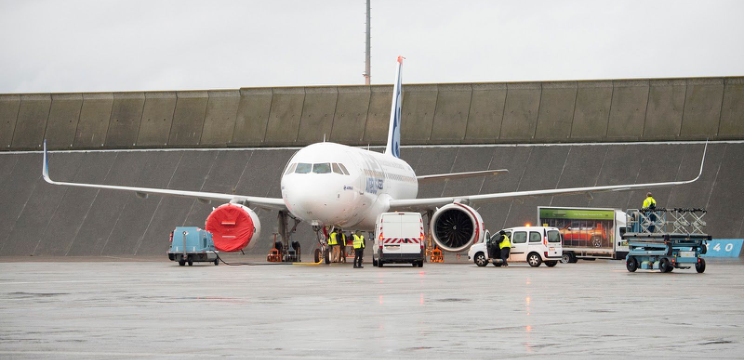
Section titled “Parking”In some cases, the aircraft needs to be kept in a condition that enables quick resumption of operations. In this case, the parking procedure is applicable so that the number of tasks needed to prepare the aircraft for flight operations is minimised. It must be noted that aircraft with only parking procedures applied still require a number of recurring maintenance actions that ensures the aircraft remains in a “ready for flight” condition.
A320 family, A330, A340, A350, A380 aircraft
Section titled “A320 family, A330, A340, A350, A380 aircraft”Which AMM/MP to apply will depend on if the aircraft will be parked for less than one-month or more than one-month..
Here are the two AMM/MP references:
-
10-10-00 Parking and storage procedures
-
10-11-00 Parking Procedure
A220 aircraft
Section titled “A220 aircraft”Three procedures are available in the AMP depending on the duration of the parking: Parking 7 days, 15 days or 12 weeks.
AMP references:
-
Parking (Maximum 7 days) BD500-A-J10-14-00-01AAA-890A-A
-
Parking (Maximum 15 days) BD500-A-J10-10-00-01AAA-890A-A
-
Parking (Maximum 12 weeks) BD500-A-J10-11-00-01AAA-890A-A
Storage
Section titled “Storage”The storage procedure is for the preservation of parked aircraft that are unlikely to return into service in the short-term. This means that the tasks in the storage procedure will have more detailed steps to follow and require more time complete compared to the parking procedure. However, the number of recurring maintenance tasks is reduced, meaning less interventions are required on aircraft that are stored. For example, engine runs and a number of other operational checks are not required on an aircraft preserved in accordance with a storage procedure, as it is the case when engines, avionics computers or other major components are removed from the aircraft.
A320 family, A330, A340, A350, A380 aircraft
Section titled “A320 family, A330, A340, A350, A380 aircraft”Two storage procedures are available in the AMM, one for aircraft that will be stored for less than one-year and a procedure for aircraft stored for periods more than a year.
AMM/MP references:
Section titled “AMM/MP references:”-
10-10-00 Parking and storage procedures
-
10-12-00 Storage Procedure
A220 aircraft
Section titled “A220 aircraft”Two storage procedures are available in the AMP depending on the duration the storage: Storage 6 months and 2 years.
AMP references:
-
Storage (Maximum 6 months) BD500-A-J10-30-00-01AAA-890A-A
-
Storage (Maximum 2 years) BD500-A-J10-31-00-01AAA-890A-A
KEY SAFETY CONSIDERATIONS FOR PARKING & STORAGE
Section titled “KEY SAFETY CONSIDERATIONS FOR PARKING & STORAGE”The application of the AMM/MP/AMP parking and storage procedures ensures the preservation of the aircraft systems. For example, using engines and APU inlet and outlet protection.
There are key safety aspects that are part of the AMM/MP/AMP procedures and must be considered when preparing an aircraft for parking or storage and during the recurring maintenance tasks. These are highlighted below.
Storage location
Section titled “Storage location”Aircraft should be ideally parked or stored on a flat surface with the nose pointing in the direction of the prevailing winds to limit the effect of wind and gusts on the aircraft.
Landing gear safety devices
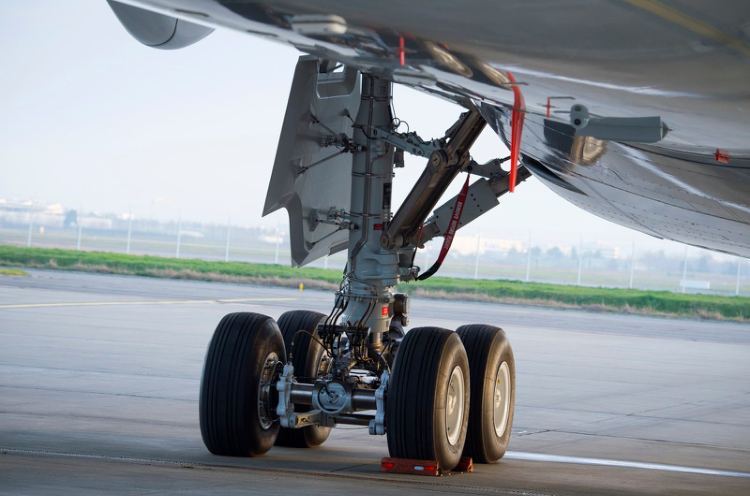
Section titled “Landing gear safety devices”Landing gear safety devices must be put in place to prevent unwanted landing gear retraction.
Use of Chocks
Section titled “Use of Chocks”On A300, A310, A320, A330, A340, A350 and A380, the parking brake will be ineffective as there will be no hydraulic pressure in the system.
The AMM/MP parking and storage procedures both recommend the use chocks at the wheels to hold the aircraft in its parked position. The procedure for wheel chocks installation is available in the AMM/MP 10-11-00 Parking Procedure.
The A220 being equipped with an electrical brake system, Airbus recommends to apply the parking brake in addition to the chocks. The brake force will remain constant throughout the parking/storage duration. For A220 wheel chocks installation, refer to the AMP Parking Procedures previously listed above.
You will find complementary information about the design and correct use chocks in the Safety first article titled, “Safe Aircraft Parking”.
Protection against strong winds
Section titled “Protection against strong winds”If the aircraft is stored in an area known to be windy, or if strong wind conditions are expected, it is necessary to check and improve aircraft’s stability (AMM/MP 05-57-00) and moor the aircraft if needed (AMM/MP procedure 10-20-00 Mooring). However, if the expected winds are above the aircraft’s stability limits, Airbus recommends to move the aircraft to another airport when possible.
On A220 aircraft, similar safety precautions should be followed as recommended above. In addition, the Flight By Wire architecture being susceptible to high winds, it is important to be aware of the Parking and mooring gust limits provided in AMP BD500-A-J10-20-00-02AAA-030A-A.
Post high-wind inspection
Section titled “Post high-wind inspection”It is important to perform the “post high wind event” inspection (05-51-42) when the aircraft is unmoored to ensure that the aircraft was not damaged including an assessment of the entire aircraft checking for excessive loads as well as inspections of the flight controls and landing gear structure.
For A220 aircraft, follow Severe winds on the ground - Special irregular inspection per AMP BD500-A-J05-51-32-01AAA-284A-A if limits are exceeded.
What if strong winds are expected and my aircraft is parked/stored in an area with no mooring attachment point?
Section titled “What if strong winds are expected and my aircraft is parked/stored in an area with no mooring attachment point?”Operators should contact Airbus Customer Support to define an alternate solution. At the time of authoring this article, Airbus was updating its detailed guidance for aircraft stability recommendations, which will address fuel and ballast as well as regular and alternative mooring schemes.
Grounding/earthing of the aircraft
Section titled “Grounding/earthing of the aircraft”It is highly recommended to permanently ground/earth the aircraft when parked or stored to avoid damage caused by lightning in storms.
It is mandatory to ground/earth the aircraft during the periodic ground checks to ensure safety of the maintenance personnel and avoid damage to the aircraft systems.
Protecting air data probes
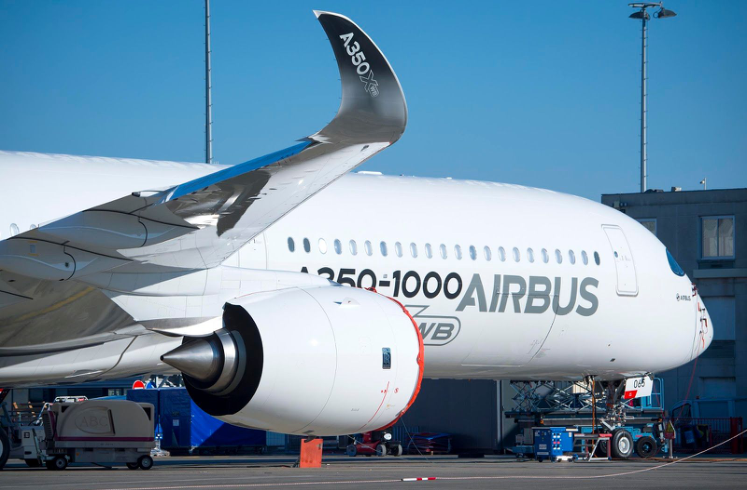
Section titled “Protecting air data probes”Air Data probes need to be protected to prevent dust or insects from causing an obstruction. Approved probe covers must be used. They can normally be found in each aircraft’s fly-away kit.
Some precautions must be taken when using alternative means like plastic foil when the approved covers are unavailable. These materials can damage the probes. For example, using plastic foil to cover the angle-of-attack probes can
cause water to ingress inside the probe when water accumulates inside the plastic foil if the foil is not properly sealed with the fuselage and not equipped with drain holes. This can result in a blocked probe in flight when the aircraft returns to service.
It was also reported that the pressure increased in the total pressure line when sliding certain unapproved protections on the pitot tubes, simulating airspeed reading. This led to an unexpected Ram Air Turbine (RAT) extension when power was applied to the aircraft.
Finally, there is a risk that the tape or foil will not be seen by the ground or flight crews and it will remain on the aircraft when it returns to service. This could lead to incorrect indications for the flight crew and the associated system effects.
What if the approved air probe covers are not available?
Section titled “What if the approved air probe covers are not available?”If the approved probe covers are not available, the advice is not to use an improvised or unapproved cover, and it is preferred that the probe remains uncovered when the aircraft is parked. It will then be necessary to carry out an inspection and/or a flushing procedure on the associated pressure line before returning to service.
Closure of the outflow valves
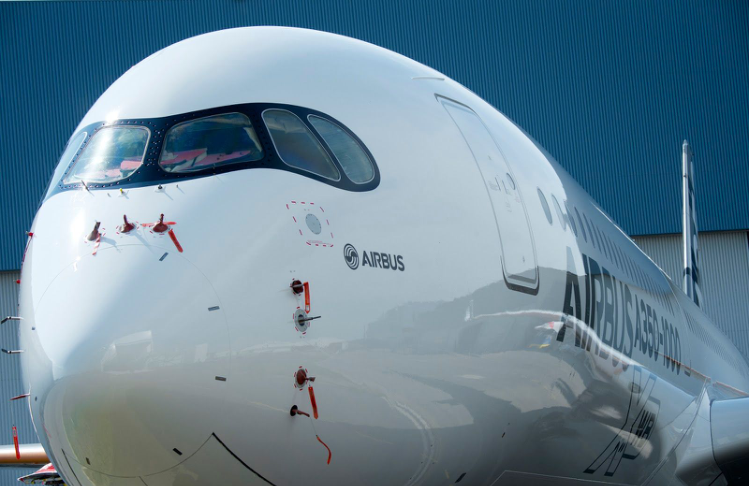
Section titled “Closure of the outflow valves”The parking/storage procedures request closing the outflow valves using the DITCHING pushbutton. Care should be used during maintenance on the aircraft if pre-conditioning the cabin with the aircraft doors closed using a ground cart connected to the low pressure port. The potential for pressure to build up in the cabin may cause the passenger cabin doors to open violently if operated by ground personnel. The maintenance personnel must ensure that at least one passenger door, or the forward avionics compartment access door, is open before connecting the ground cart and remains open for as long as the cart connected to the aircraft.
Refer to the “Preventing Violent Door Opening Due to Residual Cabin Pressure Safety first article published in October 2018.
Contributors :
Section titled “Contributors :”Patrick BERTRAND Section Chief, A220 In-Service Engineering Systems
Gérard DELSAUT Ground Operations Manager Engineering
Benoît DUQUESNE
Section titled “Benoît DUQUESNE”Air Data system Support Engineer Customer Support
Certain situations will require the parking or storage of aircraft for given period of time. The AMM/MP/AMP parking/storage procedures must be followed to ensure that the aircraft’s safety, airworthiness and value is maintained during any extended period on the ground. This will ensure that any aircraft, which was parked or in storage can safely return to service when required to do so.
It is strongly advised that operators avoid using improvised unapproved items to protect the aircraft and its components. In any situation where there are unprecedented numbers of aircraft being parked or stored around the world, it is crucial that where AMM/MP/AMP procedures cannot be correctly applied, that operators contact Airbus to seek advice on what approved alternative procedures may be applicable.
Olivier LE MEUR Structure Support Engineer Customer Support
Christoph MAIER Customer Manager Scheduled Maintenance Services
Guillaume PROUVEUR
Section titled “Guillaume PROUVEUR”Aircraft Systems Environment Project Manager Customer Support
Safety first , 2020. Safety first is published by Airbus S.A.S. 1, rond point Maurice Bellonte - 31707 Blagnac Cedex/France.
Publisher and Editor: Yannick Malinge, Chief Product Safety Officer.
飞机停放与存储
Section titled “飞机停放与存储”来源:Airbus Safety First 网址:https://safetyfirst.airbus.com/aircraft-parking-and-storage/ 发布日期:2020-05-12 类别:维护、轮挡、接地、雷击、系留、排气活门、探头、保护 PDF:原始 PDF
面对当前 COVID-19 大流行期间全球范围内前所未有的、大规模的机队存储需求,空客已启动对所有运营商在接地、停放和存储条件方面的主动支持。
为补充这一持续努力,本文旨在提醒进行适当停放和存储时的一些关键安全注意事项。
本文同时发布于 safetyfirst.airbus.com 及 iOS 和 Android 设备的 Safety first 应用上。
停放与存储程序
Section titled “停放与存储程序”AMM/MP/AMP 为运营商提供了停放和存储的详细程序。必须遵循这些程序以保持飞机的安全性、适航性和价值。
根据停飞时间的长短以及飞机恢复服役就绪状态的需求,飞机的保存有多种选择,包括以”飞行就绪”状态停放或存储。
在某些情况下,飞机需要保持在能够快速恢复运营的状态。此时适用停放程序,以尽量减少飞机恢复飞行运营所需的准备工作量。需注意,仅执行停放程序的飞机仍需要进行一定次数的定期维护工作,以确保飞机保持”可飞行”状态。
A320 系列、A330、A340、A350、A380 飞机
Section titled “A320 系列、A330、A340、A350、A380 飞机”应使用哪一本 AMM/MP 取决于飞机是停放少于一个月还是超过一个月。
以下是两份 AMM/MP 参考资料:
- 10-10-00 停放和存储程序
- 10-11-00 停放程序
A220 飞机
Section titled “A220 飞机”AMP 中提供了三种停放程序,具体取决于停放时长:7 天、15 天或 12 周。
AMP 参考资料:
- 停放(最长 7 天)BD500-A-J10-14-00-01AAA-890A-A
- 停放(最长 15 天)BD500-A-J10-10-00-01AAA-890A-A
- 停放(最长 12 周)BD500-A-J10-11-00-01AAA-890A-A
存储程序适用于不太可能在短期内恢复使用的停放飞机的保存工作。这意味着与停放程序相比,存储程序中的任务将需要遵循更详细的步骤,并且需要更多时间完成。然而,定期维护工作的次数会减少,意味着对存储飞机的干预需求更少。例如,按照存储程序保存的飞机不需要进行发动机试车和多项其他运营检查,这与发动机、航空电子计算机或其他主要部件从飞机上拆下时的情况相同。
A320 系列、A330、A340、A350、A380 飞机
Section titled “A320 系列、A330、A340、A350、A380 飞机”AMM 中提供了两种存储程序:一种适用于存储时间少于一年的飞机,另一种适用于存储时间超过一年的飞机。
AMM/MP 参考资料:
Section titled “AMM/MP 参考资料:”- 10-10-00 停放和存储程序
- 10-12-00 存储程序
A220 飞机
Section titled “A220 飞机”AMP 中提供了两种存储程序,具体取决于存储时长:6 个月和 2 年。
AMP 参考资料:
- 存储(最长 6 个月)BD500-A-J10-30-00-01AAA-890A-A
- 存储(最长 2 年)BD500-A-J10-31-00-01AAA-890A-A
停放与存储的关键安全注意事项
Section titled “停放与存储的关键安全注意事项”应用 AMM/MP/AMP 停放和存储程序可确保飞机系统的保存。例如,使用发动机和 APU 进气口和排气口保护。
以下内容强调的是 AMM/MP/AMP 程序中的关键安全方面,这些方面必须在飞机准备停放或存储时以及定期维护工作中予以考虑。
飞机应理想地停放在平坦地面上,机头朝向主导风向,以减少风和阵风对飞机的影响。
起落架安全装置
Section titled “起落架安全装置”必须安装起落架安全装置,以防止意外收上起落架。
在 A300、A310、A320、A330、A340、A350 和 A380 机型上,由于系统内无液压压力,停留刹车将不起作用。
AMM/MP 停机与封存程序均建议在机轮处使用轮挡,以保持飞机停放位置。轮挡安装程序参见 AMM/MP 10-11-00 停机程序。
由于 A220 配备电刹车系统,空客建议在使用轮挡的同时施加停留刹车。在整个停放/封存期间,刹车力将保持恒定。A220 轮挡安装请参阅上文所列的 AMP 停机程序。
关于轮挡的设计和正确使用,请参阅 Safety First 文章《安全停机》。
如果飞机停放在已知多风的区域,或预期将出现强风条件,必须检查并增强飞机的稳定性(AMM/MP 05-57-00),并在必要时对飞机进行系留(AMM/MP 程序 10-20-00 系留)。但是,如果预期风力超过飞机的稳定性限制,空客建议尽可能将飞机转移至另一机场。
对于 A220 飞机,应遵循上述类似的安全预防措施。此外,由于电传飞控架构对强风敏感,重要的是要注意 AMP BD500-A-J10-20-00-02AAA-030A-A 中提供的停机与系留阵风限制。
强风后的检查
Section titled “强风后的检查”在解除系留时,执行“强风事件后”检查(05-51-42)非常重要,以确保飞机未受损,包括对整个飞机的评估以检查是否承受过大的载荷,以及对飞行操纵面和起落架结构的检查。
对于 A220 飞机,如超出限制,请遵循 AMP BD500-A-J05-51-32-01AAA-284A-A 中的地面强风——特殊非正常检查。
如果预期有强风,而我的飞机停放/封存在没有系留接点的区域,该怎么办?
Section titled “如果预期有强风,而我的飞机停放/封存在没有系留接点的区域,该怎么办?”运营商应联系空客客户支持以确定替代解决方案。在撰写本文时,空客正在更新其关于飞机稳定性建议的详细指南,其中将涉及燃油和压舱物以及常规和替代系留方案。
强烈建议在飞机停放或封存时进行永久性接地,以避免雷暴中雷电造成的损坏。
在定期地面检查期间,必须对飞机进行接地,以确保维护人员的安全并避免对飞机系统造成损坏。
保护空数据传感器
Section titled “保护空数据传感器”空数据传感器需要防护,以防止灰尘或昆虫造成堵塞。必须使用经批准的传感器盖。它们通常可以在每架飞机的应急工具包中找到。
当经批准的盖子不可用时,必须在使用塑料薄膜等替代方法时采取一些预防措施。这些材料可能会损坏传感器。例如,使用塑料薄膜覆盖迎角传感器时,如果薄膜未正确密封在机身且未配备排水孔,水会在塑料薄膜内积聚并渗入传感器内部。这可能导致飞机返回使用时传感器在飞行中堵塞。
另有报告称,在将某些未经批准的防护装置套在皮托管上时,总压力管路中的压力会增加,模拟空速读数。当对飞机施加电力时,这导致意外伸出冲压空气涡轮(RAT)。
最后,还存在胶带或薄膜不被地面或飞行机组看到而在飞机返回使用时仍留在飞机上的风险。这可能导致飞行机组的错误指示以及相关的系统影响。
如果经批准的空传感器盖不可用,该怎么办?
Section titled “如果经批准的空传感器盖不可用,该怎么办?”如果经批准的传感器盖不可用,建议不要使用临时或未经批准的盖子,最好让传感器在飞机停放时保持未覆盖状态。然后需要在返回使用前对相关压力管路进行目视检查和/或冲洗程序。
排气活门的关闭
Section titled “排气活门的关闭”停机/封存程序要求使用 DITCHING(应急撤离)按钮关闭排气活门。如果在对飞机进行维护时,使用连接至低压接口的地面空调车对客舱进行预调节,且此时飞机舱门关闭,则需要特别注意。如果客舱内压力积聚,乘客舱门可能被地面人员操作而猛烈打开。维护人员必须在连接地面空调车之前确保至少有一个乘客舱门或前电子设备舱进入门处于打开状态,并在空调车与飞机连接期间保持打开状态。
请参阅 2018 年 10 月发布的《防止残余客舱压力导致舱门剧烈打开》Safety First 文章。
Patrick BERTRAND A220 在役工程系统专业主管
Gérard DELSAUT 地面运行工程经理
Benoît DUQUESNE
Section titled “Benoît DUQUESNE”客户支援部大气数据系统支援工程师
某些情况下,飞机需要在特定时间段内停放或封存。必须遵循 AMM/MP/AMP 停放/封存程序,以确保飞机在地面长期停放期间的安全性、适航性及其价值得到保持。这将确保任何处于停放或封存状态的飞机能够在需要时安全地恢复服役。
强烈建议运营商避免使用临时性的未经批准物品来保护飞机及其部件。在全球范围内有大量飞机需要停放或封存的情况下,如果 AMM/MP/AMP 程序无法正确执行,运营商必须联系 Airbus,寻求关于可适用的经批准替代程序的专业建议。
Olivier LE MEUR 客户支援部结构支援工程师
Christoph MAIER 计划维修服务客户经理
Guillaume PROUVEUR
Section titled “Guillaume PROUVEUR”客户支援部飞机系统环境项目经理
Safety first,2020 年。Safety first 由 Airbus S.A.S. 出版。 地址:1, rond point Maurice Bellonte - 31707 Blagnac Cedex/France。
出版人和编辑:Yannick Malinge,首席产品安全官。