The Go-around Procedure
Source: Airbus Safety First URL: https://safetyfirst.airbus.com/the-go-around-procedure/ Published: 2011-07-14 Category: Archive PDF: Original PDF
Safety
10 Issue 12 | JULY 2011
david OwENS
Section titled “david OwENS”Senior Director Training Policy
The Go Around Procedure
Section titled “The Go Around Procedure”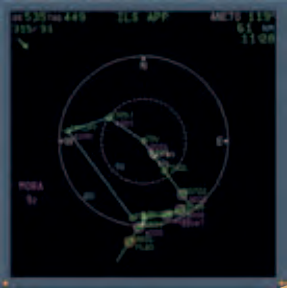
1. Introduction
Section titled “1. Introduction”Go Around is an essential safety maneuver for all pilots. It is regularly practiced in the simulator, but often with engine failure, and often from minima.
By contrast, most real-world Go Arounds are:
q Light weight
q High thrust
q From any other point on the approach.
Pilots must be familiar and confident with all aspects of the Go Around maneuver. However, recently, we have seen several examples where a safe Go Around was not achieved, and following these in-service incidents, we must review Go Around management and flight crew task sharing for the Go Around.
3. why Go Around?
Section titled “3. why Go Around?”If:
q The approach is not properly stabilized, or
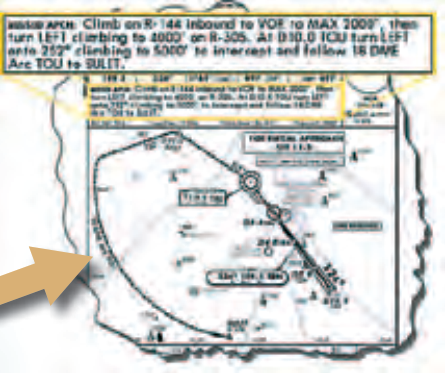
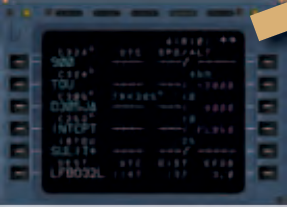
brief, the missed approach. We recommend that the Pilot Flying (PF) reads the missed approach from the MCDU, while the Pilot Non Flying (PNF) confirms by reading the missed approach section of the chart. Use of the ND in plan mode will give a good visual confirmation at the same time.
q You have doubts about your situational awareness, or
q A malfunction occurs below 1000ft AAL, or
This article will review the normal Go Around, and examine several other different Go Around situations.
q Adequate visual cues are not obtained at minima, or
q Any GPWS/TCAS or windshear alert occurs…
2. Go Around Preparation
Section titled “2. Go Around Preparation”q On ATC request
q Whenever the crew considers it necessary.
All pilots must be “Go Around minded”. As an essential and normal part of the approach preparation, the crew should check, and
Issue 12 | JULY 2011 11
The Airbus Safety Magazine
4. How?
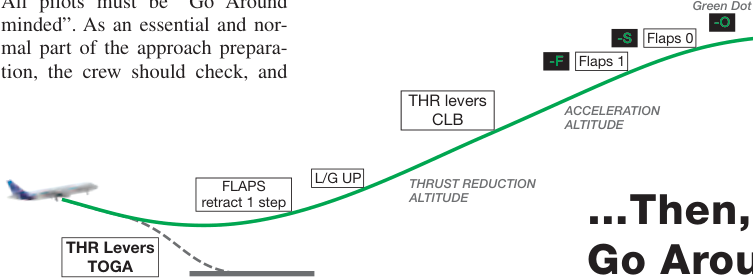
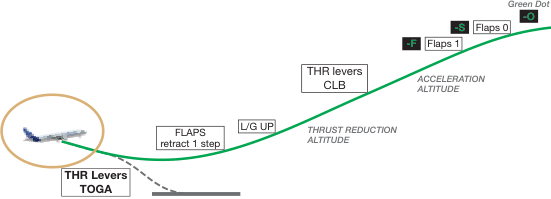
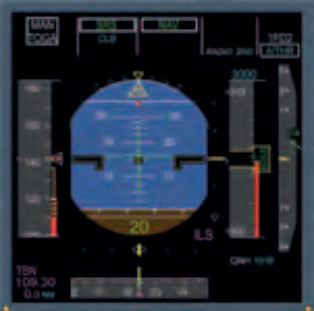
Section titled “4. How?”The PF announces “Go Around… Flaps!” , and, simultaneously:
q Sets TOGA thrust
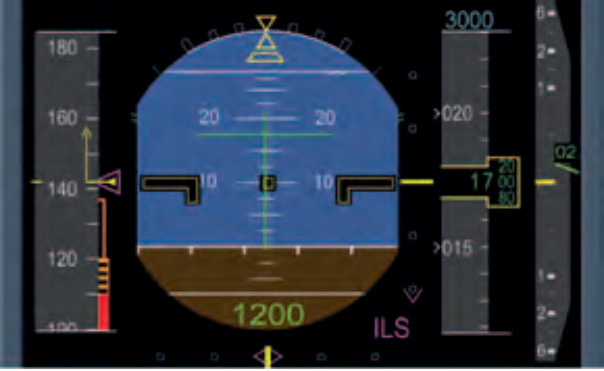
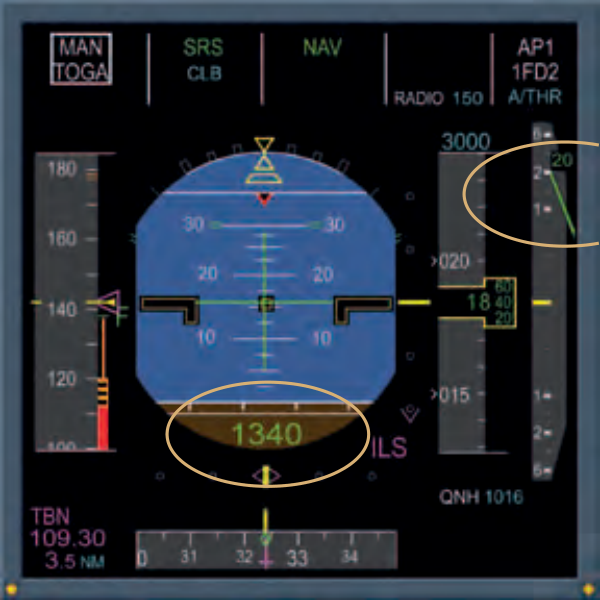
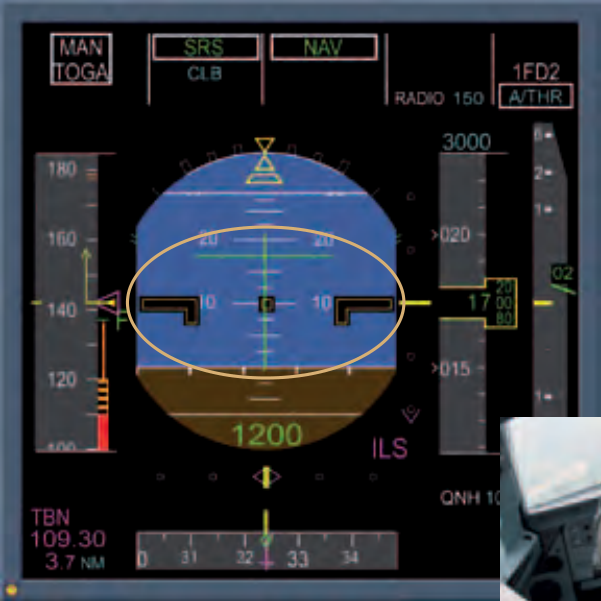
q If in manual flight, rotates to the Go Around pitch target (see right), or monitors the Auto-Pilot (AP) response
q Checks the Flight Mode Annunciator (FMA).
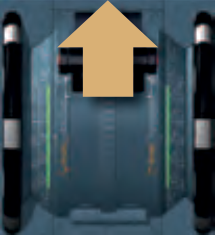
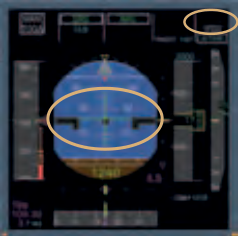
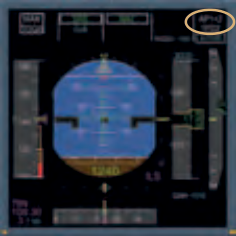
All pilots must know the required initial pitch target for their aircraft BEFORE commencing a missed approach. They must maintain that pitch target by following the SRS commands in manual flight. With the autopilot engaged, they should use this knowledge to confirm the autopilot behavior.
Safety
12 Issue 12 | JULY 2011
6. why is the Pitch Important?
Section titled “6. why is the Pitch Important?”6.1. Spatial disorientation - False Climb Illusion
Section titled “6.1. Spatial disorientation - False Climb Illusion”During a manual Go Around, if the required pitch is not reached or maintained, linear acceleration will result. Research has shown that this may cause a “ false climb illusion ”. The false climb illusion may lead a pilot to believe that the aircraft is already above the required pitch. Consequently, a pilot may respond with an opposite and dangerous pitch down input.
6.2. Potential Overspeed – Manual Flight
Section titled “6.2. Potential Overspeed – Manual Flight”If the correct pitch attitude is not maintained, the aircraft will accelerate towards the flap limit speed.
There is NO speed protection when the auto-thrust indication (A/THR), on the Flight Mode Annunciator (FMA), is blue, meaning that the A/THR is not active.
Actual Flight Path
Section titled “Actual Flight Path”This is best prevented by maintaining the correct pitch
SPEED REFERENCE SYSTEM (SRS) pitch orders, when followed accurately, should ensure that the aircraft remains at the correct speed during the Go Around.
Issue 12 | JULY 2011 13
The Airbus Safety Magazine
7. PNF’s Actions and Responsibility
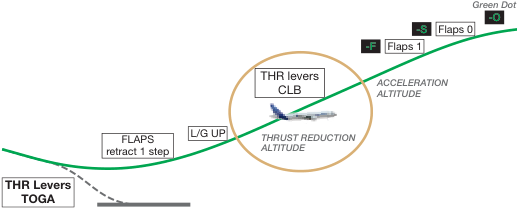
Section titled “7. PNF’s Actions and Responsibility”As soon as the PF announces the Go Around, the PNF retracts FLAPS one step.
The PF orders “Gear up!” , when a positive climb is confirmed by the PNF.
The PNF’s prime responsibility remains the monitoring of PF’s flying.
The PNF must make callouts if any flight parameters deviate from standard or safe values.
This is done to enhance the situational awareness of the PF and to trigger a corrective action by the PF.
14 Issue 12 | JULY 2011
8. Thrust Reduction Altitude
Section titled “8. Thrust Reduction Altitude”The PF sets the thrust levers to the CLB detent when the aircraft reaches the thrust reduction altitude.
RAPID ALT* ENGAGEMENT – WITH AUTOPILOT
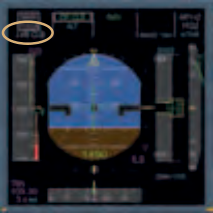
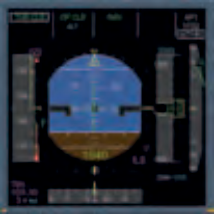
Section titled “RAPID ALT* ENGAGEMENT – WITH AUTOPILOT”In the event of an early capture of altitude (ALT*), for example if the Go Around is initiated close to the altitude selected on the Flight Control Unit (FCU) or in case of a high rate of climb, rapid acceleration towards a potential overspeed may occur.
As soon as ALT* engages, the autopilot lowers the aircraft pitch and the aircraft accelerates without any A/THR protections (A/THR blue). At that time, “LVR CLB” flashes on the FMA. The PF reacts by setting the thrust levers from TOGA detent to CL detent, without delay, in order to activate the A/THR, thus enabling A/THR protections. These protections include a flap overspeed protection.
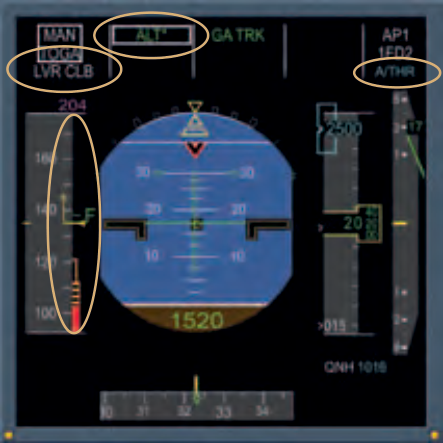
Set THR LVRs from TOGA to CL detent without delay
Section titled “Set THR LVRs from TOGA to CL detent without delay”Issue 12 | JULY 2011 15
The Airbus Safety Magazine
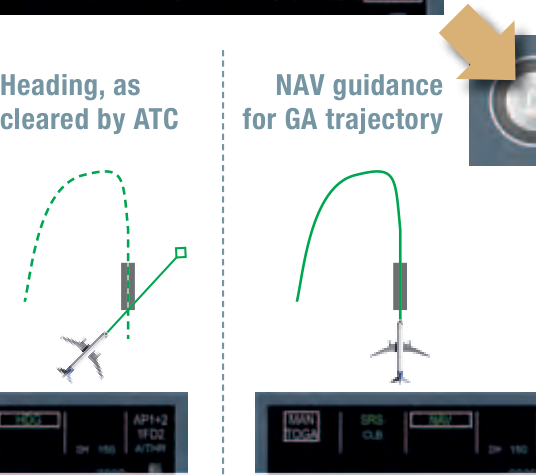
10. Notes on Lateral Guidance:
Section titled “10. Notes on Lateral Guidance:”q Recent Airbus aircraft are fitted with an automatic re-engagement of NAV mode at Go Around.
q For other aircraft the FMA will show GA TRK
This GA TRK will be the aircraft track at the instant that the thrust levers are placed to TOGA. If a heading is required by ATC, or a track different to the GA TRK, then, pull HDG for HDG mode, and set the correct heading as required. If a managed Go Around is required, then, push HDG for NAV.
11. Missed Approach – other Altitudes
Section titled “11. Missed Approach – other Altitudes”11.1. Go Around from Intermediate Approach
Section titled “11.1. Go Around from Intermediate Approach”All missed approaches must include the initial use of TOGA thrust to ensure the Go Around phase is engaged. Once TOGA is confirmed on the FMA, THR CLB may be selected.
11.2. Go Around Close to the Ground
Section titled “11.2. Go Around Close to the Ground”If you are close to the ground, initiate a “ standard Go Around ”, and avoid rapid rotation and excessive pitch. This low Go Around may result in a runway contact, If it does, continue with the standard Go Around.

Safety
16 Issue 12 | JULY 2011
5. Conclusion
Section titled “5. Conclusion”We must train for different Go Arounds
Section titled “We must train for different Go Arounds”q Light weight and heavy q Available thrust both high (all engines) and low (engine failure) q High energy (Close to missed approach altitude) q Different configurations
q From intermediate, decision and low altitude
Familiarity, and confidence, will only come with practice.
Section titled “Familiarity, and confidence, will only come with practice.”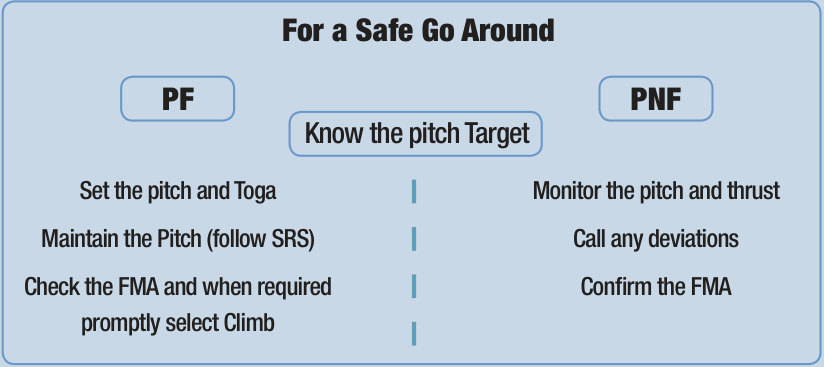
Safety
10 Issue 12 | JULY 2011
大卫·欧文斯
Section titled “大卫·欧文斯”培训政策高级总监
复飞是所有飞行员的一项基本安全机动动作。它通常在模拟机中进行练习,但往往是在发动机失效的情况下,且往往从最低下降高度/决断高度开始。
相比之下,大多数真实世界中的复飞是:
q 低重量
q 高推力
q 从进近过程中的任何其他阶段开始。
飞行员必须熟悉并熟练掌握复飞机动动作的各个方面。然而,近期我们发现多起案例未能实现安全的复飞。针对这些在役事件,我们必须审视复飞管理和飞行机组任务分工。
3. 为什么要复飞?
Section titled “3. 为什么要复飞?”如果:
q 进近未能正确稳定,或
简言之,复飞。我们建议主飞飞行员(PF)从MCDU读取复飞程序,而非主飞飞行员(PNF)通过对照航图上的复飞部分进行确认。同时使用ND的计划模式可以提供良好的目视确认。
q 对态势感知存在疑虑,或
q 在最低下降高度/决断高度以下发生故障,或
q 在最低点未能获得足够的目视参考,或
q 发生任何GPWS/TCAS或风切变警告……
2. 复飞准备
Section titled “2. 复飞准备”q 应ATC要求
q 无论何时机组认为有必要。
所有飞行员必须“具备复飞意识”。作为进近准备的基本正常部分,机组应检查并了解复飞的所有关键要素。
Issue 12 | JULY 2011 11
The Airbus Safety Magazine
4. 如何复飞?
Section titled “4. 如何复飞?”PF宣布**“复飞……收襟翼!”**,同时:
q 设置TOGA推力
q 如果是手动飞行,旋转至复飞俯仰目标(见右图),或监控自动驾驶(AP)的响应
q 检查飞行状态指示器(FMA)。
所有飞行员必须在开始复飞之前了解其机型的所需初始俯仰目标。他们必须在手动飞行中通过跟随SRS指令来保持该俯仰目标。使用自动驾驶时,他们应利用此知识来确认自动驾驶的行为。
Safety
12 Issue 12 | JULY 2011
6. 为什么俯仰如此重要?
Section titled “6. 为什么俯仰如此重要?”6.1. 空间定向障碍——错误上升错觉
Section titled “6.1. 空间定向障碍——错误上升错觉”在手动复飞时,如果未能达到或保持所需的俯仰,将导致线性加速。研究表明,这可能导致“错误上升错觉”。错误上升错觉可能使飞行员误以为飞机已经高于所需俯仰。因此,飞行员可能做出相反且危险的俯仰向下修正。
6.2. 潜在超速——手动飞行
Section titled “6.2. 潜在超速——手动飞行”如果未保持正确的俯仰姿态,飞机将加速至襟翼限制速度。
当Flight Mode Annunciator(FMA)上的自动推力指示(A/THR)显示蓝色时,表示A/THR未激活,此时没有速度保护。
最佳预防方法是保持正确的俯仰。
速度参考系统(SRS)俯仰指令,如果准确跟随,应能确保飞机在复飞过程中保持在正确的速度。
Issue 12 | JULY 2011 13
The Airbus Safety Magazine
7. PNF的动作与职责
Section titled “7. PNF的动作与职责”PF一宣布复飞,PNF即将襟翼收回一档。
当PNF确认正上升后,PF下令**“收起落架!”**。
PNF的首要职责仍然是监控PF的飞行。
如果任何飞行参数偏离标准或安全值,PNF必须进行喊话。
这是为了增强PF的态势感知,并促使PF采取纠正措施。
14 Issue 12 | JULY 2011
8. 推力降低高度
Section titled “8. 推力降低高度”当飞机达到推力降低高度时,PF 将推力手柄设置到 CLB 卡位。
快速 ALT* 接通——使用自动驾驶仪
Section titled “快速 ALT* 接通——使用自动驾驶仪”如果提前截获高度(ALT*),例如在接近 FCU 上选择的高度时发起复飞,或在爬升率较高的情况下,可能会快速加速接近潜在超速。
一旦 ALT* 接通,自动驾驶仪降低飞机俯仰,飞机在没有任何 A/THR 保护(A/THR 蓝灯)的情况下加速。此时,FMA 上 “LVR CLB” 闪亮。PF 应立即将推力手柄从 TOGA 卡位移至 CL 卡位,以激活 A/THR,从而启用 A/THR 保护。这些保护包括襟翼超速保护。
无延迟地将推力手柄从 TOGA 移至 CL 卡位
Section titled “无延迟地将推力手柄从 TOGA 移至 CL 卡位”Issue 12 | JULY 2011 15
The Airbus Safety Magazine
10. 侧向引导注意事项
Section titled “10. 侧向引导注意事项”- 新近的空客飞机在复飞时具有 NAV 方式自动重新接通功能。
- 对于其他飞机,FMA 将显示 GA TRK。
此 GA TRK 是推力手柄置于 TOGA 瞬间的飞机航迹。如果 ATC 要求使用航向,或需要与 GA TRK 不同的航迹,则拉出 HDG 以选择 HDG 方式,并按要求设置正确的航向。如果需要管理式复飞,则按压 HDG 以选择 NAV。
11. 复飞——其他高度
Section titled “11. 复飞——其他高度”11.1. 中间进近时的复飞
Section titled “11.1. 中间进近时的复飞”所有复飞必须首先使用 TOGA 推力以确保复飞阶段被激活。一旦 FMA 上确认 TOGA,可以选择 THR CLB。
11.2. 接近地面时的复飞
Section titled “11.2. 接近地面时的复飞”如果接近地面,发起标准复飞,避免快速横滚和过大俯仰。这种低高度复飞可能导致与跑道接触,如发生此情况,继续执行标准复飞。
Safety
16 Issue 12 | JULY 2011
我们必须针对不同的复飞进行训练
Section titled “我们必须针对不同的复飞进行训练”- 轻重量和重重量
- 可用推力高(双发)和低(单发失效)
- 高能量(接近复飞高度)
- 不同形态
- 从中间进近、决断高度和低高度
熟悉度和信心只能通过练习获得。
Section titled “熟悉度和信心只能通过练习获得。”