Under the Spotlights
Source: Airbus Safety First URL: https://safetyfirst.airbus.com/under-the-spotlights/ Published: 2024-09-13 Category: Ground Ops, Maintenance, acrylic, halogen, heat, light, Windows PDF: Original PDF

Two recent events with damage to the passenger windows of the aircraft were reported to Airbus. Similar events also happened on non-Airbus aircraft. The damage was caused by the heat of spotlights used during promotional filming sessions. One of these events could have had serious safety consequences as damage was not detected on ground, and caused some window panes to detach from the aircraft during the next flight.
This article describes this event in more detail and how to prevent heat damage due to exterior lighting. It also recommends checking the condition of the aircraft before it returns to service.
Check the latest version of this article on safetyfrst.airbus.com and on the Safety first app for iOS and Android devices.
CASE STUDY
Section titled “CASE STUDY”Event Description
Section titled “Event Description”An A321neo aircraft was performing a positioning flight before several sectors of operations. A limited number of people including some cabin crew members were on board. The aircraft was climbing toward its target altitude. At 10 000 ft, one of the cabin crew noticed an excessive amount of cabin noise and cold temperature while walking toward the empty middle part of the aircraft. He discovered that one of the windows on the left side of the cabin appeared to have slipped down from its usual position and that the window seal was flapping in the outside airflow (fig.1). He immediately informed the flight crew who decided to descend to 9 000 ft and to perform an in-flight turnback. The aircraft landed safely and without further incident.
When on the ground and with the aircraft parked, the flight crew performed an inspection of the aircraft exterior. They observed that two windows were missing and one was dislodged (fig.2). Damage to the lower side of the left stabilizer, probably due to an impact of a departing part, was also noticed. Further inspection revealed that two additional windows were damaged on the left side of the fuselage and one window also showed signs of damage on the right side of the fuselage.
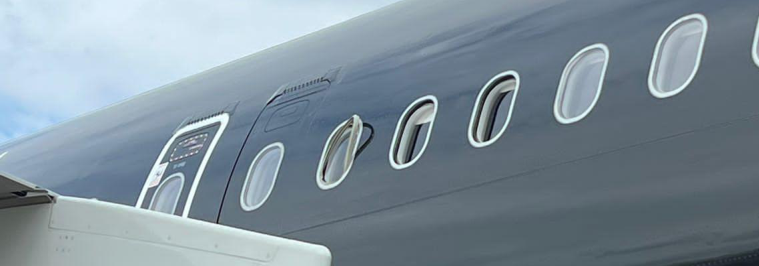
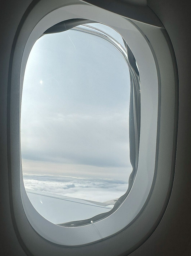
(fig.1) Picture of the window during the event (source: operator)
(fig.2) Picture of the damaged and missing windows after landing (source: investigation board)
Event Analysis
Section titled “Event Analysis”One day before the event, there was a filming session inside the aircraft, around the middle cabin area. There were 6 halogen (tungsten) lamphead spotlights, rated at 12 kW, placed outside the cabin windows to light the area being filmed. The 6 spotlights were first located on the right side of the aircraft at a distance between 6 to 9 meters from the fuselage, close to the overwing emergency exits, with the light beams focussed on the same area of fuselage (fig.3). The lights were then moved to the left side of the aircraft for the second part of the filming session.
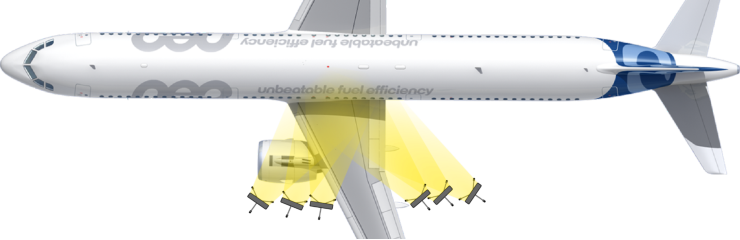
(fig.3) Lighting setup during the filming session (not to scale)
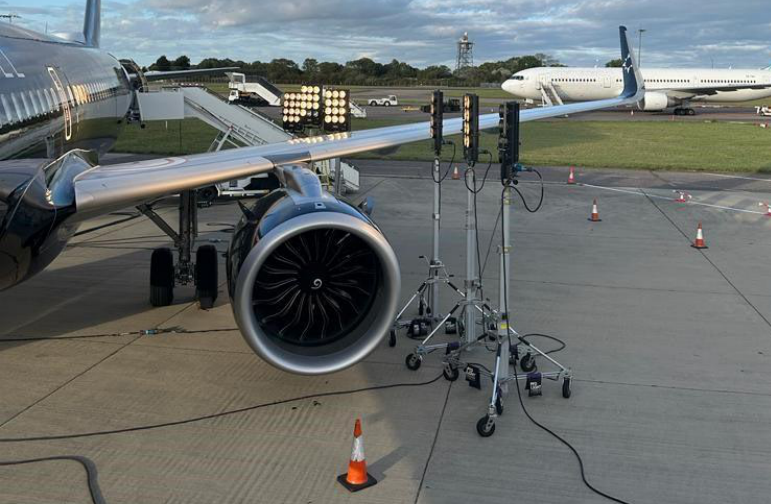
(fig.4) Picture of the filming session (source: operator)
Heat damage
Section titled “Heat damage”The combined power of the 6 lamps in the halogen lighting setup was 72 kW. The exposure of the fuselage area to the spotlights lasted more than 4 hours on each side of the aircraft. The heat produced by the infrared radiation from the halogen spotlights damaged several cabin windows. This damage was not detected prior to the next flight.
The damage found on the affected windows during post-flight inspection included:
-
Two window assemblies completely missing (one pane was retrieved on the runway)
-
One window with missing outer pane
-
Deformation of several other window panes
-
Window seals in degraded condition
-
Visible burn marks
-
Melted foam ring at the interface between the window and the cabin lining.
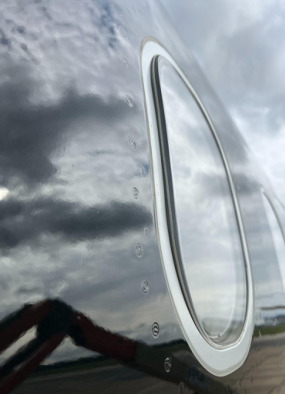
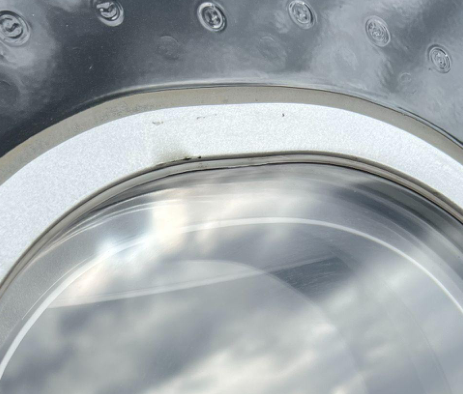
(fig.5) Window protrusion due to deformation (left) and burn marks on the top of an outer pane (right) (source: investigation board)
CABIN WINDOWS
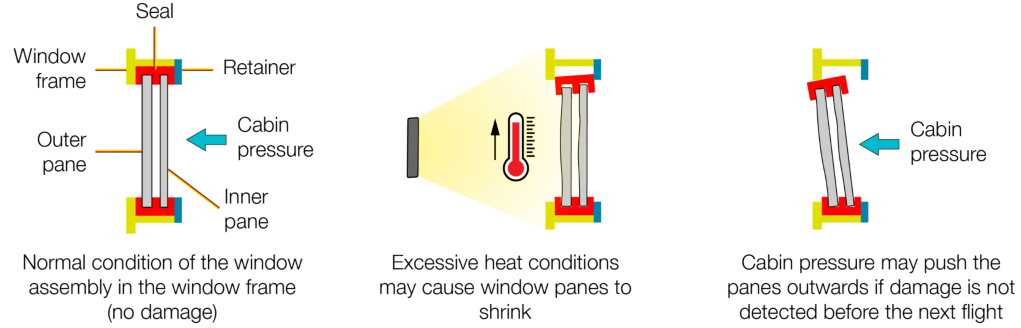
Section titled “CABIN WINDOWS”A cabin window assembly is typically composed of one inner and one outer pane made of stretched acrylic contained in a window seal (fig.6). An additional transparent lining (not shown in the illustration) is present on the cabin side to protect the inner pane from impacts or scratches from the passenger side.
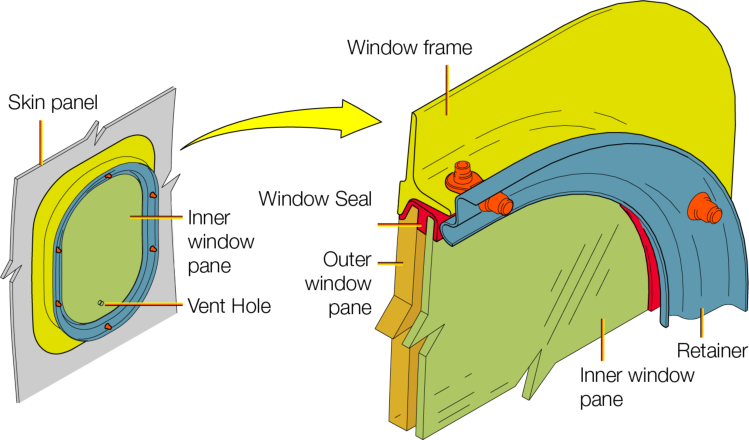
(fig.6) Typical structure of a cabin window
A plug-type structural element
Section titled “A plug-type structural element”The cabin window assembly is a plug-type structural component. In other words, it is positioned from the inside of the aircraft and its size is bigger than the window frame so that the differential pressure pushes it against the window frame. The window assembly is maintained in place by a retainer, which is attached to the window frame by bolts.
A fail-safe structural part
Section titled “A fail-safe structural part”Each cabin window pane (i.e. both the inner and outer panes) are able to independently sustain the maximum cabin differential pressure usually experienced during a flight.
The outer pane sustains the loads. A small vent hole on the inner pane lets the cabin pressure into the space between the two panes. This prevents the inner pane from sustaining pressurization cycles on each flight. The inner pane is, therefore, not exposed to structural fatigue.
If the outer pane fails during a flight, the inner pane is designed to sustain the differential pressure loads and maintain the cabin pressure, which allows the continuation of the flight. The window assembly can then be replaced when the aircraft is back on the ground.
Risks associated with abnormal heat exposure
Section titled “Risks associated with abnormal heat exposure”Shrink-back effect of acrylic
Section titled “Shrink-back effect of acrylic”Cabin window panes are manufactured from a thick acrylic sheet that is heated to become softer, then stretched until the required thickness is reached. In normal operating temperature conditions, the acrylic remains in a stable state. However, if
excessive heat is applied to a stretched acrylic object, the acrylic softens and the object tends to shrink back to its original shape (fig.7).
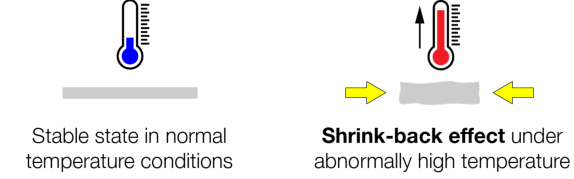
(fig.7) Shrink-back effect of the stretched acrylic under abnormally high temperature
Risk of window pane ejection
Section titled “Risk of window pane ejection”If the passenger window panes are exposed to an excessive amount of heat, the panes may start to shrink and could become smaller than the window frame. If a damaged window is not detected before the aircraft returns to service, as in the event described earlier, there is a risk that the cabin pressure differential at altitude will force the affected window pane outwards, causing cabin air pressure leaks and eventually the ejection of the window pane (fig.8). If both the inner and outer panes are affected by the heat damage, the complete window assembly could fail and be ejected.
(fig.8) Risk of window pane ejection if the heat damage is not detected before the next flight
PREVENTING HEAT DAMAGE
Section titled “PREVENTING HEAT DAMAGE”When performing a filming session or photoshoot that requires the use of artificial lighting in close proximity to an aircraft, the following recommendations will prevent heat from the lights causing damage to the windows and fuselage.
Avoid using high thermal radiation lighting
Section titled “Avoid using high thermal radiation lighting”Airbus recommends not to use high thermal radiation lighting devices , such as halogen (tungsten) or HMI lighting, during photoshoots or filming sessions outside or inside an aircraft. This type of lighting device emits a large amount of thermal energy. Only use low energy lighting devices, such as LED lights, which provide good lighting capabilities with low heat emission.
Limit exposure and regularly monitor the surface temperature
Section titled “Limit exposure and regularly monitor the surface temperature”Switch off any lighting devices when not necessary to limit the exposure time to the minimum.
Even though Airbus aircraft materials have been qualified for use in elevated temperature environments, for example, taking into account operations or storage in
hot weather regions, Airbus recommendation is to make sure that the surface temperature of cabin and passenger windows, fuselage, interior equipment and all aircraft parts exposed to the lighting sources, are monitored and do not exceed 55°C.
Beware of the thermal radiation cumulative effect
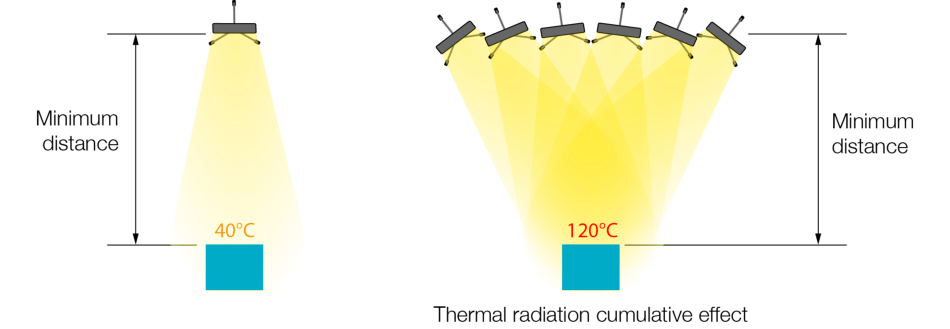
Section titled “Beware of the thermal radiation cumulative effect”Even if the minimum distance to the subject defined by the lighting device instructions is respected, when multiple lighting units are used at the same time, there is a thermal radiation cumulative effect that may cause overheating and damage to the aircraft.
For example, one halogen lighting unit located at the minimum recommended distance, and pointed at the fuselage may increase the surface temperature of the fuselage to 40°C (fig.9).
Using six similar halogen lighting devices simultaneously, which are located at the recommended minimum distance and all pointed at the fuselage, may quickly raise the surface temperature to 120°C due to the cumulation of the thermal radiation emitted from each light. This high temperature may cause damage to the object.
(fig.9) Thermal radiation cumulative effect
Check the aircraft for damage before return into service
Section titled “Check the aircraft for damage before return into service”After the filming session or photoshoot is finished, Airbus recommends performing a visual inspection of all cabin windows that were exposed to the lightning to check they are free of any damage or distortion before returning the aircraft to service.
Contributors:
Section titled “Contributors:”Bruno ESTEBE
Section titled “Bruno ESTEBE”Thermal Analysis Expert Design Office
Jérôme GRAS
Section titled “Jérôme GRAS”Cockpit and Cabin Windows Expert Design Office
Pierre LABRO
Section titled “Pierre LABRO”Accident/Incident Investigator Aviation Safety
Kamel NAIT ATIA
Section titled “Kamel NAIT ATIA”Nose and Fwd fuselage windows product leader Customer Support
Jens WIETING
Section titled “Jens WIETING”The use of lighting devices during a filming session or photoshoot around an aircraft, or in the cabin, can have unintended consequences. High energy lighting devices can emit a level of thermal radiation that can damage the aircraft’s fuselage, windows, or cabin interiors. This may even result in a failure in of the window assemblies due to the of the heat flight effects damage, leading to a loss of cabin pressure at altitude and potential injury to passengers or crew.
Several recommendations should be taken into consideration when planning a filming session or photo shoot involving any aircraft. These include only using low heat emitting lighting devices, such as LED lighting equipment, limiting the exposure of the fuselage, windows, or cabin interior to the lights, and regularly monitoring the surface temperature so that it does not exceed 55°C when exposed to the lights.
After the completion of the filming session, it is important to perform a thorough visual inspection of the areas that were exposed to the lighting to ensure there is no damage and that the aircraft is in a safe condition for its return to service.
Composite/hybrid structural design engineering Design Office
With thanks to Damien PARISE from Customer Support and Sylvain RAMADIER from the Flight and Integration Tests Centre photo lab
Safety first, 2024. Safety first is published by Airbus S.A.S. 1, rond point Maurice Bellonte - 31707 Blagnac Cedex/France.
Editor: Yannick Malinge, Chief Product Safety Officer.
Editorial team: Guillaume Estragnat, Vanessa Sadi, Gwyneth Duggan, Javier Martinez Marina, Tim Roach.
Photos by Airbus.
来源:Airbus Safety First 网址:https://safetyfirst.airbus.com/under-the-spotlights/ 发布日期:2024-09-13 类别:地面操作、维修、丙烯酸、卤素、热、光、舷窗
两起涉及飞机舷窗损坏的事件已报告给空客。此类事件也发生在非空客飞机上。损坏由宣传拍摄期间使用的聚光灯热量造成。其中一起事件可能造成严重安全后果,因为地面检查时未发现损坏,导致部分窗玻璃在后续飞行中从飞机上脱落。
本文详细描述该事件,并介绍如何防止外部照明造成的热损伤。同时建议在飞机恢复运营前检查其状态。
请访问 safetyfirst.airbus.com 或下载适用于 iOS 和 Android 设备的 Safety First 应用,查看本文最新版本。
一架 A321neo 飞机在执行多个航段运营前执行调机飞行。机上人员有限,包括部分客舱乘务组成员。飞机正在爬升至目标高度。在 10,000 英尺处,其中一名客舱乘务员注意到,在走向飞机中部空置区域时,客舱噪音过大且温度较低。他发现左侧一个舷窗似乎从原位置滑落,窗框密封件在外部气流中拍打不止**(图1)**。他立即通知机组,机组决定下降至 9,000 英尺并执行空中返航。飞机安全着陆,无进一步事故。
飞机落地停稳后,机组对飞机外部进行检查。他们观察到两个舷窗缺失,一个舷窗错位**(图2)**。同时注意到左侧水平安定面底部受损,可能是脱落部件撞击所致。进一步检查发现,机身左侧还有两个舷窗受损,右侧机身也有一个舷窗出现损坏迹象。
(图1) 事件期间舷窗照片(来源:运营人)
(图2) 着陆后受损和缺失舷窗照片(来源:调查委员会)
事件发生前一天,飞机内部进行了拍摄,地点在客舱中部区域。舱窗外放置了 6 盏卤素(钨丝)灯头聚光灯,额定功率为 12 kW,用于照亮拍摄区域。6 盏聚光灯首先布置在飞机右侧,距机身 6 至 9 米处,靠近翼上应急出口,光束聚焦在机身同一区域**(图3)**。随后灯光移至飞机左侧,进行拍摄的第二部分。
(图3) 拍摄期间的照明布置(非等比例)
(图4) 拍摄现场照片(来源:运营人)
6 盏卤素灯的组合功率为 72 kW。机身区域暴露于聚光灯照射超过 4 小时,每侧均如此。卤素聚光灯红外辐射产生的热量损坏了多个客舱舷窗。该损坏在下次飞行前未被检测到。
飞行后检查中发现的受损舷窗情况包括:
- 两个舷窗总成完全缺失(其中一块窗玻璃在跑道上找到)
- 一个舷窗外层窗玻璃缺失
- 多个其他窗玻璃变形
- 窗框密封件状况劣化
- 可见烧灼痕迹
- 舷窗与客舱内衬界面处的泡沫密封圈熔化。
(图5) 因变形导致舷窗突出(左)及外层窗玻璃顶部烧灼痕迹(右)(来源:调查委员会)
舷窗组件通常由一层内层玻璃和一层外层玻璃组成,两者均由拉伸丙烯酸玻璃制成,嵌在窗框密封件中**(图6)**。舷窗内侧还设有一层额外的透明衬垫(图中未显示),用于保护内层玻璃免受乘客侧的撞击或划伤。
(图6) 舷窗的典型结构
塞入式结构部件
Section titled “塞入式结构部件”舷窗组件是一种塞入式结构部件。换言之,它从飞机内部安装,其尺寸大于窗框,使压差将其压向窗框。窗组件通过固定夹保持在位,固定夹通过螺栓安装在窗框上。
安全冗余结构部件
Section titled “安全冗余结构部件”每层舷窗玻璃(即内层和外层玻璃)均能独立承受飞行中通常遇到的最大客舱压差。
外层玻璃承受载荷。内层玻璃上的一个小通气孔使客舱压力进入两层玻璃之间的空间。这可以防止内层玻璃在每次飞行中承受增压循环。因此,内层玻璃不会受到结构疲劳影响。
如果外层玻璃在飞行中失效,内层玻璃设计用于承受压差载荷并维持客舱压力,从而允许航班继续飞行。舷窗组件可在飞机返回地面后进行更换。
与异常受热相关的风险
Section titled “与异常受热相关的风险”丙烯酸玻璃的回缩效应
Section titled “丙烯酸玻璃的回缩效应”舷窗玻璃由厚丙烯酸板制成,加热软化后拉伸至所需厚度。在正常操作温度条件下,丙烯酸保持稳定状态。然而,如果对拉伸丙烯酸物体施加过多热量,丙烯酸会软化,物体倾向于回缩至其原始形状**(图7)**。
(图7) 拉伸丙烯酸玻璃在异常高温下的回缩效应
玻璃弹出风险
Section titled “玻璃弹出风险”如果舷窗玻璃暴露于过量热源下,玻璃可能开始回缩,尺寸可能变得小于窗框。如果受损的舷窗在飞机恢复运营前未被检测到,如前所述事件中的情况,则存在这样的风险:高空的客舱压差会将受影响的玻璃向外推出,导致客舱气压泄漏,最终造成玻璃弹出**(图8)**。如果内层和外层玻璃均受到热损伤影响,整个舷窗组件可能失效并被弹出。
(图8) 如果热损伤在下次飞行前未被检测到,存在玻璃弹出风险
当进行需要使用人工照明设备靠近飞机的拍摄或摄影时,以下建议将防止灯光热量对舷窗和机身造成损坏。
避免使用高热辐射照明设备
Section titled “避免使用高热辐射照明设备”空中客车公司建议不要使用高热辐射照明设备,如卤素灯(钨丝灯)或HMI灯,在飞机外部或内部的拍摄或摄影期间使用。此类照明设备会释放大量热能。仅使用低能耗照明设备,如LED灯,能够在低热量排放的情况下提供良好的照明能力。
限制照射时间并定期监测表面温度
Section titled “限制照射时间并定期监测表面温度”不需要时关闭任何照明设备,将照射时间限制在最短。
尽管空客飞机材料已通过高温环境适用资格认证,例如考虑到炎热天气地区的运营或存放,但空客建议确保客舱和舷窗、机身、内部设备以及所有暴露于照明光源的飞机部件的表面温度得到监测且不超过55°C。
注意热辐射累积效应
Section titled “注意热辐射累积效应”即使遵守照明设备说明中规定的与被照物体的最小距离,当多个照明设备同时使用时,仍存在热辐射累积效应,可能导致飞机过热和损坏。
例如,一盏位于最小推荐距离处并对准机身的卤素灯可能会将机身表面温度升高至40°C**(图9)**。
同时使用六盏类似的卤素灯,位于推荐的最小距离处并全部对准机身,由于每盏灯发出的热辐射累积,可能迅速将表面温度升高至120°C。这种高温可能对物体造成损坏。
(图9) 热辐射累积效应
在恢复运营前检查飞机是否有损坏
Section titled “在恢复运营前检查飞机是否有损坏”拍摄或摄影结束后,空中客车公司建议对所有暴露于灯光下的舷窗进行目视检查,确认其无任何损坏或变形后再将飞机恢复运营。
Bruno ESTEBE
Section titled “Bruno ESTEBE”热分析专家设计室
Jérôme GRAS
Section titled “Jérôme GRAS”驾驶舱与客舱舷窗专家设计室
Pierre LABRO
Section titled “Pierre LABRO”事故/事件调查员航空安全
Kamel NAIT ATIA
Section titled “Kamel NAIT ATIA”机身前部舷窗产品负责人客户支援
Jens WIETING
Section titled “Jens WIETING”复合材料/混合结构设计工程设计室
在飞机周围或客舱内进行拍摄或摄影时使用照明设备,可能产生意想不到的后果。高能照明设备会释放一定水平的热辐射,可能损坏飞机机身、舷窗或客舱内饰。这甚至可能导致舷窗组件因热效应/飞行效应造成的损坏而发生失效,进而导致在高空飞行时客舱失压,并对乘客或机组人员造成潜在伤害。
在计划涉及任何飞机的拍摄或摄影时,应考虑以下几点建议:仅使用低发热量的照明设备(如 LED 照明设备),限制机身、舷窗或客舱内饰暴露于灯光下的时间,并定期监测表面温度,使其在灯光照射下不超过 55°C。
拍摄结束后,对暴露于灯光下的区域进行全面的目视检查非常重要,以确保没有损坏,且飞机处于安全状态,可以恢复运营。
感谢来自客户支援的 Damien PARISE 以及飞行与集成测试中心照片实验室的 Sylvain RAMADIER
Safety first,2024 年。Safety first 由空中客车股份有限公司出版——地址:1, rond point Maurice Bellonte,31707 Blagnac Cedex/法国。
主编:Yannick Malinge,首席产品安全官。
编辑团队:Guillaume Estragnat、Vanessa Sadi、Gwyneth Duggan、Javier Martinez Marina、Tim Roach。
图片由空中客车提供。