Post-Maintenance Foreign Objects Damage prevention
Source: Airbus Safety First URL: https://safetyfirst.airbus.com/post-maintenance-foreign-objects-damage-prevention/ Published: 2013-01-14 Magazine Issue: 2013-02 Category: Archive PDF: Original PDF
François LEFEBVRE
Section titled “François LEFEBVRE”Head of Quality Basics and FOD
Post-Maintenance Foreign Objects Damage (FOD) Prevention
Section titled “Post-Maintenance Foreign Objects Damage (FOD) Prevention”1. Introduction
Section titled “1. Introduction”A Foreign Object Damage (FOD) is any damage attributed to an object, referred to as Foreign Object Debris (FOD), that is not part of an aircraft. FODs are usually associated to external causes like runway debris or bird strikes, but they can also be caused by foreign objects inside the aircraft, in which case they are referred to as internal FODs.
Internal FODs generally result from maintenance or outstanding work on aircraft, and may be divided into several families:
-
q Debris (swarfs, chips, paper, rubber, …)
-
q Hardware (consumables like rivets, nuts…)
2. Examples of FODs
Section titled “2. Examples of FODs”There are many ways in which a foreign object can impair safety: a small metallic part may lead to an electric arc inside an electric cupboard, a plastic sheet may clog a bleed pipe or a fuel pump etc…
Here is an in-service incident, which illustrates the potential ef-
-
q Aircraft parts
-
q Personal Objects (phones, pencils, cigarettes, …)
Figure 1 q Tools (mainly hand tools A short circuit caused by a like screwdrivers, wrenches, contact pin burnt lights, drilling tools, …) an A380 power distribution centre
- q Protections (plastic, foam, …).
The common point to all these families of objects is that they may all affect the safety of operations, depending on where they are located on-board aircraft.
This article will illustrate, through a few examples, how foreign objects may impact safety and will give some recommendations on how to implement an efficient prevention program to minimize FOD occurrences.
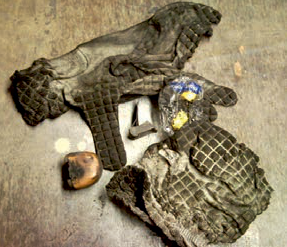
Figure 2 Foreign objects found in an APU compartment
fect of internal foreign objects: on a landing A380, the crew perceived an electrical burning smell. They were then unable to stow an engine and experienced problems with the Auxiliary Power Unit (APU). Then, at power-off, the Ram Air Turbine (RAT) deployed.
Post-flight investigation revealed that the aircraft’s Primary Electrical Power Distribution Centre (PEPDC), located at the rear of the cockpit, was partially burnt.
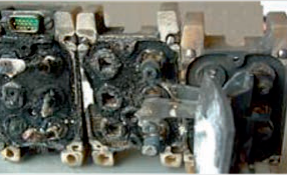
The root cause for the short circuit was a contact pin, which had migrated through the ventilation grid of the equipment (fig. 1).
Here are three examples of different foreign objects that were luckily found before any damage could be created:
- q Gloves, earplugs, metal clamps and a plastic cap were discovered in the Auxiliary Power Unit (APU) compartment. It was determined that these objects could have lead to an APU shutdown (fig. 2).
Safety
- q A wrench was found in the horizontal stabilizer. This FOD could have lead to a blockage of the elevator servo control (Fig. 3 & 4).
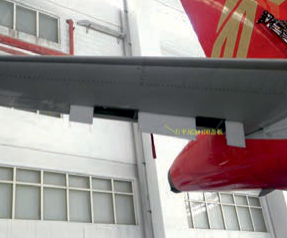
Figure 3 A320 horizontal stabilizer
Figure 4 Wrench left in A320 horizontal stabilizer
- q Critical zones: characterized by a major FOD risk. The zones are closed and a clear safety impact has been identified. There is a high risk of migration of foreign objects to adjacent areas e.g. avionic or electrical bays, tanks, servo-valves or pipes.
Once the zoning has been defined, decisions have to be taken regarding:
-
q The visual identification of these zones, through standardized FOD logos, ground markings, etc
-
q The rules to be applied within these zones, linked to access rights, work rules, tool usage and carriage of personal objects.
-
q The communication channels to be used, to ensure that the rules are widely known and understood by all stakeholders.
3.2 Introduction of Housekeeping and Cleanliness Rules
Section titled “3.2 Introduction of Housekeeping and Cleanliness Rules”3. FOd Prevention
Section titled “3. FOd Prevention”Herewith are six recommendations to implement an efficient FOD prevention program:
-
q Define FOD risk zones
-
q Introduce housekeeping/ cleanliness rules
-
q Manage hand tools
-
q Introduce FOD declaration, recording and feedback
-
q Train for FOD awareness
-
q Involve the management.
3.1 definition of FOd Risk Zones
Section titled “3.1 definition of FOd Risk Zones”An aircraft may be divided into three classes of FOD risk zones:
-
q Non-sensitive zones: characterized by a low risk of FOD e.g. primary parts, sections/products without zones closure.
-
q Sensitive zones: characterized by a moderate FOD risk. The zones are closed, but the impact of foreign objects is assessed as limited, notably concerning the migration of these foreign objects to other areas e.g. cabin overhead bins.
Figure 5 Code protected l ockers in the vicinity of FOD risky areas
Introducing proper housekeeping and cleanliness rules will help minimizing the number of foreign objects. The 5S standard (ref A) has been originally developed by the automotive industry. This international standard calls for a reduction of the number of tools and other objects to be used in the work areas and contains simple rules related to housekeeping and cleanliness.
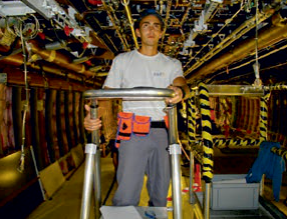
A good practice to avoid FODs, is to install code protected lockers in the vicinity of FOD risky areas, where personnel entering these zones may leave non-useful tools and personal objects like mobile phone, money, keys etc (Fig. 5). A further good practice is to define a dress code including work-wears without pockets, but with a dedicated belt and bag to carry a limited number of personal objects like a pen or handkerchief (Fig. 6).
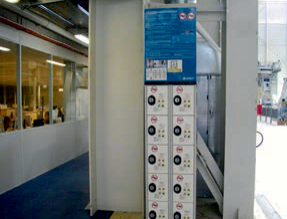
Figure 6 Dedicated dress code against FODs
3.3 Management of Hand Tools
Section titled “3.3 Management of Hand Tools”Managing hand tools is key to avoid having screwdrivers, lights, wrenches, drill bits, etc. remain in the aircraft. Several solutions should be considered:
-
q Equipping tool boxes/cabinets with shadow boards, one form per tool, allows to easily detect missing tools (Fig. 7).
-
q Introducing inventory rules at the beginning and end of each shift ensures that no missing tool goes undetected.
-
q Limiting access to tool cabinets by badge ensures that only the authorized user of that cabinet will utilize the enclosed tools.
-
q Setting RFID chips on individual tools will allow for an efficient tracing.
-
q Tools kitting consist in having small tools boxes or mallets prepared with only the tools needed for a specified job, not more!
-
q Means should be put in place to declare lost tools and to analyse the data so as to come up with answers to reduce these occurrences. These solutions should then be promoted to the shop floor. The implementation of a lost tool process highlights the message that leaving a tool in an aircraft is not acceptable. The personnel declaring a loss is expected to do his/her best to relocate the missing effect.
-
q Tools identification, through laser etching for example, will ease the missing tool list cross-checking when a tool is found. It will also allow to identify the owner of the tool.
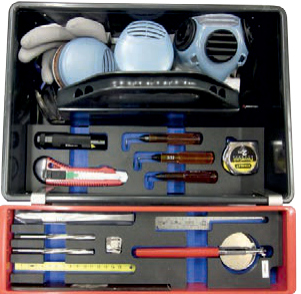
Figure 7 Tool box with shadow boards to easily detect missing tools
3.4 FOd declaration, Recording and Feedback
Section titled “3.4 FOd declaration, Recording and Feedback”That training should be given to all the people working on the aircraft, whether direct employees or external staff, as well as to their managers. It would be advisable as well to give people working in support functions, on the ground floor, a basic FOD awareness course.
q The declaration, recording and communication about lost tools should be broadened to encompass all families of foreign objects. All foreign objects should be declared and recorded. FOD trends should be analysed to identify why they are left in the aircraft and pertinent mitigation means should be defined. Last but not least, these mitigation means should then be actively promoted to all stakeholders to ensure a good implementation.
3.6 Involvement of the Management
Section titled “3.6 Involvement of the Management”The implementation of an efficient FOD prevention program needs the active involvement of the management at all levels of the hierarchy. This requires a constant effort over time to ensure that habits change durably. It is up to the management to clearly indicate that fighting FODs is a priority, and to put in place the needed mitigation measures.
3.5 Training for FOd Awareness
Section titled “3.5 Training for FOd Awareness”The training allows to:
-
q Make people aware that foreign objects left in an aircraft may impact safety, thereby obtaining their adherence to FOD mitigation procedures.
-
q Inform personnel on how to follow these procedures.
4. Conclusion
Section titled “4. Conclusion”Internal foreign objects may take many forms, but they all potentially represent a threat to safe aircraft operation.
-
q The management of hand tools
-
q The declaration, analysis of recordings and feedback of mitigation means against FODs
This threat should be mitigated by implementing a sound Foreign Object Damage (FOD) program, which calls for:
-
q The training for FOD awareness q The involvement of the management.
-
q The definition of FOD risk zones
All above recommendations are currently being implemented by Airbus on its manufacturing sites.
- q The introduction of housekeeping and cleanliness rules
References A:
Section titled “References A:”- q “ 5S for operators: 5 pillars of the visual workplace” Writer: Hiroyuki HIRANO Editions: B&T – ISBN: 978-1563271236
Safety
François LEFEBVRE
Section titled “François LEFEBVRE”质量基础与外来物损伤(FOD)负责人
维修后外来物损伤(FOD)预防
Section titled “维修后外来物损伤(FOD)预防”外来物损伤(FOD)是指由不属于飞机部件的物体(称为外来杂物FOD)造成的任何损伤。FOD通常与外部原因有关,如跑道碎片或鸟击,但也可能由飞机内部的外来物引起,此时称为内部FOD。
内部FOD通常由飞机维修或未完成的工作造成,可分为以下几类:
-
q 碎屑(切屑、金属屑、纸张、橡胶……)
-
q 小件(消耗品如铆钉、螺母……)
-
q 飞机部件
-
q 个人物品(手机、铅笔、香烟……)
-
q 工具(主要是手动工具如螺丝刀、扳手、手电、钻孔工具……)
-
q 防护用品(塑料、泡沫……)。
所有这些物品的共同点是,根据它们在飞机上的位置,都可能影响运行安全。
本文将通过几个示例说明外来物如何影响安全,并将给出关于如何实施有效的预防计划以减少FOD发生的一些建议。
2. FOD示例
Section titled “2. FOD示例”外来物有许多方式可以损害安全:一小块金属部件可能导致电气柜内的电弧,塑料片可能堵塞引气管或燃油泵等……
以下是一起实际发生的事件,展示了内部外来物的潜在影响:
在一架A380着陆过程中,机组察觉到电气烧焦气味。随后他们无法收上一个发动机,并遇到辅助动力装置(APU)故障。然后在关车后,冲压空气涡轮(RAT)自动放出。
飞行后调查发现,位于驾驶舱后部的主电力配电中心(PEPDC)发生部分烧毁。
图1 短路原因是接触销穿过设备通风网格迁移至此
以下是在造成任何损坏之前幸运地被发现的三个不同外来物示例:
- q 在辅助动力装置(APU)舱内发现了手套、耳塞、金属夹和塑料盖。经确定,这些物体可能导致APU关闭**(图2)**。
图2 在APU舱内发现的外来物
- q 在水平安定面中发现了一把扳手。此FOD可能导致升降舵伺服控制阻塞**(图3和图4)**。
图3 A320水平安定面
图4 留在A320水平安定面中的扳手
- q 关键区域: 具有重大FOD风险的区域。这些区域是封闭的,且已确认存在明确的安全影响。外来物迁移到相邻区域(航电或电气舱、燃油箱、伺服阀或管路)的风险很高。
一旦完成区域划分,必须就以下事项做出决定:
-
q 这些区域的视觉标识, 通过标准化的FOD标识、地面标记等
-
q 在这些区域内应用的规则, 与进入权限、工作规则、工具使用和个人物品携带相关
-
q 使用的沟通渠道, 以确保所有相关方广泛知晓并理解这些规则
3.2 5S 管理与清洁规范简介
Section titled “3.2 5S 管理与清洁规范简介”3. FOD(外来物损伤)预防
Section titled “3. FOD(外来物损伤)预防”以下是实施有效 FOD 预防程序的六项建议:
-
q 界定 FOD 风险区域
-
q 引入 5S 管理与清洁规范
-
q 管理手工工具
-
q 建立 FOD 申报、记录与反馈机制
-
q 开展 FOD 意识培训
-
q 管理层参与
3.1 FOD 风险区域定义
Section titled “3.1 FOD 风险区域定义”飞机可分为三类 FOD 风险区域:
-
q 非敏感区域: FOD 风险较低的区域,例如主要部件、未封闭的区域/产品。
-
q 敏感区域: FOD 风险适中的区域。该区域已封闭,但外来物的影响评估为有限,尤其涉及外来物迁移至其他区域的可能性,例如客舱行李架。
图 5 FOD 风险区域附近的密码保护储物柜
引入适当的 5S 管理和清洁规范将有助于减少外来物的数量。5S 标准(参考文献 A)最初由汽车行业制定。该国际标准要求减少工作区域中使用的工具和其他物品数量,并包含关于 5S 管理和清洁的简单规则。
避免 FOD 的良好实践是在 FOD 风险区域附近安装密码保护储物柜,供进入这些区域的人员放置无用工具和个人物品,如手机、现金、钥匙等**(图 5)。另一项良好实践是制定着装规范,包括无口袋的工作服,并配有专用腰带和工具包来携带少量个人物品,如笔或手帕(图 6)**。
图 6 防止 FOD 的专用着装规范
3.3 手工工具管理
Section titled “3.3 手工工具管理”工具管理是避免螺丝刀、手电筒、扳手、钻头等遗留在飞机上的关键。应考虑以下多种解决方案:
-
q 在工具箱/柜中配备孔板(shadow boards),每种工具一个位置,便于快速发现缺失的工具**(图 7)**。
-
q 在每个班次开始和结束时引入盘点规则,确保不遗漏任何缺失工具。
-
q 通过门禁卡限制工具柜的进入,确保只有该柜子的授权用户使用其中的工具。
-
q 在单个工具上设置 RFID 芯片,可实现高效追踪。
-
q 工具包准备法(Tools kitting):使用小型工具箱或专用工具包,仅配备特定工作所需的工具,不多不少!
-
q 应建立丢失工具申报机制并对数据进行分析,以找出减少此类情况发生的措施。这些解决方案应推广到车间。实施丢失工具处理流程强调了一个信息:将工具留在飞机中是不可接受的。申报丢失的人员应尽最大努力寻找缺失物品。
-
q 工具标识,例如激光刻蚀,可便于在发现工具时与缺失工具清单进行交叉核对。同时也能识别工具的所有者。
图 7 带有孔板的工具箱,便于快速发现缺失工具
3.4 FOD 申报、记录与反馈
Section titled “3.4 FOD 申报、记录与反馈”应为所有在飞机上工作的人员(无论是正式员工还是外部人员)及其管理人员提供培训。同样,建议为在底层支持岗位工作的人员提供基础 FOD 意识课程。
q 关于丢失工具的申报、记录和沟通应扩展到所有类型的外来物。所有外来物都应申报并记录。应分析 FOD 趋势,以确定它们被留在飞机上的原因,并制定适当的缓解措施。最后但同样重要的是,这些缓解措施应积极推广给所有相关方,以确保良好实施。
3.6 管理层参与
Section titled “3.6 管理层参与”有效 FOD 预防程序的实施需要管理层在各级别积极参与。这需要持续不断的努力,以确保习惯能够持久改变。管理层有责任明确指出打击 FOD 是优先事项,并实施必要的缓解措施。
3.5 FOD 意识培训
Section titled “3.5 FOD 意识培训”培训可实现以下目标:
-
q 使人们认识到留在飞机中的外来物可能影响安全,从而获得他们对 FOD 缓解程序的认同。
-
q 告知人员如何遵循这些程序。
内部外来物可能呈现多种形式,但它们都可能对飞机安全运行构成威胁。
-
q 手工工具管理
-
q 外来物申报、记录分析以及缓解措施反馈
应通过实施完善的外部物体损伤(FOD)预防程序来缓解这种威胁,其中包括:
-
q FOD 意识培训 - q 管理层参与
-
q FOD 风险区域界定
-
q 引入 5S 管理与清洁规范
以上所有建议目前正在空客各制造基地实施。
参考文献 A:
Section titled “参考文献 A:”- q “5S for operators: 5 pillars of the visual workplace”(5S 操作员指南:可视化工作场所的五大支柱) 作者:Hiroyuki HIRANO(平野裕之)出版社:B&T – ISBN:978-1563271236